University of Social Sciences and Humanities - VNU Hanoihttps://ussh.vnu.edu.vn/uploads/ussh/logo-ussh-2_100_100.png
Friday - October 25, 2024, 8:00 PM
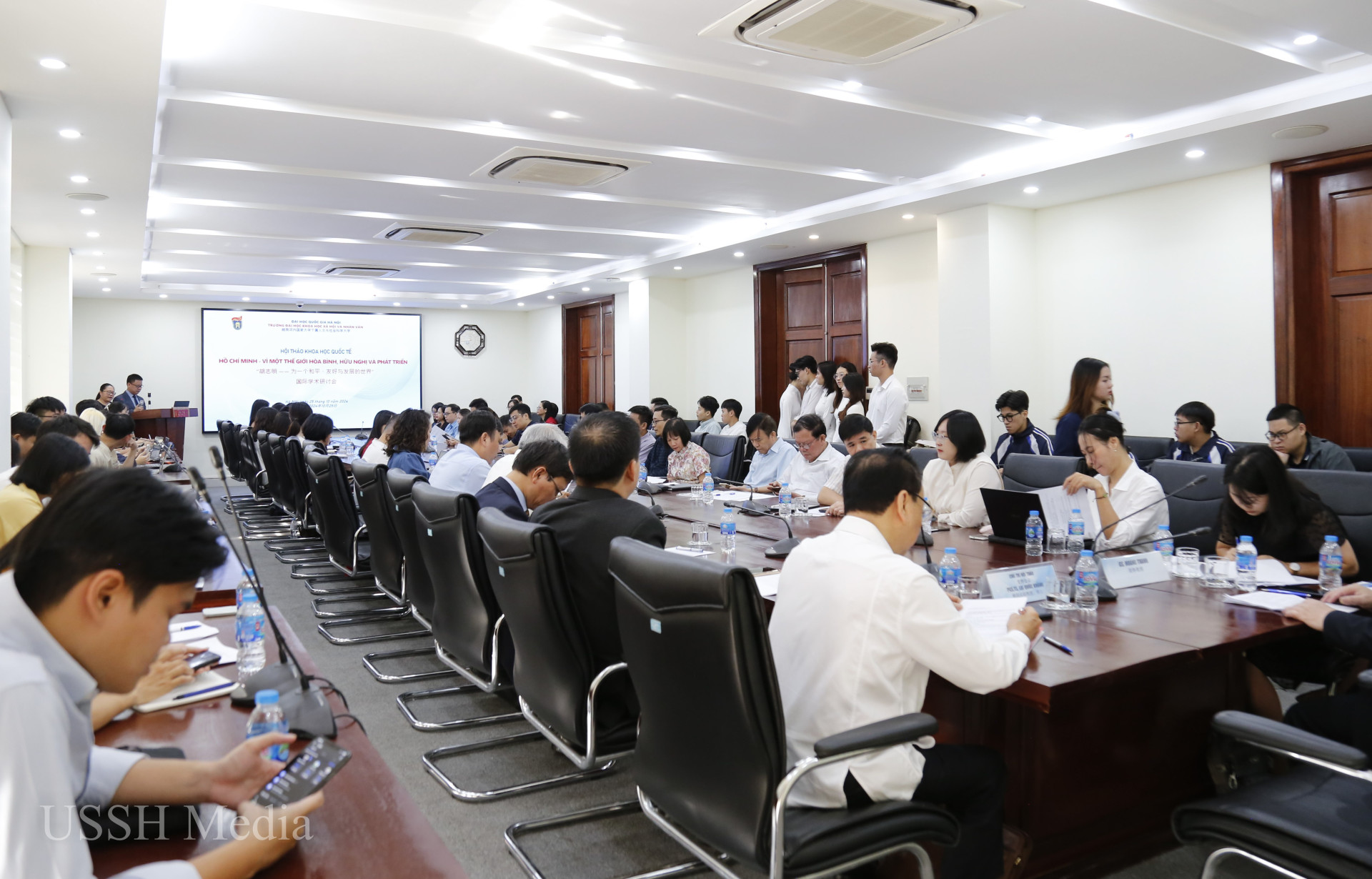
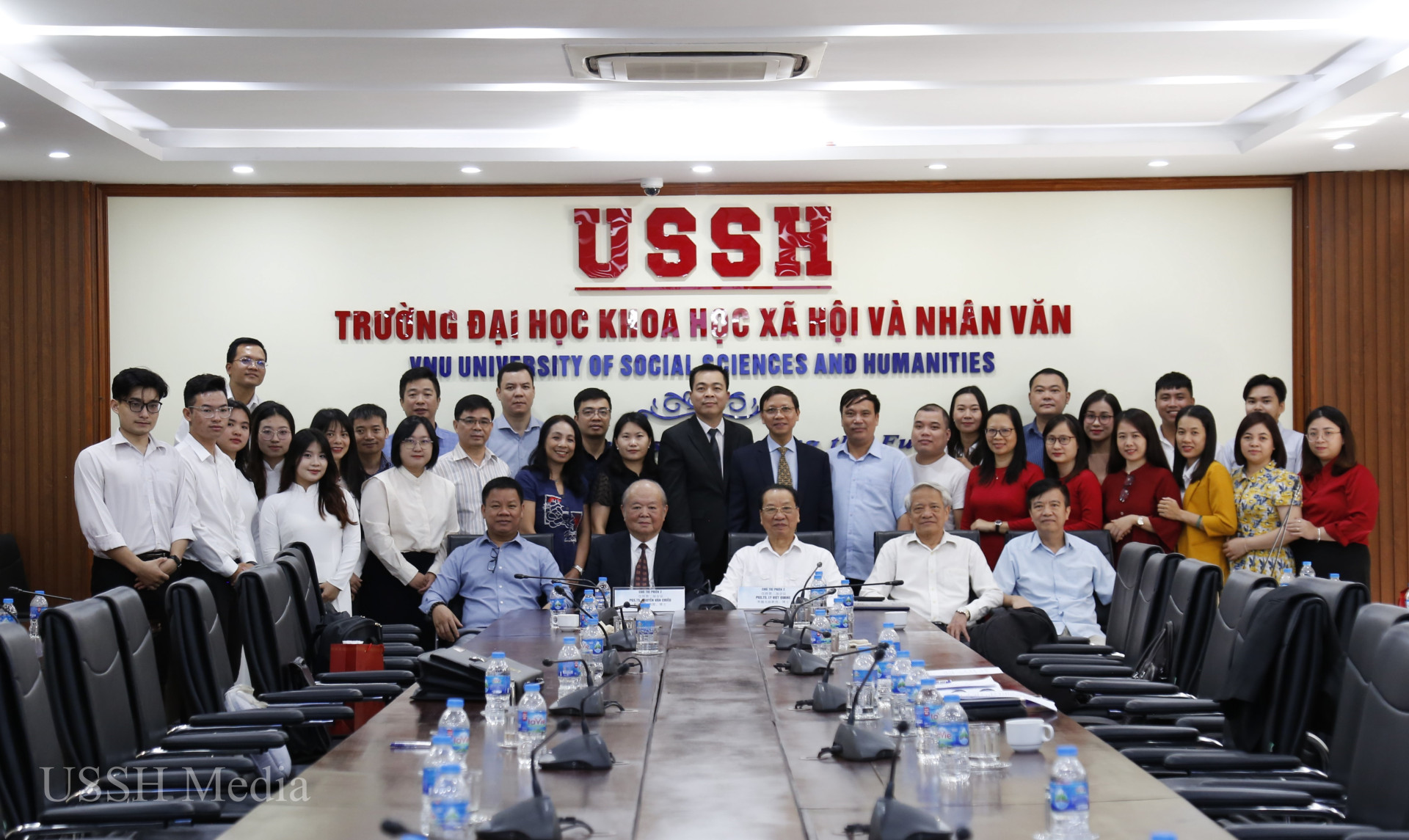
This is the content of the international scientific conference held at the University of Social Sciences and Humanities, Vietnam National University, Hanoi today, October 25, 2024, with the participation of many reputable scientists from Vietnam and abroad.
Meaningful scientific activities contribute to strengthening Vietnam-China relations. The international scientific conference "Ho Chi Minh – For a World of Peace, Friendship and Development," organized by the University of Social Sciences and Humanities (with the Political Science Department as the coordinating body) in collaboration with the Guangxi Academy of Social Sciences (China), is a significant academic activity commemorating the 75th anniversary of the establishment of diplomatic relations between Vietnam and China. The conference attracted the participation of many scientists from academies, universities, research institutes, and relevant agencies both domestically and internationally. In particular, the conference was honored to welcome Professor Huang Zheng - former Vice President of the Guangxi Academy of Social Sciences, China, and Professor Feng Youfu - former Standing Vice Chairman of the Central Theoretical Council, former Standing Deputy Head of the Central Propaganda Department, the first Rector of the University of Social Sciences and Humanities, and Chairman of the University's Scientific and Training Council.
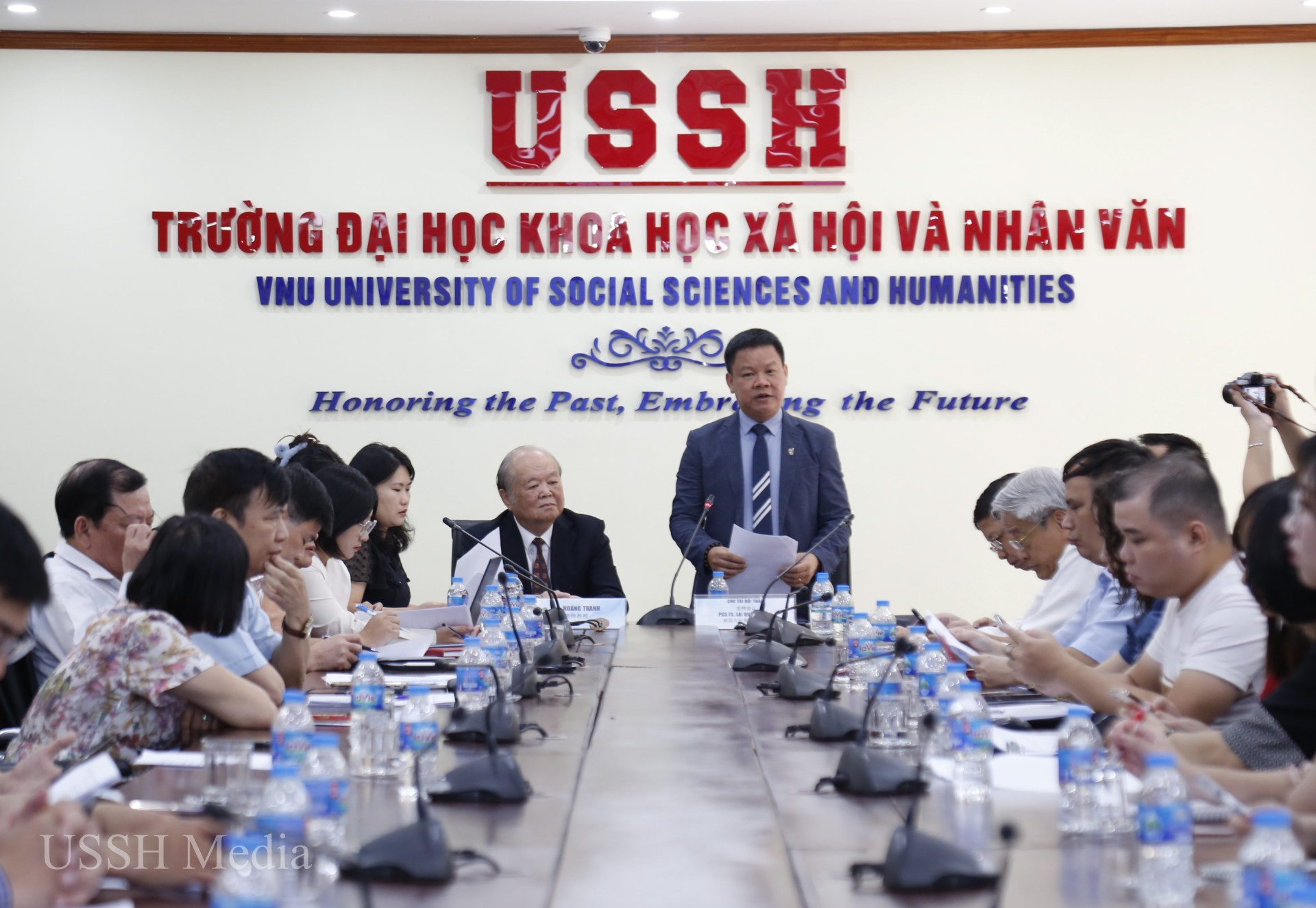
Associate Professor Lai Quoc Khanh, Vice Rector of the University of Social Sciences and Humanities, Vietnam National University, Hanoi, emphasized that the legacy left by President Ho Chi Minh is immense and profoundly valuable, and needs to be continuously cherished, studied, and applied in practice.
In his opening remarks at the seminar, Associate Professor Dr. Lai Quoc Khanh, Vice Rector of the University of Social Sciences and Humanities, Vietnam National University, Hanoi, expressed that President Ho Chi Minh was a brilliant leader of the Vietnamese revolution and a close comrade-in-arms of many revolutionary leaders of the world in the 20th century, including Chairman Mao Zedong. Throughout his revolutionary life, President Ho Chi Minh, theoretically, built a comprehensive and profound system of thought, and in practice, tirelessly fought not only for the liberation and development of the Vietnamese nation, but also for a peaceful, friendly, and prosperous world. Associate Professor Dr. Lai Quoc Khanh emphasized that the legacy left by President Ho Chi Minh is immense and profoundly valuable, and needs to be continuously cherished, studied, and applied in practice, especially in the context where the great goals of humanity—"peace, friendship, and development"—are still being seriously challenged by hegemonic ambitions and local wars and conflicts occurring in many parts of the world. The international scientific conference "Ho Chi Minh - For a Peaceful, Friendly and Developed World," with the participation of prestigious domestic and international scientists, aims to contribute to affirming and clarifying the immense values in the life, career, and thought of Ho Chi Minh, and to promote these values in common efforts for a peaceful, friendly and developed world; contributing to promoting academic exchange and good friendly relations between Vietnam and China for a "Vietnam-China Community with a Strategically Significant Shared Future."
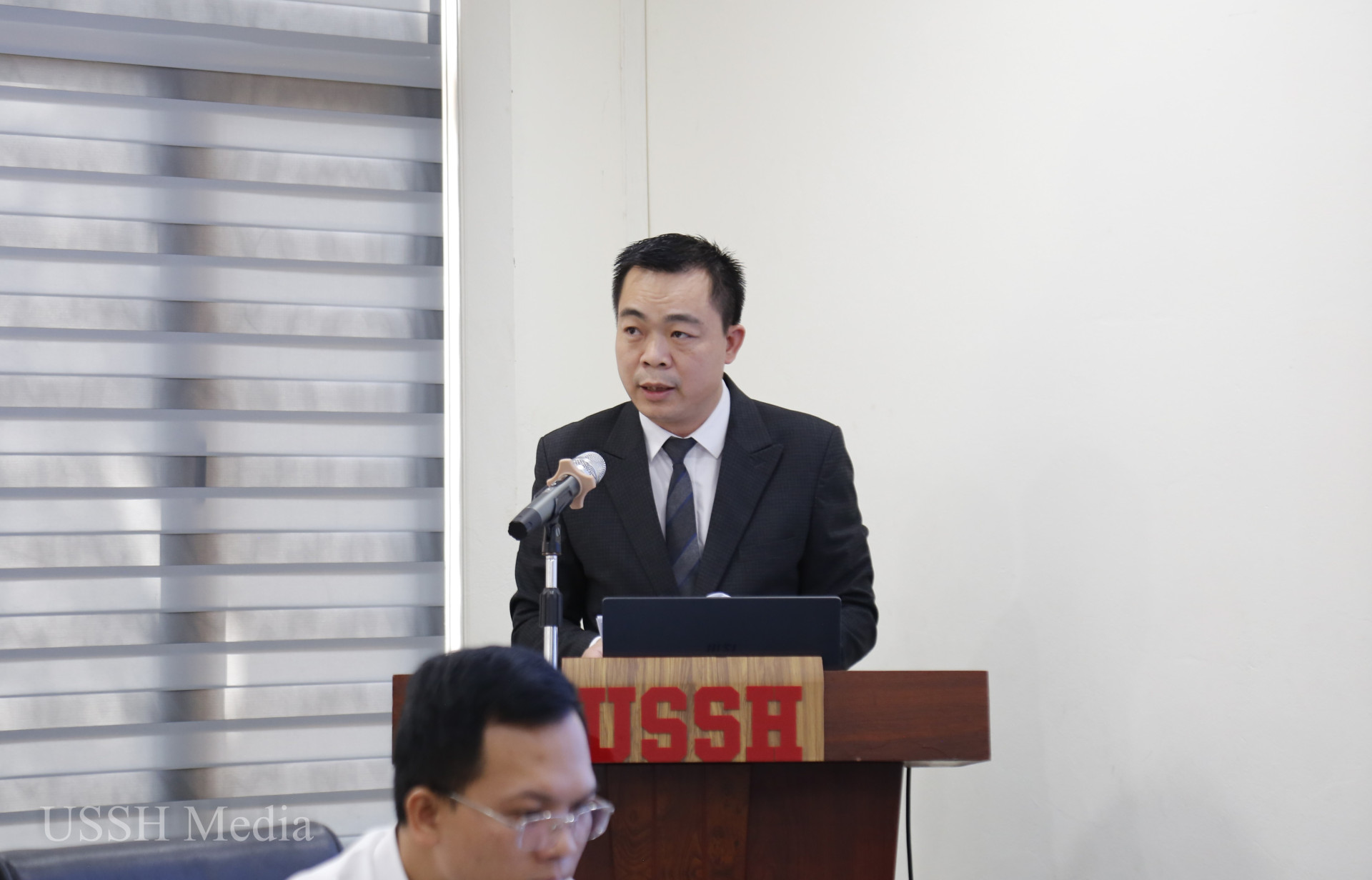
Assoc. Prof. Dr. Nguyen Van Chieu - Head of the Department of Political Science, University of Social Sciences and Humanities, presented the introductory report for the conference.
In his introductory report, Associate Professor Dr. Nguyen Van Chieu - Head of the Department of Political Science, University of Social Sciences and Humanities, emphasized that the conference was particularly significant as it coincided with the 100th anniversary of Ho Chi Minh's arrival in Guangzhou, China (November 11, 1924 - November 11, 2024). This is considered a crucial historical milestone in his revolutionary life, because in Guangzhou, Ho Chi Minh not only broadened his international horizons but also met with pioneering revolutionaries, laying the ideological foundation for the national liberation movement in Vietnam. Thanks to this connection, Ho Chi Minh's ideology has continuously spread and inspired many national liberation movements around the world, from Asia to Africa and Latin America. The profound scientific and practical content affirms the value of Ho Chi Minh's thought. The workshop was organized into two main working sessions, which focused on studying Ho Chi Minh's thought on humanity and international solidarity; and Ho Chi Minh's thought on sustainable development and its application in the context of international integration. Over 90 papers submitted to the conference by scientists and researchers from both within and outside the country brought profound scientific and practical value. The papers covered a wide range of topics, including: Ho Chi Minh – A symbol of a culture of peace; Distinctive features of Ho Chi Minh's thought on peace, friendship, and global development; Ho Chi Minh's thought on peaceful diplomacy and friendship among nations; Ho Chi Minh – the founder of the Vietnamese Communist Party's strategy for international solidarity and international relations; The enduring value of Ho Chi Minh's thought on peace; Ho Chi Minh's thought on international solidarity to resolve some challenges in Vietnam's current foreign policy; Ho Chi Minh's views on sustainable development and its application by the Vietnamese Communist Party; Ho Chi Minh's philosophy of liberation and the Buddhist philosophy of liberation – a comparative approach; Religious solidarity according to Ho Chi Minh's thought; Applying Ho Chi Minh's ideas on peace in preventing and resolving current conflicts, etc. These diverse topics not only reflect the deep interest of the academic community but also reaffirm the contemporary value of Ho Chi Minh's thought in addressing current global issues. To ensure the continued relevance of President Ho Chi Minh's thought on peace, friendship, and development, the Organizing Committee of the conference hopes that domestic and international scientists, in addition to researching and honoring the values of Ho Chi Minh's thought, will focus on discussing and further clarifying the value, application, and creative development of his thought in the current new era, applying his thought to proposing practical solutions to the challenges the world is facing.
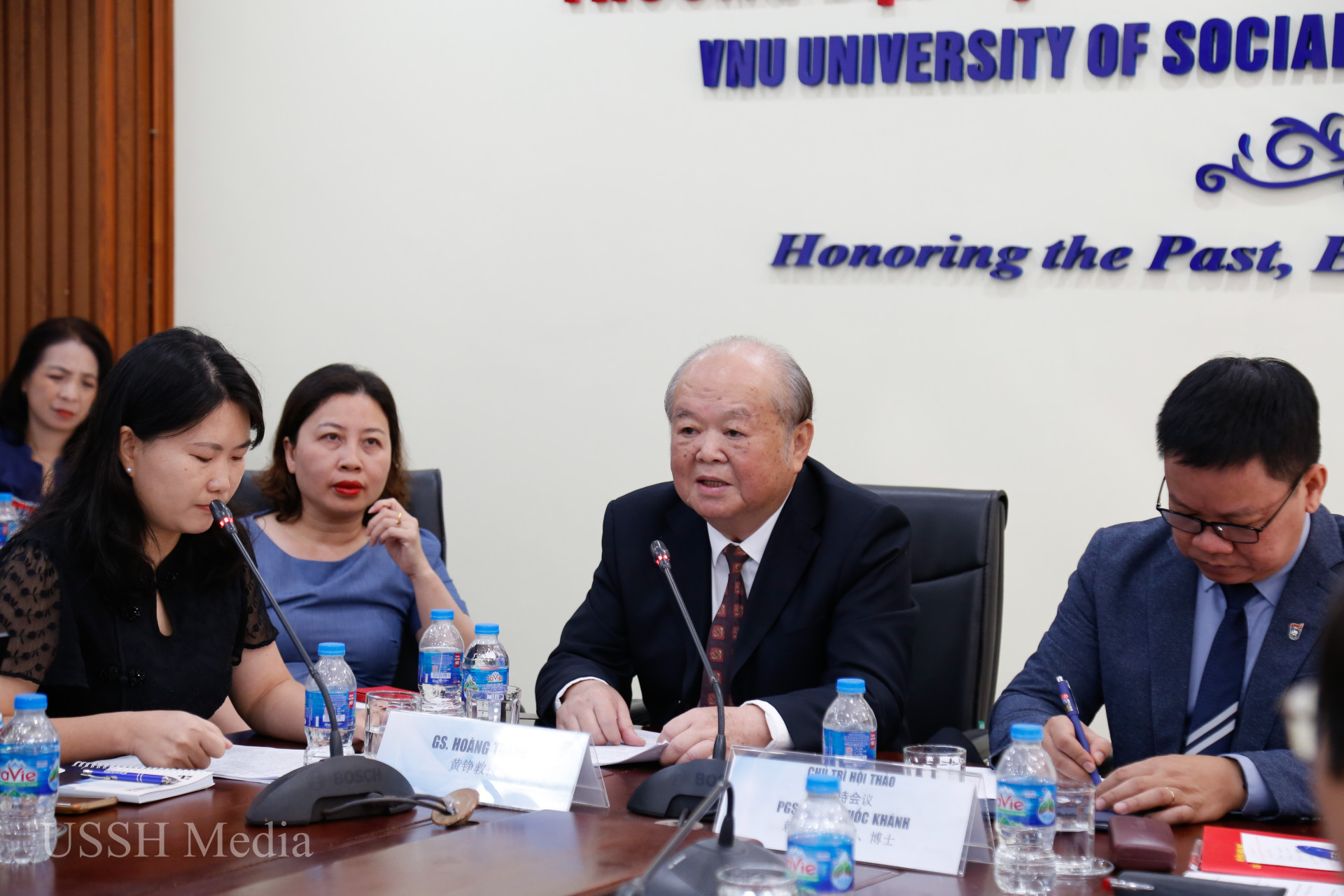
Professor Huang Zheng - Former Vice President of the Guangxi Academy of Social Sciences, China (seated in the middle)
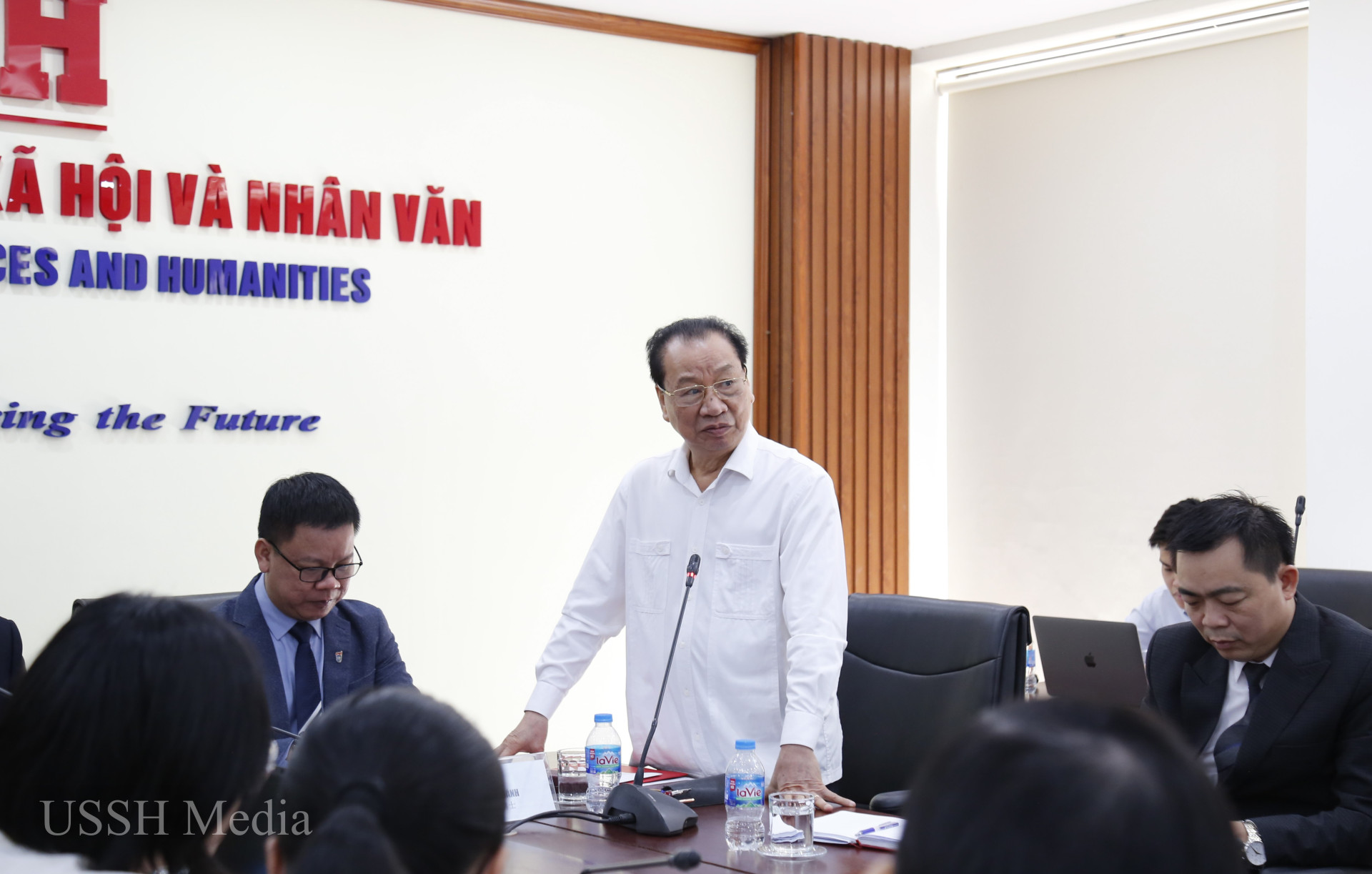
Sharing research findings and assessments of President Ho Chi Minh's revolutionary activities in China, Professor Hoang Tranh affirmed: "I believe that during Ho Chi Minh's revolutionary activities in China, his achievements in areas such as theory, journalism, and literature enriched his intellectual treasury and established his historical position as a 'cultural figure'." Deeply moved by the remembrance and profound recognition of President Ho Chi Minh's contributions, Professor Hoang Tranh emphasized that Ho Chi Minh was a great revolutionary of the proletariat and a cultural figure. The United Nations Educational, Scientific and Cultural Organization (UNESCO), in its 1987 conference resolution, honored Ho Chi Minh as a "National Liberation Hero and Outstanding Cultural Figure."
Professor Phung Huu Phu - former Standing Vice Chairman of the Central Theoretical Council - delivered a speech at the conference.
Professor Phung Huu Phu shared his emotion when recalling the achievements in Ho Chi Minh's theoretical system. “President Ho Chi Minh's thought on peace is profound, especially in building peace on the foundation of equality and mutual respect.” Professor Phung Huu Phu affirmed: “Ho Chi Minh was a fighter for true and genuine peace.” The values of Ho Chi Minh's thought for a peaceful, friendly, and developed world are a great idea that has been valuable for nearly a century and will forever remain valuable to the Vietnamese people and to humanity.
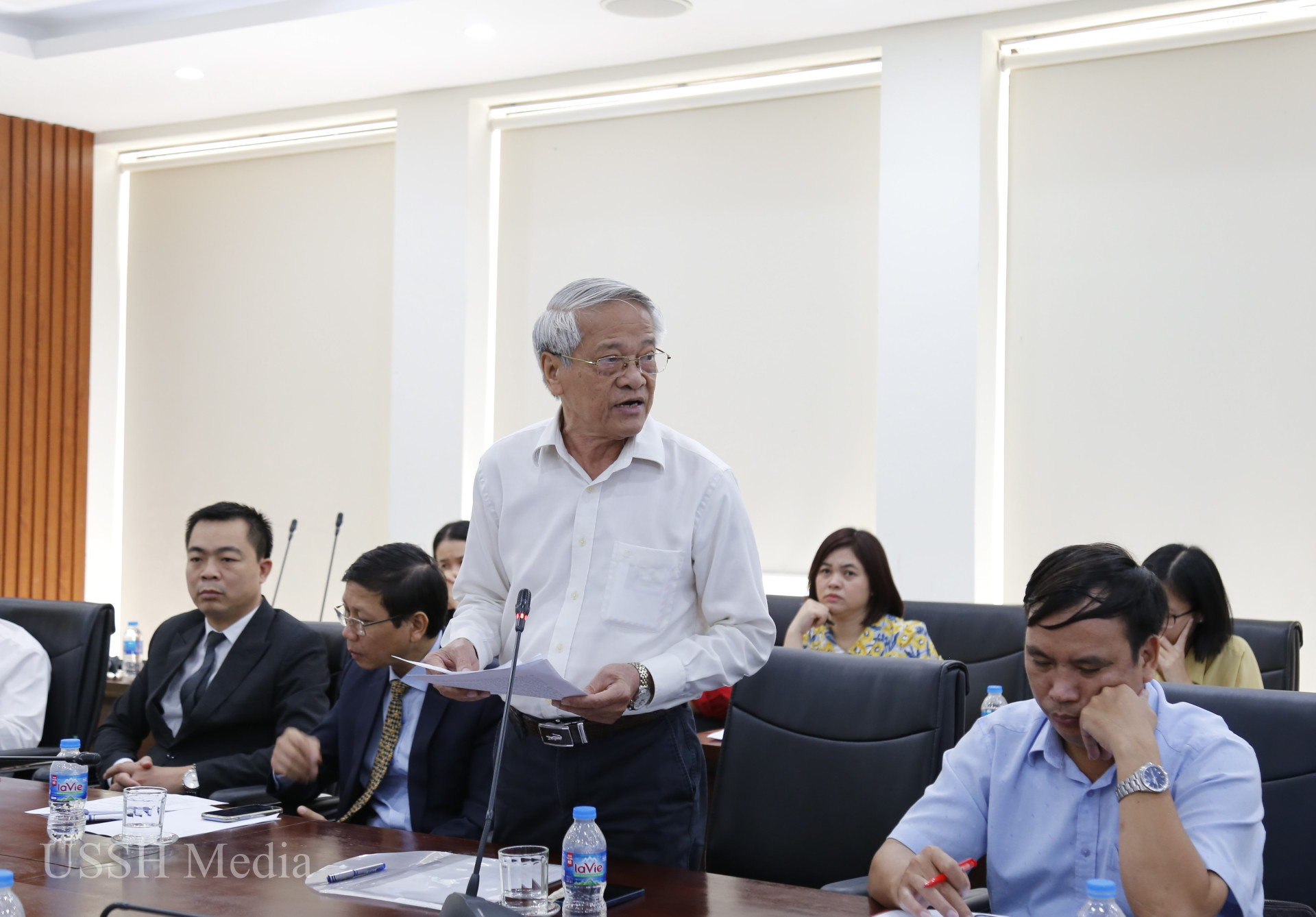
Assoc. Prof. Dr. Bui Dinh Phong - Ho Chi Minh National Academy of Politics
Associate Professor Dr. Bui Dinh Phong (Ho Chi Minh National Political Academy), in his presentation "Ho Chi Minh's Thought on Combining National Strength with the Strength of the Times," emphasized that, stemming from his national origins and his journey to find a way to save the country and its people, Ho Chi Minh profoundly understood the relationship between national strength and the strength of the times. According to him, it is necessary to highly promote patriotism, the spirit of solidarity, the indomitable will to fight, self-reliance, self-confidence, self-strength, national pride, and solidarity with the people of colonial countries, revolutionary and progressive forces worldwide to fight the common enemy for peace, national independence, democracy, and social progress. In this context, it is necessary to promote the spirit of self-reliance, understanding that helping others is helping oneself, securing international support and assistance, befriending all democratic countries, and expanding friendly relations and international cooperation. Associate Professor Dr. Bui Dinh Phong affirmed: "In today's turbulent world, Ho Chi Minh's thought on combining national strength with the strength of the times retains its full value and remains highly relevant."
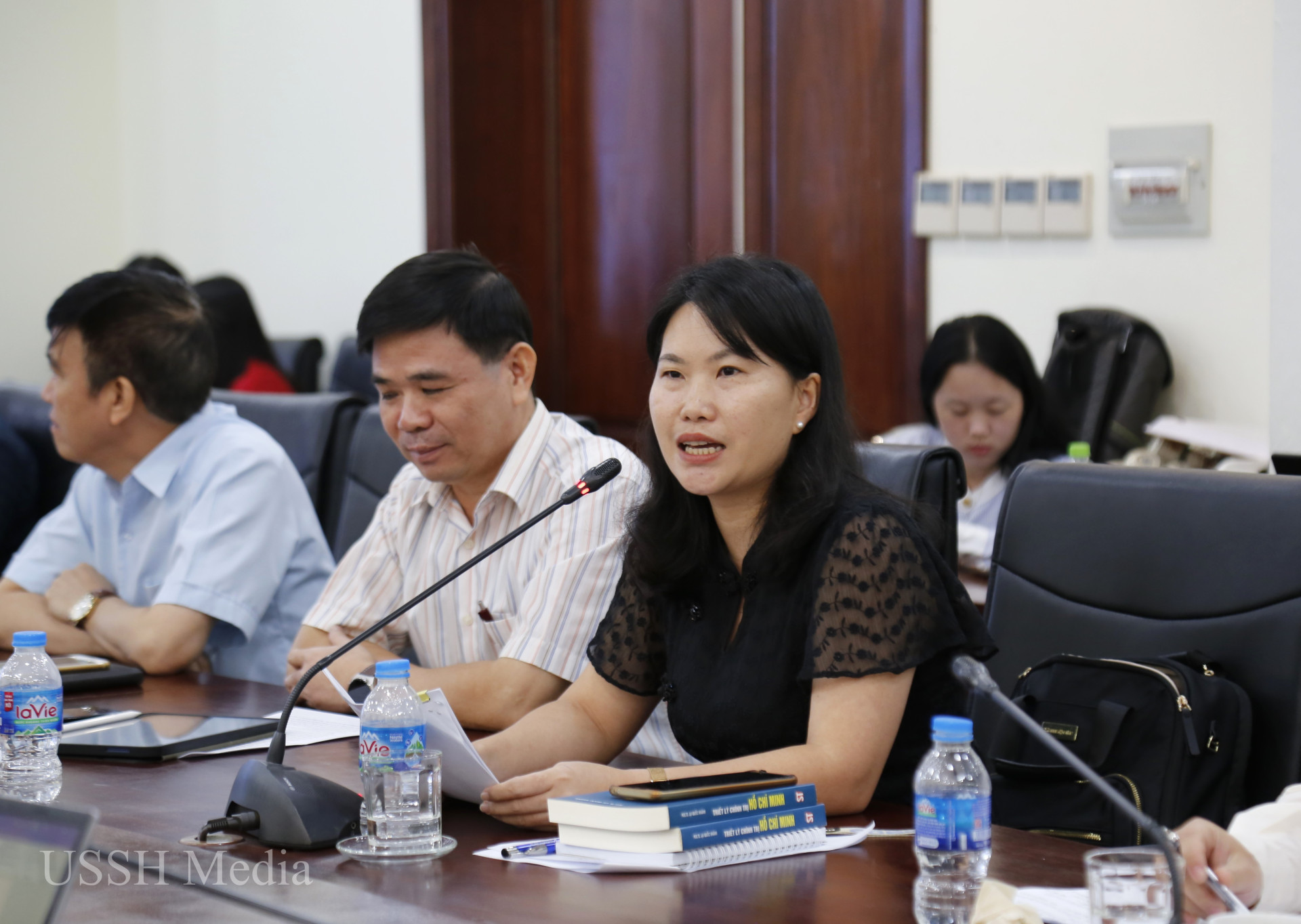
Dr. Vi Le Xuan (Researcher at the Vietnam Research Institute, Guangxi Academy of Social Sciences, China)
In her paper titled "Ho Chi Minh's Thought on International Solidarity and its Suggestions for Sino-Vietnamese Relations," Dr. Vi Le Xuan (Researcher at the Vietnam Research Institute under the Guangxi Academy of Social Sciences, China) assessed that Ho Chi Minh was an outstanding ideological guide and practical leader of the Vietnamese revolution. He creatively applied Marxism-Leninism to the practical realities of the Vietnamese revolution, based on the understanding that the Vietnamese revolution was a part of the world revolution, adhering to the principle of internationalism's solidarity among the world's proletariat, opposing the aggression and expansionism of imperialism, and promoting solidarity and friendship among fraternal parties and nations, as well as the international alliance of all proletariat and oppressed peoples worldwide. Ho Chi Minh steadfastly upheld internationalist ideology by speaking out in support of the national liberation causes of Asian, African, and Latin American countries, enriching and developing Marxism-Leninism-Ho Chi Minhism. Dr. Vi Le Xuan emphasized that Ho Chi Minh's idea of international solidarity and Xi Jinping's concept of a community of shared destiny are both innovative developments of Marxist-Leninist internationalism. The strategic significance of the Vietnamese and Chinese parties building a community of shared destiny, based on shared ideological foundations and values rooted in Marxism, as well as the localization of Marxist theory formed from the practical experiences of each nation, along with the continued and deepening of friendship and close cooperation between the two parties, inevitably elevates Marxist-Leninist internationalism in the new era to a new historical level.
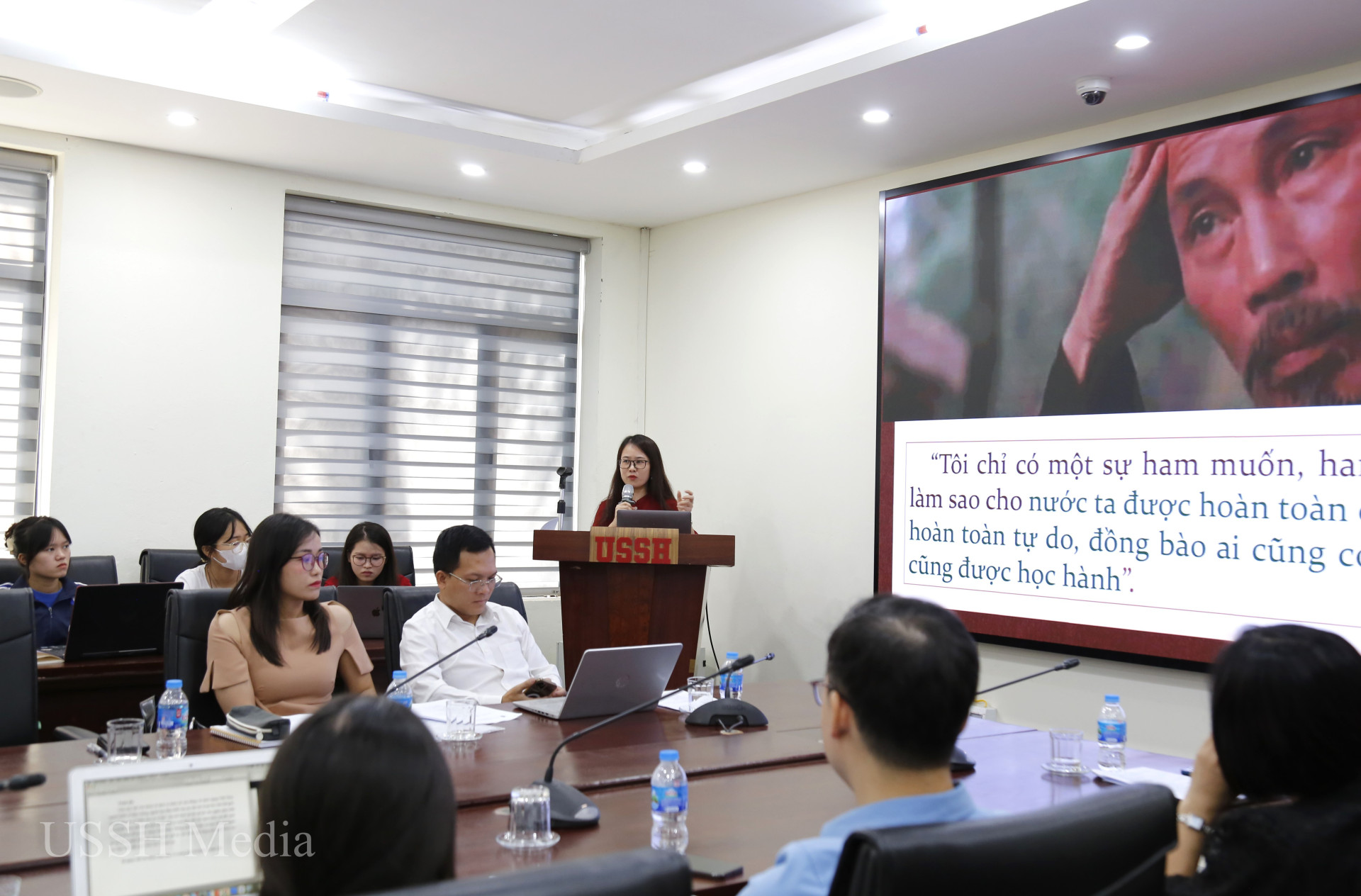
Dr. Pham Thi Thuy Van from Hanoi National University of Education 2 presented a paper on the topic "Ho Chi Minh's philosophy of liberation and the Buddhist philosophy of liberation - a comparative approach".
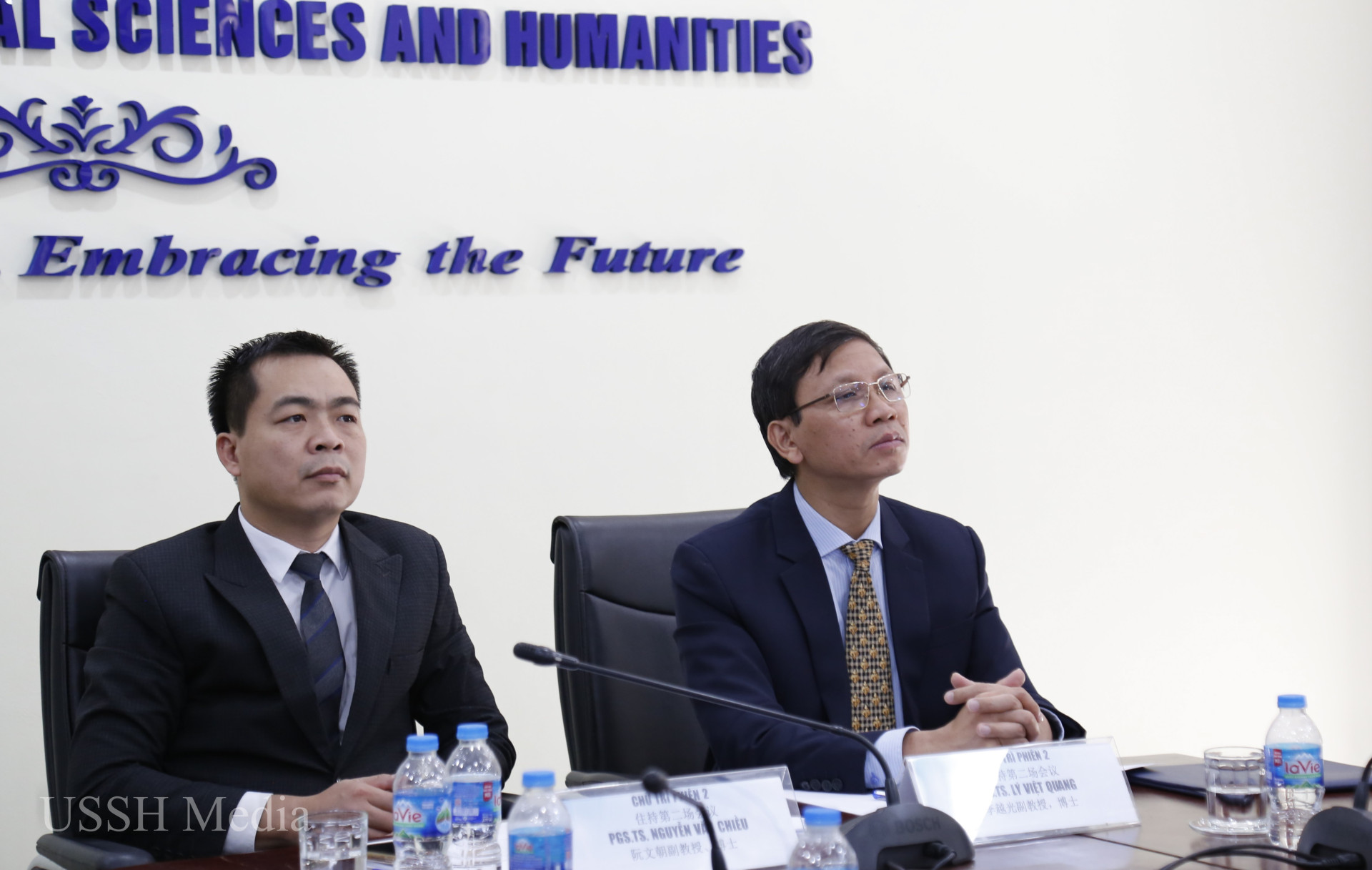
Associate Professor Dr. Nguyen Van Chieu and Associate Professor Dr. Ly Viet Quang chaired discussion session 2.
With the participation of many scholars from the Guangxi Academy of Social Sciences, China, the conference was not only a forum for academic exchange but also the starting point for many opportunities for future cooperation between the Faculty of Political Science, University of Social Sciences and Humanities, and the Guangxi Academy of Social Sciences, China. This is also a vivid testament to the tradition and strengthening of the solidarity, cooperation, and friendship between Vietnam and China that President Ho Chi Minh painstakingly built.