
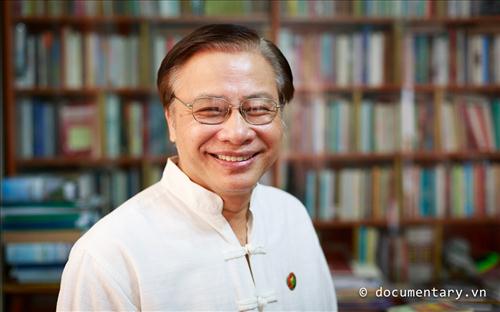
Unexpected milestones on the learning journey
Professor Tran Ngoc Them was born in 1952 in Hien Da commune, Cam Khe district, Phu Tho province. Born and raised in a farming family, he, like many rural children, frequently worked in the fields from a young age. Being a playful child, he was often punished and beaten by his father for his mischievous antics. However, these were beautiful and profound childhood memories that he still cherishes today. During his high school years, thanks to his intelligence, his academic achievements, while not outstanding, were still impressive. He showed a talent for art from a very young age and dreamed of attending a fine arts university. However, an unexpected turn of events led Tran Ngoc Them down a different path. In 1968, due to his excellent academic performance, he was selected by his school to study in the Soviet Union, thus ending his dream of entering art school. During his years of study in the distant, beautiful country of the Soviet Union, life held a series of new surprises for him.
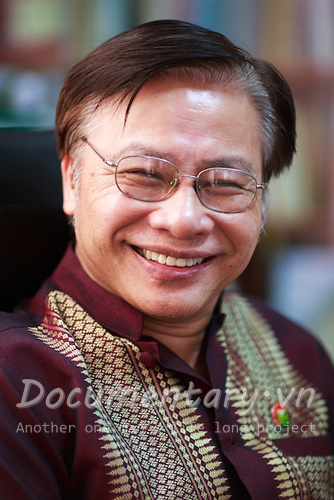
Professor, Doctor of Science Tran Ngoc Them/Photo: Thanh Long
Upon arriving in the Soviet Union, he was assigned by the Vietnamese Ministry of Higher Education to study Industrial Forestry Economics. He spent a year studying Russian as a preparatory subject and reviewing the 10th-grade curriculum in Russian at Minsk State University. Initially, learning Russian proved incredibly difficult for him. However, through his utmost effort, after completing the preparatory course, from knowing not a single word of Russian, he became one of the top students in his class. After his preparatory year, with excellent academic results in all social and natural sciences, the Vietnamese Embassy in the Soviet Union decided to transfer him to study Mathematical Linguistics at Leningrad State University. This was a new and very difficult field. At that time, no Vietnamese person had successfully completed this major, so he was understandably worried and repeatedly applied to change his major, but without success. Faced with this situation, he decided: "The fact that the higher authorities haven't agreed to the transfer means they still trust me. If I insist on transferring now and neglect my studies, I'll be guilty. I must throw myself into studying with all my determination and ability." With that determination, he rose to become the top student in a class mostly composed of Russian students. For five consecutive years, he was the only student in the class to consistently achieve a perfect 5/5 grade and had many accomplishments in scientific research. He completed two dissertations, one presented at the all-faculty student scientific conference, and the other nominated by the university for the university's scientific research competition.
His academic achievements were truly enviable for any student. From an average student, he became an excellent one and was selected to study abroad. From someone with absolutely no foreign language skills, in just one year he rose to become one of the top students in his class. From an extremely difficult field of study, one that no Vietnamese student had ever successfully pursued, he was determined to succeed and achieved results that even students from Russia and other countries would envy.
These job rotations are linked to significant scientific achievements.
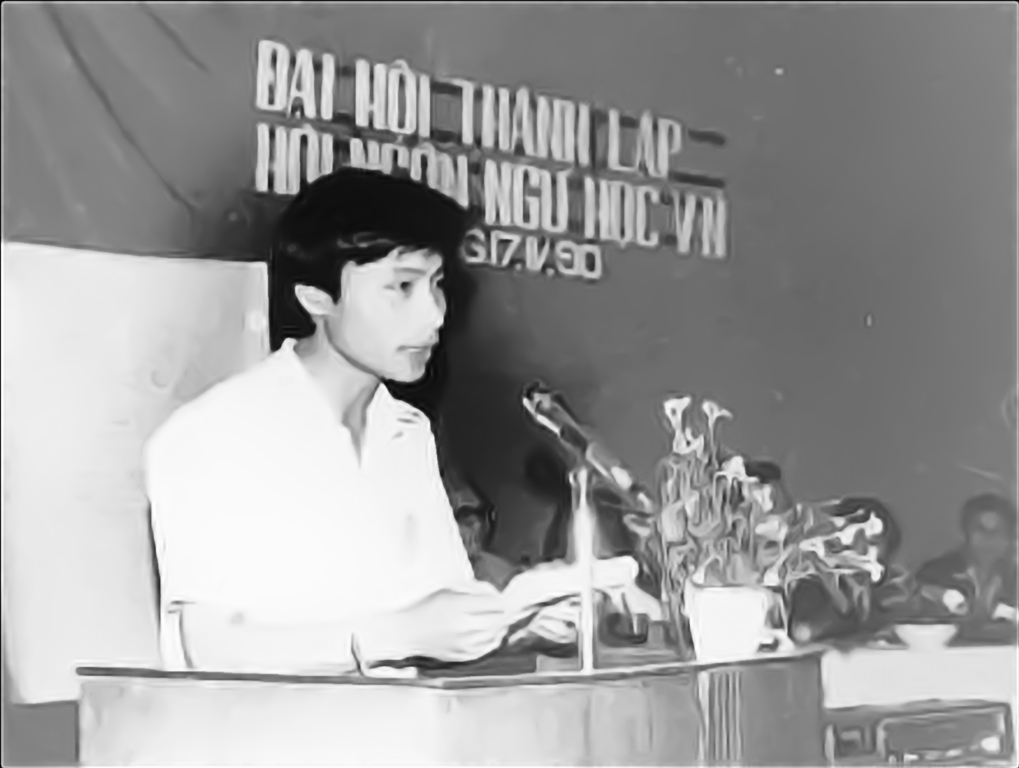
Teacher Tran Ngoc Them in his youth (archival photo)
Professor Tran Ngoc Them not only left unexpected marks on his academic journey, but he also underwent several career changes, and with each change, he made very valuable contributions.
Returning to Vietnam at the end of 1974, it was thought that with the outstanding achievements he had made in the field of Mathematical Linguistics, he would continue to excel and serve well in his work. However, due to the limited computer systems in Vietnam at that time, the field of mathematical linguistics did not have the necessary conditions to flourish. He then went to work at the Department of Linguistics, Faculty of Literature, Hanoi University, and completely switched to Linguistics - a field somewhat different from the Mathematical Linguistics he had studied previously.
During his time at Hanoi University, he successfully combined teaching with scientific research and social work. From 1976, while teaching and working with the Youth Union, he began publishing articles in specialized journals.LanguageAnd from then on, he regularly published one or two articles every year. In 1978, he researched and introduced a completely new discipline, previously unknown in Vietnam, into teaching: Text Grammar. By 1980, at the age of 28, he had published results in this field. The young teacher Tran Ngoc Them was invited to lecture at numerous universities from Thai Nguyen and Hanoi to Quy Nhon. Based on these research results, he completed his monograph.Systemlinkdocument VietnameseThe 350-page book was published by the Social Sciences Publishing House in 1985, when he was only 33 years old. The book was praised for both its rigorous systematic structure (achieved through his mathematical thinking) and its clear and engaging writing style (achieved through his artistic talent). His findings in this monograph were subsequently incorporated into university and postgraduate curricula, included in reformed Vietnamese textbooks for grades 9 and 10, and remain widely used by Vietnamese linguists to this day.
Based on these results, he expanded upon them and wrote a doctoral dissertation (equivalent to a doctorate today) titled...Organizationgrammar- semantics ofdocument(based on documents)VietnameseHe defended his dissertation at Leningrad State University in October 1987. Upon first reading it, his scientific advisor, Professor Dr. V.V. Bogdanov, remarked: “I have never read a text like this before. It is excellent. I read it in one sitting, completely captivated and enthralled.” The dissertation was deemed exceptionally outstanding by the evaluation committee, which unanimously voted to recommend that the All-Union Supreme Academic Board (BAK CCCP) allow a re-defense (without further revisions) for the doctoral degree (equivalent to the current Doctor of Science). After six months of review by the BAK CCCP and another six months of processing, the dissertation was completed.Organizationgrammar- semantics ofdocument(based on documents)Vietnamese)He was allowed to withdraw from the National Library to defend his dissertation again at Leningrad State University in November 1988 to receive a Doctor of Science degree. This is a very rare case, not only for foreigners but even for Russian citizens.
In addition to his representative worksVietnamese text linking system,He also wrote the bookQuestions and Answers about Text Grammar, is the organizer and main writer (5 out of 7 chapters) of the book.Text grammar and teaching essay writing; participated in writing the bookVietnamese Language Handbook for Secondary School Students; translate the bookText grammarby OI Mossalskaja, translated and organized the translation of the bookThe fundamental elements of general linguisticsby VB Kasevich. In the early 1990s, he joined the group of founders of the Vietnam Linguistics Association led by Professor Hoang Phe and was elected as the Association's first General Secretary.
My journey into Cultural Studies and my involvement in building the field.Orientalism
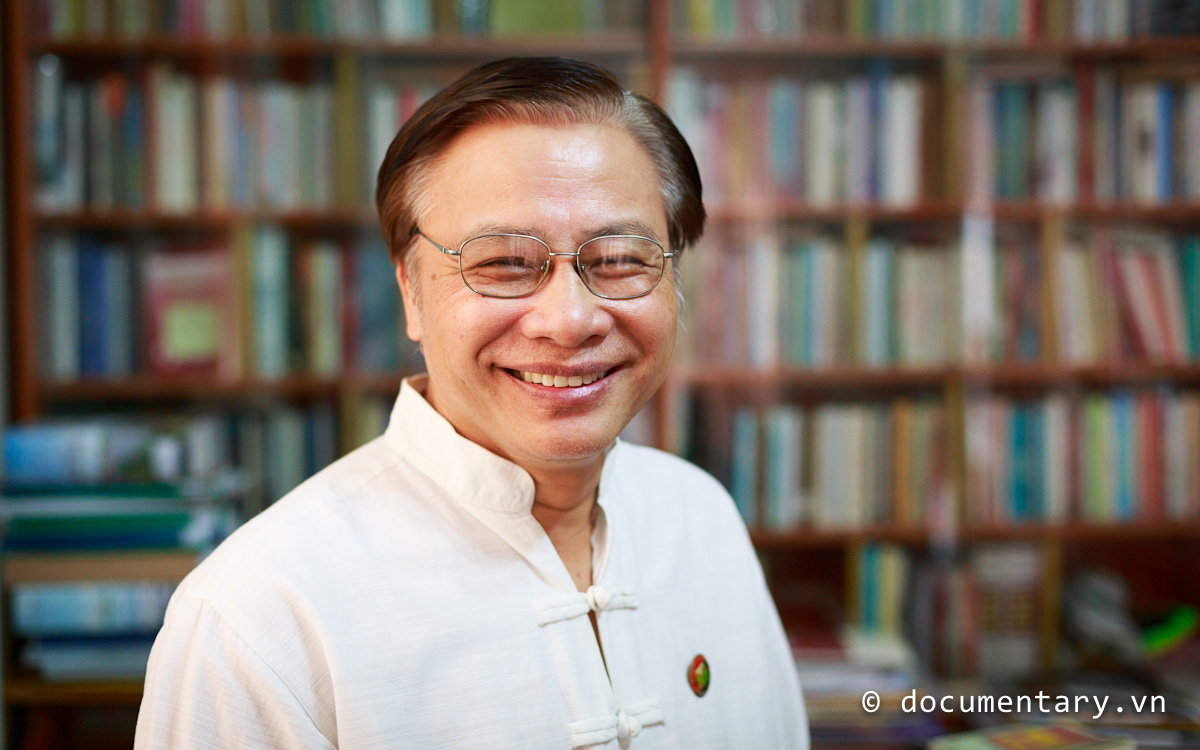
Professor Tran Ngoc Them has made significant contributions to science and education in Vietnam, especially in the fields of Linguistics and Cultural Studies. /Photo: Thanh Long
Having achieved great success in linguistics, it was thought he would continue to dedicate his life to this field, but by chance he was led to another area, cultural studies - a field that, before him, had not been clearly defined in Vietnam.
After successfully defending his Doctor of Science thesis in the Soviet Union, he returned to Vietnam at the end of 1988. At this time, the Ministry of Education and Training began implementing educational reforms at the university level. The first group of disciplines selected for pilot reform was foreign languages. An Interdisciplinary Foreign Language Council was established with members from the Russian, English, and Chinese language councils, as well as the linguistics and Vietnamese studies council. He was assigned to head the last council. Regardless of which foreign language one studies, one must have general knowledge of linguistics and Vietnamese studies, with Vietnamese culture as the most important foundation. This was the idea behind the development of the course.Cultural foundationchemistryVietnamThat's how it came into being. In 1990, he developed the outline. After it was approved, he began developing the content. The first experimental version of the curriculum...Cultural foundationchemistryVietnamThe book he compiled consists of two volumes (each approximately 80 pages) and was published internally by the Hanoi University of Foreign Languages in 1991.
In April 1992, while giving lectures in Ho Chi Minh City, he was invited by Professor Nguyen Ngoc Giao, Rector of the University of Ho Chi Minh City, to establish a program in Oriental Studies. Because this was a field he had been very interested in during his studies in the Soviet Union, he happily accepted immediately and moved his entire family there. In 1992, he founded and headed the Department of Asian Studies at the University of Ho Chi Minh City – marking the beginning of the formation of Oriental Studies in Vietnam; subsequently, he founded and headed the Faculty of Oriental Studies at the University of Foreign Languages and Information Technology in Ho Chi Minh City from 1995.
May 1995, course syllabusCultural foundationchemistryVietnamThe curriculum he developed for foreign language universities since 1990 has been approved as a common subject for all general university courses; at the same time, the bookCultural foundationchemistryVietnamHis 500-page book was also published by Ho Chi Minh City University in October of the same year. The publication of this book became a significant event and received dozens of reviews and critiques both domestically and internationally; a separate conference on the book was held in Ho Chi Minh City. In 1996, based on the book...Cultural foundationchemistryVietnamInitially, he developed it into two textbooks.Cultural foundationchemistryVietnamFor students (300 pages) and monographsRediscovering Vietnamese cultural identity(670 pages). Both of these books have been reprinted many times, in which"Rediscovering Vietnamese cultural identity"With financial support from the European Union (EU), the World Publishing House organized the translation into French, and it has been reprinted three times to date.
It doesn't stop at just teaching.Vietnamese cultural foundationsAs a subject of study, in 1999 he participated in establishing a graduate program in Cultural Studies. Just as the project was approved, he was invited to teach at the Korea International University in Seoul for two years, 2000-2001. In 2002, he returned to Vietnam and established the Department of Cultural Studies under the University, and was also appointed Head of the Faculty of Oriental Studies. In 2003, he decided to propose that the University transfer the Head of the Faculty of Oriental Studies to someone else to focus on developing the Cultural Studies program. Along with building the faculty, he also spearheaded the development of the program to expand the Cultural Studies training to the remaining two levels: bachelor's and doctoral degrees. After five years of effort, the entire three-level cultural studies training system (bachelor's, master's, and doctoral) was completed for the first time at the Vietnam National University - Ho Chi Minh City. In 2008, the Department of Cultural Studies, formerly part of the University, was transformed into the Faculty of Cultural Studies, and he became its first head.
In 2011, he resigned from his position as head of the department and moved to head the Center for Theoretical and Applied Cultural Studies at the University of Social Sciences and Humanities - Vietnam National University Ho Chi Minh City.In April 2013, he published two new books:Theoretical and Applied Issues in Cultural Studies(675 pages)Vietnamese culture in the Southwestern region of Vietnam(885 pages). Cuon beforea collection of research findingshis personalityin gnearly 20 yearsvRegarding the theory and application of cultural studies.four after by Mr. Chborder, is a product ofThe National University's key-level scientific research project that he chaired...With the participation of faculty members, these are the research achievements of a talented and dedicated scientist. It can be said that throughout his life, Tran Ngoc Them never missed an opportunity to dedicate himself to science. His life was like a film, in which he played many roles, and in each role, he was very successful and performed his best. Regarding this, he once shared:"My life has offered few choices, and I've constantly had to change careers. Because of this lack of choice, in order to survive, I've had to possess great willpower and determination to excel at things I initially disliked. This determination to do well led to the formation of passion, and that passion helped me to do even better.”Perhaps his less-than-ideal life brought him many surprises, and in turn, those surprises led him to very proud successes, to which he has made significant contributions to science and education in his country today, especially in the fields of Linguistics and Cultural Studies.
|
PROFESSOR, DOCTOR OF SCIENCE TRAN NGOC THEM
+ Certificate of Merit from the Ministry of Education and Training for outstanding scientific work during the period 1990-1995 for the following work.Calculatesystemof Vietnamese culture. + Certificate of Merit from the Director of Vietnam National University Ho Chi Minh City for scientific publication in 2013 for this work.Theoretical and Applied Issues in Cultural Studies. + Bronze Award for Best Book of 2014 from the Vietnam Publishers Association for the bookTheoretical and Applied Issues in Cultural Studies. |
Author:Pink

