

This page commemorates the 80th anniversary of the school's tradition and 30 years of development.University of Social Sciences and Humanities
1. Introduction
The modern world is constantly changing and developing, accompanied by a process of improving the quality of life, prompting people to seek and enhance forms of entertainment and exploration, considering them as activities to regenerate energy and stabilize their spirits. People have a mindset of relaxation and exoticism, enjoying learning and exploring new things. Tourism, as a comprehensive service industry, not only meets these desires but also helps people connect more closely with nature (through ecotourism), connect more deeply with culture (through cultural tourism), transforming this activity into a necessary need in socio-cultural life.
In Vietnam, the transformation of the economy from a centrally planned, bureaucratic system to a socialist-oriented market economy, accepting the coexistence of multiple economic sectors, has simultaneously opened a new door for tourism as the country embraces, actively participates in, and develops "open" approaches. Therefore, Tourism Science emerged as an academic method to prepare students – the future high-quality workforce – with a solid and confident mindset to face the new socio-economic environment, while providing them with a firm foundation of specialized knowledge in the field. Furthermore, Tourism Studies allows those with a strong interest in this field the opportunity to pursue further research, contributing to the standardization and internationalization of tourism theories to serve practical activities. Professor Tran Quoc Vuong recognized these values early on. And with his pioneering and innovative approach, he has been present and supportive since the early days of the Faculty of Tourism Studies – a highly creative applied science discipline within the largest social science training university in the country: the University of Social Sciences and Humanities, Vietnam National University, Hanoi.
2. From the perspective of…
The Western concept of tourism, from a semantic perspective, mainly revolves around two words:Tourism(Tourism) andComputer(The Traveler). Scholar William F. Theobald inGlobal Tourism(1998) suggests that the word Tour originates from Latin.deadewand/or GreektornadoesTo indicate a circle, a closed loop of motion around a center point or a system of axes. Suffix-ismIt is an action, process, characteristic form of behavior/conduct, or a quality-indicating element; suffix-istIt refers to the person performing those actions. When combining these linguistic elements, we get a simple understanding that...Tourism is the act of moving in a closed loop, starting from one point and ending the journey by returning to that point.The tourists were the ones who performed this action.
Contemporary views divide the understanding of Tourism into several directions. The French school of A. Houlot (1961) considers it fromTourIt originates from the Aramaic language, a family of Afro-Asiatic languages with a 3000-year history, including Hebrew. Accordingly, the wordTurIt refers to human exploration, discovery, and migration, first mentioned when the Bible describes Moses' journey to the ancient land of Canaan (modern-day West Asia). Another perspective suggests that the word...Tourof Anglo-Saxon originTornThe term, used since the 12th century, referred to a journey that guaranteed a return. Over time, it came to refer to expeditions aimed at learning about cultures and civilizations, accumulating knowledge, and using that knowledge to govern (M. Korstanje, 2007).
Without denying Western interpretations, Professor Tran Quoc Vuong has a somewhat more Eastern perspective on the concept of tourism. He argues that tourism is a Sino-Vietnamese word, of Chinese origin. According to the etymology of Chinese characters (Ly Lac Nghi and Jim Waters, 1997): The character for "tourism" is written as 遊, later adding the radical for "water" (氵) or "walking" (辶), implying movement like flowing water or walking. We can tentatively translate it as "playing," "going out," or "wandering." The character for "traveling" is written as 歷, which can be translated as "experience," "going through," or "experienced," like history (i.e., past events). Therefore, in his view, he summarizes tourism as generally speaking.Go out and have fun!.
Considered a leading figure in Vietnamese historiography, Professor Tran Quoc Vuong has a very "archaeological" perspective when considering the concept of tourism. He believes that humans learned to walk in prehistoric times when they were able to stand on two legs. Initially, they walked to find food, later to conduct business, to travel, or a combination of both. The upright posture, remarkably, allowed humans to do two things at once: walk – to move – and see – their field of vision broadened due to the increased height. This flexible mode of locomotion, coupled with the need to "see far and wide," led to the increasingly widespread settlement of humankind across the globe. Travel at that time aimed to explore new lands, not simply to satisfy curiosity.
Today, among humankind, there are "Differences" defined by the distinct adaptations and symbiotic relationships with various environments and social contexts. These differences drive people today to seek out places far removed from their familiar "countryside." Now, we travel to explore lifestyles in different environments, especially those different from our usual lives, as well as to resolve the dialectical relationship between two psychological traits: a preference for familiarity and a fondness for novelty.
With modern technology and institutions, travel has become increasingly longer and more extensive, travel times have been shortened, and there are consequently more things to see on Earth. Touring has become extremely popular, and therefore, tourism has become an integral part of modern life and lifestyle.

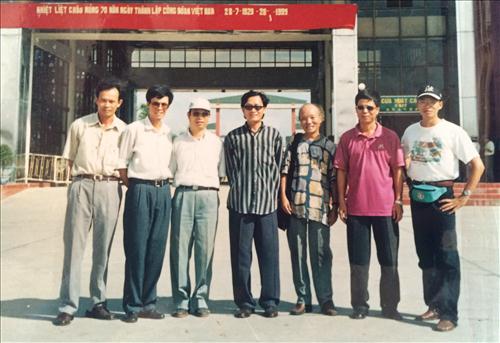
Professor Tran Quoc Vuong and faculty members from the Faculty of Tourism on a survey trip to China.
3. Come for training…
Back in the early 1990s, when the country was taking its first tentative steps towards a new economic orientation, according to Professor Tran Quoc Vuong, training in tourism at the undergraduate and postgraduate levels was a novel concept in Vietnam. When he mentioned this, he meant that the tourism industry at that time still smelled of fresh ink, the pages still retaining a hint of warmth from the printing press, and it was uncertain whether they would yellow over time, whether the glue on the covers would be sufficient or insufficient, or whether the binding would fray. This figurative way of speaking highlights the heavy responsibility of the Faculty of Tourism Studies at that time. Entrusted with the role of Head of Department and then Chairman of the first Training and Scientific Council of the Faculty, he envisioned establishing four departments: Travel and Hospitality, Tourism Economics, Ecotourism, and Cultural Tourism. During that period (1995), the Faculty of Tourism Studies was the only institution authorized by the Ministry of Education and Training to offer and award Bachelor of Science degrees in Tourism. After proving its capabilities, in which Professor Tran Quoc Vuong played a significant role, the Faculty was entrusted with the responsibility of training postgraduate students in Tourism, with the first cohort commencing in 2003.
Having grasped and understood the State's tourism orientation of developing eco-tourism and cultural tourism, he placed great emphasis on building the curriculum of the Faculty of Tourism Studies. According to him, it should be a comprehensive body of knowledge to prepare students before employment, providing them with firsthand tourism experience including how to maintain business relationships (cultural etiquette in tourism) and various other aspects of the industry, including transportation, accommodation, food, entertainment, and many other areas.
He placed particular emphasis on the socio-cultural aspects of the industry, persistently arguing that culture and tourism are two mutually reinforcing and inseparable elements. The strength of the University of Social Sciences and Humanities, where the Faculty of Tourism Studies exists and develops as a specialized training and research institution, lies in its cultural foundation. This was one of his key orientations in the Faculty's initial steps. Knowledge was "culturalized" with theories and practices on Vietnamese cuisine, interaction with nature and society, clothing culture, language culture, travel culture, customs, traditions, and festivals, helping students develop a sense of professional ethics and a healthy, comprehensive understanding of tourism. A tour guide, upon receiving their professional license, must be a passionate professional with a deep understanding of the history and culture of their nation and destination. They must be able to convey these values to tourists, helping foreign visitors connect with the melodies of Vietnam and enabling Vietnamese tourists to fully enjoy their experiences in foreign lands.
As a pioneer in applying interdisciplinary and cross-disciplinary approaches in social science research, he also believes that Tourism Science is no exception, given its connections to many other disciplines. This multidisciplinary nature will complement students' learning. For example, research on sustainable tourism development requires an understanding of biology, the environment, and social responsibility. He also argues that tourism students should consciously learn a second, or even a third, language, including Sino-Vietnamese (Hán Nôm) for tourism purposes, as most of Vietnam's tangible cultural heritage from the past included inscriptions and used this language. This reminder serves as a call to action, urging future generations to understand the importance and effort in learning foreign languages, while also resounding with the importance of preserving traditional values and applying that knowledge to modern tourism.
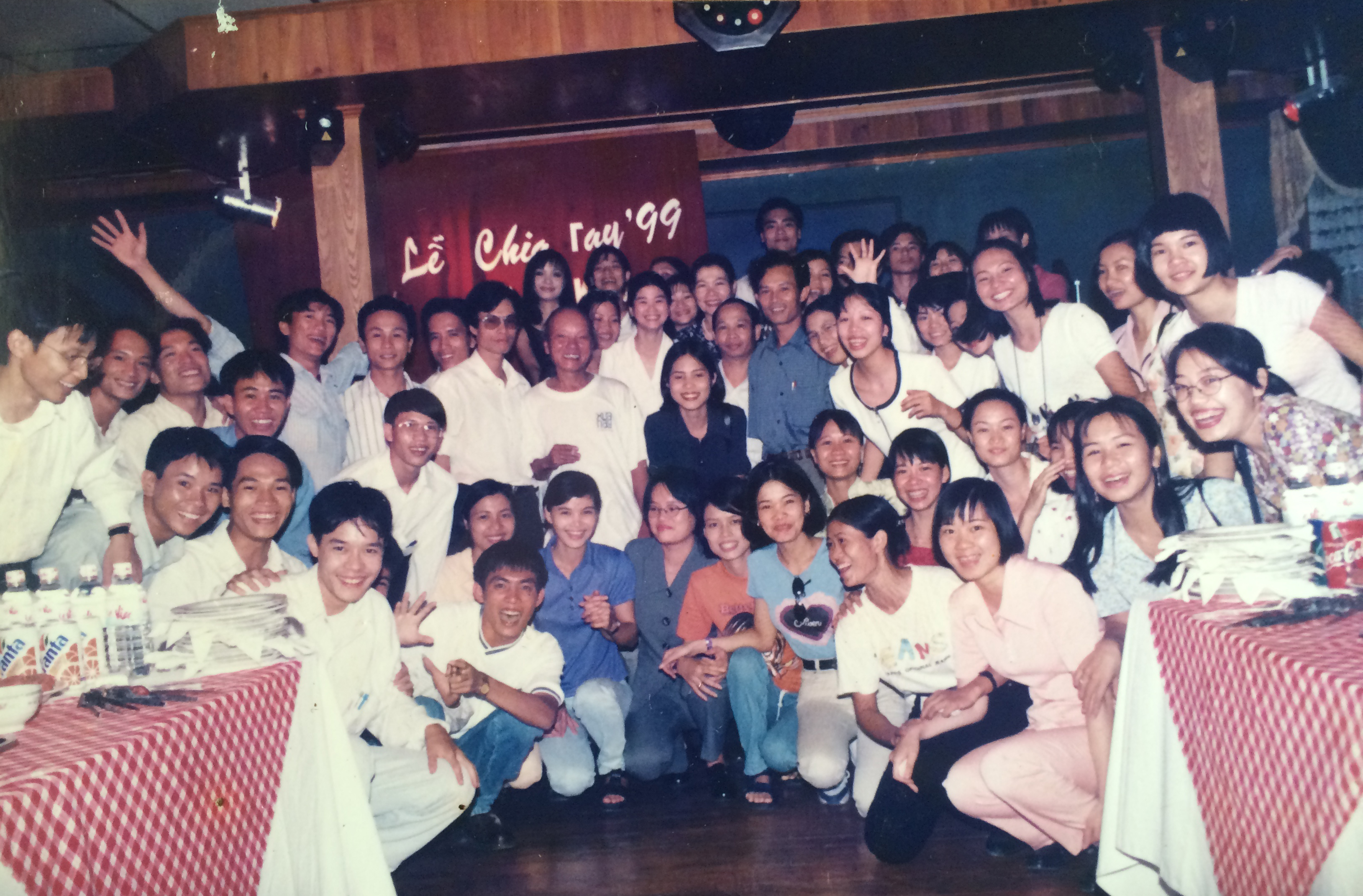
Professor Tran Quoc Vuong bids farewell to the graduating students of the 40th cohort of the Faculty of Tourism.
4. And teaching
That's the goal for students, but achieving those goals requires a significant role from the faculty, especially in the initial, somewhat "awkward" and "unfamiliar" phase when the first lecturers of the Faculty themselves were not specifically trained in Tourism Studies. The Faculty's lecturers in Tourism Studies strive tirelessly to build a foundation, update trends, and keep abreast of changes in tourism activities, incorporating this information into their lectures to prepare the most solid stepping stones for the enthusiastic "galangal" students of the Faculty to confidently and vigorously enter the professional tourism environment. As a professor with academic prestige not only domestically, he enthusiastically collaborated with the Faculty staff in exchanges, research, and efforts to establish relationships with universities in the region and in Europe that offered tourism programs. He believed that this would benefit the lecturers; but it would also pave the way for students to gain practical experience in an international environment through internships and exchange programs, and at the same time give them a ticket to a journey of conquering new heights of knowledge.
Furthermore, he noted that tourism lecturers must constantly learn and be proficient in world geography, Southeast Asian geography, and especially Vietnamese geography in relation to environmental knowledge and ecosystems. He believed that, in Vietnam specifically, the diverse natural environment and ecosystems have fostered a Vietnamese mindset that prefers living in harmony with nature. Many historical and cultural relics are often associated with scenic spots, so when tourists visit natural landscapes, they are also simultaneously visiting historical and cultural relics and heritage sites. This is something Professor Tran Quoc Vuong particularly emphasized when discussing the teaching of tourism culture to students. In this context, he clearly distinguished tourism culture from cultural tourism. Accordingly, tourism culture should be the way people interact with each other in relationships involving obligations and benefits from tourism activities (including tourists, local communities, tourism companies, and tourism management levels...). After traveling, all the qualities of "elegance" and "politeness," sharing the common denominator of "tranquility" (experience, understanding life, understanding people), belong to the responsibility of Vietnamese tourism professionals in general and the faculty of the Faculty of Tourism Studies in particular when training students. This is both knowledge and the conscience and ethics of those working in the profession, as they themselves understand the value of hospitality, the dynamic and flexible nature of the tourism industry, as well as the associated obligations and responsibilities.
Teaching tourism is about introducing the good, the beautiful, the unique, and the distinctive aspects of a destination, but according to him, instructors must also prepare their students with knowledge about the potentially negative impacts on the local environment. This will help tourists they guide, as well as local residents, understand how to preserve, protect, and further enhance the natural and cultural values bestowed upon them, proactively mitigating or eliminating negative activities that may affect the appearance or content of tourism resources. Only by doing this can the sustainability of the economy in general and tourism in particular be ensured.
To demonstrate these ideals, as the head of the fledgling Tourism training program, he personally taught classes, tirelessly imparting his accumulated knowledge of many years to the first cohorts of the Faculty – students who were incredibly fortunate to hear him lecture on cultural tourism in his unique style, drawing on his experiences from his travels across the country and his experiences in all corners of the world.
5. Conclusion
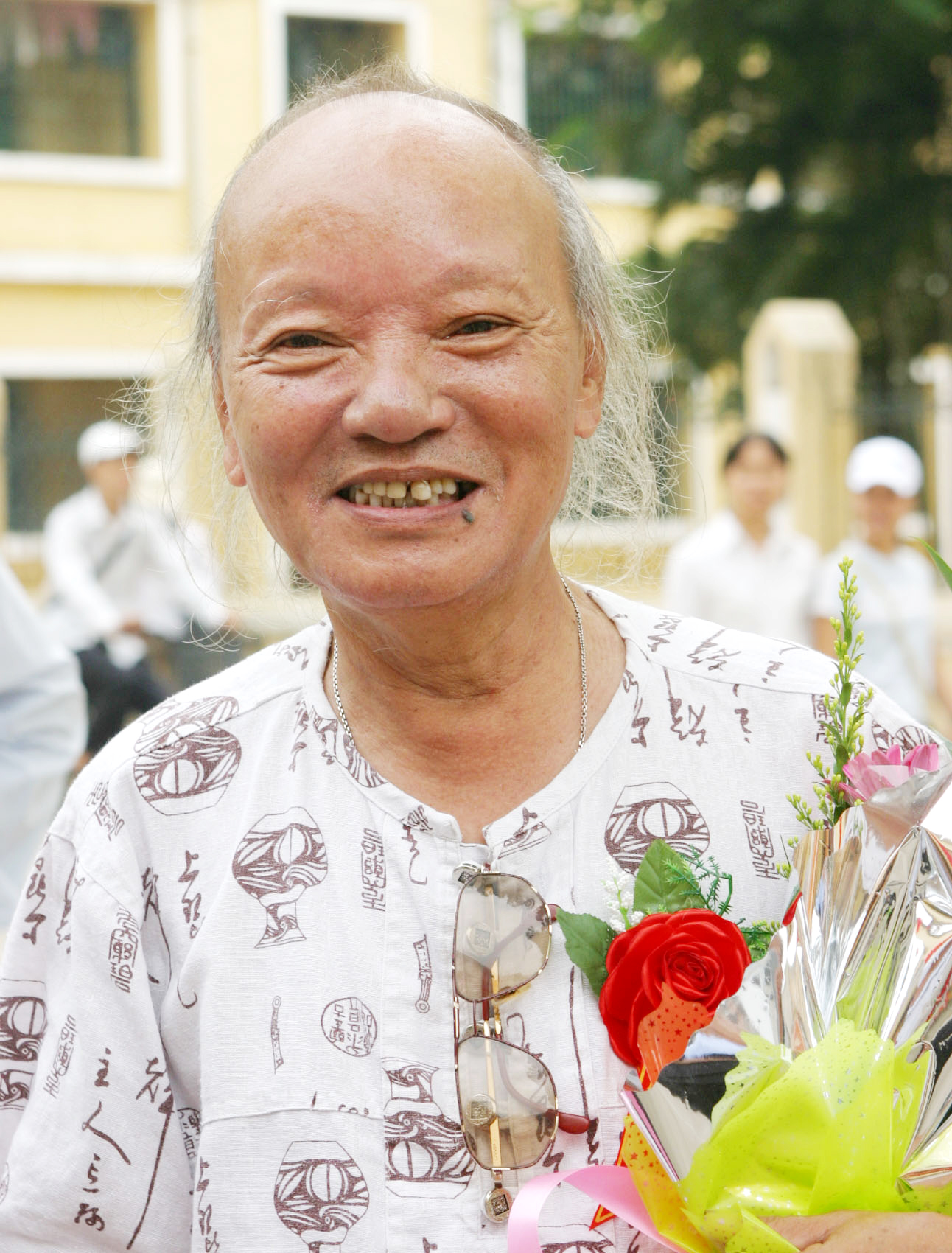
Professor Tran Quoc Vuong once spoke of himself in an autobiography, saying that he was born with a destiny ordained by heaven: "Mountain Head Fire." During the day, while traveling, seeing the flames and smoke rising from the mountains warmed the traveler's heart, knowing that a warm home lay far away. At night, the flickering fire on the mountaintop shone like a dazzling light, illuminating the hearts of those who were lost, allowing them to breathe a sigh of relief and fill them with hope. With his guiding qualities in science, he captivated his listeners with the light of his intellect through his speech, writing, expression, teaching, and pioneering of new disciplines, including tourism science.
A decade has passed since the eagle shed its wings and ceased to fly, but for generations of his colleagues and students in general, and those in the Tourism Studies department in particular, his image remains as steadfast as the Yggdrasil tree in Norse mythology connecting nine worlds in the universe. Cultural studies, ancient history, linguistics, art, archaeology, tourism... are like those worlds. Students, colleagues, close friends, social acquaintances, and relatives, with their myriad personalities and qualities, are also like those worlds. These seemingly separate things and individuals coexist around the support of a sturdy tree, relying on the shade of its wide, spreading canopy. Everyone sees in him a great anchor, an infinite, powerful, resolute, creative, yet compassionate, profound, and gentle connecting force.
Author:MSc. Phan Quang Anh, Assoc. Prof. Dr. Tran Thuy Anh