I became a lecturer in the Journalism Department at Hanoi University when my life was already in its twilight years. Mr. Ha Minh Duc, the head of the department, recounted a conversation he had with a university administrative officer about my request to join the faculty as follows:
So the school's organizational officer had no choice but to agree. From the day I transferred to the school (1992) until my retirement, it would probably be exactly ten years. When I joined the Journalism department, the K36 class was about to finish its first year. I quickly got acquainted with the students because among the 68 students in the class, quite a few were former students of Hanoi-Amsterdam High School, the same age as my son. Many of them had visited my house when they were high school students. The following academic year, the department appointed me as the class advisor for this class until they graduated (1995).
I became a teacher quite by chance, because from my childhood I never thought that in the future I would choose the profession of "teaching children" or "ferrying people across the river," although my grandfather, a disgraced scholar who, from the year of Giap Ngo (1894) to the year of Ky Dau (1909), had taken the imperial examinations six times and still failed, was my first and most beloved teacher. My grandfather taught me classical Chinese from a very young age, almost simultaneously with teaching the Vietnamese language at the Cong Ich, Chu Van An, and Tran Trong Hue primary schools... At school, I had to learn in French, I had to parrot "Our ancestors are Gooloa," and during the flag-raising ceremony every Monday morning I had to repeat the instructions of Marshal Petain (the President who sold France to Nazi Germany). When I returned home, I was taught in my mother tongue. The first textbook my grandfather used to teach me was the "Three-Character Classic," which contained wonderful admonitions from thousands of years ago: "An unpolished gem is not a useful object; a person without learning is ignorant of reason." "A child who doesn't learn will not know what to do when they grow up." "Silkworms spin silk, bees make honey; a person without learning is no better than an animal." My grandfather was very intelligent and was invited by the French to teach Annamese to their people as a foreign language, but he refused. The most ironic thing was that in the final exam, a French student, the chief examiner of the national language exam, failed his teacher because my grandfather had resolutely refused his request for help. Perhaps that's why none of my grandfather's children (a total of 9) followed this "unprofitable" profession, except for one uncle of mine who, after working as a doctor in a mountainous region, was invited to become a professor at Hanoi Medical University at the age of 26 (1932) due to his outstanding scientific work.
During my childhood, I witnessed unforgettable events: the execution of Hoang Van Thu in the fields of Hoang Mai village, near my school at the time (1944); the Japanese-French coup in Hanoi (March 9, 1945) and the terrible famine; the spirit of the August Revolution and Independence Day on September 2, 1945, in the capital; the boundless joy of our soldiers and people during the heroic victory at the Lo River in Ben Then, Vinh Yen (1947); the atmosphere of preparing for the general counter-offensive and the volunteer movement of students from Han Thuyen School, Bac Ninh (1949)... I became a young military medic participating in the Tran Hung Dao and Hoang Hoa Tham campaigns in Bac Ninh - Bac Giang (1950), and then was sent by the Military Medical Department to study at the Vietnam Young Cadets School in Cao Bang (1951). The training objective of this school was to prepare a next-generation army officer by sending students to a short course at the Army Academy after graduating from the Cadet School. Many of my friends studied at the Army Academy and then joined the ranks of soldiers participating in the Dien Bien Phu campaign (1954). Because I was younger than them, I studied in China for 3 years, then in the Soviet Union for 7 years, and only graduated from university in 1961 and returned to Vietnam. I was assigned to teach at the Gia Thuong Foreign Language Supplementary School in Gia Lam (the predecessor of Thanh Xuan Foreign Language University, now Hanoi University).Original text: "the predecessor of the University of Foreign Languages in Me Tri today").
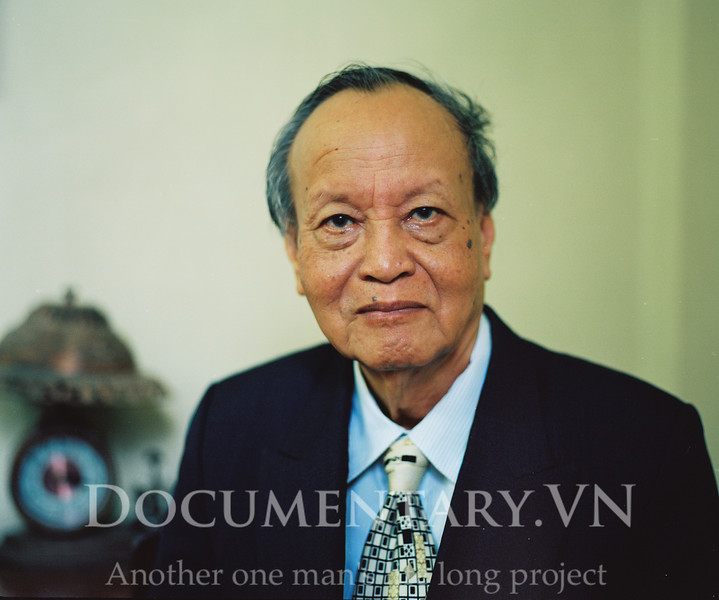
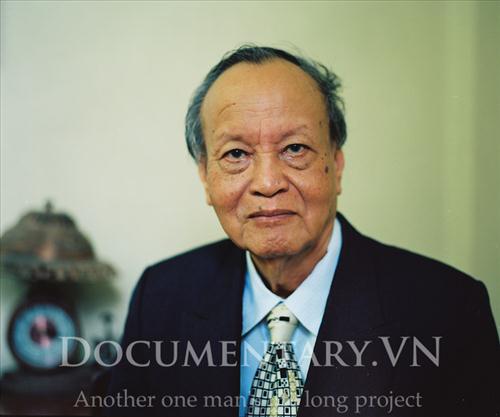
Assoc. Prof. Dr. Do Xuan Ha
Thus, I became a foreign language teacher. Thanks to the active support of the late People's Teacher, Professor Nguyen Luong Ngoc, Head of the Faculty of Literature, Hanoi Pedagogical University, I was transferred to teach literature for the next 20 years (1962-1982). I was very excited and proud to be among the teaching staff of the Faculty of Literature, alongside illustrious names I had long heard of: Nguyen Luong Ngoc, Le Tri Vien, Huynh Ly, Truong Chinh, Vu Dinh Lien… I was in the Foreign Literature group, headed by Mr. Nguyen Duc Nam. This was one of the strongest groups in the Faculty and had a great appeal to the students.
The teacher training students of those years were very talented. Many of the older students were even older than the younger students of my generation, such as Nguyen Hoanh Khung, Nguyen Duc Dong (also known as Tu Son, son of critic Hoai Thanh), Bui Van Ba (also known as Phuong Luu), Thanh The Thai Binh… From that class of teacher training students, many later became famous writers and poets such as Ma Van Khang, Nguyen Khoa Diem, To Nhuan Vy, Pham Tien Duat, Lam Quang Ngoc, Vuong Tri Nhan, To Hoang, Nghiem Van Da, Hoang Hung…
A few years ago, Mr. To Hoang – a writer, journalist, screenwriter, and film critic – came from Ho Chi Minh City to Hanoi and visited me. He said that he still keeps his graduation thesis in pedagogy, which I supervised, as a memento, even though more than 30 years have passed and he has studied at several "universities": in the B battlefield, in the Soviet Union, at a film studio, at a newspaper office… A few days ago, Mr. Trinh Binh An – a science manager – came to my house from Hai Phong. Although he is 60 years old, he still read me a poem he composed, his voice as young as it was more than 35 years ago, when he was a student working on his thesis under my supervision.
I came to the Journalism Department of Hanoi University not from the Literature Department of the Pedagogical University, but from the Vietnam Institute of Educational Sciences, where I worked after defending my doctoral thesis in literary theory at Moscow State University and being appointed by the then Minister of Education as the scientific secretary of the large institute and deputy director of the Institute of Educational Sciences. Mr. Ha Minh Duc was surprised when I expressed my intention to leave those positions and request a transfer to the Journalism Department as a regular lecturer. Due to problems in the Ministry's Organization and Personnel Department, I had to wait five months without receiving a decision from the Minister regarding my transfer. At that time, Mr. Duc had to climb to the fifth floor of my house in Thanh Xuan Bac and ask my wife: "Has Mr. Ha changed his mind about requesting a transfer to Hanoi University?"
My path to the Faculty of Journalism in the final stage of my teaching career was a fortuitous and fortunate one. I was born in the year of the Ox, a beautiful year. Some of my contemporaries are heads of state, ministers, deputy ministers, Central Committee members, or have received other "heavenly blessings." Unfortunately, I was born at 8 a.m., when the "ox" was sweating on the plow! But since I was little, my mother told me I had "benefactors." I don't know about other matters, but in this case, it's true: In the beginning of my teaching career, I received dedicated assistance from Professor Nguyen Luong Ngoc, and in the end, Professor Ha Minh Duc wholeheartedly campaigned with the relevant authorities to allow me to return to my desired workplace. Here, I would like to express my deepest gratitude to Professor Ha Minh Duc.
I received over 12 years of training in central Russia to become an expert in Russian literature, earning three degrees: a bachelor's, a doctorate, and a PhD. My name was included in the book "Who is who?" by the MAPRIAL (World Russian Studies) organization. I was elected a member of the Inspection Committee by the organization's General Assembly in 1990. At the organization's 7th Congress, I chaired a conference on literature and ethnosciences alongside three renowned scientists from the United States, Hungary, and Russia. I have authored numerous textbooks, monographs, articles, and scientific reports. I have taught at many universities in Vietnam and Cambodia, attended many international conferences, and in 1981, I was elected Associate Professor by the Faculty of Literature, Hanoi Pedagogical University (Decision of the Prime Minister - 1984). However, ironically, in 1985, I became an educational researcher, a specialist in aesthetic education for seven years, leading a Vietnamese delegation to visit and conduct research in a Nordic country, attending and presenting papers at international conferences on this field – a field very far removed from Russian literature and culture, which I had studied and researched relatively thoroughly.
That's why when Mr. Ha Minh Duc asked me to join the Faculty of Journalism as a lecturer, I was very happy. Besides my expertise in foreign literature, he also asked me to take charge of the History of Journalism department and directly teach the History of World Journalism. I've been quite good at writing since I was young; I remember when I was in junior high school, Professor Pham Tuyen once gave me a score of 19.1/4 (out of 20). I was the head of the university's wall newspaper for five years, and in 1957, I had an article published in the "University Journal." After that, I wrote many articles for newspapers and magazines on literature and education. My articles on education alone have been compiled into a book and published twice. However, I've never actually worked in journalism. I always tell my students that I'm just a teacher, not a journalist, even though I've written articles, and even once won an award from a major newspaper.
During my time working at Hanoi University, I received quite a lot from the university (Original: “Although I've only worked at Hanoi University for 8 years, the university has given me quite a lot."In 1996, I was elected Vice Chairman of the Council of Academic Ranks in Literature and Sino-Vietnamese Studies and was elected Professor with 93.3% of the votes; I was also twice elected as an Outstanding Teacher by the University Council with over 80% of the votes. But the greatest achievement was given to me by the Journalism Faculty: I became a true journalism teacher and have had over 1000 former students and pupils, now active journalists in all types of media throughout the country. Many of them still remember me and occasionally visit me.
|
ASSOCIATE PROFESSOR, DOCTOR OF SCIENCE DO XUAN HA
Head of the Department of Journalism History, Faculty of Journalism and Communication (1992-2002).
|
Author:Professor, People's Teacher Ha Minh Duc

