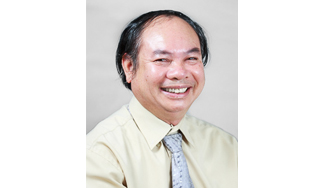
Students like Professor Vu Van Thi belonged to the "fiery era" of Hanoi University. In 1972, as a first-year student in the Faculty of Literature, Professor Thi temporarily set aside his academic dreams and enlisted in the army. For over four years, he served as an artillery soldier, then transferred to the position of radar operator in the missile corps, protecting the capital. Professors Pham Gia Lam and Nguyen Ba Thanh were also in the same unit. The story of these Literature students becoming missile soldiers always surprises and inspires us young people. As for Professor Thi, during that period, there was nothing more important than the belief that he had to do his best to fulfill his duty.
After the war ended in 1976, he returned to school to continue his studies and graduated. He was assigned to the Vietnamese Language Department to teach Vietnamese to foreigners. Professor Hoang Trong Phien, the Head of the Department at the time, enthusiastically opened classes to provide professional guidance, taught English, and helped young people quickly mature in a completely new environment. In 1981, less than a year after graduating and working at the Vietnamese Language Department, he was sent by the Ministry of Higher Education and Vocational Training to Cambodia to teach Vietnamese at the School of Languages (now the Royal University of Phnom Penh). This was the first time the Ministry had sent a delegation of officials to Cambodia to teach. Teaching abroad was strange, yet familiar. A lecturer – a former missile soldier – was going to teach in a country that had just gone through a period of brutality, poverty, and immense suffering. Our country was also facing difficulties. The faculty and staff were "equipped" with old suits taken from the warehouse where students studying abroad usually rent them, just to look "decent." Lecturers' salaries remained the same as in Vietnam, and they ate meals in the mess hall like soldiers. Each room was also provided with an AK rifle and a magazine for self-defense. Cambodian students were eager to learn, and the kind-hearted people loved their Vietnamese teachers. The feelings of those who had just experienced war, longing for a bright and better future, became a source of empathy. The teachers also tried to learn Cambodian language, customs, and traditions, integrating into life with the people of Cambodia. The students studied hard, and the teachers taught diligently. Teacher Vu Van Thi was one of the first to write a Vietnamese language textbook for Cambodia. He still remembers the student Chorani, whose entire family died in the genocide; he was rescued by Vietnamese soldiers. After only 5 months, he was determined to learn Vietnamese well and wrote many letters to his teacher. Later, more faculty members from the Department went to Cambodia to teach. And like Professor Thi, that was certainly a time that would never fade from the minds of each lecturer.
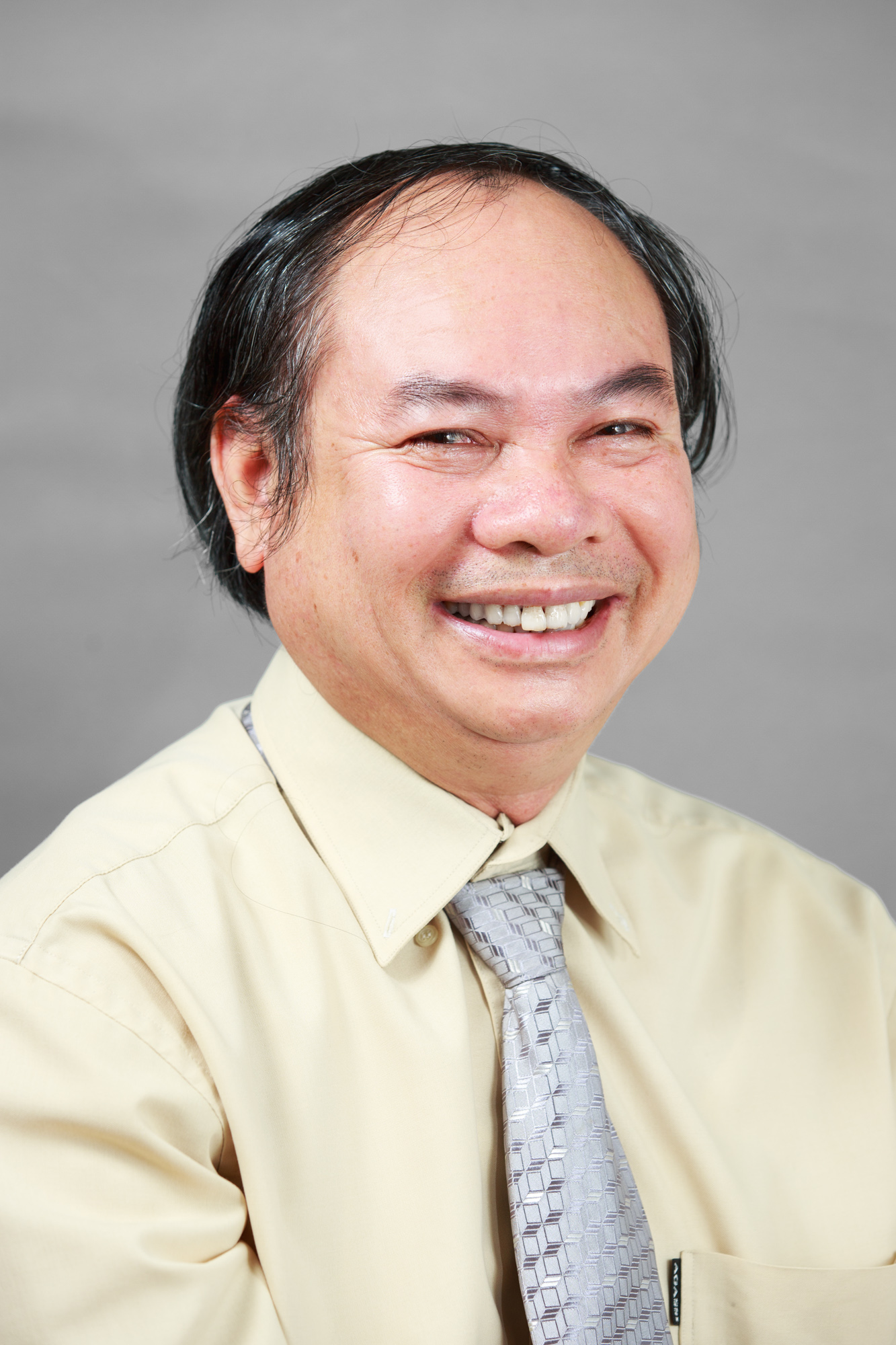
After returning to the department, Professor Thi diligently improved his professional skills and frequently traveled abroad to teach Vietnamese. In 1990, he was sent to participate in a 5-month English course in the United States. Immediately after this course, he was officially invited to teach Vietnamese for the summer course (SEASSI) at Cornell University in New York (USA), and the following year, he taught Vietnamese at the University of Washington, Seattle. He also taught Vietnamese at Putra University, Malaysia (1997) and Chungwoon University, South Korea (2005). He also attended several international conferences in the USA, South Korea, China, Thailand, the Philippines, Taiwan, etc. Through his interactions and teaching with many foreigners interested in learning Vietnamese, he noticed many interesting points. In the early 1990s, Americans and American students were very eager to learn Vietnamese and to learn about the country and people of Vietnam. There are American students who have researched extensively and become very proficient in Vietnamese; the more they learn, the more positive their feelings towards Vietnam grow. Later, the number of students from Japan and South Korea increased, initially for cultural exchange, but later for business purposes, working in companies investing in Vietnam. Although sent to study with the goal of working, students are frequently required to write reports and commentaries on issues related to Vietnamese culture, social life, and people. Therefore, their needs are not simply about learning the language, but also about quickly interacting with and learning about Vietnam and its people through lectures and teaching methods. These demands create the impetus for innovation and development within the Faculty and for each faculty member, acting as a bridge connecting different cultures.
In 2006, as Head of the Department of Vietnamese Language and Culture for Foreigners, he and the department focused on developing a new training program, the Vietnamese Studies Program, and simultaneously renamed the Department of Vietnamese Studies and Vietnamese Language. Advanced countries in the region and around the world, such as Germany, the United States, South Korea, and Japan, all have departments and research centers dedicated to Vietnamese studies. The Department of Vietnamese Studies and Vietnamese Language represents a continuation of over 45 years of tradition and development, while also setting new demands for in-depth investment, linking theory with practice. Learning Vietnamese is based on a solid foundation in Vietnamese studies and, through the Vietnamese language, aims to introduce Vietnam to international friends.
Regarding the training of Vietnamese Studies students, Professor Vu Van Thi also has many concerns. The Vietnamese Studies program started in 2010, with two cohorts having graduated over 100 students. The Faculty has also received the transfer of the Master's program in Vietnamese Studies from the Institute of Vietnamese Studies and Development, and began recruiting its first Master's program in Vietnamese Studies in 2015. The Vietnamese Studies training program for foreigners is also attracting more and more students. This is a broad field of study with a high degree of interdisciplinary nature. In teaching practice, Vietnamese students, and especially international students, often raise questions about sensitive issues in life. Teachers need to provide explanations that are both empathetic and reasonable. Professor Thi is particularly enthusiastic about the idea of teaching the subject of Contemporary Vietnamese Society with up-to-date and thorough explanations of current issues such as ethnic groups, maritime territories, cultural transformation, and development trends.
Professor Thi has compiled numerous textbooks and reference books, contributing not only to the Faculty's overall documentation system but also to other educational, media, and cultural organizations. He wrote the book "Basic Vietnamese Language" in 2006, which is one of the best Vietnamese language textbooks to date. Not only in Vietnam, but it is also used as a Vietnamese language textbook in several universities abroad, such as Putra University in Malaysia, Chungwoon University in South Korea, and Seoul National University of Foreign Studies in South Korea. He also participated in compiling Vietnamese language textbooks for Vietnamese people abroad for the Ministry of Education and Training. This is the "Homeland of Vietnam" series, consisting of nine volumes: three Vietnamese language textbooks, three exercise books, and three teacher's guides. He has participated in several training programs on teaching Vietnamese for Vietnamese language teachers in France, Thailand, and some domestic programs of the Ministry of Education and Training, and participated in two Vietnamese language teaching programs for the Voice of Vietnam Radio: "Speak Vietnamese" and "Vietnamese for Tourism".
The professor shared that Vietnamese language textbooks, like those for other languages, become outdated after a period of time and need to be constantly updated. The Faculty's curriculum and lectures, after expanding its specializations and training levels, are being continuously supplemented, refined, and upgraded. According to the professor, current methods of teaching Vietnamese to foreigners have undergone many positive changes, shifting from a purely academic approach to one that focuses more on developing listening and speaking skills. Previously, foreigners learning Vietnamese often said, "The storms and tempests are nothing compared to Vietnamese grammar." To teach effectively, lecturers need to prepare excellent curricula and lectures, and the courses must be truly effective. The professor shared that the Faculty has long implemented a method that allows foreign students to read Vietnamese fluently in just 9-12 lessons, and he hopes to widely disseminate this method to save learners time. Professor Thi also has the idea of developing a Vietnamese language proficiency assessment program that meets international standards, similar to TOEFL and IELTS for English, under the Faculty's management. In addition, establishing an applied linguistics major is essential for Vietnamese language training programs for foreigners, as well as for training Vietnamese language teachers, meeting the great needs of society.
The faculty and staff of the Department of Vietnamese Studies and Vietnamese Language are continuing to unite and strive to develop the Department into a larger and more prestigious institution. Professor Vu Van Thi hopes that the Department will establish a doctoral program in Vietnamese Studies. In the future, the Department will not only be a training center but also a center for testing and evaluating international Vietnamese language proficiency, a center for training teachers to teach Vietnamese internationally, and a strong research center for Vietnamese Studies. There is still much work to be done, and on this path of development, Associate Professor Vu Van Thi, along with his colleagues, continues to quietly contribute his efforts.
Author:Ms. Nguyen Thi Kim Hue, M.Sc., Ms. Le Thu Ha, M.Sc.

