
1. What is archaeology?
Someone seriously asked me: Is archaeology a humanities or a natural science?
Someone jokingly told me that archaeology is the field of "digging up graves"!
Some humorous people say: Archaeology is the science of studying trash cans!
Some people are also curious: Will archaeology uncover many ancient artifacts?
Surprisingly, some people wonder: Is archaeology the science of broken jars?
And, especially when there's an archaeological excavation site, the local people around are often curious and gather to observe the archaeologists at work, always asking: Have they found the gold yet?…
Indeed, to this day there are many folk interpretations of a field of historical science: archaeology. At the same time, within the field of archaeology, there are also many different definitions of this specific discipline.
The British archaeologist D. Clarke offered a classic definition:Archaeology is a science, and its theory and practice require the use of indirect methods to uncover unobservable human behaviors from incomplete documentary sources.
American archaeologist DB Dickson defined archaeology as:“A set of methods used to discover, describe, and study the past activities of humankind. Traditional archaeological methods include: field surveys, excavation techniques, accurate record-keeping, dating processes, and detailed laboratory analysis. Archaeology is one such method; it can help us use the specific forms of material remnants of prehistoric and historical human activity to test relevant theories and models of the past.”
British archaeologists C. Renfrew and P. Bahn defined it as:One branch of archaeology is the collection of ancient treasures, another is the meticulous research of scientists, and yet another pursues a creative, imaginative pursuit. It encompasses arduous excavations under the scorching sun of the Iraqi desert, observing Eskimos in the freezing snow of Alaska, diving to survey Spanish shipwrecks at the bottom of the Florida sea, and exploring the underground sewers of the Roman city of York—all extremely challenging tasks requiring interpretation. To understand these tasks and discover their significance in human history, archaeology is a form of outdoor physical labor combined with intellectual creation in libraries and laboratories. These are the immense and captivating aspects of archaeology.
The Britannica Encyclopedia defines it as: “Archaeology is the science that studies the material remains from the life and activities of humans in the past. These include human artifacts ranging from the earliest stone or bone tools to buried or discarded objects that survive to this day. Archaeological surveys are a primary source of knowledge about prehistoric, ancient, and lost cultures.
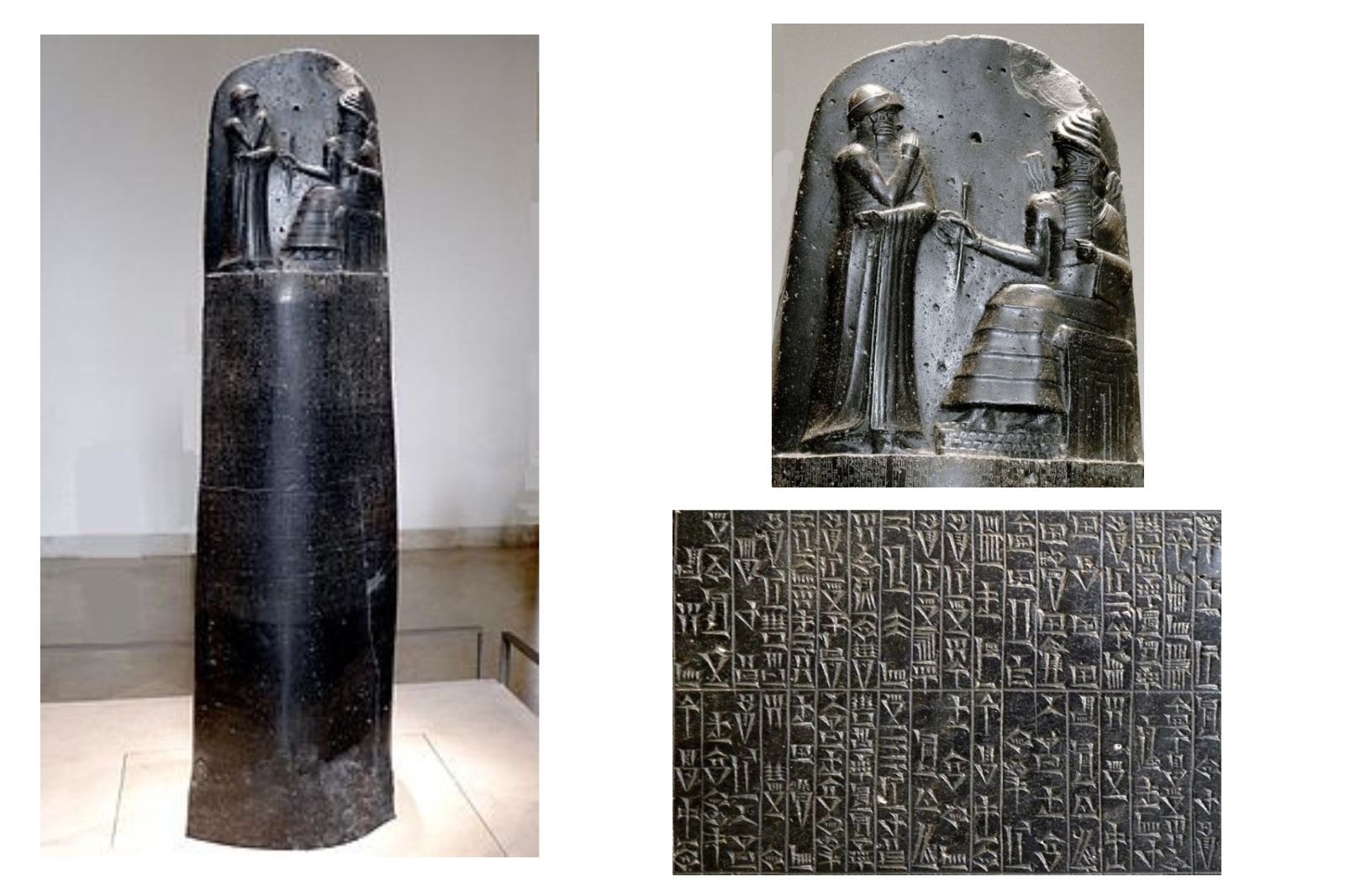
Codex of Hammurabi
Hummurabi, the sixth king of Babylon, had it carved around 1760 BC. The artifact is housed in the Louvre Museum in Paris, France.
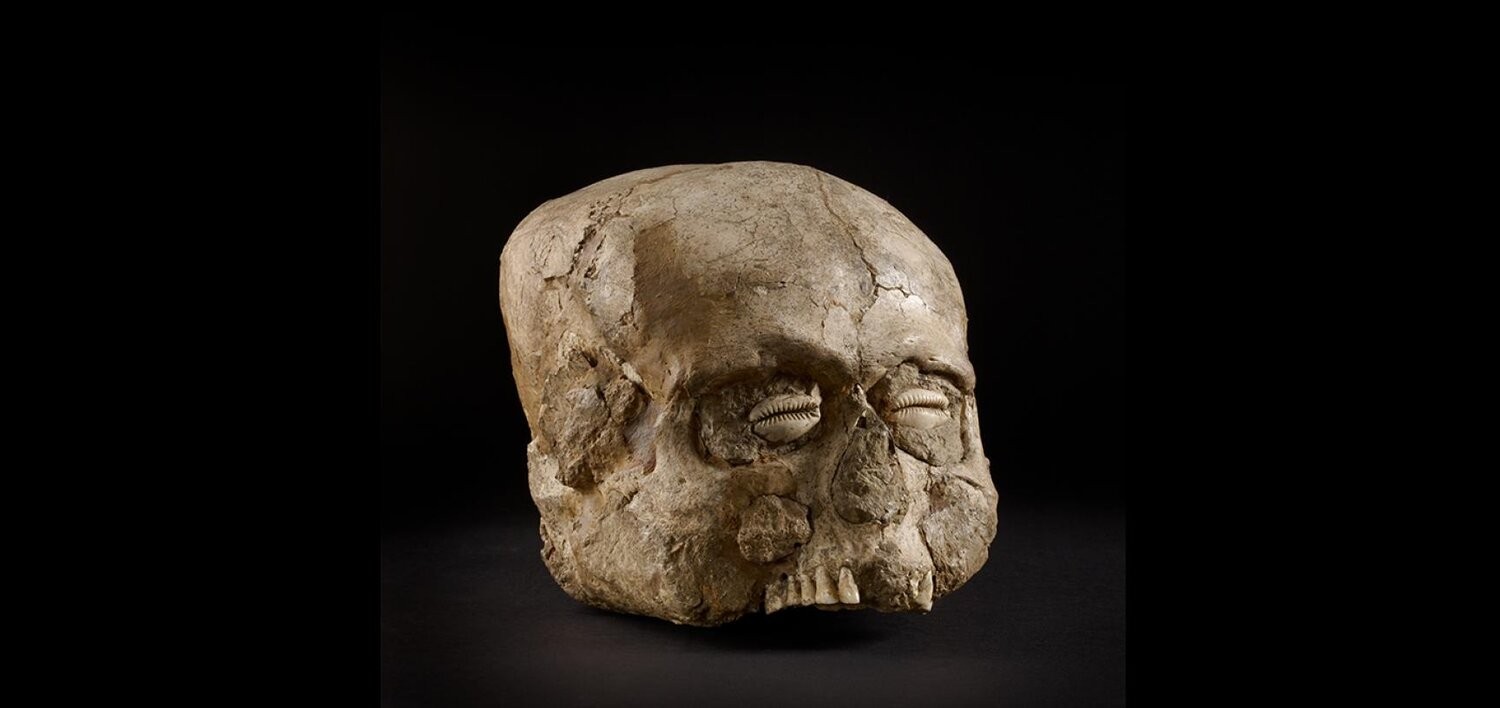
A human skull dating back approximately 9,000 years has been discovered in Jericho (Palestine).
Artifacts from the Ashmolean Museum in Oxford (England)
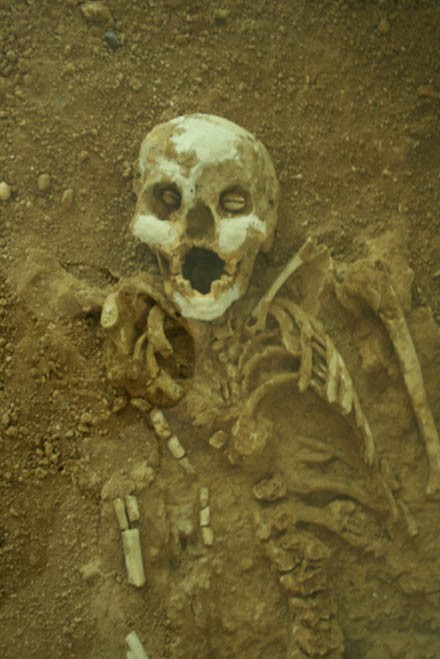
Human skulls dating back approximately 10,000 years have been discovered in Phia Vai cave (Tuyen Quang province).
(Photo: Nguyen Lan Cuong)
Thus, it can be understood that archaeology is a science that studies ancient times through relics and artifacts collected from archaeological excavations. Archaeology is based on fundamental principles: the principle of stratigraphic superposition (early on the bottom, late on the top), the principle of three eras (Stone Age, Bronze Age, Iron Age), the principle of biological and technological evolution (early backward, late advanced)... Archaeology is a science that combines the humanities (history, ethnology, art) and the natural sciences (geology, biology, physics, chemistry).
Globally, archaeology began in the early 15th century with an interest in collecting ancient artifacts, took shape in the mid-19th century with large-scale excavations, developed strongly in the first half of the 20th century with the theory of three eras and the stratigraphic method, and shifted to a new state of archaeology from the second half of the 20th century based on the application of many natural sciences.
In Vietnam, archaeology emerged in the late 19th century, introduced by French geologists and archaeologists, forming a colonial archaeology foundation in the early 20th century. It developed into modern archaeology from 1960 onwards, originating from the Faculty of History, Hanoi University (formerly the University of Social Sciences and Humanities in 1995), with the founding roles played by two prominent educators: Professor Ha Van Tan and Professor Tran Quoc Vuong.
Basically, archaeological activities in the world and in Vietnam today can be divided into two branches: field archaeology (investigation and excavation on land) and underwater archaeology (investigation and excavation in submerged environments).
2. What is archaeology?
Students of archaeology will be equipped with the following six basic blocks of knowledge:
- Overview of archaeology: introduction to archaeology, the origin of humankind, the archaeological development of the world and Vietnam through the three Stone, Bronze, and Iron Ages.
- Theories and methods of field archaeology and laboratory archaeology.
- Archaeological and cultural issues, regional and Vietnamese civilization.
- Contents on archaeology and conservation, community archaeology, and promoting the value of archaeological heritage in the context of heritage-based economic development.
- Application of modern technology and tools in archaeology.
- Archaeological Excavation Internship: 15 days (December annually) at archaeological sites throughout Northern Vietnam. Each internship group typically consists of 30-35 first- and fourth-year students, along with 1-2 supervising lecturers, several doctoral students, and local officials. Students will stay in local households in groups, organize their own communal kitchens, conduct excavations, communicate about the archaeological excavation activities to local people, and learn about the lives of people in different regions. This activity is considered one of the most effective and engaging activities of the University of Social Sciences and Humanities. Students have the opportunity to personally uncover the "history of the land" to reconstruct the history of each region through archaeological sites and artifacts.
In addition, there are many learning and practical activities at museums, historical sites, archaeological excavation sites, and archaeological heritage conservation and promotion sites…
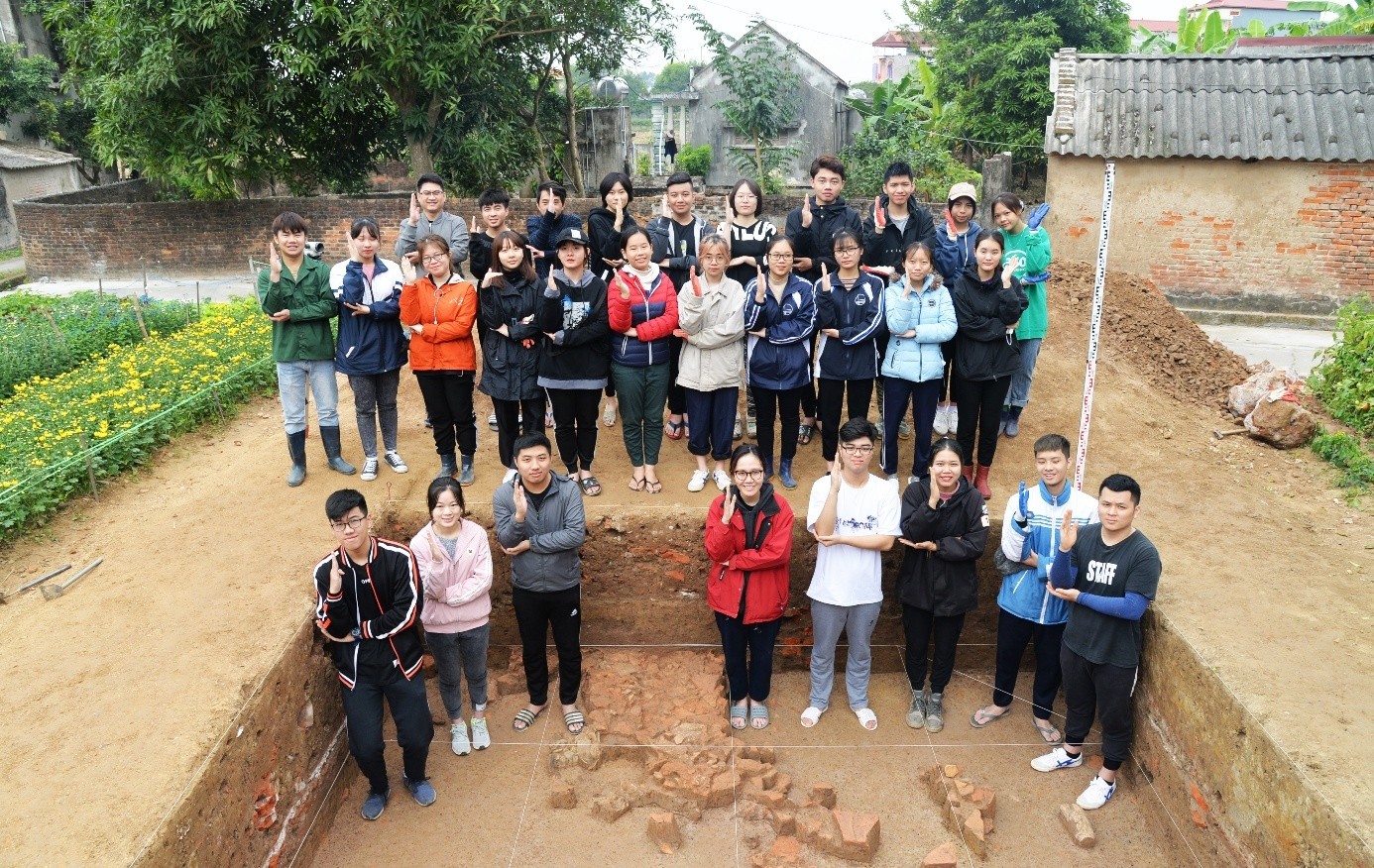
First-year history students undertake archaeological excavation internship at Khuc Thua Du Temple (Hai Duong) in 2020.
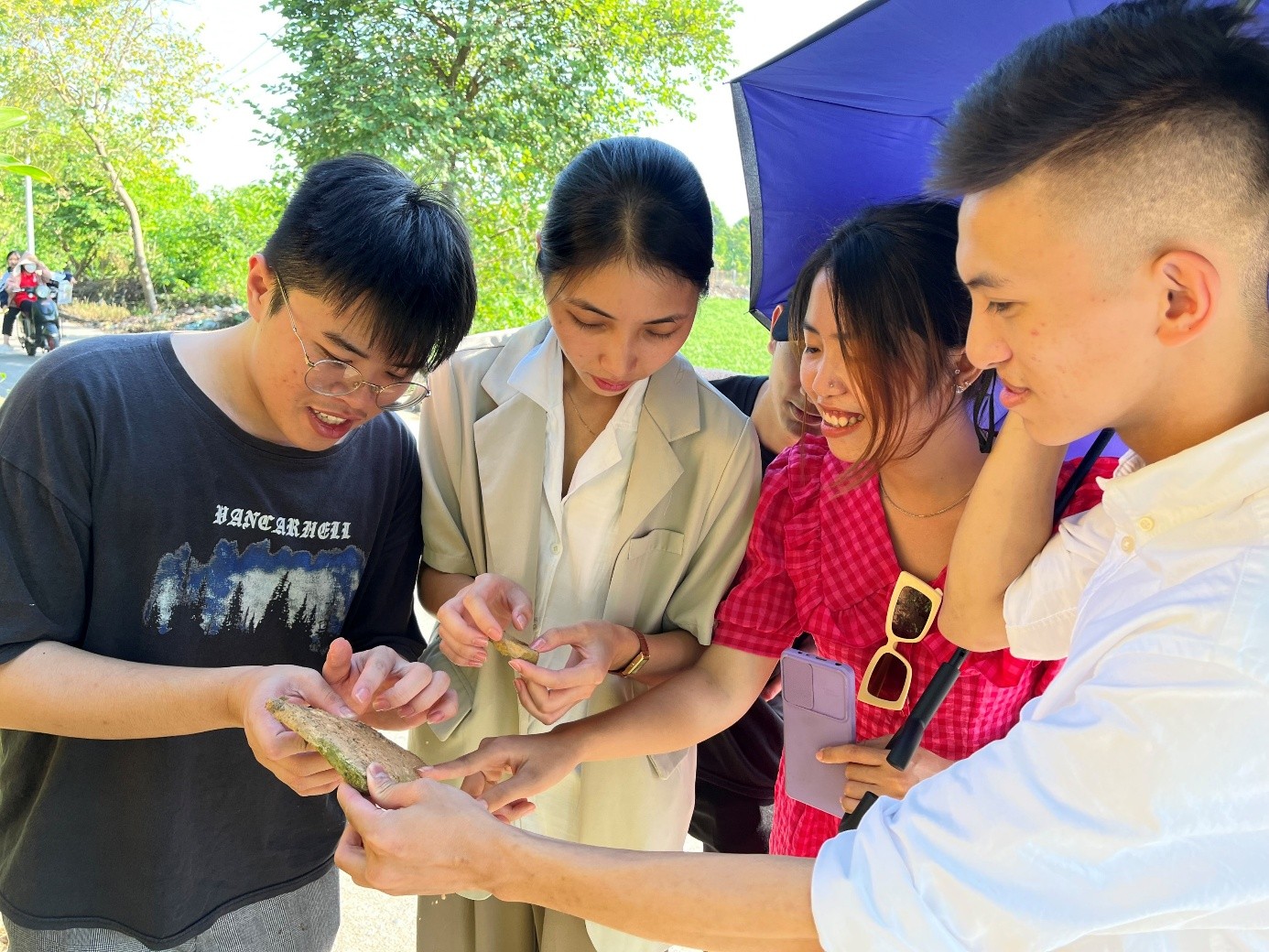
Fourth-year archaeology students participate in a field trip to Co Loa Citadel (Hanoi) in 2022.
3. What can you do with a degree in archaeology?
Over the past 65 years, archaeological work throughout the country, including the Archaeology specialization within the Faculty of History (from 2026 onwards, the Faculty of History and Culture), has addressed many national issues such as:
1. Affirming historical periods from before the advent of writing, such as the recent eras of the Hung Kings and An Duong Vuong; or even further back, the Stone Age dating back nearly a million years.
2. Affirming the sovereignty over the exploration and development of the nation's land and sea areas through archaeological research programs in the Central Highlands, the Southwest region, the Truong Sa archipelago, and marine and island archaeology...
3. Contributing to the implementation of major socio-economic projects in the Central Highlands, Northwest, and North Central regions, such as the Yaly, Son La, Lai Chau, Dien Bien, and Trung Son hydroelectric power plants, the Quang Ninh thermal power plant, the Dung Quat export processing zone, the National Convention Center, and the new Ba Dinh Hall.
4. Develop dossiers for World Cultural Heritage sites in various locations such as the Imperial City of Hue, Hoi An Ancient Town, My Son Sanctuary, Thang Long Imperial Citadel, Ho Dynasty Citadel, Trang An, Yen Tu - Vinh Nghiem - Con Son, Kiet Bac…
5. Identifying, quantifying the value, and proposing effective management, preservation, and exploitation plans for underground and above-ground cultural heritage sites in various localities nationwide, directly contributing to the development of the heritage economy in the current context.
Based on the historical development of archaeology in Vietnam over the past half-century, the following job positions can be broadly summarized for graduates:
a) Research and teaching in research and training institutions specializing in archaeology, history, cultural heritage, museum conservation, etc., such as archaeological institutes, archaeological centers, universities, and high schools.
b) Heritage management at state management agencies, public and private institutions responsible for managing historical sites, scenic spots, and tourism... such as cultural departments, world cultural heritage centers, management boards of historical sites and scenic spots, museums (public and private), traditional rooms, tourism centers...
c) Providing historical and cultural consulting and creative services to domestic and international organizations, especially corporations and companies that utilize knowledge of archaeology, history, culture, heritage, cultural industries, and the creative economy in the process of creating products and services for society.
References:
D. Clarke: “Archaeology: the Loss of Innocence”, Antiquity, 1973 (47), p. 17.
D. Bruce Dickson, David L. Carlson: Ancient Preludes, US, Eddie Bowers Publishing, 2000, p. 4.
C. Renfrew, P. Bahn: Archeology: Theories, Methods and Practice, London, Thames & Hudson, 2000, p. 9.
The New Encyclopadia Britannica, 15th Edition, USA, Encyclopadia Britannica, Inc, 1995, p. 525
ADMISSION INFORMATION FOR HISTORY PROGRAM IN 2026:
Enrollment quota: 80 students
Admission code: QHX10
Industry code: 7229010
Admission combinations: D01, D09, D10, D11, D14, D15, C00
Admission methods: 301, 401, 100
Specializations: Archaeology; History of the Communist Party of Vietnam; Urban History; World History; Vietnamese History; Vietnamese Cultural History.
Author:Assoc. Prof. Dr. Dang Hong Son - Vice President and Deputy Secretary General of the Vietnam Archaeological Association
Newer news
Older news

