
In the increasingly diverse landscape of university education, alongside trendy and popular majors, interdisciplinary fundamental sciences still play a crucial role. Anthropology is a prime example; despite its long history, it remains largely misunderstood by many students due to the specifics of its name.
From field training and interdisciplinary skills to job opportunities at international organizations.
In an interview with a reporter from the Vietnam Education e-magazine, Dr. Nguyen Vu Hoang, Deputy Head of the Faculty of Anthropology and Religious Studies, University of Social Sciences and Humanities (Vietnam National University, Hanoi), stated: Anthropology is one of the important pillars of human knowledge, with a history of development spanning over a century in major academic traditions such as England, France, and the United States.
In Vietnam, this field of study has gradually affirmed its position over several decades, associated with contributions to the study of culture and ethnic groups. The current name "Anthropology" is considered a continuation and development of the traditional foundation of Ethnology, aiming to meet the increasingly complex changes of contemporary society.
According to Dr. Nguyen Vu Hoang, the Anthropology program at the university is designed to combine academic foundations with practical applications. First and foremost, students are equipped with a foundational knowledge system regarding culture,historyThe program explores various aspects, including religion and social structures, thereby forming a comprehensive perspective on human diversity. In addition, it focuses on in-depth, practical topics such as migration, climate change, ethnic livelihoods, and gender inequality.
In particular, students are trained in qualitative research skills such as observation, in-depth interviews, community immersion, and contextual analysis. This is considered a significant advantage for Anthropology graduates in the current context, where the ability to understand people and cultural factors is becoming increasingly important in fields such as human resources, marketing, communication, and social project management.
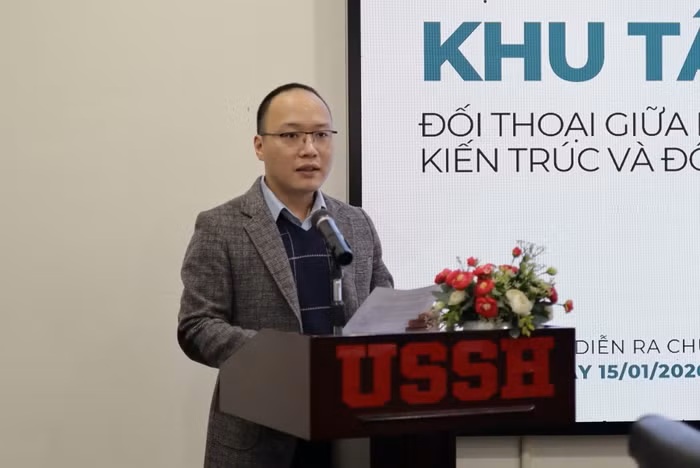
Dr. Nguyen Vu Hoang - Deputy Head of the Department of Anthropology and Religious Studies, Faculty of Social Sciences and Humanities (Vietnam National University, Hanoi). Photo: university website.
In Vietnam, the University of Social Sciences and Humanities, Vietnam National University, Hanoi. It is considered one of the most reputable institutions for training in Anthropology.
According to Dr. Nguyen Vu Hoang, the school's strengths are built on two main pillars: its training tradition and international cooperation network, along with a teaching methodology closely linked to fieldwork. It is a leading institution in anthropology training nationwide at all three levels (bachelor's, master's, and doctoral), with a team of experienced experts and a wide network of international partners from the Netherlands, Australia, France, Canada, and the United States.
Notably, the "fieldwork" method is considered a highlight in training, shifting from theoretical learning to a practical approach. Students participate in surveys at craft villages, ethnic minority communities in mountainous areas, as well as museums from the central to local levels. Many extended fieldwork programs allow learners to directly live and work with the community, thereby gaining a deeper understanding of local life and culture.
At the same time, the curriculum is continuously updated to reflect international trends with modules such as Visual Anthropology, Developmental Anthropology, Medical Anthropology, Heritage Anthropology, and Tourism Anthropology. The school also strengthens modules taught in English, aiming to prepare students for working in a global environment or pursuing further studies abroad.
In addition to the main curriculum, the University of Social Sciences and Humanities also implements many support activities to help students improve their skills, gain experience, and expand their job opportunities.
Dr. Nguyen Vu Hoang stated that the school believes learning should not only take place within the classroom but also be linked to practical experience. In this spirit, the Faculty and the School have built a comprehensive support ecosystem for students.
This includes a series of career networking events held monthly, comprising workshops, talk shows, and career guidance seminars with the participation of experts, recruiters, and alumni. Through these activities, many students have proactively established connections with suitable agencies and organizations to seek internship and job opportunities.
In addition, scholarship and international exchange programs are also being promoted. Students have regular access to short-term and long-term exchange opportunities, receive scholarships from the university, and participate in international research projects as collaborators. Notably, the Phan Huu Dat Award is one of the prestigious scholarships for outstanding Anthropology students.
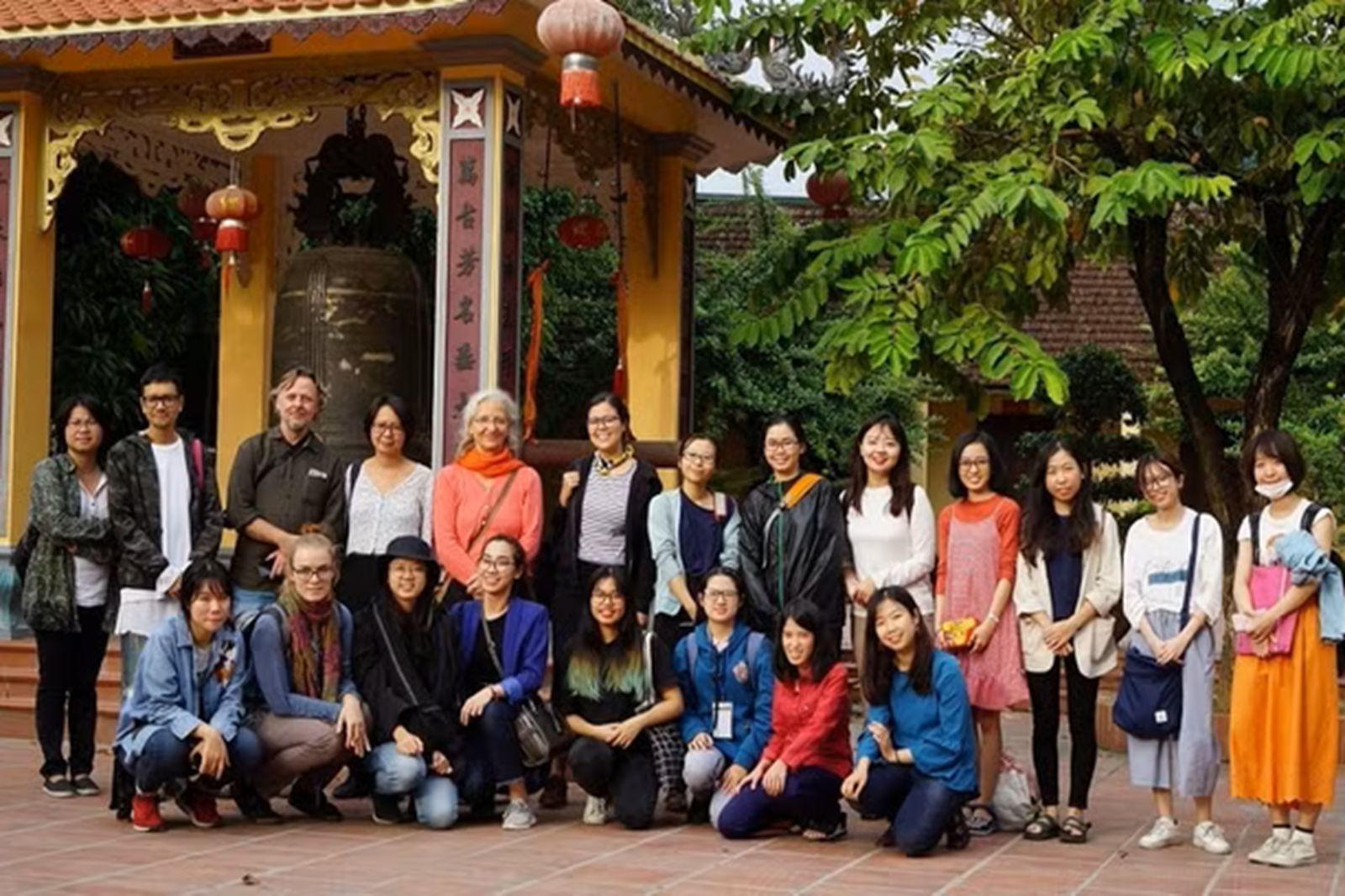
Assessing the current demand for human resources in the field of Anthropology, Associate Professor, Dr. Lam Minh Chau - Senior Lecturer in the Department of Anthropology and Religious Studies, University of Social Sciences and Humanities (Vietnam National University, Hanoi) believes that, in the context of many fields being strongly impacted by global changes, especially the development of artificial intelligence (AI), the demand for human resources in Anthropology remains stable, and even tends to increase.
According to Professor Chau, the core advantage of Anthropology lies in its field research capabilities, gained through direct contact with communities and research areas. This allows anthropologists not only to experience and understand the unique characteristics of each context and region but also to grasp the needs, thoughts, and behaviors of people in specific conditions. In the near future, these capabilities will remain difficult to replace by technology.
From that foundation, anthropology graduates have diverse job opportunities in both the public and private sectors. Notably, the field of development is considered one of the promising career paths, where anthropologists participate in research, assess the impact of programs and projects, and directly support the implementation of development activities in communities.
Thanks to their field research capabilities and cultural sensitivity, anthropological human resources are currently working in many international organizations such as United Nations agencies, the World Bank, national development agencies, consulting firms, and non-governmental organizations working in the fields of poverty reduction, environmental protection, and gender equality promotion.
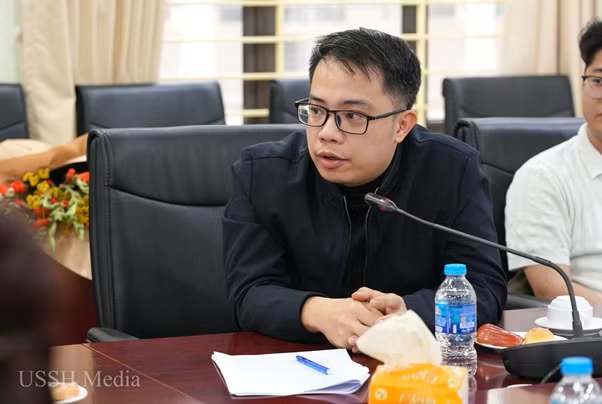
Meanwhile, Dr. Phan Phuong Anh, a lecturer in the Department of Anthropology and Religious Studies at the University of Social Sciences and Humanities (Vietnam National University, Hanoi), argues that in Vietnam, the process of national renewal and economic integration with the region and the world has created opportunities for anthropology experts to work in many fields.
Specifically, the first group includes researchers and lecturers capable of undertaking research and teaching at the undergraduate and postgraduate levels on human beings, culture and human society, and practicing development and conservation in museums, tourist areas, nature reserves, historical sites, libraries, etc.
Group two consists of officials working in Party and State government agencies, mass organizations, international and non-governmental organizations, and other socio-political organizations that need to use anthropological knowledge and methods to solve social problems.
Group three consists of practicing anthropologists, who are consultants capable of undertaking applied work serving the planning and implementation of social policies, such as policy research, impact assessment, needs assessment, and ethnographic research. They may also work as experts in community development and social development, managing and directing research or application programs/projects related to anthropological knowledge and research methods.

Dr. Phan Phuong Anh - Lecturer in the Department of Anthropology and Religious Studies, Faculty of Social Sciences and Humanities (Vietnam National University, Hanoi). Photo: Provided by the interviewee.
Enhance practical training and skill development to adapt to the labor market.
Besides theoretical content, practical activities and internships are also considered an important component in anthropology training.
Associate Professor, Dr. Lam Minh Chau stated that Anthropology students have three main opportunities for practical training and internships during their studies.
Firstly, the intensive internship program lasts approximately 15 days in a specific location, under the direct guidance of instructors. This is a mandatory course, in which students participate in fieldwork, usually in mountainous ethnic minority areas, to live, eat, and work alongside the local people, thereby learning about their lives, culture, and society from a practical perspective.
Secondly, there are short field trips as part of each course module, such as Heritage and Tourism Anthropology, Image Anthropology, or Religious Anthropology. These trips help students reinforce their classroom knowledge and hone their research skills on specific topics, such as exploring the heritage of Quan Ho folk singing or practicing photovoice techniques.
Thirdly, learning is conducted through various forms of study such as group assignments, presentations, yearbooks, student research projects, and graduation theses. These activities require students to directly participate in fieldwork, engage with communities, collect data, and process information. During this process, students receive guidance from instructors while also having the opportunity to develop initiative and independent work skills.
Based on her experience studying and working in various environments, Ms. Bui Ha Trang, a former student of the K59 Anthropology program at the University of Social Sciences and Humanities, Vietnam National University, Hanoi (currently a lecturer in the Faculty of Cultural Industry and Heritage, School of Interdisciplinary Sciences and Arts, Vietnam National University, Hanoi), believes that Anthropology is not a purely academic field as many people think, but has clear practical applications, especially in developing critical thinking and problem-solving approaches.
According to Master Bui Ha Trang, the core value that learners receive during their studies is the ability to view problems from multiple perspectives, respect diversity and differences, and always place people and phenomena within a specific socio-cultural context. This foundation helps learners quickly adapt to various work environments and collaborate effectively with diverse groups.
Beyond just intellectual development, characteristic research methods of Anthropology such as fieldwork, observation, and in-depth interviews have become core skills frequently applied in the workplace. The training process also contributes to cultivating active listening skills, empathy, and patience in communication.
In the field of heritage research, close engagement with local communities is essential. Anthropological methods allow for the interpretation of cultural practices from the perspective of those directly involved, thereby providing valuable practical advice.
In the private sector, these skills continue to be effective in helping professionals understand customers, systematically research user behavior rather than relying on assumptions, and thereby build products and solutions that meet real-world needs.
According to Ms. Trang, what Anthropology offers is not only specialized knowledge, but also a way of approaching people and the world, creating a foundation for working effectively in many different fields.
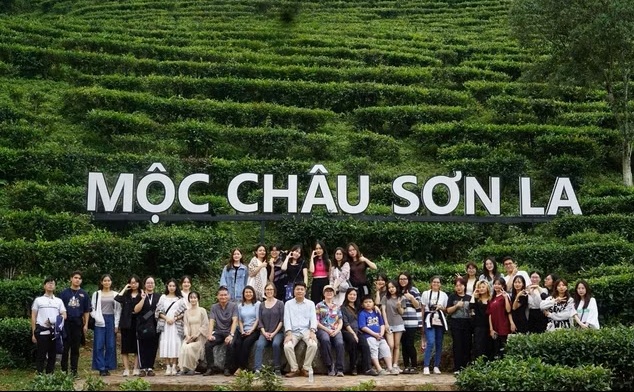
Students from the Faculty of Anthropology and Religious Studies (USSH) on a field trip to Son La.
Based on her practical experience in the labor market, Master Bui Ha Trang believes that, in addition to mastering foundational knowledge, Anthropology students need to proactively cultivate three important skill sets.
Firstly, there are soft skills in the workplace such as collaboration, teamwork, critical thinking, communication, and problem-solving. These are essential competencies that help students adapt to the increasing pressure and diverse demands of the labor market.
Secondly, interdisciplinary skills and thinking are crucial. According to Ms. Trang, not all graduates pursue a career in Anthropology research; they can work in various fields such as education, media, tourism, or content creation. Therefore, proactively acquiring interdisciplinary knowledge and skills will broaden job opportunities and enhance competitiveness.
Finally, there is the ability to adapt to technology, especially artificial intelligence. Actively grasping and effectively utilizing digital tools will become a crucial advantage, helping students enhance their learning, research, and competitiveness in the workplace.
Author:According to Vietnam Education
Newer news
Older news

