
Previously, the field of Oriental Studies included specializations such as Japanese Studies, Korean Studies, and Thai Studies. However, it has now been restructured, focusing on two main areas: Chinese Studies and Indian Studies. Many higher education institutions nationwide have implemented these programs with diverse orientations, thereby expanding choices for students.
This field of study offers a competitive advantage in the wave of Asian integration.
In an interview with a reporter from the Vietnam Education e-magazine, Dr. Pham Hoang Hung, Head of the Department of Oriental Studies at the University of Social Sciences and Humanities (Vietnam National University, Hanoi), stated: Oriental studies is an interdisciplinary science that systematically and comprehensively studies Eastern countries and peoples across many dimensions such as language, history, culture, economics, politics, and international relations.
In the context of the 21st century, considered the "century of Asia," Oriental studies not only holds academic significance but also possesses strategic applications, playing a crucial role in many fields. Economically, this workforce helps Vietnamese businesses penetrate regional markets by understanding the languages and business practices of partners such as Japan, South Korea, and China.
Culturally, this field of study contributes to connecting and promoting cultural values between Vietnam and Eastern countries. In the field of diplomacy, this workforce effectively supports foreign affairs work thanks to their deep understanding of the politics, religion, and social characteristics of other countries.
According to Dr. Pham Hoang Hung, the demand for human resources in the field of Oriental Studies is currently considered high and stable, especially in the context of increasing investment by FDI enterprises from the Asian region in Vietnam, leading to a great need for personnel with strong foreign language skills and cultural understanding. Graduates of this field can take on many positions such as translators/interpreters, foreign affairs specialists, human resource managers in international businesses, researchers, or lecturers, with a competitive advantage stemming from their interdisciplinary knowledge base and ability to adapt flexibly in a multicultural environment.

Sharing about the advantages of training in Oriental Studies under the Faculty of Oriental Studies, Dr. Pham Hoang Hung said that the University of Social Sciences and Humanities (Vietnam National University, Hanoi) possesses a team of leading lecturers and experts who are internationally renowned scientists and scholars with in-depth expertise in many fields such as history, culture, international relations, and languages...
In addition, the department continuously maintains close cooperative relationships with international exchange funds and many leading universities in China, India, and the ASEAN region, thereby opening up scholarship and academic exchange opportunities for students even while they are still in school.
In particular, the training program is designed in a modern, interdisciplinary way, regularly updated according to international trends, focusing not only on language but also on "Regional Studies," helping students gain a deep understanding of the national identity and mindset of their partners.
In parallel, the school regularly creates opportunities for students to gain practical experience through scientific seminars, workshops, and thematic exhibitions on regions such as China, India, or Korean culture, contributing to enhancing their learning experience and ability to apply knowledge to real-world situations.
“At the school, the curriculum is designed to build a solid foundation of knowledge combined with in-depth practical skills, with a focus on developing foreign language proficiency such as Chinese and English. Simultaneously, it provides knowledge of regional studies and in-depth expertise in East Asia, Northeast Asia, Southeast Asia, and South Asia, and trains professional skills such as office work, foreign relations, international economics, and intercultural communication.”
"In addition, students also have access to modern theories and research methods to develop critical thinking and independent research skills," Mr. Hung informed.
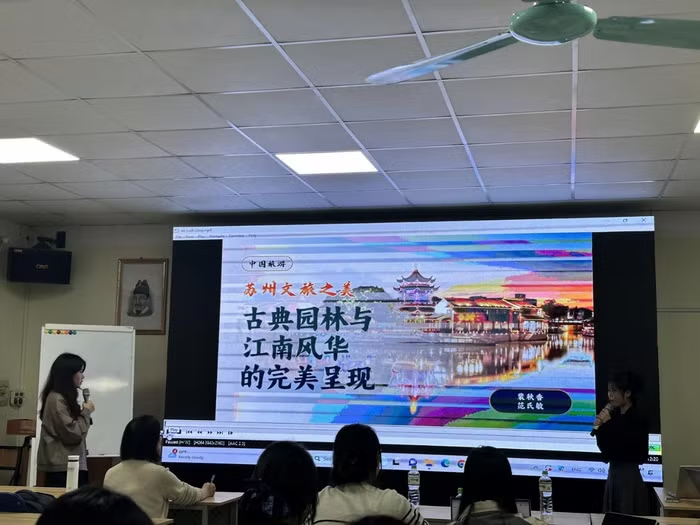
Practical training provides a competitive advantage for East Asian studies students.
The appeal of Oriental Studies is not only evident in the choices made by prospective students but is also clearly reflected in the admissions practices at higher education institutions.
According to Dr. Pham Hoang Hung, this major consistently receives the highest number of applications each year. The admission scores are also frequently among the highest in the C00 and D01 subject combinations nationwide, demonstrating the high quality of incoming students with strong critical thinking skills and a solid foundation in foreign languages.
In addition to high-quality entry requirements, graduates of the university's Oriental Studies program are highly regarded for their proficiency in foreign languages and their broad knowledge of culture and politics, enabling them to adapt flexibly to various segments of the labor market.
Specifically, graduates can take on positions such as diplomatic officers or international relations specialists at ministries, government agencies, or Vietnamese representative offices abroad.
In the field of economics and business, graduates in Oriental Studies can work as human resources specialists, project managers, international tour operators, or market analysts at multinational corporations, especially those from Japan, South Korea, China, and the ASEAN region. In addition, students can also pursue careers in translation and interpretation, and international communication such as translators, interpreters, reporters, and editors.
Furthermore, for those with an academic orientation, opportunities to work as research fellows in area studies at research institutes or to teach at higher education institutions are also very wide open.
To prevent students from being overwhelmed by the rapidly changing labor market, according to Dr. Pham Hoang Hung, the school has been implementing many innovative solutions focused on practicality and integration. The training program has been restructured to increase its applicability, reduce purely theoretical courses, and add skills and professional subjects relevant to industry requirements.
Furthermore, the school proactively updates its teaching with new trends through modern topics such as "Asian Cultural Industries," "Digital Diplomacy," and "Regional Sustainable Development," aiming to equip students with the ability to solve global problems. The development of high-quality training pathways linked to international professional certifications is also being promoted, contributing to increased degree value and the competitiveness of graduates in the labor market.
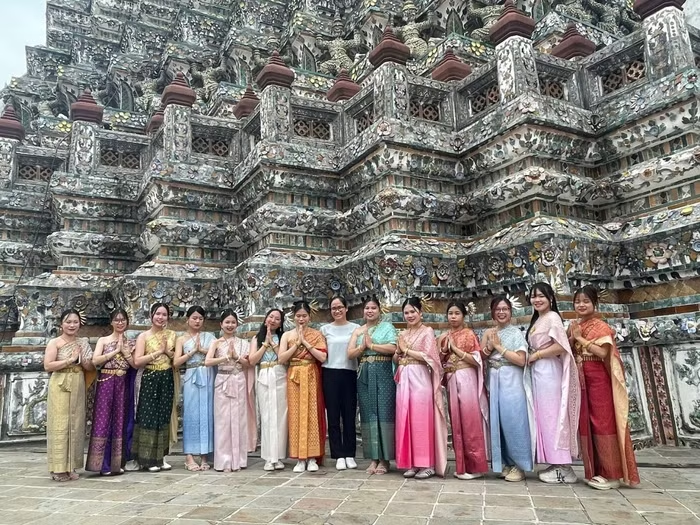
Alongside curriculum reform, the school places special emphasis on practical activities, internships, and real-world experiences with the philosophy that "the classroom is not just within four walls." Students are given the opportunity to intern at embassies, international organizations, and large businesses from their third year, thereby becoming familiar with a professional work environment early on.
Through a wide network of partners, students also have the opportunity to participate in international exchange programs lasting from 6 months to 1 year in countries such as Japan, South Korea, and Thailand… to improve their foreign language skills and cultural understanding. In addition, directly participating in organizing scientific conferences, cultural exhibitions, and practical projects implemented by the faculty and the university helps students develop management skills, teamwork abilities, and adapt to job requirements in a globalized context.
According to Dr. Pham Hoang Hung, to pursue a degree in Oriental Studies, students need to possess many qualities, the most important of which is proficiency and perseverance in foreign languages, as this is the "key" to accessing knowledge and working in an international environment. In addition, the field of study requires interdisciplinary thinking and the ability to synthesize and connect various disciplines from history and culture to politics and economics; therefore, candidates need keen observation skills, multi-dimensional analytical abilities, and an open mind that respects cultural differences.
In the context of a rapidly changing Eastern world, proactively engaging in self-learning, staying updated on information, and building a strong foundation of knowledge early on are considered key factors for learners to adapt and achieve sustainable growth.
To facilitate the holistic development of students during their studies, Professor Hung stated that the University of Social Sciences and Humanities - Vietnam National University, Hanoi has implemented many comprehensive support policies. Besides a diverse system of scholarships from organizations, businesses, and international exchange funds, students also have the opportunity to participate in exchange and internship programs abroad, thereby enhancing their professional skills and accumulating practical experience.
At the same time, early encouragement of scientific research, along with a wide alumni network, helps students clearly define their career paths and increase their job opportunities after graduation.
Related articles:
If students want to travel to many places, what career path should they choose?
Do the "hot" fields of Social Sciences and Humanities still retain their appeal in the digital age?
Nearly 90% of Social Sciences and Humanities students find employment after graduation.
Understanding Religious Studies Correctly: A Scientific Perspective and Broad Career Opportunities
"Open lecture hall" for students majoring in History and Cultural Studies.
Author:According to Vietnam Education
Newer news
Older news

