Airlangga University (UNAIR) is one of the leading universities in Indonesia and the region, currently ranked 308th in the world according to the QS World University Rankings 2025, and among the top 5 most prestigious universities in Indonesia. With its strengths in social sciences, humanities, and interdisciplinary research, UNAIR is an important destination in the collaborative network of many universities in Asia and around the world.
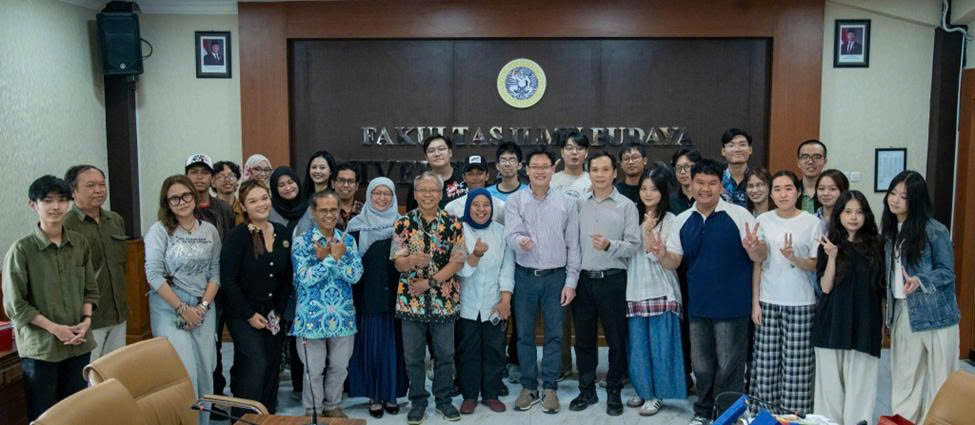
Immediately after landing at Ngurah Rai Airport (Bali), the delegation embarked on a long journey by car and ferry to Surabaya (the second most populous city after Jakarta, in East Java province). The delegation was warmly welcomed by the leaders of the Faculty of Humanities, faculty members, and students of the History Department of the University. Speaking at the reception, Assoc. Prof. Dr. Dewi Meyrasyawati, Vice Dean in charge of Research, Innovation, and Community Development, warmly welcomed the delegation and expressed her desire to promote cooperation, student and faculty exchanges, workshops, and research programs with partners in Vietnam.
Following this, Assoc. Prof. Dr. Johny Alfian Khusyairi, Head of the History Department, expressed his pleasure at having coordinated the visit of the delegation from the University of Social Sciences and Humanities to Airlangga University, and also expressed his hope that this practical internship for students would open up many opportunities for cooperation between UNAIR and VNU-USSH, contributing to deepening the cooperative relationship in training and research between Indonesia and Vietnam.

In response to the warm and sincere welcome from their Indonesian colleagues, Associate Professor Pham Van Thuy (Faculty of History), representing the delegation, thanked the leadership, lecturers, and students of the History Department, Faculty of Humanities, Airlangga University for coordinating and organizing this meaningful practical internship program and for providing financial support for the delegation's activities in Indonesia. Associate Professor Pham Van Thuy also expressed his hope to continue receiving support and cooperation from Airlangga University in the future, so that more Vietnamese students and lecturers will have the opportunity to experience the academic atmosphere and gain a deeper understanding of Indonesian history and culture.
As part of the program, students participated in a scientific seminar titled "The Encounter Between Vietnamese and Indonesian History." The presentations affirmed that Vietnam and Indonesia share many similarities in history and culture; have a long history of relations and many prospects for future cooperation. Students had the opportunity to ask questions and exchange expertise with the speakers, who highly appreciated their confidence and professional competence.
In addition to attending lectures on history and culture, the delegation had the opportunity to visit and learn at specialized museums belonging to Airlangga University, including: the Museum of Medical Education, the Museum of Ethnology & Burial, and the Museum of History & Culture. These are academic spaces rich in practical value, helping students broaden their interdisciplinary perspectives, especially in approaching the history and culture of Southeast Asia.
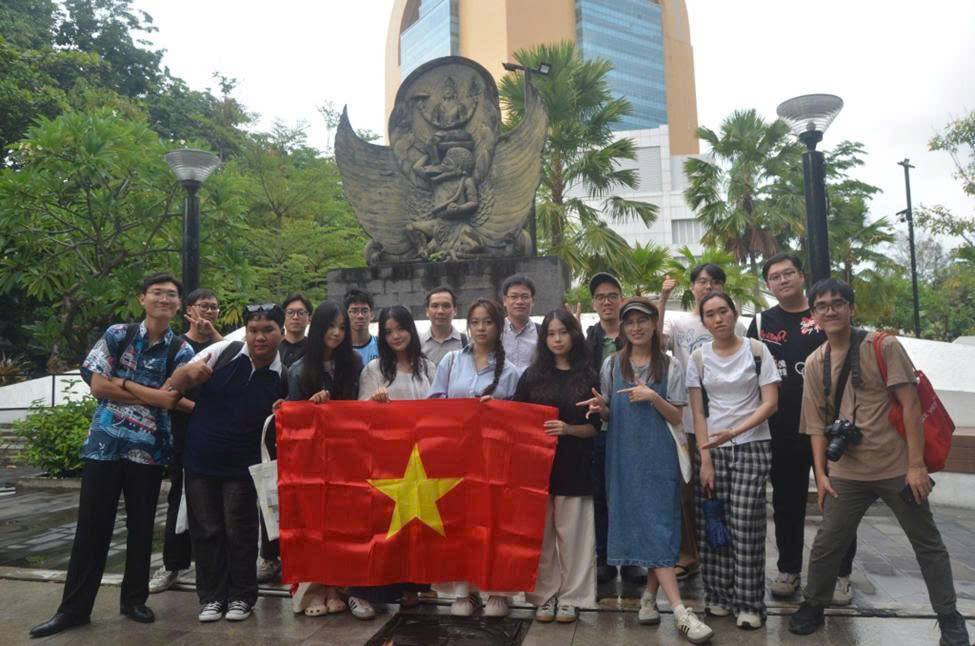

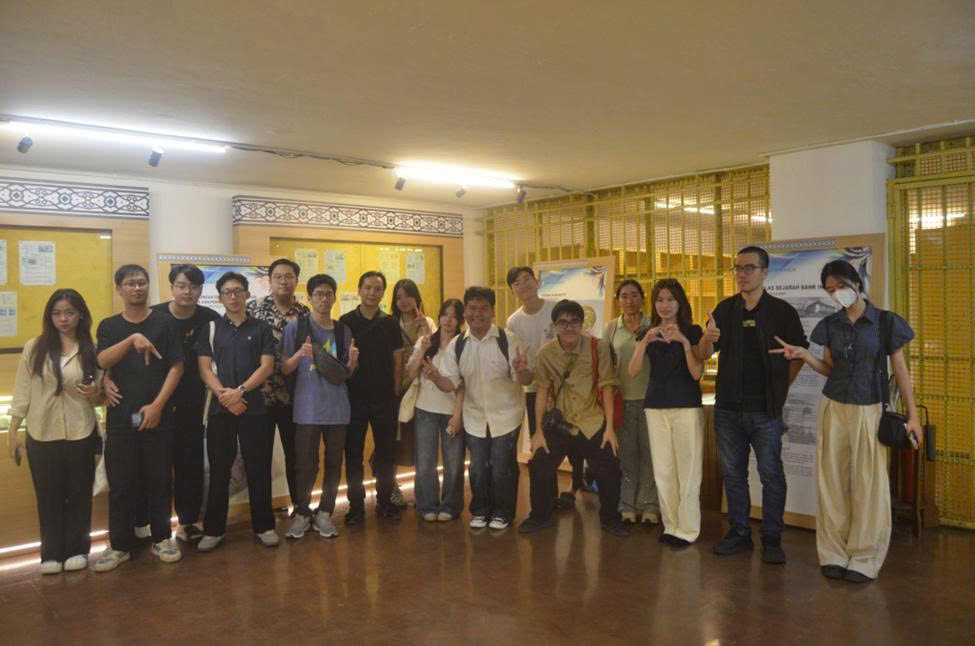

Students were particularly interested in the unique cultural and artistic experiences of Indonesia. They learned about traditional Indonesian musical instruments, played the Gamelan orchestra, experienced Wayang kulit shadow puppetry, and observed Muslim prayer practices. The trip also provided students with opportunities for fieldwork, exploring Chinatown and the old town of Surabaya, home to numerous historical sites related to the Dutch East India Company (VOC) and the colonial era, enjoying island cuisine, and experiencing the diverse culture of Indonesia.
The field trip to Indonesia not only helps students from the Faculty of History and the Faculty of Oriental Studies enhance their field skills and international integration capabilities, but also contributes to affirming the open, interdisciplinary, and regionally connected training orientation of the University of Social Sciences and Humanities in its new development phase. Hopefully, this will be an important starting point for extensive cooperation plans between the two universities in the future.