When Vietnamese cinema is mentioned, audiences often picture a film industry steeped in "grand histories," of significant upheavals, a "museum" of collective memory. However, Vietnamese cinema also takes the form of small stories, personal experiences, and private memories, with a cinematic language deeply marked by the director's individual style. Therefore, according to Dr. Hoang Cam Giang, Head of the Art Studies Department (Faculty of Literature) and curator of the event series: "The purpose of the Art Studies Department and the Film Club is to create a spiritual 'homecoming.' We are living within the Vietnamese film industry, and therefore, we hope that young people will have more opportunities to access the very artistic environment they belong to and will live/work in in the future."
On December 11, 2021, at the film screening and panel discussion "Returning to the Green Land of Yesteryear: Scenes (Unseen) in Vietnamese Independent Films," speakers – journalist and film critic Mai Nhu Ngoc (VnExpress online newspaper) and film lecturer Dr. Hoang Cam Giang (University of Social Sciences and Humanities), along with moderator Ms. Nguyen Thi Bich (University of Social Sciences and Humanities) – engaged in in-depth discussions on issues related to the creation and reception of Vietnamese independent films. This was also considered the first panel discussion to approach cinematic works from the perspective of landscape theories – a new and promising research direction in the social sciences and humanities. The discussion was conducted through four short films:Garden(Doan Hoang Kien, 2010)Mother, daughter, and dreams(Duong Dieu Linh, 2018);The invisible river(Pham Ngoc Lan, 2020) andEternal Spring(Viet Vu, 2021), the two speakers pointed out the influence of 'everyday cinema' aesthetics and documentary elements in these experimental independent works. According to journalist Mai Nhu Ngoc (Ngoc Nick M), these four short films all bear a strong personal imprint, in which “each author incorporates their own story. All the characters in the four films are trapped somewhere and want to tell that story.” And according to Dr. Hoang Cam Giang, it is a type of cinema that “opens up for us a different way of creating meaning for reality” – it “questions us about hidden scenes, scenes that have long been absent and unseen – because commercial filmmakers often focus on ‘picture-perfect’ landscapes, framed and formulaic.”
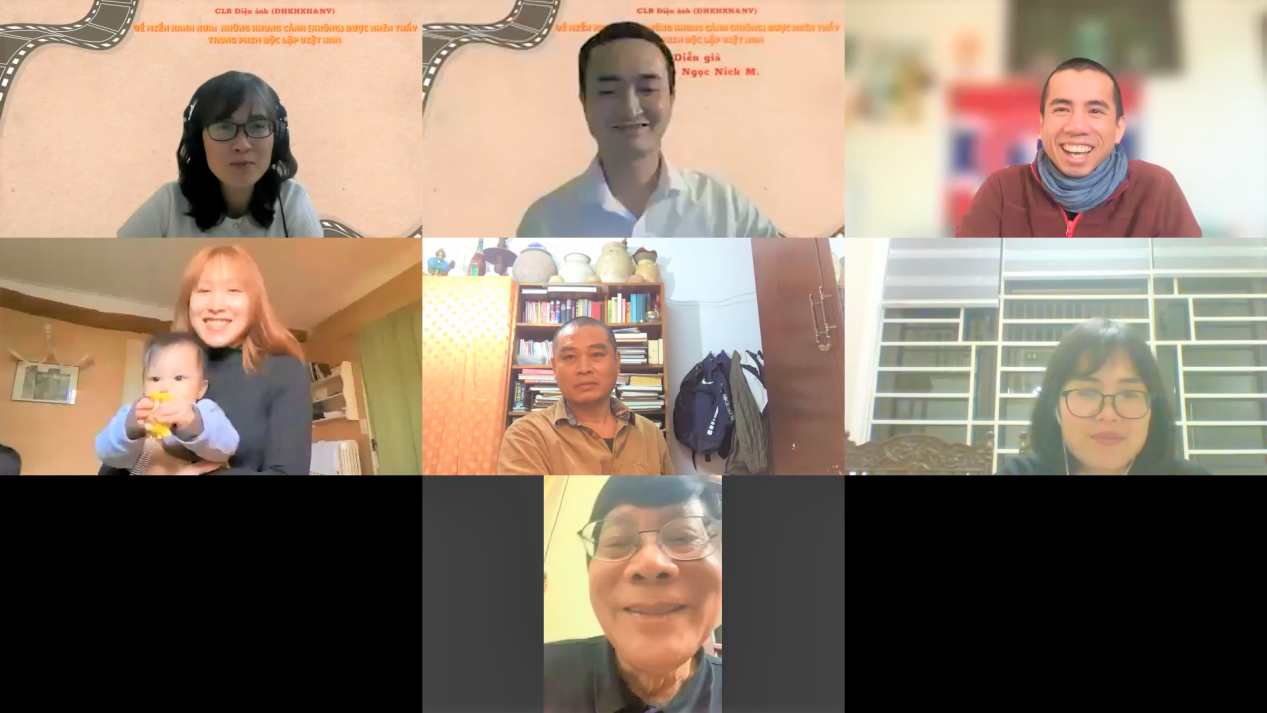
Notably, the panel discussion also featured directors Doan Hoang Kien, Viet Vu, and Duong Dieu Linh.
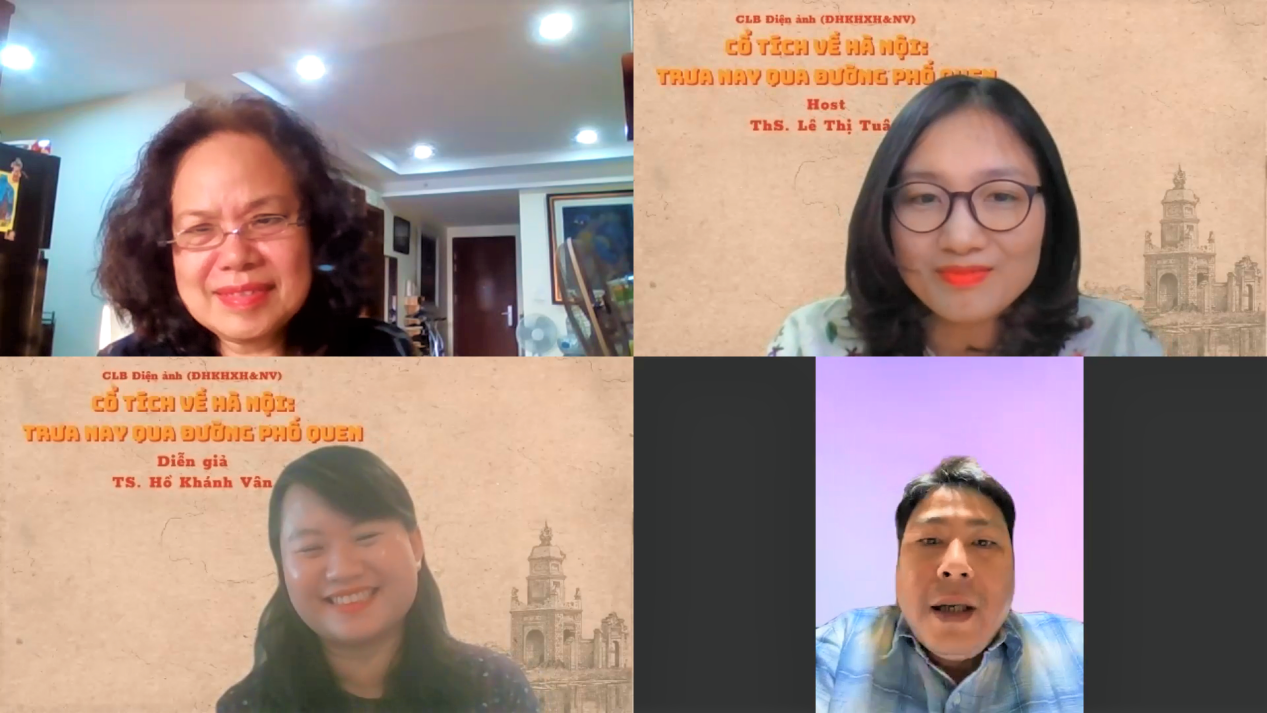
Following the success of the first event, on November 18, 2021, the film screening took place.Fairy tales for 17-year-oldsThe panel discussion "Fairy Tales about Hanoi: Walking Through Familiar Streets This Afternoon" was held with the participation of screenwriter Trinh Thanh Nha, Dr. Ho Khanh Van (University of Social Sciences and Humanities - Ho Chi Minh City) and moderated by Ms. Le Thi Tuan (University of Social Sciences and Humanities - Hanoi).
From the perspective of the creator - the screenwriter of the film.Fairy tales for 17-year-olds- Ms. Trinh Thanh Nha shared many interesting stories about the script's creation process: "Initially, my film script was a very honest personal story. Later, through many revisions, the 'I' in the story gradually transformed into a collective 'we'. The creative process is a process of transforming 'I' into 'we,' both private and universal."
Continuing the spirit of the first panel discussion, Dr. Ho Khanh Van shared her thoughts on the portrayal of Hanoi in the film. According to her, Hanoi is not merely a geographical location; it represents a deep connection, a sense of belonging, a layer of accumulated history that has become a collective memory. “At the same time, Hanoi will always be intertwined with the personal growth of each individual. Therefore, Hanoi is also the space of destiny for each person.” Furthermore, approaching the film from a feminist perspective, Dr. Ho Khanh Van stated: “The film expresses an anti-war spirit and presents a very Vietnamese feminist viewpoint. This is evident in every family scene, every dialogue between men and women, which we see very clearly in each scene of the film.”
In particular, at the seminar, speakers and guests shared and analyzed the process of creating Hanoi as a space that is both familiar and unfamiliar. According to Assoc. Prof. Dr. Pham Xuan Thach (Head of the Faculty of Literature), although Hanoi always possesses its own inherent values, the city is also a meeting place of dreams. And therefore, "Hanoi's space, seemingly an unconscious space, is actually a continuation of cultural values," Assoc. Prof. Dr. Pham Xuan Thach emphasized.
The final film screening and panel discussion of the event series – “Who Travels a Thousand Miles – Paths of a Hundred Years” – took place on the anniversary of the founding of the Vietnam People's Army. Therefore, the event aimed to pay tribute to the soldiers and generations of military personnel who dedicated their lives to the Fatherland. The panel discussion featured special speakers: former teachers and soldiers, and film experts Assoc. Prof. Dr. Pham Thanh Hung, Assoc. Prof. Dr. Tran Khanh Thanh, and Senior Lecturer Tran Hinh (University of Social Sciences and Humanities, Hanoi), along with two moderators, Pham Duc Minh and Le Thuy Tien (Executive Board of the Film Club). During the discussion, representing the Faculty of Literature, Dr. Nguyen Thi Nam Hoang expressed the profound gratitude of the generations of teachers and students of the Faculty of Literature to the veteran teachers – those who dedicated their youth to the country and now continue to tirelessly contribute to Vietnamese education.
At the seminar, speakers discussed the "plight" of soldiers, the sorrow of war, and the post-war period – a time of healing, therapy, and reconciliation as depicted in the film. According to Associate Professor Pham Thanh Hung, "the post-war reconciliation as portrayed in the film is an inevitable consequence. When war ends, people return to the age-old issues of human identity."
Following up on the comments from Associate Professor Pham Thanh Hung, Associate Professor Tran Khanh Thanh argued that the film raised the issue of the status of soldiers and merchants in the post-war period. In particular, the film was structured around a journey. On the train "traveling thousands of miles," "the characters return to familiar things and look towards the future."
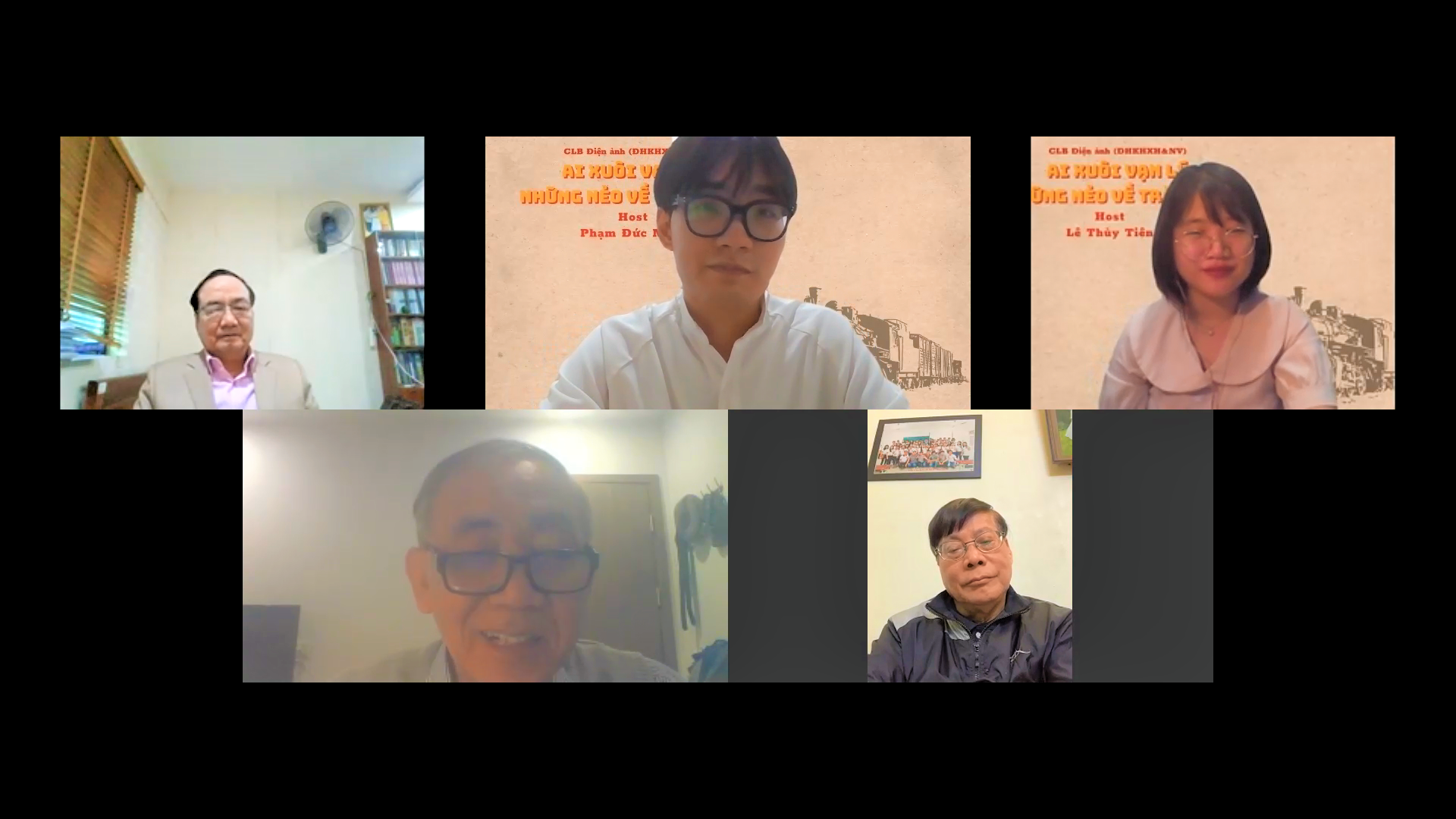
Speakers shared their insights during the panel discussion.
Analyzing the film from a cinematic language perspective, GVC. Tran Hinh commented, "This is a film rich in poetic quality, especially through the symbolic image of the train, the film reflects the process of national reunification with all its ups and downs for individuals and society."
As a former military officer and teacher himself, Associate Professor Dr. Pham Gia Lam shared many insights about wartime experiences and the post-war reconciliation issues raised in the film. Associate Professor Dr. Pham Gia Lam also emphasized the importance of knowledge to the participating students, stating that "knowledge provides us with the energy to live more humane lives."
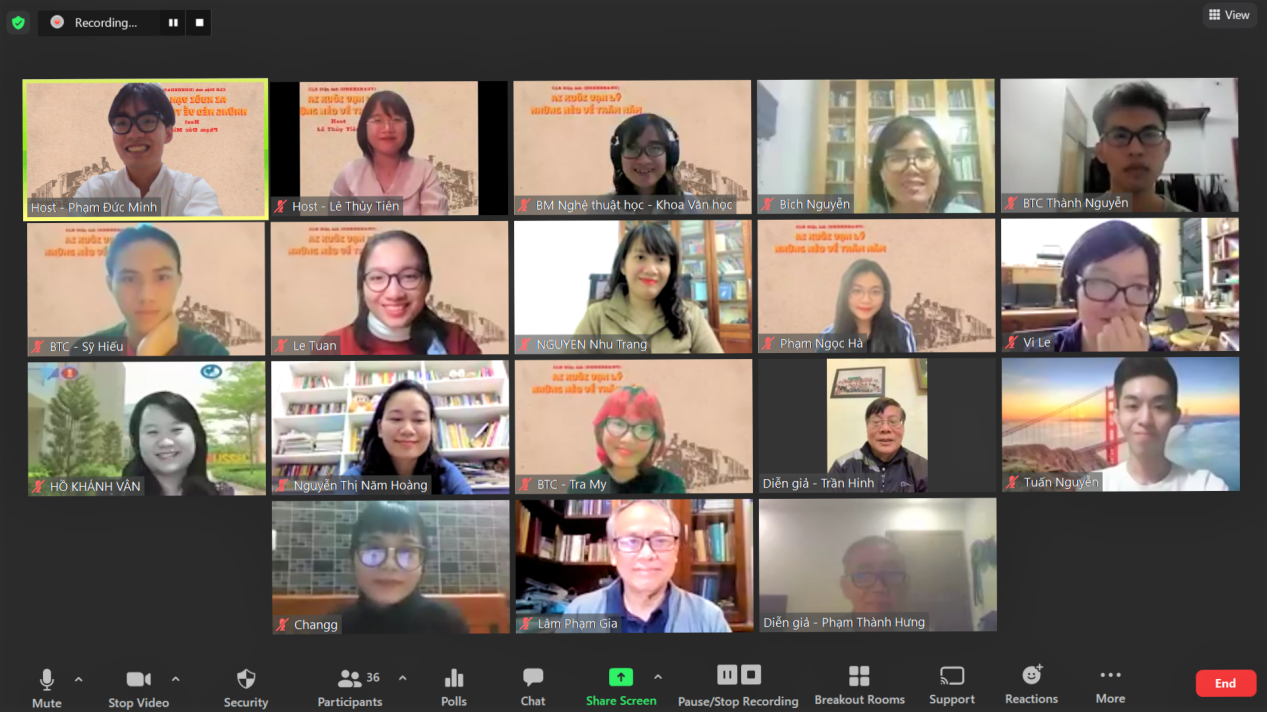
The series of events “Coming Home - 'Returning Home' with Vietnamese Cinema: Small histories, personal memories” concluded a challenging yet successful 2021 for the Film Club, Department of Art Studies. “This was not only a beneficial activity for students and film lovers in general, but also an opportunity for the Faculty of Literature to welcome researchers, journalists, and artists to share and analyze valuable cinematic works.” (Dr. Nguyen Thi Nam Hoang).
Overcoming the obstacles of the pandemic, the series of events has become a special space – a non-contact space – where film lovers can interact and share stories about cinema, art, and the era in which we live and have lived, so that we can more deeply appreciate the value of each moment we are in life. According to the organizers of the series of events: "Community memories and personal memories will remain forever and contribute to shaping each of our identities."
Author:Duc Minh (Film Club)
Newer news
Older news

