
On the morning of August 6, 2026, a preliminary report on the results of the emergency archaeological excavation of the ancient well structure at the Community Cultural Center No. 5 (Long Bien Ward, Hanoi) was held. Attending and chairing the report were Assoc. Prof. Dr. Dang Hong Son - Vice Rector of the University of Social Sciences and Humanities, Vietnam National University, Hanoi, and Mr. Dang Minh Ve - Deputy Director of the Hanoi Museum. At the conference, Dr. Nguyen Huu Manh - Head of the Museum of History and Culture, University of Social Sciences and Humanities - who directly led the excavation, presented details of the excavation process as well as initial scientific findings.


In late May 2026, while residents of Neighborhood Group No. 5 were digging holes to plant trees and beautify the grounds of the Cultural Center, the first brick steps of an ancient well were unexpectedly unearthed. Immediately, the local authorities and residents showed great awareness in covering the area, temporarily halting construction, and reporting the incident to the relevant authorities.
The People's Committee of Long Bien Ward and the Hanoi Department of Culture and Sports quickly intervened, directing the protection of the site in accordance with the law. From July 17th to August 4th, 2026, an emergency excavation of an area of 100m² was conducted by the Hanoi Museum in coordination with the University of Social Sciences and Humanities. Despite facing many difficulties due to strong groundwater activity and stormy weather, forcing the excavation team to drive Larsen sheet piles to prevent landslides, the excavation still completed its objectives, ensuring absolute safety for the site and neighboring structures.
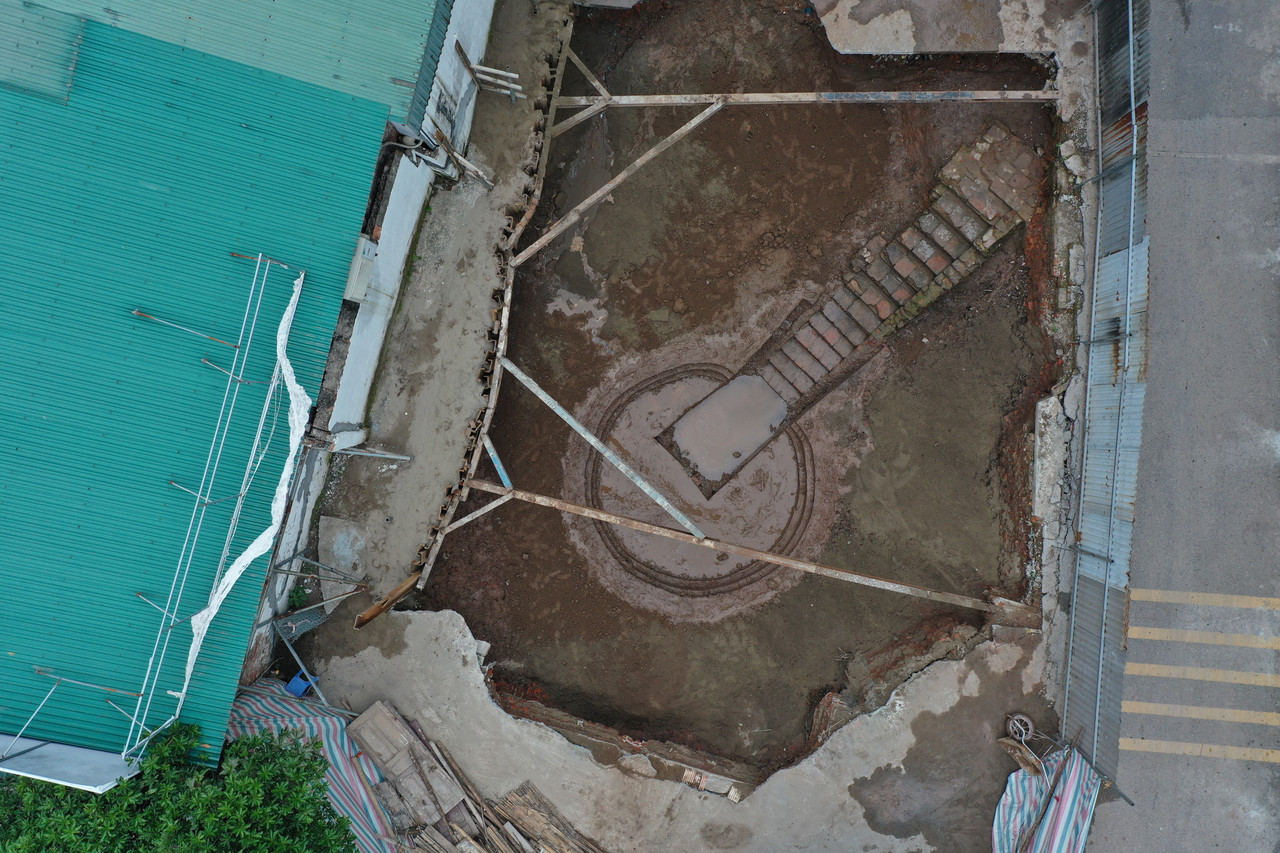
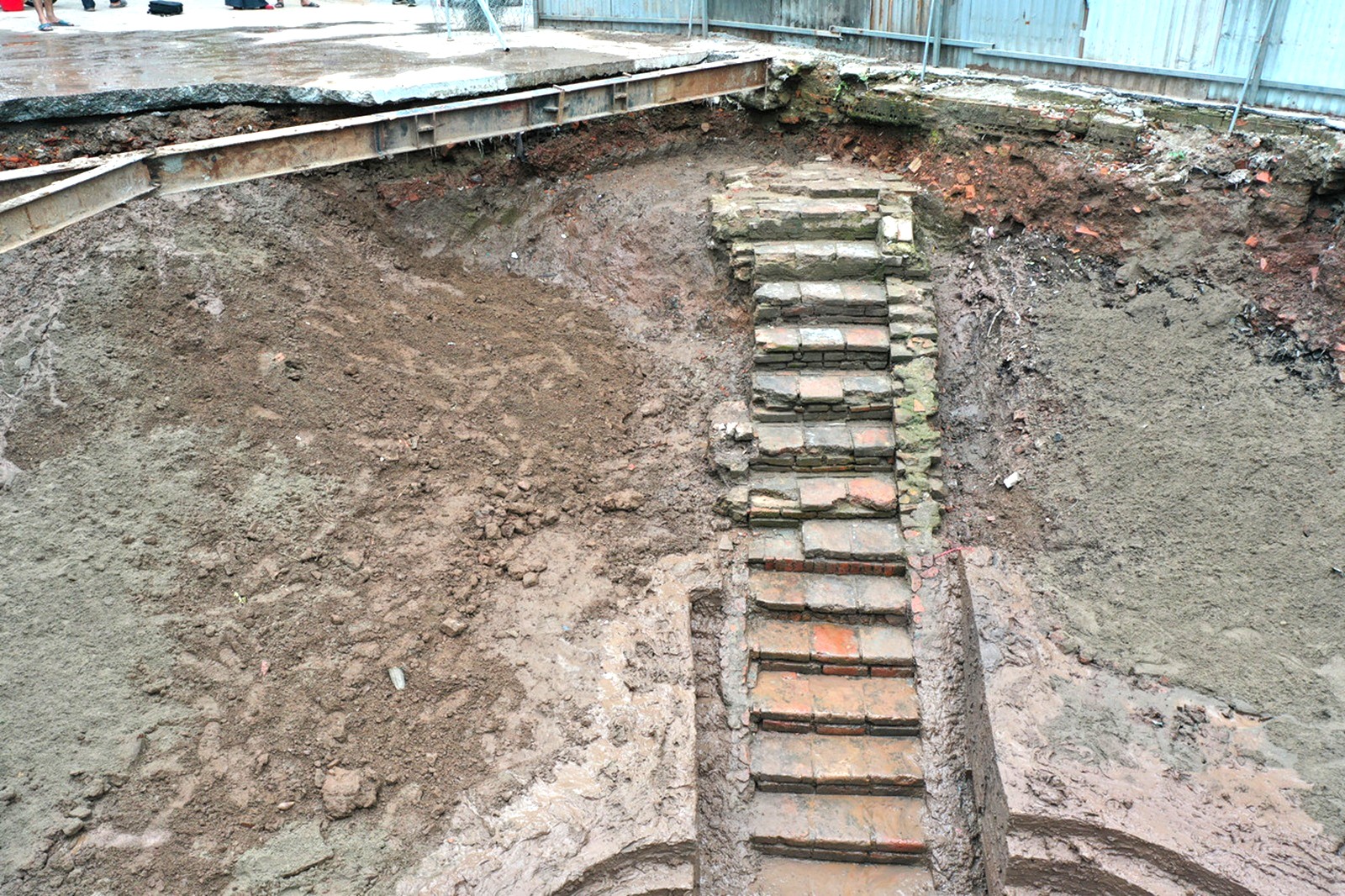
The excavation revealed a well bridge built of red-orange to dark red Bat Trang bricks leading down to the ancient well. The bridge is inclined along the well's edge at a slope of over 45 degrees, with a total length of approximately 9m and a width ranging from 1.3 to 1.65m.
The archaeological team has clarified the entire system of 21 steps leading up and down. The construction technique demonstrates the meticulous planning of the ancients: the layers of bricks underneath are staggered to increase bonding, and the steps themselves are made of 3-4 rows of flat bricks. Notably, on the 7th and 14th steps, the bricks are arranged vertically, creating a completely different effect compared to the other steps. Except for the bottom steps, both sides of the well bridge are reinforced with lime mortar mixed with broken tiles to maintain structural stability and prevent landslides. Based on the characteristics of the materials and techniques, scientists believe that this well bridge structure dates back to the 19th century and is still relatively well-preserved under the layer of soil.
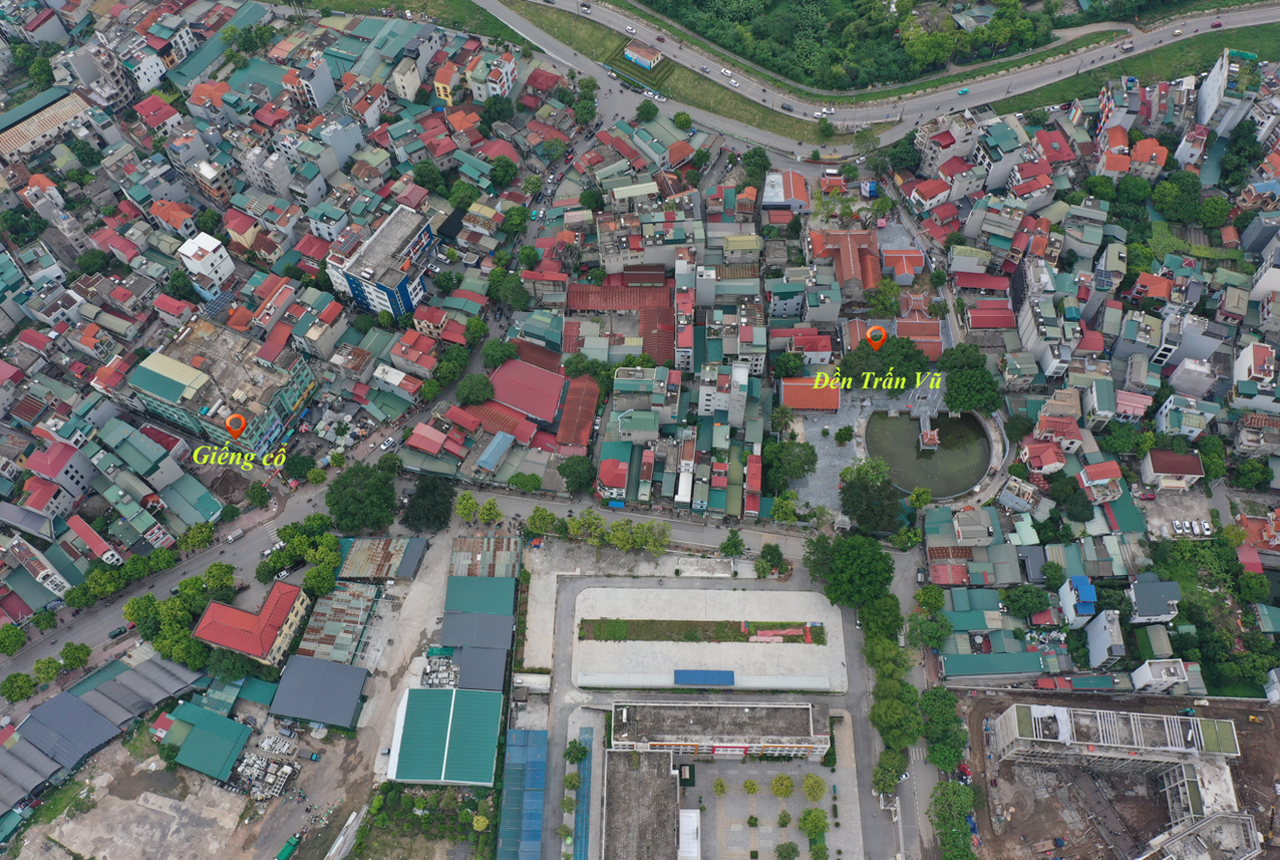
Besides its archaeological and architectural value, the newly discovered ancient well also plays an important role in the cultural and religious space of Ngoc Tri village. Through interviews and recollections of local people, this well was once a source of water for daily life, serving the traditional tofu-making craft, and was associated with the custom of fetching water on the night of the 30th of Tet (Lunar New Year's Eve).
More specifically, the well has a close relationship with the nearby Tran Vu Temple - Cu Linh Pagoda complex. During traditional festivals, water from the well is carried to the temple for offerings to the deities. Young men (tug-of-war participants) must use water from this well to bathe and purify themselves before entering the temple for the ceremony, before participating in the Sitting Tug-of-War Ritual and Game (a UNESCO-listed Intangible Cultural Heritage of Humanity).
The presence of the ancient underground well is not just a public structure obscured by urbanization, but also a historical "witness," an important piece in identifying the residential space and planning of the ancient Tran Vu Temple complex.
Based on the promising results of the emergency excavation, the excavation team proposed a plan to preserve the newly unearthed well bridge in its original state. At the same time, they recommended that the local authorities continue to closely manage the site, using this evidence as a scientific basis, combined with the collection of historical documents and old images from the people, to develop a plan for the future restoration and reconstruction of the ancient well. The restoration would not only fulfill the heartfelt spiritual aspirations of the local people but also contribute to enhancing the cultural landscape and connecting the heritage space of Tran Vu Temple in Hanoi.
Author:Museum of History and Culture
Newer news
Older news

