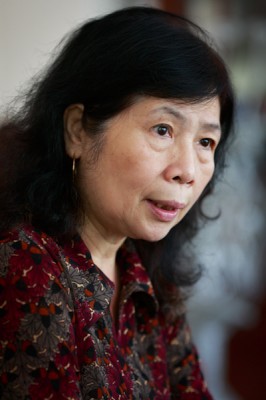
Vietnamese families are changing in line with the rapid development of socio-economic life, with both positive and negative changes. These changes are having a significant impact on society, particularly on the formation of individuals with new values and norms. Professor Dr. Le Thi Quy, Director of the Center for Gender and Development Studies at the University of Social Sciences and Humanities, argues that specific state policies on the development of Vietnamese families, based on in-depth and comprehensive research, are needed to ensure healthy family development, contributing to societal progress and bringing happiness to each individual.
Based on your research, how do you assess the changes in the Vietnamese family today compared to the past?This is a very large issue that cannot be answered fully and comprehensively at once. However, the changes in the Vietnamese family can be summarized in four aspects: size, family relationships, family functions, and family nature. The size and structure of the Vietnamese family have changed towards more nuclear families, meaning families consisting only of parents and children. Regarding family relationships, we can best observe the lives of those around us. For example, in the feudal era, families were influenced by Confucianism, with filial piety as the core of the parent-child relationship, and the three obediences (tam tòng) as the duties of women in the family. Accordingly, the imposition of parental authority on children in marriage was expressed in the saying: "children must obey their parents' wishes." Today, equality among individuals within the family has increased, and democracy within the family is also higher. One-sided imposition, such as from a husband to his wife or from parents to their children, is gradually diminishing. Families have many functions: economic, cultural, political, and psychological/emotional… These functions are also undergoing significant changes. For example, the economic function has changed: previously, during the subsidy period, both parents worked for a salary and were the primary breadwinners for their children. Now, the family can become a direct production unit, creating material wealth, and all members can contribute to the economy. Essentially, the family is no longer the sole haven for each member. In the past, in agricultural societies, people lived close together, bound by strong emotional ties. Today, social relationships are more developed, with each individual playing multiple roles and participating more actively in social activities. Adults have relationships with colleagues, friends, and even within groups sharing common interests or hobbies. Children, during their time at school and playing, also engage in many other peer relationships. Close family bonds are weakened.
 So, Professor, what are the most positive changes?
We are facing social stratification. While previously we had equality in poverty, now we are witnessing families becoming wealthy very quickly. Along with improved material conditions, these families have better opportunities for cultural and educational development, and social interaction is flourishing. These are very positive changes. This development helps families improve their material and spiritual quality of life. Currently, 40% of Vietnam's population needs social work. This is a large number. But even for poor families, they have the opportunity to change their lives if they are diligent, hardworking, and talented. Clearly, society has achieved basic equality, allowing families to have better conditions for development. The Vietnamese government has implemented very sound policies, supporting families who legitimately become wealthy while simultaneously assisting poor families to rise above poverty.
- But it seems that never before have there been such burning social issues related to the family as today: cases of children killing their parents, relatives killing relatives; serious crimes committed by children; adultery and divorce becoming common; homosexuality and social discrimination; the trend of separating sex from love and family; domestic violence, social violence...?This is because we have focused too much on economic development while neglecting social and family issues. This has allowed families to develop without any standards. We have broken down old value systems, considering Confucian views outdated, but have failed to build new values for the family. This is the high price we pay for economic development that is not commensurate with social development. A somewhat flawed comparison might be like a nouveau riche who becomes wealthy very quickly but lacks culture. Remember, the family is where the strongest socialization function is performed for an individual. Human development from a biological to a social being begins primarily within the family environment. We learn to adapt to social norms, participate in the labor process to produce material wealth, learn to respect the principles set by society, learn to love, cooperate, and help others in work and life... All of these things must be educated, taught, and developed within the family, with relatives, most directly grandparents, parents, and siblings. If humans are separated from this process, they are no different from animals. We have seen the phenomenon of "jungle people," or children raised by wolves from a young age in the forest; when they grow up, although they have the physical form of humans, their behavior is no different from that of the animals that raised them. Or, regarding the phenomenon of homosexuality you mentioned above, how will we address it? On the one hand, this requires society to respect the legitimate rights and needs of individuals, but on the other hand, when this phenomenon becomes a trend or movement, it poses a great danger to society. Adultery, if it becomes a "trend," is also a distorted manifestation in family development that affects the existence of the family and the happiness of its members. All of these issues are "exploding" and have deep roots in family education, but currently we still lack proper research and guidance in society.
 - It is known that the Government issued the Strategy for the Development of Vietnamese Families until 2020, with a vision to 2030, in May 2012. How do you assess this event, Professor?
Studies on families in Western countries have been conducted for a long time, and they have achieved certain successes. In Vietnam, the State is beginning to pay attention to the family as one of the unique and important social institutions for social development. The recent promulgation of the Strategy for the Development of Vietnamese Families is considered one of the positive actions. However, it is regrettable that the criteria for building and developing families outlined in the Strategy are still quite general.
I believe the government should immediately establish a Ministry of Family and Gender Equality with appropriate functions and experienced, knowledgeable personnel to address current family issues.— Prof. Dr. Le Thi Quy
For example, we set criteria for a prosperous, equal, and happy family, but we need to clarify what constitutes prosperity, equality, and happiness. During the subsidy period, prosperity meant having enough to eat, but today, prosperity also means eating well, getting enough nutrients, and eating according to one's needs. Does equality mean children are equal to their parents, everyone has needs, and everyone can do whatever they like? What happens if we only emphasize rights without defining accompanying responsibilities? What does it mean for equal development among family members? Or how do we define happiness? Is it a wife who sacrifices her whole life serving her husband, raising her children, fulfilling her responsibilities to her parents and relatives without regard for her own personal needs? The reason Confucian values have endured for centuries is partly because they have very clearly defined criteria. For example, children should prioritize filial piety towards their parents, wives should be faithful and obedient to their husbands, husbands should love their wives; parents should love and be tolerant of their children... We also need clearer and more verifiable criteria.
So, where should we begin, and what is the key solution?I believe the State needs to immediately establish a Ministry of Family and Gender Equality with appropriate functions and experienced, knowledgeable personnel to address current family issues. The family is the core of society, and it is the most intimately connected to each individual. The family is where people are born, where they are educated to become good citizens for society, and where high-quality human resources are created. Such an important institution, such a major social issue, must have an official managing agency. Those working in family affairs must acquire the necessary knowledge, skills, and enthusiasm. The State needs to have policies to support family education, pay special attention to social work, and support poor families. Furthermore, policies to improve the quality of the population should begin at the family level. For example, Vietnam has already been able to select for superior genes and eliminate inferior ones through medical measures related to family reproduction. Regarding education, we need to more strongly implement programs to educate couples about family matters before they get married...
- The professor mentioned the changes in values and norms within families, including changes in the concept of happiness. So, from the perspective of the relationships between family members, what are the criteria for happiness in the professor's view?The needs of each individual and family are immense and difficult to satisfy completely. However, in my opinion, within a family, the needs of each individual must be ensured, harmonizing rights and responsibilities, so that they can find their own freedom and happiness without trampling on the freedom and happiness of others in the family. Each individual should receive respect and affection from other members, and be given equal opportunities for development and contribution to the family and society within their specific circumstances.
Thank you, Professor, for the conversation.