
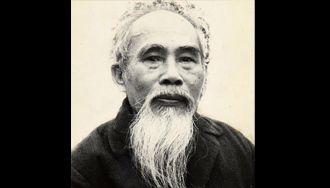
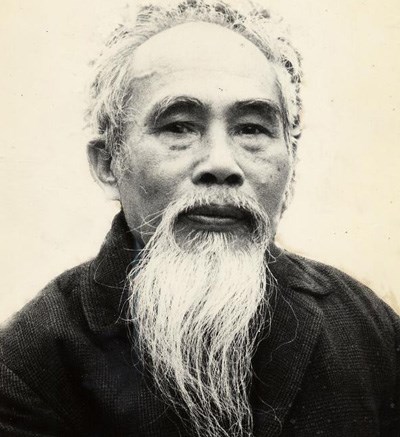
Professor Dao Duy Anh (1904-1988) was one of the professors who contributed to building the foundation of the Faculty of Literature.That is, the modern social sciences and humanities of the country.
Professor Dao Duy Anh was born on April 25, 1904, in Thanh Hoa and passed away on April 1, 1988, in Hanoi. The Dao family originally came from Khuc Thuy village, Ta Thanh Oai commune, Thanh Oai district, Ha Dong province (now Hanoi), but his grandfather migrated to Thanh Hoa (Trung Chinh commune, Nong Cong district). After graduating from Hue National School (1923), he did not want to work as a civil servant under the colonial government and chose the noble profession of teaching, teaching at Dong Hoi Primary School (Quang Binh). At that time, the patriotic movement was surging with the bombing of Sa Dien (Guangzhou, China) by Pham Hong Thai in 1924, the movement demanding "amnesty" for Phan Boi Chau in 1925, the funeral of Phan Chu Trinh in 1926, and progressive journalistic and publishing activities in major cities, all of which captivated the mind of the young intellectual Dao Duy Anh. In late 1925, he attended the Quang Tri Association of Dong Hoi to welcome Phan Boi Chau on his way from Hanoi to Hue. In 1926, he resigned from his teaching position, moved to Da Nang, and intended to go to Saigon to live in the cultural and political centers to "escape the confines of the pond," "find a place of vast skies and seas," where he could "expand his knowledge" and engage in patriotic activities. From then on, he dedicated himself to political and cultural activities.
On his way to Da Nang, he stopped in Hue to visit Phan Boi Chau, who was under house arrest at Pho Quang Pagoda (later moved to a house on Ben Ngu slope). In Quang Nam, he met Huynh Thuc Khang, who was then the President of the Central Annam People's Representative Assembly. He helped Huynh Thuc Khang found a newspaper.People's VoiceHe held the position of Editorial Secretary. In late summer of 1926, he joined the Vietnam Revolutionary Party, later renamed the Tan Viet Revolutionary Party (July 1928), and he became its General Secretary. Also in 1928, he foundedQuan Hai Tung ThuWith the collaboration of progressive intellectuals such as Vo Liem Son, Tran Dinh Nam, Phan Dang Luu, etc., this publishing house published popular books to familiarize readers with scientific thought and historical materialism. During its short existence until July 1927, this publishing house released 13 publications, including the early works of Dao Duy Anh. In July 1929, Dao Duy Anh was arrested by the colonial authorities and was not released from prison until early 1930.
From then on, he began to devote himself to cultural and scientific activities. He completed and published two dictionaries:Sino-Vietnamese Dictionary" (1932) "French-Vietnamese dictionary"(1936). These are not only essential reference books that meet the demands of cultural and scientific development at the time, but through the words and political concepts, the author intentionally included progressive and scientific explanations from a Marxist perspective and modern intellectual trends. Dao Duy Anh was a lexicographer who laid the foundation for modern Vietnamese lexicography.
In the field of culture and literature, he published many works:Outline of Vietnamese Cultural History" (1938) "Confucian criticism of minor laws" (1938) "Outline of Chinese History" (1942) "A discussion on Kim Van Kieu" (1943). The work ""Outline of Vietnamese Cultural History"by Dao Duy Anh and his work "Annamese Civilization"(La Civilization Annamite, 1944)" by Nguyen Van Huyen is a scientific work that laid the foundation for the formation of modern Vietnamese cultural studies in a scientific and national spirit.
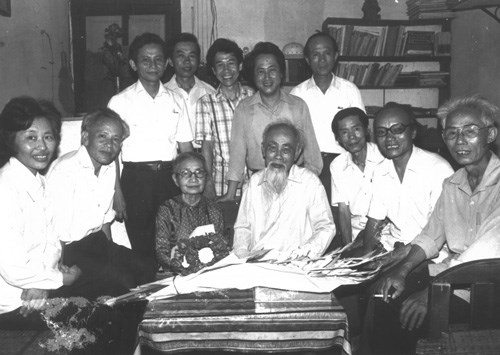
Professor Dao Duy Anh with his students
However, the field of science to which Dao Duy Anh devoted the most effort was History..After the August Revolution of 1945, Professor Dao Duy Anh was invited to teach History at the Hanoi University of Literature, along with other universities and colleges that opened on November 15, 1945. He was a member of the Organizing Committee for the National Cultural Congress (1946). During the resistance war against the French, he was active in the Literature and Arts Branch of Zone IV. In 1950, he was invited to Viet Bac to be the Head of the History and Geography Department under the Department of Literature and Arts, Ministry of Education. In 1952, he returned to Thanh Hoa to teach at the University Preparatory School. In 1954, after peace was restored, he returned to Hanoi to teach at the Hanoi University of Education and the University of Literature. In 1956, when Hanoi University was established, he was appointed Head of the Department of Ancient Vietnamese History, overseeing training and scientific research. Professor Dao Duy Anh's time working at the Department of History, Hanoi University, until 1958, was only a little over two years. However, this was the period when he focused all his efforts on the field of history and achieved the highest results.
With materials accumulated over many years, along with reflections and some drafts prepared during the resistance years, and now having the opportunity to supplement, update information, and consult relevant foreign scientific works, he conducted many fundamental research topics on Vietnamese history, especially on ancient and medieval history such as the issue of historical periodization, the origin of the nation, the issue of the slave-owning system, the feudal system, the formation of the Vietnamese nation... Professor Dao Duy Anh completed the old draft and published two sets of textbooks:History of Vietnam" (1956) and "Ancient history of Vietnam" (1956). Shortly afterwards, he added and rewrote it as "Ancient history of Vietnam"(1957) consists of 4 volumes. In the years 1957 - 1958, he continued to publish "The issue of the formation of the Vietnamese nation"(1957) and rewritten"History of Vietnam from its origins to the 19th century"(2 volumes, 1958). It is rare to see an expert complete and publish so many scientific works in such a short period of two years. During these two years, Professor Dao Duy Anh also worked hard to build a long-term documentation base for the Department of History and Hanoi University. He sought out and purchased valuable Chinese texts, hired people to copy Vietnamese historical works and Sino-Vietnamese documents, collected foreign sources written about Vietnam, and planned to translate necessary materials for students' reference. Alongside the Department of Ancient and Medieval Vietnamese History, there was a translation team consisting of senior Sinologists and a cartography team. Also during these two years, Professor Dao Duy Anh participated in training three cohorts of students from the Department of History, Hanoi Pedagogical University and Hanoi University (1954-1958), the first generation of historians of independent Vietnamese universities, many of whom became professors, associate professors and held important roles. It is important in the development of modern historiography in the country.
In 1958, Professor Dao Duy Anh transferred to the Ministry of Education, and then in 1960 to the Institute of History. From there, he ceased his university teaching duties and focused on a field more suited to his new work environment, while continuously contributing to the country's academic development. As assigned by the Institute of History, he edited and annotated many valuable books that were translated into Vietnamese, such as...Historical Records of Dynastic Constitutions","Dai Nam Thuc Luc","Phu Bien Tap Luc", "Complete History of Dai Viet","Dai Nam Nhat Thong Chi","Military Treatise and Tiger Tent Strategy","Gia Dinh City Chronicle","Complete Works of Nguyen Trai".During this time and after his retirement (1965), he compiled several works such as "Vietnam through the ages" (1964) "Dictionary of the Tale of Kieu" (completed in 1965, published in 1974)"Nom script: its origin, structure, and evolution."(1975), translation and commentary"Lock of the Void" (1974) "Department of Literature" (1974) "The Fairy Tale" (1978) "Nguyen Du's poems in Chinese characters" (1988) "Book of Poetry" (unpublished)The Tao Te Ching and the teachings of Lao Tzu" (unpublished). Towards the end of his life, he wrote a memoir.Remember to think about it this afternoon."(Completed in 1974, published in 1989)."
From 1928 until his passing, Professor Dao Duy Anh left behind a vast legacy of works in numerous fields, from dictionaries, linguistics, culture, and literature to history, archaeology, textual studies, ethnology, and historical geography. He was a brilliant scholar with encyclopedic knowledge of social sciences and humanities, demonstrating an unyielding scientific spirit, a great passion, a grand ambition, and extraordinary willpower. Above all, he was a great historian and a great cultural figure whose groundbreaking research laid the foundation for the formation of modern Vietnamese historiography and cultural studies. In 2000, Professor Dao Duy Anh was posthumously awarded the Ho Chi Minh Prize for two of his works.Ancient History of Vietnamand ""The history of Vietnam from its origins to the 19th century".
Professor Dao Duy Anh was present at the Faculty of Literature from its founding (1945), then at the University Preparatory School in Thanh Hoa (from 1952) and at the Faculty of Literature, Hanoi Pedagogical University and Hanoi University (from 1954 to 1958). He was one of the professors who contributed to building the foundation of the Faculty of Literature, which is the modern social sciences and humanities, of the University and the country.
|
PROFESSOR DAO DUY ANH
+ Workplace: Vietnamese Ancient History Group, later the Department of Ancient and Medieval Vietnamese History (Faculty of History). + Management position: Former first Head of the Department of Ancient and Medieval Vietnamese History (Faculty of History).
Sino-Vietnamese DictionaryHanoi, 1932. French-Vietnamese dictionaryHanoi, 1936. Outline of Vietnamese Cultural History,1938. History of Vietnam From its origins to the end of the 19th centuryHanoi, 1956. Ancient history of Vietnam,Hanoi, 1957. The issue of the formation of the Vietnamese nation,Hanoi, 1957. Vietnam through the ages,Hanoi, 1964.
+ Ho Chi Minh Prize for Science and Technology in 2000 for a collection of works on Vietnamese history and culture, comprising 4 books:History of Vietnam from its origins to the end of the 19th century;Ancient history of Vietnam;VOutline of Vietnamese Cultural History;Vietnam through the ages. |
Author:Professor Phan Huy Le
Newer news
Older news

