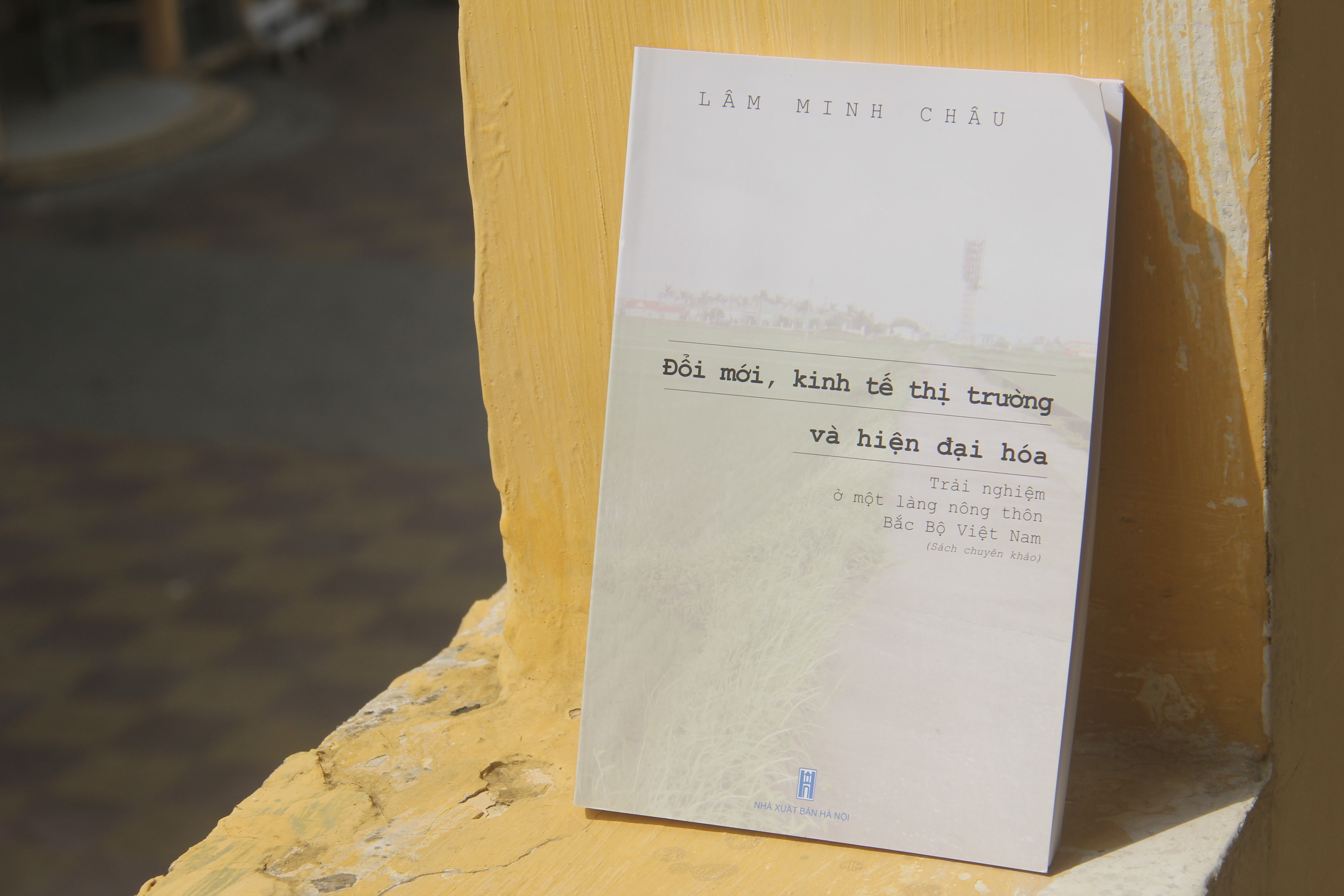
![[Sách chuyên khảo] Đổi mới, kinh tế thị trường và hiện đại hóa](/uploads/ussh/news/2017_06/sach-chuyen-khao-doi-moi-kinh-te-thi-truong-va-hien-dai-hoa08062017144548.jpg)
What is particularly interesting in Dr. Chau's book is the rich documentation on how the hardworking and diligent people in a highly dynamic and traditional rural community in the Red River Delta adapted to the challenges of the Doi Moi (Renovation) process. This book clearly contributes a fresh case study to the body of anthropological knowledge about rural inhabitants and their adaptation to opportunities and challenges during periods of transition. On this basis, the study highlights Vietnam's role as a new and important context for social science research on global economic transformation, while also providing insight into the body of research by experts on Vietnam who share a common interest in the nature and impacts of the Doi Moi period in rural Vietnam and beyond.
I believe that Vietnamese readers will gain much new insight through Dr. Chau's insightful and rigorous analysis of his research findings, and will be very impressed by his sensitivity as an ethnographic field researcher. In this work, he has demonstrated the best of the skills and qualities necessary for an ethnologist/social anthropologist. As social anthropologists, we aim to explain and analyze issues with respect, openness, and a commitment to building upon the research findings of scholars from other disciplines, both past and present. Our top priority is to show the utmost respect for the dignity and privacy of the individuals and communities we study through our extensive fieldwork. In anthropological research, a respectful and serious attitude towards documenting the stories and experiences that people share with us is one of the most important goals, and in this book, Dr. Chau has met the highest standards of social anthropological research, demonstrated through meticulousness, honesty, humility, and accuracy in the observation process aimed at recording all the diverse shades and complexities of life that we encountered.
I am personally very pleased to have been Dr. Chau's scientific advisor during his doctoral studies, and I feel extremely proud to have witnessed his enthusiasm and efforts throughout his studies and independent research. Not only did he set ambitious and demanding goals for himself, but he also demonstrated admirable determination and courage in realizing those goals and completing these studies. Dr. Chau's book explores one of the unresolved issues in international scholarly research, yet one of the most significant for contemporary Vietnam. This is about how the daily economic lives of rural families and communities in Vietnam have changed since the beginning of the Doi Moi (Renovation) period, and how hardworking Vietnamese farmers have seized diverse livelihood opportunities to fulfill their responsibilities of caring for their beloved families, amidst profound changes taking place in economic life, from employment and land to household economic activities as well as in trade and commerce.
Now that Dr. Chau has revised and edited his dissertation into a highly innovative research monograph, he is sharing his findings about the community in northern Vietnam, which he studied and named Xuan Village, with Vietnamese readers. To me, this is a very promising prospect. Through Dr. Chau's meticulous and detailed observation, readers will discover the richness, creativity, and extraordinary courage of the people of Xuan Village as they adapt to and confront the challenges of their economic lives, both past and present. We will learn much from the people of Xuan Village because their voices, their life stories about daily life, and their determination to provide the best for their families and seek life opportunities for their children are the overarching and most important themes of this book. In this book, readers will understand the lives they live, how they think and act, and how they have adapted to the visions of development and plans for expanding economic horizons—things that have been and continue to be considered grand goals for Vietnam today.
Dr. Chau's book on the world of the people in Xuan village is a well-deserved recognition of his care, sincerity, and effort in conceiving and carrying out this creative yet challenging research. I am confident that the book will be warmly and widely received by readers.
Susan Bayly
Professor of Historical Anthropology
University of Cambridge, England
Author:Susan Bayly
Newer news
Older news

