
Professor Nguyen Van Khanh, Chairman of the School's Science and Training Council, is presiding over the meeting.
The University's Scientific and Training Council has 37 members, including the Board of Directors, Heads of Departments, Institute Directors, Directors of several centers, and 17 invited members who are professors who have previously worked with or collaborated on the University's scientific and training activities. Professor Dr. Nguyen Van Khanh, Director of the Institute for Policy Research, is the Chairman of the Council. Traditionally, the University's scientific council meets twice a year to advise and provide feedback on development strategies to the University's leadership.
Also attending the working session were Assoc. Prof. Dr. Nguyen Kim Son, Permanent Vice Director of VNU; Prof. Dr. Nguyen Dinh Duc, Head of Training Department of VNU; and Dr. Nghiem Xuan Huy, Deputy Head of Science and Technology Department of VNU.

Associate Professor Pham Quang Minh, Rector of the University, delivered the opening remarks at the meeting.
In his opening remarks, Associate Professor Pham Quang Minh, Rector of the University, highlighted several challenges that the University of Social Sciences and Humanities will face in the coming period. To maintain its leading position nationwide in the field of social sciences and humanities and to extend its influence globally, the University's staff needs to take groundbreaking steps, based on the principle of liberal arts as a foundation, driving strong momentum for development.
Associate Professor Pham Quang Minh hopes that the members of the training science council, who are the most brilliant minds of the University, will discuss and offer many suggestions and advice for the University's future.
Professor Nguyen Van Kim, Vice Rector of the University, presented the University's Science and Technology Plan for the period 2016-2020. Accordingly, the University's key research direction for the coming period is to research and establish theoretical issues, doctrines, viewpoints, and research methods that promote the development of social sciences and humanities suitable to Vietnamese society. This includes researching and clarifying Vietnam's unique development path and model; the position and political and cultural responses of our nation in history, present, and future. It also involves researching the historical, cultural, social, linguistic, ethical, and lifestyle characteristics of the Vietnamese people, as well as the natural conditions and ecological environment that impact social transformation, social classes, strata, interest groups, and Vietnamese value systems, creating a basis for national economic development policies and regional development; with priority given to ethnic minority regions.
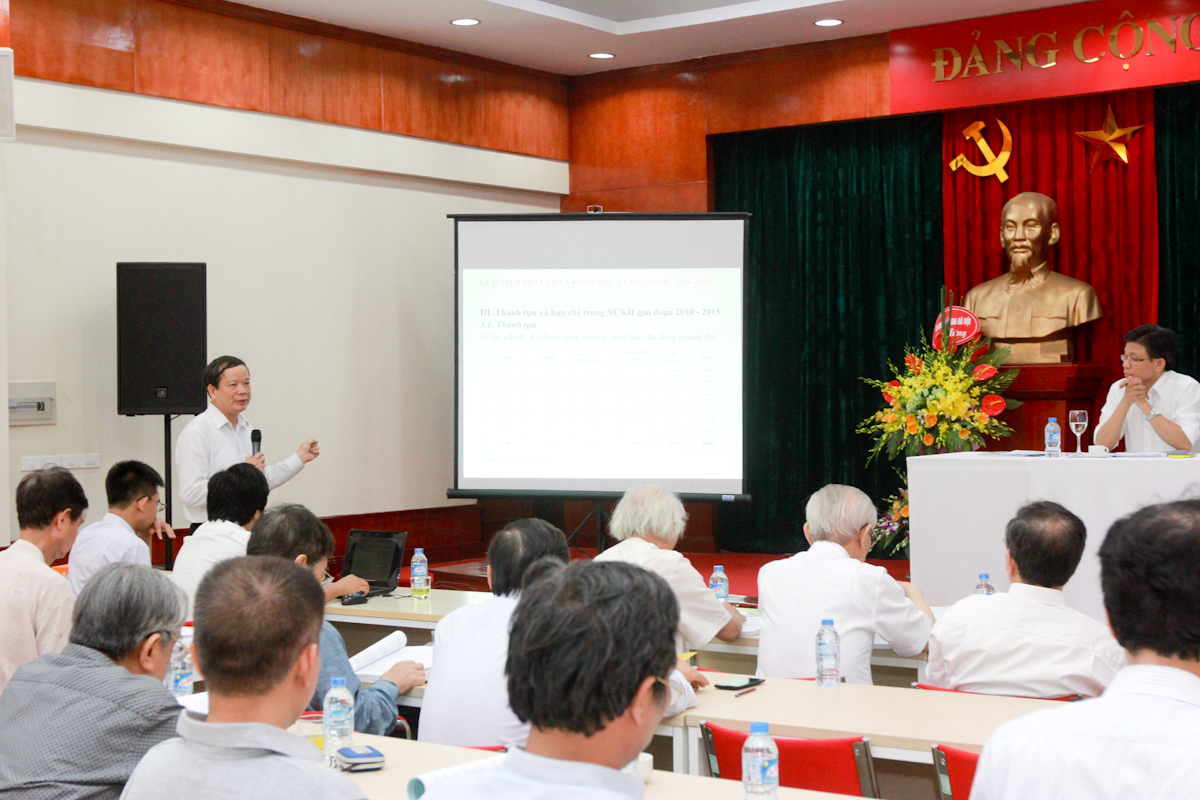
Professor Dr. Nguyen Van Kim, Vice Rector of the University, is presenting the University's science and technology plan report for the period 2016-2020.
Research on urbanization and urban management, and rural management in the urbanization process. Research on fundamental issues to build a national standard document on Vietnam's territorial sovereignty, with particular emphasis on maritime sovereignty and the potential, cultural, and economic environment of the sea.
This study compares and summarizes Vietnam's international relations throughout history, with a priority on researching and summarizing relations between Vietnam and Southeast Asian countries and Asia-Pacific countries.
Regarding training, during the period 2011-2015, the development of training programs made significant progress; credit-based training continued to be implemented and stabilized; and training materials were given attention and strengthened.
Despite its notable achievements, the school's training organization and management still have some limitations. Specifically, enrollment targets have not been met; and the quality of training has been inconsistent over the years.

Overview of the session
After analyzing the causes of existing limitations, the report proposed a group of solutions aimed at improving the quality of training at the University in the coming period: reforming the organization and management of training during the 2016-2020 period. Student recruitment needs to become a regular and career-oriented activity. Accordingly, the training department should establish a specialized recruitment unit for undergraduate and postgraduate programs.
The training department's teaching schedule development requires close coordination with the faculties. The training and evaluation process should be partially adjusted to enhance the proactive role of the faculties and the professional role of lecturers. Teaching foreign languages to students is one of the key solutions to improve the quality of university education. Supplementary skills training for students will be conducted efficiently and cost-effectively. Some stages in postgraduate training should be adjusted to streamline the process and reduce administrative procedures for students...
Commenting on the school's development direction, Associate Professor Pham Quang Long stated that the school's directions are too general and not closely aligned with practical activities. Furthermore, he suggested that the school should establish a fund for scientific research as soon as possible, as this would be a prerequisite for promoting stronger development of social sciences and humanities research in the future.
Regarding training, Associate Professor Pham Quang Long emphasized the issue of employment for students after graduation. The university needs to take more decisive measures in organizing and training to increase job opportunities for students in the future.
To increase these opportunities, one of the crucial foundations is the quality of training, according to Professor Phan Huy Le. He believes that, ultimately, for training to survive and thrive, all activities must aim for one final goal: quality.
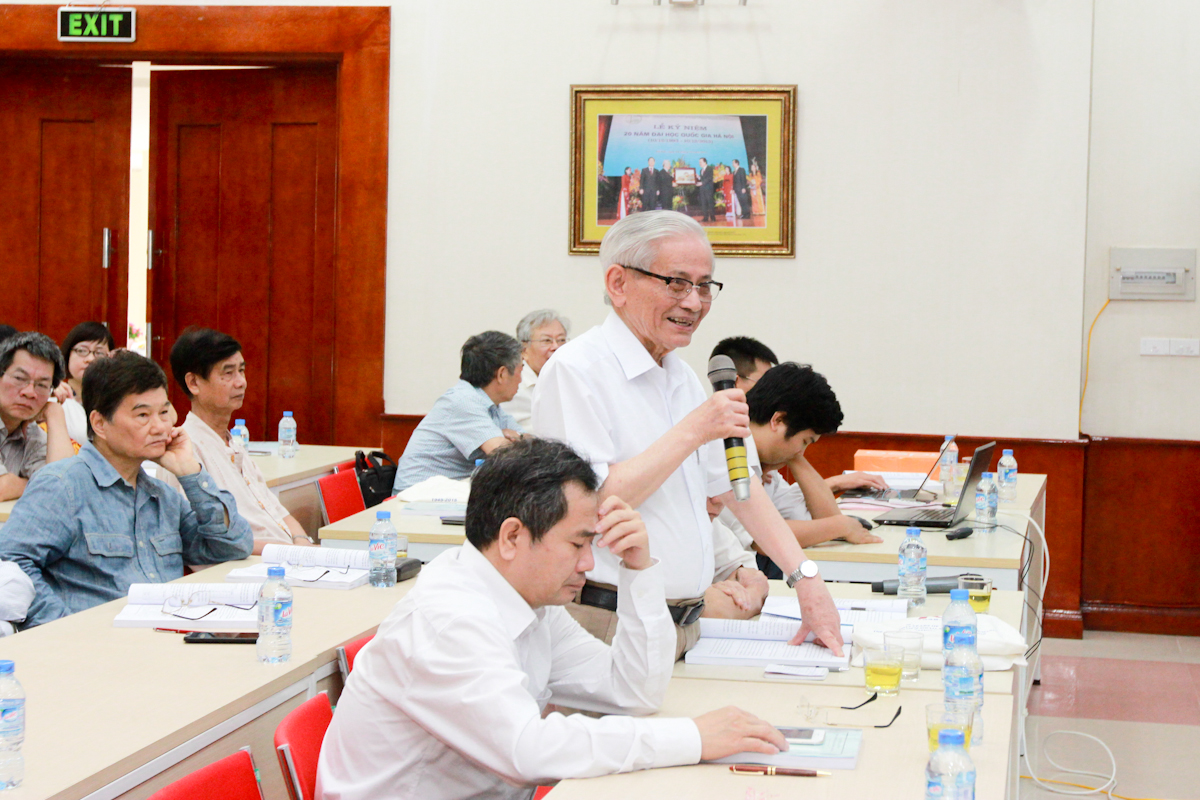
Professor Phan Huy Le is submitting a proposal to the school's leadership.
To improve quality, Professor Phan Huy Le, a People's Teacher, believes that the university needs to invest in its staff, especially young staff. According to him, a current reality is that the university has a large staff with high academic titles and degrees, but lacks experts in specific fields. The university needs to develop strategies to ensure that its staff is both broad in knowledge and in-depth in their respective research areas.
Discussing the issue of young staff, Professor Phan Huy Le suggested that the university should pay special attention to young people. While society today offers many sources for training young professionals, the university must ensure that those who enter and remain at the university are the most outstanding individuals. This addresses the problem of highly trained young staff who either do not return to the university or leave after a short time, leading to wasted resources.
Regarding scientific research activities, Professor Phan Huy Le, a People's Teacher, believes that only research can contribute to society, only research can train talented personnel; in other words, good research is essential for good teaching. Professor Phan Huy Le suggested that the university should promote research activities among all its staff, lecturers, students, and trainees.

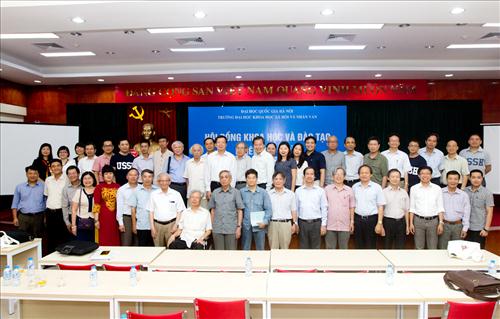
The entire School's Scientific and Training Council and the leadership of VNU Hanoi pose for a commemorative photo.
Speaking at the session, the Standing Vice Director of VNU Hanoi, Nguyen Kim Son, highly appreciated the achievements that the University of Social Sciences and Humanities has made in the past time.
Deputy Director Nguyen Kim Son requested that, in the process of development, the University of Social Sciences and Humanities needs to carry out many important tasks, especially restructuring the system of training majors/specializations and scientific research to increase competitiveness within the entire system. The university needs to pay attention to and invest resources in teaching social sciences and humanities.
Regarding training, the school needs to innovate its training management methods to ensure uniformity, professionalism, and a modern, formal approach; while also strengthening the development of high-quality training programs and proposing solutions for foreign language training to meet the output standards for students.
Regarding scientific research, the Standing Vice Director of VNU suggested that faculty and staff of the University of Social Sciences and Humanities should increase research programs and major research projects to increase international publications, and at the same time, promote collaborative projects with localities.
Also within the working framework, members of the School's Scientific and Training Council unanimously approved, with revisions, the Report on the Establishment of the Center for Marine and Island Research; the Report on the Establishment of the Center for Research, Training and Development of Social Work; the Report on the Establishment of the Department of Religious Studies under the School; and the Report on the Establishment of the Department of Public Policy under the Faculty of Management Science.
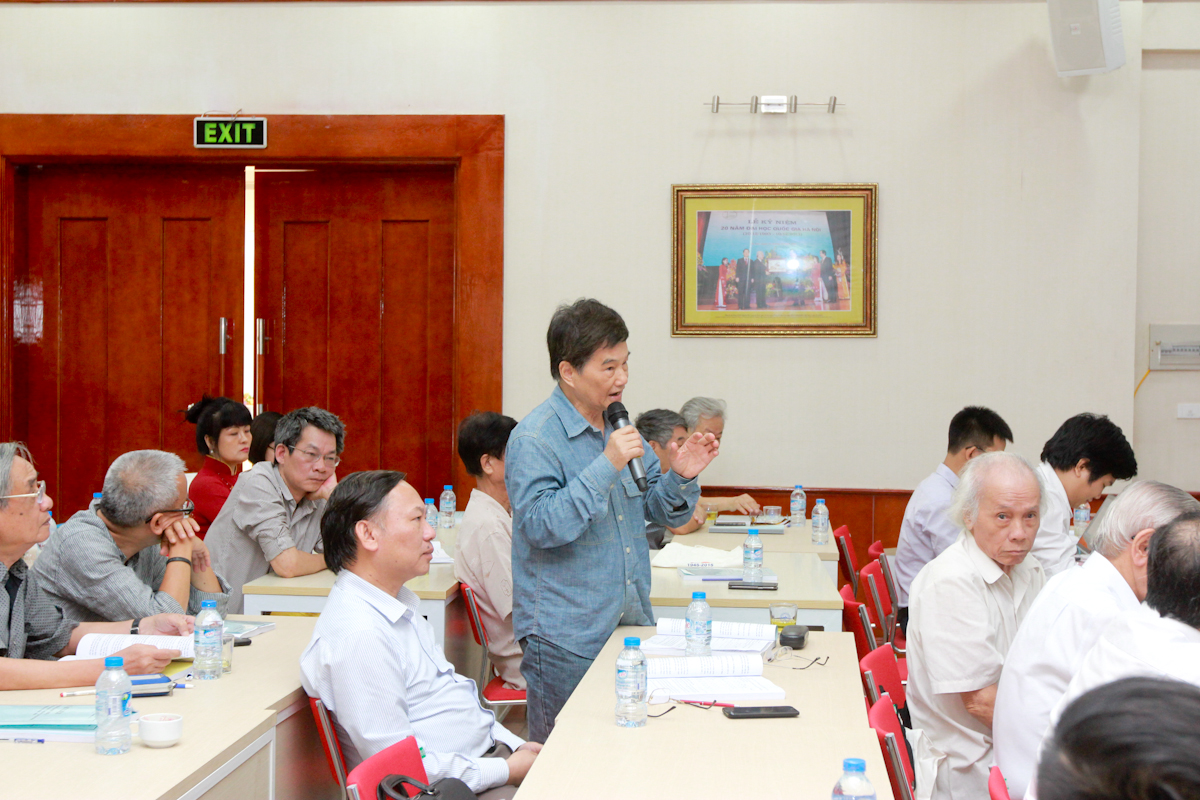
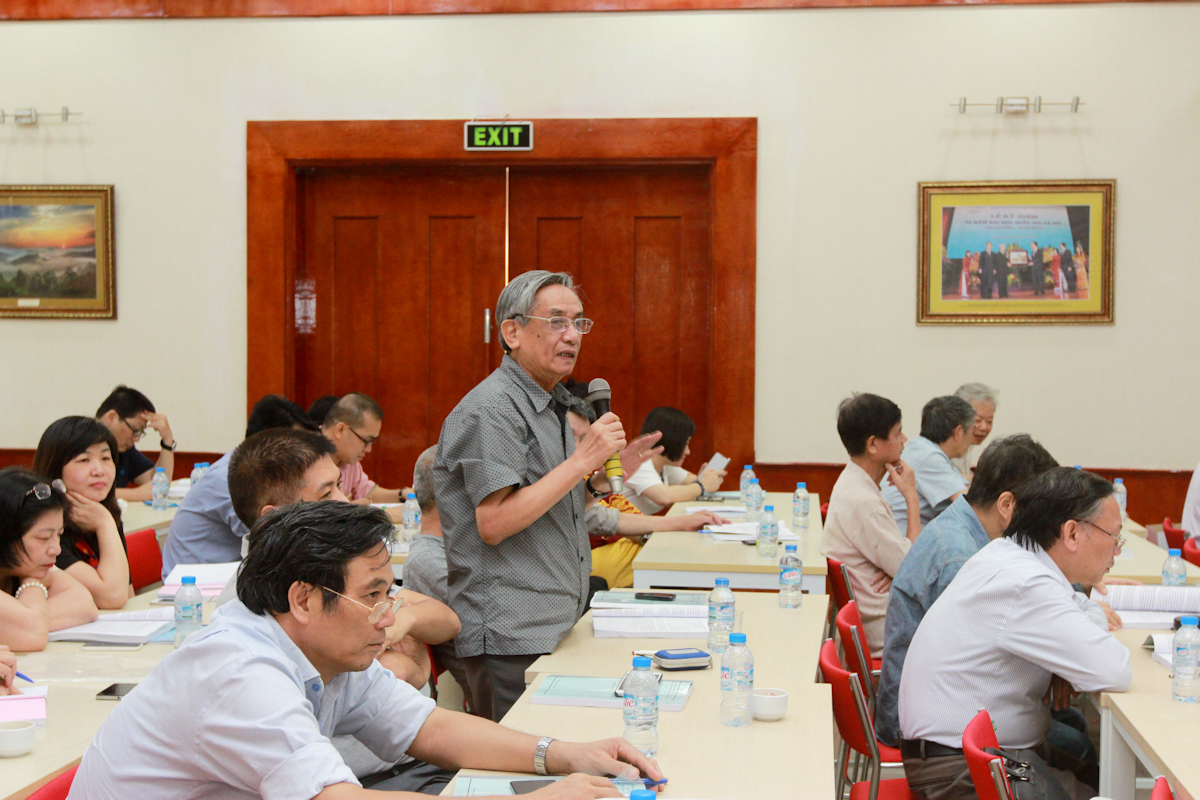
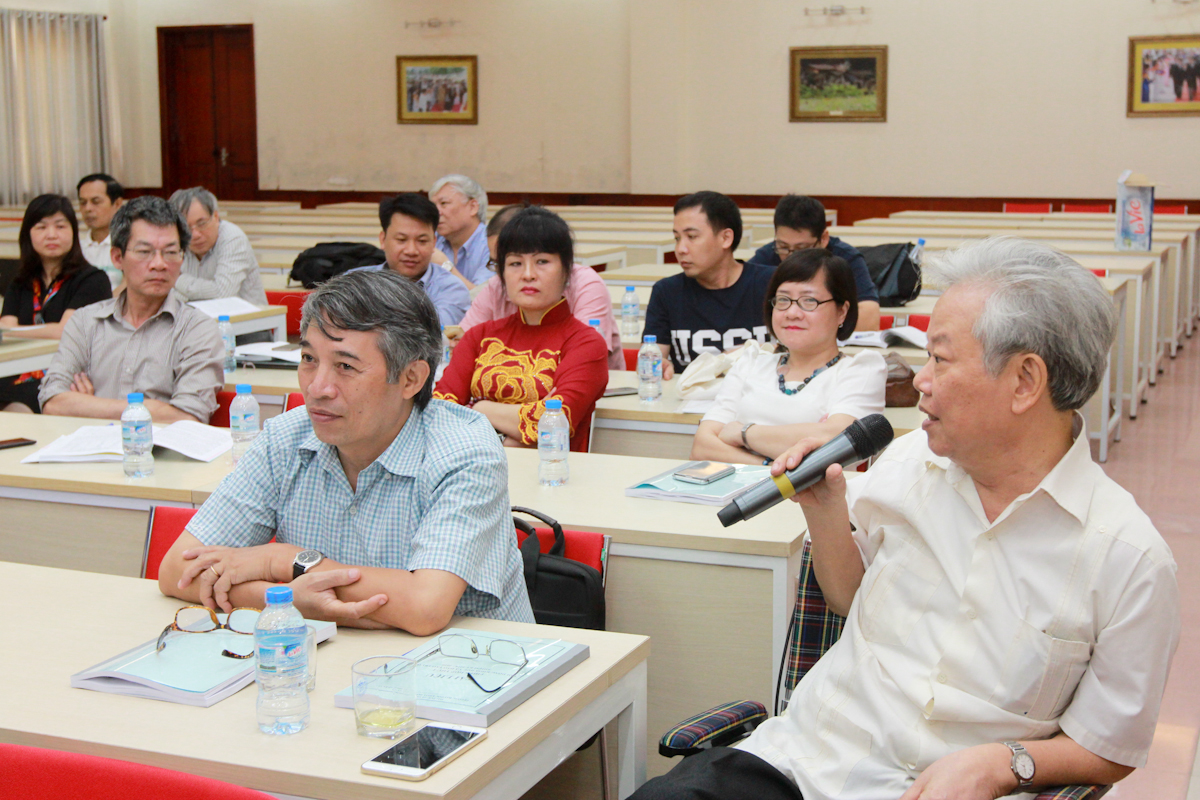
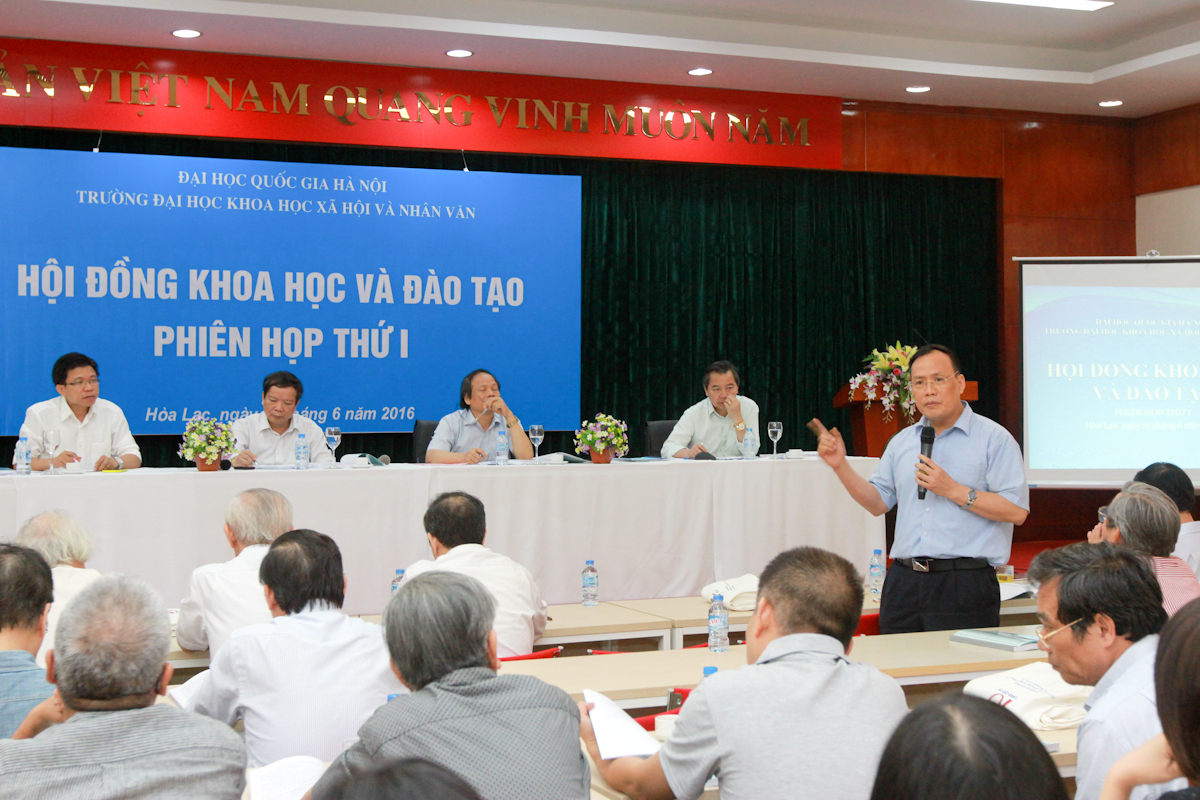
Here are some photos showing the feedback from the council members at the meeting:

Author:Hoai An
Newer news
Older news

