
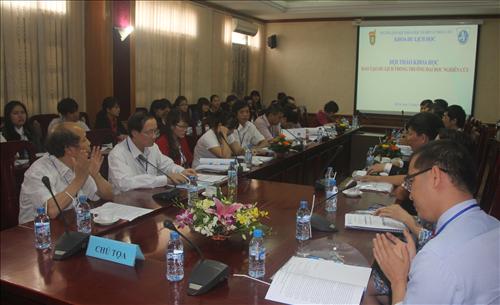
The presentations addressed the opportunities and challenges of the tourism industry in general and tourism human resource training in particular, while also discussing solutions to improve the quality of tourism training to meet social needs and global development trends.
Tourism is identified as a fundamental and key economic sector of the country. The goal of Vietnam's tourism industry is to develop professionally with high-quality, diverse, branded tourism products that reflect the national cultural identity and are competitive with those in the region and the world. By 2030, Vietnam aims to become a developed tourism nation.
Experts believe that job opportunities in the tourism and hospitality sector are increasing due to the continued high growth rate of both domestic and international tourists. This opens up significant opportunities for domestic tourism training institutions.
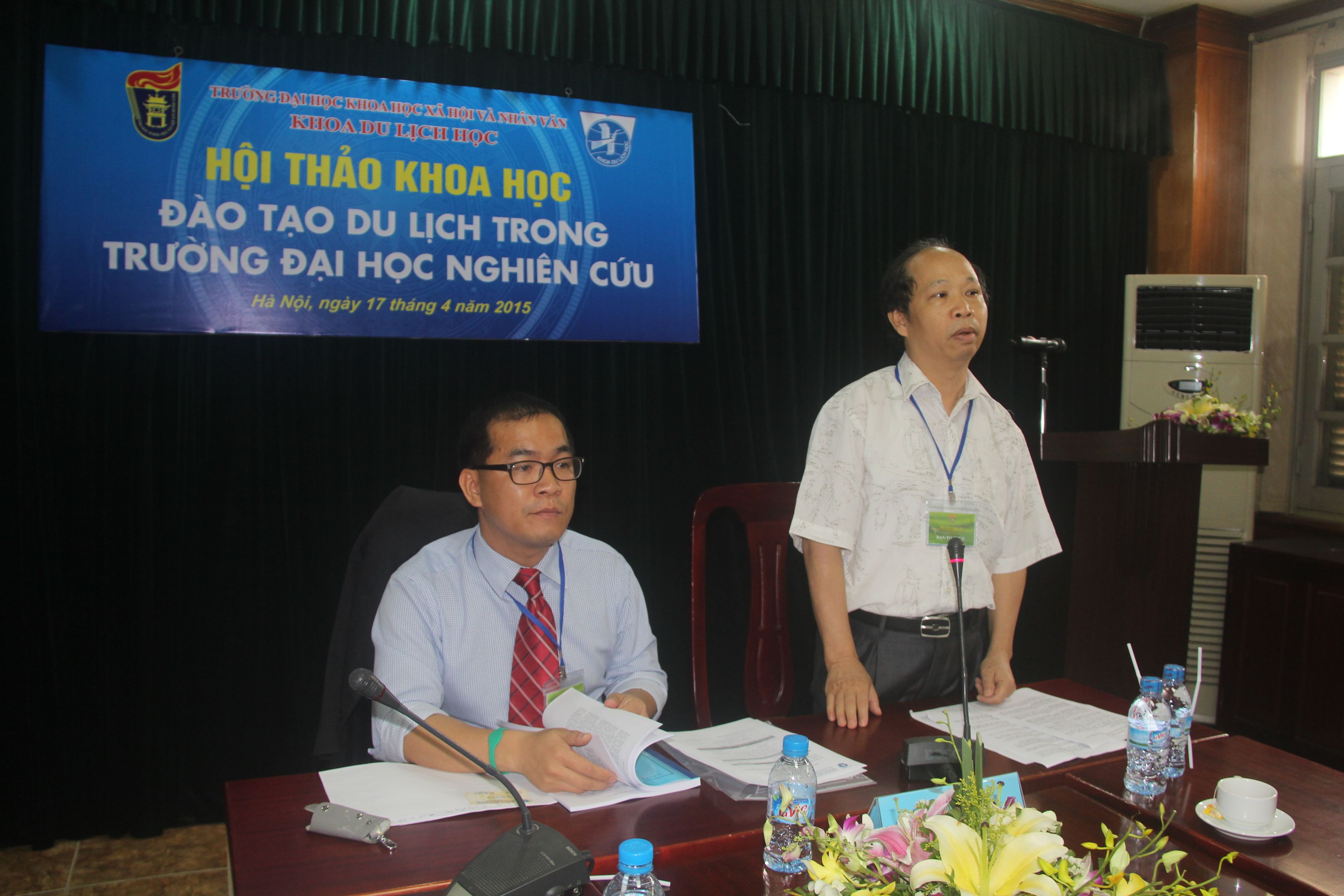
According to the "Vietnam Tourism Development Strategy to 2020, Vision 2030" published by the Ministry of Culture, Sports and Tourism in 2012, 2.2 million workers in the tourism sector were needed by 2015, and over 3 million by 2020. Between 2015 and 2020, the percentage of workers with specialized tourism training had to increase from 60% to 80%-100%. By 2015, at least 90,000 tourism workers had to have a university degree or higher. Meanwhile, according to the "Vietnam Tourism Human Resource Development Plan for the period 2011-2020," currently only about 3.2% of the total workforce in the industry has a university degree or higher, which is less than 20,000 people, equivalent to only 22% of the target. On average, more than 8,000 undergraduate graduates and over 500 master's degree holders need to be trained each year. Therefore, Vietnamese universities are currently unable to meet this demand.
In addition, legal documents on educational development strategies, tourism development strategies, etc., issued by the State and ministries at all levels have created an important basis for training institutions to plan appropriate development strategies and training scales.
Tourism education is also facing several challenges:
Firstly, there has been a proliferation of tourism-related universities across the country, offering diverse training programs and formats. Currently, there are 62 universities nationwide, producing over 1,000 graduates annually in tourism-related fields.
Secondly, Tourism Studies does not yet have an official training program code. Program codes are a standardized framework for organizing, implementing, and managing training content. With the development of society, the program code system also needs to be expanded to support universities and align with global trends. Currently, including tourism training and guidance programs under the Vietnam Studies program code not only results in graduates not meeting the requirements of Vietnam Studies but also failing to meet the requirements of the tourism industry. Similarly, the program code for "Tourism and Travel Service Management" is also inappropriate.
Thirdly, competition in the tourism industry has placed increasingly stringent demands on the training of human resources. Practical training in tourism is very elaborate, time-consuming, and requires significant effort. Schools lack qualified teachers and lecturers with strong expertise and practical experience. New tourism trends, including outbound tourism and increased investment in overseas tourism, force training institutions to constantly adjust their curricula and training content to suit the realities of the industry.
Currently, the Faculty of Tourism Studies at the University of Social Sciences and Humanities is a reputable and well-established training institution in tourism studies nationwide. The Faculty was the first to offer a Master's program in Tourism in 2003 and the first faculty within the University of Social Sciences and Humanities to successfully launch a dual degree program in 2009. Furthermore, the Faculty's full-time and part-time staff possess high professional qualifications, extensive practical experience, and excellent foreign language skills.
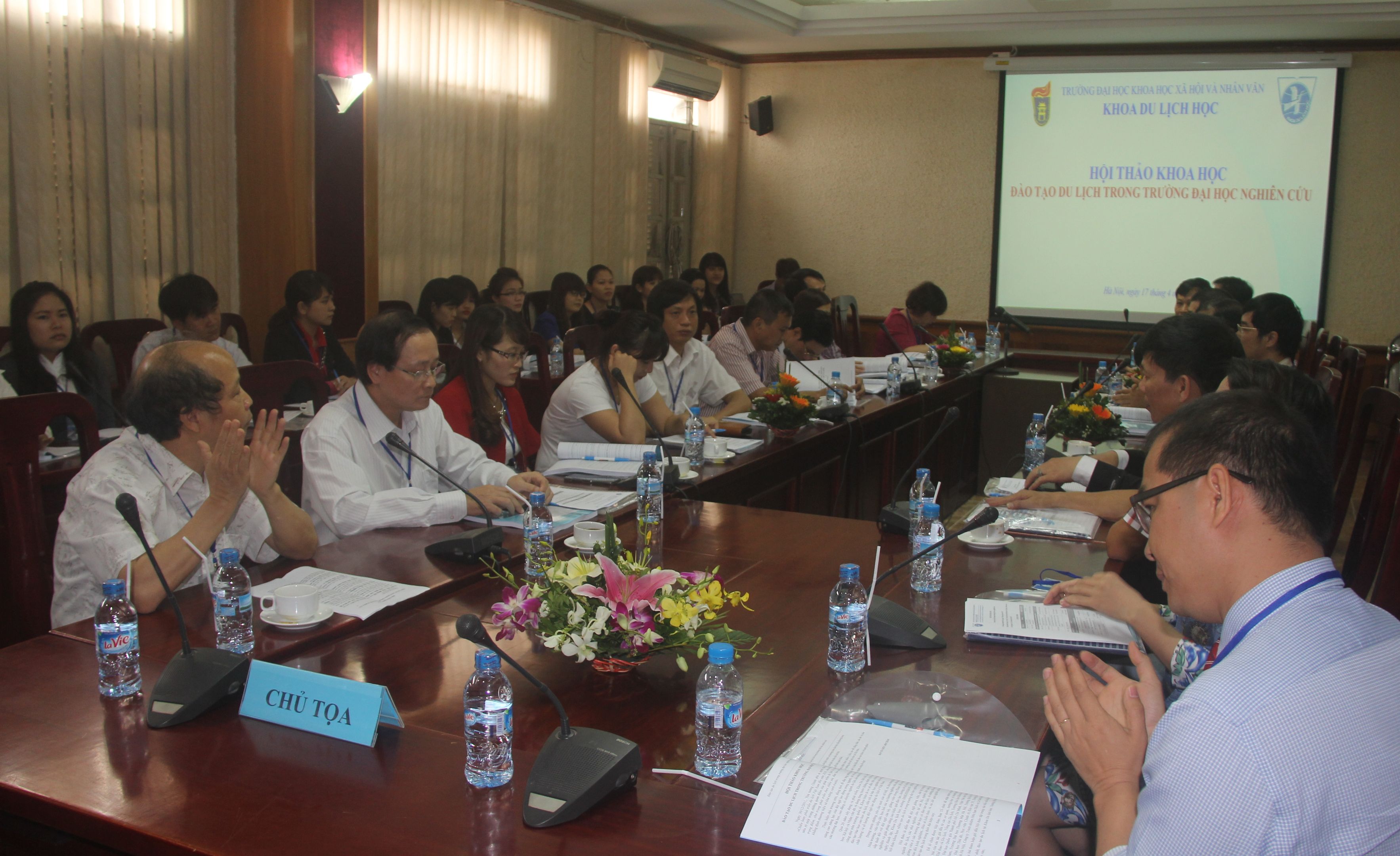
In line with the development trend of the University of Social Sciences and Humanities towards a research-oriented university, the Faculty of Tourism Studies has set itself the direction of becoming a research-oriented training institution. Contributing to this development direction of the Faculty, the delegates proposed several solutions:
Firstly, it is necessary to raise awareness of the concept of a research university among the faculty, students, and trainees of the Department. A research university must be an environment that focuses on research and postgraduate training, a place that brings together and trains professional researchers, and whose research results contribute to the development of human knowledge. A research university must aim to become an elite university.
Secondly, the Faculty needs a specific strategic development plan that is appropriate for each stage. Based on societal needs and its strengths, the Faculty should focus on developing postgraduate training in both breadth and depth. Specifically, it should quickly adjust and update the research master's program, open additional applied master's programs, and complete the doctoral training program in tourism.
Thirdly, the Faculty needs to strengthen training partnerships both domestically and internationally, especially with institutions offering advanced training programs, to enhance its professional and organizational management capabilities. The Faculty should also expand international collaborative training programs to promote professional exchange, technology transfer in training and research; and strengthen partnerships with tourism businesses to reinforce the relationship between the university and practice.
In addition, the Faculty needs to immediately implement benchmarking activities, which means establishing a continuous evaluation process of teaching and research, academic research, and applying best practices from advanced training institutions.
Author:Thanh Ha
Newer news
Older news

