
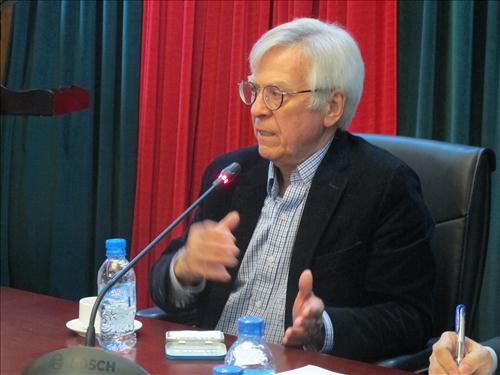
Concerns in current sociological research
Professor Bryan Turner began by presenting the current state of sociological research. According to him, the role of sociology is declining and failing to meet the needs of modern society. The era of sociology under renowned figures such as Max Weber and Durkheim is considered the golden age of sociology. However, today, sociology is seen as losing its crucial role. Why is this? It's because since the 1950s, the American sociological system has increasingly dominated, emphasizing quantitative models and the complexity of research models. However, the more complex the issues, the narrower the research perspective becomes, failing to reflect the broader problems. Furthermore, there is a distinction in sociological models between the United States and Europe. While funding for sociological research in the United States is greater, their studies often place too much emphasis on technical and quantitative issues. Meanwhile, in Europe, despite less funding, researchers tend to focus on qualitative perspectives rather than statistical and data-driven discoveries.
According to Professor Bryan Turner, contemporary sociology is too heavily influenced by neoliberalism, placing too much emphasis on individual experience, individuality, and narrow issues such as identity, personality, and consumerism, while neglecting broader issues. For example, the Center for Sociology at the City University of New York currently has about 150 graduate students researching issues such as identity, sexuality, gender equality, gender, and children. Gender is considered the most important issue. However, according to Professor Turner, this is not necessarily the only or dominant issue in sociology. Many issues that were central to sociology during its golden age, such as class, inequality, justice, exploitation, and deindustrialization, have received almost no adequate attention recently. Furthermore, he argued that current sociological research places too much emphasis on cultural studies, particularly cultural issues from the perspective of media and postmodernism. This necessitates changes in the direction of sociological research.
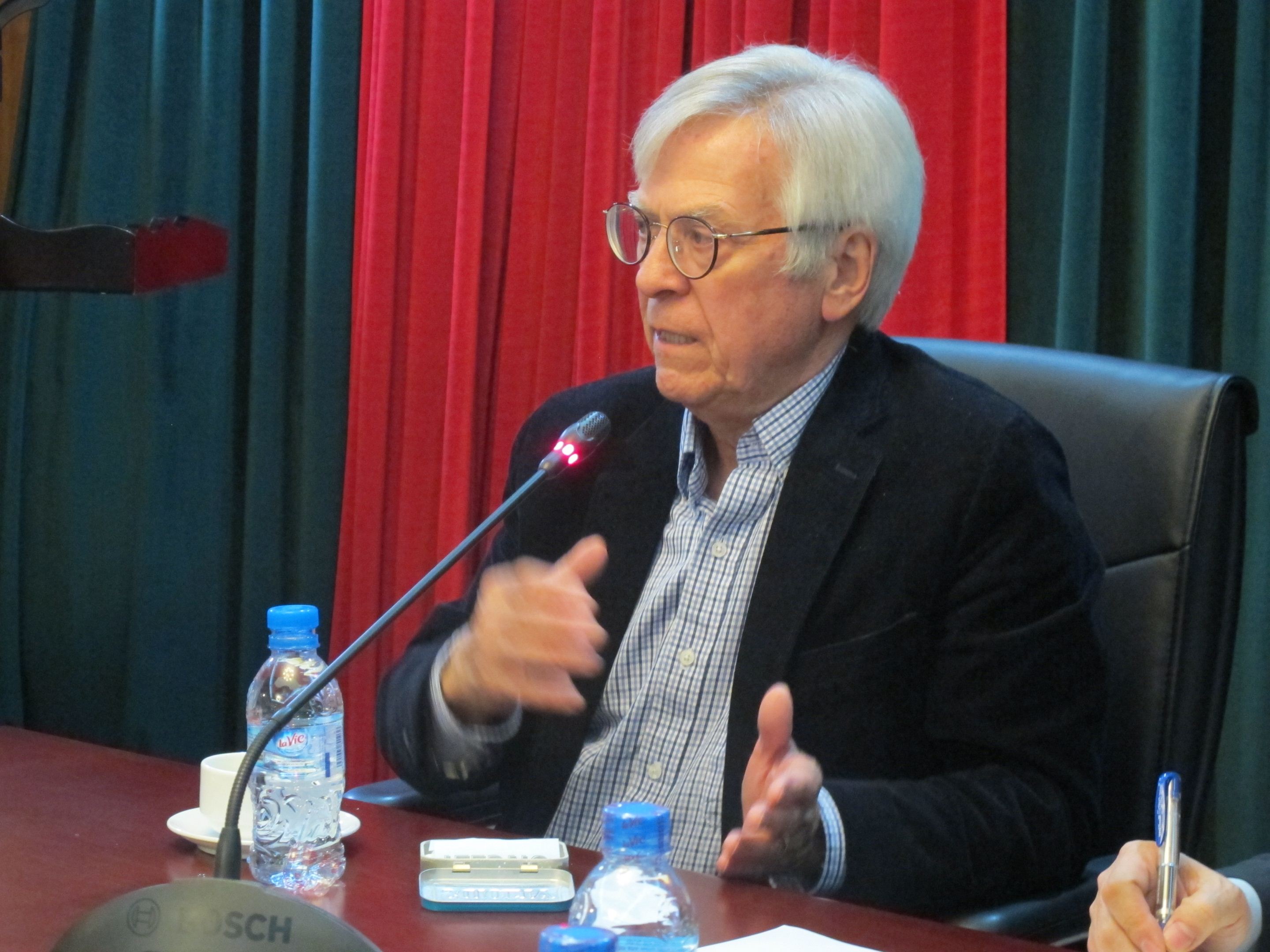
Professor Bryan Turner presents concerns in modern sociological research (Photo: Thu Ha)
Solutions to the concerns of modern sociology.
So what are the solutions to these problems? Professor Bryan Turner believes there are many solutions to the aforementioned situation. He himself has founded three specialized journals to address both classic and contemporary issues in sociology.
First is the journal *Civic Studies*. According to Professor Bryan Turner, citizenship is a major, classic issue in sociology, related to political issues such as the state. For example, in Vietnam, there are issues concerning citizenship, such as the definition of citizenship in Vietnam. Citizenship reflects whether an individual is integrated into a society or is isolated and separated from it. Citizenship is also related to inequality and resource distribution in society. For example, citizenship can help combat market forces and promote a more equitable distribution of resources.
Secondly, there is the Journal of Classical Sociology. This journal receives many articles on great sociologists such as Karl Marx, Weber, and Durkheim. These articles highlight the views, terminology, and approaches of great sociologists of the past that remain relevant today. The Journal of Classical Sociology aims to draw attention to these classic issues, authors, concepts, and ideas in modern sociology.
Thirdly, there is the Journal of Religious and Political Practice. This journal not only focuses on research into issues such as doctrine and religion in general, but also on how people practice religion. The journal has two main concerns. First, it examines religious practice within the context of contemporary religious diversity, the differences between religious practices in Buddhism, Islam, Catholicism, Shintoism, etc. Second, it explores the relationship between religion and politics, such as the relationship between Sunni and Shi'a Islam in the Middle East, the relationship between Buddhism and Islam in Myanmar, religious conflicts in Thailand, and the influence of Islam in Europe.

Scene from the meeting (Photo: Thu Ha)
Planned sociological research
In addition to the three journals mentioned above, Professor Turner is about to launch a research project entitled "Secularization, Contemporaryism, and the Social Pluralism of Religion." This project has the following main concerns:
Firstly, there is the aspect of legal pluralism. Specifically, the project will focus on Islamic law, also known as Sharia law.
Secondly, there is social diversity. The main issues of concern here are family, sexuality, same-sex marriage, etc. Studying these issues will clarify the diversity within families and marital life today.
Thirdly, there is the crisis that religious societies are facing. There are many religious issues of concern at present, such as the emergence of homosexuals in public spaces, or the debates between Protestant and Orthodox communities in many countries today.
Based on the aforementioned concerns, this project will answer two main questions: What constitutes the cohesion and success of a society? What makes people happy, and what is the relationship between the fate of a society and human happiness?
According to Professor Turner, there are many commonly used criteria for evaluating the success of a society, such as the health of its citizens, wealth, and happiness. However, there are many other important criteria that have not been given enough attention, even though they also contribute significantly to the success of a society. For example, in many societies, citizenship is so strictly regulated that many segments of society are marginalized, such as minorities, migrants, and refugees.
In short, the core issue of modern sociology relates to human happiness. Human happiness is also the main measure of a successful society. According to him, people are happy when they have the opportunity to develop and grow. But people cannot achieve this if society is not good.
Through this project, he will develop a new research agenda for modern sociology. This agenda will focus on the problems of modern society but on applying classic sociological perspectives and concepts. Initially intended to focus on societies, Professor Bryan Turner has shifted the research subject to cities.
Taking this opportunity, Professor Turner also proposed to Associate Professor Pham Quang Minh the implementation of a global research project. This project would apply criteria for evaluating the success of cities to answer questions such as: are Hanoi, Melbourne, or New York successful cities in comparison to other cities around the world? Through this project, scholars and sociologists would have the opportunity to exchange views and experiences. Associate Professor Pham Quang Minh welcomed this proposal, considering it a very important and interesting issue for sociological research.

Associate Professor Pham Quang Minh presents Professor Bryan Turner with a copy of the Journal of Social Sciences and Humanities of the University of Social Sciences and Humanities (Photo: Thu Ha)
Following the presentation, faculty, staff, and students of the School asked Professor Bryan Turner many questions related to issues such as the concept of happiness; President Obama's views and policies on gun sales and the reaction of the American public; the role of women in modern society; the issue of citizenship in sociological research; as well as the market economy and individual happiness.
Author:Tran Minh
Newer news
Older news

