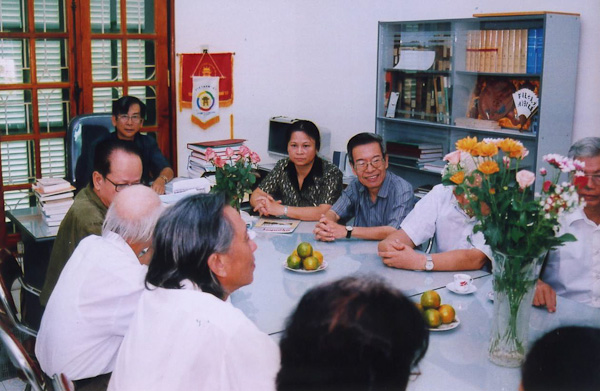
Associate Professor Dr. Nguyen Hong Con (Head of the Department of Linguistics - University of Social Sciences and Humanities) reviews the 55-year journey of the Linguistics Department at the University of Social Sciences and Humanities on the occasion of the 55th anniversary of the Faculty of Literature and the 15th anniversary of the Faculty of Linguistics.
Linguistics was introduced into the curriculum of Vietnamese universities in 1956, beginning with the Linguistics Department, part of the Faculty of Social Sciences, and later the Faculty of Literature at Hanoi University (1956-1996). In 1996, three years after the establishment of the University of Social Sciences and Humanities under the Vietnam National University, Hanoi (hereinafter referred to as Hanoi University of Social Sciences and Humanities) on the basis of Hanoi University, the Linguistics department separated from the Faculty of Literature to become the Faculty of Linguistics of Hanoi University of Social Sciences and Humanities. Thus, to date, the Linguistics department of Hanoi University of Social Sciences and Humanities has undergone 55 years of development.
1.1.During its 55 years of establishment and development, the Linguistics Department of the Hanoi University of Social Sciences and Humanities has achieved many accomplishments in various aspects of its activities, first and foremost the achievements in
traininghuman resources for the country
.After a period of active curriculum development and course content building during the first 10 years (1956-1965), and the development of a faculty for teaching and research, in 1965, Linguistics was officially recognized as an independent major, with its own admissions process starting from the first year. This specialized training continued until 1996. It can be said that, along with Literature, Linguistics within the Faculty of Linguistics contributed significantly to the reputation of the Faculty of Literature at the University of Hanoi (1956-1996). In 1996, based on the Linguistics Department of the Faculty of Linguistics, the Faculty of Linguistics of the Hanoi University of Social Sciences and Humanities was established, marking the first time Linguistics was recognized as an independent undergraduate major in Vietnam. After nearly 15 years of development, the Faculty of Linguistics is now the only faculty in Vietnam offering Linguistics programs at all three levels: Bachelor's (including standard, high-quality, and international-level programs), Master's (linguistics), and Doctoral (including five specializations: linguistic theory, Vietnamese linguistics, languages of ethnic minorities in Vietnam, historical comparative linguistics, and comparative-contrastive linguistics). As of 2011, the Linguistics Department of the Hanoi University of Social Sciences and Humanities had trained over 1600 bachelors, more than 250 masters, and 125 doctoral graduates in linguistics, Vietnamese linguistics, and the languages and cultures of ethnic minorities in Vietnam. Graduates of the Faculty of Linguistics are currently working in many universities, research institutes, media, cultural, and educational organizations both domestically and internationally. In the 2011-2012 academic year alone, the Department of Linguistics was managing the training of 150 undergraduate students and 285 postgraduate and doctoral students. If we compare the ratio of undergraduate students to postgraduate students, the number of postgraduate students in the Department is currently almost double that of undergraduate students. In addition, the Department also has over 300 international students participating in various training programs.
1.2.Along with training, generations of faculty and lecturers in the field of Linguistics have also actively promoted
scientific research activitiesand achieved significant accomplishments. Many faculty members of the Department are pioneers or leading researchers in various fields of the discipline, such as:
Vietnamese grammar(Nguyen Tai Can, Nguyen Kim Than, Nguyen Lai, Cao Xuan Hao, Hoang Trong Phien, Nguyen Cao Dam, Dinh Van Duc, Nguyen Minh Thuyet, Nguyen Van Hiep, Nguyen Hong Con, Dao Thanh Lan…),
Vietnamese phonetics(Doan Thien Thuat, Nguyen Phan Canh, Mai Ngoc Chu, Dinh Le Thu,…)
Vietnamese vocabulary and semantics(Nguyen Van Tu, Nguyen Thien Giap, Le Quang Thiem, Nguyen Duc Dan, Vu Duc Nghieu, Le Dong…),
history of the Vietnamese language(Nguyen Tai Can, Dinh Van Duc, Tran Tri Doi, Vu Duc Nghieu…),
Vietnamese dialect(Hoang Thi Chau)
Vietnamese learning styles(Phan Ngoc, Nguyen Phan Canh, Nguyen Huu Dat…),
languages of ethnic minorities in Vietnam(Bui Khanh The, Doan Thien Thuat, Tran Tri Doi, Mai Ngoc Chu, etc.)
neurolinguistics(Nguyen Ham Duong)
Contrastive linguistics and translation(Le Quang Thiem, Nguyen Hong Con)
text linguistics(Tran Ngoc Them, Nguyen Thi Viet Thanh), etc. Many textbooks, lectures, and scientific research works compiled by former and current faculty members of the Linguistics Department are of academic and pedagogical value and are highly appreciated by colleagues both domestically and internationally, for example:
Vietnamese grammar: Words - compound words - phrases Nouns as a word class in modern Vietnamese, Origin and formation process of Sino-Vietnamese pronunciation, Historical phonology of the Vietnamese language.(Nguyen Tai Can)
Vietnamese phonetics(Personal Practice Group),
Vietnamese Grammar - Sentences(Hoang Trong Phien)
Vietnamese Grammar - Parts of Speech, Vietnamese Grammar: Parts of Speech from a Functional Perspective(Dinh Van Duc)
Vietnamese vocabulary learning, Vietnamese words and word recognition.(Nguyen Thien Giap)
Researchamniotic fluid
projection of languages, Semantics(Le Quang Thiem)
Vietnamese words indicating direction of movement,
Language and literary creation(Nguyen Lai)
Vietnamese dialects(Hoang Thi Chau)
Studies on the languages of Vietnam's ethnic minorities, History of the Vietnamese language(Tran Tri Doi)
Vietnamese Text Cohesion System (Tran Ngoc Them), Vietnamese Sentence Components(Nguyen Minh Thuyet, Nguyen Van Hiep)
Vietnamese syntax(Nguyen Van Hiep)
Vietnamese learning styles(Nguyen Huu Dat), etc. In addition, every year, faculty members of the Department of Linguistics publish dozens of articles in specialized journals and national and international scientific conferences, and lead and participate in many scientific research projects at various levels. These research works have contributed to improving the quality of training in the field of Linguistics and participating in solving problems of cultural and social life.
1.3.Alongside training and scientific research, the field of Linguistics has developed and expanded over the past 55 years.
international cooperationWith numerous teaching and research facilities for linguistics and Vietnamese linguistics abroad, faculty members in the Linguistics department have conducted research and taught at many universities around the world, such as Moscow State University, Saint Petersburg State University (Russia), Humboldt University (Germany), Tokyo University of Foreign Studies, Osaka University (Japan), Paris 7 University (France), University of Wisconsin, Cornell University, University of California - Fullerton (USA), Hankuk University of Foreign Studies, Seoul National University (South Korea), Peking University, Shanghai Foreign Language University, Guangxi University, Guangxi Nationalities University, Yunnan Nationalities University, Guangdong University of Foreign Studies and Foreign Trade (China), etc. On the other hand, the Linguistics department of the University also welcomes many students from various countries to study and conduct research under different programs. As of 2011, the Linguistics Department had trained 150 foreign bachelors, 20 masters, and 6 doctoral graduates, not including thousands of international students participating in short-term courses (from 3 months to 1 year) on Vietnamese language and culture. In the 2011-2012 academic year alone, there were over 300 foreign students studying at the Linguistics Department, including over 40 postgraduate and doctoral students. International cooperation in scientific research is also emphasized. Many international scientific conferences organized by the Linguistics Department or in collaboration with domestic and foreign partners in recent years have achieved significant academic recognition, such as:
6th International Conference on Pan-Asian Linguistics(Hanoi, November 2004)
International Conference on “Research and Teaching of Vietnamese and Chinese Language and Culture”(Guangxi, 2007; Hanoi, 2009). Through exchange and cooperation programs, many foreign scientists and professors have come to participate in teaching or giving scientific presentations at the Department of Linguistics (Prof. Michel Ferlus, Prof. Nguyen Phu Phong - French National Center for Research, Prof. Pallard Denis - University of Paris 7, Prof. Johan van de Auwera - Editor-in-Chief of Linguistics journal, Prof. Marc Brunelle - University of Ottawa, Prof. Mark Alves - Montgomery University...).
1.4.To achieve the above results in training, scientific research, and international cooperation, over the past 55 years, the Linguistics Department of the University has gradually built, developed, and undergone very fundamental changes.
organizational and personnel work.Formerly a department within the Faculty of Literature, the Linguistics program has now developed into an independent Faculty of Linguistics with five departments, directly managing research and teaching in the following basic training specializations:
Linguistic theory, Applied linguistics, Comparative and regional linguistics, Vietnamese linguistics, Languages of ethnic minorities in Vietnam.In addition, the Department also has a
Center for Applied Linguistics and Vietnamese LinguisticsIt is a place where young lecturers, doctoral candidates, and postgraduate students of the department can apply theoretical knowledge to teaching and research practice. The faculty and staff of the Linguistics Department have also continuously developed and grown stronger over many generations; many have become leading scientists or specialists, making positive contributions to the education, training, and scientific research of the Department and the field, such as: Prof. Dr. Nguyen Tai Can, Prof. Dr. Nguyen Ham Duong, Assoc. Prof. Phan Ngoc, Assoc. Prof. Nguyen Kim Than, Assoc. Prof. Nguyen Van Tu, Assoc. Prof. Professors Cao Xuan Hao, Dr. Nguyen Lai, Dr. Doan Thien Thuat, Dr. Hoang Trong Phien, Dr. Nguyen Cao Dam, Dr. Hoang Thi Chau, Dr. Nguyen Duc Dan, Dr. Bui Khanh The, Dr. Le Quang Thiem, Dr. Dinh Van Duc, Dr. Nguyen Thien Giap, Dr. Nguyen Minh Thuyet, Dr. Tran Ngoc Them, Dr. Tran Tri Doi, Dr. Mai Ngoc Chu, Assoc. Prof. Dr. Vu Duc Nghieu, etc., are also a source of lecturers and research staff for many research and teaching centers on linguistics and Vietnamese linguistics throughout the country (Institute of Linguistics, Institute of Lexicography and Encyclopedia, Vietnam Institute of Social Sciences Information, Ho Chi Minh City University of Education, Ho Chi Minh City University of Social Sciences and Humanities, the Foreign Language Universities of Hanoi National University, Hue University, Da Nang University, etc.) and abroad. outside (China, South Korea, Japan, the United States, France, Thailand, etc.). Currently, the Department of Linguistics has 25 staff and lecturers, including 4 Professors, 7 Associate Professors, 2 Doctors, and 12 PhD candidates (3 of whom are studying abroad). It is expected that by 2015, 100% of the lecturers in the Department of Linguistics will have a doctoral degree or higher. Due to outstanding achievements in training, scientific research, and international cooperation, the Department of Linguistics was awarded the Third-Class Labor Medal (2001) and the Second-Class Labor Medal (2006) by the State. Many staff and lecturers of the Department have received prestigious awards and titles from the State such as:
Ho Chi Minh Prize for Science and Technology(Prof. Dr. Nguyen Tai Can)
State Award for Science and Technology(Assoc. Prof. Phan Ngoc, Assoc. Prof. Nguyen Kim Than, Prof. Dr. Hoang Thi Chau)
title of People's Teacher(Prof. Dr. Bui Khanh The, Prof. Dr. Doan Thien Thuat, Prof. Dr. Le Quang Thiem, Prof. Dr. Nguyen Lai, Prof. Dr. Hoang Trong Phien, Prof. Dr. Hoang Thi Chau, Prof. Dr. Dinh Van Duc, Prof. Dr. Nguyen Thien Giap)
title of Outstanding Teacher(Associate Professor Nguyen Van Tu, Professor Nguyen Cao Dam, Educator Nguyen Xuan Luong).
 2.1.
2.1.Inheriting a tradition of 55 years of departmental development and 15 years of faculty building, and proudly standing as one of the leading basic science faculties of the University of Social Sciences and Humanities, the Faculty of Linguistics, along with other faculties throughout the university, is entering the second decade of the 21st century with its
The most basic advantages:The Faculty has a long history of development with many achievements; it has a strong team of faculty and staff who are professionally competent, ideologically sound, and united in their common interests; it receives close guidance from the Party Committee and the Board of Directors, and cooperation and assistance from departments, faculties, and other departments throughout the university, etc. However, alongside these advantages, the Faculty of Linguistics also faces many challenges.
difficulties and challenges- Like other basic sciences, although it plays an important role in society, primarily serving social interests, in the context of a market economy where social needs are often equated with pragmatic value or economic benefit, Linguistics is not an attractive choice for students, especially outstanding students. - Policies regarding students and teachers in Linguistics, as well as other basic sciences, are fundamentally no different from those training in professions that serve the immediate interests of students and businesses. Even in high-quality programs or strategic projects, policies and implementation are not yet attractive enough for students and teachers, and are not fully compatible with the program's goal of aiming for international standards. - Although the facilities and equipment serving the teaching and scientific research activities of lecturers and students have been more fully equipped than before, they still do not meet the requirements of innovation in teaching and learning methods (credit-based system), especially the library system, specialized documentation rooms, classrooms, means and funding for internships and practical training. - The demands of industrialization and modernization of the country and the context of globalization require the ngành (field/discipline) and Faculty to undergo strong transformations towards internationalization: training programs, training quality and training management systems must be accredited according to regional and international standards; scientific research products must be published in reputable specialized journals in the region and internationally; the Faculty must have a team of staff and lecturers with sufficient professional and foreign language skills to participate in international cooperation in scientific research and training. However, the faculty and staff, who are driving this transformation, are facing a series of challenges that need to be addressed, including: an increasing workload and responsibilities (teaching, scientific research, management); ever-increasing demands for improved knowledge and skills (professional expertise, foreign languages, and professional expertise); and growing needs to address personal and family life issues, etc.
2.2.The above difficulties and challenges are an inevitable consequence of the development process, especially as the field and the Faculty of Linguistics enter a new phase of development, a phase of improving the quality of training, scientific research, and international integration. To overcome these difficulties and challenges and continue to develop, in the coming time, the Faculty of Linguistics will focus on:
solutionsThe following points should be considered: - Continue to innovate the content and teaching methods of all training programs towards internationalization. Initially, focus resources on completing the objectives of the strategic program, building and developing the Linguistics major to meet international standards. - Promote scientific research activities of faculty and staff in both quantity and quality of output, especially internationally published scientific products. Strengthen the application of research results to training activities (textbook compilation, lectures) and to serve society (providing training and scientific services according to societal needs). - Innovate the management of training and scientific research by linking work with responsibilities and benefits; utilize all available resources in terms of policy, human resources, finance, technology, and experience both domestically and internationally… to ensure the development of the major and the Faculty in the right direction. - Maintain international cooperation in training and scientific research with traditional partners; Continue to seek and expand cooperative relationships with new partners, especially high-quality international training and research institutions. Continue to send lecturers to teach and conduct research at universities and research centers abroad as requested by partners. - Build a team of faculty and staff who are united, cohesive, professionally competent, proficient in foreign languages, possess qualifications and skills that meet regional and international standards, and capable of international cooperation in teaching and scientific research. Diversify the faculty of the Faculty in terms of training and recruitment sources, combined with inviting foreign lecturers to serve as part-time or visiting lecturers.
***
Fifty-five years is not a long time in history, but for the Linguistics Department of the Hanoi University of Social Sciences and Humanities, it is a considerable period, spanning almost the entire academic lives of three generations of faculty and students. Inheriting the glorious tradition of 55 years, the Linguistics Department is grateful for the silent dedication, sacrifice, and contributions of many generations of lecturers and students. Looking back at the achievements we have made with pride, and recognizing the difficulties and challenges ahead to strive for further progress, we are confident that the Linguistics Department of the Hanoi University of Social Sciences and Humanities in general, and the Linguistics Department in particular, will mature and continue to develop.
REFERENCES
- Dinh Van Duc,Half a century of Linguistics at our University: Some experiences from practical activities.Report of the Scientific Conference commemorating the 65th anniversary of the Traditional Day of the University of Social Sciences and Humanities, 2010.
- Dinh Van DucForty years - a journey of training and developmentLanguage, No. 3, 1996.
- Nguyen Thien Giap,A Brief History of Vietnamese Linguistics, Volume 1. Education Publishing House, 2006.
- Website of the Department of Linguistics:http://ngonnguhoc.org/