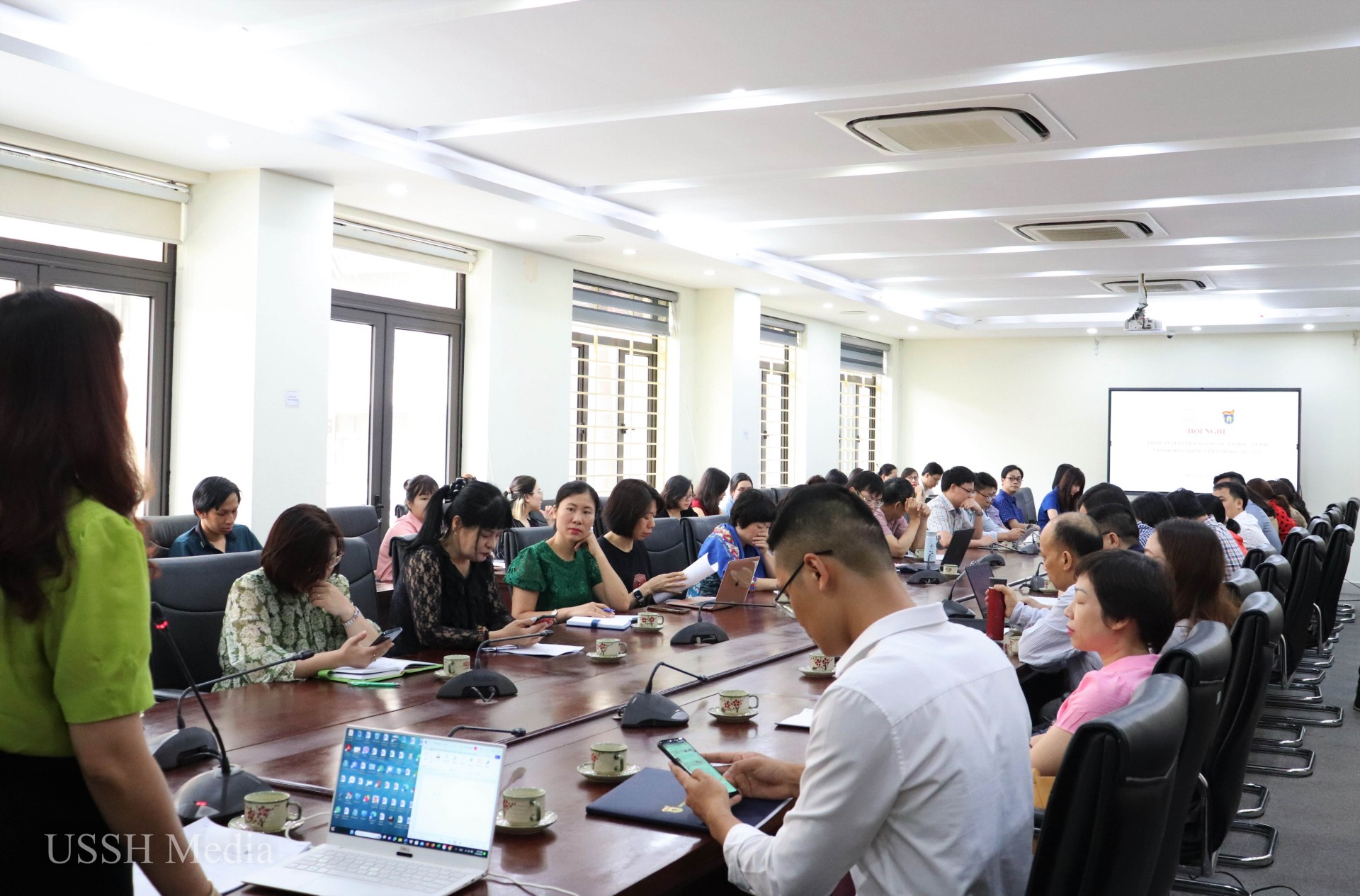
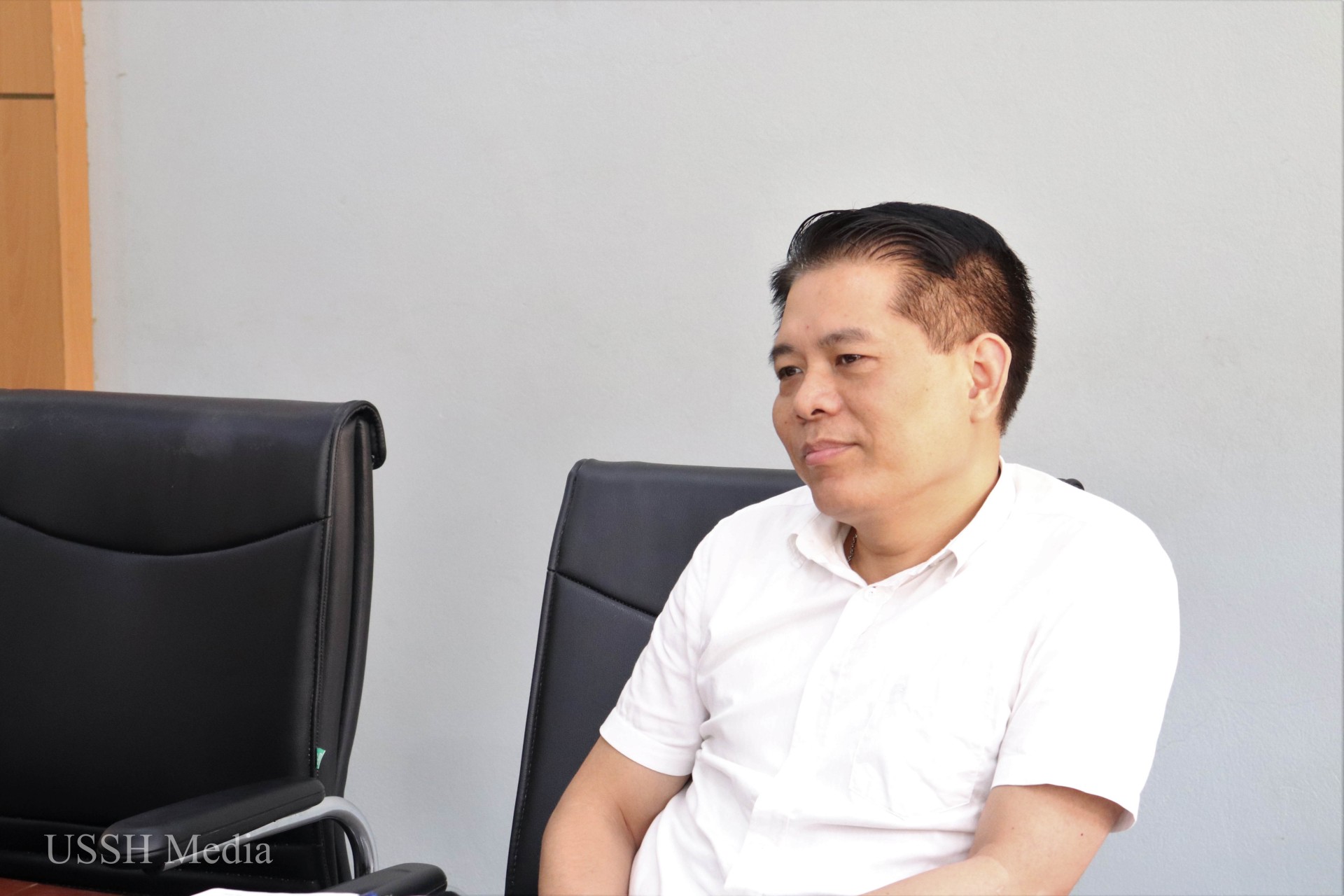
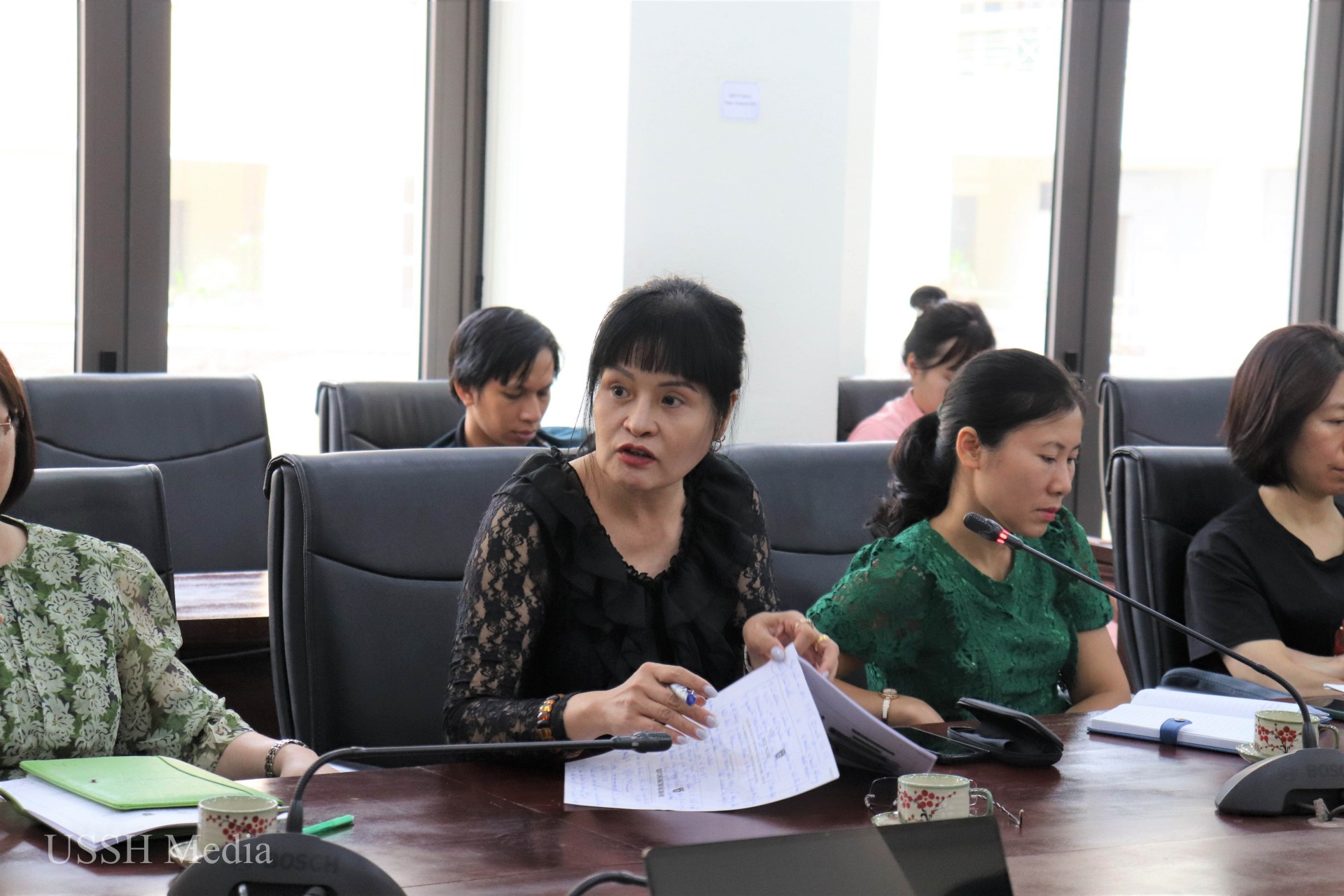
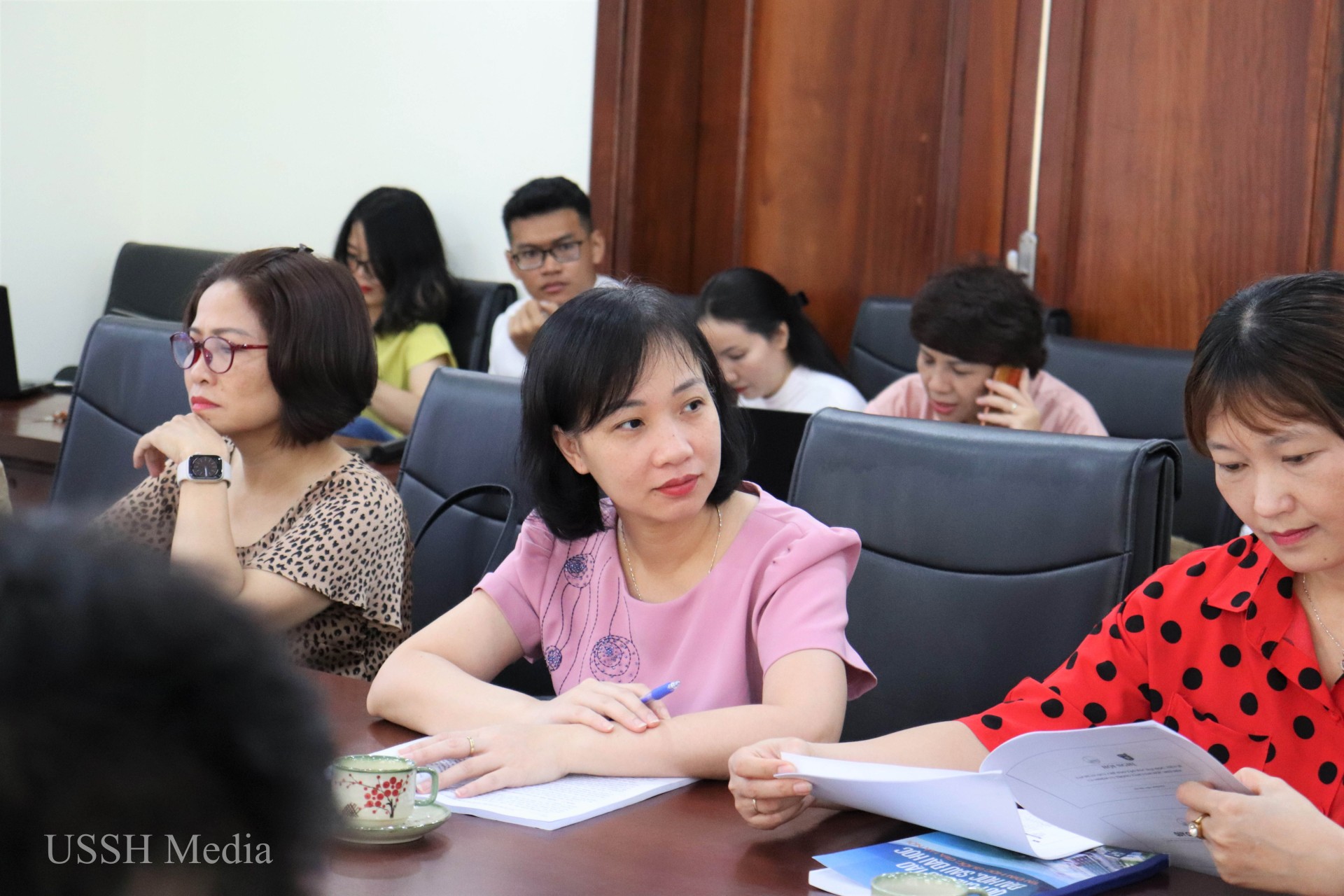
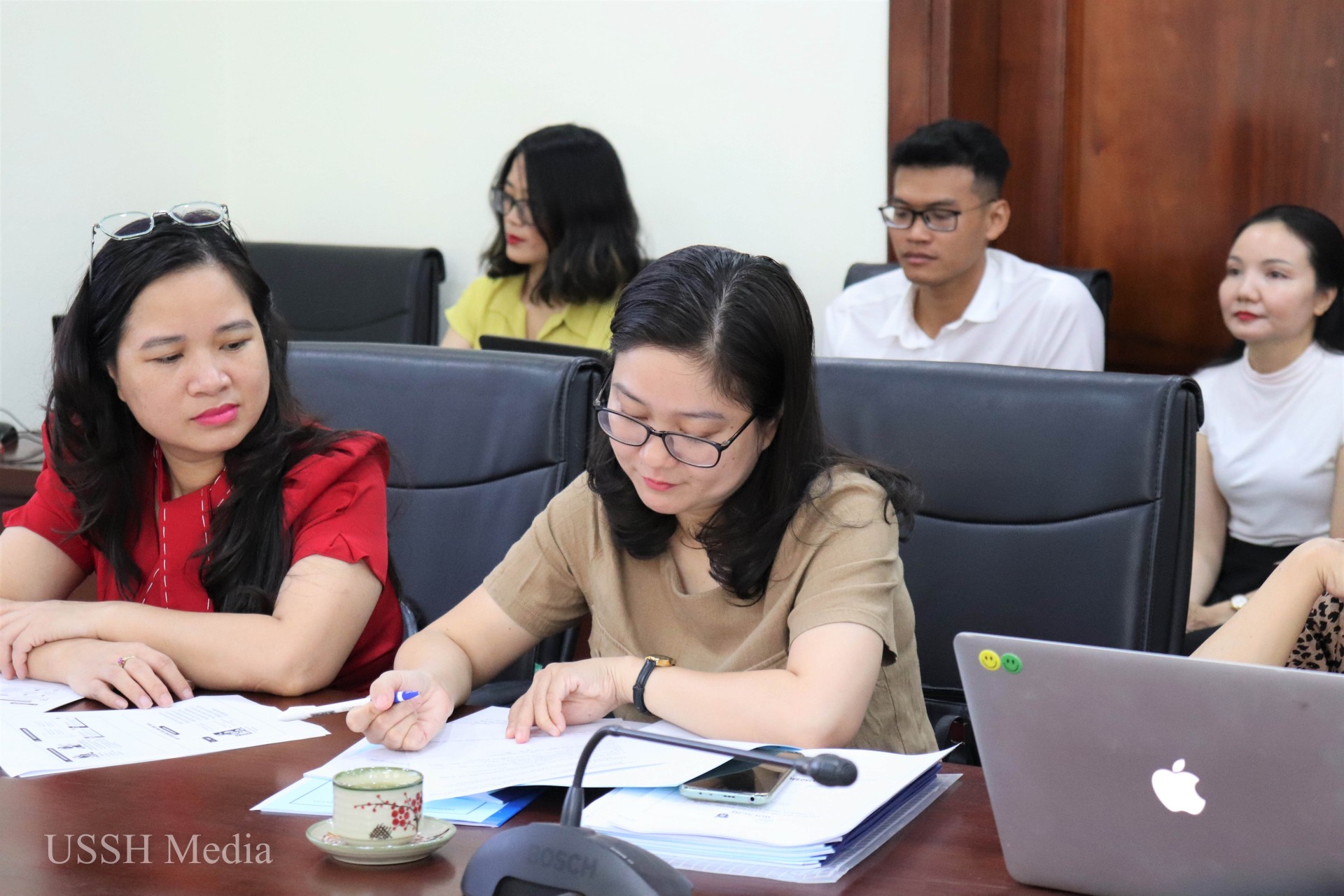
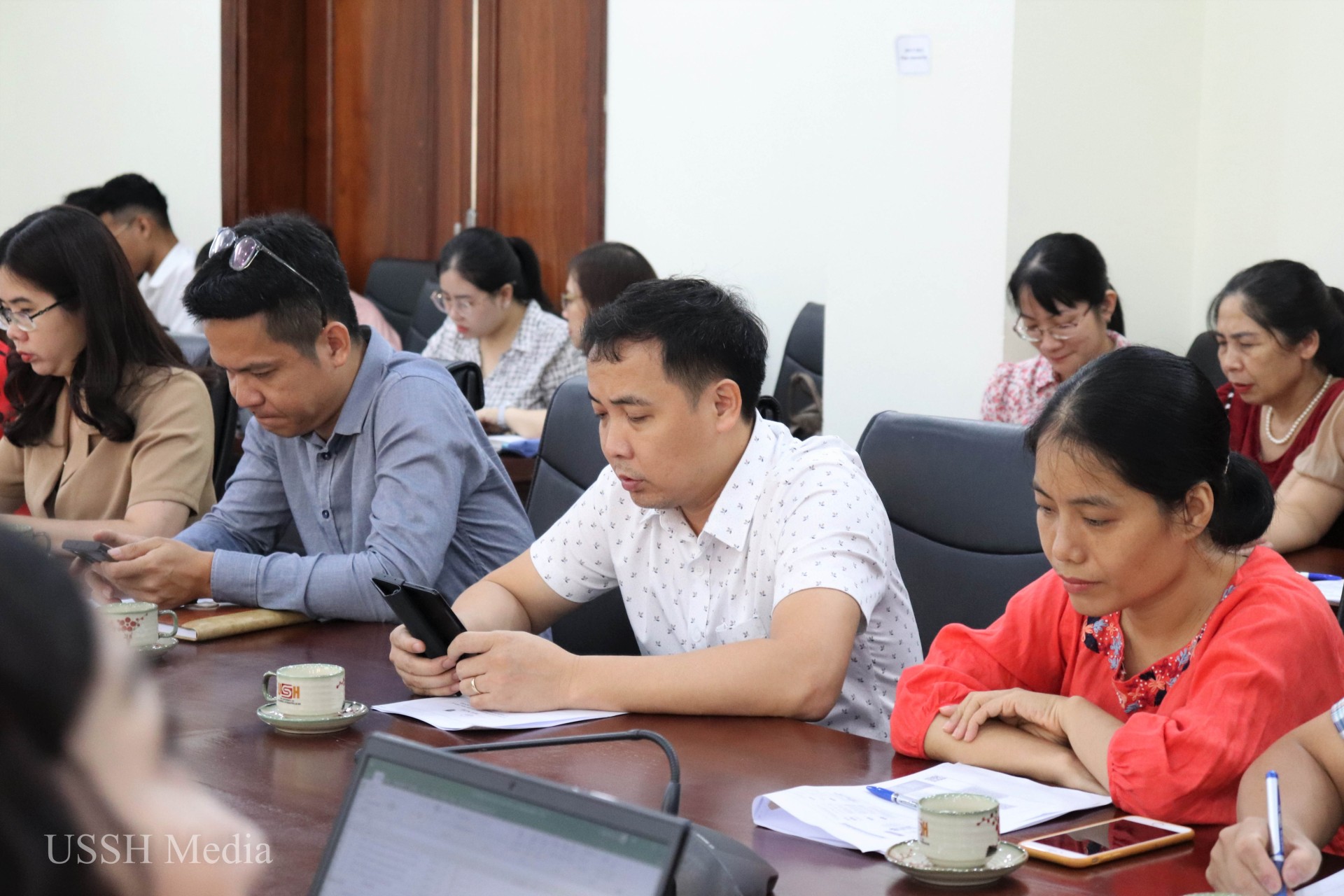
The conference was attended by Assoc. Prof. Dr. Dang Thi Thu Huong - Vice Rector of the university, Assoc. Prof. Dr. Bui Thanh Nam - Head of the Training Department, leaders and lecturers from the Faculties/Institutes, and staff from the Training Department.
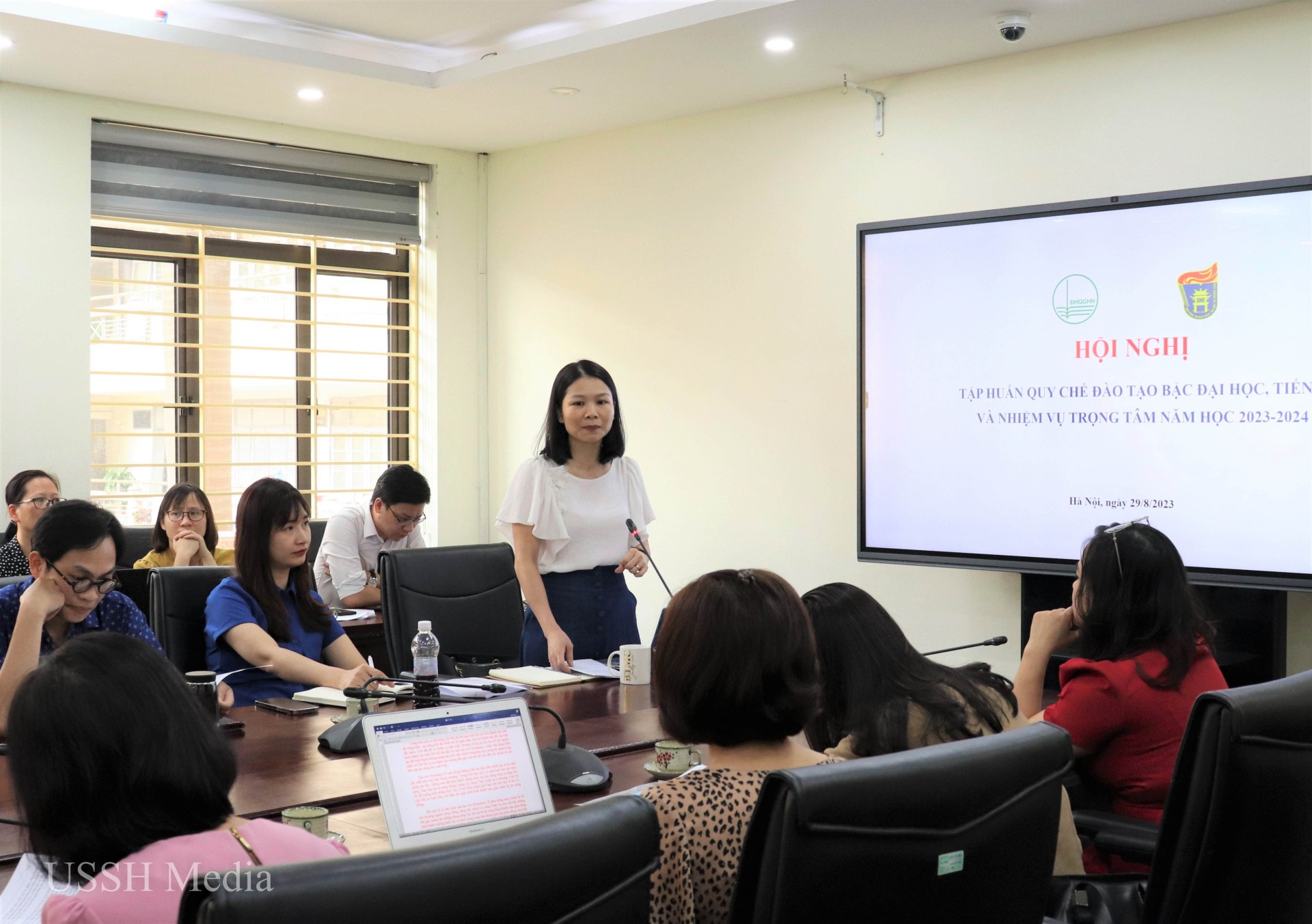
In her opening remarks at the workshop, Assoc. Prof. Dr. Dang Thi Thu Huong emphasized that the university ensures the strict and rigorous implementation of the training regulations. In addition, functional departments and training units will make every effort to provide students, trainees, and doctoral candidates with favorable conditions during their studies. With the new points in the training regulations, VNU-USSH learners will have more advantages to complete their training programs in the best possible way.
Associate Professor Dr. Dang Thi Thu Huong - Vice Rector of the University of Social Sciences and Humanities, Vietnam National University, Hanoi, emphasized the strict application of the new training regulations and the support provided to students at the university.
New points in the Doctoral Training RegulationsIn the 2023-2024 academic year, the University of Social Sciences and Humanities offered 32 doctoral programs, attracting a large number of domestic and international doctoral candidates. According to Regulation No. 3638/QD-DHQGHN issued on October 21, 2022, applicable to the QH-2022-X cohort onwards, some of the admission requirements for doctoral candidates will be relaxed.
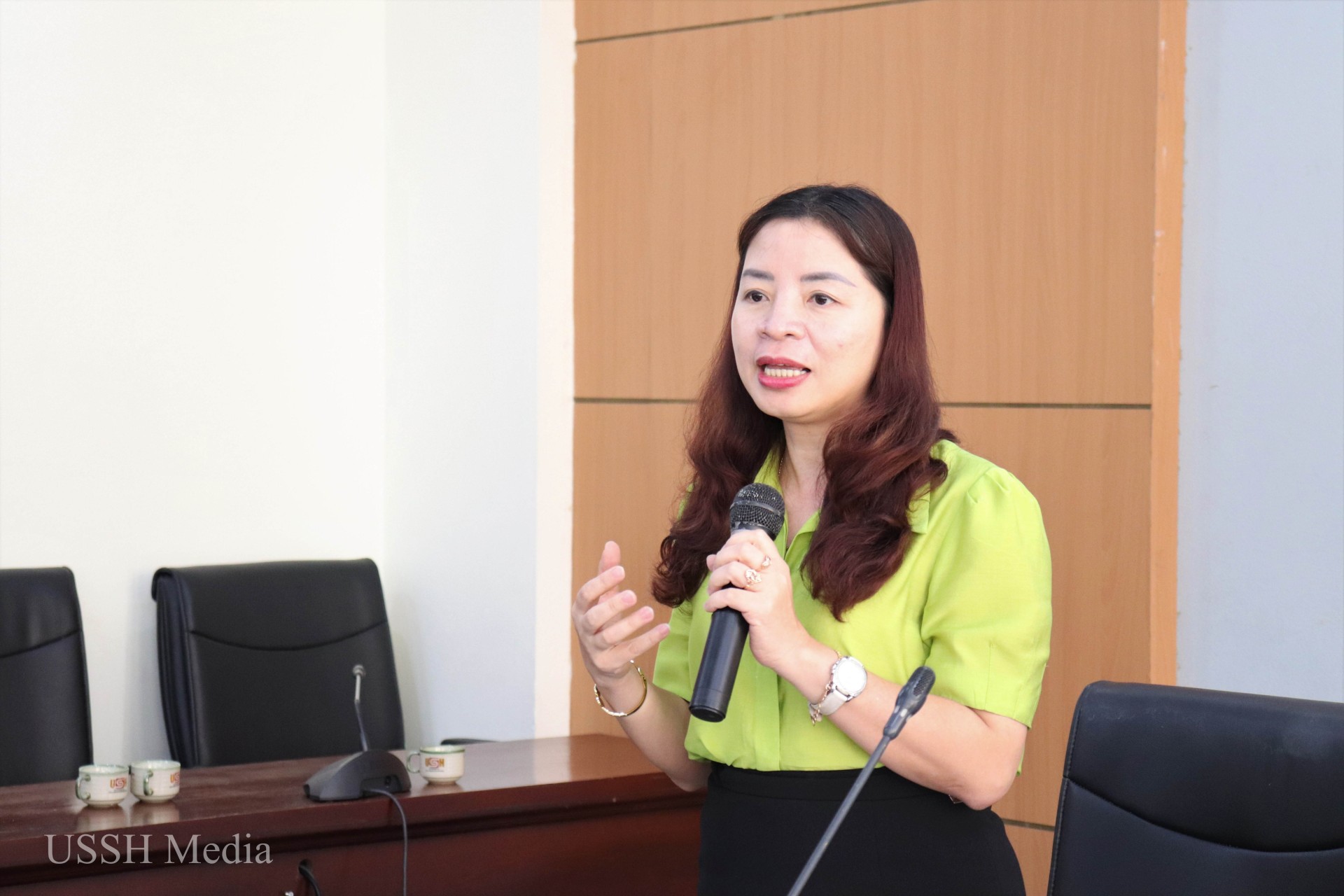
Ms. Le Kim Tan - Training Department, presented some changes in Training Regulations No. 3638/QD-DHQGHN.
Accordingly, there will be many changes to the admission requirements. For candidates applying for doctoral programs, the degree requirements include: candidates must have graduated with a Master's degree or a regular university degree with a GPA of Excellent or higher, or an equivalent level 7 in some specialized fields. The field/major of study must be relevant. There are two types of relevant fields/majors: (1) relevant without requiring additional knowledge and (2) relevant requiring additional knowledge, as stipulated by the training unit. Candidates who are required to supplement their knowledge must complete it before registering for admission.
Regarding training duration, while Regulation 4555/QD-VNU stipulates a total of 5 years of training for doctoral candidates with a master's degree (3 standard years + 2 extended years), Regulation 3638/QD-VNU extends this to a total of 6 years (3 standard years + 3 extended years). This allows doctoral candidates more time to complete their dissertations and research tasks as required by the training program. The training duration for doctoral candidates with a bachelor's degree remains 6 years (4 standard years + 2 extended years). Doctoral candidates with outstanding research results may defend their dissertations earlier than the standard training period, but not by more than one year (12 months).
Regarding the calculation of completion time for doctoral candidates, while Regulation 4555/QD-VNU stipulates that the time is calculated until the candidate successfully defends their final dissertation, Regulation 3638/QD-VNU states that the doctoral training time is calculated from the date the decision recognizing the doctoral candidate takes effect until the time the dissertation is approved by the specialized unit.
NCS candidates should also note the changes in Regulation 3638/QD-DHQGHN, such as the scoring method for international publications, the criteria for supervisors, etc. The contents of the new regulations will be communicated to candidates and faculty members in the Faculties/Institutes through the university's communication channels by the Training Department.
Associate Professor Bui Thanh Nam - Head of the Training Department, emphasized several points to note during the application of the new training regulations.
In addition, Associate Professor Bui Thanh Nam - Head of the Training Department - noted that Faculties/Institutes need to prepare a list of lecturers and scientists that meet the criteria required by the new training regulations. Therefore, close coordination between training units and functional departments is necessary to ensure that the implementation of doctoral recruitment and training activities is rigorous, compliant with regulations, and convenient for doctoral candidates.
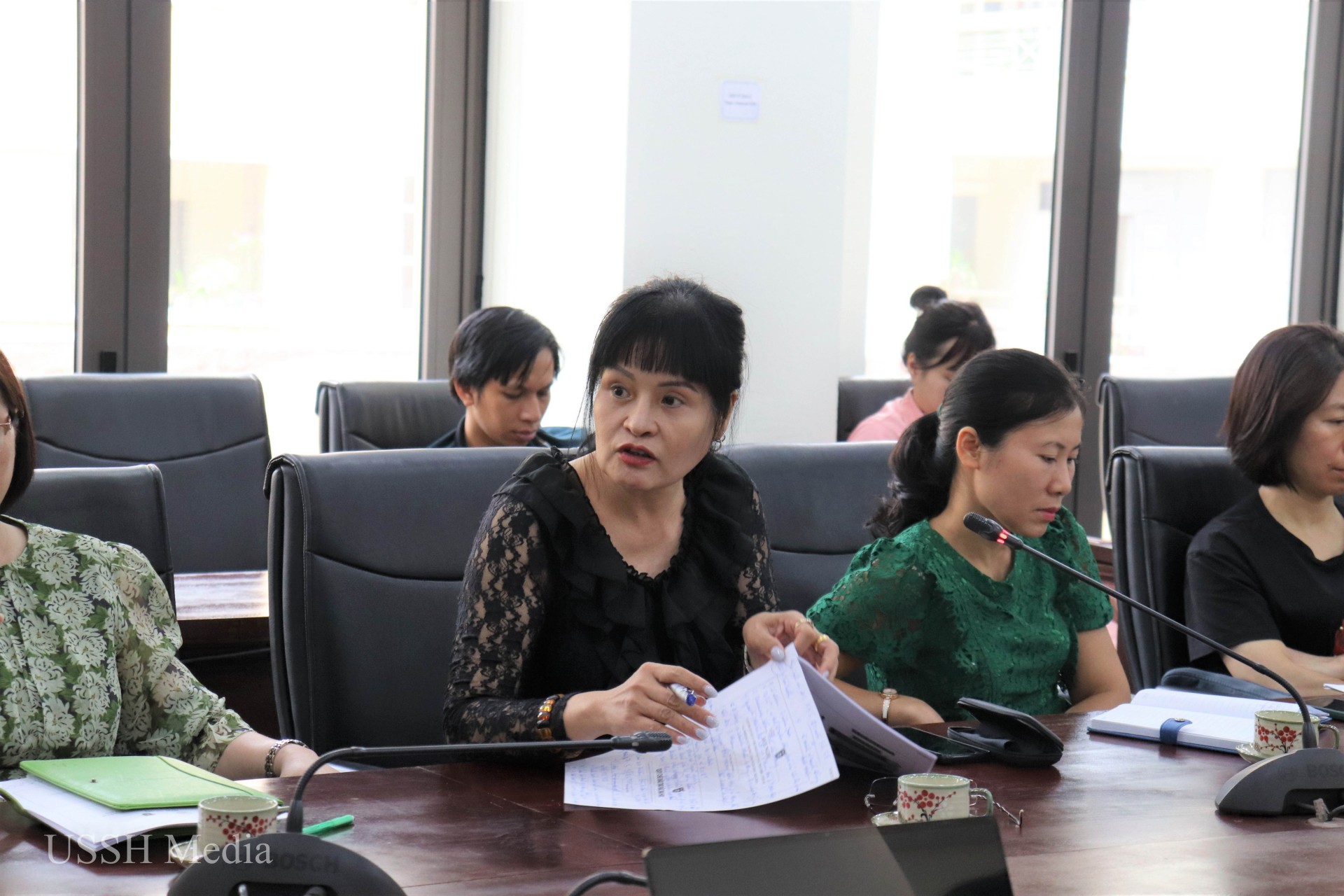
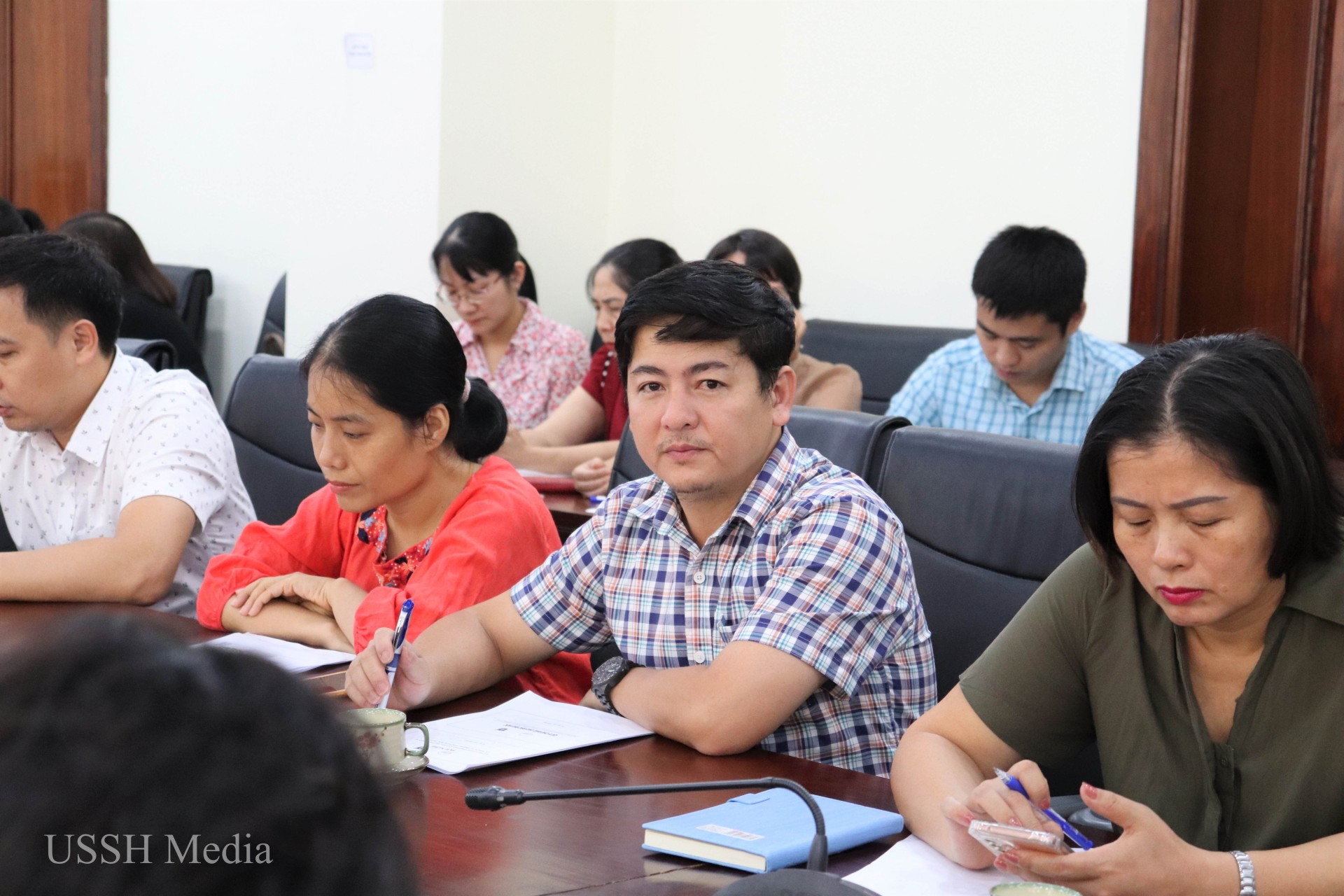
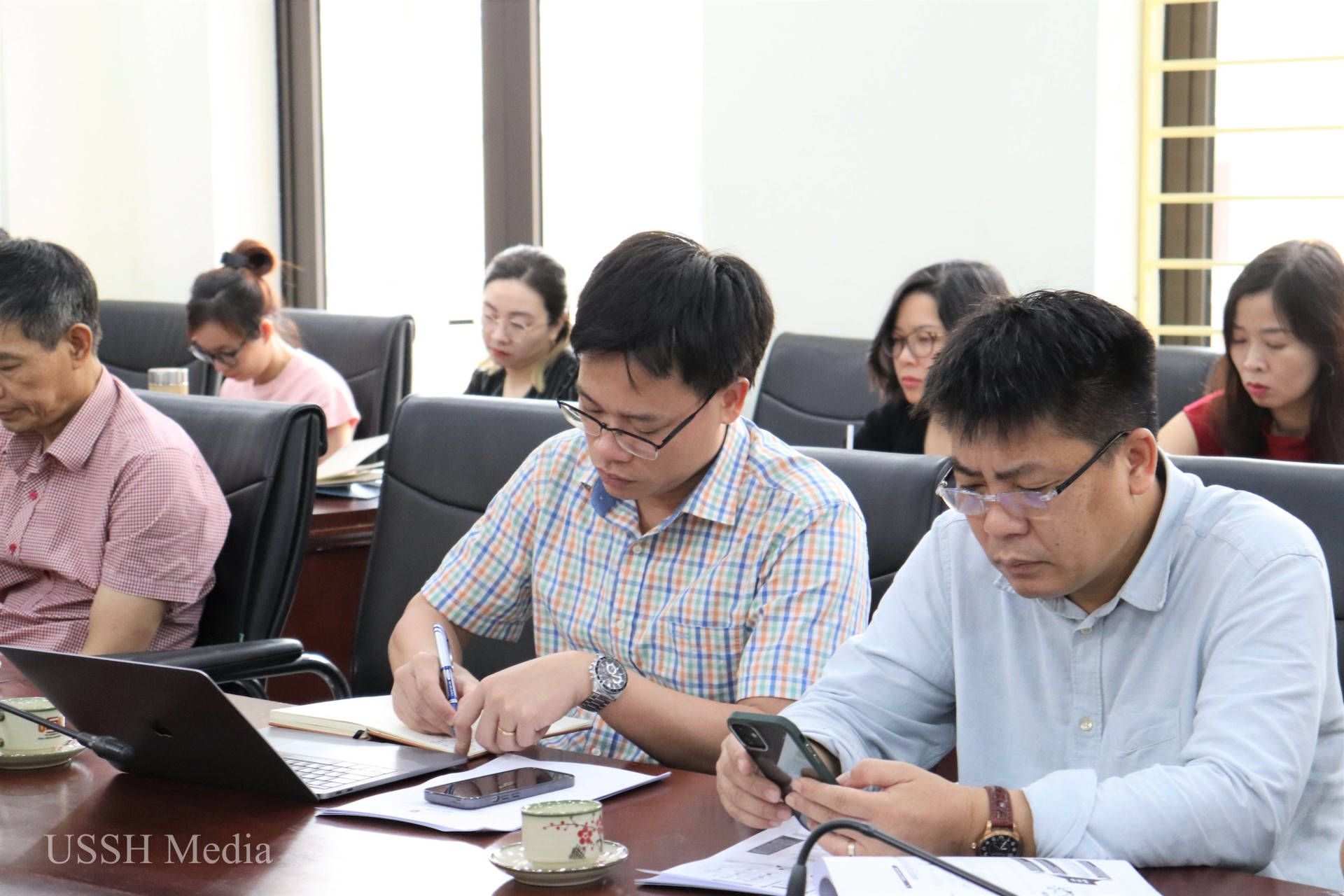
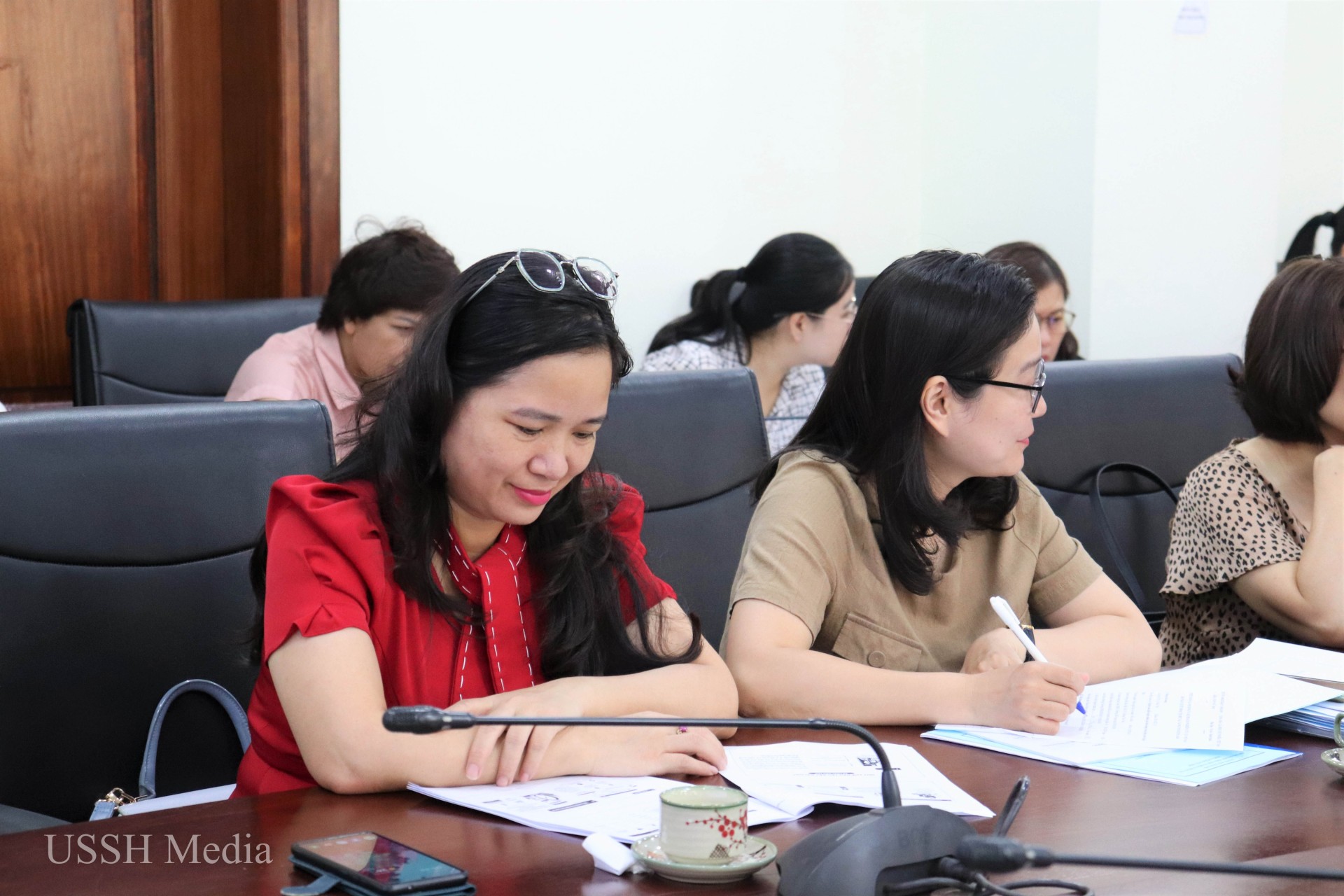
At the conference, the contents of the training regulations received lively discussion from leaders and lecturers at the Faculties/Institutes.
Some changes to the regulations on undergraduate training aim to expand learning and research opportunities for students.At the conference, Vice Rector Dang Thi Thu Huong announced the good news regarding university admissions, stating that 2,050 students had registered and been admitted to the University of Social Sciences and Humanities, Vietnam National University, Hanoi, through the Ministry of Education and Training's admissions portal. This is both good news for the university and a call for functional departments and faculties/institutes to improve their training capacity and student support and care activities.
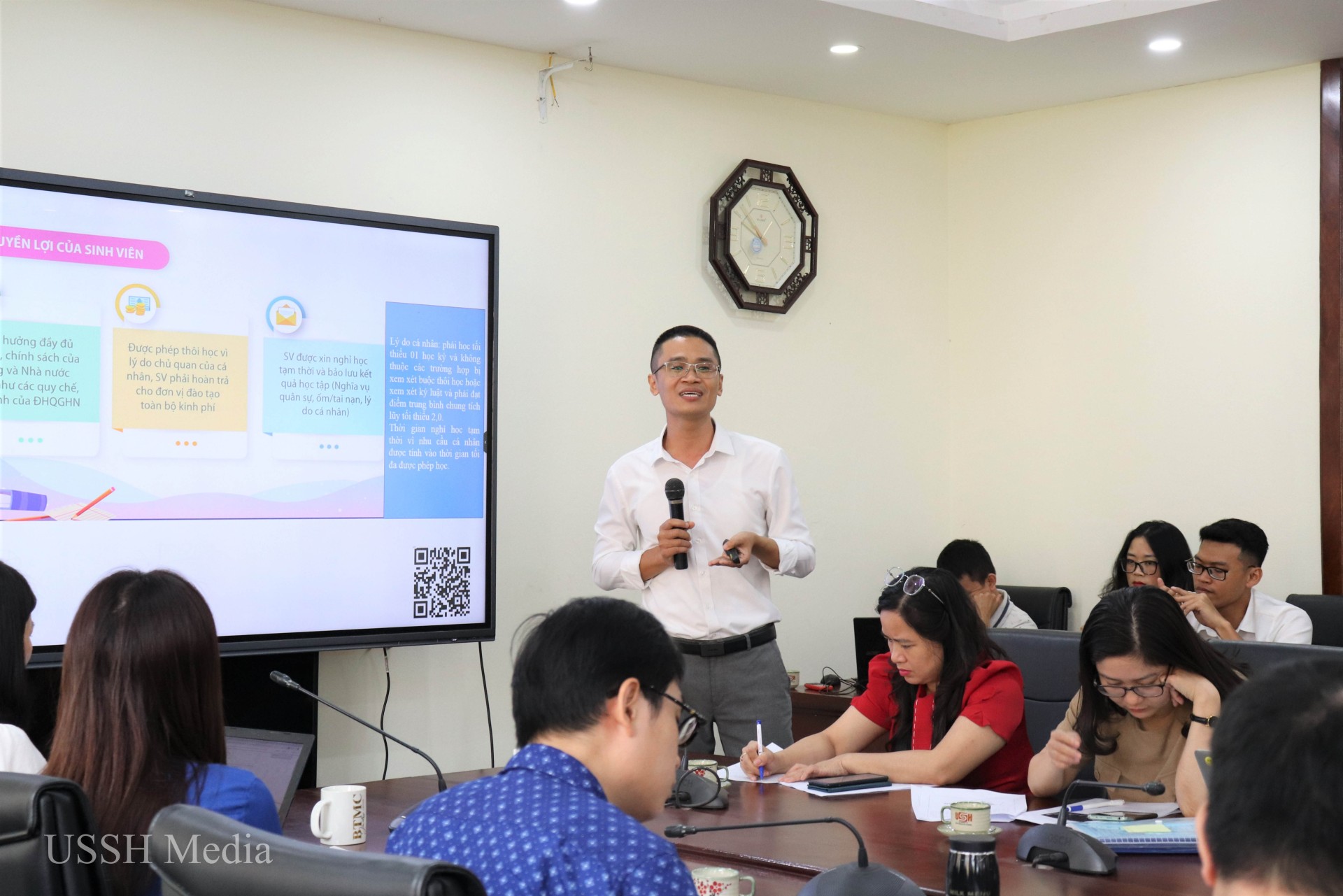
MSc. Pham Van Hue - Deputy Head of the Training Department - presented detailed and concise information on the Training Regulations according to Decision No. 3626/QD-DHQGHN, which includes many new points aimed at facilitating the teaching and learning process for lecturers and students.
Emphasizing the role of homeroom teachers and academic advisors – those who will accompany students throughout their studies, such as providing information about the curriculum; guiding students in developing study plans and learning methods; selecting and registering for appropriate courses…, Mr. Pham Van Hue, M.Sc., stated that this will be a key activity in the new academic year, receiving special attention and guidance from the school's Board of Directors.
In addition, the university encourages internships at various organizations and businesses to help students gain practical knowledge, improve their skills, and broaden their job opportunities. At the University of Social Sciences and Humanities, this activity has been implemented throughout the faculties/institutes with outstanding practical programs such as: the "Bringing the newsroom to the lecture hall, bringing the lecture hall to the newsroom" model of the Institute of Journalism and Communication Training, and practical programs in various localities of the Faculty of Psychology, the Faculty of Management Science, and the Faculty of International Studies… In the new academic year, this activity will continue to be organized on a larger scale and in more innovative and creative forms.
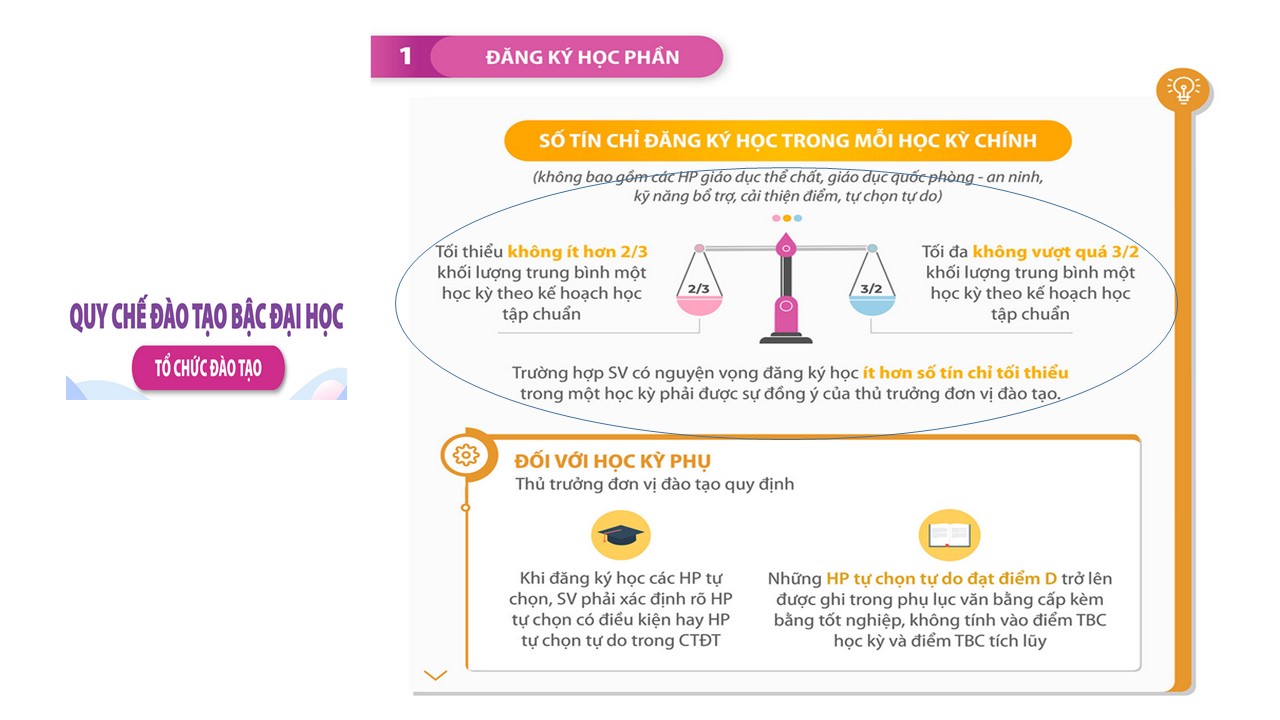
For each semester, students must register for a minimum of 2/3 of the average workload and a maximum of 3/2 of the average workload per semester according to the standard study plan. Students wishing to register for fewer credits than the minimum required in a semester must obtain the approval of the head of their training unit.
Students should note that for supplementary semesters, when registering for elective courses, they must clearly identify whether the elective is a conditional elective or a free elective within the curriculum. Free elective courses with a grade of D or higher will be recorded in the diploma appendix accompanying the graduation certificate and will not be included in the semester GPA or cumulative GPA.
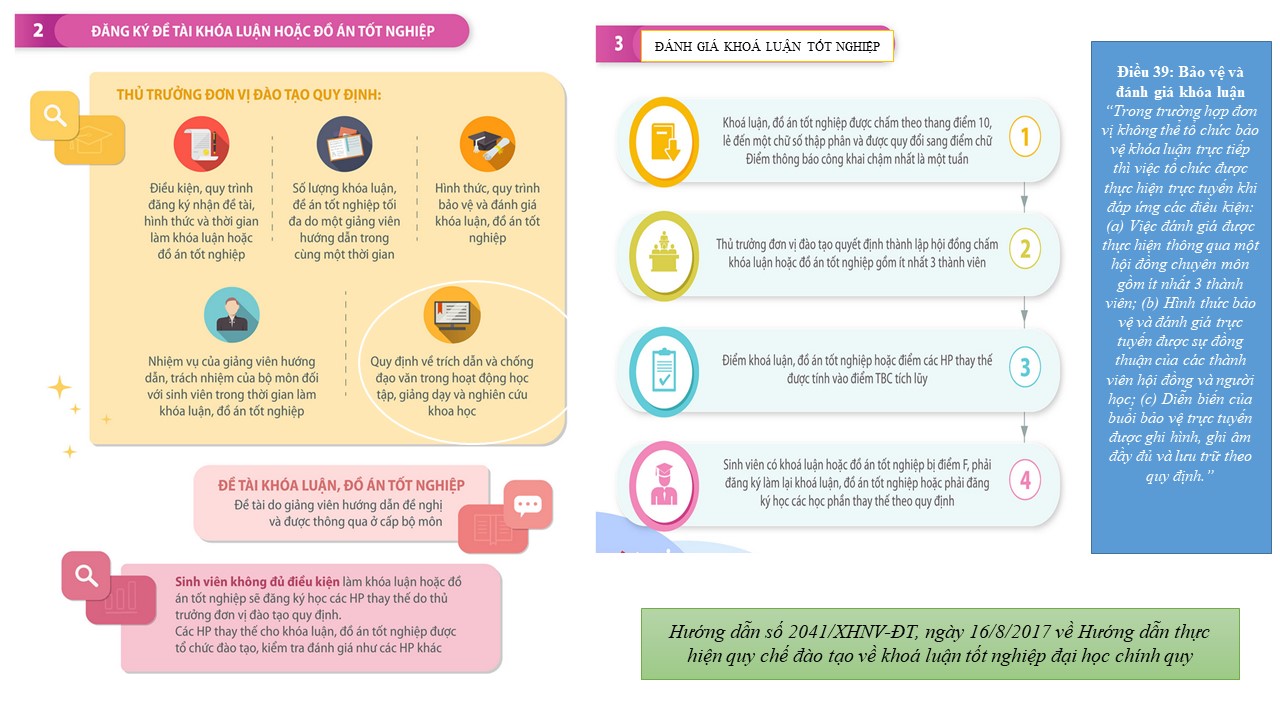
A new point regarding the evaluation of graduation theses, according to Article 39 of Guidance No. 2041/XHNV-ĐT dated August 16, 2017, on the implementation of regulations on undergraduate graduation theses, states that the defense and evaluation of theses "In cases where the unit cannot organize a direct thesis defense, it shall be conducted online when the following conditions are met: (a) The evaluation is conducted through a professional council consisting of at least 3 members; (b) The online defense and evaluation format is agreed upon by the council members and the student; (c) The proceedings of the online defense are fully recorded and archived according to regulations." The university will provide detailed guidance to students to ensure that their studies and examinations are conducted appropriately.
A major advantage for students of the University of Social Sciences and Humanities is the opportunity to pursue a second major in all undergraduate programs offered by the university, provided they meet the admission requirements. In particular, from the 2023-2024 academic year, two more training units within the Vietnam National University, Hanoi, are expected to offer second-major programs at VNU-USSH: the University of Natural Sciences and the Faculty of Interdisciplinary Sciences.
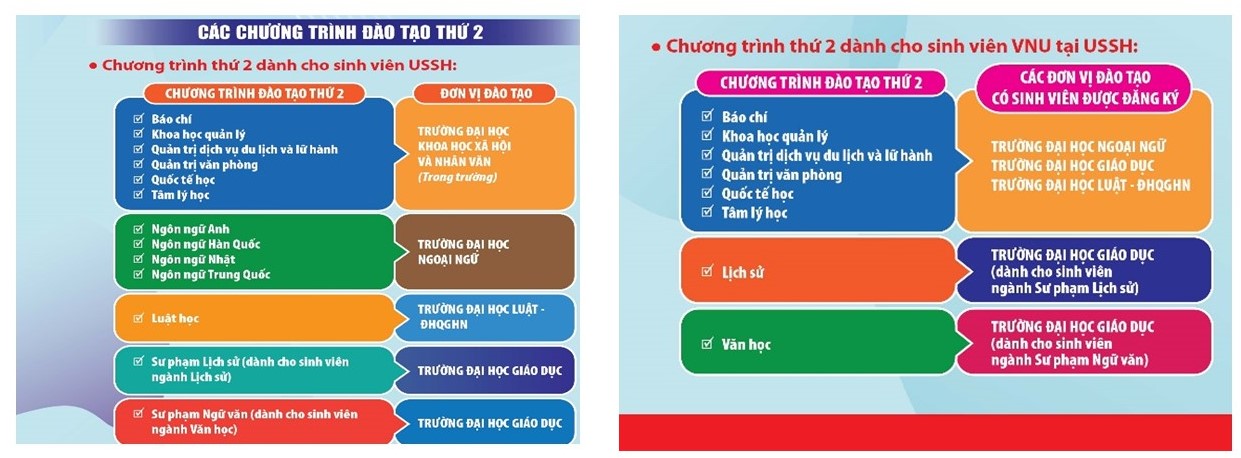
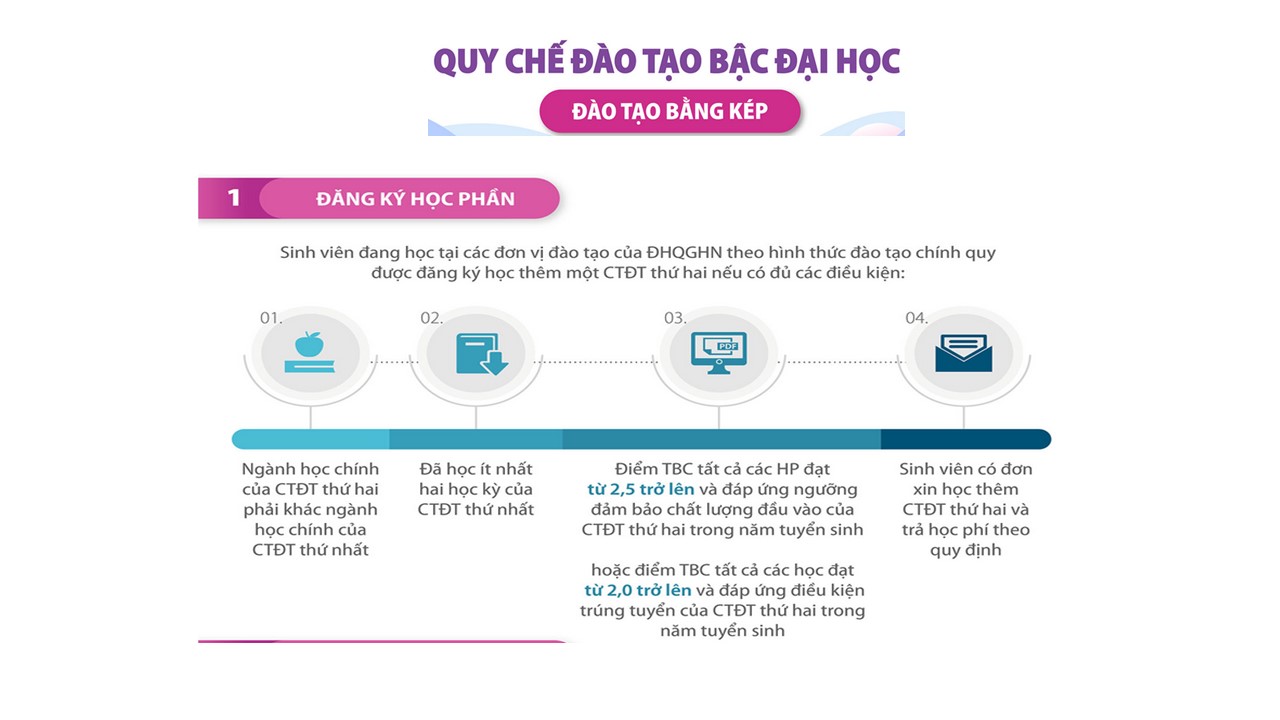

The university encourages students to participate in scientific research activities with maximum support from functional departments and faculties/institutes to provide them with opportunities for scholarships and international student exchange. When participating in scientific research activities, students participate in field surveys, practical internships, scientific experiments, thesis writing, graduation projects, research topics, and the application of scientific advancements in practice. Student scientific research activities at VNU-USSH are organized actively every year with student science clubs, scientific thematic discussions, scientific presentations at conferences and seminars, and the publication of scientific articles in specialized journals.
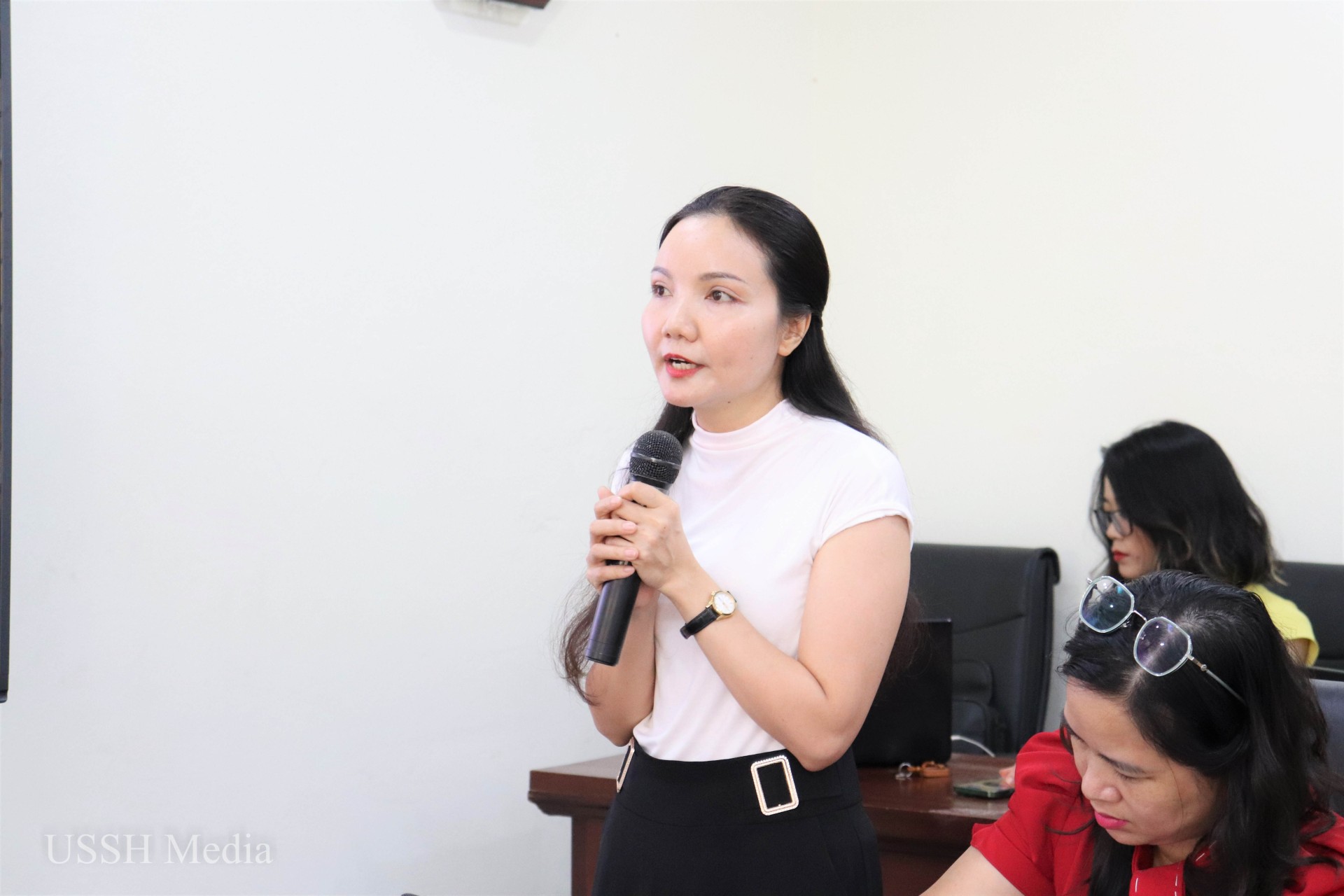
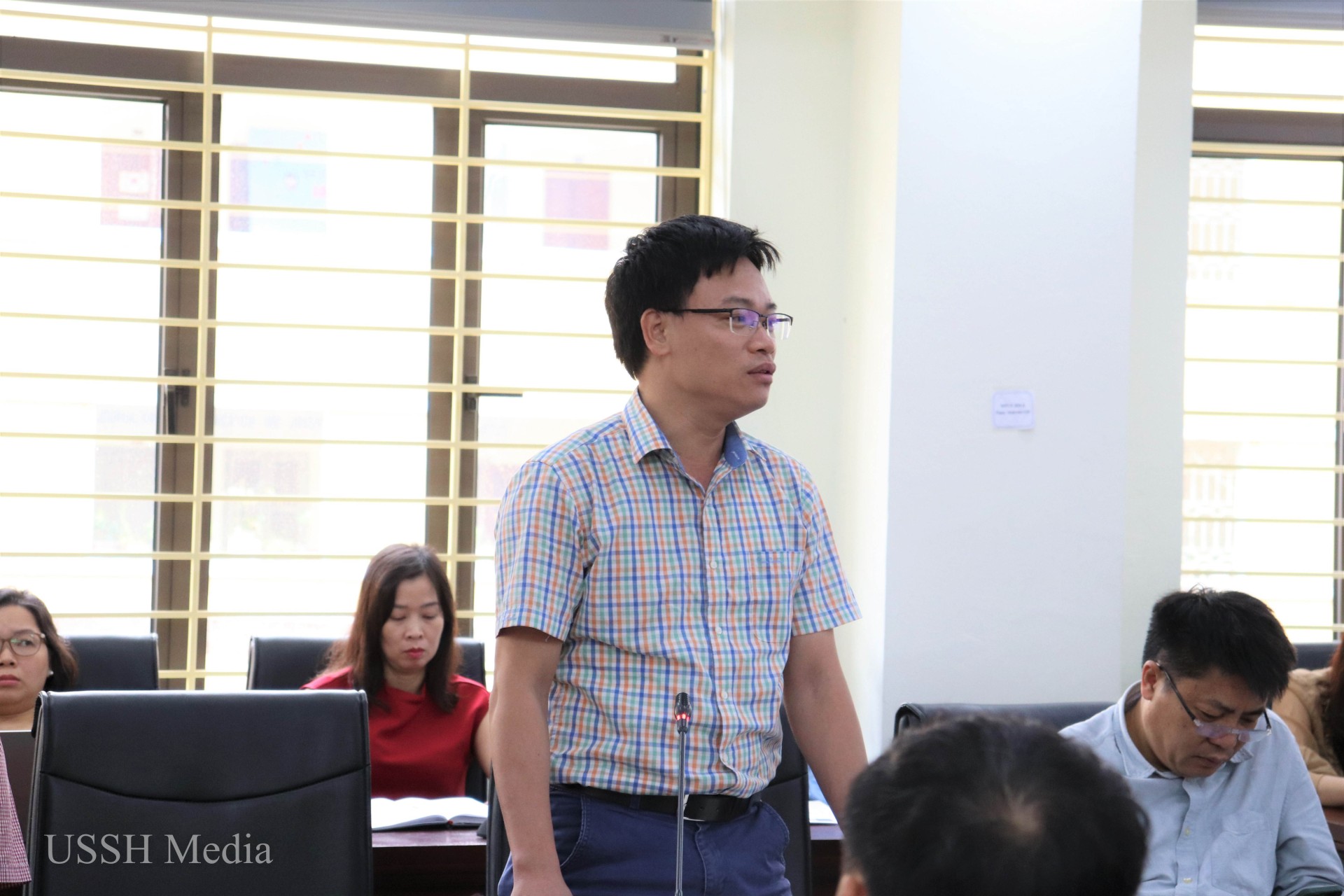
Leaders and faculty members of the Faculties/Institutes participate in contributing ideas to the school's training management activities.
For the 2023-2024 academic year, the University of Social Sciences and Humanities, Vietnam National University, Hanoi, offers 27 standard training programs with 2,000 enrollment quotas. With strict regulations in the training program, support from functional departments, and faculty members at the training units, VNU-USSH students will receive the best guidance and support throughout their studies at the university.