The forum is a highlight in the series of events leading up to the celebration of the 100th anniversary of Vietnam's Revolutionary Press Day (June 21, 1925 - June 21, 2025). This is not only an opportunity to affirm the role and achievements of Vietnamese journalism, but also an important academic space connecting managers, technologists, media experts, and a large number of journalism students in the digital age.
Innovating journalism training: Proactively applying technology.Entering the third decade of the 21st century, Vietnamese journalism and media are facing a rapidly developing digital era. Artificial intelligence (AI), big data, virtual reality/arrival (VR/AR), blockchain technology, and automated media models are transforming the entire media ecosystem. New technologies are emerging, methods of information dissemination are being reinvented, and, most importantly, the role of journalists and media professionals is being re-evaluated within this context.
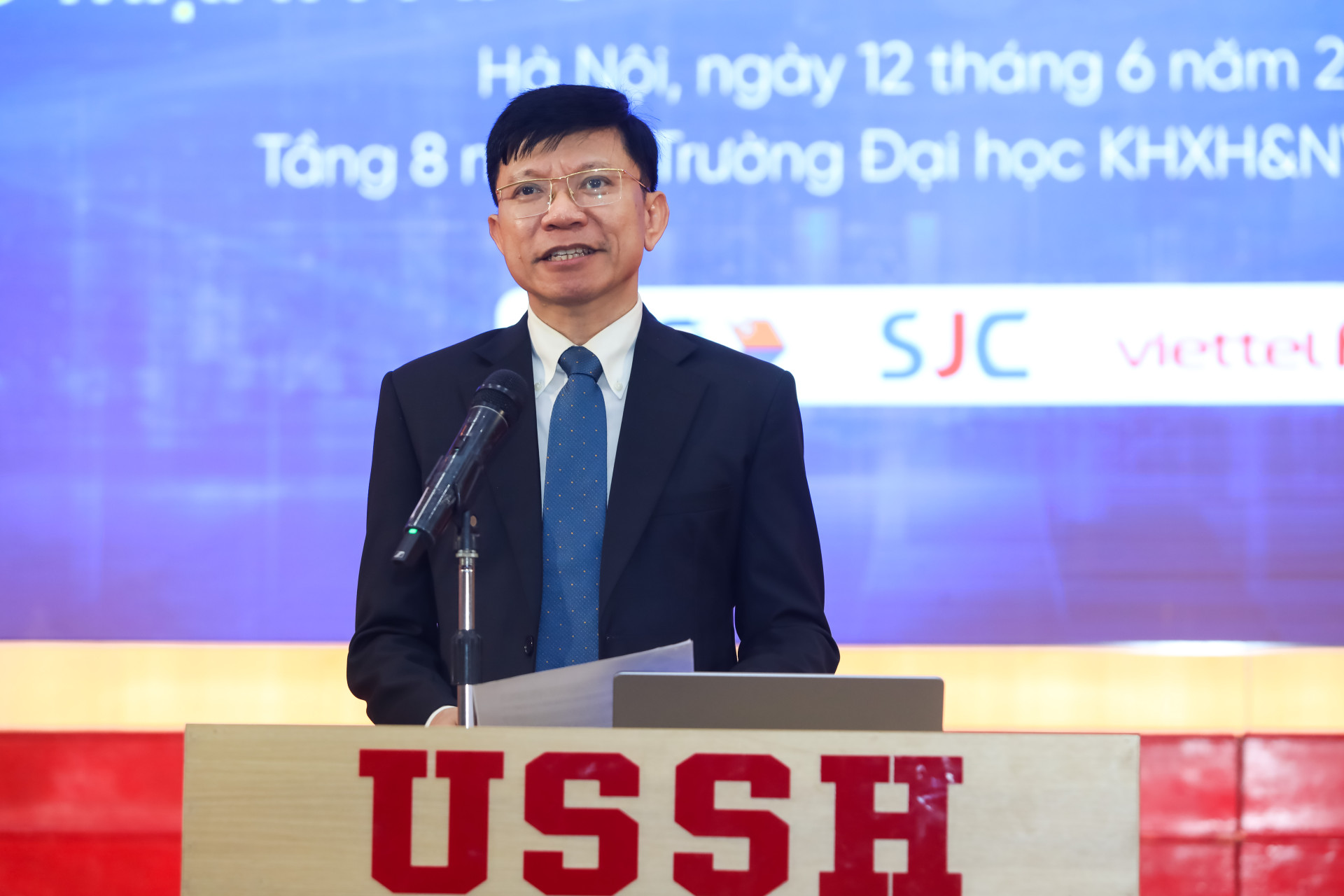
In his opening remarks at the forum, Professor Hoang Anh Tuan, Rector of the University of Social Sciences and Humanities, Vietnam National University, Hanoi, stated that, in the face of these challenges, those involved in journalism training and research, and those directly and indirectly preparing the next generation of young journalists, cannot stand idly by. The Vietnam Journalism and Media Technology and Innovation Forum 2025 aims to connect, share, and innovate in technological approaches to prepare a new generation of media professionals – a generation responsible for writing the glorious history of Vietnamese revolutionary journalism over the next 100 years.
The forum is not only a place for professional exchange, but also a space for everyone working in journalism and media, especially students, to reflect on their responsibilities, mission, and career development direction in the new era.
Professor Hoang Anh Tuan - Rector of the University of Social Sciences and Humanities, Vietnam National University, Hanoi, delivered the opening remarks at the forum.
The power of AI is immense. But AI cannot replace the core qualities that make a true journalist: intelligence, courage, social responsibility, and a desire to dedicate oneself to the truth. AI can assist journalists in creating content, analyzing data, and personalizing information – but ultimately, it is humans who determine the direction of that content.
Rector Hoang Anh Tuan emphasized: “Learn technology – but don’t forget humanism. Master the tools – but don’t let the tools replace thinking. And keep innovating – but still maintain a heart that is honest with the truth, with the people, and with the noble mission of revolutionary journalism” – Professor Hoang Anh Tuan expressed.
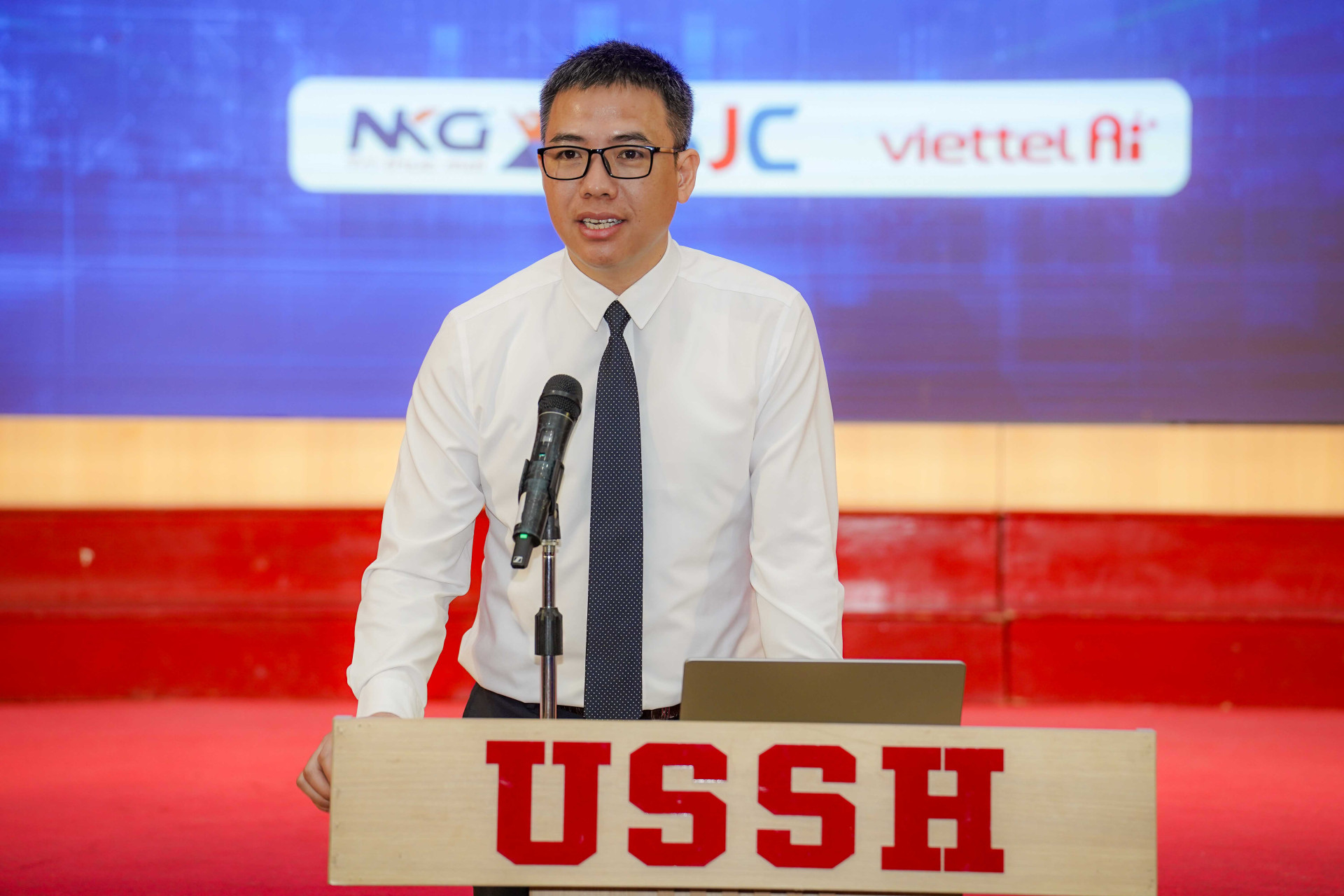
Dr. Phan Van Kien, Director of the Institute of Journalism and Communication Training, believes that journalism and communication training institutions, including the Institute, have the responsibility to prepare a new generation of journalists who are more confident, creative, technologically advanced, and humane. Students are at the center of all educational innovation. In the context of rapidly developing AI, universities need to equip students with more interdisciplinary knowledge, from digital skills and professional ethics to critical thinking, the ability to interact with machines, and creativity in a technological environment.
Dr. Phan Van Kien - Director of the Institute of Journalism and Communication Training, University of Social Sciences and Humanities, Vietnam National University, Hanoi
AI is not replacing journalists, but rather reshaping the way journalism is done for the better.This was the assertion made by leading technology experts and developers from Viettel AI, Protech, Neko, and many other influential entities in the technology and media sectors at the forum.
Entering a new phase of development, digital technology is having the first and most powerful impact on the field of journalism and media, creating fundamental changes in this sector. In particular, the explosion of artificial intelligence (AI) is dramatically reshaping journalism, from content production and news distribution to in-depth investigation and reader service.
With its ability to improve efficiency, expand reach, and personalize the reader experience, artificial intelligence (AI) is not only changing how newsrooms operate but also raising major questions about ethics and trust. In this context, the future of journalism is shaped by a delicate collaboration between humans and technology, where the core values of journalism remain the guiding principle.
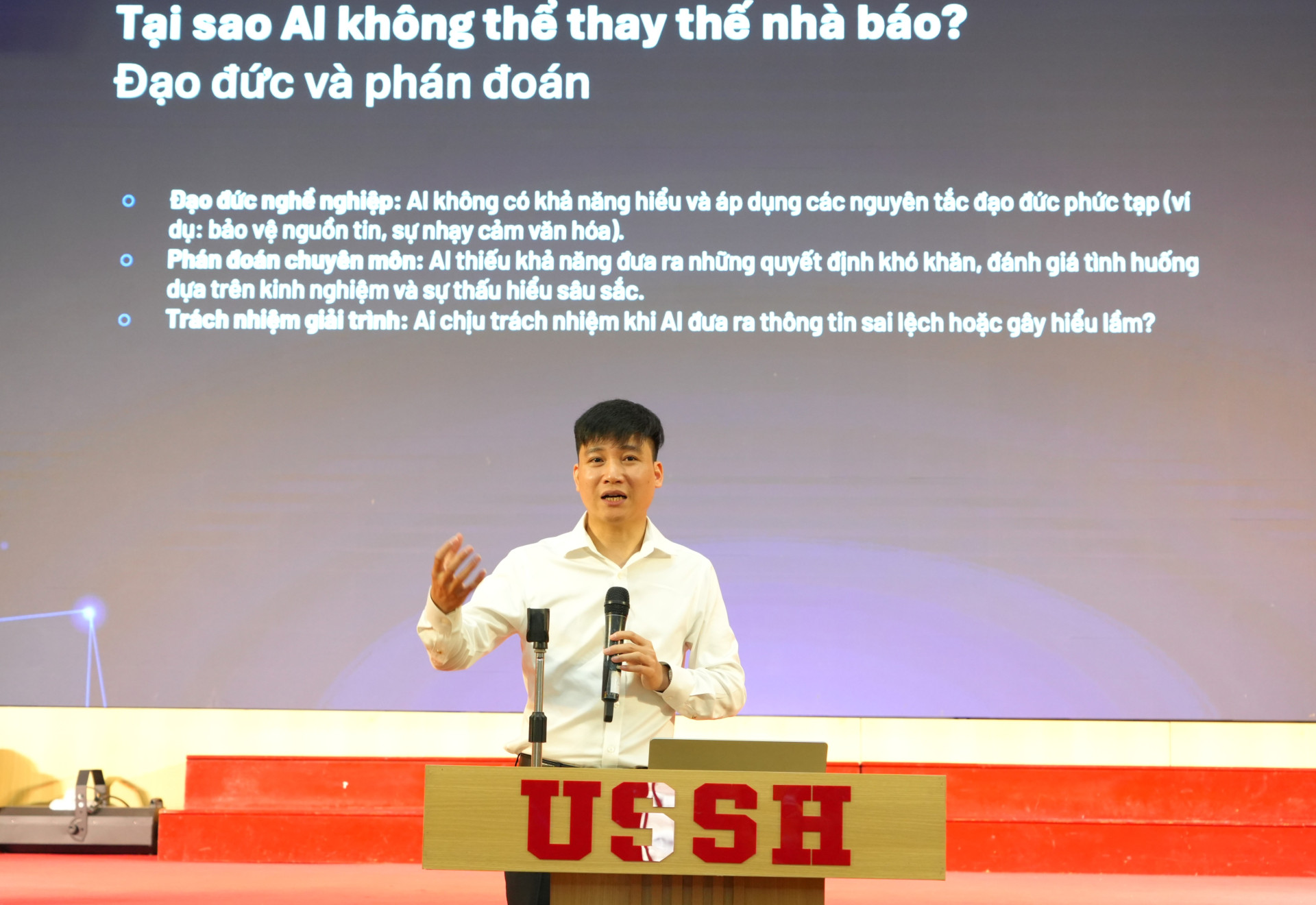
Mr. Bui Cong Duyen - Product Director of ONECMS (NEKO Company), stated that AI helps improve productivity, but the core professional value still belongs to the journalist. Currently, there are many AI tools to support tasks in journalism, such as fast and accurate data analysis, fake news detection, and personalization of journalistic content. However, AI cannot replace the emotional element, creativity, professional decision-making, responsibility, and ethics of a journalist.
Mr. Bui Cong Duyen - Product Director of ONECMS converged newsroom - emphasized the decisive role of journalists.
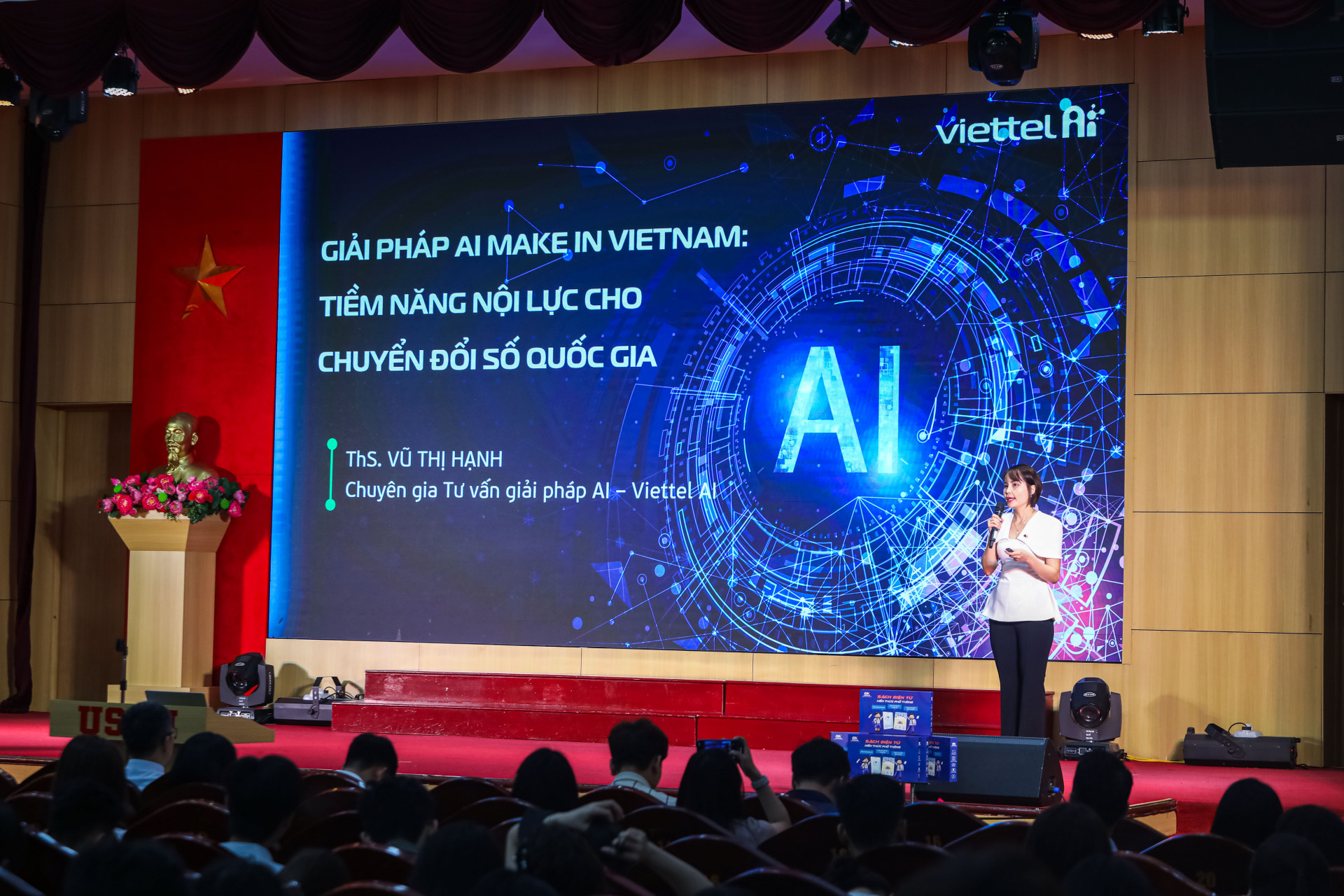
Ms. Vu Thi Hanh, an AI consultant from Viettel Group, highlighted the role of domestic technology solutions in supporting Vietnamese media organizations to transform significantly while maintaining their identity.
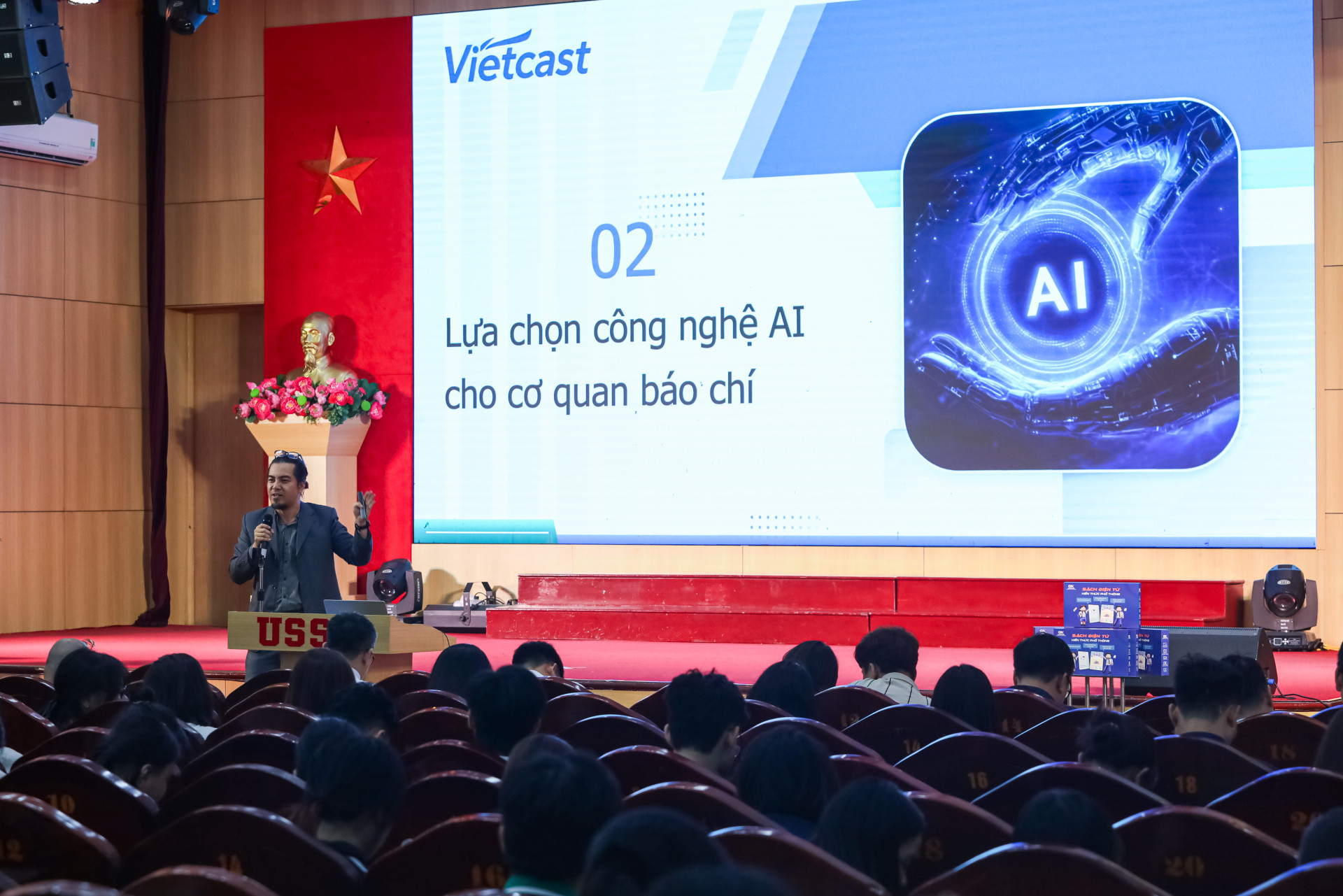
Mr. Le Hoai Trung - Director of Protech and Viettcash - pointed out the trend of operating AI-integrated news systems in many newsrooms both domestically and internationally, helping to optimize the information production and distribution chain.
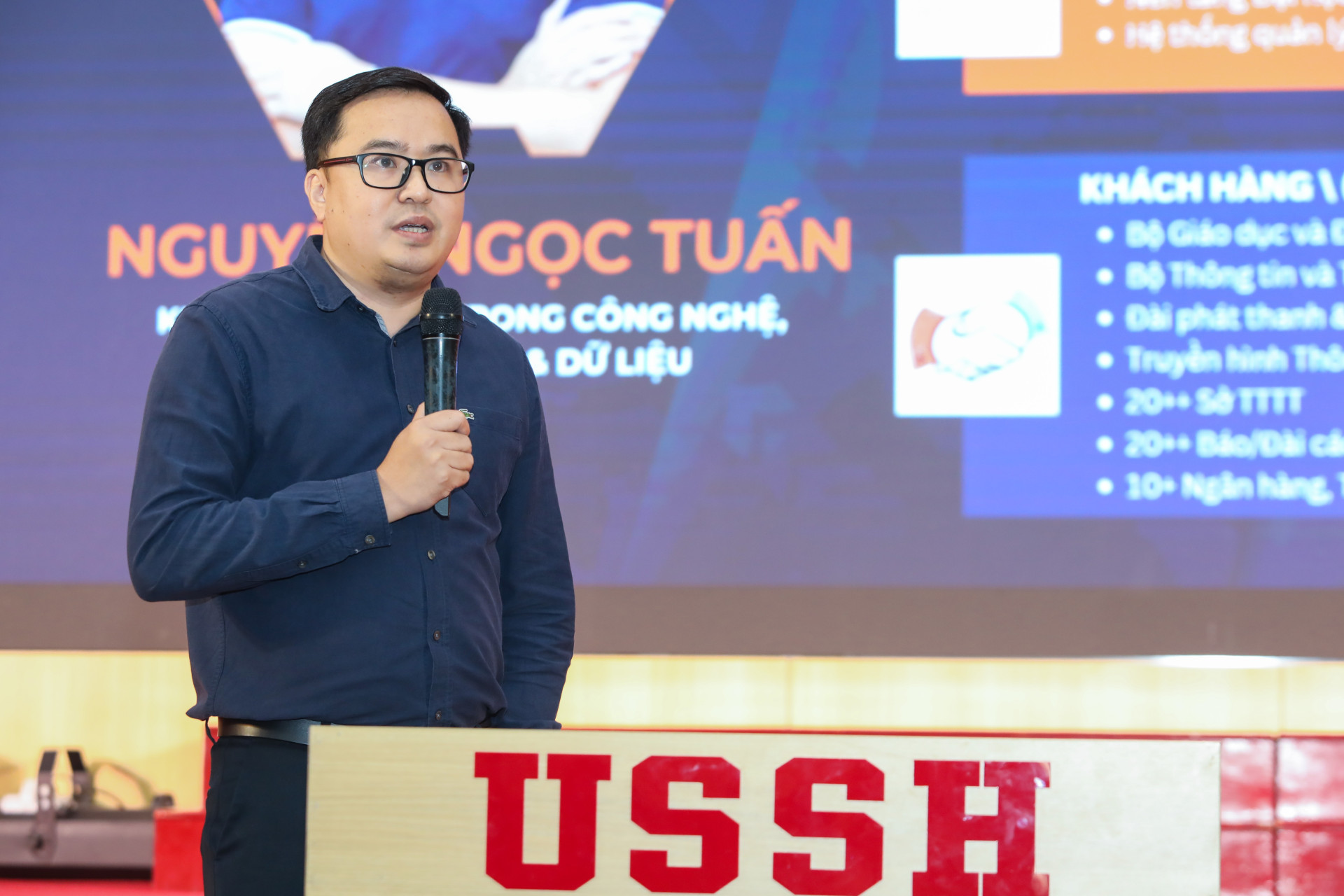
Mr. Nguyen Ngoc Tuan – General Director of NKG New Knowledge Company, shared information about the monitoring system and communication guidance.
The insights shared by the experts were not only knowledge but also practical guidance, helping students – future journalists and communicators – understand that journalism in the digital age is not just about using technology, but about understanding the essence of technology to create new value for content, for the community, and for society.
With an open, creative, and responsible spirit, the forum serves as a starting point for new initiatives, new training and research models, and effective collaborative relationships between universities, businesses, students, and society.
With the support of Meta Group, the University of Social Sciences and Humanities, VNU Hanoi, has become the first institution to develop and issue this document.Digital competency framework for students(Late 2023), it was referenced by over 150 universities. The school also made significant contributions to the Ministry of Education and Training in developing the Circular promulgating the Digital Competency Framework for learners in the national education system.
In early 2025, the school will collaborate with Meta Group to organize the following events.Training course on the application of AI in research and learning.This is for nearly 200 lecturers and 600 students from the University of Social Sciences and Humanities and member universities of VNU Hanoi.
The press reported on the event:
Nhan Dan Newspaper:The power of AI and shaping the next generation of media.
Vietnam News Agency:
The power of AI and the tools for the next generation of media professionals.
Economy and Urban Development: AI helps journalists work better and create new value.