Attending the Conference were representatives from the Office and functional departments; Heads and Deputy Heads in charge of quality assurance, heads of quality assurance departments and specialists (directly responsible for university ranking) of member and affiliated training and research units; and representatives from the Institute for Educational Quality Assurance.
At the conference, representatives from the Institute for Educational Quality Assurance presented the results of Vietnam National University, Hanoi's ranking in international rankings for 2021 and the ranking plan for 2022.
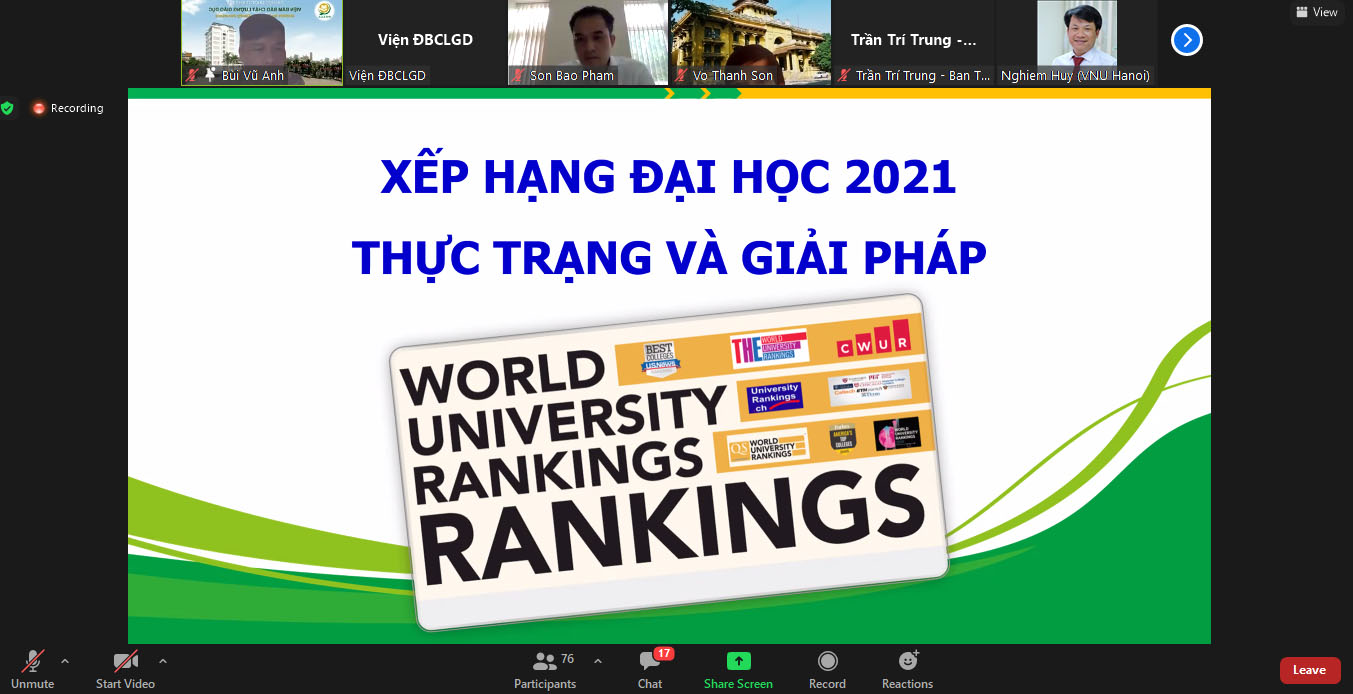
With thorough resource preparation, detailed research on ranking criteria, and integration into the overall operational tasks in 2020, 2021 was one of the years in which Vietnam National University, Hanoi (VNU) achieved many outstanding accomplishments in university rankings in several prestigious international rankings. Based on this foundation, VNU is being affirmed as one of the leading educational institutions in Vietnam and has been recognized in prestigious world rankings. VNU ranks first in Vietnam in a series of world rankings and rankings by field. Achieving such accomplishments is a success of VNU's internal quality assurance system, which has worked diligently and seriously in fulfilling its overall mission.
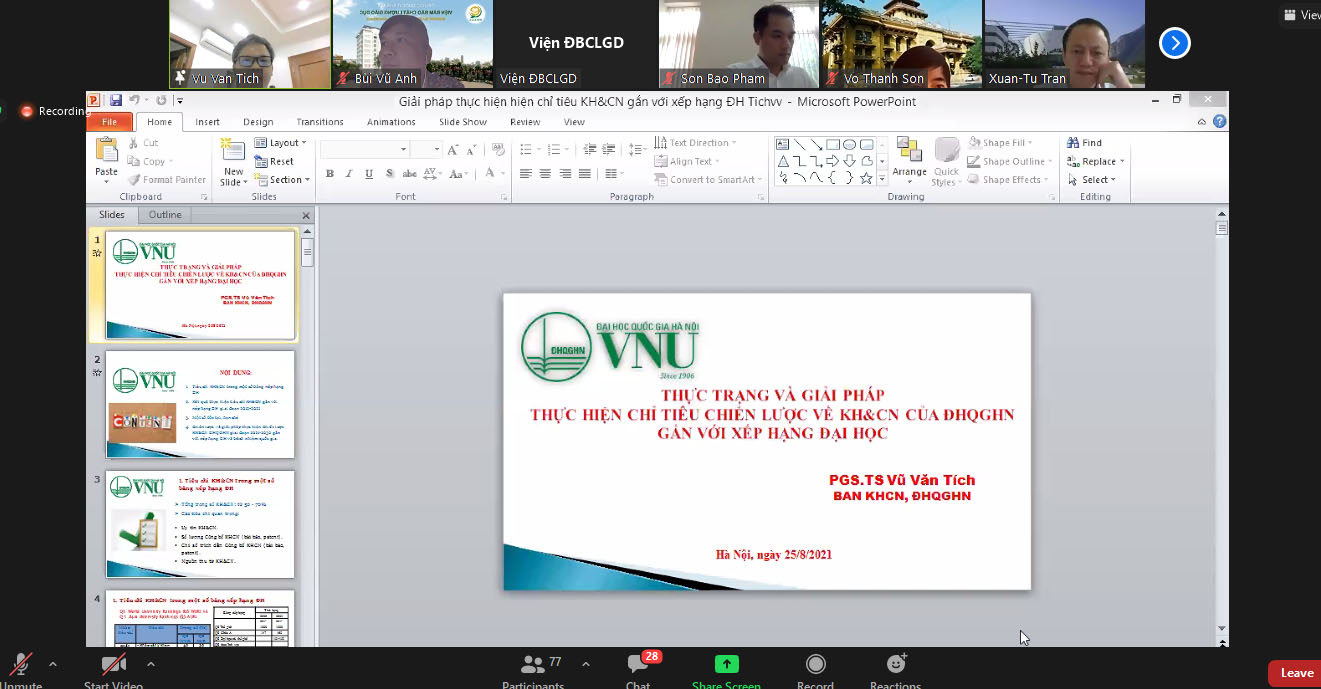
In his presentation titled "Current Situation and Solutions for Implementing Strategic Targets on Science and Technology of Vietnam National University, Hanoi in Linked to University Rankings," the Head of the Science and Technology Department of Vietnam National University, Hanoi, Vu Van Tich, presented to the Conference on the criteria for science and technology in several university rankings; the results of implementing the criteria for science and technology linked to university rankings in the period 2016-2021; some existing shortcomings and limitations; and strategies and solutions for implementing the science and technology strategy of Vietnam National University, Hanoi in the period 2021-2030 linked to university rankings and national responsibility.
Associate Professor Tran Quoc Binh – Vice Rector of the University of Science – shared some experiences in promoting international publications, cooperation in scientific research, and technology transfer at the University of Science, including: focusing on building a culture of international publication and intellectual property (IP) registration; organizing forums for exchange and sharing to enhance aspirations and experiences in international publication; having policies to regularly support and reward international articles, international monographs, and IP registrations. Seeking resources for research is also emphasized, through strengthening proposals and implementing projects to invest in equipment for research activities; encouraging staff to register research topics with internationally published products and proactively engaging in international cooperation.
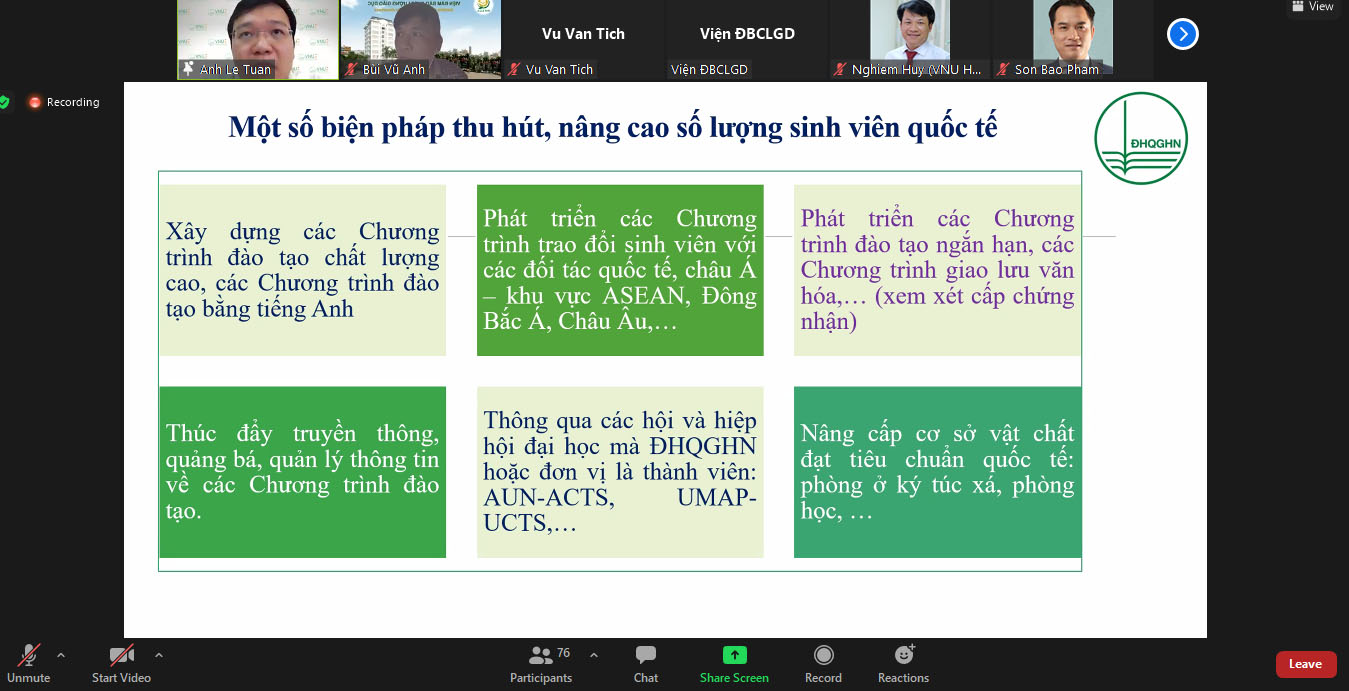
In his presentation "Solutions for implementing the strategic targets on internationalization of VNU in conjunction with university ranking indicators," Deputy Head of the Cooperation and Development Department Le Tuan Anh outlined several measures to attract and increase the number of international students, such as: Developing high-quality training programs and programs taught in English; Developing student exchange programs with international partners, including those in Asia – ASEAN region, Northeast Asia, Europe, etc.; Through university associations and societies of which VNU or its units are members, such as AUN-ACTS, UMAP-UCTS, etc.; Upgrading facilities to meet international standards: dormitories, classrooms, etc.
Regarding foreign lecturers, the representative of the Cooperation and Development Department suggested that attention should be paid to the rights and obligations of lecturers, visiting lecturers, and part-time lecturers of foreign nationality; developing suitable facilities and accommodation to meet the working requirements of foreign experts and scientists; implementing an international lecturer and scholar exchange program to attract excellent foreign professors and lecturers to participate in research and training; and promoting cooperation with foreign partners and implementing collaborative research programs and projects.
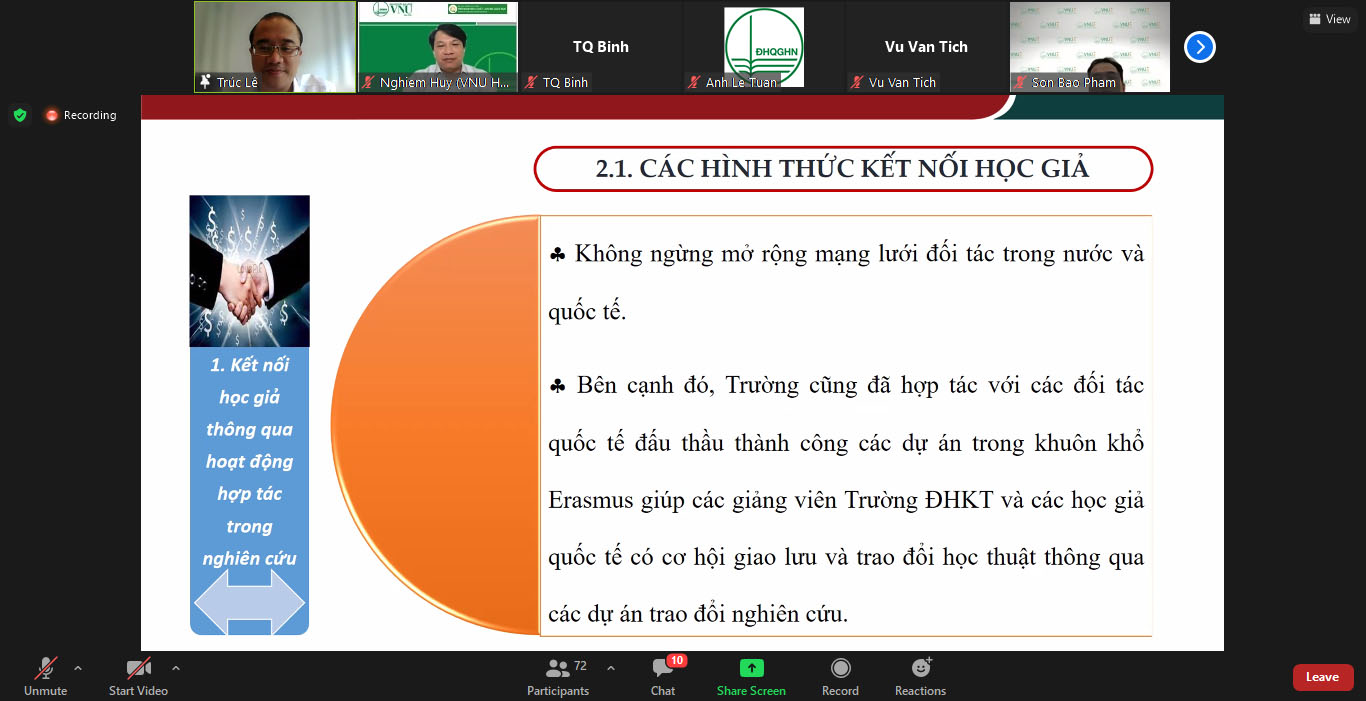
According to statistics from January 1, 2016 to December 31, 2020, the University of Economics, Vietnam National University, Hanoi, received 824 scholars for academic exchange and research collaboration. To achieve this result, Rector Nguyen Truc Le shared experiences in connecting scholars at the University of Economics, such as:Enhance connectivity throughCollaborative research, participation in conferences and seminars, and academic exchanges; developing strategic plans and clearly defining short-term and long-term performance targets; strengthening and developing a high-quality faculty to participate in scientific research and academic exchanges.
Mr. Vo Thanh Son – Deputy Director of the Institute of Resources and Environment – presented a paper at the conference on the topic “Implementing Sustainable Development Goals (SDGs) and the Role of Universities – The Practice of the Institute of Resources and Environment”. He shared that sustainable development is a trend of the times from the late 20th century to the early 21st century, with the 2030 Agenda and the 17 SDGs being the clearest evidence. The Institute of Resources and Environment has always adhered to sustainable development goals as a strategic direction for its development. The participation of research units and universities in implementing the 2030 Agenda and the 17 SDGs also demonstrates social responsibility, thereby enhancing its international standing and contributing to the promotion of its university ranking.
Speaking at the conference, Vice Rector of Vietnam National University, Hanoi, Pham Bao Son acknowledged and highly appreciated the coordinating role of the Institute for Educational Quality Assurance and the active participation of various units in the university ranking process. He affirmed that the participation of all units will help leverage the multidisciplinary and multi-field advantages of Vietnam National University, Hanoi, as well as contribute to increasing the university's position in the rankings.
Deputy Director Pham Bao Son suggested that, in order to improve its position in university rankings, the Vietnam National University, Hanoi (VNU) should focus on maintaining stability and increasing training indicators (faculty/student ratio, postgraduate/undergraduate training scale, percentage of faculty with doctoral degrees). It is also necessary to promote research indicators, develop policies and implementation plans to increase the quantity and quality of scientific publications. Policies should be implemented to develop international cooperation to increase the number of international scholars and students coming to VNU for research and work.
In the upcoming academic year, member and affiliated training and research units will base their targets and work plans for university ranking in the 2021-2022 academic year on their strengths. These units need to implement solutions to promote collaboration with scientific partners and employers to both increase development resources and improve the academic and employment reputation of the units and VNU.
Along with implementing systematic and modern communication solutions regarding training and scientific research, Deputy Director Pham Bao Son also emphasized the need to synchronize brand identity between the unit and VNU, ensuring adherence to the OneVNU principle in international transactions and forums. University ranking is a method of strategic goal management and a way to measure and evaluate the quality of training, research, and knowledge transfer within a unit.