
The 2020-2021 academic year saw many outstanding achievements in training at Vietnam National University, Hanoi.
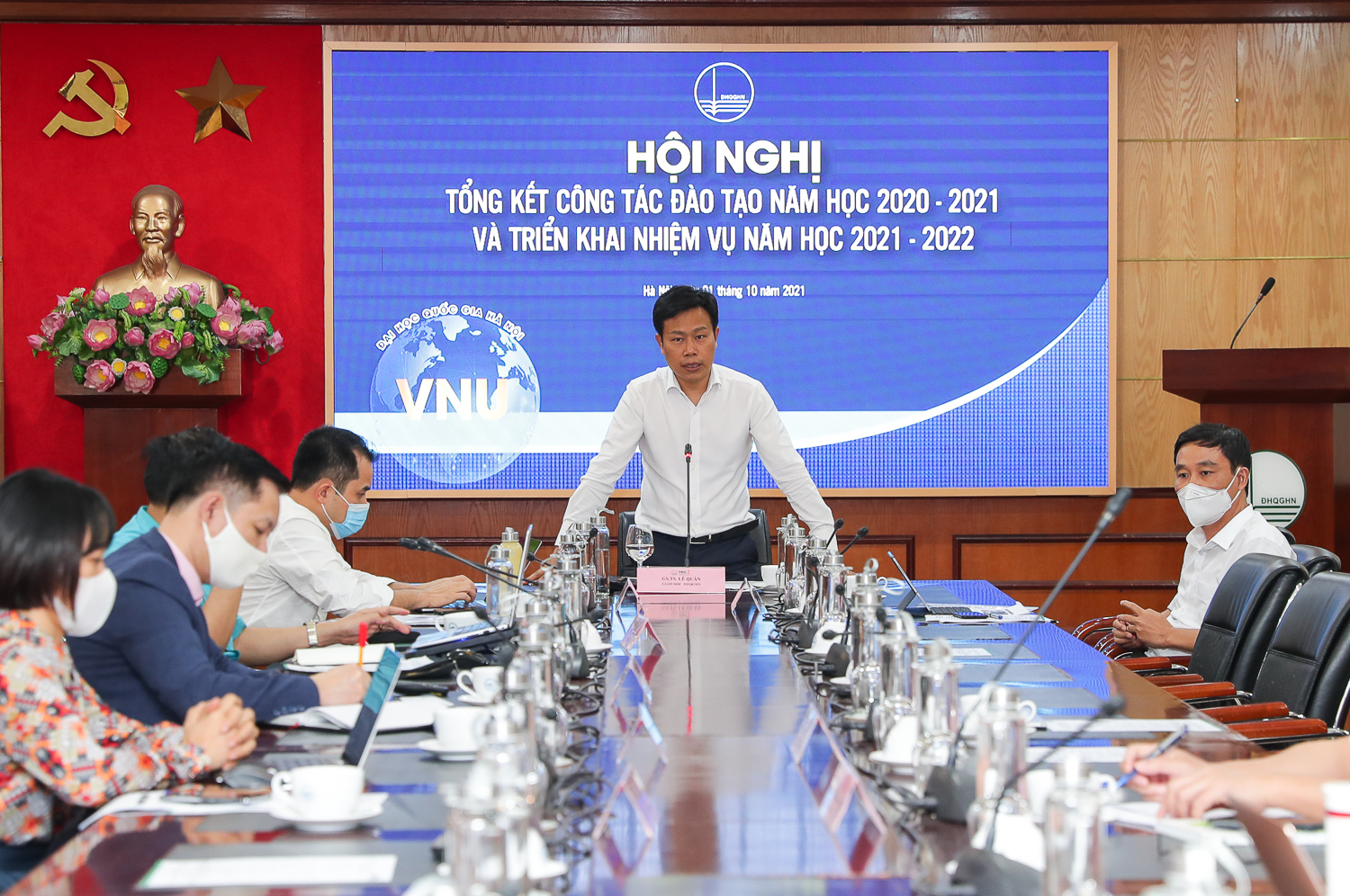
Director of Vietnam National University, Hanoi, Le Quan, at the conference.
This information was presented at the Conference summarizing training activities for the 2020-2021 academic year and outlining tasks for the 2021-2022 academic year, held at Vietnam National University, Hanoi, on October 1, 2021.
The Director of Vietnam National University, Hanoi, Le Quan, attended and delivered a keynote speech.
Also attending the conference were the Vice Directors of VNU: Nguyen Hoang Hai and Pham Bao Son, representatives of the leadership of the Office and functional departments of VNU, and representatives of the leadership and staff in charge of training work of member and affiliated units of VNU.
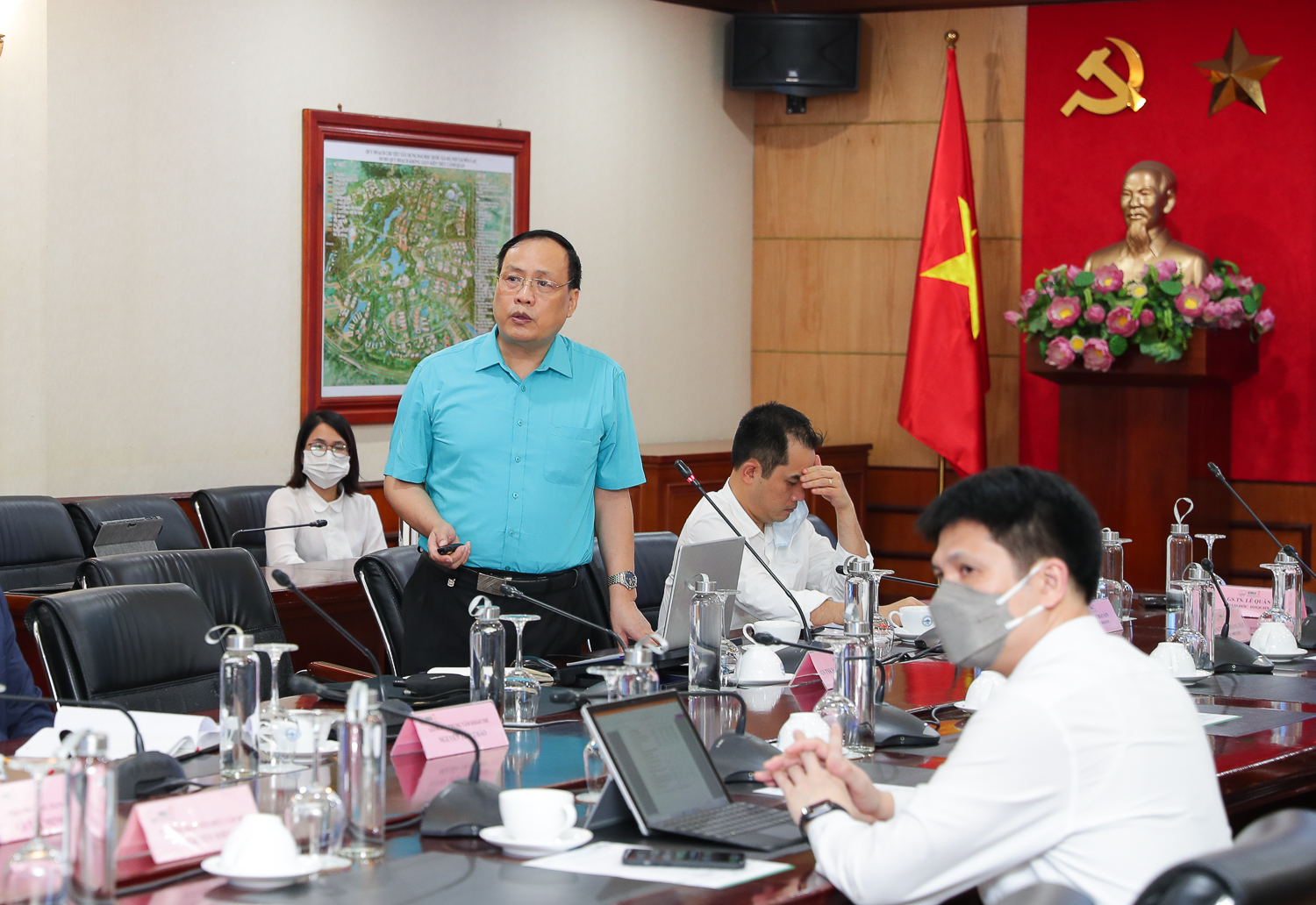
Professor Nguyen Dinh Duc reviewed the results of the tasks performed during the 2020-2021 academic year.
The conference heard and discussed the report summarizing the training work for the 2020-2021 academic year and the implementation of tasks for the 2021-2022 academic year. The report clearly indicated that training work at Vietnam National University, Hanoi in the 2020-2021 academic year continued to innovate, leveraging all resources to successfully complete the key tasks of the academic year and achieving remarkable results.
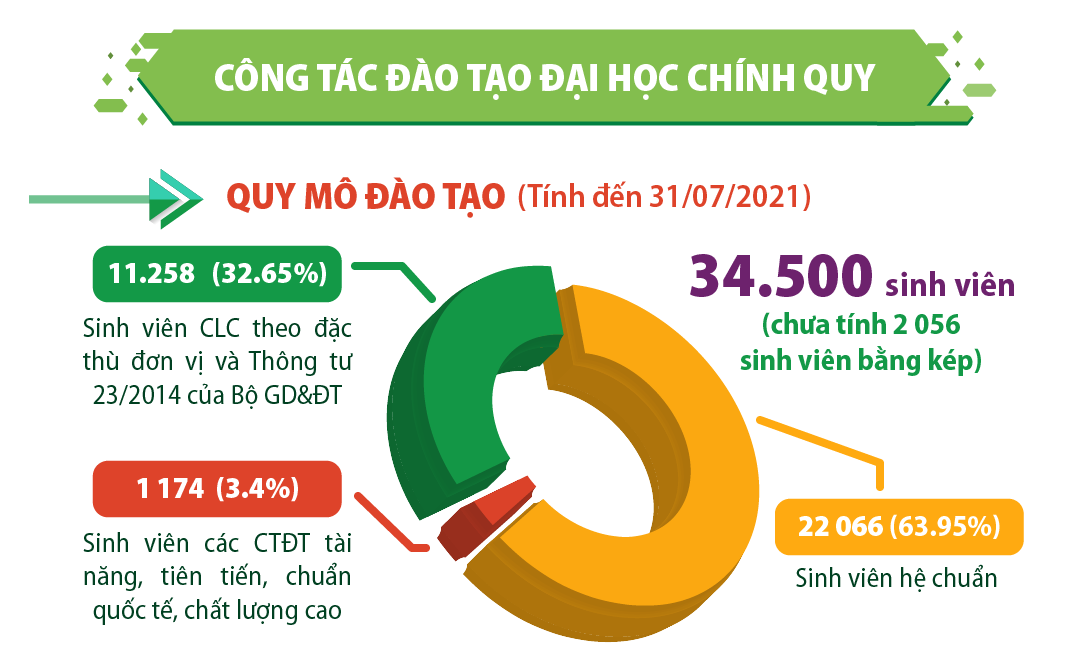
Accordingly,scale of university-level trainingThe student population of Vietnam National University, Hanoi (VNU) has remained stable, with nearly 34,500 students as of July 31, 2021.Scale of dual degree programsThe entire Vietnam National University, Hanoi has 2,056 students.Scale of postgraduate trainingThat includes nearly 7,000 postgraduate students and doctoral candidates. Notably, in 2021, Vietnam National University, Hanoi began implementing this program.many innovative policies for postgraduate admissions.and made some adjustments to better support the unit in implementing this work.
Professor Nguyen Dinh Duc, Head of the Training Department of Vietnam National University, Hanoi, also reviewed the results of the tasks performed in the 2020-2021 academic year across various areas of work:University and postgraduate admissionsThere have been many breakthroughs in both quantity and quality. The enrollment results show that the departments of VNU have a clear stratification, thereby demonstrating the attractiveness of professions according to social needs;Curriculum development workFocus on launching and piloting training programs not included in the Ministry of Education and Training's Level IV education and training catalog, interdisciplinary/cross-sectoral training programs, and expanding high-quality training programs tailored to the specific needs of each unit…
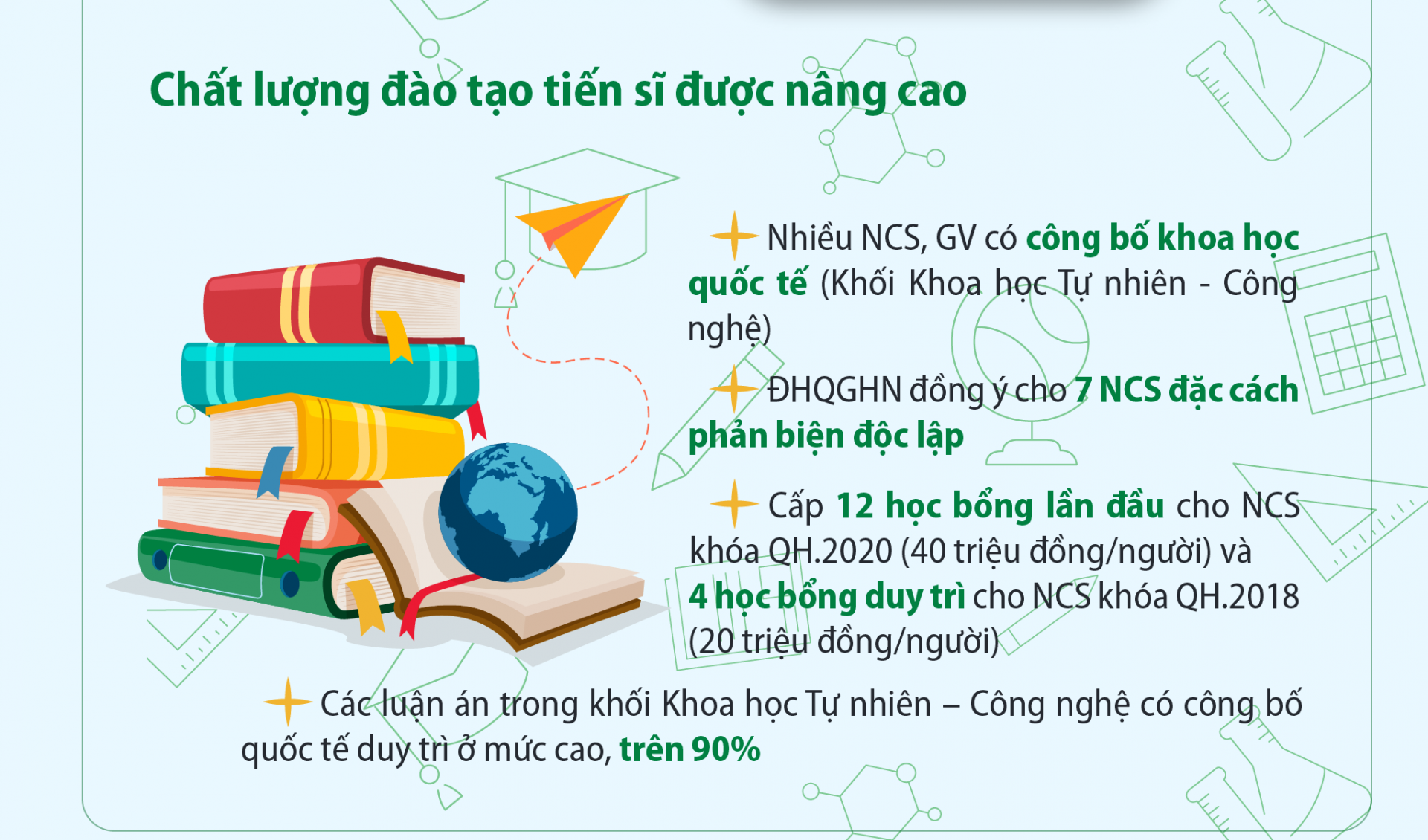
Activities aimed at improving the quality of training and employability for students are given special attention. Training is closely linked with scientific research and research groups. To date, more than 90% of doctoral candidates in the Natural Sciences and Engineering-Technology fields at Vietnam National University, Hanoi, have published their dissertations in reputable international ISI journals. In the past academic year, five disciplines at Vietnam National University, Hanoi, were ranked 500-600 in the world in the QS rankings: Computer Science and Information Systems, Mechanical Engineering, Aerospace and Manufacturing, Mathematics, Physics and Astronomy, and Business and Management Studies. This is the first time that Business and Management Studies has been ranked by QS.
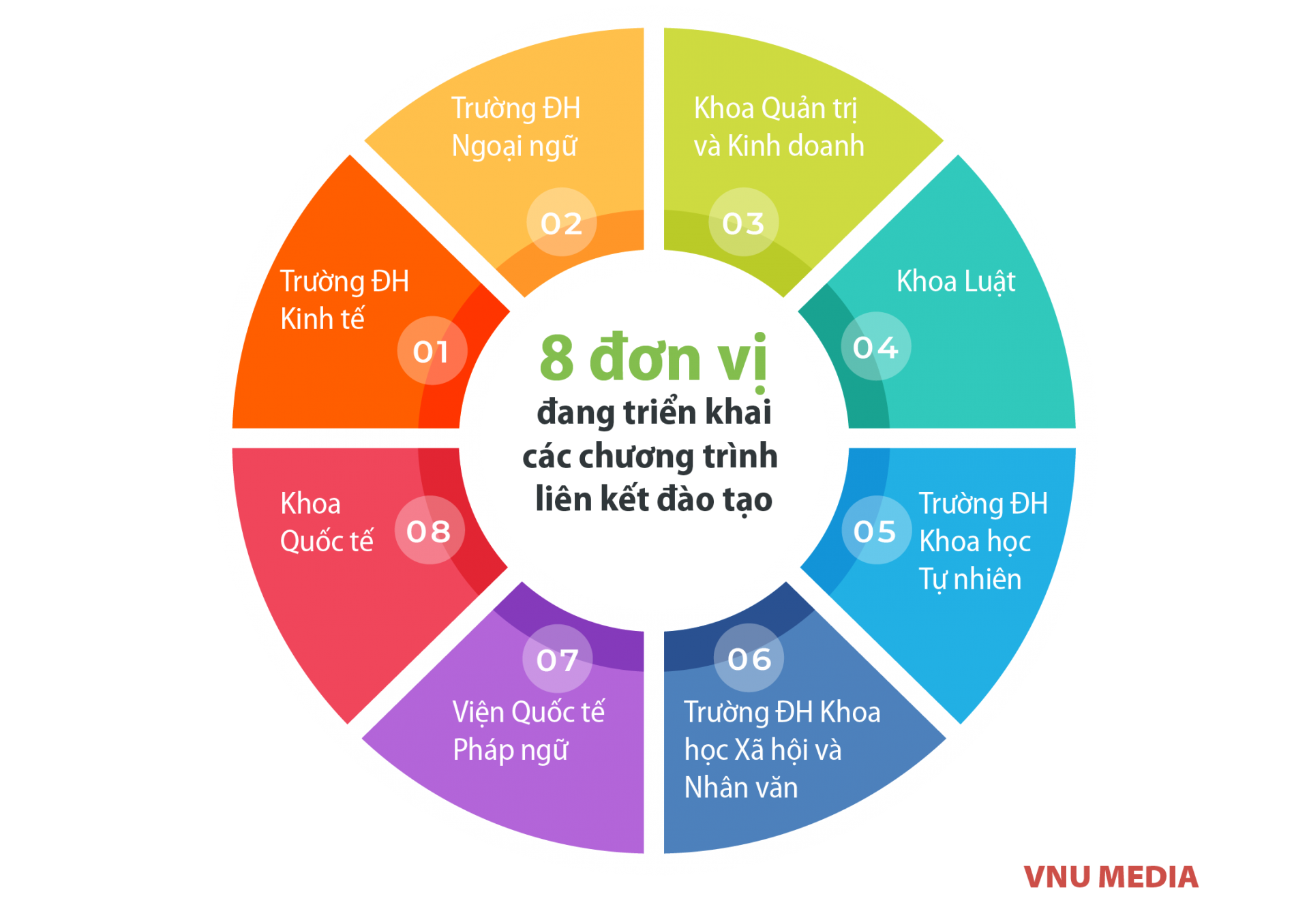
Boostinternational joint training programsFields of study include: Economics, Business, Management, and Technology, with reputable foreign educational institutions.Quality testing and evaluationThe training programs will then develop specific and practical solutions to improve the quality of student recruitment and training.Innovating teaching methodsAt VNU, the program was implemented comprehensively from high school to undergraduate and postgraduate levels, making a significant contribution to completing the academic year's tasks amidst the complex pandemic situation.Work related to curriculum development, teaching materials, and computerization of training management.It is also being implemented systematically and proactively in line with the digital transformation of education and training…
However, there are still some shortcomings and limitations that need to be addressed in the coming academic years, namely: The opening of high-quality training programs is only focused on a few majors/specializations with high social demand and has not been given sufficient attention in basic science fields; Some high-quality training programs are not truly different from standard training programs; Investment in high-quality training programs is not truly commensurate; Infrastructure conditions are still limited and do not meet the scale of university-level training; Postgraduate enrollment still faces many difficulties…
The theme for the 2021-2022 school year is"Continue to promote digital transformation and comprehensive innovation in teaching activities; constantly improve the quality of training, expand the scale and enhance the quality of doctoral training and training in engineering and technology fields."In the coming academic year, training at VNU will focus on the following key tasks: (1) Building and implementing the Project to organize high school level Olympic exams of VNU to select talents; (2) Promoting digital transformation, perfecting the model and method of online training associated with quality assurance; (3) Innovating the structure of training program content; (4) Expanding the scale and improving the quality of doctoral training; (5) Expanding the scale and improving the quality of training in engineering and technology fields.
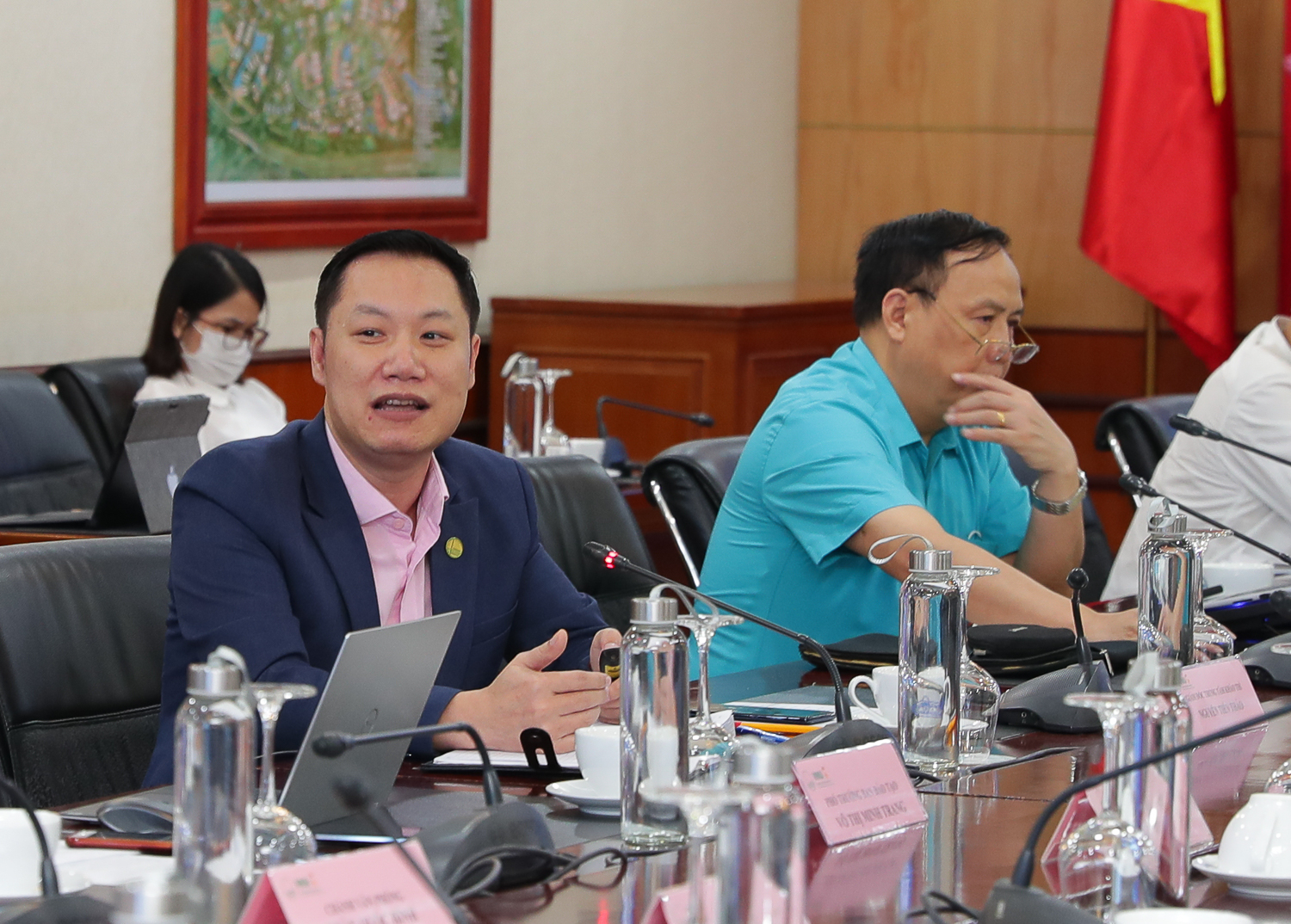
Nguyen Tien Thao, Director of the Testing Center of Vietnam National University, Hanoi, reported on the results of the 2021 National Competency Assessment Exam.
Regarding the National University of Hanoi's Competency Assessment Exam (ĐGNL) for high school students, the Director of the VNU-Hanoi Testing Center, Nguyen Tien Thao, stated that the 2021 ĐGNL exam achieved its goals in terms of quality, process, results, similarity, and balance of difficulty levels according to modern measurement and testing science. The exam had a high level of differentiation, assessing students' abilities according to the three competency groups of the output standards of the general education program; it correlated positively with the graduation exam results but had a higher level of difficulty and differentiation from an assessment perspective. In 2022, the VNU-Hanoi Testing Center plans to organize multiple ĐGNL exams throughout the year for approximately 30,000 candidates, serving broad-based university admissions.
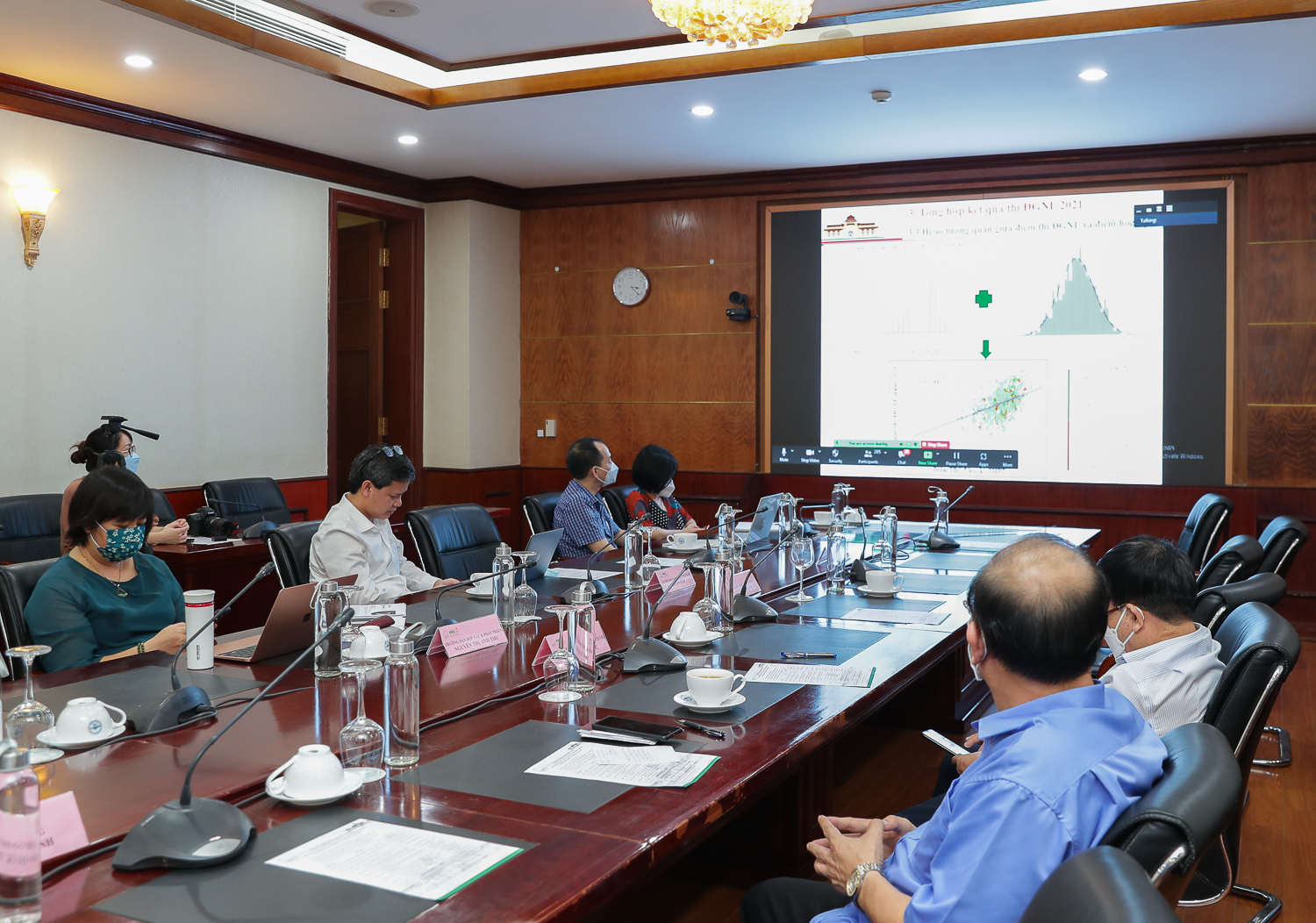
At the conference, delegates exchanged and discussed the shortcomings that have existed in the past, and proposed solutions to overcome them in the coming years.
Regarding the issue of improving the quality of doctoral training to international standards, according to Vice Rector of the University of Science, Le Thanh Son, the output standards for doctoral training vary among countries in terms of knowledge, skills, and international publications of doctoral students. The regulations on doctoral training at Vietnam National University, Hanoi, applied since 2018, stipulate that international publication is a mandatory requirement for doctoral students. This has created a good foundation for moving towards doctoral training according to international standards. The university encourages and facilitates doctoral students to participate in research groups and international academic exchanges to increase their international publications. At the same time, the university also seeks and supports doctoral students in obtaining research support scholarships. The doctoral training at the University of Science is gradually moving towards achieving international standards in publications.
Emphasizing the role of basic sciences in providing high-quality human resources for teaching, research, and management, Vice Rector of the University of Social Sciences and Humanities, Lai Quoc Khanh, stated that the University has many policies and initiatives to encourage and support basic science research activities to promote training and research in this field. However, certain difficulties are still encountered during implementation. The University of Social Sciences and Humanities recommends that Vietnam National University, Hanoi (VNU) prioritize investment in basic sciences to ensure that the human resource needs of the State and society are met. Besides continuing to support basic sciences with internal resources, the University proposes several investment and development directions from a state management perspective for these fields: a mechanism for the State to commission basic science training programs; and a mechanism for the State to provide incentives and encouragement for lecturers and students in basic sciences…
Chairman of the Council for Educational Quality Assurance Mai Trong Nhuan and Director of the Institute for Educational Quality Assurance Nghiem Xuan Huy both agreed that training units need to develop a quality accreditation roadmap for internationally standardized training programs that meet the high demand for human resources in society, aiming to effectively implement the Vietnam National University, Hanoi's Development Strategy. Simultaneously, training units also need to identify comprehensive solutions to address the factors and conditions that directly affect the ranking of Vietnam National University, Hanoi and the quality assessment of training programs, such as: requirements for learning outcomes, assessment activities, curriculum design, and infrastructure.
According to Professor Mai Trong Nhuan, increasing the scale of training must go hand in hand with improving the quality of training and the employability of graduates. At the same time, units need to ensure the lecturer-to-student ratio and implement solutions to promote connections with employers. Content on quality assurance must also be flexibly integrated into the training regulations of Vietnam National University, Hanoi.
Professor Le Ngoc Thanh – Rector of the University of Medicine and Pharmacy – proposed that Vietnam National University, Hanoi (VNU) needs a mechanism to increase the income of staff and lecturers in specialized training fields such as medicine and pharmacy. Rector Le Ngoc Thanh expressed his hope that the VNU leadership and its member units would continue to support and cooperate with the University in training, providing facilities and financial resources so that students and trainees have better opportunities for practical training and internships.
Professor Nguyen Quy Thanh, Rector of the University of Education, expressed his views on developing teacher training and educational science programs that align with the direction of digital transformation in education and training. Professor Nguyen Quy Thanh believes that there needs to be a unified policy and mechanism to acknowledge the participation of lecturers and to support them in developing lectures and learning materials for online and blended learning.
Delegates attending the conference also suggested that a synchronized solution is needed to integrate data from common training management software and systems used throughout Vietnam National University, Hanoi, in order to facilitate management and operation.
Concluding the conference, the Director of VNU, Le Quan, highly appreciated the achievements of VNU in the past academic year, acknowledging the efforts of training units in developing training programs and gradually increasing the scale of postgraduate training; and the outstanding efforts to ensure "good teaching, good learning," successfully completing the academic year's tasks amidst the complex developments of the pandemic.
Director Le Quan suggested that, in the coming period, training should focus on developing the quality and effectiveness of training and structuring professions to adapt to the needs of the labor market.
The Director requested that training units perform the following tasks well in the 2021-2022 academic year and subsequent years:
Firstly, we need to develop and adjust the training regulations to align with the new Decree and Regulations on the Vietnam National University. This should prioritize piloting training models and methods based on international standards, refining the output standards to include competencies and skills relevant to the respective fields/groups of fields, and maximizing the position and unique characteristics of the Vietnam National University, Hanoi.
Secondly, it is important to enhance the skills of instructors in developing teaching materials for online instruction, enabling them to be more proactive in creating and designing lectures, thereby improving training effectiveness.
Thirdly, innovation in curriculum structure, linked to quality accreditation and university governance, will increase students' ability to adapt to real-world issues while reducing training costs for the institution; institutions need to focus on and accelerate the accreditation process for undergraduate and postgraduate programs.
Fourth, strengthen interdisciplinary and inter-unit training following the a+b model for engineering and technology fields. This helps address the issue of revenue generation linked to training quality and the workforce needs of the Industry 4.0 labor market.
Fifth, strengthen solutions to improve the quality of postgraduate training, especially doctoral training; develop and implement a project for internationally standardized doctoral training in the fields of Natural Sciences, Engineering and Technology, and pilot doctoral training under a commissioned mechanism; continue to maintain and supplement scholarship and reward funds and incentive solutions to increase international publications of students, researchers, and lecturers of the unit.
Sixth, increase investment in talent training and basic science disciplines in a focused and individualized manner, avoiding scattered investment.
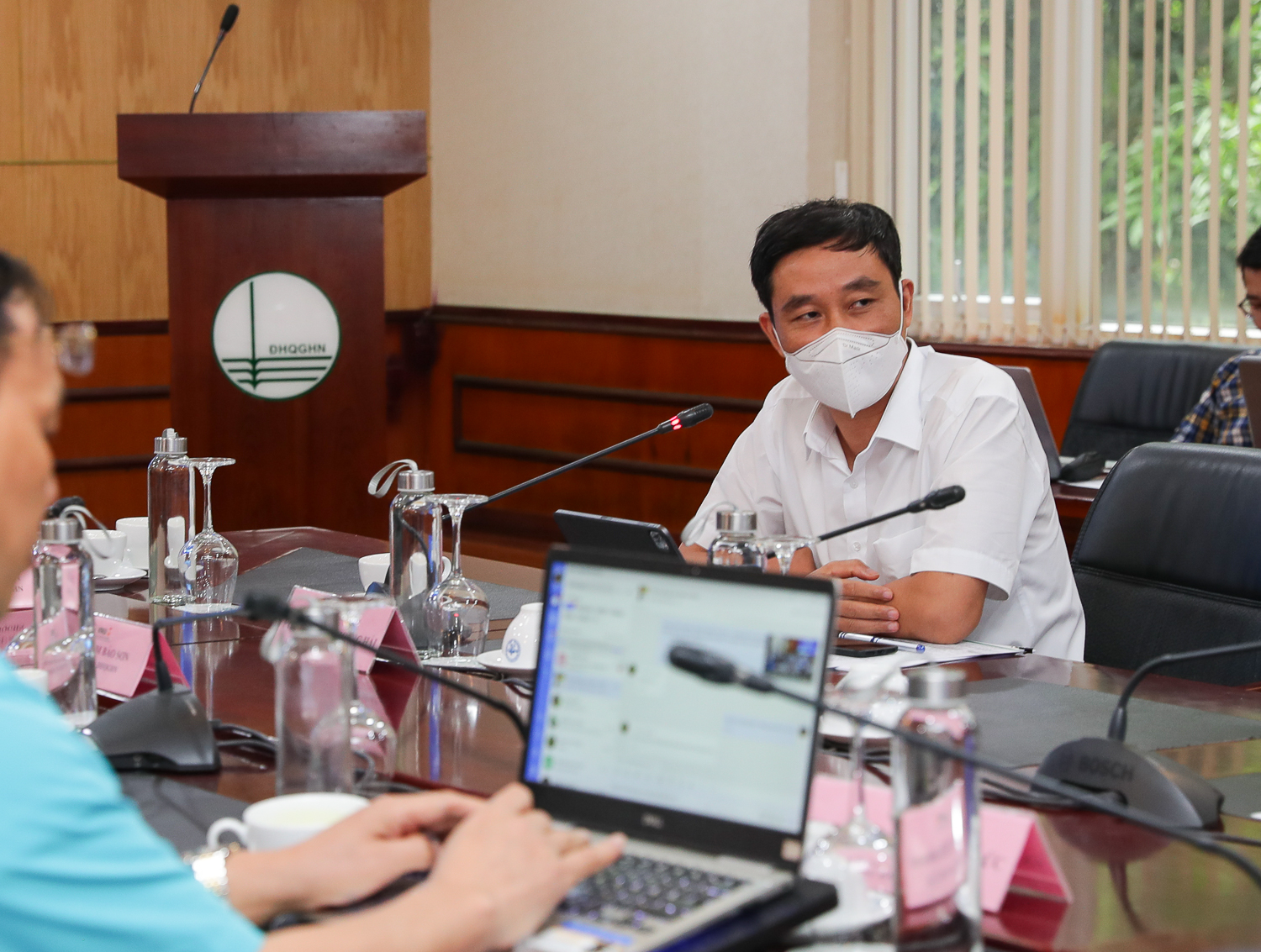
Vice Rector of Vietnam National University, Hanoi, Nguyen Hoang Hai, delivered a speech at the conference.
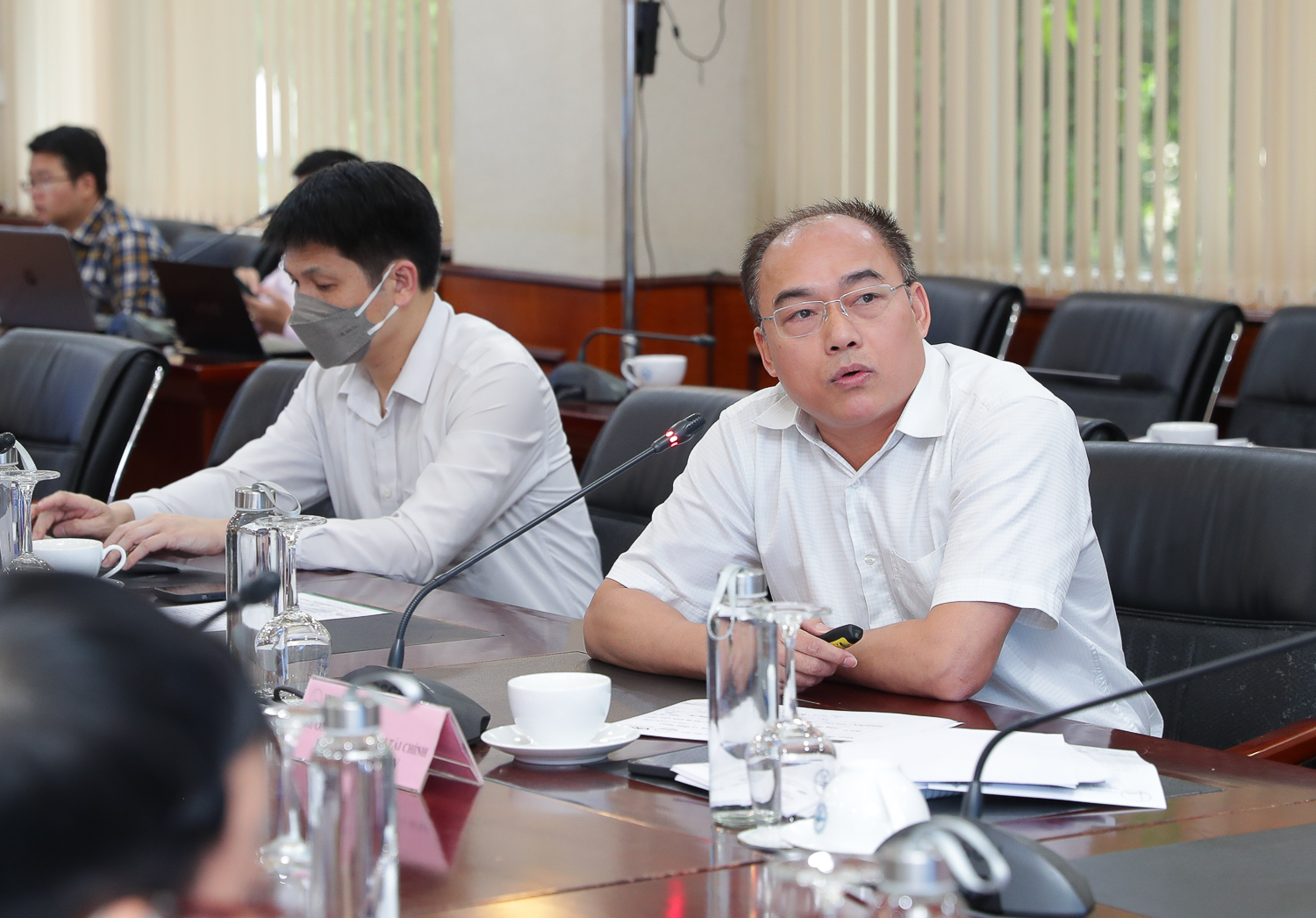
Head of Planning and Finance Department Pham Xuan Hoan presented a report on the revenue and expenditure structure by profession at Vietnam National University, Hanoi.
Author:Huong Giang - Photo: Quoc Toan - VNU Media
Newer news
Older news

