During the meeting, Professor Gong Qihuang, President of Peking University, expressed his pleasure and honor in welcoming Professor Le Quan and the delegation from Vietnam National University, Hanoi. Professor Gong shared that following the visit of the General Secretary of the Central Committee of the Communist Party of Vietnam and President of the Socialist Republic of Vietnam, To Lam, to China from August 18-20, 2024, the two sides issued a Joint Statement on further strengthening the comprehensive strategic partnership and promoting the building of a shared future between Vietnam and China. In this context, strengthening cooperation in higher education and talent training between the two countries is increasingly emphasized. Sharing many similarities as leading, multidisciplinary higher education institutions with significant importance in training talent for their respective countries, Professor Gong Qihuang believes that cooperation between Peking University and Vietnam National University, Hanoi will contribute to the development of bilateral relations.
Professor Gong Qihuang stated that, due to the impact of the Covid-19 pandemic, in-person exchanges have been severely limited. However, this has also opened up opportunities for online exchanges, creating a new trend in the development of education on digital platforms. Professor Gong Qihuang extended an invitation to Vietnam National University, Hanoi (VNU) to join the international alliance of universities on the development of digital intelligence education to discuss the direction of development for higher education institutions in the digital age.
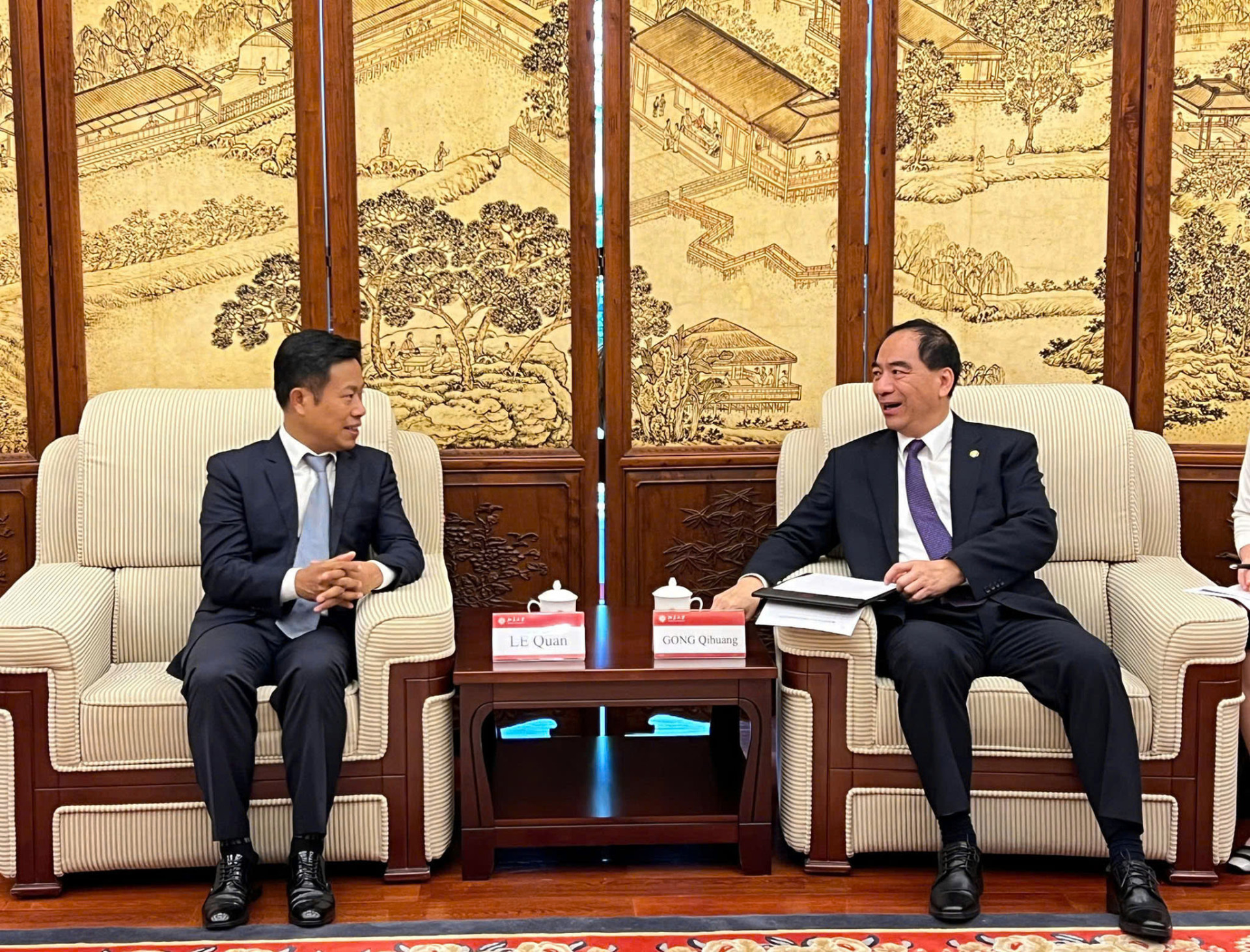
Professor Le Quan - Director of Hanoi National University and Professor Gong Qihuang -President of Peking UniversityDiscussing areas of cooperation between the two units.
Speaking at the meeting, Director Le Quan thanked the leaders of Peking University for their hospitality and expressed his appreciation for the special relationship between the two institutions. Director Le Quan stated that Vietnam National University, Hanoi (VNU) has been tasked by the Vietnamese Party and State with playing a leading role in the national education system through training, nurturing talent, and conducting high-quality research; aiming to become a university among the top 500 universities in the world by 2030. He believes that expanding cooperation with Chinese partners, especially prestigious educational institutions like Peking University, will significantly contribute to VNU's development goals. At the same time, VNU leaders also consider cooperation with Peking University as an important activity contributing to strengthening cooperation in education and training between Vietnam and China.
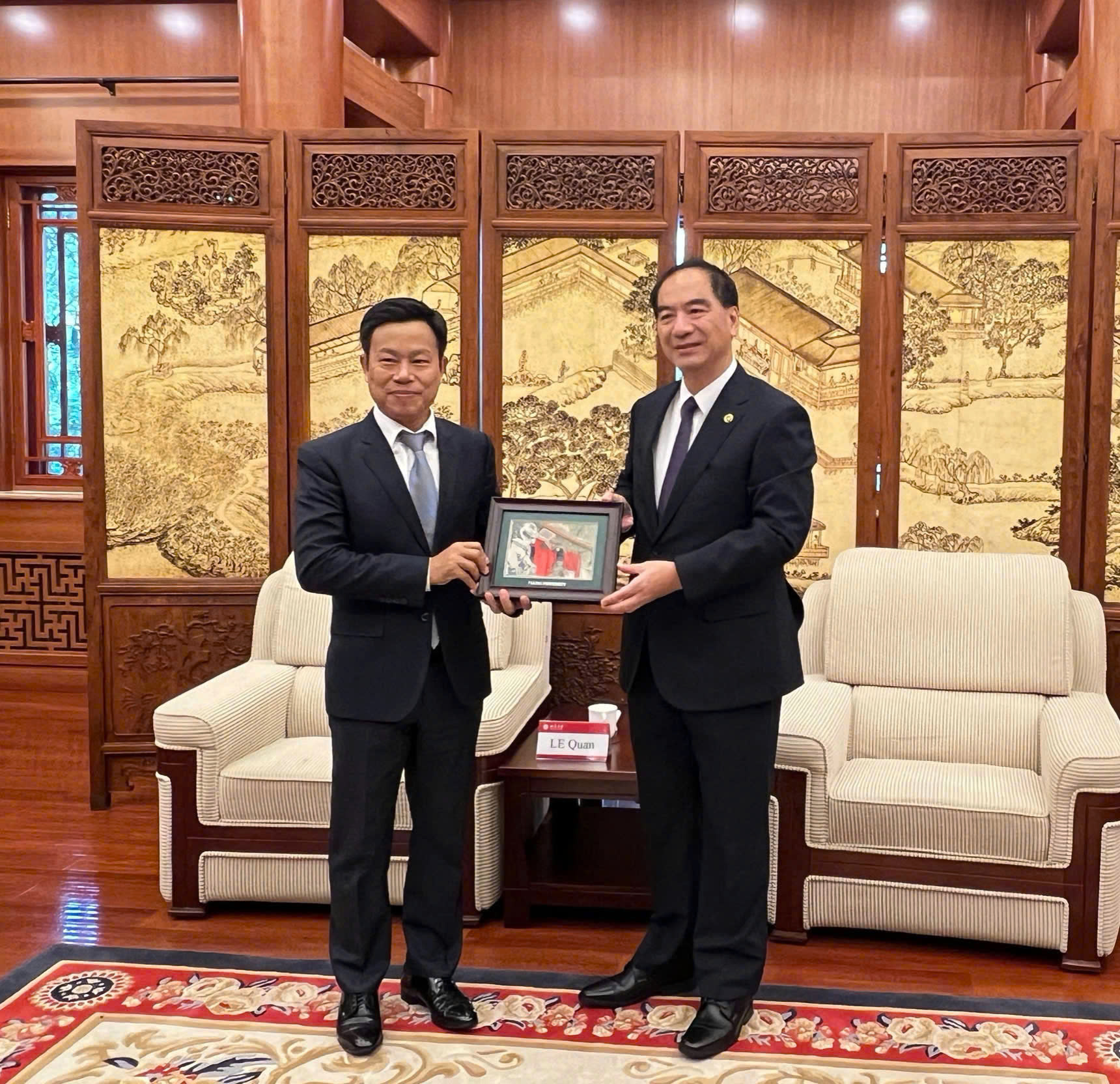
Expressing agreement with the cooperation proposals of the Director of Peking University, Director Le Quan expressed his hope that Vietnam National University, Hanoi (VNU) would soon become a member of the international alliance of universities for the development of digital intelligence education. At the same time, the head of VNU proposed that the two sides implement cooperation programs to train young scientists; and exchange programs for lecturers and students in the fields of science and technology, engineering, artificial intelligence, semiconductor technology, social sciences and humanities…
Vietnam National University, Hanoi (VNU) and Peking University have a long tradition of cooperation, both having been key members of the East Asian Four-University Forum (BESETOHA), which includes VNU, Seoul National University, the University of Tokyo, and Peking University, established in 1999. Within the framework of the BESETOHA Forum, the universities have implemented collaborative programs in training, scientific research, and experience exchange to develop joint initiatives and promote university development. VNU President Le Quan expressed his hope that Peking University and the other universities will relaunch the BESETOHA Forum to continue academic and research activities, demonstrating social responsibility as well as the capabilities and standing of leading universities in the region.
Director Le Quan hopes that Vietnam National University, Hanoi and Peking University will soon sign a cooperation agreement to serve as a basis for implementing specific activities.
Following that, the Director of Vietnam National University, Hanoi, Le Quan, had a discussion with Professor Hao Ping – Secretary of the Party Committee and Chairman of the Board of Peking University.
Professor Hao Ping expressed his appreciation for the visit and working session of the Director of Vietnam National University, Hanoi, Le Quan, at Peking University. He believes that, with the determination of the leaders of both sides, cooperative activities will soon be established and implemented, making an important contribution to bringing the cooperative relationship in the field of education between Vietnam and China to a new level. He assessed that the cooperation between the two universities reflects the guiding spirit and aspirations of the leaders of the two countries in the current period.
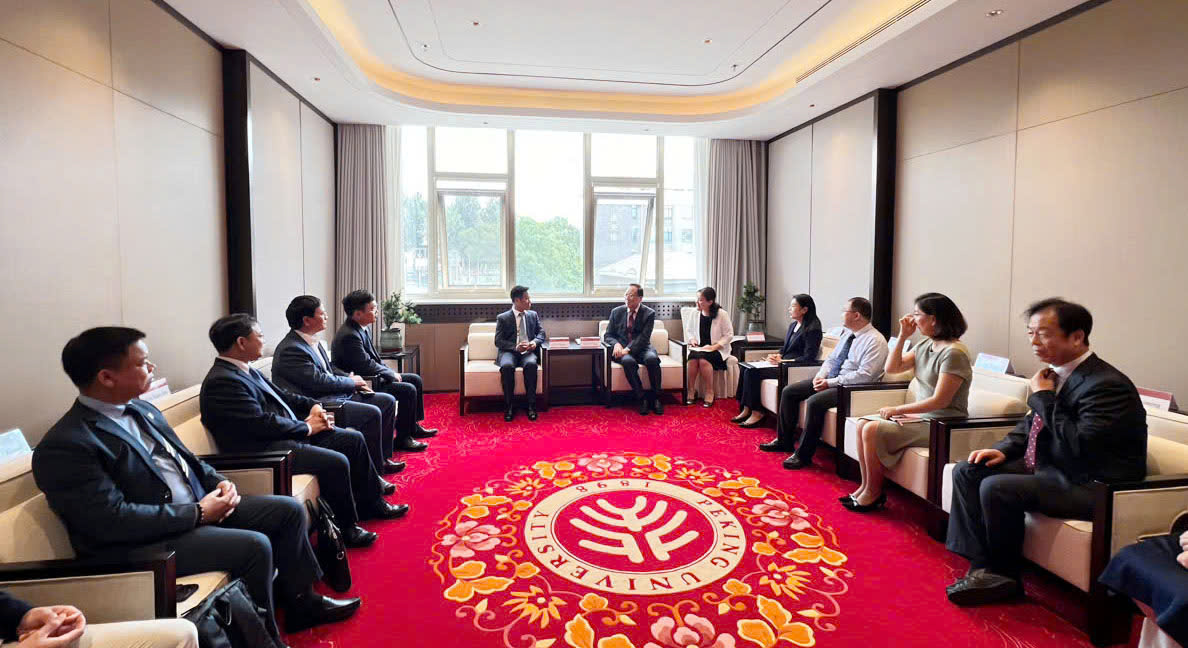
Informing Professor Hao Ping about the cooperation proposals discussed earlier with Professor Gong Qihuang, Professor Le Quan once again affirmed his determination to strengthen cooperation with leading Chinese educational institutions such as Peking University, not only in traditional fields such as social sciences and humanities, Vietnamese language and culture, and Chinese language and culture, but also in new technologies, university administration, research, and technology transfer.
Professor Le Quan stated that Vietnam National University, Hanoi (VNU) has relocated its headquarters to Hoa Lac, beginning a journey towards becoming a smart university city in Vietnam. VNU leaders see this as an opportunity to restructure and transform its operational model towards incorporating more technological, smart, green, and modern solutions. He believes that with the sharing of experiences, development lessons, and cooperation and support from Peking University, VNU will soon achieve its goals, contributing to building a high-quality workforce and developing the country.
Professor Le Quan also extended an invitation to Professor Hao Ping, Professor Gong Qihuang, and other scientists from Peking University to visit Vietnam National University, Hanoi, and to attend the 7th International Conference on Vietnamese Studies in 2025, hosted by Vietnam National University, Hanoi.
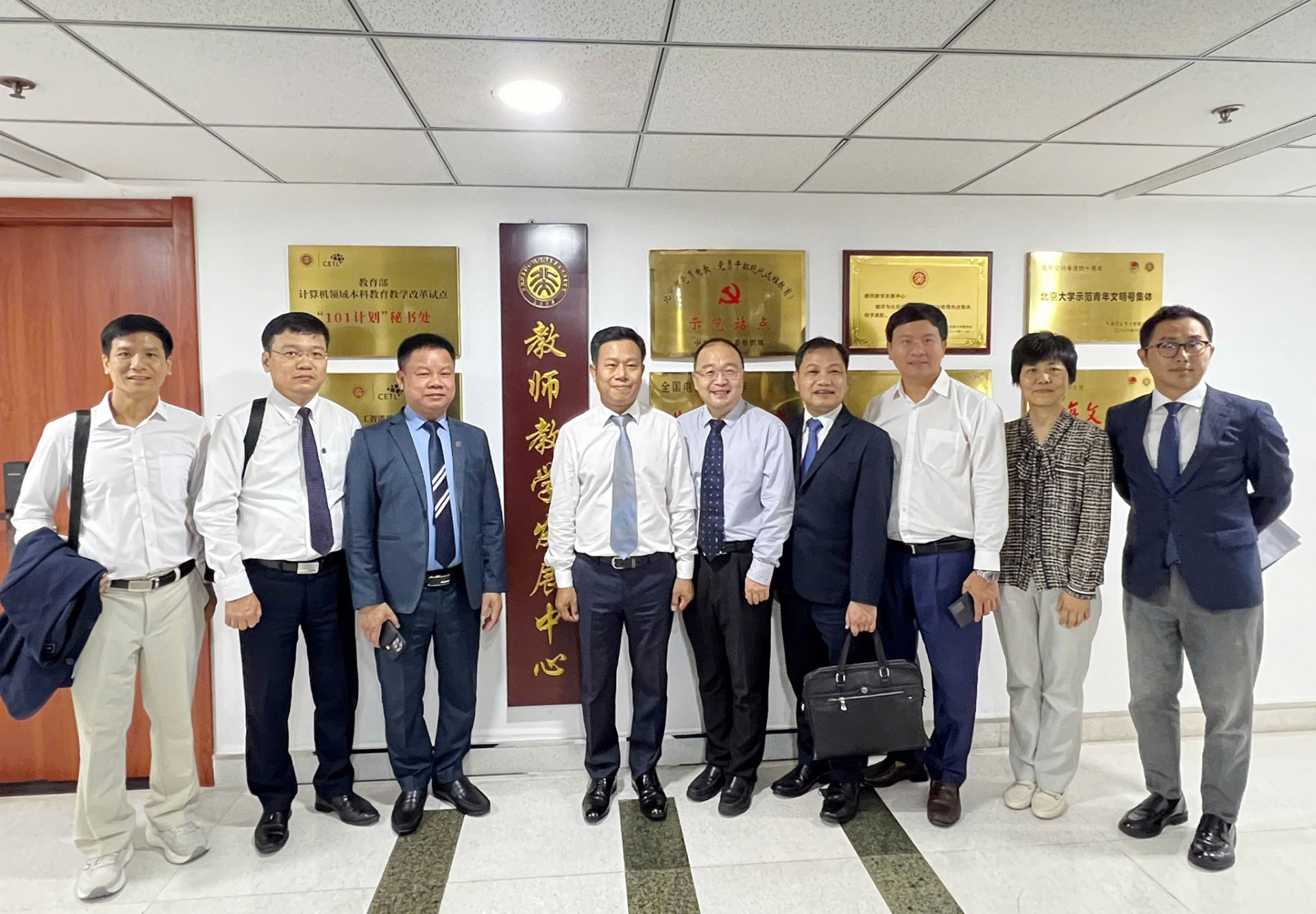
Director Le Quan and the delegation from Vietnam National University, Hanoi visited the Center for Teaching Excellence at Peking University.
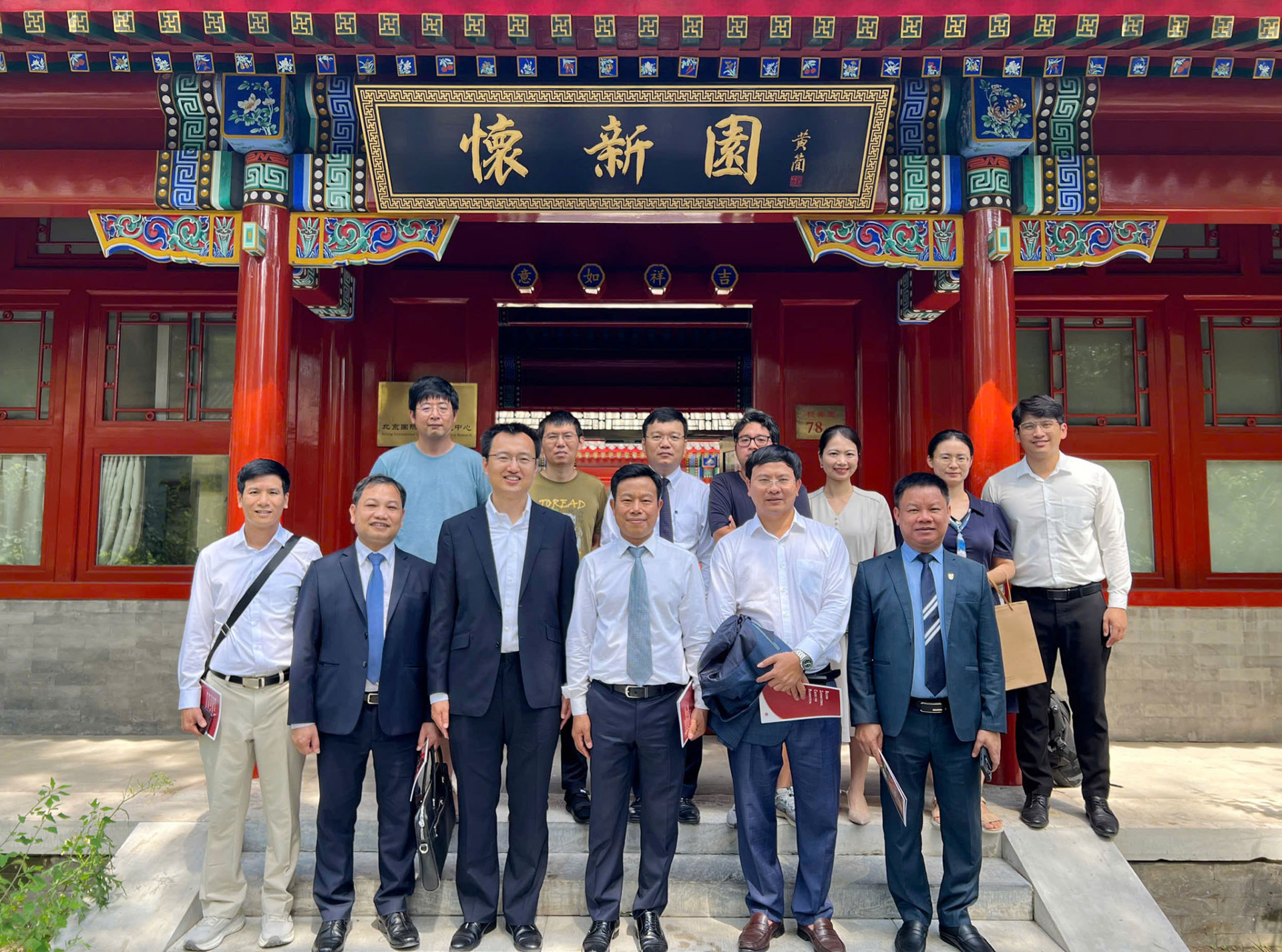
Director Le Quan and the delegation from Vietnam National University, Hanoi visited the International Institute of Mathematics, Peking University.
Speaking at the working sessions, Associate Professor Lai Quoc Khanh emphasized the long history, academic potential, and leading position of the University of Social Sciences and Humanities under the Vietnam National University, Hanoi in the fields of social sciences and humanities. He expressed his appreciation and readiness to implement cooperation activities in research and training with leading universities in China, considering this a responsibility of the scientific communities of both sides in contributing to strengthening and developing the increasingly good relations between the two countries.
During their visit to China, Director Le Quan and the delegation from Vietnam National University, Hanoi, exchanged views and signed memoranda of cooperation with prestigious universities such as Xiamen University in Fujian Province and Tsinghua University, one of the world's top 20 universities.
Prospective areas of cooperation between Vietnam National University, Hanoi (VNU) and major Chinese universities include artificial intelligence, social sciences and humanities, engineering and technology, computer science, etc., and these will be realized through the signing of specific cooperation agreements in the near future.
Peking University is one of the oldest universities, and the first national comprehensive university in China, founded in 1898 with the original name: Jingshi University (to replace the ancient Imperial Academy). With its development and rich cultural heritage, Peking University is renowned for producing many outstanding talents such as Mao Zedong, Mao Dun, Lu Xun, Li Keqiang, Lin Yifu, Li Yanhong, and the poet Xu Zhima…
After several name and location changes, on April 3, 2000, Peking University merged with the former Peking University Medical Center to form the new Peking University. Since the reform and opening up, Peking University has entered an unprecedented new era of construction and development. Becoming one of the two major universities in the national-level "Project 211," "Project 985," and "Double-First Project," Peking University is also a member of the C9 Alliance – an alliance of top universities selected by the Chinese government.
In the QS 2025 ranking of the world's top 100 universities, Peking University ranked 14th globally, 2nd in Asia, and 1st in China.
Related articles:
Vietnam National University, Hanoi (VNU) collaborates with Tsinghua University (China) in scientific research and training.
The Director of Vietnam National University, Hanoi, Le Quan, visits and works with Xiamen University, Fujian Province (China).