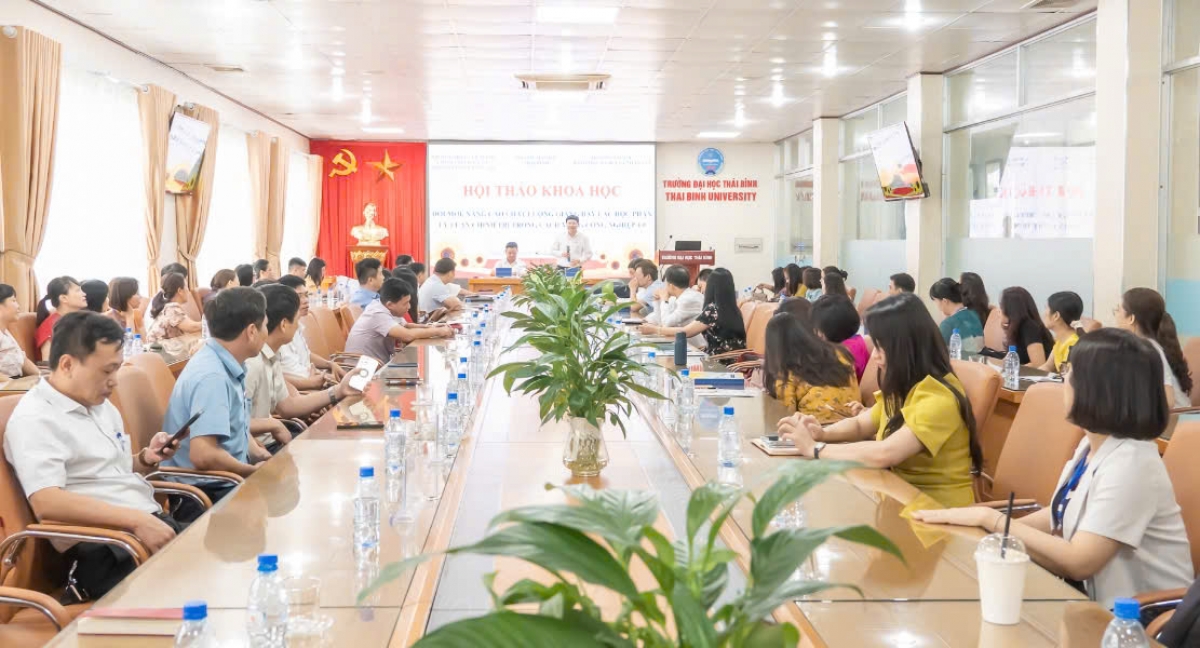
Previously, nearly 80 papers were submitted to the organizing committee by scientists, researchers, and lecturers directly teaching political theory courses at universities, academies, and provincial political centers. 55 of these papers were selected and compiled for inclusion in the proceedings.
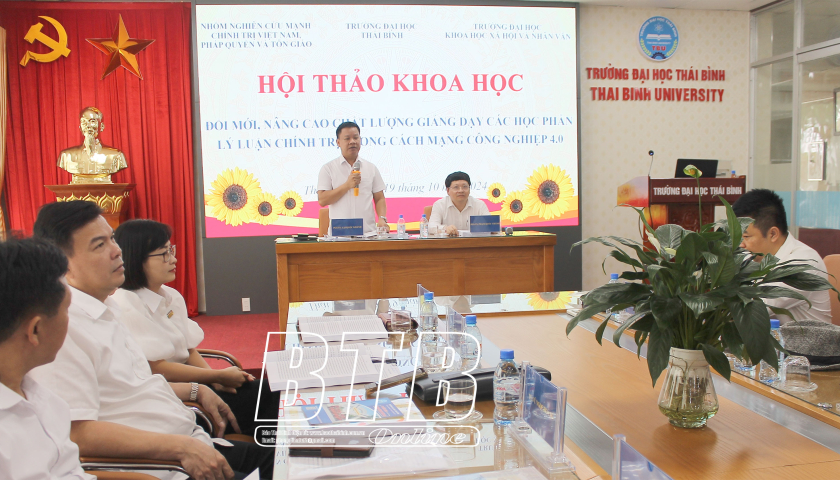
Associate Professor Lai Quoc Khanh - Vice Rector of the University of Social Sciences and Humanities, Vietnam National University, Hanoi, and Associate Professor Pham Quoc Thanh - Rector of Thai Binh University, Head of the strong research group on Vietnamese Politics, Law and Religion ( thuộc University of Social Sciences and Humanities) co-chaired the workshop.
Associate Professor Pham Quoc Thanh (right in the photo), Rector of Thai Binh University, and Associate Professor Lai Quoc Khanh (left in the photo), Vice Rector of the University of Social Sciences and Humanities, Vietnam National University, Hanoi, chaired the workshop.
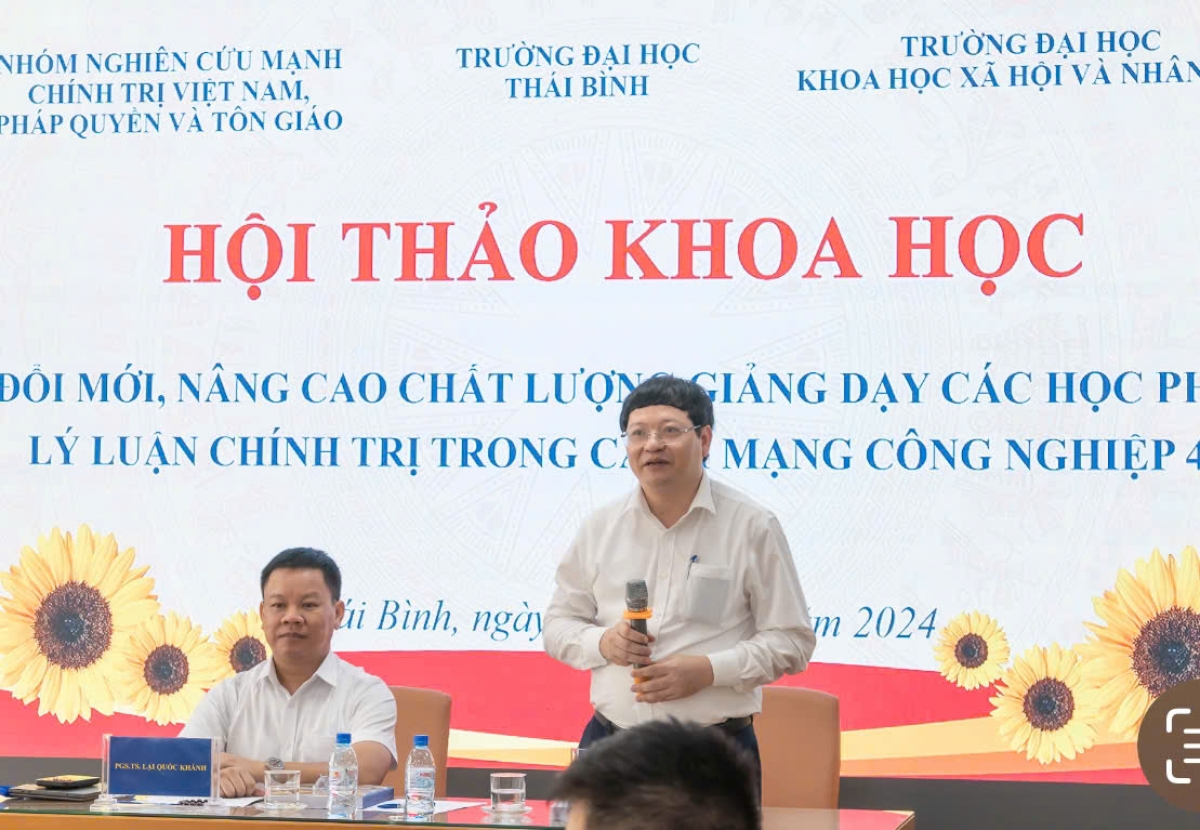
In his opening remarks at the seminar, Associate Professor Lai Quoc Khanh, Vice Rector of the University of Social Sciences and Humanities, Vietnam National University, Hanoi, highlighted that the training and education in political theory is an important part of the Party's ideological work.
The documents of the 13th National Congress of the Party affirm the need to innovate the content and methods of theoretical education in a scientific and modern direction, linking theory with practice. Over the years, political theory education institutions nationwide have implemented many solutions to improve the effectiveness of teaching and learning political theory, especially in the context of the current 4.0 revolution.
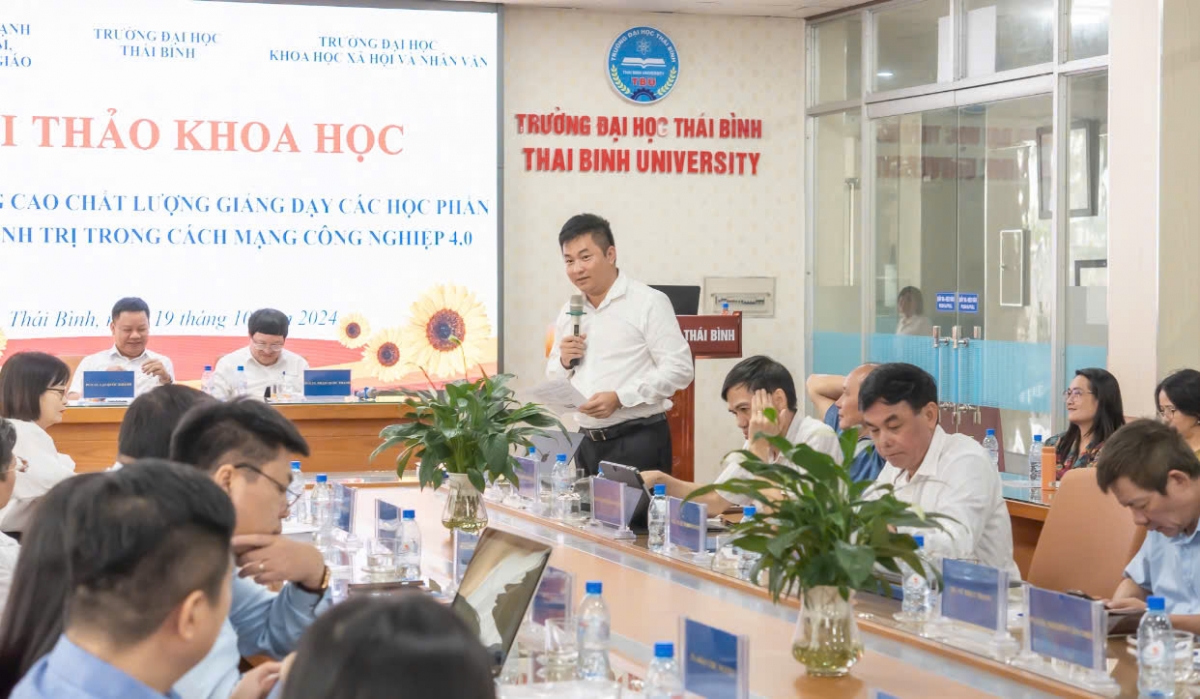
Assoc. Prof. Dr. Lai Quoc Khanh - Vice Rector of the University of Social Sciences and Humanities, Vietnam National University, Hanoi, delivered the opening remarks at the conference (Photo: Thai Binh Newspaper)
However, according to Associate Professor Lai Quoc Khanh, there are still challenges such as teaching methods that are still mainly traditional and not engaging for learners, leading many students to find the content dry and impractical. This results in the effectiveness and quality of political theory teaching in many places not meeting the requirements.
This scientific conference addresses several key issues, including the role of political theory in social development; the challenges and opportunities of the Fourth Industrial Revolution for political theory courses in the current period; innovation in teaching; increased application of technology in political theory courses; developing soft skills and critical thinking for students; fostering student interest in learning this subject; improving the teaching capacity of faculty members; and promoting interdisciplinary cooperation in teaching and research on political theory to enhance the quality of assessment and measurement of teaching in this area.
"While it's easy to see the advantages, I must share that teaching political theory has never faced so many challenges. For example, many teachers may be holding thick stacks of prepared assignments, but many of them are AI-generated. I believe today's workshop is very relevant and perfectly reflects the current state of education," emphasized Associate Professor Lai Quoc Khanh.
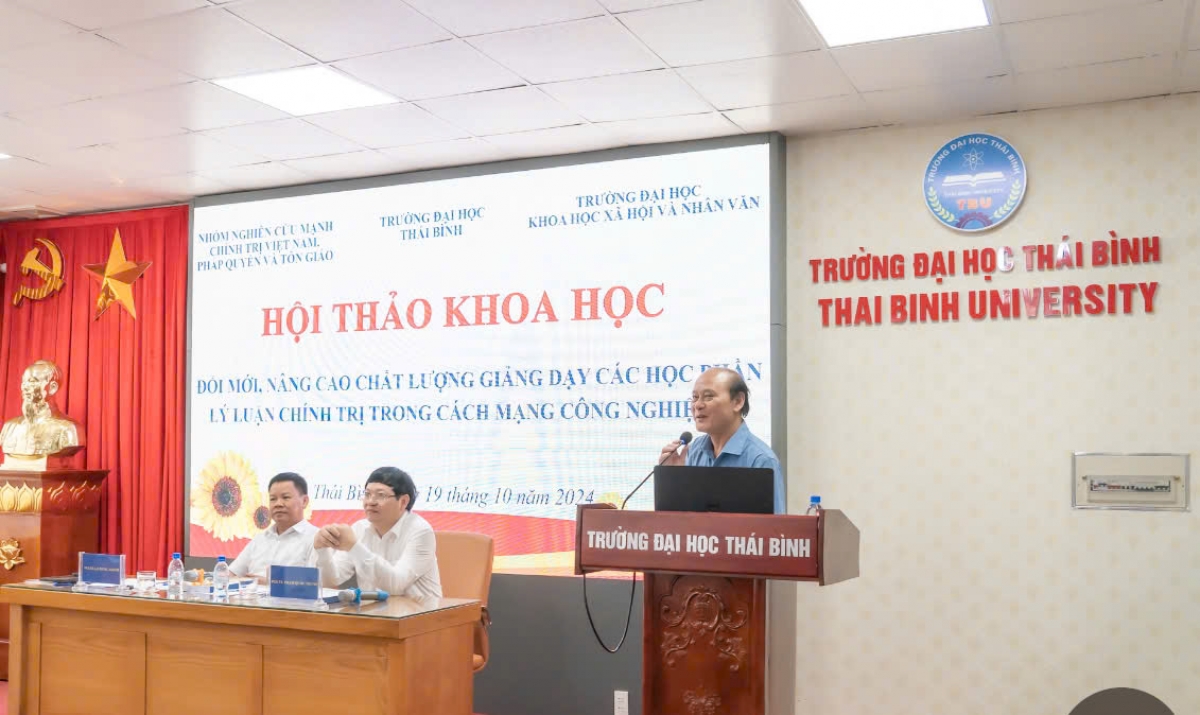
Speakers presenting papers at the conference. At the workshop, Associate Professor Dr. Le Trong Tuyen from the Political Academy, Ministry of National Defense, highlighted the necessary skills for lecturers today, emphasizing the need to limit one-way presentations and instead encourage discussion. The target audience consists of high school graduates, so open-ended presentations using stories, details, or emerging social issues are essential. Cultivating self-learning abilities and critical thinking skills in students is also crucial. Lecturers themselves need to be proficient in information technology…
Immediately following the presentation on "Digital Transformation in Training and Teaching Political Theory Courses," Associate Professor Dr. Tran Quang Dieu from the Ho Chi Minh National Academy of Politics answered a question about how to detect the use of artificial intelligence in students' assignments. Associate Professor Dr. Tran Quang Dieu affirmed that, for now, it is not too difficult to identify content created by artificial intelligence, such as word repetition.
Associate Professor Tran Quang Dieu - Ho Chi Minh National Academy of Politics, participated in the discussion at the conference.
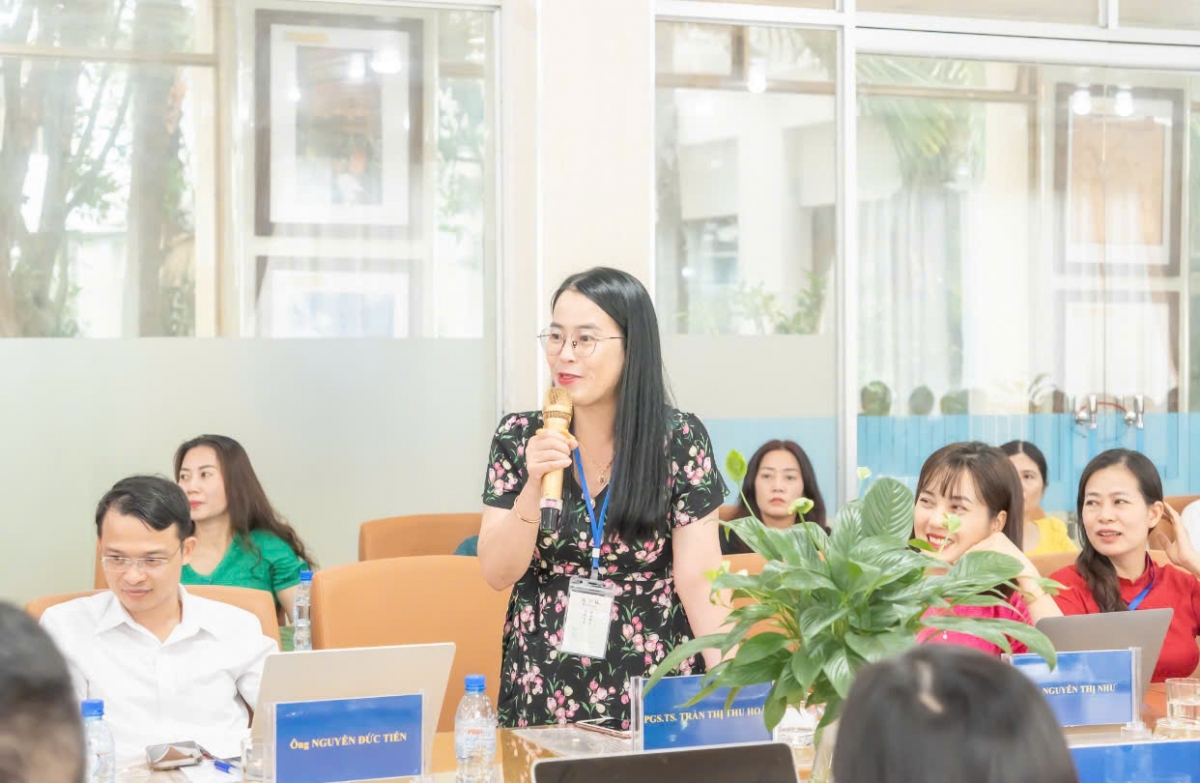
The workshop also noted the sharing of experiences in teaching political theory courses to recent high school graduates entering university in an engaging, memorable, and easy-to-understand way. Associate Professor Dr. Tran Thi Thu Hoai, a lecturer at the National Economics University, said that she has combined gamification of historical knowledge content, organized trips for students to watch historical plays related to President Ho Chi Minh, and divided them into groups to visit revolutionary and historical sites in the city… The most fundamental and important knowledge content is all uploaded to the LMS system to create a complete learning experience while attracting new students to explore political theory courses that have long been considered “difficult, dry, and tedious.”
Commenting on the reform of teaching content for political theory courses, Associate Professor Dr. Nguyen Van Chieu from the University of Social Sciences and Humanities stated that every method has two sides and cannot be absolutized. The amount used should be carefully selected and applied by the lecturers to suit the specific needs of each student group. He also emphasized the importance of learning outcomes. On the same point, Dr. Ha Van Dong, Vice Rector of Thai Binh University, affirmed that the learning outcomes should not only focus on knowledge content but also contribute to building and strengthening ideology… He also stressed the need for reform in testing and evaluation methods.
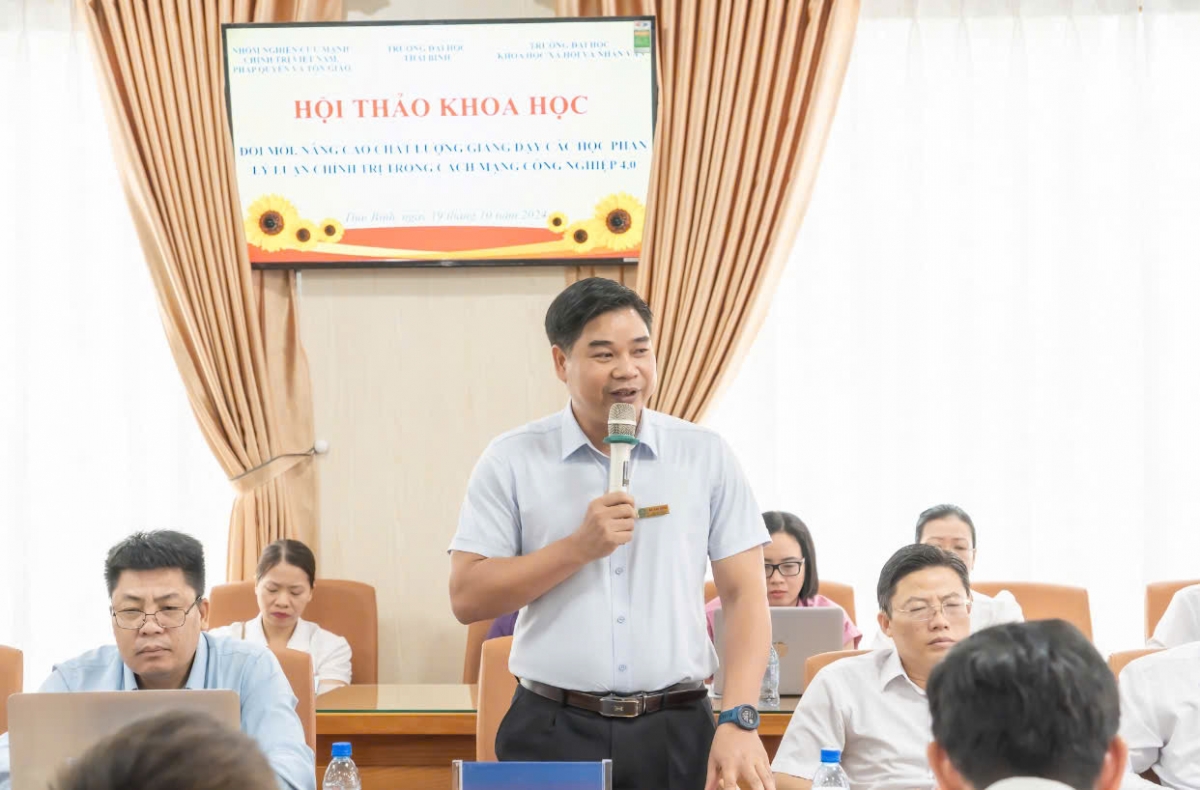
Dr. Ha Van Dong, Vice Rector of Thai Binh University, shared his views from the perspective of political theory training at Thai Binh University.
In his concluding remarks at the workshop, Associate Professor Lai Quoc Khanh, Vice Rector of the University of Social Sciences and Humanities, Vietnam National University, Hanoi, affirmed that the workshop had answered major questions, including the question of the role of technology in teaching political science courses.
"Never before have we had so many technological advantages. But the biggest challenge lies in adapting to this rapid transformation while simultaneously controlling and mastering technology. This requires the methods and skills of instructors to create engaging lessons that achieve educational goals, including knowledge, skills, and confidence. How should each instructor receive, respond to, and adjust so that the power of technology becomes a useful tool for us, instead of being swept away or becoming dependent on it?"
"The workshop can gather opinions to produce a policy advisory report to be submitted to the Ministry of Education and Training regarding the innovation and improvement of the quality of teaching political theory courses in the context of the 4.0 industrial revolution," Associate Professor Dr. Lai Quoc Khanh analyzed the achievements of the workshop.
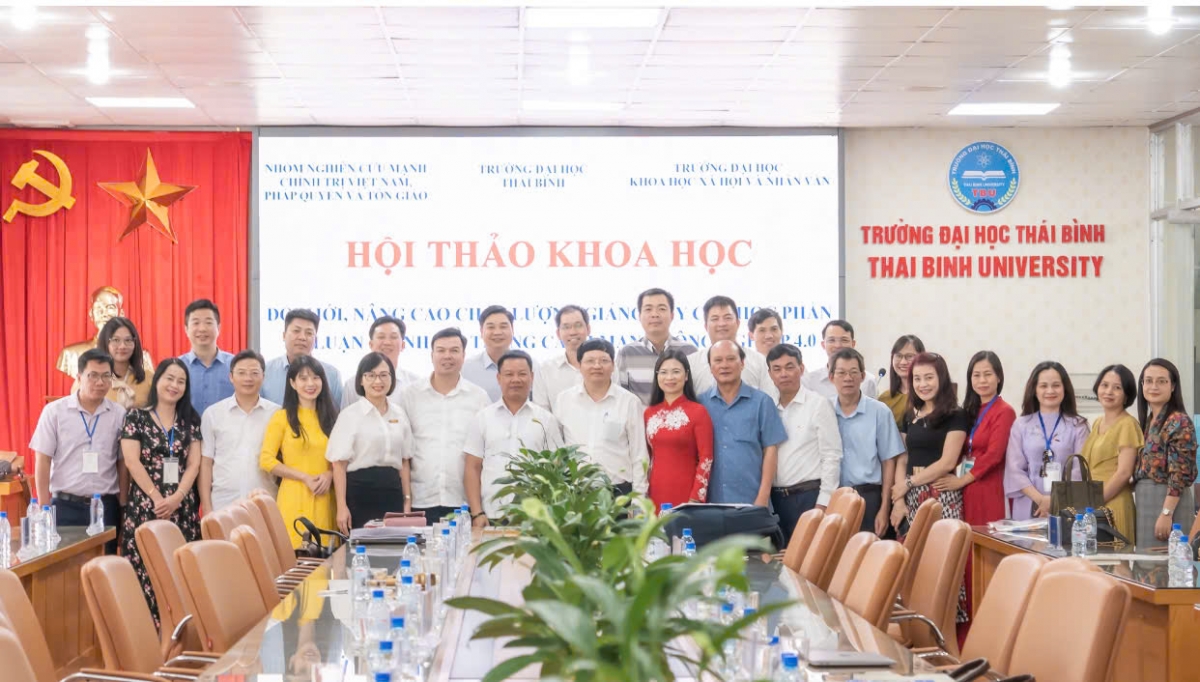
The delegates took a commemorative photo after the workshop.