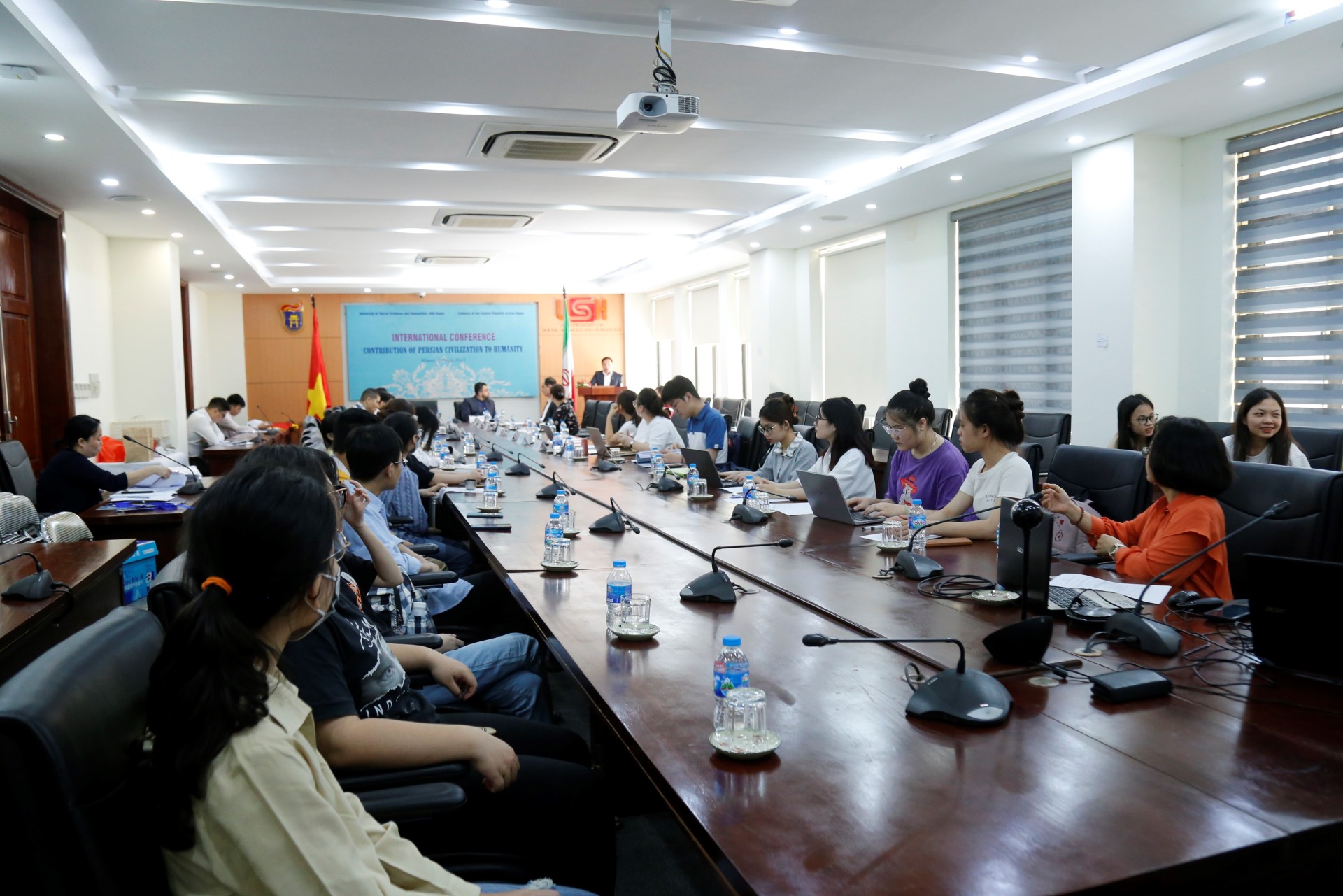
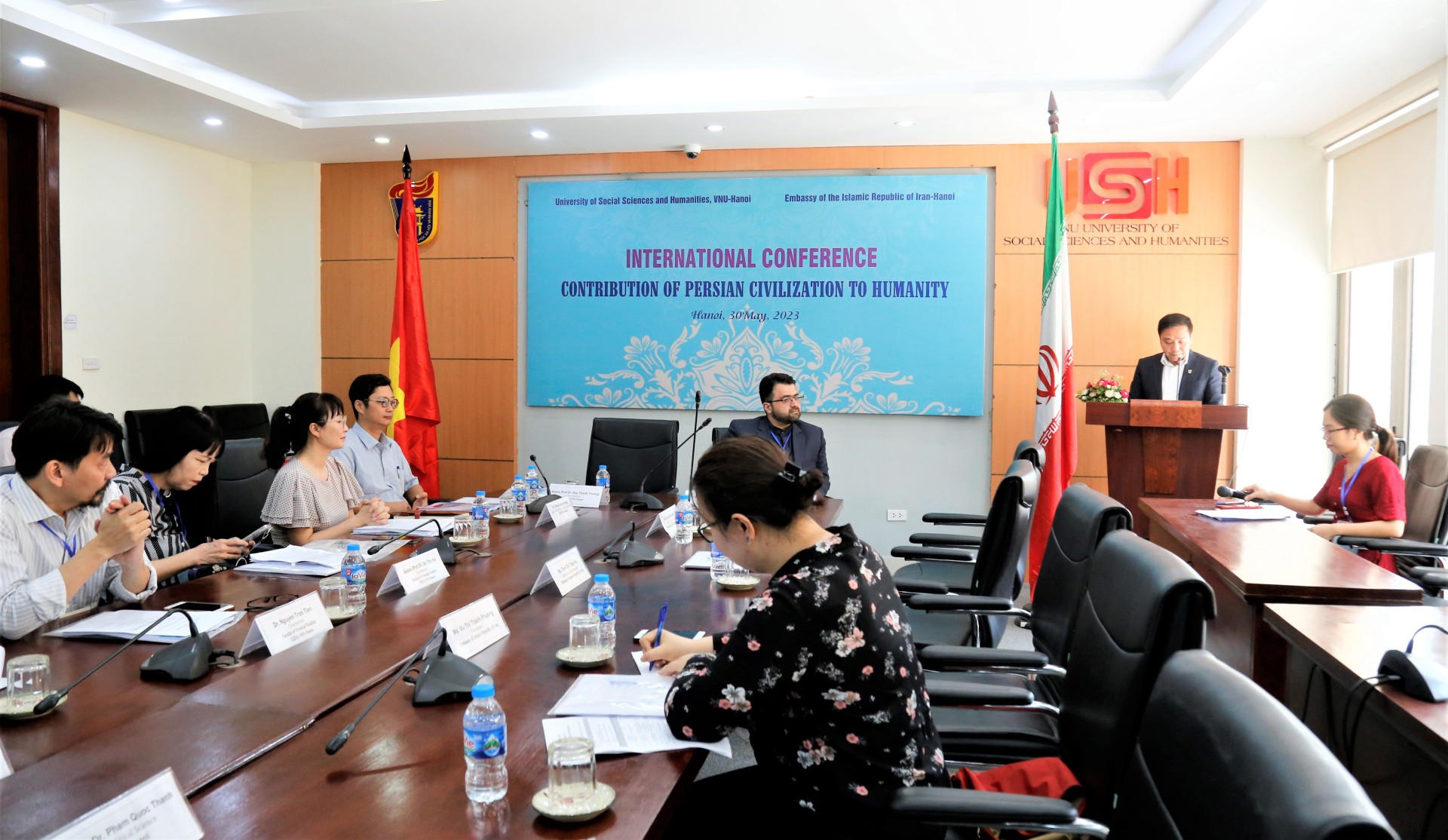
Overview of the Conference
Attending the workshop were Assoc. Prof. Dr. Dao Thanh Truong (Vice Rector of the University of Social Sciences and Humanities), Mr. Ali Akbar Nazari (Ambassador Extraordinary and Plenipotentiary of Iran to Vietnam, participating online), Mr. Amir Fatemisadr (Second Secretary, Embassy of Iran in Vietnam), Assoc. Prof. Dr. Le Phuoc Minh (Director of the Institute for African and Middle Eastern Studies); representatives from the Faculty of Oriental Studies, the Cooperation and Development Office, and the Scientific Research Management Office of VNU-USSH, as well as a large number of students, trainees, and researchers from the University.
The workshop attracted the interest and participation of many experts and scientists from Tehran University (Iran), the University of Social Sciences and Humanities, and research institutes in Hanoi.
In his opening remarks at the conference, Vice Rector Dao Thanh Truong expressed his gratitude to the Iranian Embassy in Vietnam for its effective cooperation with the University in training, scientific research, scholarship funding, and student support. He stated that today's international conference is not only of great scientific and practical significance but also a clear testament to the close cooperation between the University of Social Sciences and Humanities and universities and educational organizations in Iran, facilitated by the support of the Iranian Embassy in Vietnam. The event also serves as a practical activity to strengthen the friendly diplomatic relations between Vietnam and Iran.
Assoc. Prof. Dr. Dao Thanh Truong delivered the opening remarks at the conference.
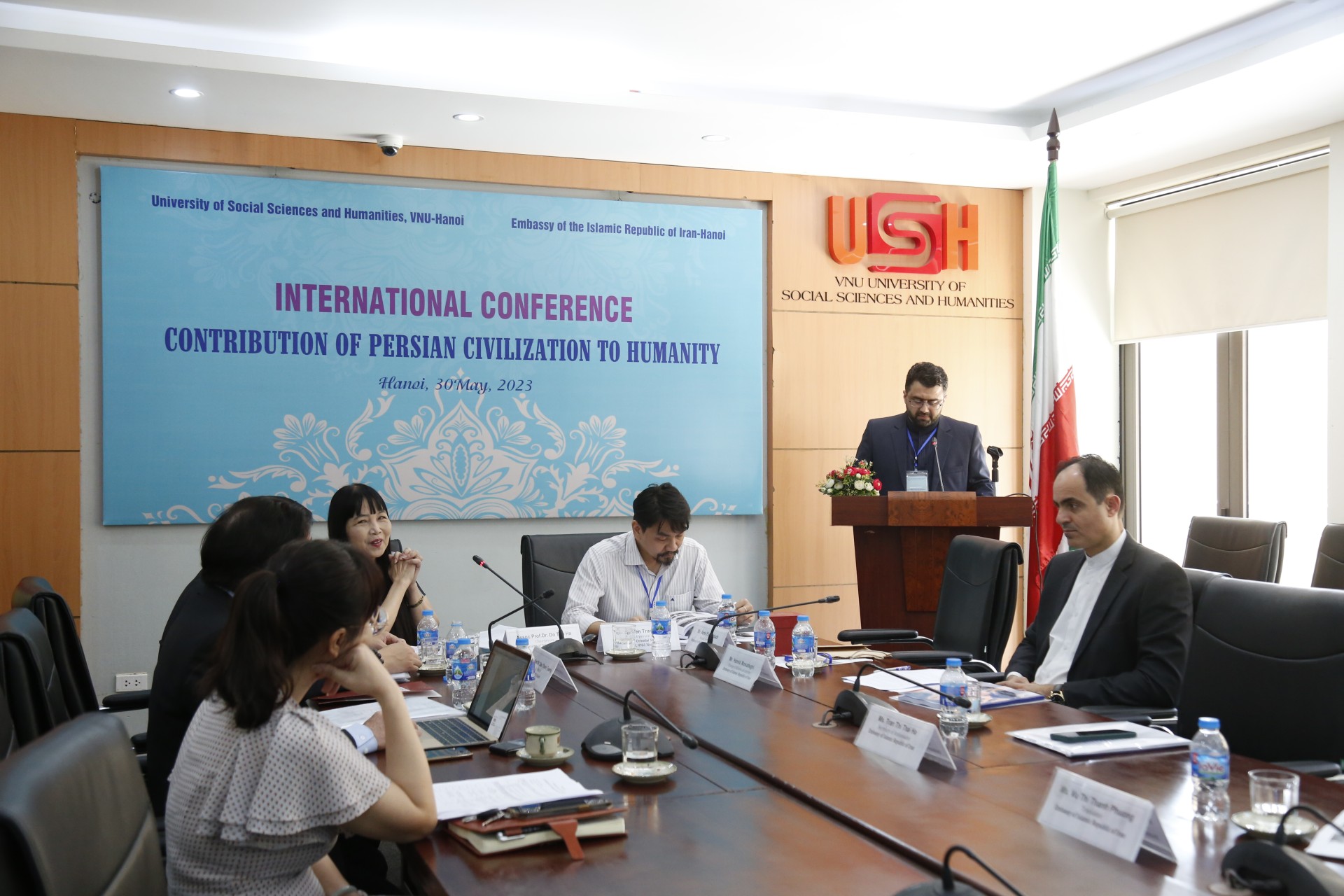
On behalf of the Iranian Embassy in Vietnam, Mr. Ali Akbar also expressed his sincere gratitude to the leaders of the University of Social Sciences and Humanities, the Faculty of Oriental Studies, and the scientists who supported and closely cooperated with the Embassy of the Islamic Republic of Iran in organizing this conference. He affirmed: “The collaboration between the University of Tehran and the University of Social Sciences and Humanities in Hanoi to organize this conference is a unique and meaningful idea, aiming to promote cooperation between the elite and scholars of Iran and Vietnam through research on the important contributions of Persian civilization to humanity. The Iran-Vietnam relationship is a prime example of a close and friendly relationship for the development and strengthening of world peace. And today's international conference is not only a scientific event but also has great significance in affirming and strengthening that friendly relationship.”
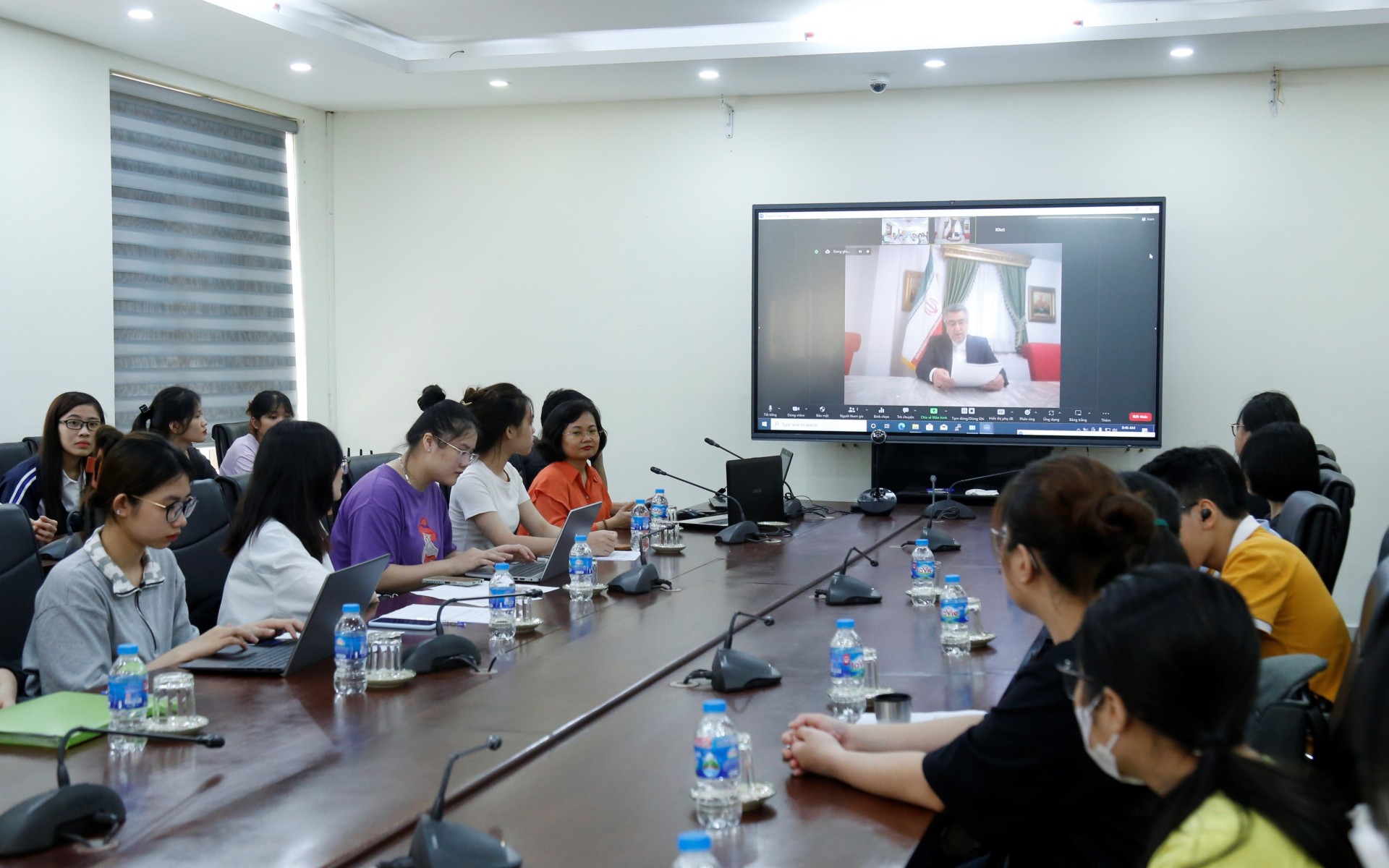
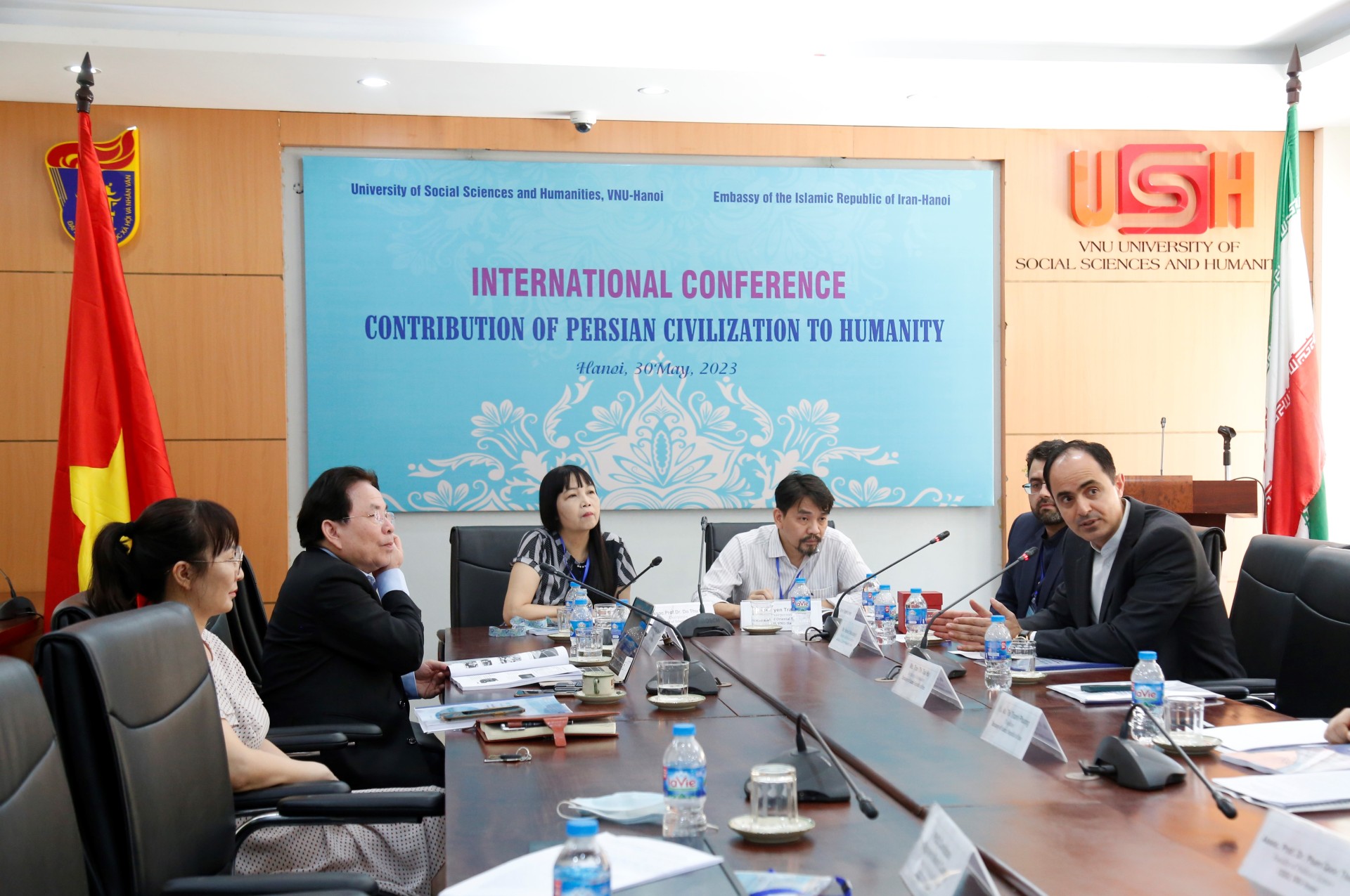
Mr. Ali Akbar (Ambassador Extraordinary and Plenipotentiary of Iran to Vietnam) expressed his appreciation for the significance of the seminar.
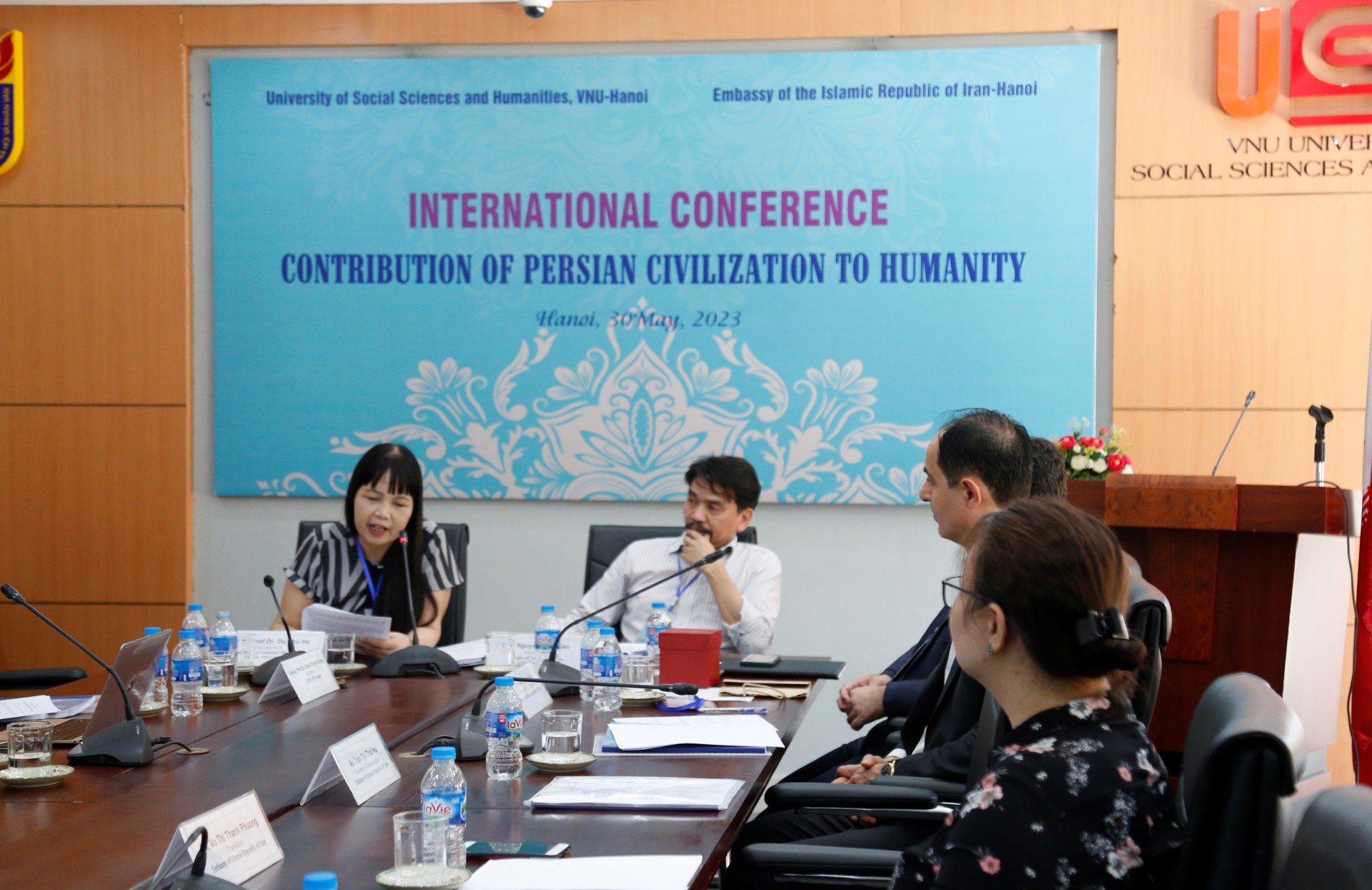
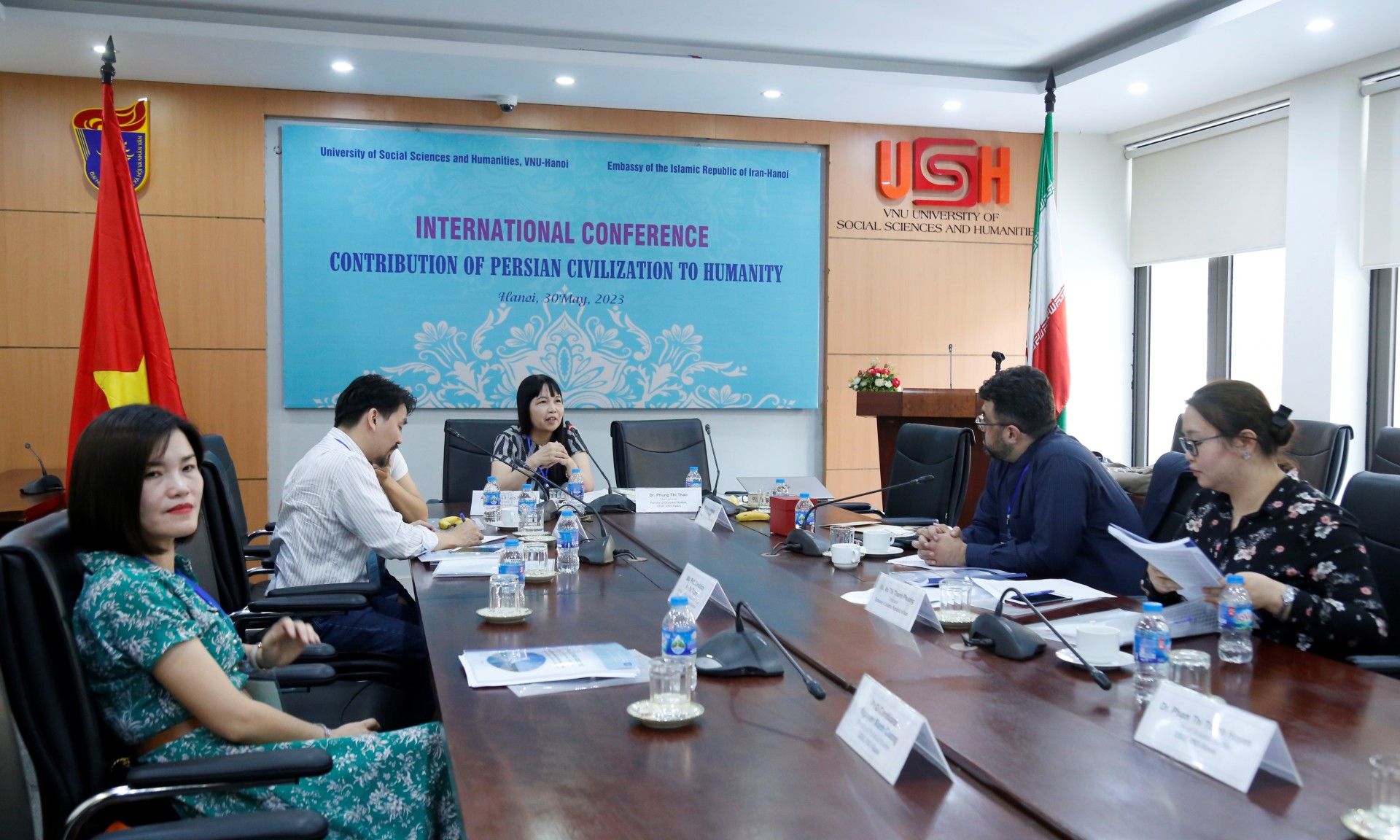
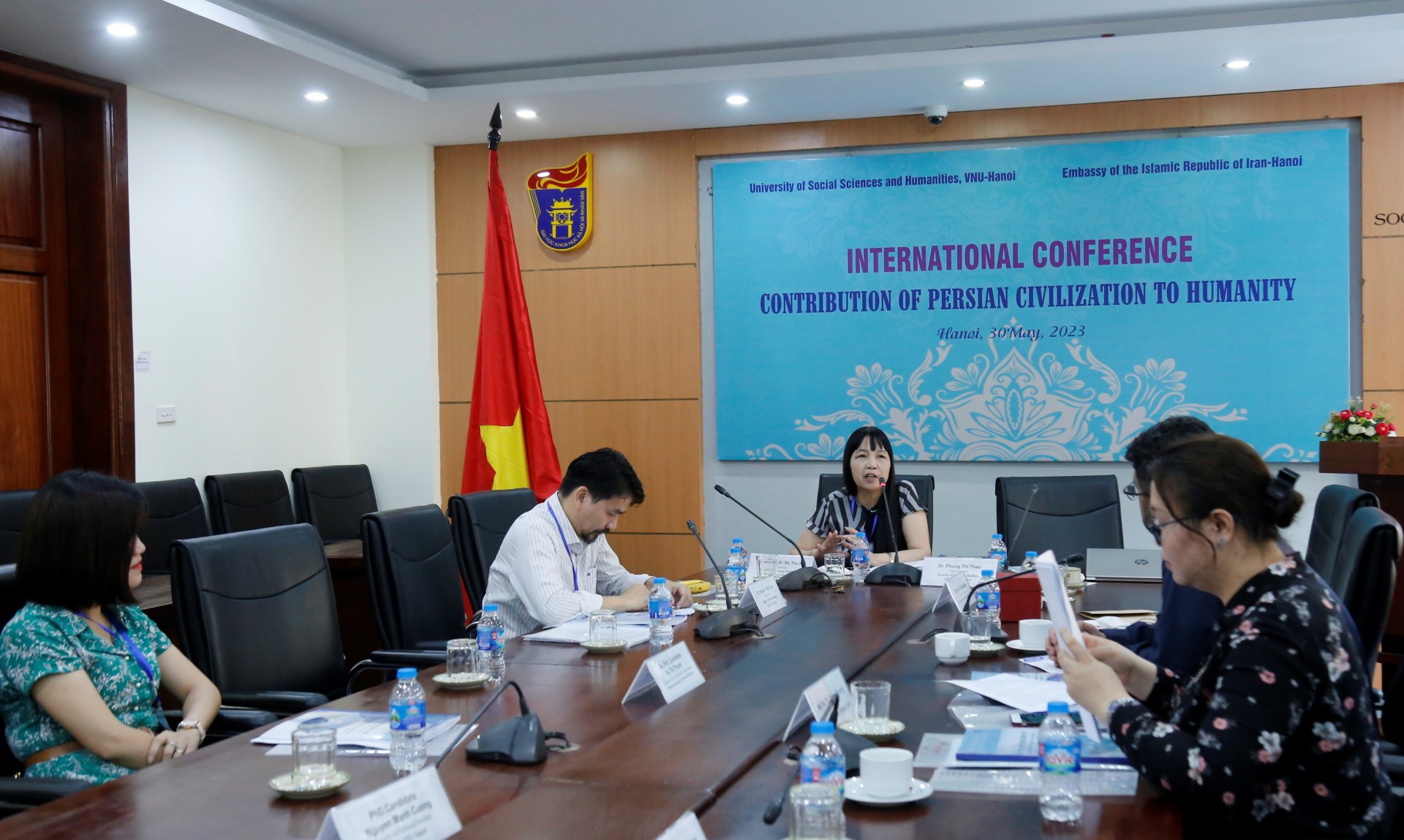
Associate Professor Dr. Nguyen Tran Tien (Deputy Head of the Faculty of Oriental Studies) and Associate Professor Dr. Do Thu Ha (former Deputy Head of the Faculty of Oriental Studies) chaired the presentation and discussion session.
The conference's theme attracted the participation of 12 scientists with 12 valuable studies on different aspects surrounding the topic: the value and contribution of Persian civilization to human civilization from the past to the present; and also comprehensively addressed issues of economics, culture, religion, politics, education, art, and health in the current Islamic nation of Iran in comparison with the values of past civilizations.
Studies have confirmed that from the ancient Persian empires to modern-day Iran, this land has been a cradle of culture, science, and knowledge. Persian civilization, with its origins spanning thousands of years, made lasting contributions to various fields of knowledge, from science and medicine to mathematics, astronomy, art, and philosophy. It is thanks to the profound insights and advancements of Persian scholars that we have gained a deeper understanding of the world around us.
Furthermore, Persian astronomers, such as Omar Khayyam and Al-Biruni, made significant contributions to the study of celestial bodies, timekeeping, and the development of astronomical instruments. They enhanced our understanding of the universe, leaving a legacy that continues to inspire and guide astronomers to this day.
Today, Iran is a regional and middle power, with a strategic geopolitical position on the Asian continent, a founding member of the United Nations, and several ECO, OIC, and OPEC organizations. The country's rich cultural heritage is partly reflected by its 26 UNESCO World Heritage sites. Iranians inherit the values of Persian civilization and continue to contribute to the world's scientific and technological advancements. Iranian scientists and researchers are actively involved in various fields, including medicine, nanotechnology, renewable energy, and space exploration.
Mr. Amir Fatemisadr (Second Secretary, Iranian Embassy in Vietnam) presented a comprehensive picture of the outstanding contributions of Persian civilization to human history: state institutions (the birthplace of the first empire in history); construction (the ancient Suez Canal, the Qunat (Kariz) aqueduct); science (invention of the world's first "refrigerator", industrial alcohol and sulfuric acid); medicine (distinguishing between measles and smallpox, etc.); architecture (great and unique architectural works); art (painting, sculpture, etc.). These scientific inventions and unique architectural works, spanning thousands of years, of Persian civilization remain valuable to this day.
Mr. Amir Fatemisadr (Second Secretary, Iranian Embassy in Vietnam) presented a paper at the seminar.
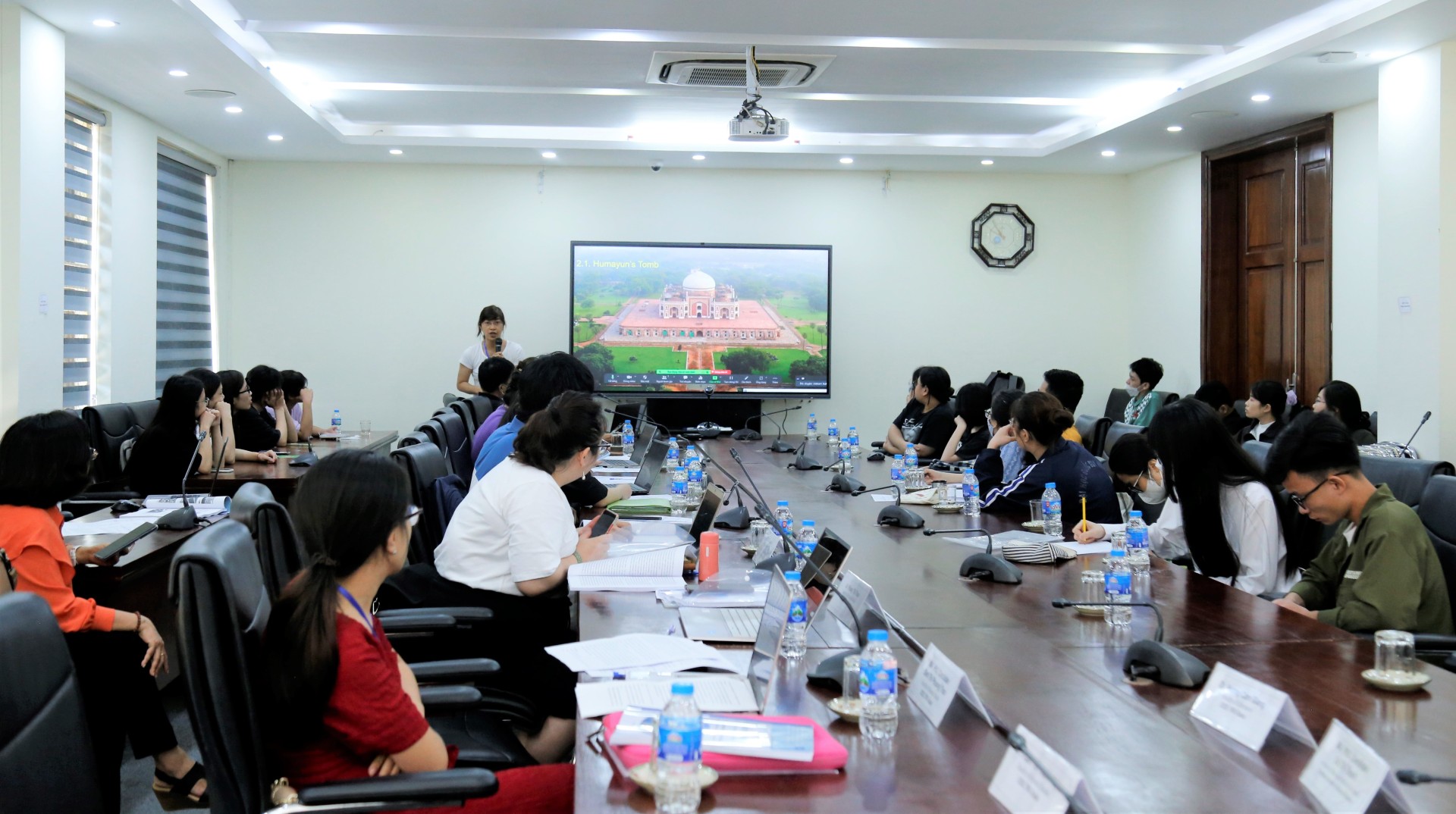
In her presentation, Dr. Phung Thi Thao (Head of the Indian Studies Department, Faculty of Oriental Studies) provided evidence showing that world-famous architectural works of the Mughal Empire (India) were heavily influenced by Persian civilization.
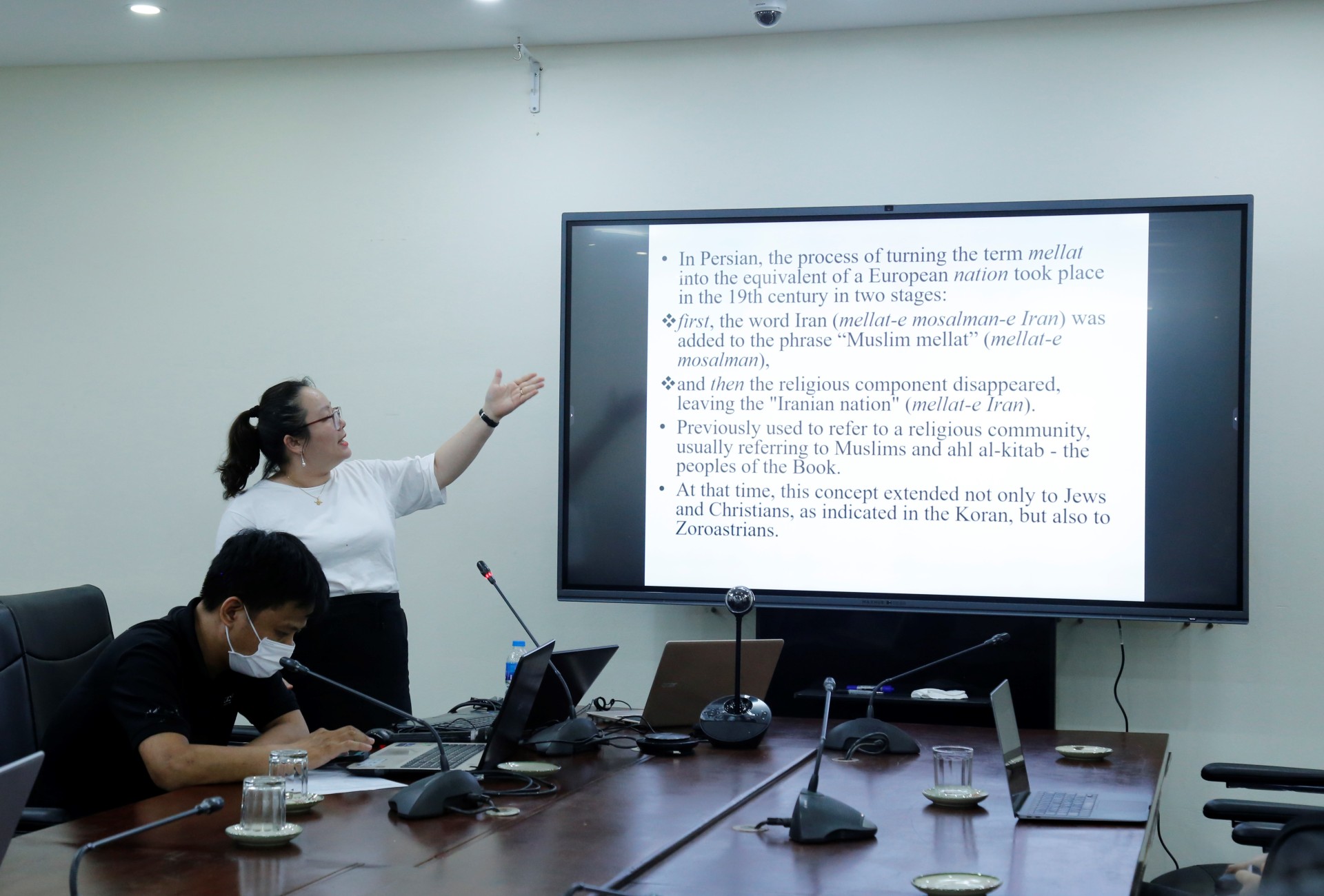
Associate Professor Dr. Do Thu Ha (Faculty of Oriental Studies) presented her paper at the Conference.
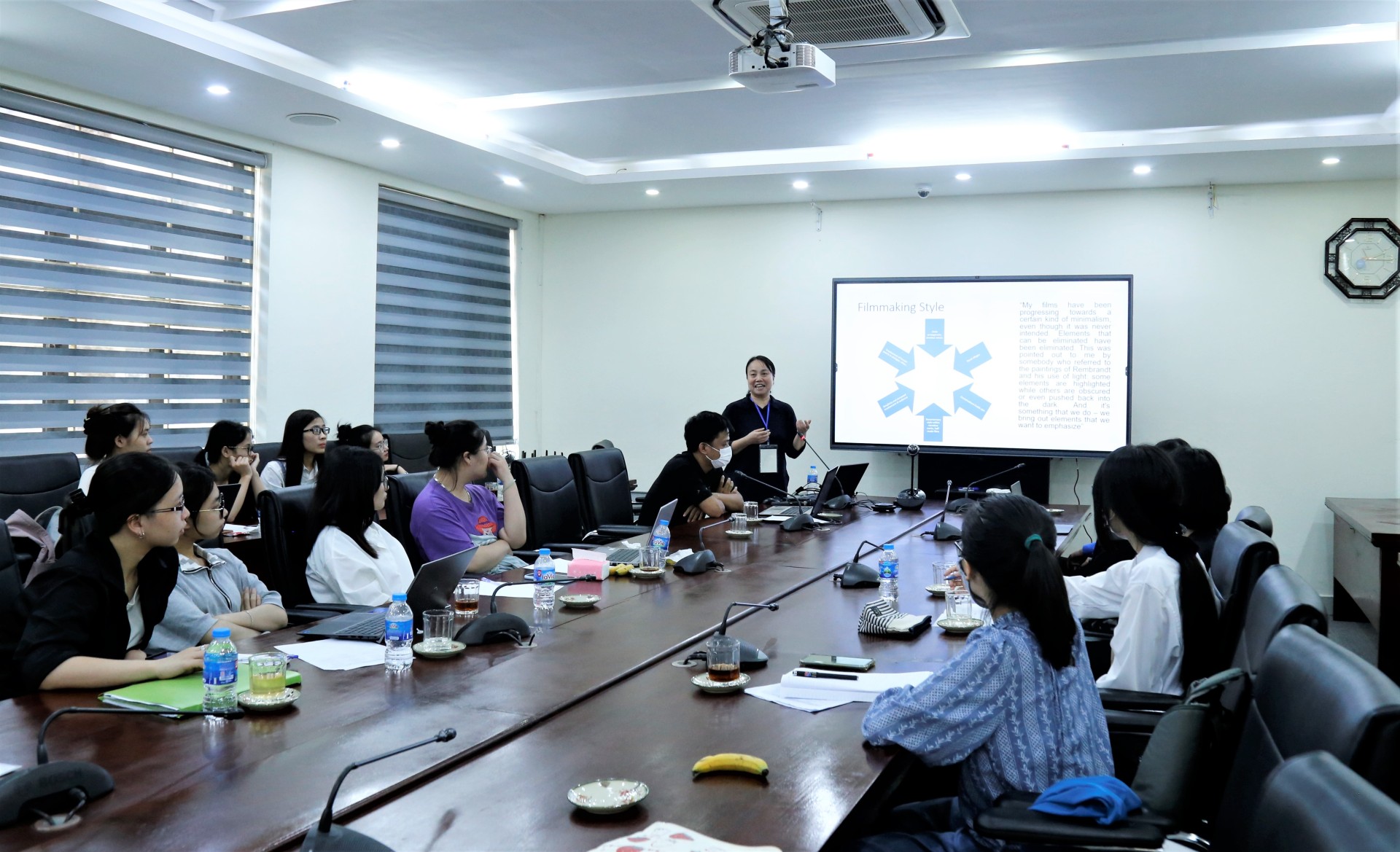
In her presentation, Dr. Pham Thi Thanh Huyen (Faculty of Oriental Studies), through a very specific analysis of the world-famous film "The Wind Will Carry Us Away" by director Abbas Kiarostami, highlighted the distinctive features of Iranian cinema: a minimalist yet highly poetic style in contemporary Iranian cinema.
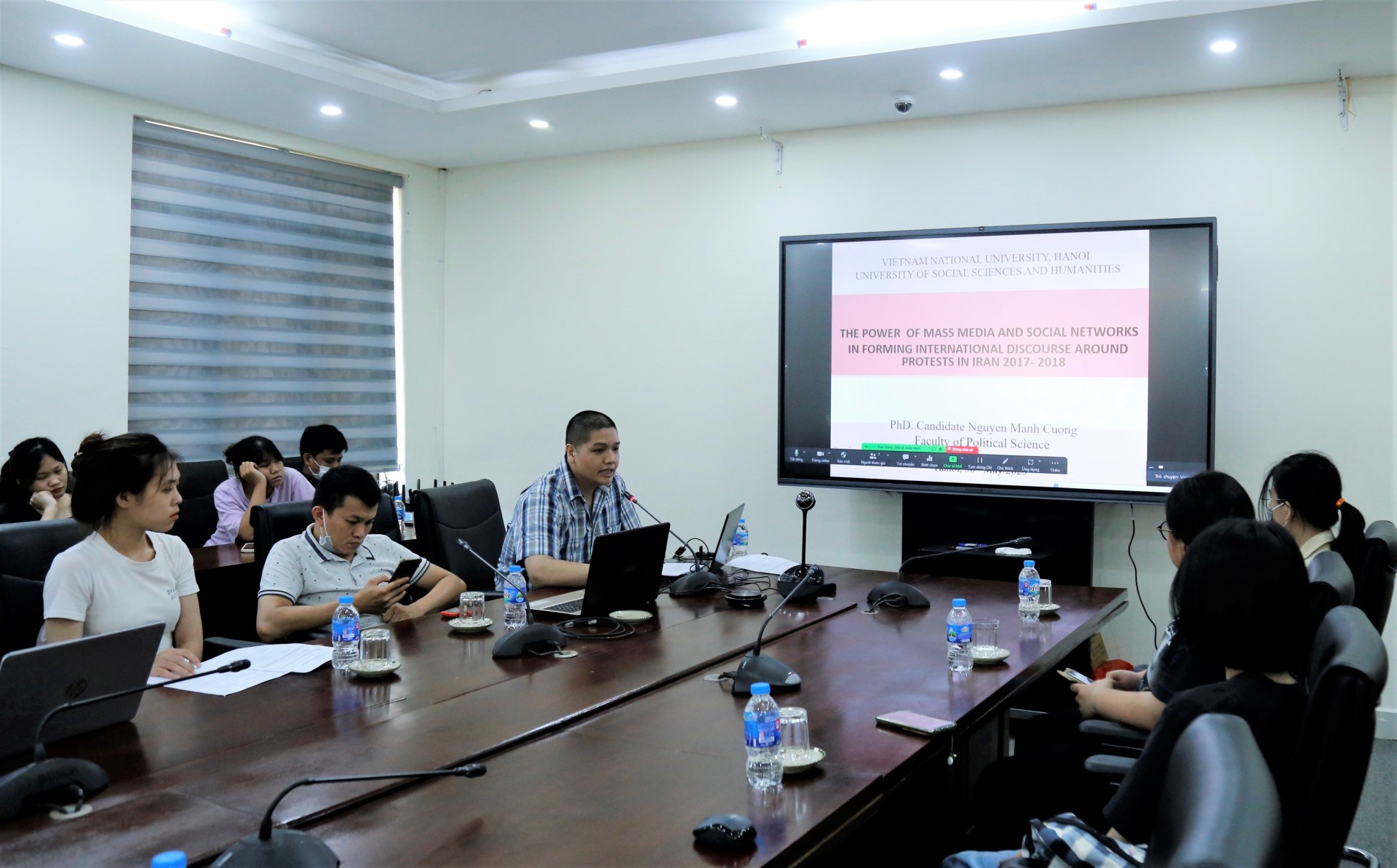
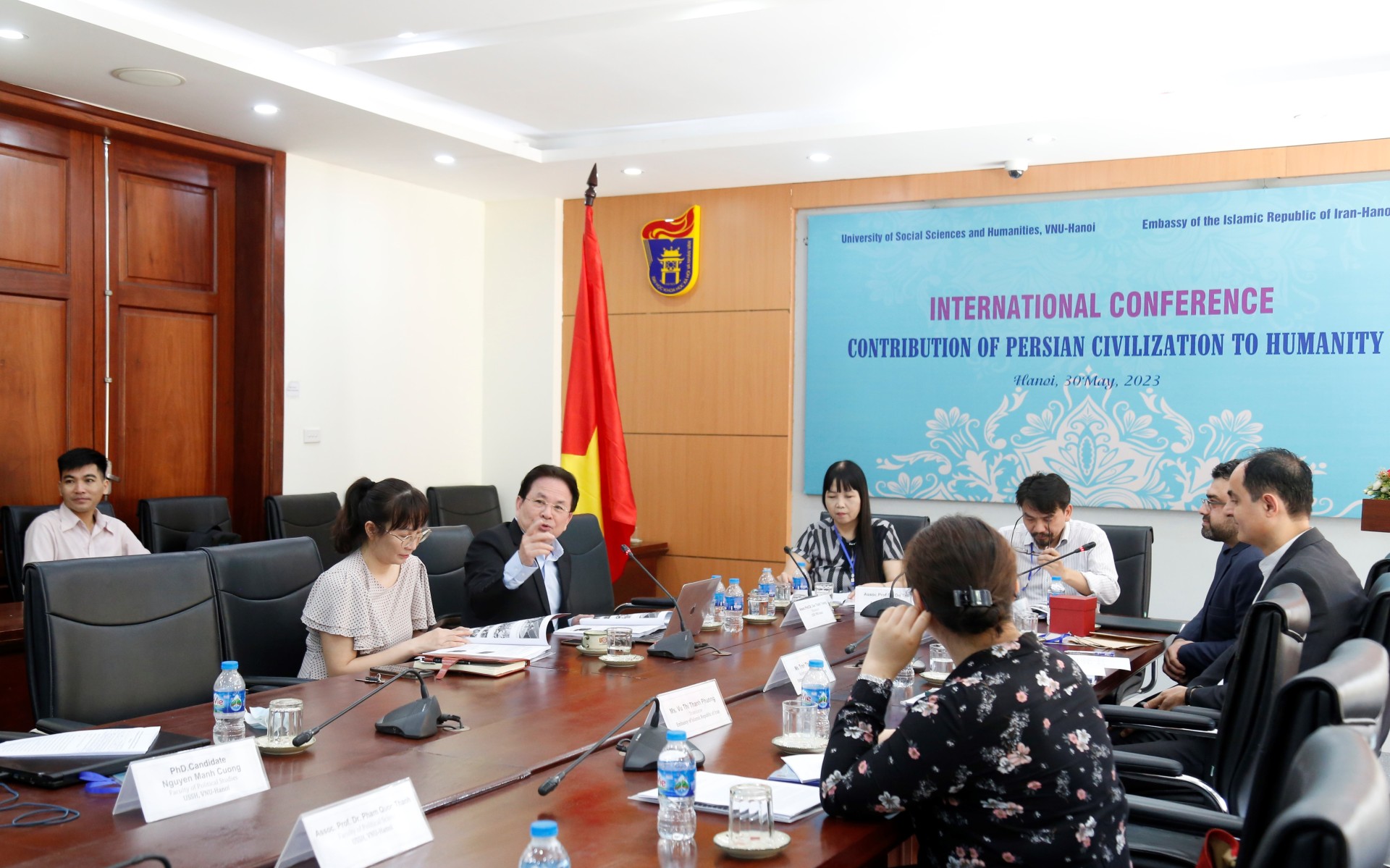
PhD candidate Nguyen Manh Cuong (Faculty of Political Science) presented his paper at the conference.
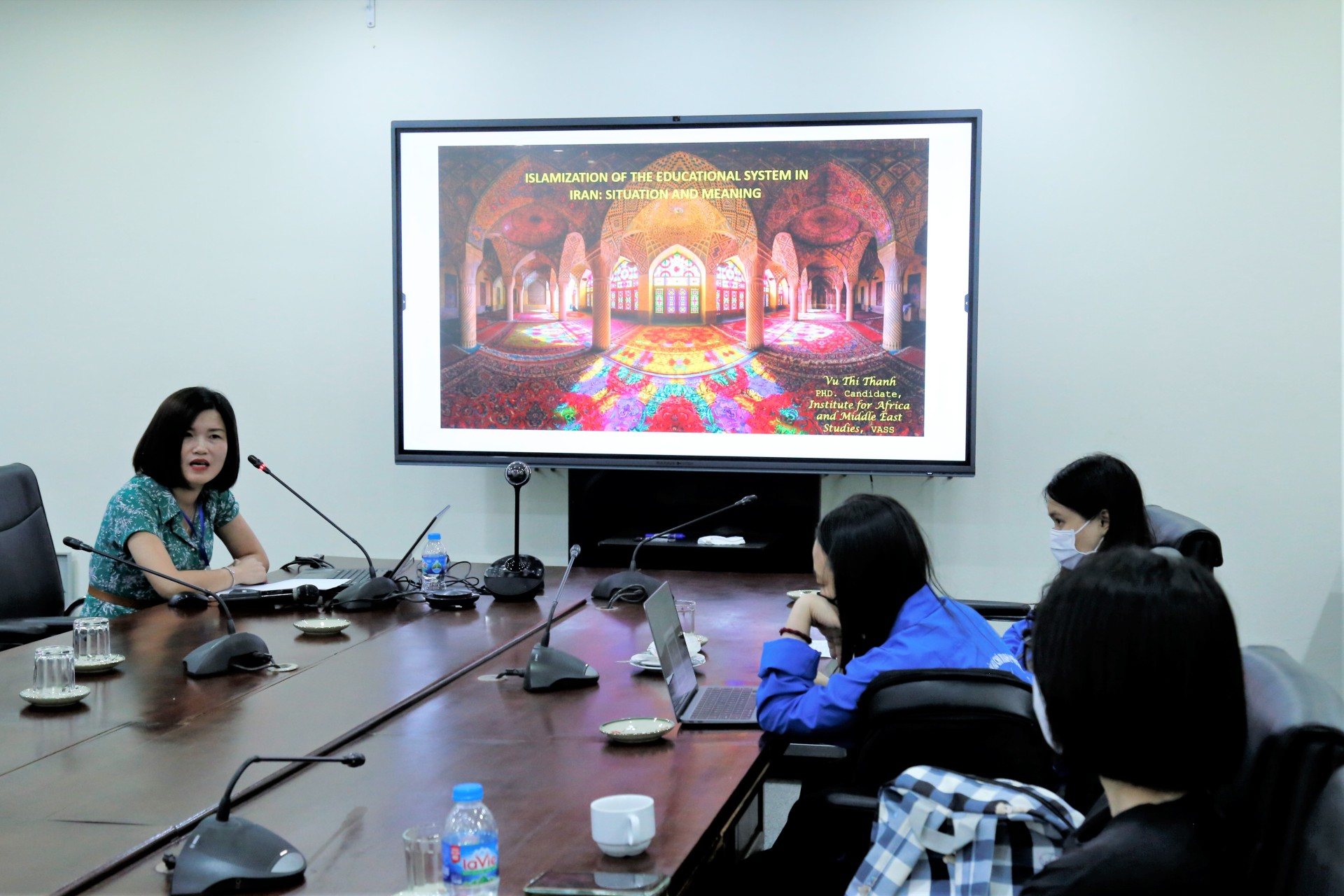
PhD candidate Vu Thi Thanh (Institute for African and Middle Eastern Studies) presented the results of her research on the relationship between education and religion in Iran from the 19th century to the present, as well as the process of Islamization of the education system.
Associate Professor Dr. Le Phuoc Minh (Director of the Institute for African and Middle Eastern Studies) shared his views at the conference.
PhD candidate Pham Ngoc Thuy (Faculty of Political Science) presented a paper titled "Religion and Iranian Nationalism," analyzing the history and key characteristics of modern Iranian nationalism.
Also at the seminar, Vice Rector Dao Thanh Truong and Mr. Hamid Mosadeghi (Chargeant, Iranian Embassy in Vietnam) presented certificates of completion for the beginner Persian language course to students representing more than 20 participants. The "Persian Language and Culture" course, within the framework of cooperation between the University of Social Sciences and Humanities and the Iranian Embassy in Vietnam, was held from the end of October 2022 and included classes on "Persian Language and Culture". After three months of study, the beginner students became familiar with the Persian language and learned about the rich and long-standing cultural heritage of Iran.
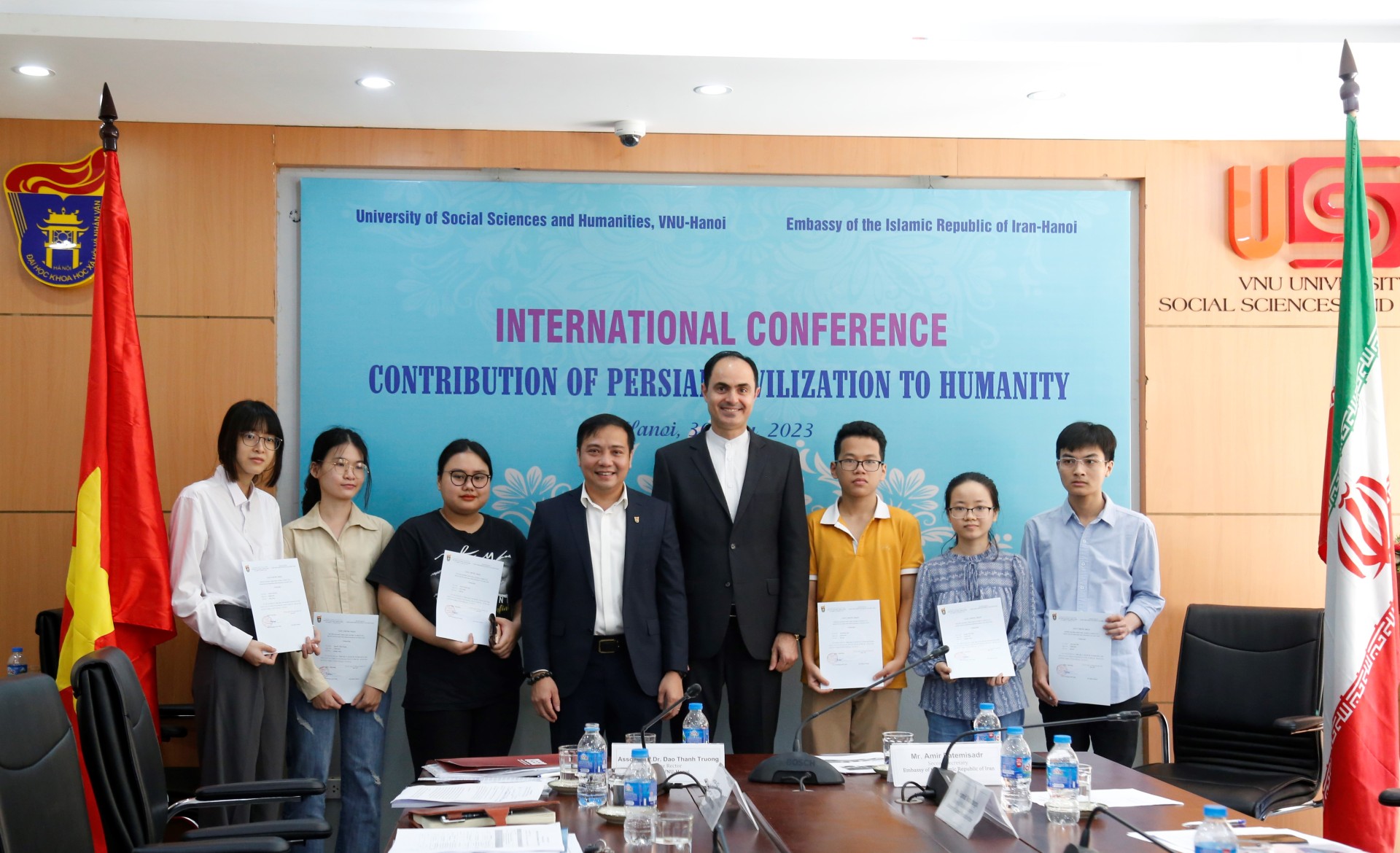
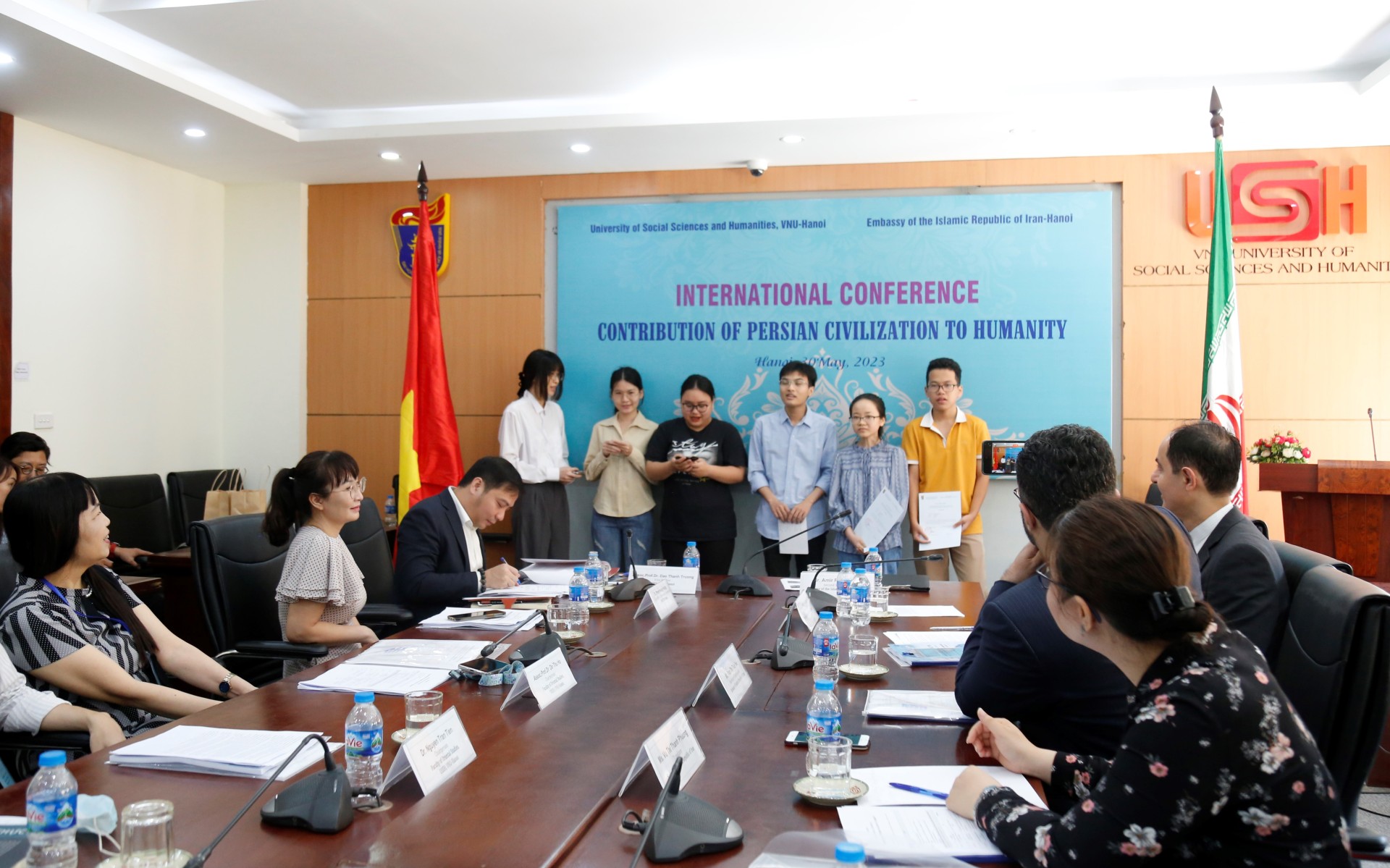
Students from the Department of Oriental Studies, having received certificates of completion for the Elementary Course, confidently performed the song "Ey Iran" in Persian.
Concluding the conference, Associate Professor Dr. Do Thu Ha emphasized: On behalf of the leadership of the University of Social Sciences and Humanities, I would like to once again thank the Iranian Embassy in Vietnam for its companionship and attention throughout the preparation and organization of the conference. The large participation and lively exchange of scholars, researchers, postgraduate students, and undergraduate students throughout the entire day of the conference demonstrated the appeal of this brilliant civilization. Through these academic exchanges, many Vietnamese people have gained a better understanding of the value and contributions of Persian civilization to humanity, while also connecting and spreading Vietnamese culture to friends around the world. In the future, the University of Social Sciences and Humanities, Faculty of Oriental Studies, hopes to continue receiving close cooperation and coordination from the Iranian Embassy in Vietnam to carry out even more meaningful activities.
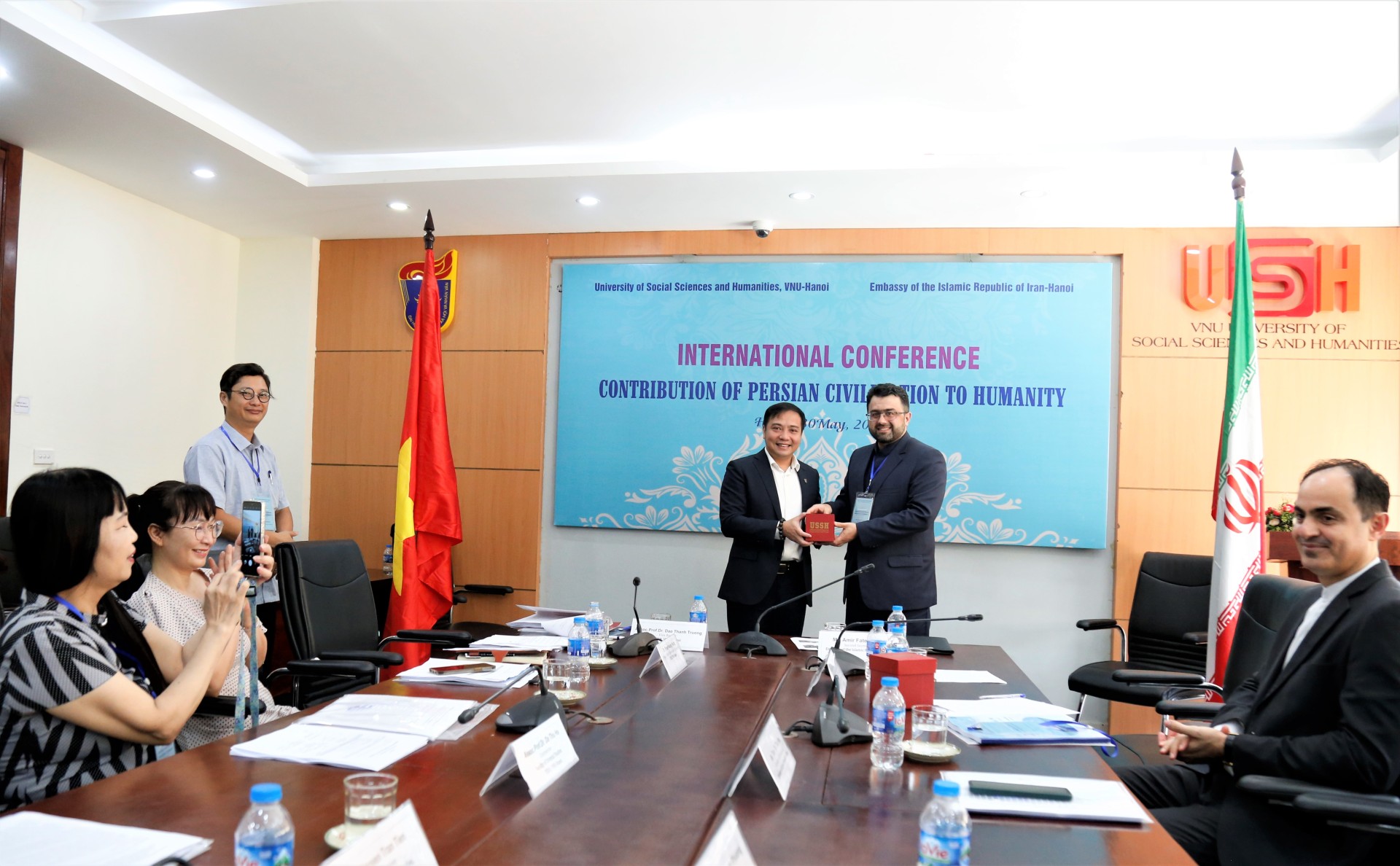
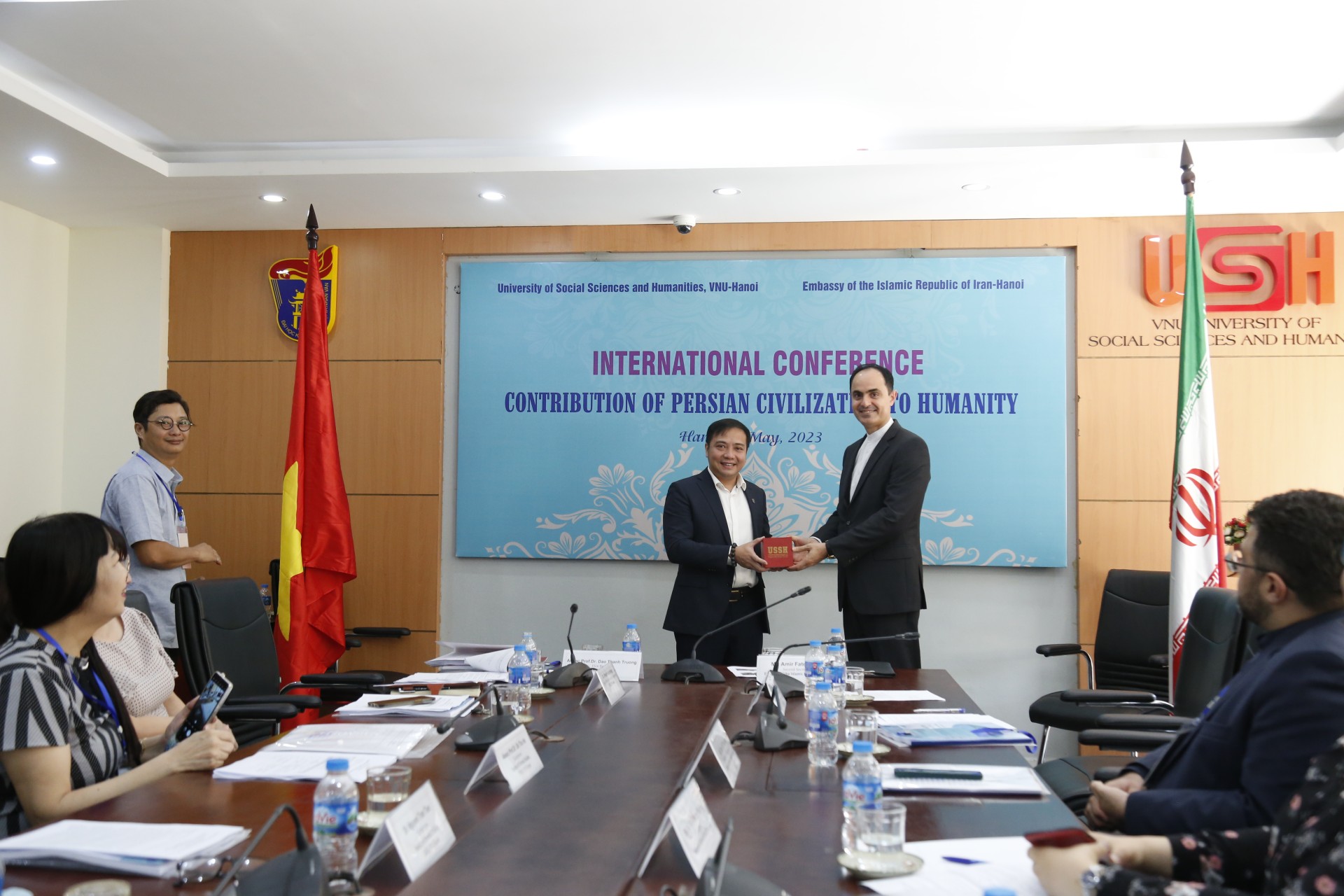
Vice Rector Dao Thanh Truong presented a commemorative gift as a token of gratitude to the Iranian Embassy in Vietnam.
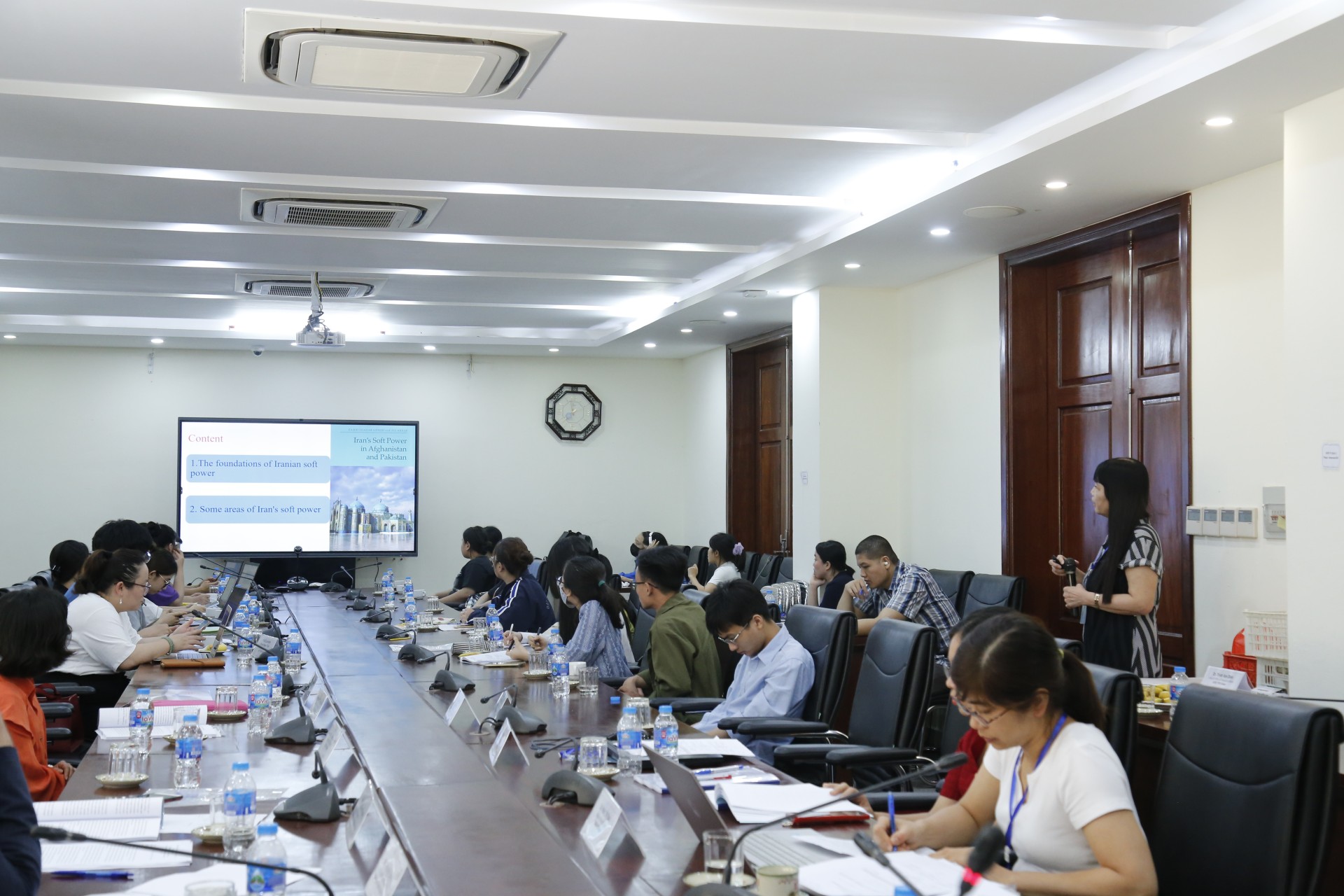
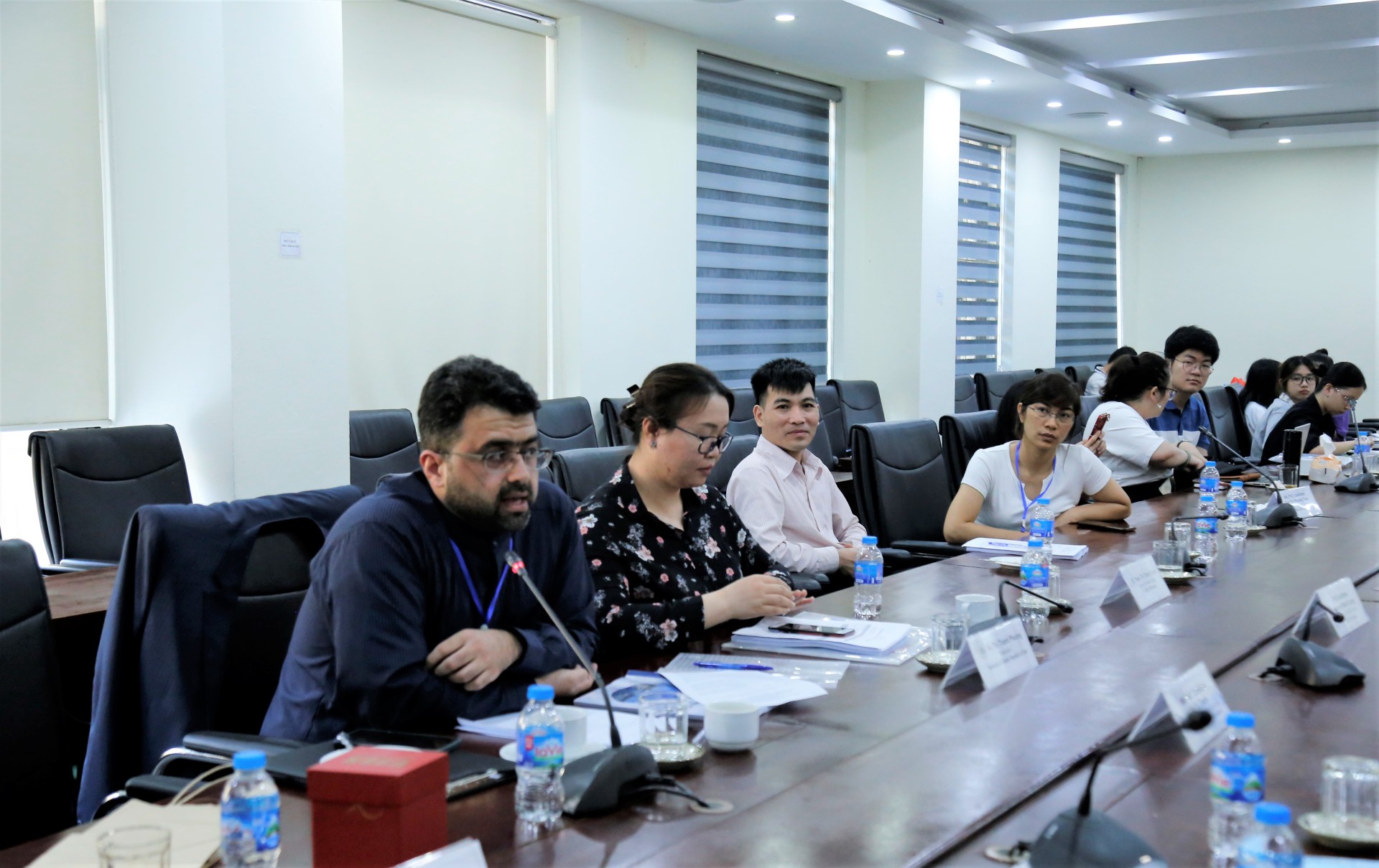
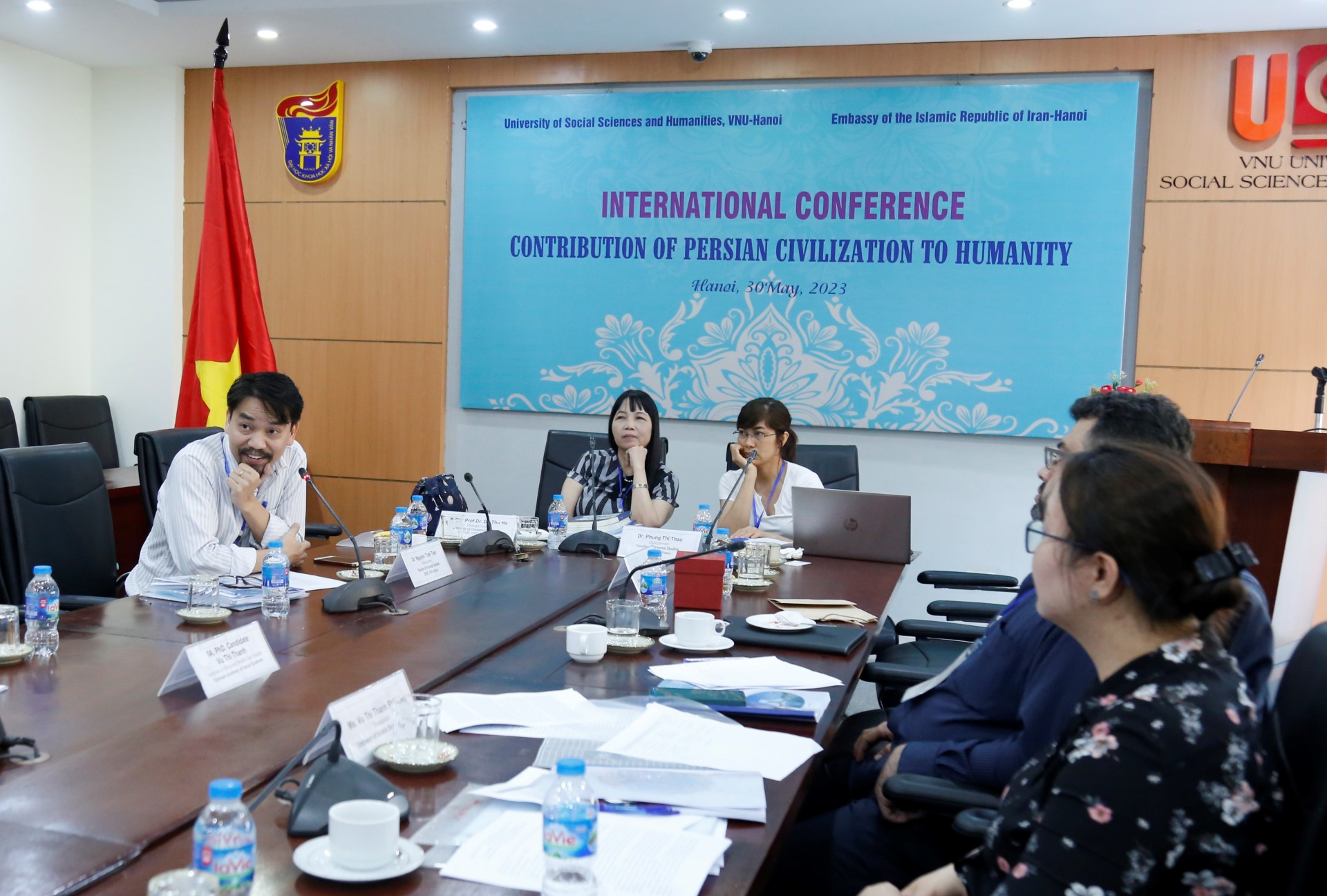
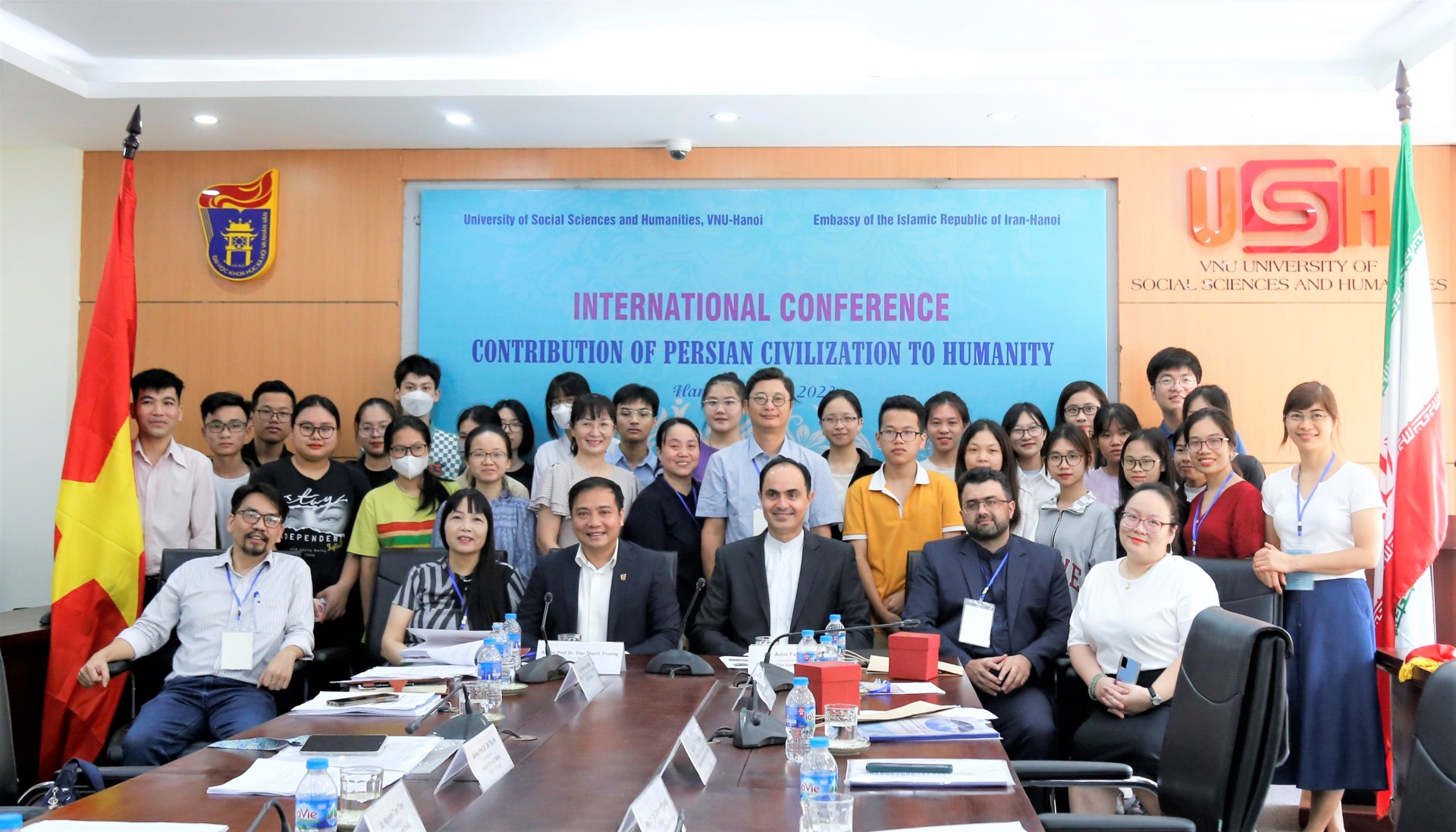
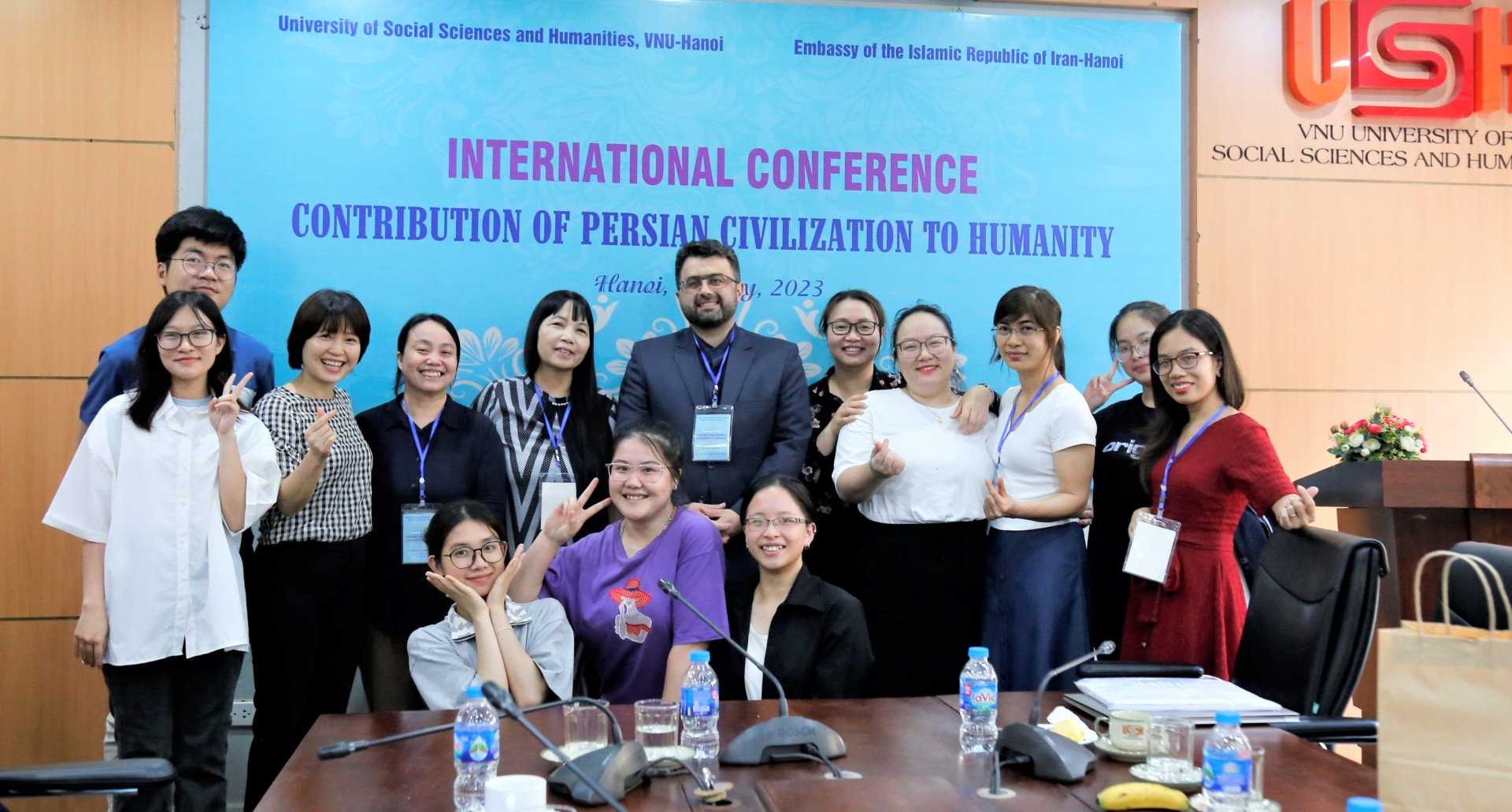
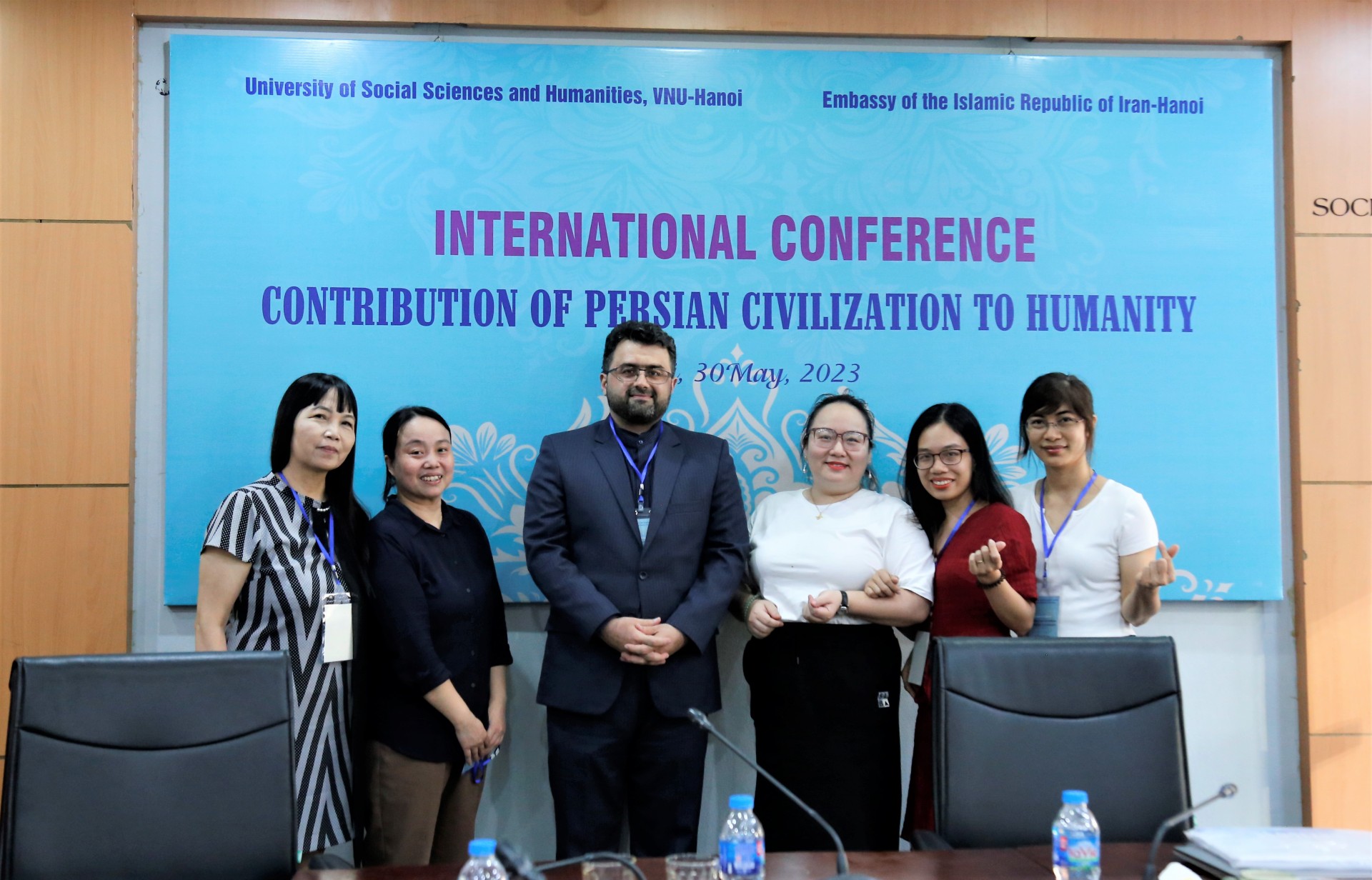
Some photos from the workshop.