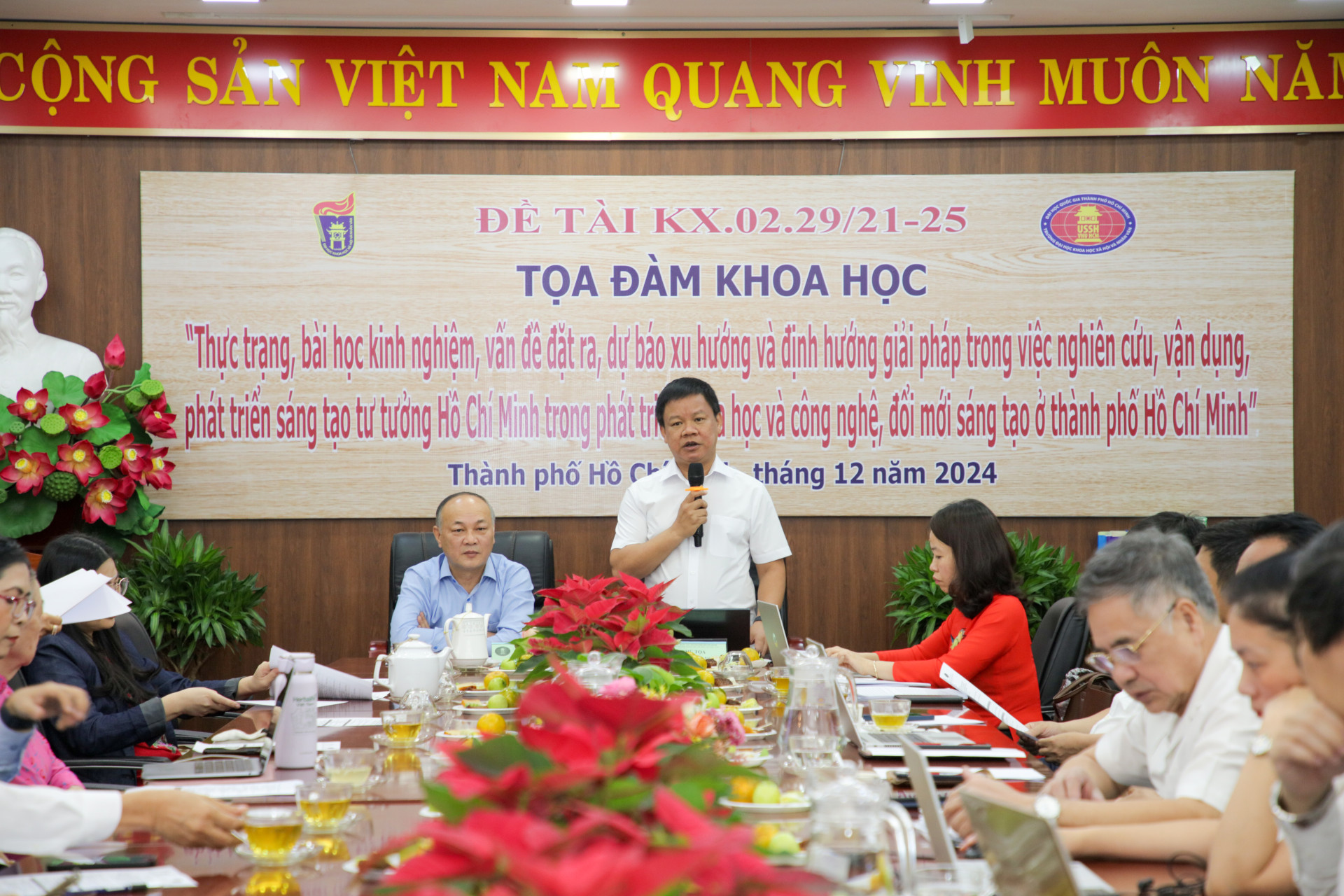
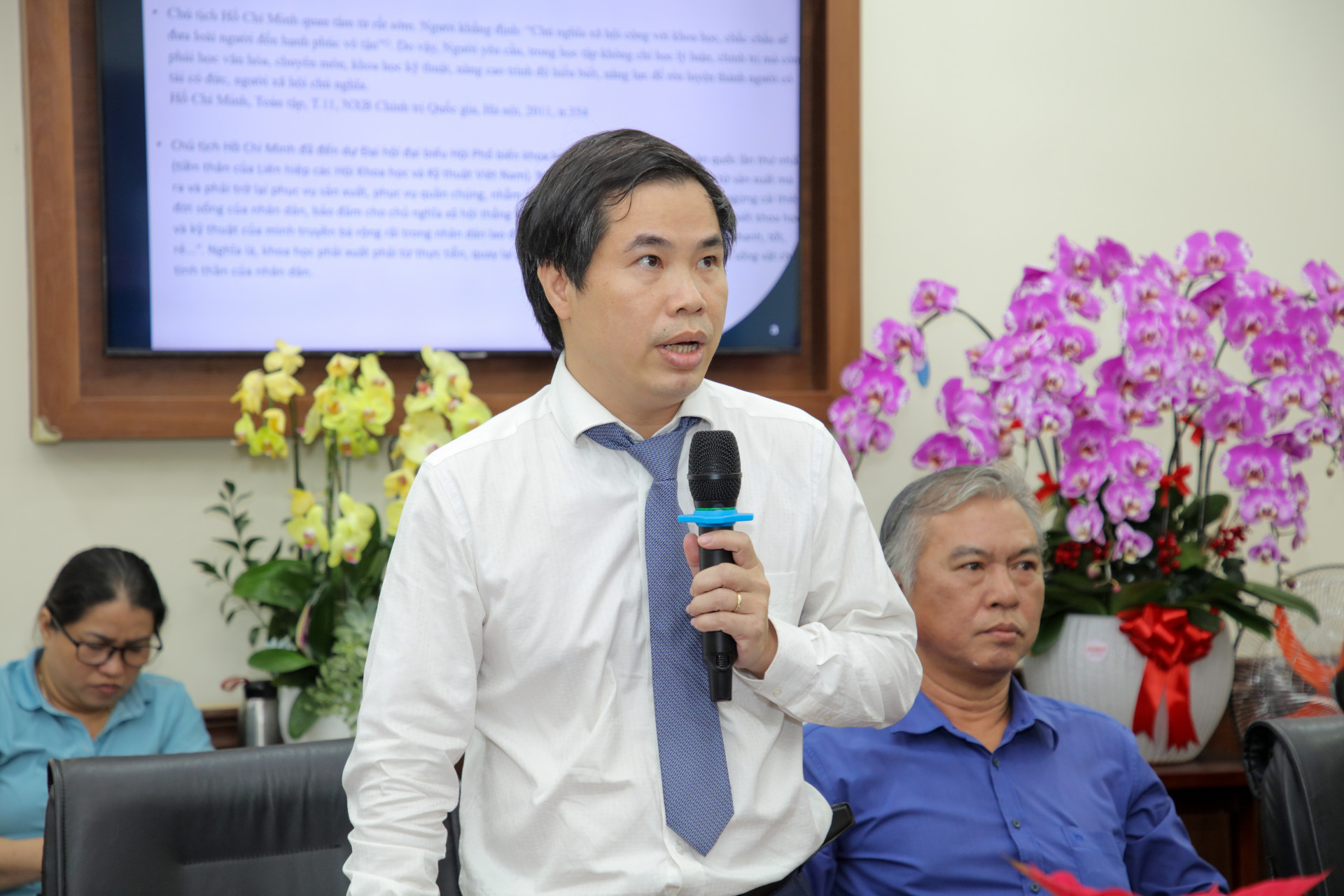
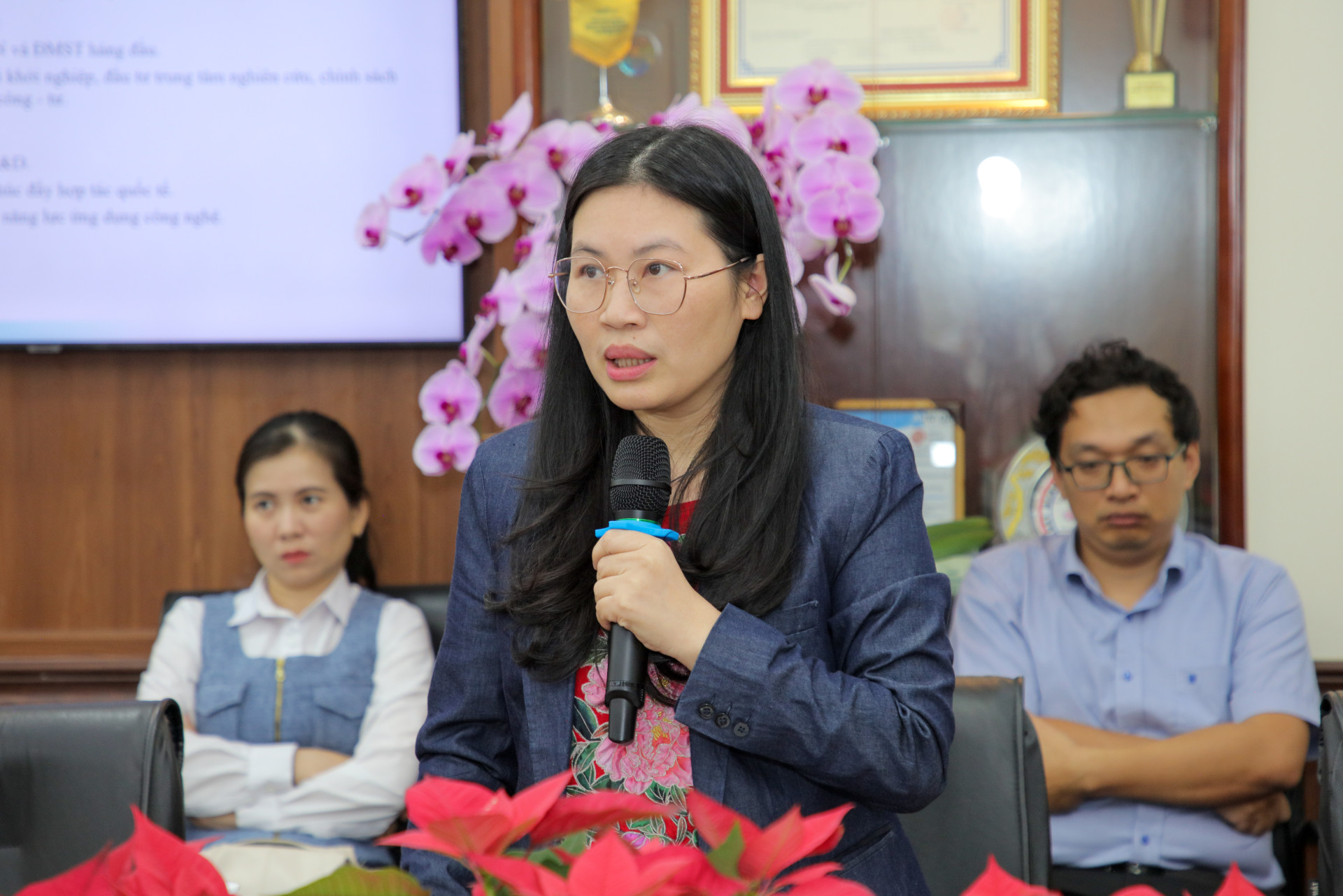
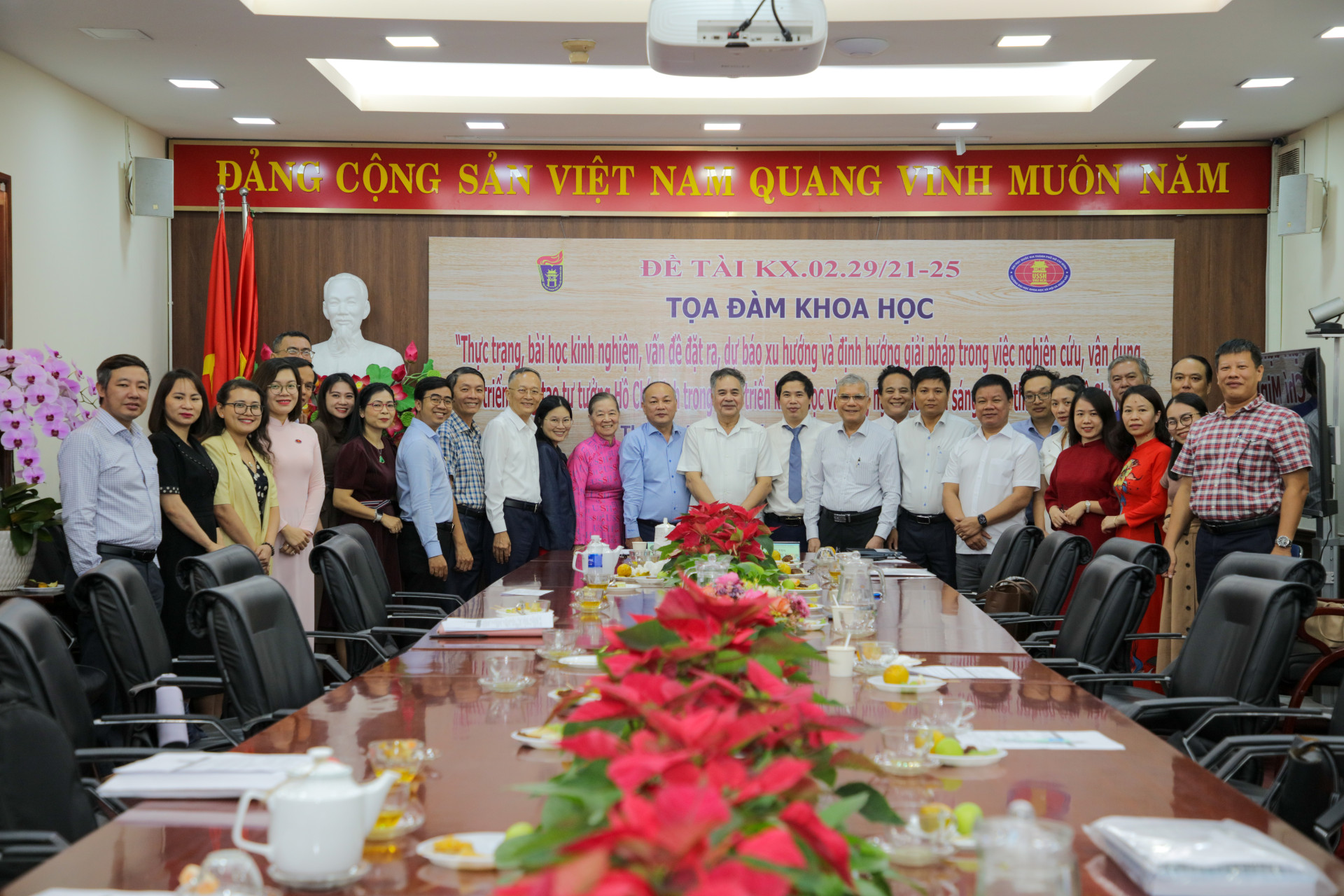
The seminar, organized by the University of Social Sciences and Humanities, Vietnam National University, Hanoi, in collaboration with the University of Social Sciences and Humanities, Vietnam National University, Ho Chi Minh City, attracted the participation of many experts, researchers, and scientists from central-level institutions and universities and research institutes nationwide.
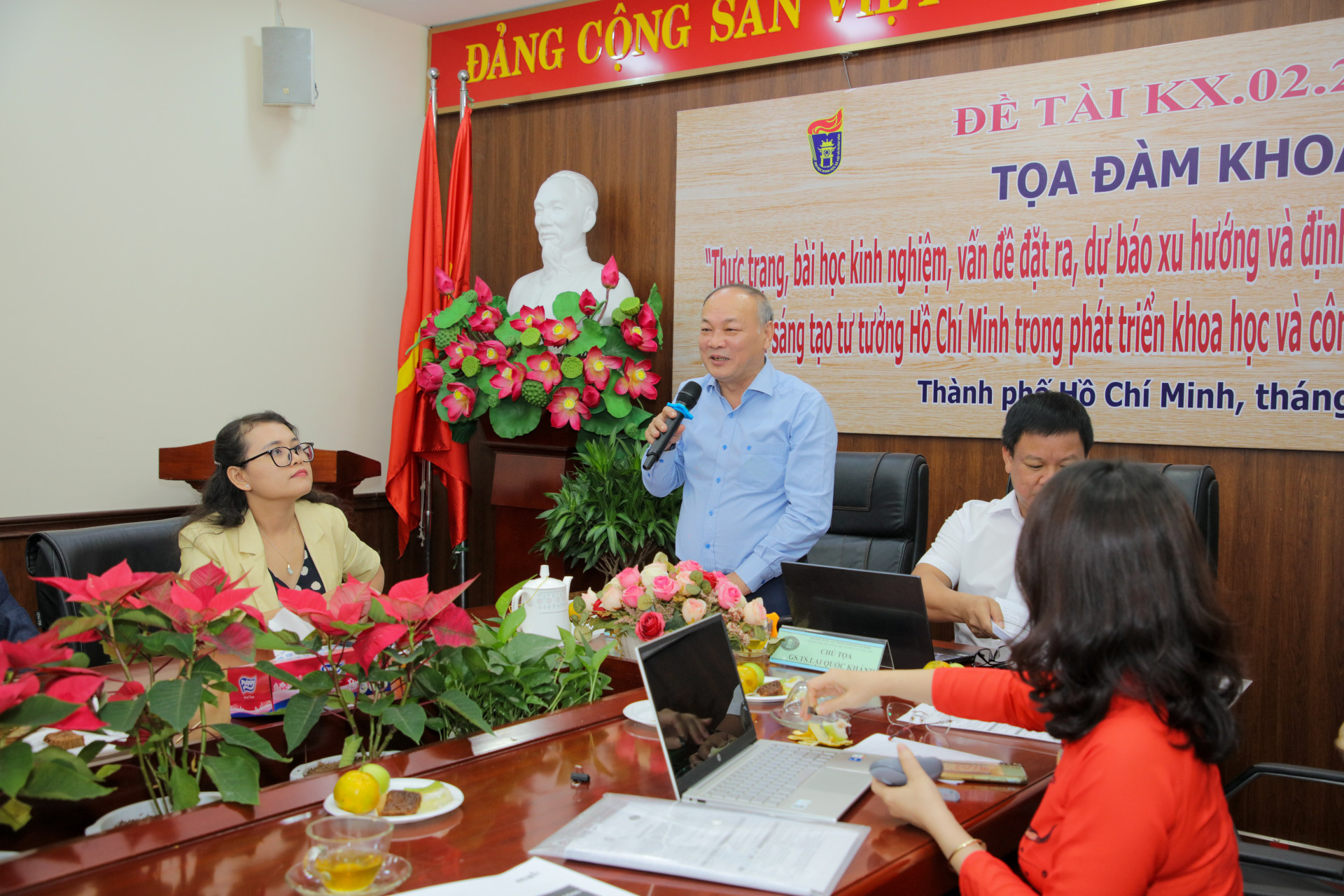
In his opening remarks at the seminar, Professor Lai Quoc Khanh, a member of the Central Theoretical Council and Vice-Rector of the University of Social Sciences and Humanities, Vietnam National University, Hanoi, affirmed the immense significance of Ho Chi Minh's thought in guiding sustainable development. Professor Lai Quoc Khanh emphasized that values such as the spirit of innovation, creativity, and self-reliance that Ho Chi Minh left behind are not only a guiding principle for cultural and social fields, but also an important foundation for promoting science and technology in the current context of digital transformation.
Prof. Dr. Lai Quoc Khanh - Member of the Central Theoretical Council, Vice Rector of the University of Social Sciences and Humanities, Vietnam National University, Hanoi; Head of the State-level research project, code number KX.02.29/21-25
Dr. Phan Thanh Dinh - Vice Rector of the University of Social Sciences and Humanities, VNU-HCM, co-chaired the scientific seminar.
The seminar heard and discussed 10 reports from scientists, focusing on a comprehensive analysis of various aspects of research and the application and creative development of Ho Chi Minh's thought on science and technology development and innovation in Ho Chi Minh City.
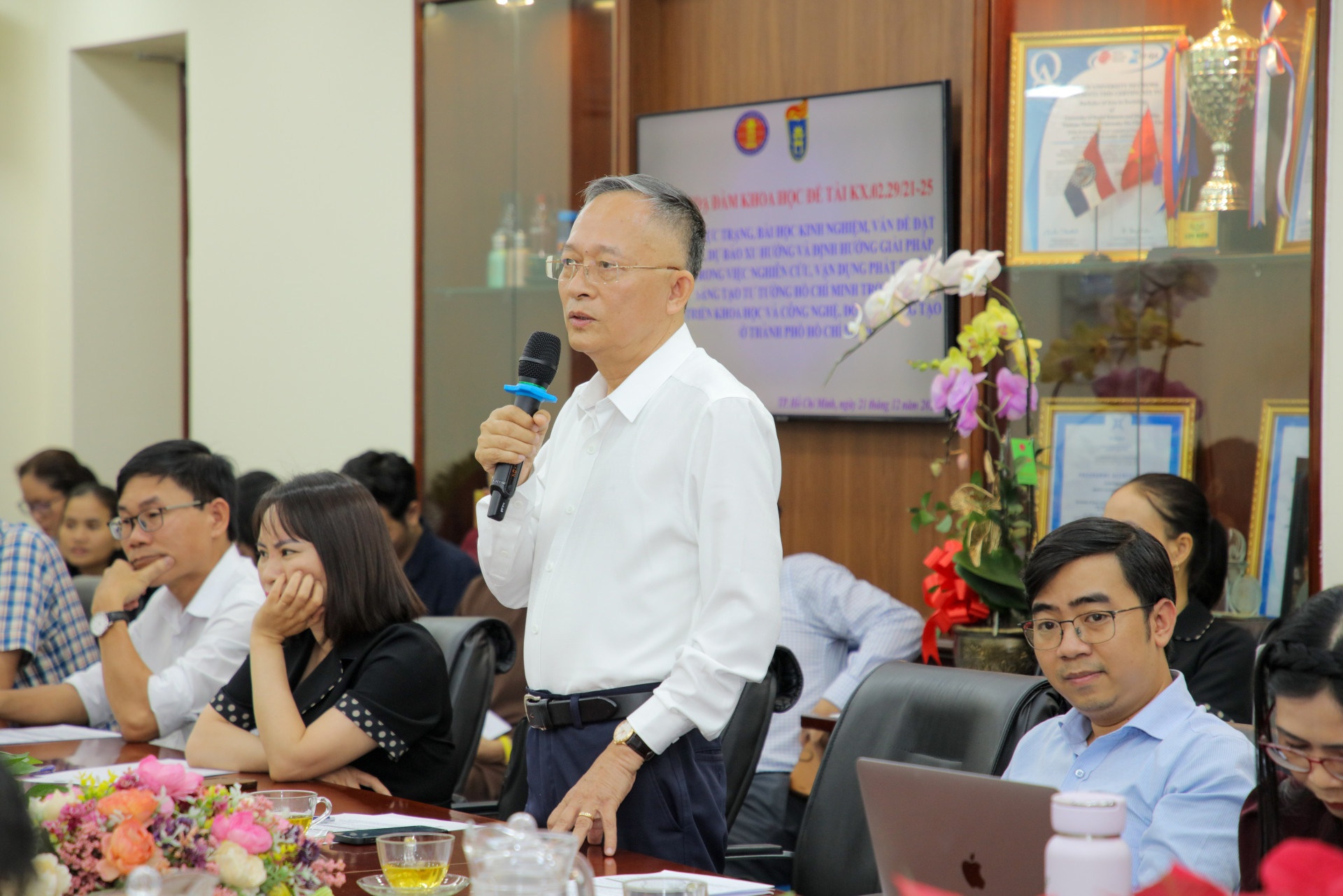
In this context, Dr. Nguyen Viet Hung, former Head of the Department of Party Building and Ho Chi Minh Thought at the Ho Chi Minh City Academy of Cadres, affirmed that Ho Chi Minh City has been and continues to lead the country in innovation. However, to effectively utilize its potential, the city needs to focus on digital transformation, developing green growth, and institutional reform. Dr. Nguyen Viet Hung also emphasized that Ho Chi Minh City's historical achievements, from the export processing zone model to the high-tech zones, are an important foundation for further promoting new fields such as semiconductor industry, biotechnology, and artificial intelligence.
Dr. Nguyen Viet Hung, Senior Lecturer - Former Head of the Department of Party Building and Ho Chi Minh Thought, Ho Chi Minh City Cadre Academy
In the section on applying Ho Chi Minh's ideology, the speakers pointed out that President Ho Chi Minh's viewpoint of "science serving humanity" is the guiding principle for Ho Chi Minh City's sustainable development. Associate Professor Cao Xuan Long - Head of the Philosophy Department, University of Social Sciences and Humanities, Vietnam National University Ho Chi Minh City - emphasized that Ho Chi Minh's ideology on science and technology is the guiding principle for the sustainable development of Ho Chi Minh City.
President Ho Chi Minh always paid deep attention to the role of science and emphasized that science must originate from practice and return to serve practice, contributing to improving the material and spiritual lives of the people. His ideology not only encouraged great inventions but also valued small initiatives stemming from very specific needs of life.
With that in mind, according to Associate Professor Cao Xuan Long, science, technology, and innovation are the "golden keys" for Ho Chi Minh City's sustainable development, contributing to economic restructuring, enhancing competitiveness, and expanding international markets.
Assoc. Prof. Dr. Cao Xuan Long - Head of the Philosophy Department, Faculty of Social Sciences and Humanities, Vietnam National University Ho Chi Minh City
When analyzing the potential and benefits of science and technology for the city, Associate Professor Cao Xuan Long also proposed specific solutions for Ho Chi Minh City to effectively utilize the power of science and innovation. He emphasized the need to innovate the management mechanism of science and technology, create a favorable environment for innovation, and focus on attracting high-quality human resources. In addition, the city needs to accelerate digital transformation and invest in key areas such as semiconductor industry, biotechnology, and green technology. In particular, Associate Professor Cao Xuan Long highly appreciated the role of public-private partnerships in realizing strategic goals, contributing to making Ho Chi Minh City a leading science, technology, and innovation center in the region by 2045.
Associate Professor Dr. Tran Thi Hong Lien - Head of the Business Administration Department, University of Economics and Law, VNU-HCM, analyzed the collaborative approach in public and private management, bringing about an effective cooperation model between research organizations and businesses.
At the scientific seminar, the exchange was lively, with many questions revolving around how to improve the connection between scientific research and practical application. The speakers directly answered the questions raised and shared further perspectives on issues related to the development of science and technology for the city. Some opinions from scientists such as Assoc. Prof. Dr. Nguyen Viet Thong, former Deputy Head of the Central Committee's Ideology and Culture Department, former Secretary General of the Central Theoretical Council; and Assoc. Prof. Dr. Bui Loan Thuy, University of Social Sciences and Humanities, Vietnam National University Ho Chi Minh City, broadened perspectives and offered practical solutions to effectively utilize domestic scientific resources.
In his concluding remarks, Professor Lai Quoc Khanh affirmed that the seminar not only clarified current issues but also proposed many new directions for researching and applying Ho Chi Minh's ideology in the development of science and technology. According to Professor Lai Quoc Khanh, Ho Chi Minh's creative spirit, proactiveness, and strategic vision are the key to Ho Chi Minh City maintaining its pioneering role and becoming the innovation center of the country.
Scientists expect that the lessons and solutions proposed will soon be implemented, contributing to building Ho Chi Minh City into a creative, modern, and sustainable urban center, with Ho Chi Minh's ideology as the foundation for its development.
The scientific seminar is one of a series of activities within the research framework of project KX.02.29/21-25 under the National Special Science and Technology Program 2021-2025 “Research, application and creative development of Ho Chi Minh's thought in the construction and defense of the country during the đổi mới (renovation) period (from 1986 to the present, orientation to 2030 and vision to 2045)” led by Prof. Dr. Lai Quoc Khanh - Member of the Central Theoretical Council, Vice Rector of the University of Social Sciences and Humanities, Vietnam National University, Hanoi.
Related articles:
Research, apply, and creatively develop Ho Chi Minh's thought in the development of science and technology and innovation during the Doi Moi (Renovation) period.
Research, application, and creative development of Ho Chi Minh's thought in the development of science and technology and innovation in Thai Nguyen.
Many scientists contributed their opinions to research on Ho Chi Minh's ideology in innovation.
The current state of research, application, and development of Ho Chi Minh's thought in the development of science, technology, and innovation.