
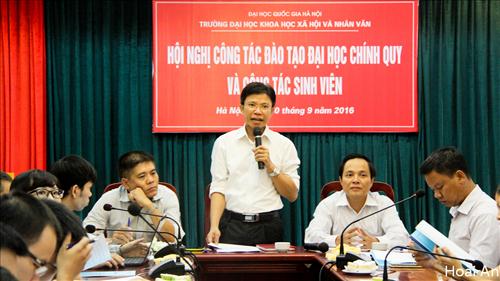
On the afternoon of September 30, 2016, the University of Social Sciences and Humanities, Vietnam National University, Hanoi, held a conference on undergraduate training and student affairs. Attending the conference were representatives from the faculty leadership, homeroom teachers, and academic advisors.
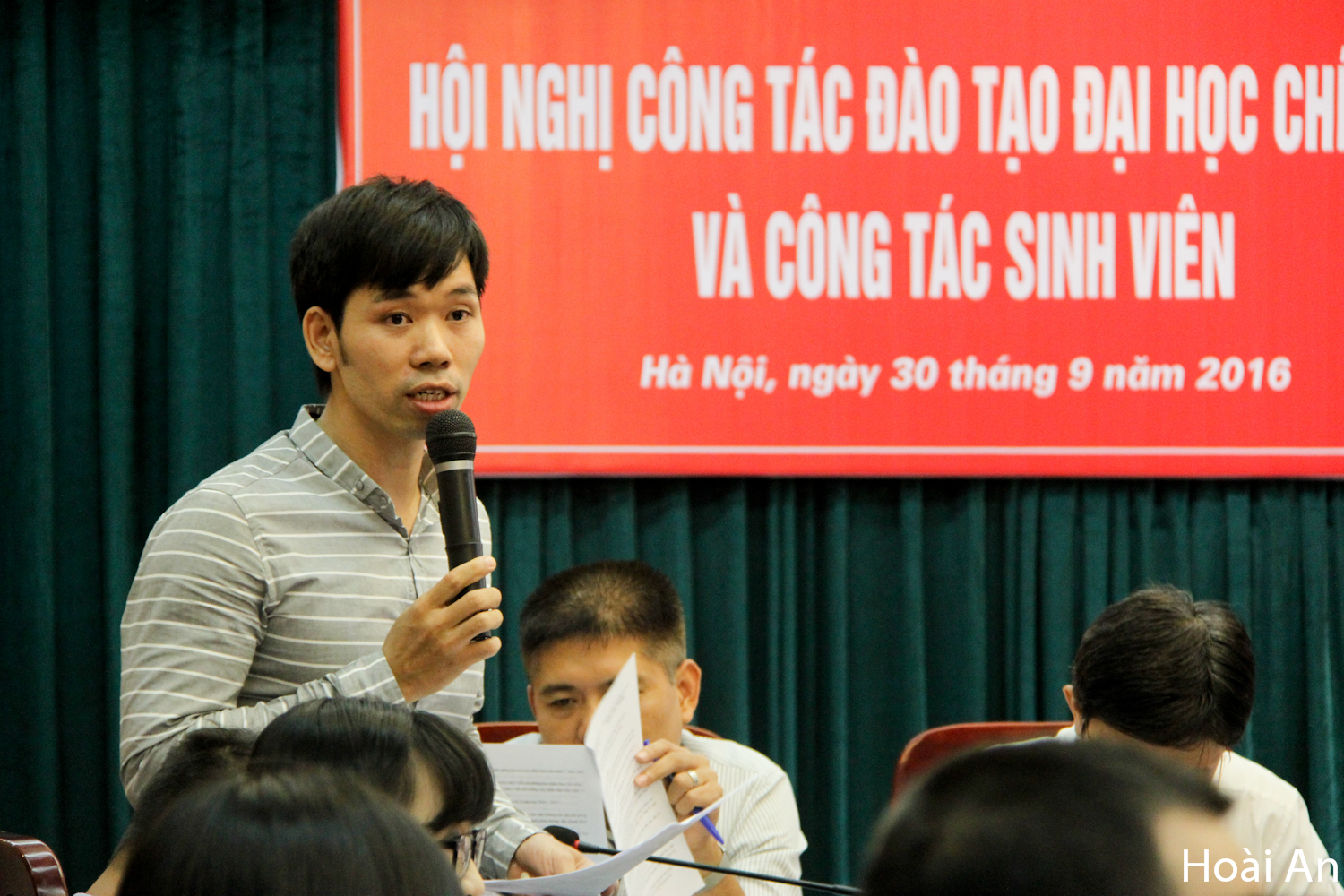
Mr. Dao Minh Quan, Deputy Head of the Training Department, presented on some shortcomings in the management and organization of training and proposed improvements.
At the conference, delegates listened to and discussed several solutions that could be implemented in the future to improve the quality of training, including:
1. Regarding the management of the training process, the school proposes a solution to develop tools for establishing and managing the training process; creating a learning plan for the entire course and for each semester. The planned implementation schedule is expected to begin in October.
This solution is expected to help the training department effectively manage the normal training progress of a course, and build an optimal learning plan for each semester. Training assistants will have the tools to build the training process and learning plan for the entire course, proactively and easily developing projected teaching plans for each semester and each course.
Academic advisors are aware of the training progress and the planned training schedule for the entire course, enabling them to support and advise students in planning their studies each semester. Students become more proactive in planning their studies each semester and can refer to their current position within the normal training progress of their major.
2. With the process of receiving class lists and entering grades, the school will develop online grade updating software. The implementation is expected to begin in November.
This solution will save time and reduce the workload of faculty members. Lecturers will have complete autonomy in obtaining course lists and entering grades from anywhere with internet access. Faculty training assistants can enter grades online for all courses taught by their respective faculties (courses in blocks M4 and M5).
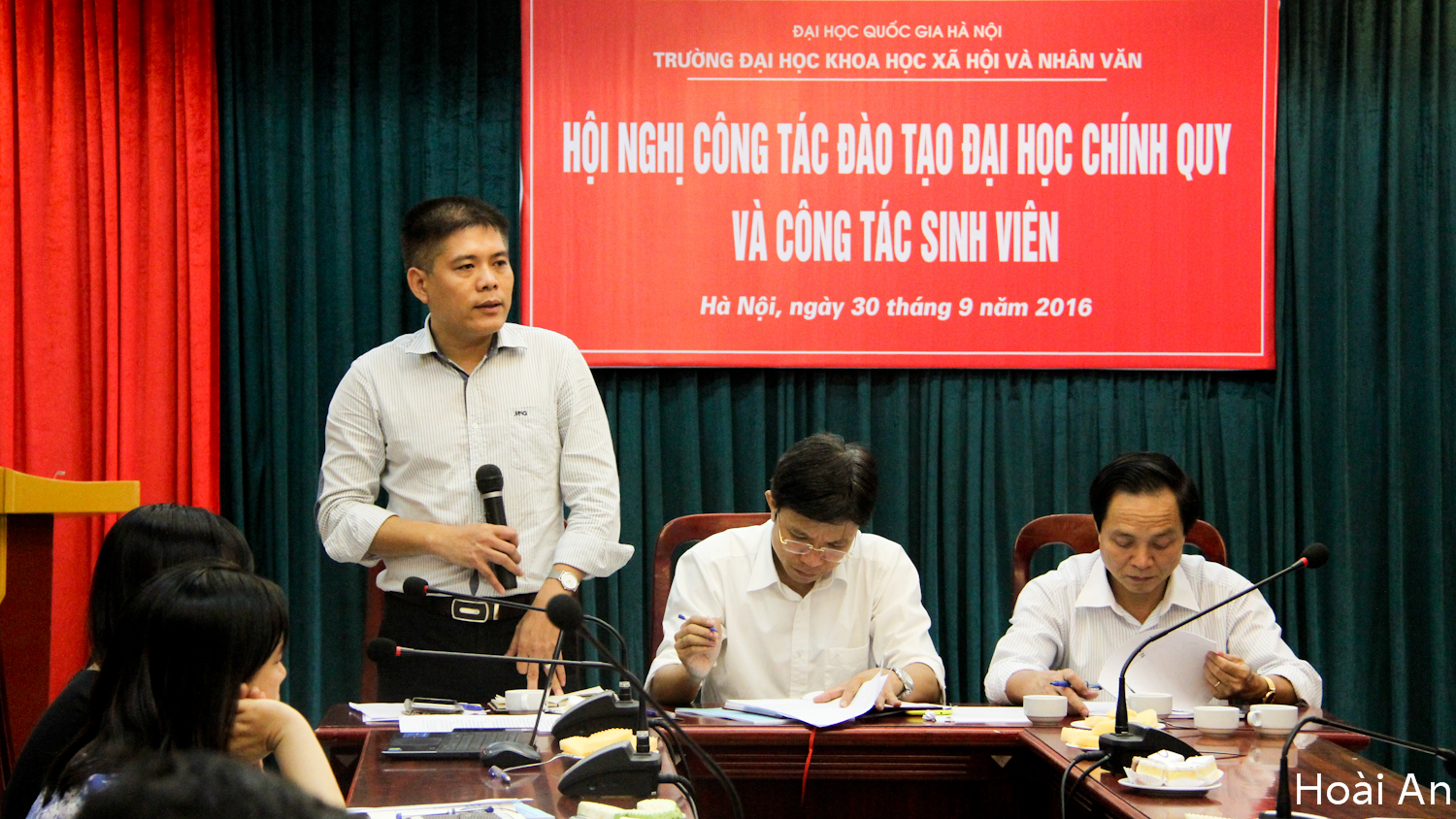
Dr. Bui Thanh Nam, Head of Training Department, presented the content on the internationalization of training programs.
3. Regarding teaching planning and organization, the school plans to adjust the number of lessons per day from 10 to 11, and reduce break time from 10 minutes to 5 minutes. Accordingly, the morning schedule will consist of 5 lessons from lessons 1-5: 7:00 AM to 11:30 AM, and the afternoon schedule will consist of 6 lessons from lessons 6 to 11: 12:30 PM to 5:55 PM. This adjustment will optimize teaching time by arranging lesson pairs such as 3+3, 2+4, 4+2, 2+3, 3+2, and 2+2+2.
The school also advocates for increasing the number of courses taught in 7-week sessions (especially 2-credit courses). Exams are held twice per semester: a second session for 7-week courses (exams in the 9th week of the semester), and a second session for 15-week courses (exams in weeks 16-19 of the semester).
The purpose of this solution is to optimize teaching and learning planning (eliminating the need to schedule classes on evenings and Saturdays), examinations, maximize the use of lecture hall space, and accelerate the training process. It reduces pressure on students, lecturers, training assistants, and training department staff in terms of learning, examinations, exam organization, grading, and grade entry. It also facilitates the graduation process.
At the same time, this implementation will increase the time available for lecturers to teach according to the 7-week schedule, and inviting lecturers will also be easier.
4. In addition, the school also proposes installing computers with internet access to support information retrieval regarding teaching plans, learning, and examinations. The minimum number of credits required for the first graduation thesis assignment will be adjusted down to 100 credits for the standard program (currently 110) and 115 credits for the high-quality program (currently 125) to help students graduate earlier.
Some of the suggestions and comments discussed at the conference:
|
The school should organize national defense education courses during the summer semesters of the first and second years. Could the physical education course have a mechanism where students can submit certificates in lieu of taking courses at the school? The training should be divided into even smaller classes to improve its effectiveness. The issue is diversifying international training programs, because the university also has specialized departments that should not focus solely on English. |
Students are treated as special customers, so the first three semesters should focus on teaching specialized subjects with the best instructors to maintain and ignite their passion for their chosen field. The academic advising staff is constantly changing, so each department only needs one academic advisor, who is also the departmental training assistant. The university also needs to implement a handbook specifically for academic advisors. |
|
The availability of full-time and visiting lecturers is unstable over time, making it difficult to finalize the academic year schedule. Lecturers currently need stable internet access, as high student traffic frequently leads to Wi-Fi congestion. Therefore, the university should provide dedicated internet connections for lecturers during training sessions. |
Class organization was difficult due to the following situation: during the first three weeks, instructors received three different class lists (because students had two weeks to adjust their schedules), causing difficulties in management and teaching. The course syllabus is too long and ineffective; it needs improvement. |
In his concluding remarks at the conference, Associate Professor Hoang Anh Tuan, Vice Rector of the University, emphasized: The University will incorporate the feedback from the faculty and staff to further promote improvements in training, thoroughly addressing issues related to course registration, supplementary courses, foreign language learning, etc., for students in the future.
The school will continue to affirm and further enhance the position and role of lecturers in the process of building training, teaching, and assessment procedures. Accordingly, it will respect the rights and position of lecturers to the fullest extent possible.
Regarding student political activities, the University continues to maintain the view that this is a supportive and caring area aimed at improving the quality of student education. Continued attention will be paid to developing student-friendly guides, handbooks, and regulations.
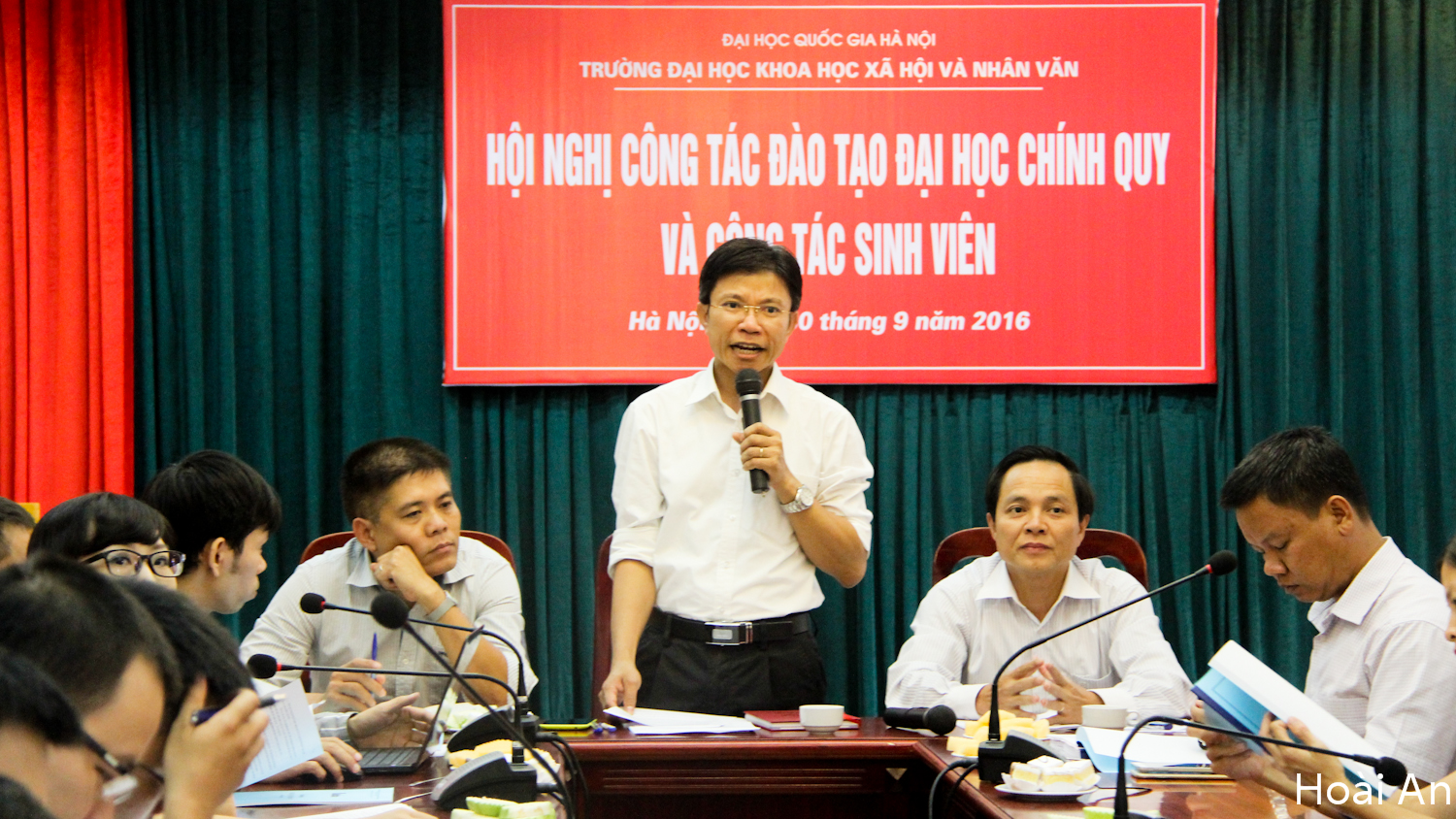
Associate Professor Hoang Anh Tuan, Vice Rector of the University, delivered the concluding remarks at the conference.
Regarding training, the Training Department will need to coordinate with the faculties to develop stable training programs so that students and lecturers can easily track their learning progress.
Adjusting the number of courses in the 7-week schedule to save time for lecturers and students while still ensuring compliance with regulations; balancing study time; paying attention to the required credits so that students can receive their graduation thesis early to complete it and graduate; and adjusting prerequisite courses to make it more convenient for students.
The internationalization of training programs will be implemented quickly and decisively, but without rushing the process.
In October, the university will finalize the courses that will be taught in a foreign language for the next semester. Simultaneously, it will soon finalize the mechanisms for lecturers and students studying in a foreign language. Accordingly, lecturers will have special mechanisms when participating in teaching, such as weighting factors and financial incentives. Regarding the organization and evaluation methods, lecturers will be given maximum freedom to choose the learning and examination methods they deem best.
Students enrolled in these programs will have a mechanism for recording courses in English and will benefit from specific course-related mechanisms.
In the future, the school will develop several fully internationalized training programs.
Author:Hoai An
Newer news
Older news


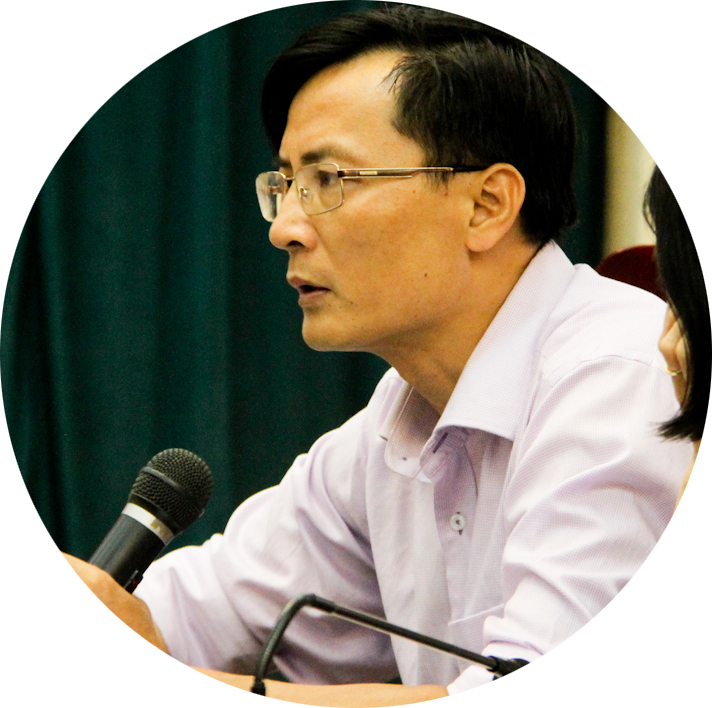 Assoc. Prof. Dr. Trinh Van Tung, Department of Sociology
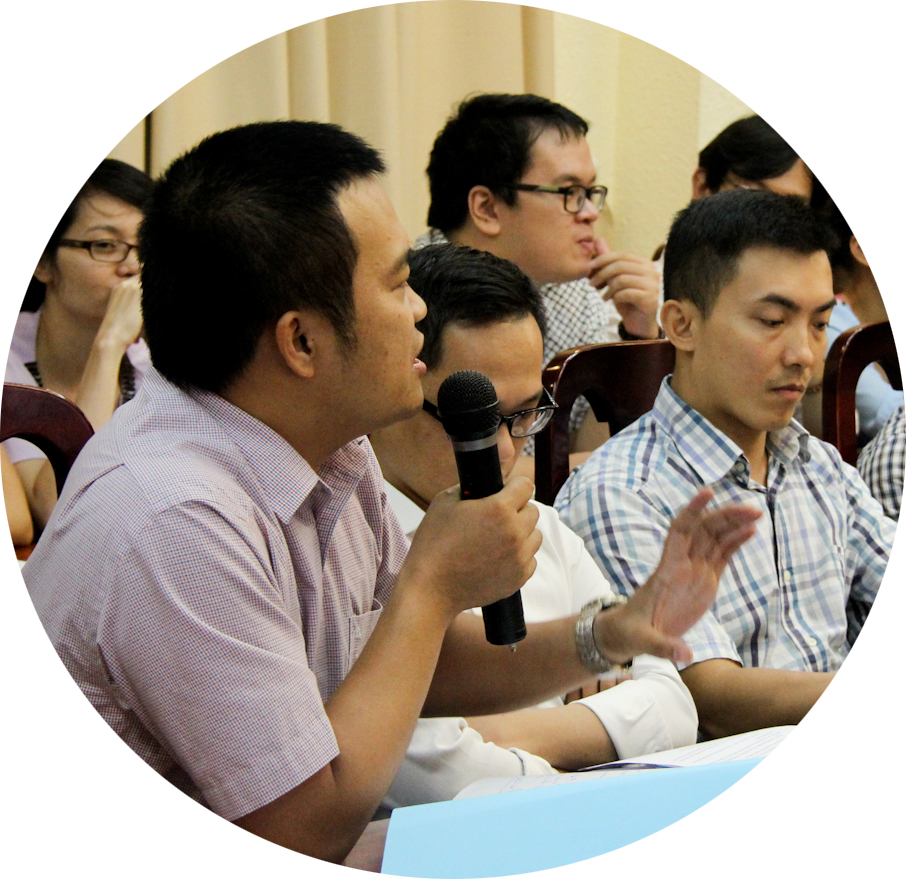 Dr. Pham Hoang Giang, Department of Philosophy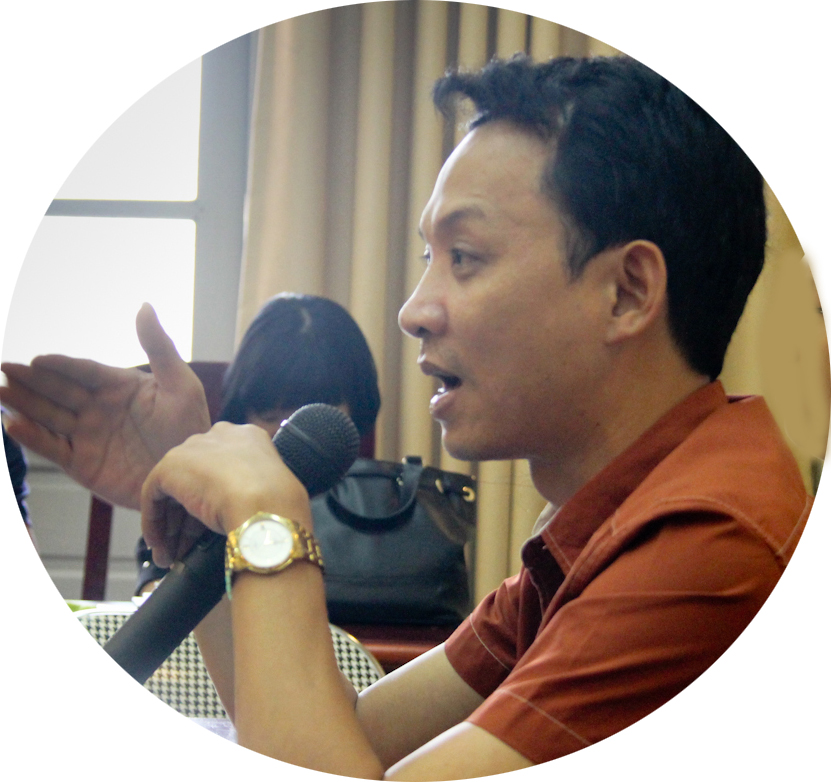
 Dr. Nguyen Quang Lieu, Department of Political Affairs and Student Services