The seminar was a professional discussion revolving around the main reports of three young researchers from the Department of Oriental Studies.
Report by Dr. Vo Minh Vu (Department of Japanese Studies) on the topic “An examination of the Japan-France relationship surrounding the issue of the Chinese community in Indochina during World War II.The report states that after entering Indochina, Japan maintained the existence of the French colonial government and, through France, dominated Indochina. Japan's goal at that time was to exploit resources, including rice, to serve its war efforts and to create a springboard for expansion into Southeast Asia. However, at this time, the rice distribution system in Indochina was in the hands of the Chinese diaspora, who were actively resisting Japan. Therefore, for Japan, attracting the cooperation of the Chinese diaspora was identified as a crucial task to ensure a stable rice supply and contribute to the construction of the Commonwealth in Southeast Asia. Through an examination of the political aspects of the actions and reactions of Japan and France regarding the Chinese diaspora, the report clarifies the nature of the Japan-France relationship as a competitive relationship disguised as cooperation, encompassing contempt, compromise, and opposition.
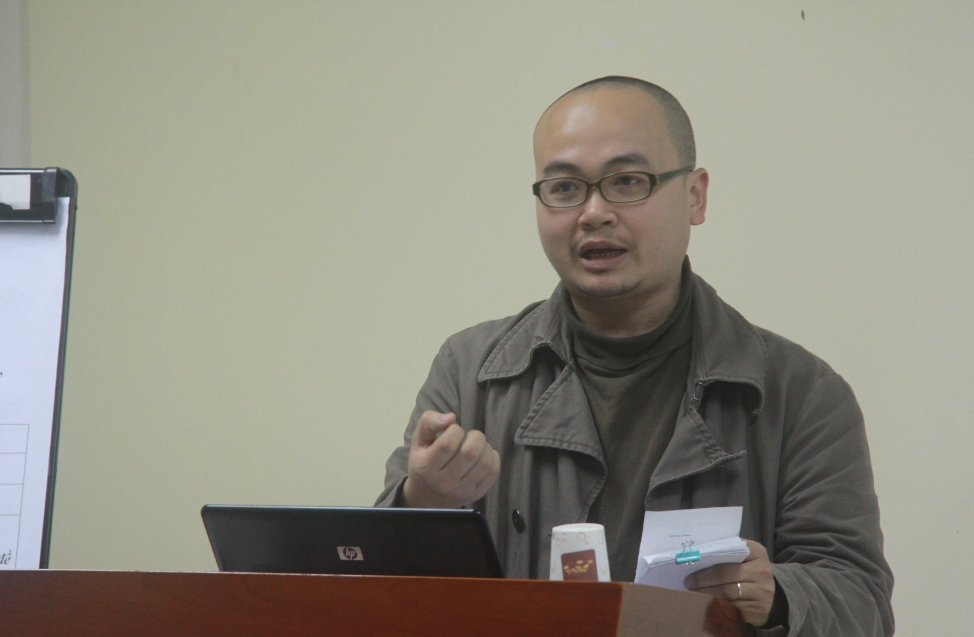
Dr. Vo Minh Vu (Department of Japanese Studies) presented the report.
Commenting on the report, Associate Professor Pham Hong Tung (Director of the Institute of Vietnamese Studies and Development Science, Vietnam National University, Hanoi) stated that the author was correct in choosing the issue of the Chinese community in the context of Japan-France relations in Vietnam during World War II for research. This is a complex but interesting issue, which can be considered a "barometer" for approaching and assessing Japan-France relations in Vietnam during that period. The valuable contribution of the article lies in its information and historical sources, particularly those from sources and research works in Japanese. This is particularly valuable information because Vietnamese and foreign researchers generally find it difficult to access these sources due to their inability to use Japanese.
Report by Ms. Le Thi Thu Giang (Department of Korean Studies) with the topic “South Korea in its relationship with ASEAN - from dialogue partner to comprehensive partner (1991-2009)This report examines the relationship between South Korea and ASEAN from the establishment of dialogue relations to their transformation into a comprehensive partnership. Through this, the report not only systematically shows the development of South Korea-ASEAN relations but also reflects the overall dynamics of international relations in the region and the world. Although not considered major political entities with significant influence, the South Korea-ASEAN relationship has played an indispensable role in economic development cooperation and creating a balance to ensure regional security.
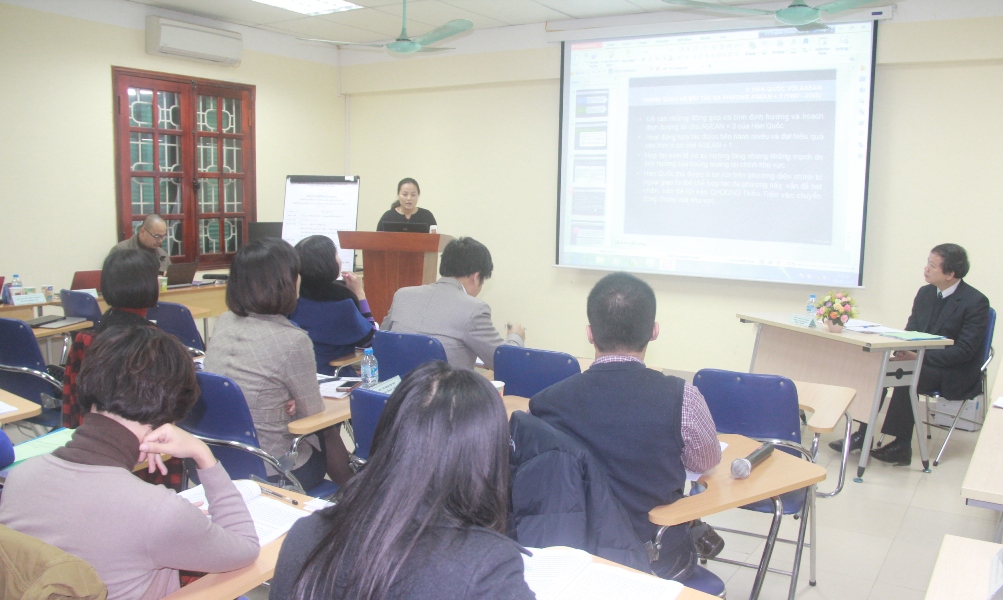
Associate Professor Pham Quy Long (Institute of Northeast Asian Studies, Vietnam Academy of Social Sciences and Humanities) commented: This is a research topic of great academic significance and high political importance in the field of contemporary international relations research in East Asia in particular and the world in general. The article has fundamentally assessed the role and pointed out the main characteristics in the shift of South Korea's foreign policy in the history of establishing and building relations with ASEAN during the period 1991-2009. The author's research is thorough, has many rich sources of information, and is a good reference for research, study, and teaching in the field of international relations. However, Associate Professor Pham Quy Long also suggested that the author needs to analyze more deeply the meanings of the two terms: dialogue partner and comprehensive partner; clarify the research perspective from the point of view of who the subject is; and analyze the internal factors of South Korea and ASEAN that influence this relationship. Focus on analyzing the political and diplomatic aspects of the relationship to create the central theme for the article…
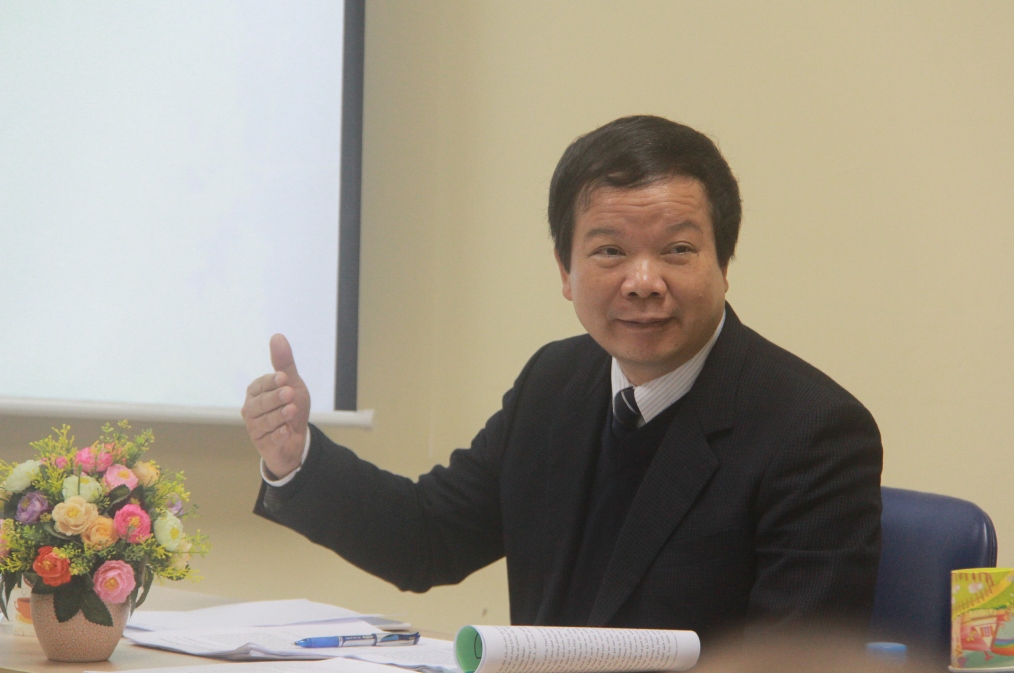
Associate Professor Dr. Nguyen Van Kim (Vice Rector of the University) chaired the seminar.
The report by Ms. Nguyen Thuy Giang (Department of Korean Studies) discusses “The issue of inheriting and promoting traditional Korean culture - current situation and solutions.This article stems from the premise that culture in general, and traditional culture in particular, is a spiritual resource that needs to be understood, preserved, and developed. South Korea is currently rising to become an "Asian dragon" in the economic field, but it also faces the risk of losing its traditional cultural values due to the negative influences of modern society. The article explores and proposes measures and policies to preserve and promote the beautiful traditional aspects of the nation, serving the sustainable development of Korean culture.
As the main commentator for the report, Associate Professor Dr. Nguyen Van Suu (Department of Anthropology) remarked: this is an excellent and important topic with both scientific and practical significance. The report is meticulously prepared, easy to read, and clearly argued, helping readers understand the issue of preserving, exploiting, and promoting the values of traditional culture in contemporary South Korea. However, Associate Professor Dr. Nguyen Van Suu also suggested that the report would be better if it included more research literature; and paid more attention to the historical aspects and the diversity, multidimensionality, and complex interactions of many stakeholders involved in this issue within South Korean society in the context of modernization and globalization.
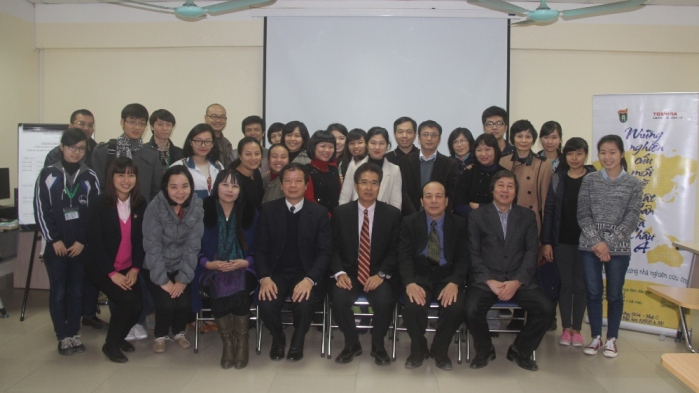
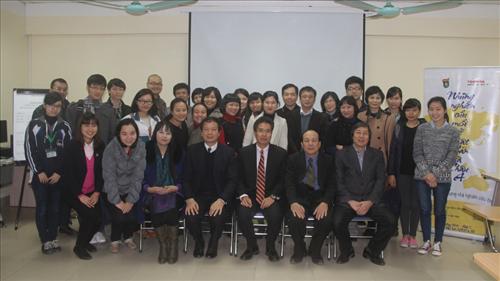
The delegates attending the seminar took a commemorative photo.
Author:Thanh Ha
Newer news
Older news

