
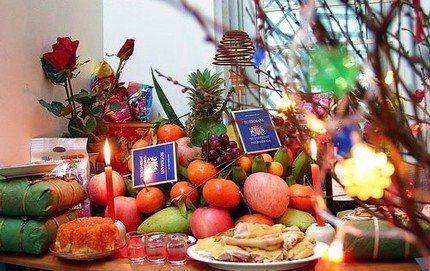
My grandfather's first task was to take out from a weathered wooden box a tea set and six porcelain cups with intricately carved patterns. He didn't know how old the tea set was, because, according to him, it had been on the altar during the Lunar New Year celebrations when he was my age. The depth of time had settled in the small space of the teapot and the bottom of the cups, and lingered in the fine cracks caused by the effects of hot and cold weather, dryness and humidity.

Illustrative image
My grandfather carefully washed each one with warm water and then dried them with a cotton towel. His rough hands, marked by years of hard work digging the soil, clearing fields, and wading through rice paddies, now felt gentle and soft. He told me that these were some of the few remaining treasures of our family, and therefore we had a responsibility to preserve them. Countless generations of our ancestors had built and maintained them, enduring wars, natural disasters, and other calamities from one generation to the next. He told stories as he worked, his white hair and beard trembling in the cool breeze. He was calm both in his stories and in his every movement.
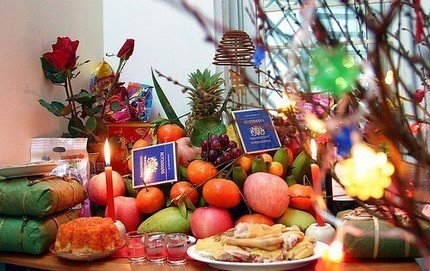
When the clock struck nine in the morning, he slowly got up and went to the tea cabinet, taking out a small vase containing about two liters of water. He then slowly tilted the vase to let the water flow into the teapot. Next, he slowly poured the water into individual cups. Choosing nine o'clock in the morning was simply a family tradition. Some also believe that this time is when people are most open and serene, so they should do things of spiritual value. My grandfather said this was the water offered to the ancestors during Tet (Lunar New Year). The water for the offering was rainwater he had collected for a long time. Obtaining that much rainwater for the Tet offerings was a great feat. He chose days with clear blue skies, gentle breezes, and clear skies, but still with rain, which was considered ideal. He waited for the rain to wash away the dirt on the eaves and in the air, so that the raindrops, like pearls, fell gently and evenly. Before collecting the water, he washed himself thoroughly, changed his clothes, and lit an incense stick on the porch to ask for blessings from heaven and earth. My grandfather meticulously and skillfully performed this task year after year. I followed him around throughout my childhood, and as I grew older, I gradually realized that his spiritual values and reverence had grown and deepened since time immemorial.
Illustrative image
The Lunar New Year holidays held great significance for my grandfather. On the morning of the thirtieth day of the lunar month, the first day of the new year, and the second day, when preparing to extinguish the church candles, were the times my grandfather changed the water in the water. With the same posture and the same skillful, gentle movements—seemingly simple, yet embodying the dedication and care he had accumulated over many years—his work was truly meaningful.
My grandfather has now passed away. My father continues this work. However, life is busy and time flows faster, so my father can no longer be as meticulous as my grandfather used to be. I ventured beyond the village bamboo fence to study and make a living in the city, but my memories of my grandfather remain intact. Through my first lessons about human society and Vietnamese culture, I suddenly understood that my grandfather's actions, though merely a family tradition or habit, were a profound, unspoken lesson to our ancestors that descendants like me need to uphold.
Although we cannot stop the passage of time, what we leave behind and what we take with us is entirely up to us, to us as individuals.
Author:Pham Dinh Lan
Newer news
Older news

