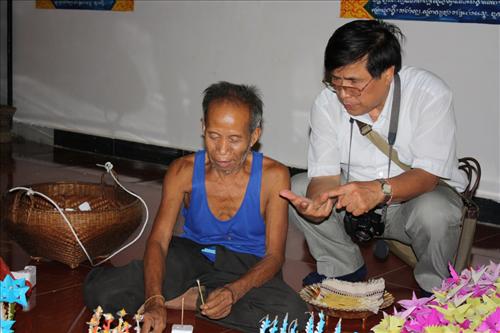
I started working at the Department of Ethnology a few years after Hoang Luong (he graduated in 1976, class 16 of the History Faculty, Hanoi University), but in terms of age, I am exactly twelve years younger than him. He was born on December 7, 1944, the year of the Wood Monkey, with a specific destiny.flowing waterHis life of over 70 years was just like the destiny he was born into, a "water flowing in the streamHis name is also very special. Huang Liang, in Chinese characters, means "golden chicken." This name is associated with a literary anecdote from the Tang Dynasty, which speaks of "the dream of Huang Liang" with profound implications about the meaning of life.
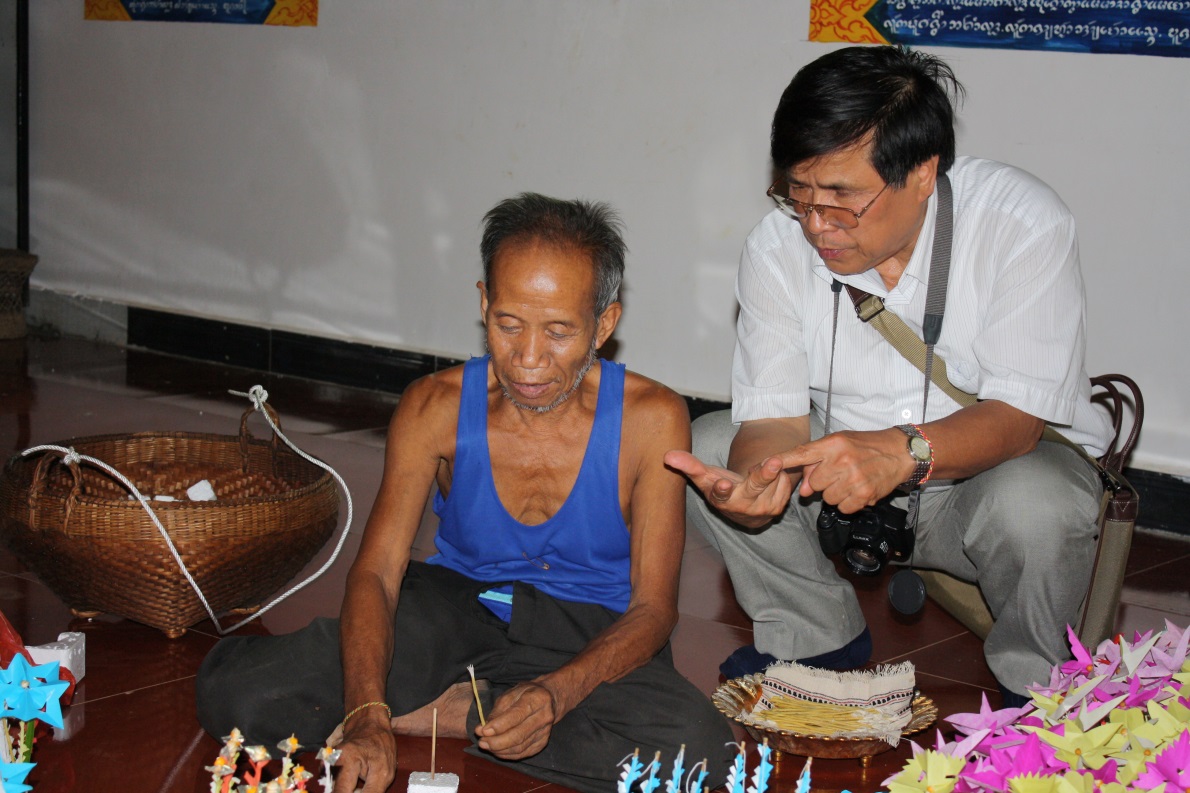
I still remember my first impressions of him. He was a simple, genuine, approachable, and quite open person. His world during his early years working at the History department was a small corner in a shared room. What impressed me most about that cramped living space was a bookshelf always overflowing with romantic novels that were very fashionable at the time, such as...Gadfly, Vanity Fair, The Godfather, One Hundred Years of Solitude, The Thorn BirdsAlthough he was an ethnologist, he probably also loved literature. He considered himself a romantic. He enjoyed playing the flute and singing love songs. I remember when I visited Sa Pa in the mid-1990s, he was still wandering the streets at midnight, standing on the sloping road next to the Fansipan Hotel, a relic from the colonial era, and singing a folk song.Love Song of the NorthwestHe was so engrossed in his work that he almost forgot his way home. Knowing his love for beauty, when I went to the Netherlands for work, I sent him a postcard with tulips depicting the silhouette of a young woman. He kept this postcard for many years on his bookshelf, and whenever friends came to visit, he would take it out to show off as a refined hobby. But he was also a very practical person, and a very good cook. He always carefully saved every grain of rice from his meager rations during the subsidy era so that at the end of the month he wouldn't have to scramble to borrow rice or beg for food like us children. While the entire possessions of most teaching staff at that time consisted of just a few sets of clothes and a small bed with a thin mat, his bed was always fully furnished with a Thai-style blanket, pillow, and mattress. He said those things were brought from his hometown, made by his wife, and he used them as a way to always feel his wife's love and the scent of his homeland.
I became closer to him after returning to the Department of Ethnology from the military. As was the custom at the time, the single men of the History department would often gather around him to gossip, and no matter the topic, the conversations always revolved around love, women, and differing views on the values of life. Sometimes, during these casual conversations over tea and drinks, small debates would break out, and he would often ignore others to defend his unique perspective. While social life in the 1980s was full of struggles and competition, he seemed unconcerned about worldly affairs, not wanting to gain any advantage for himself, and was usually content with what he had. He often helped people by lending his veteran's card to buy subsidized goods. Sometimes he would personally ride his bicycle to queue up and buy things for others, even if it was just a few ounces of meat, a kilogram of fish, or a few blocks of tofu. Some people disliked his simple, honest, and unpretentious nature, but he ignored it all. As a member of the Thai ethnic group and a war veteran, he could have easily used those advantages to secure a postgraduate program abroad, as most young faculty members at Hanoi University at the time aspired to, to advance his career. However, he didn't resort to bribery or maneuvering. Some called him foolish, but he just laughed, saying that in life, you never know what is wise and what is foolish. Perhaps throughout his life, he had waited for some kind of fairness and believed it existed. In debates, he was enthusiastic and open, but often chose to accept and yield rather than compete for the upper hand. When he was about to retire and received the title of Outstanding Teacher, he happily considered it a recognition from the state for his contributions to the field of education.
In the history of the former Department of Ethnology and the current Department of Anthropology, Hoang Luong has held a significant position in management, training, and development. He served as head of the department for two terms, but he didn't manage through "tactics," as he often jokingly called it, but rather through sincerity and enthusiasm. Many generations of students who have studied Ethnology under him share the same feeling: he teaches with a burning passion for his profession, and he has successfully instilled that passion in his students. Many students admit that they came to study ethnology thanks to attending his lectures. This is a far cry from some lecturers who consider themselves experienced while still using outdated notes from decades ago as their lectures, casually reading them aloud for students to copy, thus discouraging the subject. Throughout his teaching career, Hoang Luong strived to identify talented students and encourage them to pursue scientific careers, leading to the emergence of promising anthropology PhDs like Truong Huyen Chi and Nguyen Thi Thu Huong. Both received their PhDs from prestigious universities in Europe and North America, but deep down, they will never forget their first teacher, Hoang Luong, who instilled in them a love for the profession. There may still be differing opinions and debates regarding Hoang Luong's teaching methods at the university level. Some believe that each lecture should be prepared according to a specific knowledge unit, and the teacher should simply deliver that information to the students. However, Hoang Luong rarely followed such rigid patterns. He remained convinced and steadfast in his belief that a teacher doesn't need to demonstrate their profound academic knowledge in the classroom, but can instead offer scientific insights, sparking students' passion for the issues raised, and encouraging them to discover new horizons of knowledge for themselves. Even after retirement, he continued to teach, not for meager wages, but to satisfy his passion for connecting with his students and passing on to them his love of the profession. I have no doubt that he was a teacher who loved his profession until his last breath.
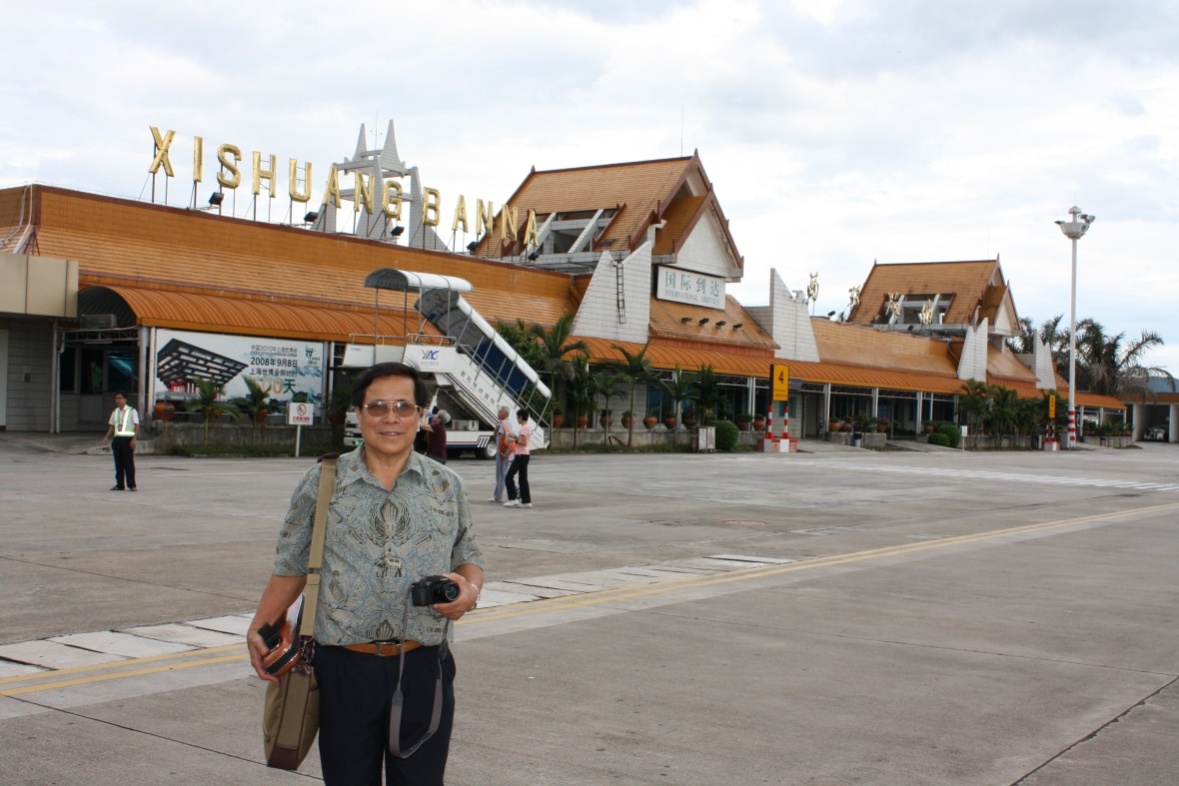
Associate Professor Hoang Luong on his exploration of Sipsong Banna (Yunnan, China, August 2009). Photo: Nguyen Van Chinh.
The history of Vietnamese anthropology also needs to acknowledge the contributions of Associate Professor Hoang Luong as one of the pioneers who paved the way for the transition from an ethnological to an anthropological approach. In the early 1990s, amidst the academic reform movement, Hoang Luong, as head of the department, embarked on a project to reform ethnology by introducing an anthropological approach to research and teaching in the ethnology department of the Faculty of History. However, his ideas met with fierce opposition, with many even mocking and belittling his efforts. Some even ridiculed him, saying he was undertaking a futile task, demanding a reform of a subject he hadn't fully grasped. There were also doubts about whether a scientific discipline called socio-cultural anthropology existed in the world. Although Hoang Luong was thrown into a state of confusion after his proposal was outright rejected by the Scientific Council, he did not lose heart. Consulting with colleagues, he wrote to several renowned anthropology professors at major universities around the world, seeking their help in clarifying the field of anthropology. One of them, Professor Luong Van Hy at the University of Toronto (Canada), responded with sincere advice, strengthening Hoang Luong's resolve to persistently persuade his colleagues to support his proposal. Now, more than two decades have passed since Hoang Luong proposed reforming ethnology in the History Department towards anthropological research. We see that most major universities in Vietnam have anthropology departments, and this field has been officially assigned a code in the training programs at all three levels, from undergraduate to postgraduate. I believe that Hoang Luong can now rest in peace, knowing that before departing to the eternal world, he saw generations of bachelor's, master's, and doctoral graduates in anthropology who had pioneered the field he had established.
As a researcher who has published numerous scientific papers, textbooks, and monographs (Thai patterns(1988)Traditional festivals and folk beliefs of ethnic groups(2002)Customary law and the preservation and promotion of traditional cultural heritage of ethnic groups in Northwest Vietnam.(2004)Culture of ethnic groups in Northwest Vietnam(2005), etc., but Hoang Luong still only considers himself a "mediocre" scientist. According to him, the training program at the History Department only teaches a few ethnology topics in the first semester of the fourth year, after which students do internships to write their graduation theses. He says that this is a system that produces half-baked ethnologists. However, he belongs to the type of person who does science in a committed way. Even when he was a fourth-year student majoring in ethnology, he chose to research the La Chi people for his graduation thesis. This is a small ethnic group living in isolation in the high mountains of Ha Giang province. In the 1970s, the population of this group was less than 10,000 people, mainly living in remote villages in the two high-altitude districts of Xin Man and Hoang Xu Phi. Only those with a romantic scientific spirit and an adventurous nature would accept going there to conduct research. Later, he recounted how many people in the small, impoverished, remote villages he visited suffered from leprosy. However, he did not leave them until he had gathered enough information to return to school for his graduation thesis. In his field memories, the mountainous region of Ha Giang had no concept of hardship; only vast forests of lilies that stunned him and made it difficult to move on. His university graduation thesis that year received an excellent grade. The information he gathered greatly assisted ethnologists and linguists in classifying the languages of various ethnic groups. In the late 1990s, he was invited to the United States and had the opportunity to work with Professor Paul K. Benedict, a renowned ethnolinguist. He provided data to help strengthen the Tai-Kadai language family hypothesis, which Benedict championed. In traditional classification, the Kradai language is considered a part of the Tibeto-Burman language group within the Sino-Tibetan language family. Hoang Luong was unaware that the linguistic data he collected from the La Chi people would contribute to strengthening the scientific hypothesis about the connection between Austroasiatic and Austronesian languages within the Tai-Kadai language family until he met Benedict.
Hoang Luong was the first person to submit a doctoral thesis in ethnology under the domestic training program at the Department of History in 1985. His doctoral thesis was titled "Patterns on Thai Muong Tac blankets (Phu Yen - Son La)He used the patterns on Thai blankets as material evidence to trace the ancestral connection between Thai-speaking and Viet-Muong peoples during the Dong Son culture era. Although there is still much debate about its scientific basis, his thesis opened a new research direction on the historical relationship between ethnic groups through patterned evidence. He further developed this research direction later through scientific articles published in various specialized journals, in which linguistic and ancient place names are considered to play a crucial role in historical ethnology.
While passionately exploring the historical relationships between ethnic groups, Hoang Luong harbored a deep desire to contribute his knowledge to the understanding of his own Thai people. He was in charge of the Thai Studies program at the university and published numerous studies on the Thai people and the relationships between the Thai, Viet, and Muong, and between the Thai and Mon-Khmer. His research in this area contributed to formulating a hypothesis about the indigenous origins of the Tay Khao group. For many years, he collaborated with Thai scholars at Mahidol University to compile a regional Thai dictionary. In 2009, Hoang Luong attended the 16th Congress of the International Union of Ethnologists and Anthropologists (CUAES) held at Yunnan University, China. At this congress, Hoang Luong presented a scientific report on the social relations between the Thai and Khmer people through genealogical data and qualitative information. After the conference, he traveled to Sip-Song-Ban-Na, considered the birthplace of the Thai ethnic group, for field research. Despite being over 60 years old, he eagerly climbed mountains, crossed streams, and traveled across the Mekong River by boat to reach the remote villages of the Thai people in Yunnan, as if he were returning home. He was particularly interested in the cultural identity of the Thai people and ethnic tourism in Yunnan after attending the water festival in Muang La. His tireless efforts have contributed to the production and dissemination of new knowledge about the Thai people of Vietnam and their relationship with other ethnic groups in the region. It is still too early to make a definitive judgment about his findings, but the hypotheses his research has raised about the ethnic group's history have certainly provided valuable information for scientists to continue their in-depth research.
Before retiring, Hoang Luong told me about his intention to write a book summarizing his life as a scientist. He planned to title the book "The road to Northwest Vietnam"I asked why it was about returning home, and he answered without hesitation: 'No matter what research I'm doing, Northwest Vietnam is still my birthplace, where I grew up, and throughout my life as a scientist, I've always thought about it, explored it—a place with beautiful villages, majestic mountains, diverse cultures, but all sharing one thing in common: the gentle yet warm nature of its people.' He paused for a moment, then added: 'And until I leave this world, I will return to that place where I was born and raised.' It seems that today, his dream is almost complete if the book he's been working on is released to readers soon. But that's okay, it will surely be printed so that his family, friends, colleagues, and generations of students, when they hold it in their hands, will understand more about him and the knowledge he wants to impart to them."
To conclude these lines in his memory, I would like to return to the story of the "dream of a glorious future" that he often spoke of during his lifetime.
The story goes that long ago, a young man, dreaming of glory, diligently pursued his studies but failed the imperial examinations. On his way home, he stopped at a restaurant to rest. An old man, upon hearing his story, lent him a pillow to lie on. In his deep sleep, the young man fell into a strange dream. He saw himself living in luxury, with a beautiful wife and intelligent children, having passed the imperial examinations and become the top scholar, and being appointed prime minister. At the height of his fame, he was falsely accused of treason by envious people and arrested. Before being imprisoned, he said to his wife, "I remember the old days when I wandered the streets in simple clothes; though poor, I was free, the food tasted good, and the sleep was restful. Now, I have nothing left." Later, after being exonerated and reinstated, the former official lost his desire for fame and wanted to retire to his hometown, but he was unable to do so and died of grief. At this point, the dream faded, and the young man awoke, opening his eyes to find a pot of freshly cooked, golden-brown millet beside him; reality remained unchanged. He suddenly exclaimed: "It was just a dream!"
It is said that the story first appeared in a Tang Dynasty legend novel called "Judge's signature"Although the story is simple, it attempts to offer a profound explanation based on the nihilistic philosophies of Taoism and Buddhism regarding the meaning of life, viewing each person's life on this earth as merely a dream. People live their lives striving and competing for fame and fortune. But all that glory, wealth, or suffering ultimately becomes meaningless, like a fleeting dream."
Hoang Luong, you have returned to the realm of nothingness, but what you have contributed to science and to life will never fade away like a fleeting dream. I believe that you will always be like a refreshing stream in the Northwest mountains, bringing new life to the generations after you, helping them continue on this difficult path, bringing to the world faith, love, and the light of knowledge.
Written in Hanoi on the night of February 13th.
Author:Nguyen Van Chinh
Newer news
Older news

