
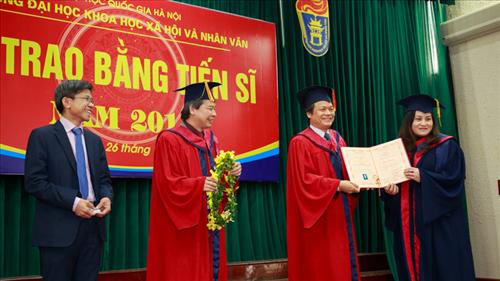
The conference focused its discussions on the following main topics:
- Summary of postgraduate training activities at the University of Social Sciences and Humanities.
- Discuss solutions to improve the quality of postgraduate training, especially the proper implementation of the doctoral training regulations of Vietnam National University, Hanoi.
- Disseminate and provide guidance on the implementation of the Postgraduate Training Regulations of Vietnam National University, Hanoi, issued on December 10, 2014.
The conference heard Associate Professor Pham Van Quyet (Head of the Postgraduate Training Department) present a summary report on postgraduate training activities for the 2013-2014 academic year.
In recent years, with the policy of developing towards a research-oriented university and promoting the integration of postgraduate training with scientific research activities, the university's postgraduate training activities have increasingly developed in both scale and quality. Improved facilities, increasingly formalized and modern training management, and the comprehensive development of various units are favorable conditions for this work to flourish. In 2013, the university had over 860 postgraduate students. In 2014, this number increased to 626 postgraduate students. Postgraduate training accounts for 67% of the university's total regular training. The current number of postgraduate programs is 61, and it is projected to reach 71 by 2020.
Alongside positive results, postgraduate training also faces challenges in expanding training scale, improving coordination between management departments and training units, perfecting management software, and building a team of postgraduate training assistants in various units.
For the 2014-2015 academic year, the main objective was to focus all resources on developing postgraduate training in a standardized, modernized, high-quality manner, in line with international standards. Some specific objectives included: maintaining the number of postgraduate students and doctoral candidates, with an emphasis on quality; continuing to effectively implement planned programs for opening new training majors; organizing two entrance examinations per year; and ensuring the successful defense of theses/dissertations for over 800 postgraduate students and 60 doctoral candidates…
At the conference, several solutions were proposed to further improve the quality and effectiveness of postgraduate training activities, including: raising awareness and responsibility among faculty and students; building a mechanism to link postgraduate training with scientific research; developing a process for managing postgraduate students/doctoral candidates; clearly defining management responsibilities for each party; increasing the use of information technology in management and training; strengthening inspection and supervision; and increasing investment in facilities and learning materials.
Author:Thanh Ha
Newer news
Older news

