
- What do you need? Someone asked in the afternoon.
We are not married and have not confessed our love.
The day the bombs buried our hair in the mud.
He lay down in the grave with his hair still unwashed.
Request for barren cemetery land
Let a few Gleditsia trees grow.
The fragrance is evenly distributed within the ethereal smoke of the incense.
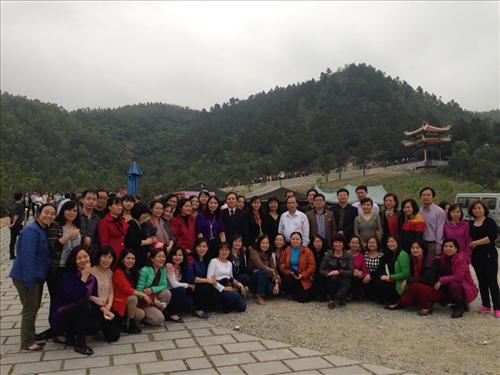
The poignant verses of Vuong Trong dedicated to the young women at Dong Loc Crossroads, sung in the sentimental and emotional Ha Tinh accent of Teacher Lieu, resonated as the convoy carrying over 100 faculty members from the University of Humanities arrived at the homeland of the great national poet Nguyen Du. Standing before the graves of the ten young women, without a word, the women searched for the two acacia trees casting their shade high above, encircling the graves. Hesitantly before the bomb craters, then quietly strolling around the historical site, many quickly noticed that among the countless green trees brought by various organizations and individuals, many more acacia trees were bearing fruit. One wonders if the plea of poetry had spread far and wide, inspiring those who remember their roots to join hands in greening this land still marked by bomb craters with the tree that is so special to the long hair of young women?
And indeed, this place is not just a memorial for the ten young women; inside the Memorial House, there is a list of hundreds of young volunteers who fell around the Truong Son mountain range. Looking up at the stone tablets inscribed with the names and hometowns of these very young people who died for this day, each person pauses, silently reciting the names and whispering words of lament. On holidays, the crowds of visitors grow even larger, the large incense burner packed tightly with burning incense sticks. Each incense stick lit carries at least a fleeting thought about those who have passed away, about the preciousness of peace regained through so much sacrifice. Thus, with thousands upon thousands of incense sticks here, the awareness of returning to one's roots is no longer distant but a clear and profound reality. And each wisp of smoke makes gratitude for the past feel closer.
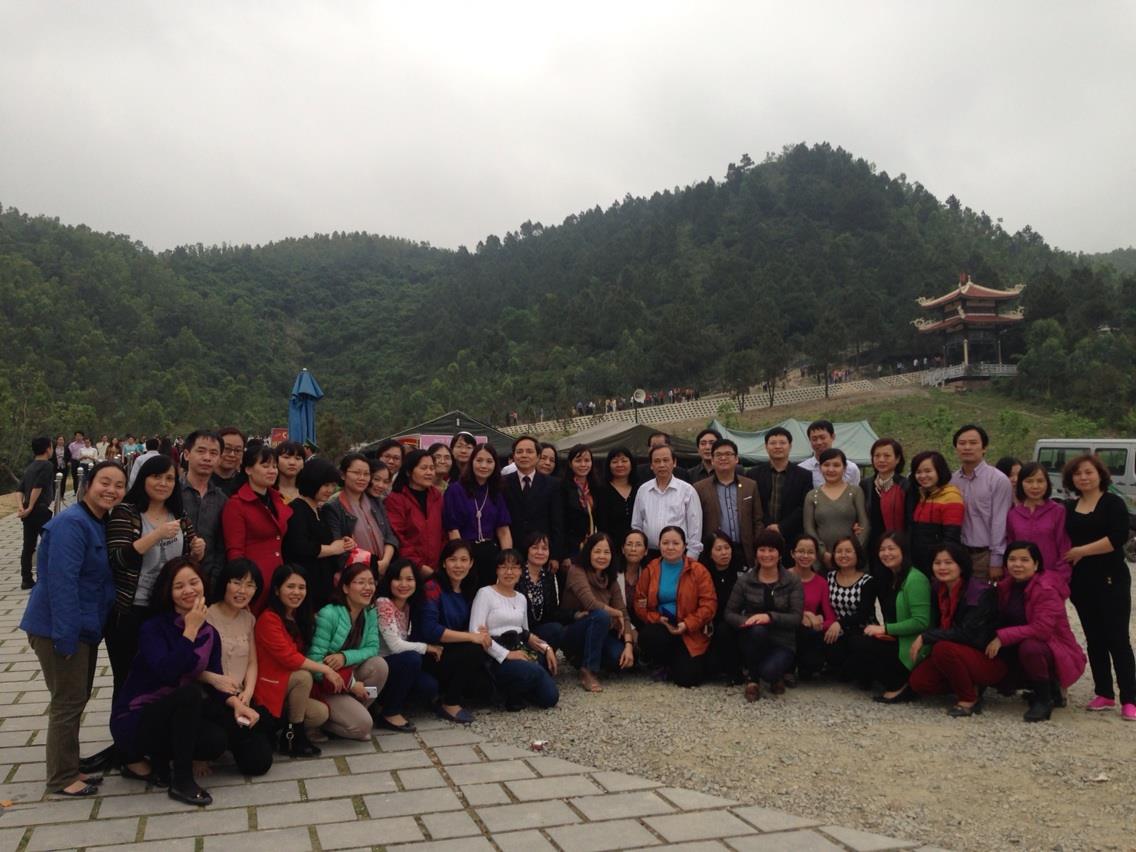
The school's visiting delegationVung Chua - Yen Island, the resting place of the General (Photo: Nguyen Phuong Lien)
This morning, at each stop, reverence spread across the faces of everyone in the group as they shared incense sticks. Although spring was dawning, smiles quickly gave way to moments of contemplation and reflection. Was it because those buried there were so young—Ly Tu Trong and the ten Dong Loc girls were all younger than the members of the group? Or was it because those who had pursued scientific fields that nurtured the development of the soul, especially women, who are more sensitive and emotional, found it easier and quicker for sorrow to blend with profound gratitude, with a sincere heart directed towards the past? At the Dong Loc crossroads, at Ly Tu Trong's grave, the incense burners blazed brightly; perhaps it was for these reasons?
Just yesterday afternoon, gathering before the tomb of General Vo Nguyen Giap, one after another offered incense, moments of quiet contemplation quickly replaced the boisterous laughter along the long journey. Many lingered to admire the scenery of the blue sea, white sand, and majestic, endless green mountains, listening thoughtfully to Teacher Khang's soft words, "The energy here is very concentrated..." Suddenly, a sense of peace arose knowing that along the more than three thousand kilometer coastline lay the elder brother of the army, gazing out at the East Sea as if silently conveying a message. Towards Yen Island, several children, accompanied by their mothers, frolicked on the picturesque sand. Oh, those innocent eyes! Surely, these children don't yet fully understand the feelings of the adults during this two-day trip! But to teach future generations gratitude, trips like this will become like refreshing rainwater gradually seeping into the earth. And tradition, which the social sciences and humanities have a duty to preserve, will certainly be strengthened by such continuity!
Author:Nguyen Phuong Lien
Newer news
Older news

