Attending the workshop, on behalf of VNU Hanoi were VNU Hanoi Director Nguyen Kim Son, Prof. Dr. Nguyen Van Kim (Party Secretary, Vice Rector of the University of Social Sciences and Humanities), and Dr. Nguyen Tho Duc (Director of the Institute of Chinese Studies, VNU Hanoi).
Representing the Ly Thoai Khe Research Association were Mr. Lee Kwang-ho (President of the International Thoai Khe Studies Association), Ms. Park Ke-Chin (Vietnam-Korea Cultural Research Center), Mr. Ryu Hang-ha (President of the Korean Chamber of Commerce and Industry in Vietnam), and Mr. Song Jea-so (Director of the Thoai Khe Research Institute).
Lee Hwang (also known as Lee Jae-hye, 1501-1570) was a prominent cultural figure, educator, and thinker in 16th-century Korea. A renowned Confucian scholar of the Choson dynasty, Lee Jae-hye was a dedicated and in-depth researcher of Zhu Xi's philosophy. He is considered to have successfully absorbed, created, and transmitted the core and profound values of Confucianism, especially the insightful philosophical reflections in classic Confucian works, into Choson society and scholarship. Today, although materialism and the Fourth Industrial Revolution significantly impact people's lives, Lee Jae-hye's lessons still hold a crucial place. The 27th International Conference on Confucianism and Lee Jae-hye Studies is being held to share thoughts and feelings about the life and significant contributions of this cultural figure to Korea.
Furthermore, from a comparative perspective, both Vietnam and South Korea are influenced by Confucianism and share many common values of East Asian civilization. In terms of culture and education, Confucianism has contributed to building a learning society in both countries, and to this day, many significant legacies of that scholarship remain valuable assets in the cultural heritage of both nations. However, each country has its own way of selecting, absorbing, and applying the philosophical and ideological values of Confucianism regarding human life and society. Therefore, this conference also aims to explore the similarities and differences in the historical and cultural development of the two countries in relation to Confucian thought.
On behalf of the organizing committee, Mr. Lee Kwang-ho (President of the International Society for the Study of the Philosophy of the Confucius Institute) introduced the Institute, which was established in 1970. To date, the Institute has published 143 issues of the research journal "The Study of the Philosophy of the Confucius Institute". Since 1976, the Institute has organized 26 international conferences on the philosophy of the Confucius Institute in many countries around the world such as the United States, Germany, China, Russia, Japan, and Taiwan. This is the first time such a conference has been held in Vietnam. Previously, there have been exchanges between Vietnam and Korea between the Center for Confucian Studies - Chungnam University, the Dasan Academic and Cultural Foundation, and the Vietnam Academy of Social Sciences. Therefore, he believes that this conference is an opportunity for both sides to learn from each other, laying the groundwork for positive exchanges between Vietnamese and Korean Confucian thought.
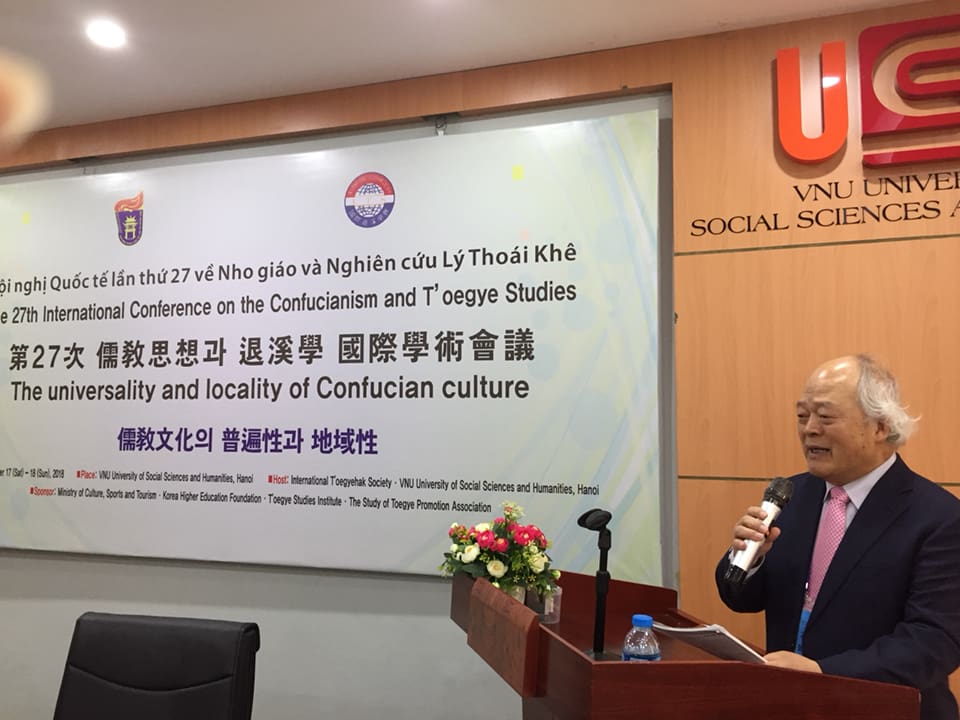
Mr. Lee Kwang-ho speaks at the conference.
On behalf of the University of Social Sciences and Humanities, Vietnam National University, Hanoi, Professor Nguyen Van Kim (Party Secretary and Vice Rector) stated that the cooperative relationship between Vietnamese universities and international universities, research institutes, and associations is expanding and achieving many important results. Therefore, this conference on Lee Soo-hye is a welcome sign for bilateral scientific cooperation between the two countries. The conference is an opportunity to promote understanding of the academic traditions and cultural depth of Vietnam and Korea. For the University of Social Sciences and Humanities specifically, this conference serves as a foundation for future academic exchanges and cooperation between the University and Korean research institutions focusing on Lee Soo-hye.
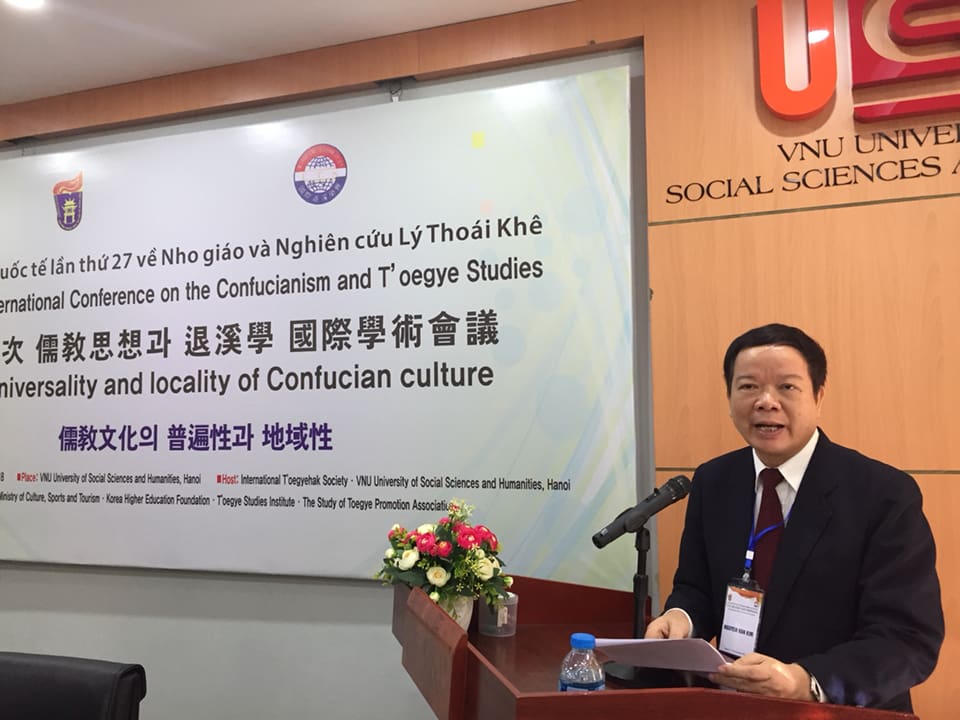
Professor Dr. Nguyen Van Kim delivered a speech at the conference.
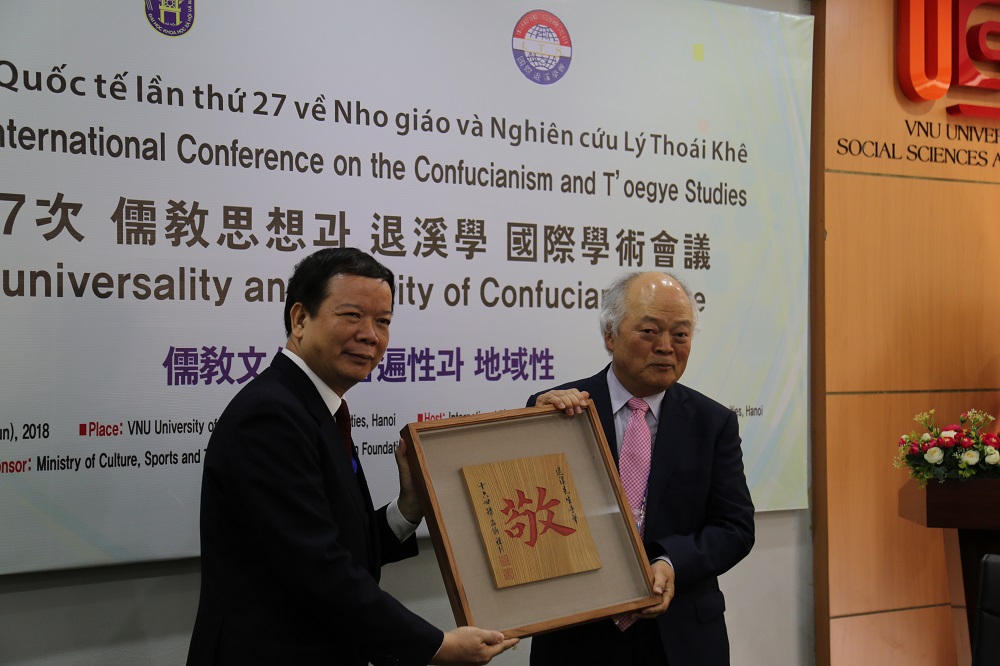
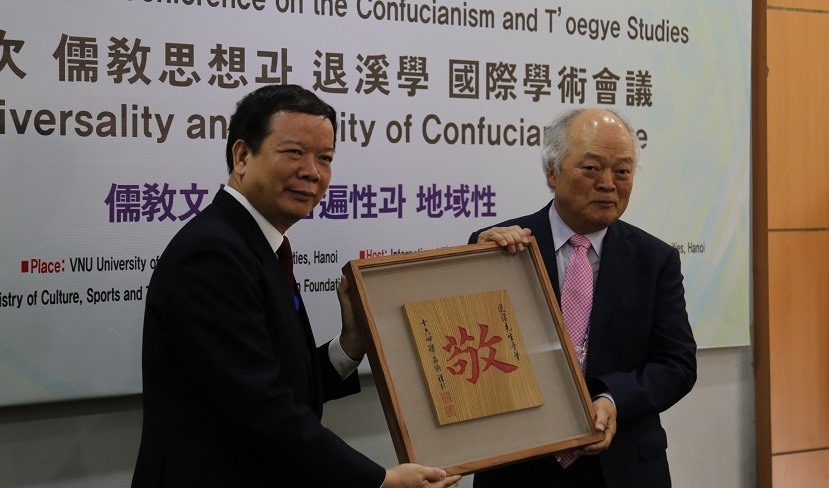
Professor Dr. Nguyen Van Kim receives a commemorative gift from Mr. Lee Kwang-ho.
On behalf of the Korean government, Mr. Do Jong-Hwan (Minister of Culture, Sports and Tourism of Korea) sent a congratulatory speech to the conference. He highly appreciated the significance of the conference, being held for the first time in Vietnam. He hoped that the conference would contribute to the analysis of Confucian values and the wider dissemination of the Thoi Khe philosophy. The Ministry of Culture, Sports and Tourism of Korea will do its utmost to revitalize the cause of character education, culture, and humanistic spirit.
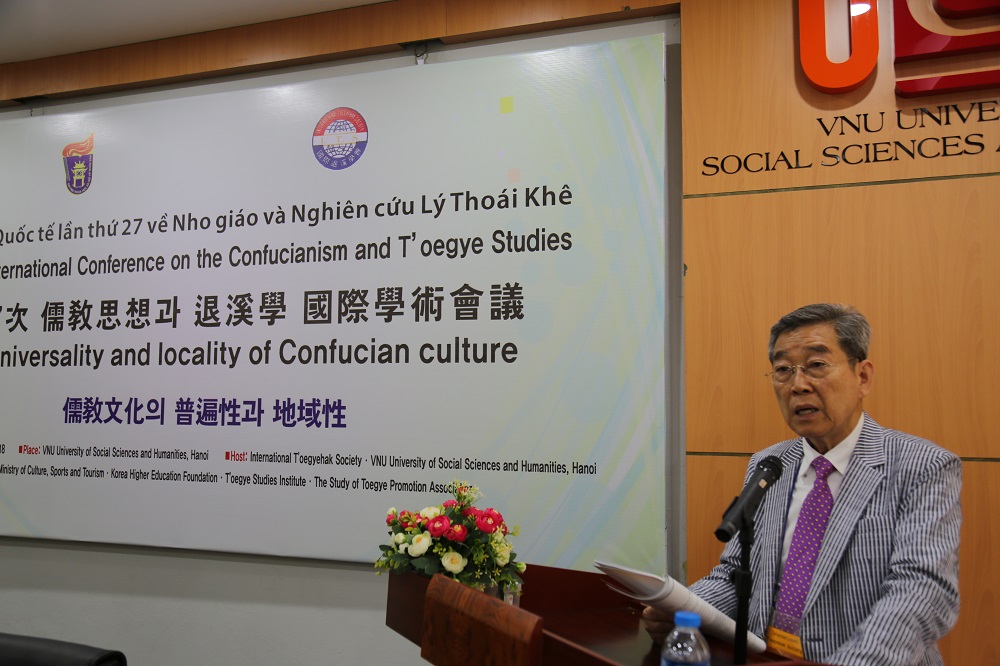
Minister Do Jong-Hwan speaks at the conference.
On behalf of the Institute for the Study of the Illustrated World, Mr. Song Jae So (Director) stated that Vietnam and Korea have historically shared cultural similarities in writing systems and political systems. In the past, there was vibrant exchange between intellectuals from both countries during diplomatic missions to China, such as the interaction between Le Quy Don and Joseon envoys during the Dong Chi period in 1970. In modern times, when both Vietnam and Korea experienced periods of French and Japanese colonial rule, President Ho Chi Minh and Korean communists interacted. In 1992, Korea and Vietnam established diplomatic relations and became important economic partners. He hoped this conference would further strengthen the bilateral friendship between Vietnam and Korea based on shared cultural values.
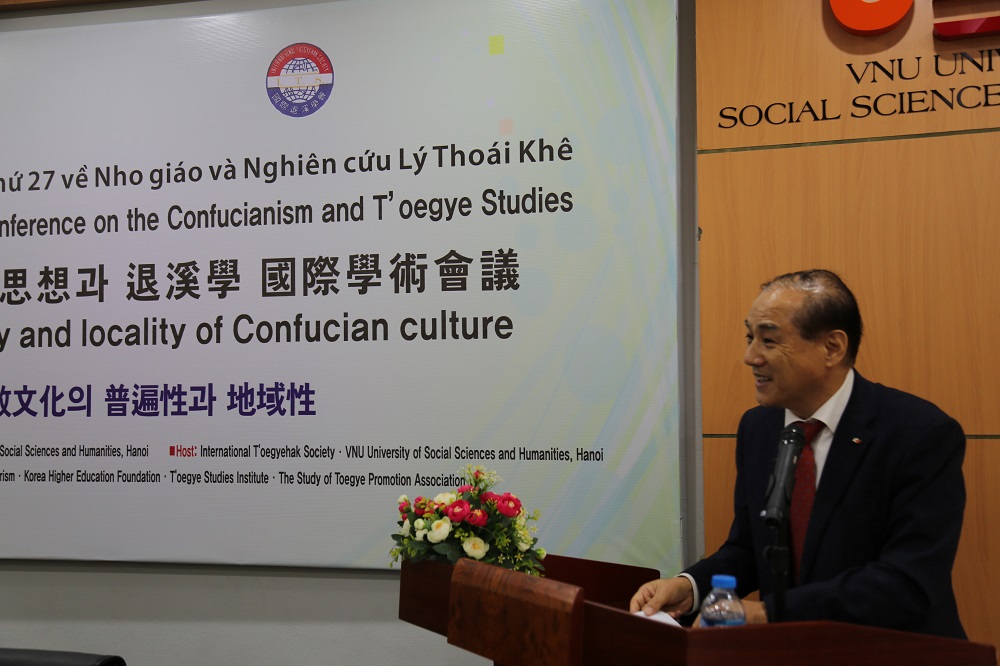
Mr. Song Jae So speaks at the conference.
Next, the workshop heard three keynote presentations:
- The report "Confucianism and the Fourth Industrial Revolution" by Assoc. Prof. Dr. Nguyen Kim Son (Director of Vietnam National University, Hanoi) outlines several positive and sustainable aspects of Confucianism in relation to the challenges and risks of the Fourth Industrial Revolution. Through this, the author proposes the possibility of promoting these sustainable values to mitigate the negative impacts of this revolution; increasing the humanistic element, and continuing to develop human beings and human values in the new era.
- The report "A Modern Perspective on the Debate Regarding the Four Deadly Sins and Seven Emotions: A Comparative Study of the Moral Psychology of Lee Hwang and Gi Dae-seung" by Dr. Jee Loo Liu (California State University, Fullerton) distills important issues in the two opposing viewpoints of Lee Hwang and Gi Dae-seung, two figures who had a significant influence on the history of Korean Confucian thought.
- The report "Reflections on the Universality and Specificity of Confucianism" by Mr. Lee Kwang-ho (President of the International Confucian Studies Association) compared the common features of Confucianism as seen in classic works such as the Six Classics and the Four Books with the unique characteristics in each context and locality, especially in Westernized societies with deep penetration of Western science and technology. Through this, the report aims to provide a deeper and more accurate understanding for Confucian scholars.
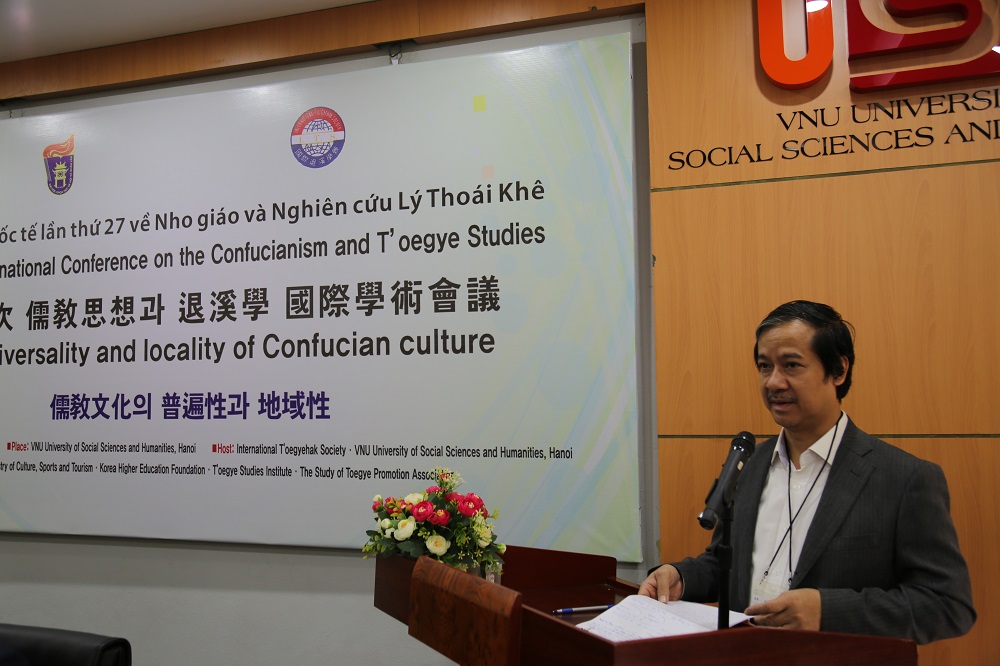
Associate Professor Dr. Nguyen Kim Son delivered a speech at the conference.
Following the opening remarks, the workshop was divided into two subcommittees:
Subcommittee A included presentations such as “Li Huang – Ecological Spiritualist, Philosopher-Poet, ‘Respecting Heaven and Loving Humanity’” by Kang Heui-bok (Yonsei University, South Korea); “Research and Inheritance of Li Huang’s ‘Family Rituals’” by Lee Bong-kyoo (Inha University, South Korea); “The Ultimate Orientation of Li Huang’s Theory of Qi” by Yang Zhucai (Nanchang University, China); “Li Huang and Eastern Studies, ‘Heaven’ in Tendo Buddhism” by Pyon Yong-ho (Tsuru University, Japan).
Subcommittee B included presentations such as “Two Paths of ‘Amplified Self’ - On the Perspective of the Sage in Confucianism and the Perspective of Modern People” by Kim Hyoung-chan (Korea University, South Korea); “The Model and Moral Enlightenment of Humanity in Mencius’s Gaozi” by Tim Connolly (University of East Stroudsburg, USA); “A Survey of the Concept of Daoism in the Tale of Ly Thoai Khe” by Vladimir Glomb (Freie University Berlin); “The Great Learning of Ly Thoai Khe (South Korea) and the Great Learning Theory of Nhu Ba Si (Vietnam)” by Dinh Thanh Hieu (University of Social Sciences and Humanities).
Author:Tran Minh
Newer news
Older news

