
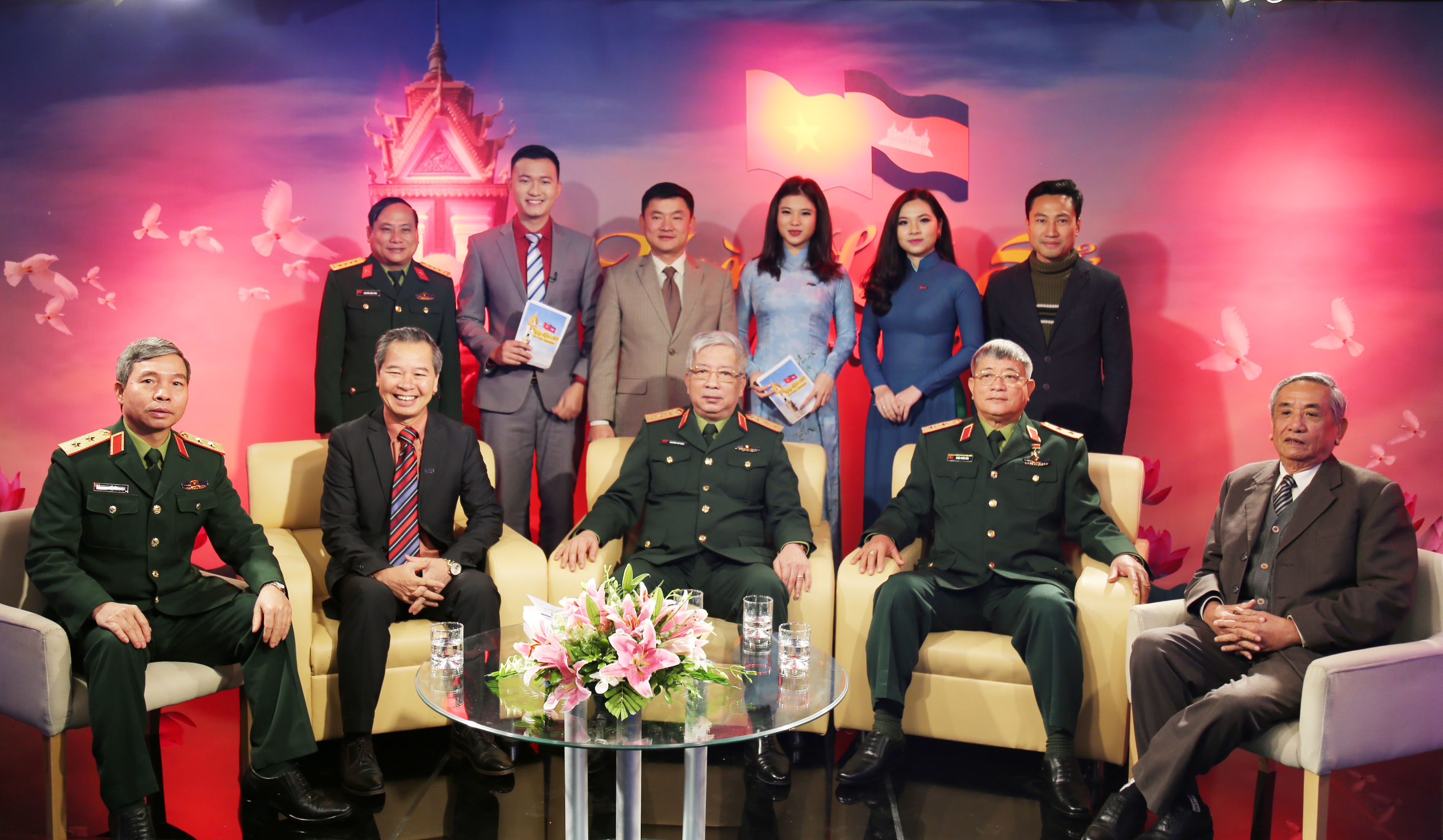
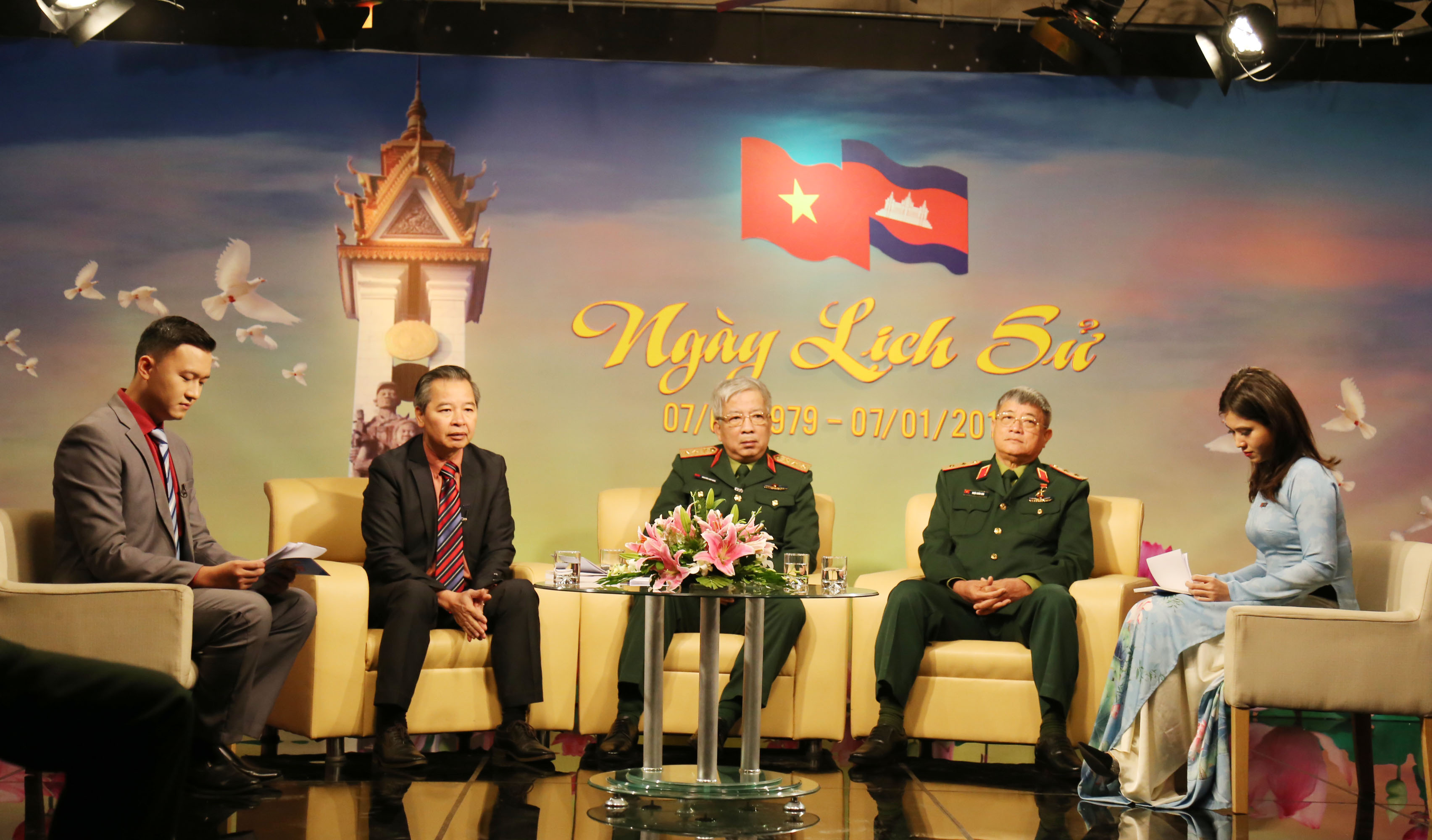
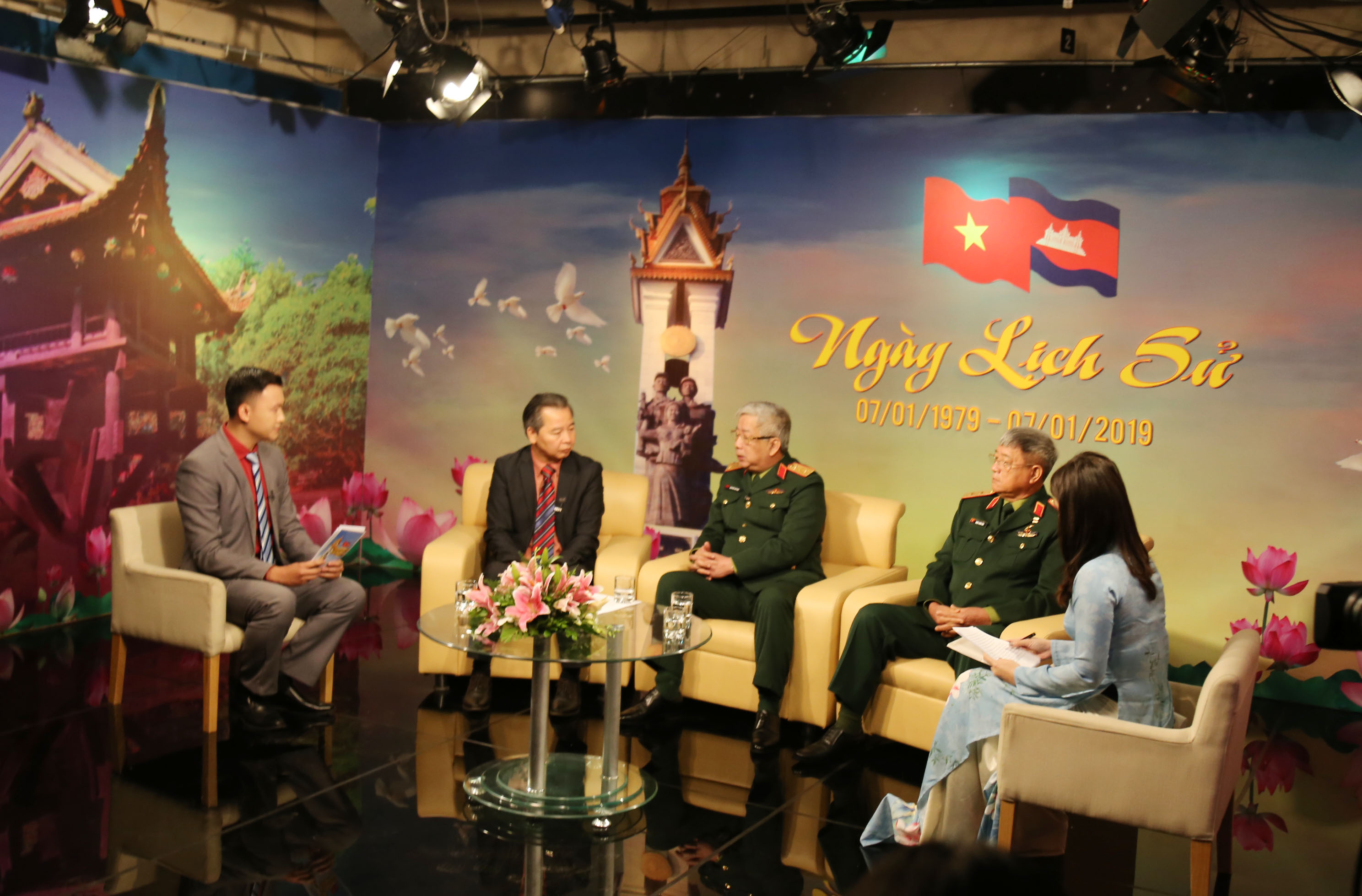
A panoramic view of the dialogue at Studio H3, Institute of Journalism and Communication Training, University of Social Sciences and Humanities.
The dialogue commemorating the 40th anniversary of the Southwestern Border War and the liberation of Cambodia from genocide (January 7, 1979 - January 7, 2019) was organized by Ho Chi Minh City Television in collaboration with the Propaganda Department - General Political Department of the Vietnam People's Army and the Institute of Journalism and Communication Training, University of Social Sciences and Humanities, Vietnam National University, Hanoi. The event was attended by Lieutenant General Nguyen Chi Vinh - Member of the Central Committee of the Communist Party of Vietnam, Standing Member of the Central Military Commission, Deputy Minister of National Defense; Lieutenant General, Hero of the Armed Forces Trieu Xuan Hoa - former Commander of Military Region 7; Prof. Dr. Pham Quang Minh - Rector of the University of Social Sciences and Humanities; and Prof. Vu Duong Ninh - expert in history and international relations.
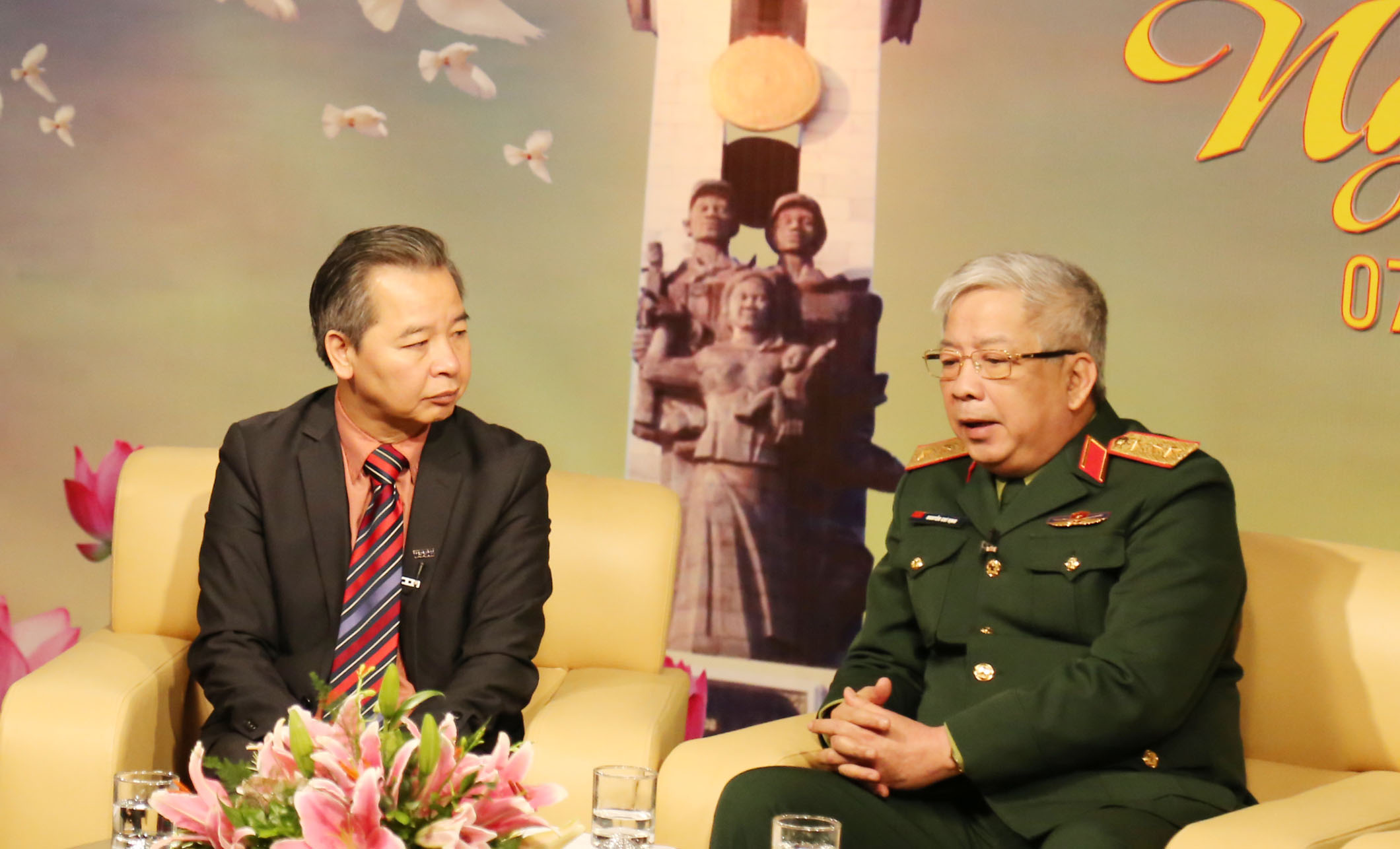
General Nguyen Chi Vinh and Professor Pham Quang Minh were the two guests on the program.
The Khmer Rouge regime, though only existing from 1975 to 1979, perpetrated genocide against millions of Cambodians (estimated to be one-quarter of the country's population at the time) and massacred Vietnamese people in Cambodia. The Khmer Rouge waged war against Vietnam by launching attacks on Phu Quoc Island (May 3, 1975) and Tho Chu Island (May 10, 1975), encroaching on many territories along the border from Ha Tien to Tay Ninh, committing barbaric crimes against the Vietnamese people. In late 1978, the Khmer Rouge launched a large-scale attack on Vietnam, forcing the Vietnamese people to rise up in resistance to defend their homeland. Vietnamese volunteer troops marched to Cambodia to help overthrow the Pol Pot regime, liberating Phnom Penh on January 7, 1979, and subsequently continued to support the Cambodian revolution and government in rebuilding the country.
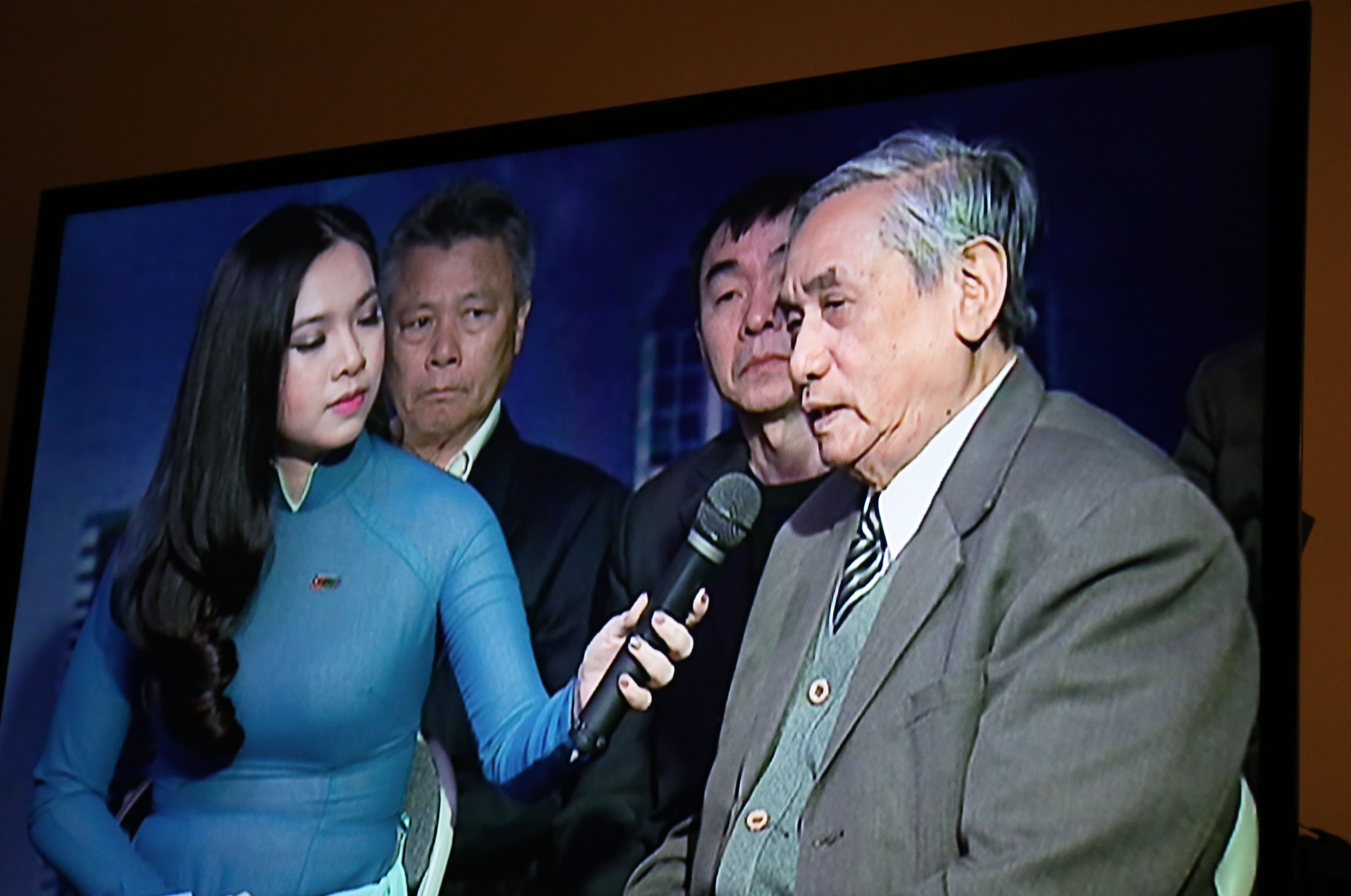
Professor Vu Duong Ninh at the studio.
During the dialogue, Lieutenant General Nguyen Chi Vinh stated that the ECCC's ruling on November 16th affirmed the righteousness of Vietnam's struggle against the Khmer Rouge regime, not only to protect the country but also to fulfill its international obligation to help the Cambodian people escape genocide. After 40 years, to answer the question of whether Vietnam could have avoided this war, the answer remains: no! Because standing idly by in the face of Khmer Rouge atrocities is suicidal, pushing the Cambodian nation to its demise. After 40 years, the ECCC's ruling proves that justice will never be obscured.
At that time, Vietnam was facing many difficulties after the reunification of the country in 1975 and was surrounded and isolated diplomatically by many countries. However, in the context of Cambodia's severely devastated society, its exhausted economy, and its fledgling government, over the next 10 years, Vietnamese volunteer troops were stationed in almost all parts of Cambodia, gradually helping the Cambodian people stabilize their lives and assisting the Cambodian army in fighting against the disruptive activities of Pol Pot's remnants. The Cambodian people were grateful and called the Vietnamese volunteer troops "the Buddhist army." The late King Norodom Sihanouk of Cambodia once affirmed: If Vietnam had not driven out Pol Pot, all Cambodians might have died. The Cambodian People's Party made no mistake in requesting Vietnam's help in fighting the Khmer Rouge, because if we had not been liberated from Pol Pot, the entire nation might have been annihilated. When the Vietnamese volunteer troops returned home, the Cambodian People's Newspaper published an editorial on June 29, 1989, which included the following passage:During the extremely tragic years under the Pol Pot genocidal regime, there were countless powerful and wealthy nations in the world, but only our poor neighbor, Vietnam, came to save our people."
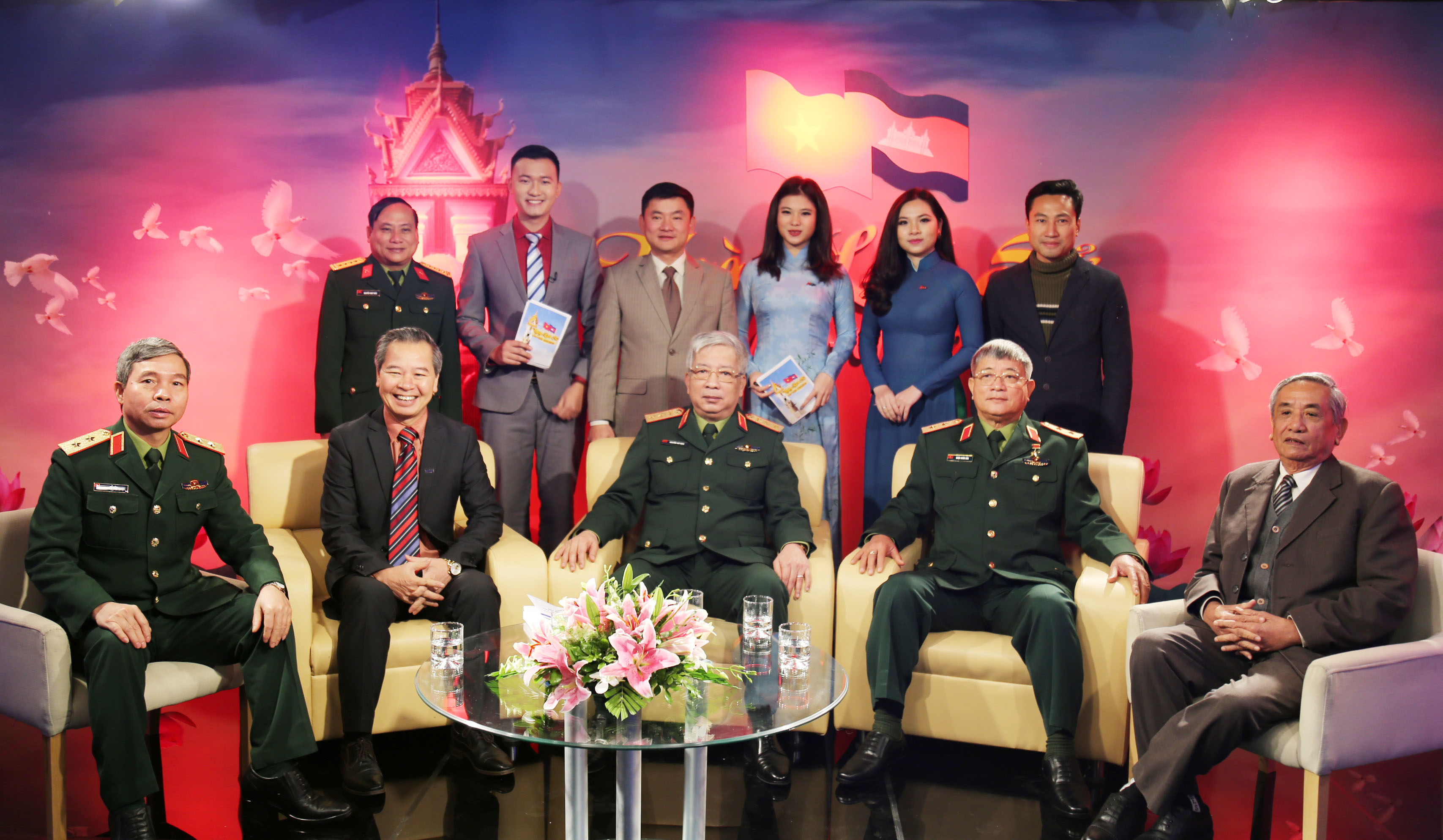
The television crew poses for photos with the show's guests.
Sharing lessons learned from history for building and developing friendly relations between Vietnam and Cambodia, Lieutenant General Nguyen Chi Vinh emphasized: the most important thing is that Vietnam has independence and self-reliance; we grant Cambodia autonomy and respect each other's interests to develop together. It is precisely because Vietnam helped Cambodia on the basis of respecting Cambodia's independence and self-reliance that our friend country has gradually recovered from its difficulties.
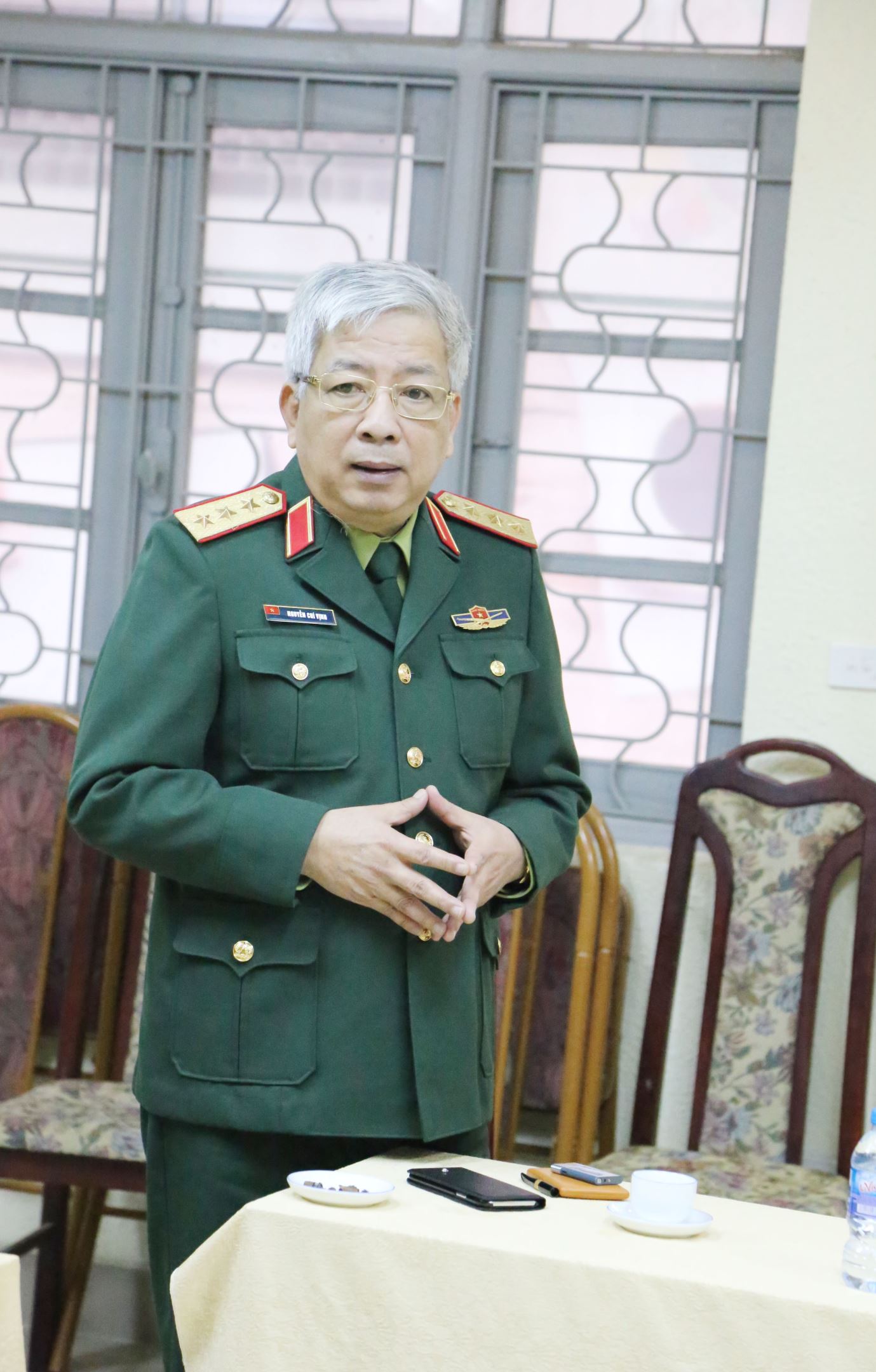
Lieutenant General Nguyen Chi Vinh - Deputy Minister of National Defense, in a meeting with the leaders of the University of Social Sciences and Humanities before the program.
International relations expert Professor Pham Quang Minh commented: Vietnam bravely stood up to wage a just struggle against the crimes of the Khmer Rouge amidst the terrifying silence from major powers for certain political purposes. But after 40 years, Vietnam has shown its resilience and perseverance. Vietnam's actions also show the world an important lesson: there must be no tolerance for crimes. Vietnam also helps enrich knowledge about international relations, that is, the theory of the obligations and responsibilities of nations and humanity in protecting people and preventing genocide... which has been internationally recognized. The world has an annual Holocaust Remembrance Day to never forget the crimes of the Nazis against the Jewish people. Therefore, the crimes of the Khmer Rouge against humanity also need to be remembered with an official commemoration day, not only to help the world fully understand a dark period of history but also to prevent a similar tragedy from happening a second time. In addition, Vietnam also learns a profound lesson about the thorough application of the power of people-to-people diplomacy and the promotion of external communication to serve the cause of national defense.
Further strengthening the traditional solidarity, friendship, and comprehensive cooperation for the benefit of the people of Vietnam and Cambodia, and for peace and development in the region and the world – this is the shared vision and determination of the people of both countries in the present and the future. In this common strategy, history and the teaching of history to the younger generation of both countries play a crucial role. Sharing this view, Professor Vu Duong Ninh stated that history is a collection of lessons, including both the successes and failures of previous generations. However, history needs to be taught truthfully, even with its twists and turns and dark areas. More importantly, the lessons of history must always remind us to strive for humanistic values, for the benefit of humanity, for the prosperous development of all nations, and for the spirit of friendship, equality, and fraternity among nations worldwide.
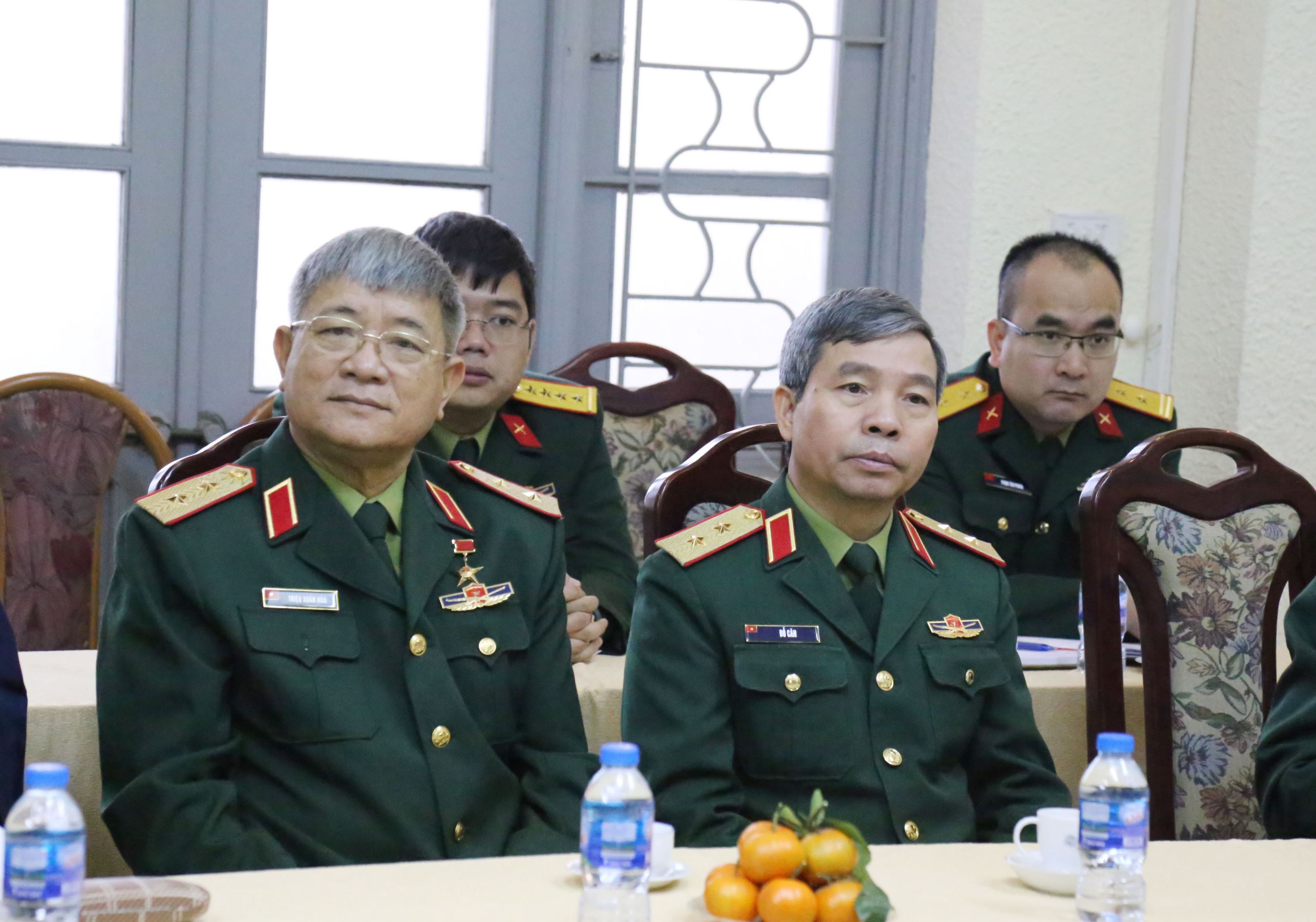
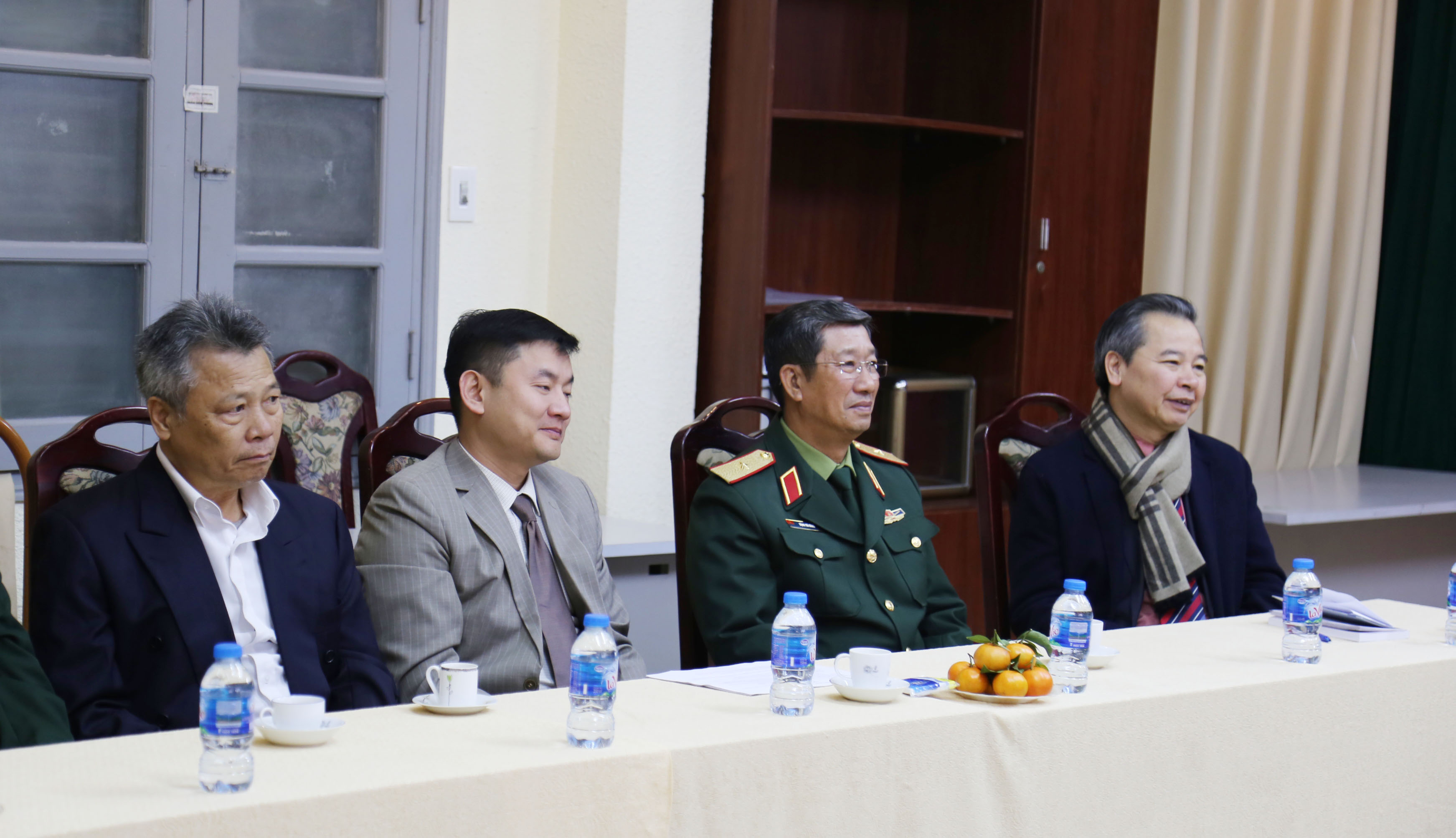
Lieutenant General, Hero of the Armed Forces Trieu Xuan Hoa (on the left) is one of the guests of the program.
Author:Thanh Ha
Newer news
Older news

