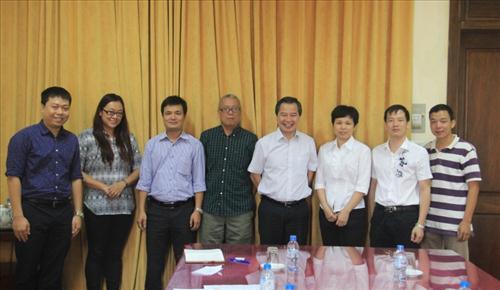
During the meeting, Associate Professor Pham Quang Minh (Rector of the University of Social Sciences and Humanities) welcomed the presence of the China-ASEAN Research Institute and briefly introduced the University of Social Sciences and Humanities. The University has extensive cooperation with universities and training institutions in China. Each year, the University welcomes more than 300 Chinese students to participate in short-term and long-term courses. The Faculty of International Studies and the Faculty of Oriental Studies at the University are two units with many specialized fields and research areas that are very closely related and important to China, ASEAN, and China-ASEAN relations. To continue these achievements, the University hopes to promote academic exchange and document sharing activities with Chinese universities, such as Guangxi University. This could be strengthened by signing a formal cooperation agreement between the two sides in the future.
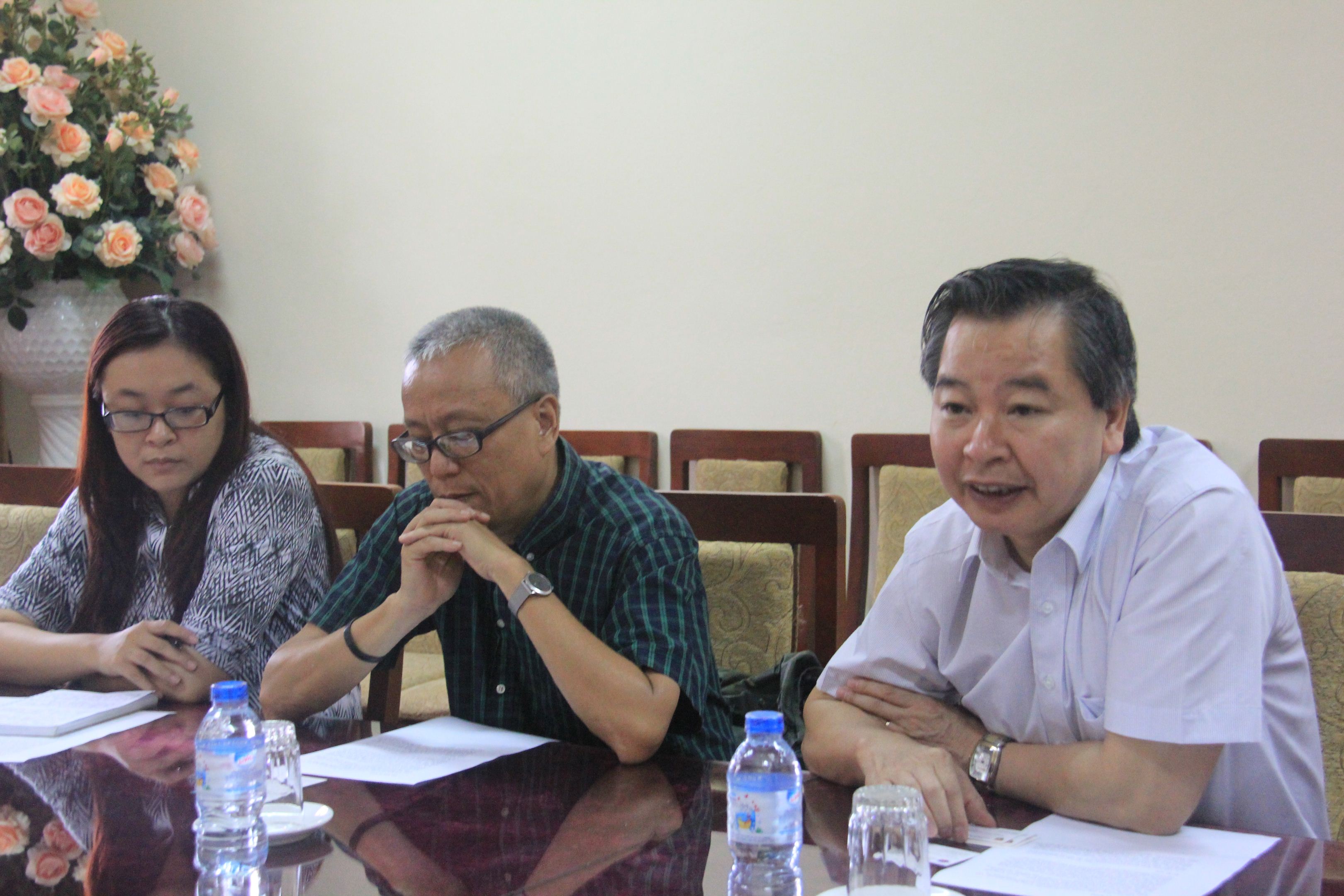
Associate Professor Pham Quang Minh (Rector of the University of Social Sciences and Humanities) introduced the University to the delegation from the Institute for China-ASEAN Studies.
Professor Kim Dan expressed his gratitude for the warm welcome from the University of Social Sciences and Humanities and proposed several collaborative activities between the two sides through the following channels: (i) international conferences: The China-ASEAN Research Institute hopes that the University can send staff, lecturers, and scientists to participate in the 4th Annual Symposium on China-ASEAN Regional Development. This forum brings together leading scholars and research experts in China and ASEAN on issues in bilateral relations. (ii) through education and training: The China-ASEAN Research Institute established the Rainbow Scholar Project for Southeast Asian scholars, under which each scholar would receive a grant of 3000 RMB and conduct research with a Chinese scholar; or through a scholarship program for Vietnamese students, under which each master's student would receive a grant of 50,000 RMB and each doctoral student 100,000 RMB. (iii) Through research and publication activities: The Institute currently has the Journal of China-ASEAN Studies and hopes to receive contributions from more Southeast Asian scholars, including Vietnamese researchers.
Associate Professor Pham Quang Minh agreed with Professor Kim Dan's proposals. In response, the Rector expressed his wish for the Institute of China-ASEAN Studies, Guangxi University, to send students, trainees, and lecturers to the University for visits, research, and internships. Furthermore, the Rector suggested that the Institute submit articles and contribute opinions to the University's Journal of Social Sciences and Humanities. At the same time, the Rector hoped that the Institute would send staff and lecturers to attend upcoming conferences and seminars organized by the University, such as the 5th International Conference on Vietnamese Studies in December. These are very practical activities aimed at strengthening cooperative relations and understanding between the two universities in particular, and between Vietnam and China, and ASEAN and China in general.
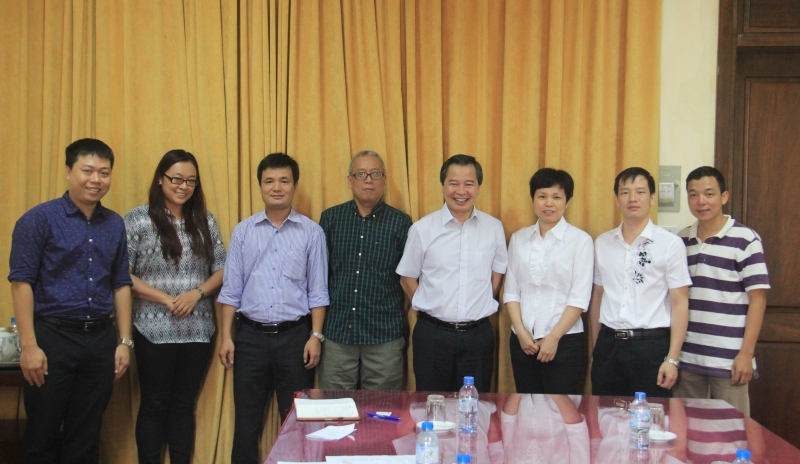
Associate Professor Pham Quang Minh (Rector of the University of Social Sciences and Humanities) poses for a commemorative photo with the university's staff and the delegation from Guangxi University.
During the meeting, the two sides also exchanged academic views on a number of issues related to China-ASEAN relations.
The ASEAN-China Research Institute was established in January 2005. Currently, the Institute has nearly 100 researchers, including 28 full-time staff. By 2012, the Institute had established a total of 10 research centers corresponding to the 10 ASEAN countries, with the Vietnam Research Center being one of the leading units. In addition, the Institute has 10 specialized research centers such as the Maritime Silk Road Research Center, the Mekong Subregion Economic Zone Research Center, and the China-Vietnam Economic Research Center. In the near future, the Institute will further expand the scope of its research topics and strengthen the links between its research centers and the host countries.
Author:Tran Minh
Newer news
Older news

