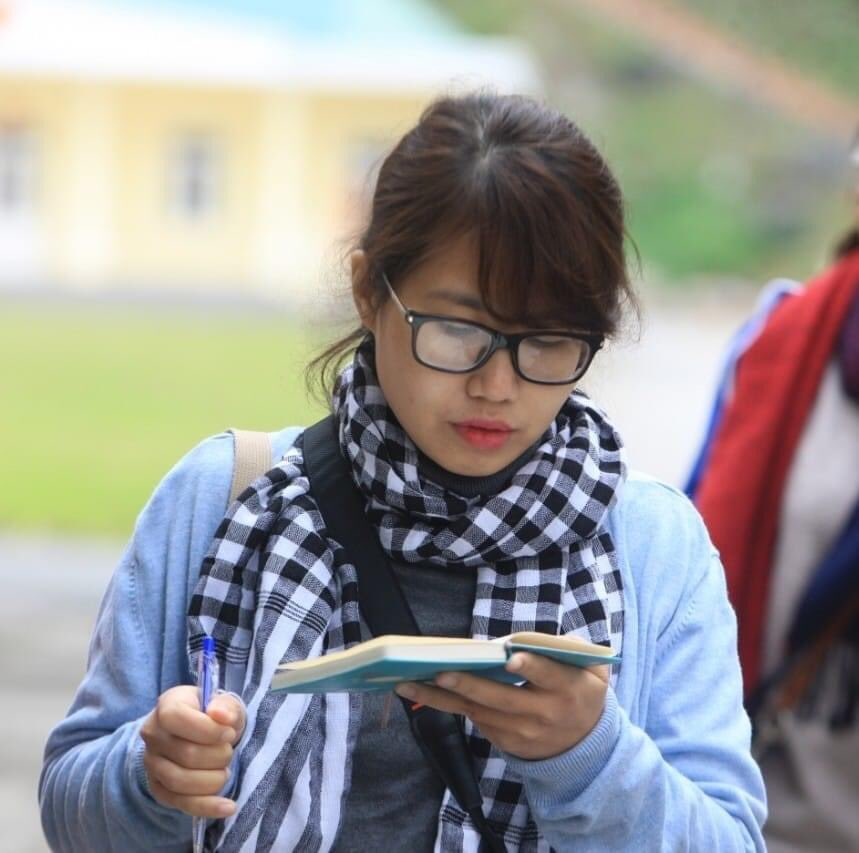
Journalist Phan Thanh Thuy during a work trip to Truong Sa.
Ms. Phan Thanh Thuy, what led you to become a journalist?
Becoming a journalist was a stroke of luck for me, because I've loved journalism since I was a child. My generation probably didn't receive as much career guidance or make career choices as the current generation, so those who majored in Literature tended to choose fields within the social sciences.
I have a particular fondness for Journalism. In 7th grade, I contributed articles to the Thiếu niên Tiền phong (Young Pioneers) newspaper. In high school, I wrote for Hoa Học Trò (Student Magazine) and some of my articles were published. When an article was published, I received many letters and friend requests because they liked my writing. My first article was about students vandalizing railway tracks due to difficult circumstances; I wrote it in the style of a journalistic report. In 11th grade, while I was contributing to Hoa Học Trò, the "School Life" section featured some outstanding university students, including a student named Giang from the University of Social Sciences and Humanities, Vietnam National University, Hanoi. She shared her story about how much she enjoyed studying journalism and why she chose this university. Thanks to reading that article, I was determined to pass the entrance exam to the Faculty of Journalism and Communication, University of Social Sciences and Humanities, Vietnam National University, Hanoi.
The reason I chose Journalism as my first major was because of a childhood interest, and during my time at the Faculty of Humanities, most students aspired to become journalists. Back then, I studied under Professor Dinh Van Huong, who said: “Each type of journalism has its own strengths and interesting aspects, but for those who love words and writing, most still prefer print journalism, enjoying the freedom of words.” At that time, I thought I was suited to writing, so I chose to pursue print and online journalism. After graduation, my friends all chose to become journalists, and most of them worked in print and online journalism.
It has now been 15 years since graduation, and most of my friends and I remain committed to our initial career choice, accumulating a wealth of knowledge and experience in the profession. My passion for the field and the good fortune of studying in an environment where senior teachers and mentors encouraged me have made my studies and career path very smooth. After graduation, I was also fortunate to be offered internships by various media organizations. I met their requirements and received guidance and encouragement from the journalists, which motivated me to strive and succeed in my career.
Can you share some memorable moments from your journey as a journalist?
I have many memories. First, there's a memory I'll never forget from my final year of university, when I had the opportunity to study with leading experts in journalism and media research and training, such as Ms. Doan Huong, Mr. Vu Quang Hao, Mr. Dinh Van Huong, Mr. Duong Xuan Son… And among them was Mr. Tran Quang, who taught the course on "Genres of Political Journalism." This was one of the most difficult courses, but during his classes, the whole class was always lively, chatting and asking questions. Despite his leg injury and difficulty walking, he always carried a microphone around the classroom to discuss with the students. At the end of my fourth year, we heard that he had suffered a stroke. The image of him lying in a hospital bed was a far cry from when he was in class giving passionate lectures. After graduation, we still visited him regularly, but he had lost all his speech, had great difficulty speaking, and could no longer write much. Later, he made significant progress; he was able to walk again, practice typing, and speak simple sentences. Currently, he's also friends with students on Facebook and frequently interacts with all their posts. Each time, my classmates and I are very happy to see that he still cares about the student generation. These are feelings that I always cherish and value. During the 30th anniversary celebration of the Institute of Journalism and Communication, my class visited the school and had the opportunity to meet him again. The memories of Professor Tran Quang are the ones I remember most from my time at university, and I still deeply appreciate him to this day.
Throughout my career as a journalist, the most memorable experience I've had is with my first subject, my first article. During the summer break of my fourth year, a classmate encouraged me to try writing about bigger, more long-term issues. They sent me the contact information of a subject near my home in Cam Pha, Quang Ninh, so I could use my summer vacation to write an article.
That day, I cycled to the stone quarry where he worked to learn more about him. He was a death row inmate who had been pardoned. When I met him, I was extremely surprised: He was thin and small, with white hair, an intelligent face, and very open when sharing his story. I realized that this was a character who had gone through many hardships in his life, so when writing, I had to carefully consider every detail. This character had been explored by many others before, so I focused on the aspect of happiness in someone who had once gone astray. The article was published and praised by the editor-in-chief, who said that the writing, from the perspective of a young reporter, had something good and fresh. At that time, I also thanked the friend who introduced me to the character, and he said something that I still remember to this day: "In journalism, you can't be lazy." Even now, when mentoring young people, I always say that, emphasizing that you have to meet the person, listen to their story, in order to gather enough material and emotion to write an article.
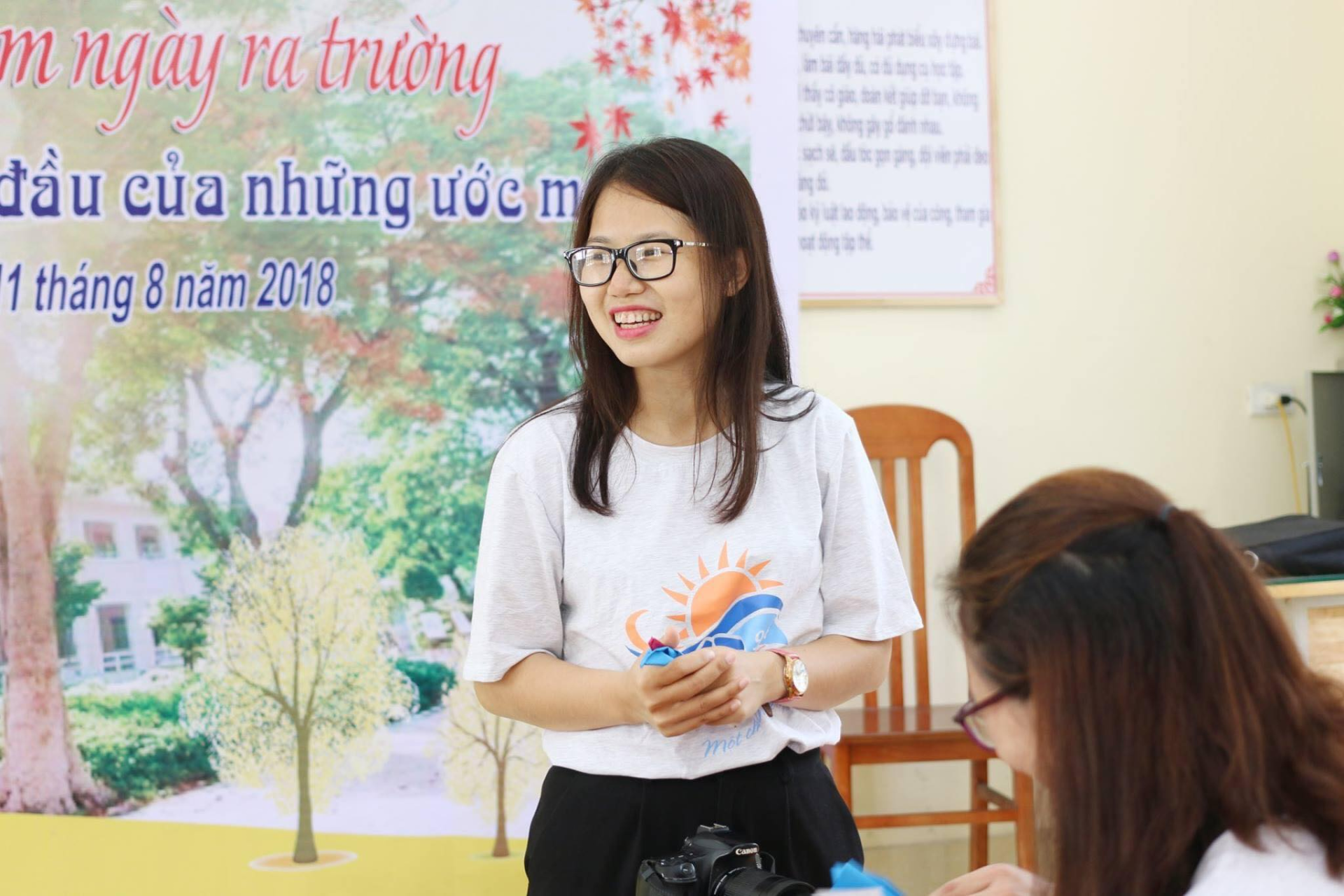
Journalist Phan Thanh Thuy on a reporting trip.
How have your views on journalism changed over time, now that you're both a journalist and a journalism lecturer?For me, my perspective on the profession remains unchanged, but the nature of the work will change with the development of science, technology, and the evolving needs of readers. Journalism prioritizes respect for the truth, and journalists must always uphold professional ethics, regardless of the changing times. There is no such thing as a half-truth; journalism must be truthful. If you can't write a truly outstanding news article, then first, write one that is truthful and complete. Many people think that journalism has changed too much, but in reality, it's only the form of expression that has changed; the perspective on the profession for those who take it seriously will never change. Journalism is a profession, not some great power. To succeed in any profession, whether journalism or any other, you must be serious and passionate about it. If you want to go the distance and delve deeply into journalism, you must have strong ethics.
Could you share some of the lessons you learned when you first started in this profession, and whether those lessons are still relevant today?What stayed with me when I first started my career, and certainly remains valuable to this day, is the spirit of learning. Those of you who studied media and journalism have a certain pride and a strong sense of self, which brings many advantages, but sometimes also becomes a disadvantage. When I first graduated, I was asked to rewrite an article by the editorial secretary during my first trial period. Although I felt my writing wasn't bad, I patiently read more works and revised it to suit the editorial style. This gave me more writing experience and also taught me a lot about the attitude I should have towards my work. Listening, humbly learning, and openly exchanging ideas to better understand each other – these are lessons I still remember even after many years in the profession. Even now, I still have to learn from younger generations about applying technology to journalism. No matter your starting point, learning and humility are never superfluous.
In my time, those who did print journalism, social reporting, or news reporting, and investigative journalism, were more well-known and had a greater impact. Now, with the development of social media and many other media channels and effects, some journalistic genres from my era have gradually become less common, such as social reporting or commentary, analysis, and editorials. Instead, news and new journalistic genres like e-magazines, infographics, and videos are gaining dominance. In general, multimedia formats with eye-catching graphics are gradually becoming more prevalent. Journalists of the 80s generation like myself are learning a lot about modern journalistic genres from reporters of the 90s generation, and even Generation Z.
Journalist Phan Thanh Thủy working at a school.
By observing and working with young people, what strengths and areas where they need further improvement have you noticed?Nowadays, young people have excellent technological skills, allowing them to grasp issues very quickly. They are passionate about their profession and highly creative. Even with issues or individuals previously covered by the press, young journalists still approach them differently, enthusiastically meeting with the subjects, taking photos, and asking direct questions. With the development of technology, young journalists not only choose to write articles but also proactively use images and videos from the field, create infographics, and e-magazines. The thinking of young journalists is always fresh, diverse, curious, and eager to understand thoroughly. Young journalists always ask detailed questions and produce better multimedia content with the support of technology.
However, young journalists also face some disadvantages. The biggest disadvantage is a lack of experience and sensitivity in using language. Young people are very quick to adapt to new forms of journalistic expression, but for an article, content is the most important thing; it must be accurate before aesthetics. In the context of competition with social media, an article with a beautiful format will attract more readers. But if the content is inaccurate, it will still receive criticism from readers. Sometimes, young journalists are very meticulous about the form but forget to thoroughly review to ensure the accuracy of the content (for example, in political and social fields, sufficient experience and expertise are needed to accurately identify the names of documents, directives, and the names and positions of organizations and individuals according to regulations). Don't use form to mask errors in content.
In your opinion, what qualities should a young person who wants to become a journalist possess?First and foremost, to become a journalist, young people need to possess the qualities suitable for the job and the working environment. At a minimum, they need to have a good understanding and willingness to learn about their chosen field, and some specific strengths such as: good writing skills, creativity, and dynamism…
However, working with young people—those who are tech-savvy and unafraid to express their personal opinions—has changed my mindset. The old approach to interacting with the current generation is ineffective. Attitude and competence are equally important. Young journalists may have strong personalities and high egos, but they also possess good skills, are willing to contribute, and learn. Therefore, young people entering journalism should shed their preconceived notions, whether about appearance or attitude. Skills are what help them create good work, while attitude is something that can be discussed and adjusted collaboratively throughout the work process. And most importantly, their skills and personality must be a good fit for the job and work environment they choose.
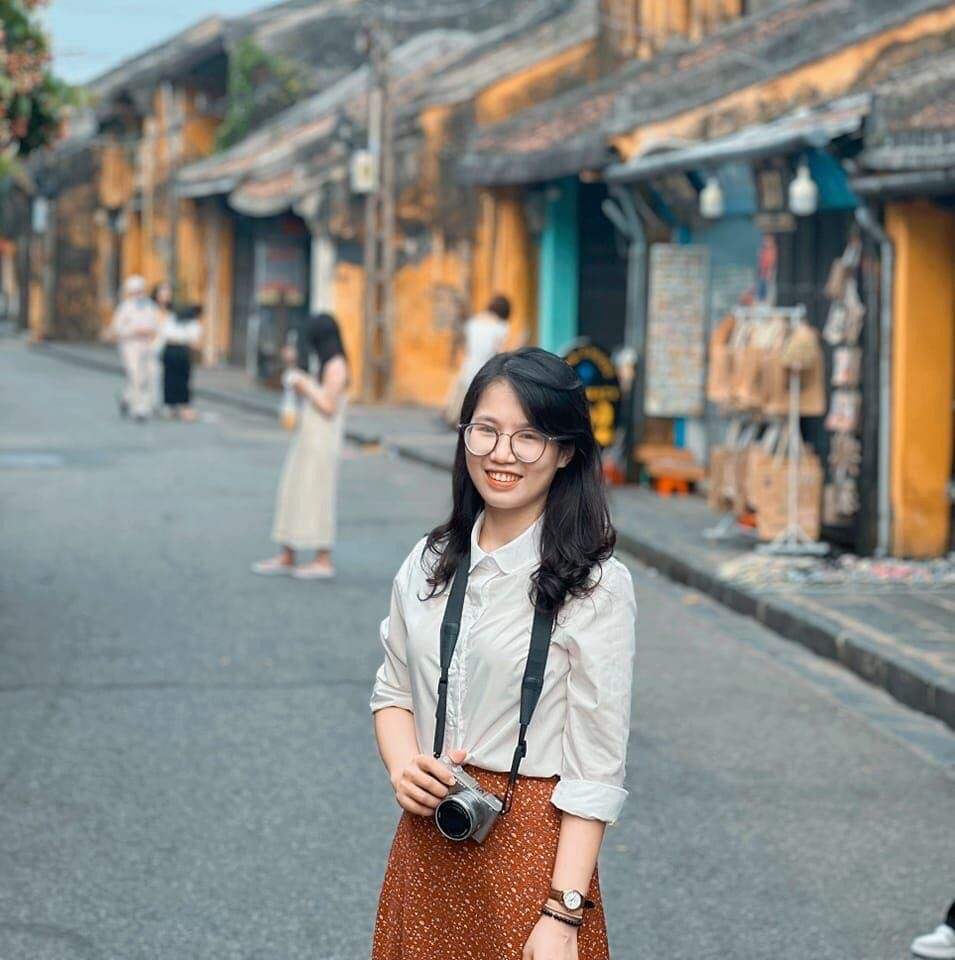
Journalist Phan Thanh Thủy during a work trip to Hoi An.
So, what marks the maturity of a journalist, madam?For me, what marks a journalist's maturity is calmness and a lack of haste. This might sound counterintuitive at first, given that journalism is often associated with characteristics like speed and being "up-to-date." However, the development of social media and the competition among various forms of information dissemination have only reinforced the importance of not rushing for experienced journalists. When receiving information, a mature journalist always considers it carefully, asking questions such as: Is the information accurate? What is the basis of this information? Is the writing style appropriate?...
In many cases, information has spread rapidly on social media, but journalists have yet to officially speak out. This is because they have experience in handling information and know that questioning is necessary before drawing conclusions. Especially with negative information, one should never determine right from wrong without sufficient evidence; if reporting is necessary, it must be done with great caution. Therefore, the maturity of a journalist lies not in being able to write quickly or extensively, but in meticulousness, avoiding haste, and giving themselves time to assess the accuracy, relevance, and impact of the information.
In your opinion, what responsibility do journalists have regarding the current social impact of journalism?Currently, journalism is being equated with fraudulent forms of journalism. Journalists need to be able to distinguish between newspapers, magazines, websites, social media, and other forms of fraudulent journalism. Furthermore, journalists themselves need to build their own reading base by staying updated on news from reputable news sources. With the current technological advancements, it's easy to create websites that mimic news sites. Most readers lack the skills to differentiate between legitimate journalism and fraudulent journalism. This means there will be a mix of genuine and fake information, with everyone being called a "journalist." In this situation, the role of journalists is to provide accurate information, enhance the credibility of legitimate news organizations, and disseminate well-researched articles to mitigate the spread of fake news. Journalists also need to share their knowledge with their readers, helping them distinguish between legitimate and fake news sources.
Journalism itself needs readers and must serve their needs; therefore, engaging writing techniques are still necessary. These techniques are only reprehensible when they violate professional ethics or diminish the clarity of the Vietnamese language. The primary purpose of an engaging headline is to help readers grasp the core of the article. Phenomena like "sensational headlines" or "clickbait" often appear in articles widely shared on social media and are mistakenly equated with journalism. Given this situation, journalists have a responsibility to differentiate and explain to the public the nature of their work.
With the development of readers' cultural level, I believe negative phenomena will be resolved. Meanwhile, journalists need to be meticulous first, building credibility through careful, beautiful, and well-invested works.
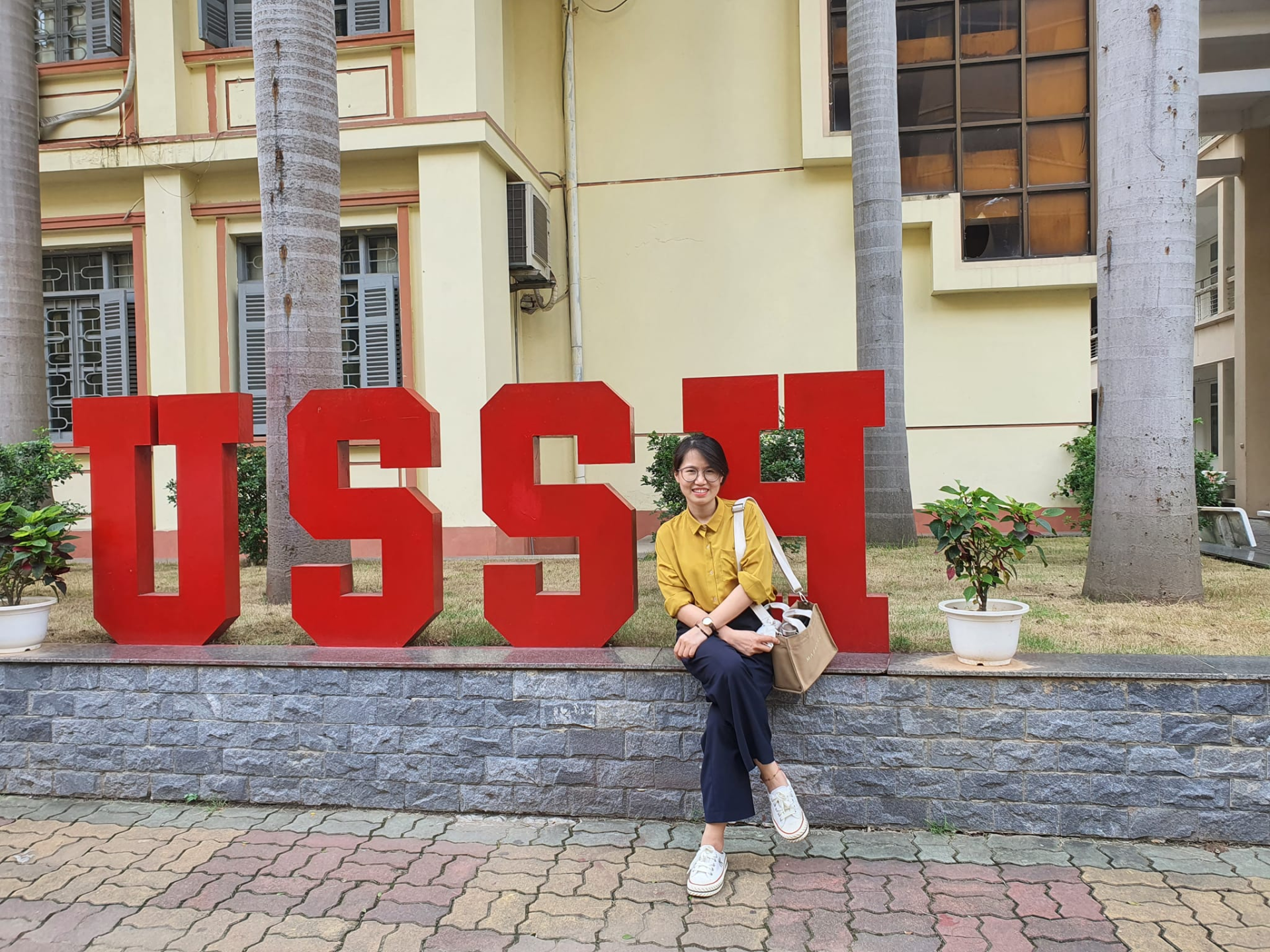
Journalist Phan Thanh Thủy at the University of Social Sciences and Humanities, Vietnam National University, Hanoi.
On the occasion of Vietnam Revolutionary Press Day on June 21st, what message would you like to convey to young people who aspire to pursue a career in journalism?
Not all journalism students will become journalists, and not all journalism students can become journalists. The profession chooses the person, and especially in journalism, those who are suited to it and can pursue it will survive. Specifically regarding the students at the Institute of Journalism and Communication Training, University of Social Sciences and Humanities, most of you are like me in the past: you love the profession and enjoy journalism, you enjoy working in media, you enjoy traveling, you love freedom, you want to have a fresh perspective, you love words, and you want to contribute – that's why you chose to become a journalism student.
First, if you have passion, you've already achieved 50% of the commitment to the profession. The remaining 50% is the effort to pursue it. Many articles and reports have shown that many students drop out after their first or second year of university. These cases are often due to students realizing they chose the wrong school, lacking passion for the field, or being influenced by family choices. However, most students who choose to study journalism already have a passion for it, so their passion only intensifies during their studies.
Many people say that university education in Vietnam doesn't allow graduates to apply their knowledge when they start working. In my opinion, this isn't true. Just like reading a book, you can't read it today and apply it tomorrow. University studies are a time to build a foundation of skills for your initial passions, cultivating love and enthusiasm so you can commit to your chosen profession.
Journalism is a demanding profession. The first few years after graduation are the most difficult: challenging financially, in terms of experience, and health. It takes about two years for you to get used to and adapt to the job before you gradually achieve stability. For young journalists, the difficulty isn't a lack of skills, a poor attitude, or incompatibility with the organization's culture. The difficulty lies in the lack of experience and expertise. When young and experienced journalists work together, conflicts easily arise due to differences in experience and understanding. Differences in life perspectives and work ethics make it difficult to find common ground in the workplace. After a few such instances, your enthusiasm for the profession will diminish. You must be truly persistent, adapt to gain practical experience, prepare your health to cope with the demanding nature of the job requiring a lot of travel and exposure, and find a way to balance work and life in order to stay committed to the profession. Young people, don't rush. Journalism is often associated with keywords like "fast, hurried, and sensational," but you can't rush this profession. Maintain your love for the job and your continuous learning. The more you travel, the more you encounter unique situations and interview memorable people, the more you'll feel a renewed zest for life. That means you've truly committed to the work. Dedicate the first two years to facing challenges and setbacks; if you still have enough passion for the profession, you'll be able to pursue it and make a living from it.
Thank you for sharing your thoughts, journalist Phan Thanh Thủy. Wishing you success in your future endeavors!