In 1996, building upon the Linguistics Department of the Faculty of Literature, Hanoi University (1956-1996), the Faculty of Linguistics of the University of Social Sciences and Humanities, Vietnam National University, Hanoi, was established. The Faculty was the first in Vietnam to offer Linguistics as a separate academic discipline. Its function and mission is to train high-quality human resources in linguistics, Vietnamese linguistics, the Vietnamese language and culture, and the languages of ethnic groups in Vietnam and Southeast Asia.
With a tradition spanning 60 years (formerly the Faculty of Literature) and 20 years (currently the Faculty of Linguistics), the Faculty of Linguistics has affirmed its position and importance as one of the leading fundamental science faculties of the University of Social Sciences and Humanities, as well as its role in training in linguistics and the Vietnamese language within the Vietnamese higher education system.
The Faculty of Linguistics is one of the oldest faculties at the University of Social Sciences and Humanities, Vietnam National University, Hanoi, and holds a leading reputation nationwide in the field of research and training of human resources in linguistics.
The Faculty of Linguistics has the mission of training high-quality human resources, fostering a passion for research in linguistics, the languages and cultures of ethnic groups in Vietnam, applied linguistics (sign language, school linguistics, medical linguistics, forensic linguistics, body language...), Vietnamese linguistics, comparative linguistics, Vietnamese linguistics for foreigners..., contributing to promoting exchange and relations between Vietnam and countries around the world.
Over its more than 60-year history, the Faculty of Linguistics has trained approximately 25,000 Vietnamese and international undergraduate, graduate, doctoral, and postgraduate students and interns. The number of international students and graduate students studying at the Faculty of Linguistics consistently leads the University of Social Sciences and Humanities, Vietnam National University, Hanoi. Many of these Vietnamese students, graduate students, and doctoral candidates have gone on to become high-ranking leaders in the Vietnamese Party, State, and social organizations. Many international students, graduate students, and doctoral candidates have held and continue to hold key positions in state agencies, research institutions, and educational organizations in their host countries. The Faculty also regularly sends lecturers to teach and conduct research exchanges at universities and research institutes in dozens of countries across all continents worldwide.
Over the past five years (2018-2023), the entrance scores for Linguistics students have consistently been among the highest at the University of Social Sciences and Humanities, Vietnam National University, Hanoi. This strength stems from the Faculty's team of experienced, dynamic, and highly professional professors, associate professors, and doctors in both training and scientific research. The Faculty has developed numerous training programs for all three levels (bachelor's, master's, and doctoral) that meet regional and international standards. The employment rate for Linguistics graduates in their field of study consistently exceeds 90%.
Due to its outstanding achievements in training and scientific research, the Faculty of Linguistics was awarded the Third-Class Labor Medal (2001) and the Second-Class Labor Medal (2006) by the State. Many faculty members have also received prestigious awards and titles: 1 Ho Chi Minh Award for Science and Technology (Prof. Dr. Nguyen Tai Can), 5 State Awards for Science and Technology (Assoc. Prof. Phan Ngoc, Assoc. Prof. Nguyen Kim Than, Prof. Dr. Hoang Thi Chau, Prof. Dr. Nguyen Thien Giap, Prof. Dr. Doan Thien Thuat).
Author:USSH Media
Newer news
 We respectfully congratulate the two lecturers from the University of Social Sciences and Humanities who have been honored as "Vietnam National University, Hanoi Lecturer of the Year 2025".
 From Students to "Cultural Ambassadors": International Students Preserve and Spread Vietnamese Identity
 Film Club – Exploring Humanistic Stories Through Cinema
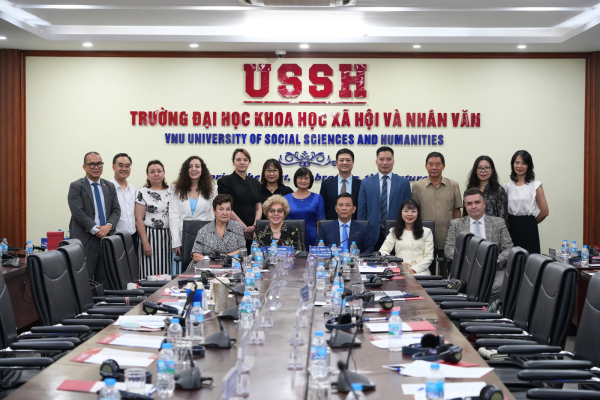 The University of Social Sciences and Humanities promotes people-to-people exchanges through an international seminar on tourism and economic development.
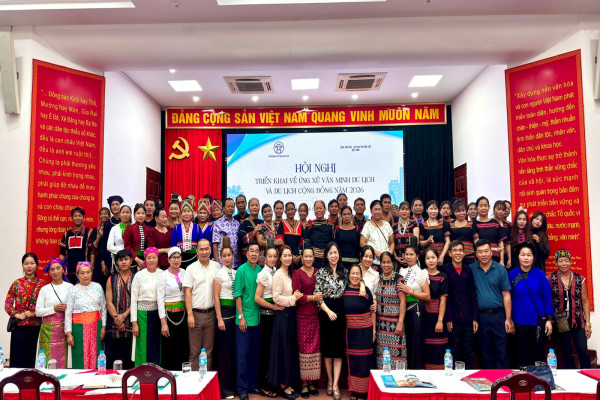 USSH scientists are collaborating to develop sustainable community tourism and promote civilized tourism behavior.
 Celebrating 50 years of diplomatic relations between Vietnam and Thailand: VNU and USSH strengthen cooperation in scientific research and publications.
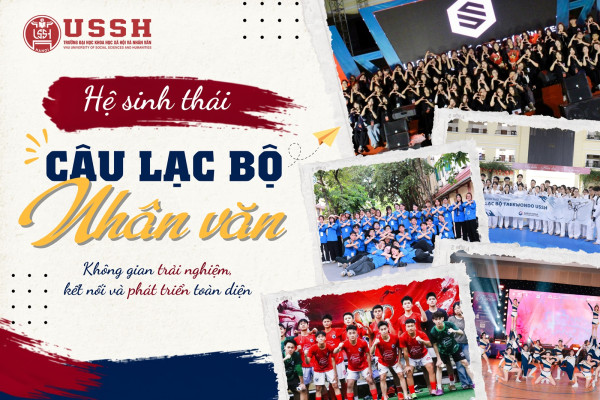 Humanities Club Ecosystem: A space for experience, connection, and holistic development.
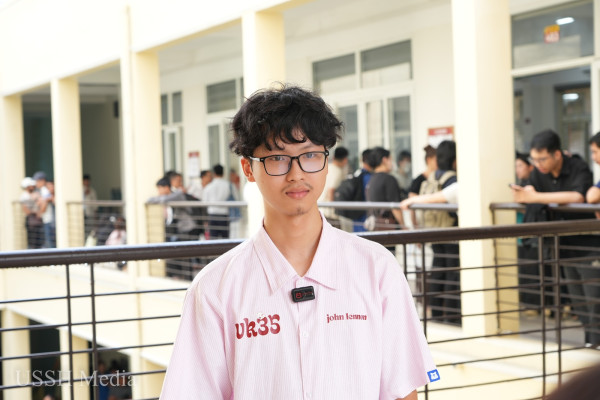 A male student who achieved an IELTS score of 8.0 chose Literature as his major to "live authentically."
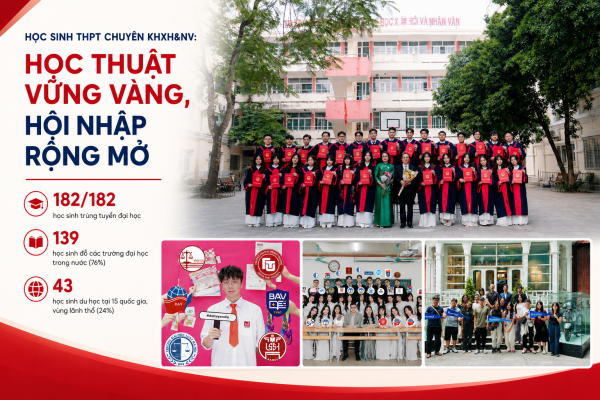 Students of the Specialized High School for Social Sciences and Humanities: Strong academic foundation, broad integration opportunities.
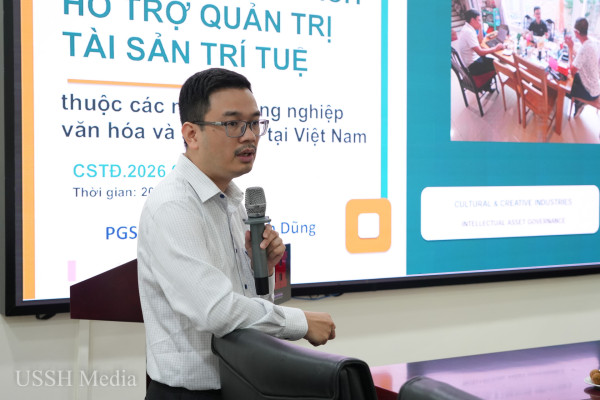 The ecosystem supports intellectual property governance.

