
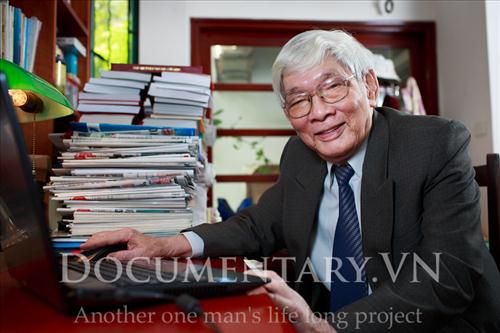
Associate Professor Nguyen Quoc Hung was born in 1936 into a petty bourgeois intellectual family in Hanoi. After completing primary school in Hanoi, he attended secondary school in Tan Trao - Tuyen Quang (1949-1951), and then studied at the Central Campus of the Central College of Social Sciences (Nanning - China).
After graduating from the Teacher Training College (Level III), he was assigned to teach at the secondary school in Ninh Binh town. In mid-1957, he transferred to work at the Education Zone of Inter-Region III. From 1958 to 1960, he worked at the Son Tay Education Department.
In 1961, he was sent to study History at the Lenin Pedagogical University in Moscow. In 1964, by state decision, he was one of the students who had studied social sciences in the Soviet Union and Eastern Europe to return to Vietnam, continuing his studies at the Faculty of History, Hanoi University, and was a student in the first cohort of the World History major (1965-1966).
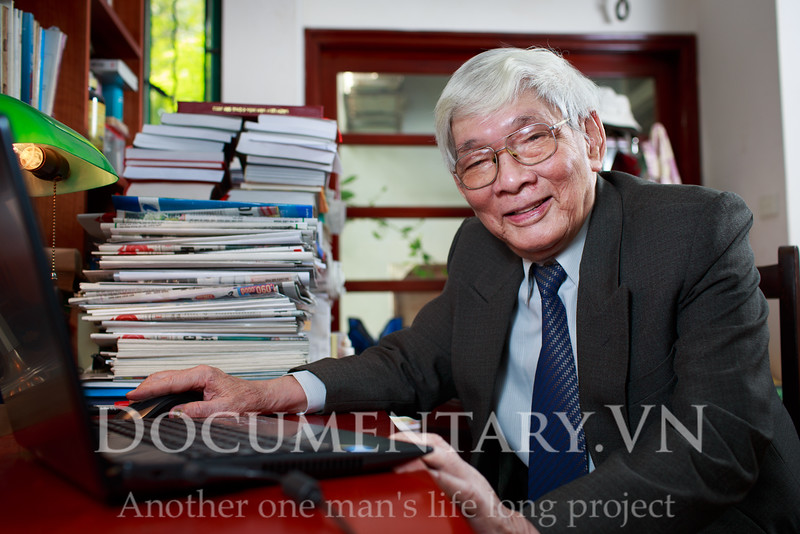
Associate Professor, People's Teacher Nguyen Quoc Hung
In 1966, after graduating, he was retained at the Department of History, Hanoi University. He was assigned to teach modern world history, and later taught specialized topics on imperialism... to fourth-year world history students.
With his previous teaching experience, Associate Professor Nguyen Quoc Hung was very aware of the importance of preparing lesson content. To teach the assigned topics, he invested considerable effort in self-study to acquire additional knowledge in related fields such as the economics and finance of imperialism. Perhaps the self-learning, self-reliance, and perseverance developed in the environment of the former Central University Campus helped him develop a high level of self-learning ability.
By 1986, following the Sixth National Congress of the Communist Party of Vietnam, the Party's reform policies and international integration guidelines demanded a comprehensive and in-depth study of international relations. Associate Professor Nguyen Quoc Hung, with his keen professional insight, recognized the need to introduce research and teaching on International Relations at the undergraduate and postgraduate levels to contribute to Vietnam's international integration and multilateral diplomacy policies. He was particularly interested in international organizations such as the United Nations and ASEAN. After the establishment of Hanoi National University in 1993, he was assigned to lead the International Relations group within the General Studies program.
In 1993, he, along with Professor Phan Huy Le and Associate Professor Le Quang Thiem, joined the executive board to prepare for the establishment of the Faculty of Oriental Studies. After the Faculty of Oriental Studies was officially established in 1995, he transferred to work there, assuming the position of Vice Dean and Head of the Department of Japanese Studies, contributing significantly to the development of the nascent field of Japanese Studies in Vietnam.
From a very young age, Associate Professor Nguyen Quoc Hung has been dedicated to the field of education and training. At the age of 19, he was entrusted with the responsibility of being the Principal of a secondary school in Ninh Binh town. This shows that he possesses not only excellent professional and pedagogical skills but also strong management abilities.
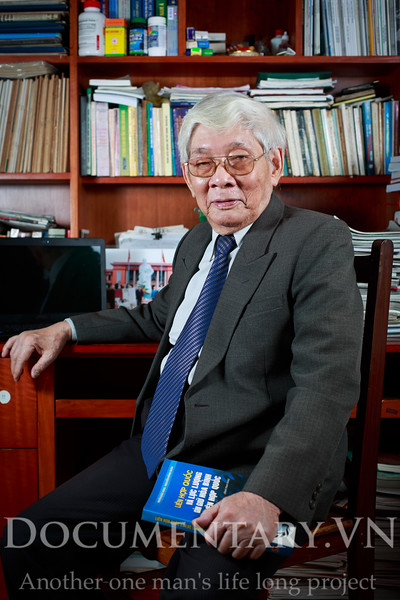
Since working at the University, he has also been entrusted with various positions: Acting Head of the History Department (1983-1984), Deputy Head of the History Department (1983-1990), Deputy Director of the Asia-Pacific Research Center (1990-1995), Deputy Head of the Oriental Studies Department (1995-2000), and Head of the Japanese Studies Department (1995-2005). Regardless of his position, alongside his professional work, he invested in fundamental professional development and the training of successors. He always demanded that younger generations continuously read and learn, transforming their training into self-training, updating lecture content and research, and always setting an example for them to follow. A prominent characteristic of his work principles is the demand for extreme meticulousness. Furthermore, he always paid attention to fostering unity within the department and cultivating character in the younger generation: hard work and honesty.
In addition to his administrative duties, he also devoted time to publishing numerous works that laid the foundation for research in modern world history, the history of international relations, the history of the Soviet Union (Russia), and the history of Japan. Notable examples include textbooks on...Modern World History(1984 - 1998)The October Revolution and the national liberation movement(1987)United Nations(1992)International relations in the 20th century(2000),A Brief History of the Russian Federation 1917-1991(Written jointly with Nguyen Thi Thu, 2002)Ho Chi Minh - An International Fighter(2005)International Relations - Theoretical Aspects and Issuesco-authored with Hoang Khac Nam, 2006)History of Japan(2007)The United Nations and United Nations peacekeeping forces(co-authored with Nguyen Hoang Quan, 2008)... He participated in compiling history textbooks (world history section) for high school students such as the 9th grade History Textbook, the 12th grade History Textbook... In addition, he participated in compiling the Vietnamese Encyclopedia (4 volumes).
Associate Professor Nguyen Quoc Hung is also the person who discovered, collected, and translated the manuscript.Nguyen Ai Quoc's speechAt the Third Congress of the Red International of Trade Unions (1924), his work was included in Ho Chi Minh's Complete Works. He was the first to translate and introduce important documents on international relations such as...Statement by the three major powersat the Tehran Conference in 1943,Agreement of the Three Great Powers on the Far Eastern Issuesat the Yalta Conference in February 1945,Document on the military surrender of Nazi Germany. May 8, 1945,Declaration of Human Rightsof the United Nations (1948).
For all his contributions to the field of education, he was awarded the title of Associate Professor by the State in 1991, the title of Excellent Teacher in 1997, and the title of People's Teacher in 2008.
|
ASSOCIATE PROFESSOR, PEOPLE'S TEACHER NGUYEN QUOC HUNG
+ Workplace: Department of World History, Faculty of History (1966-1995). Department of Japanese Studies, Faculty of Oriental Studies (1995-2005). + Management position: Deputy Head of the Department of History (1983-1990). Acting Head of the History Department (1983-1984). Deputy Director of the Center for Asia-Pacific Studies (1990-1995). Deputy Head of the Department of Oriental Studies (1995-2000). Head of the Department of Japanese Studies (Faculty of Oriental Studies) (1995-2005).
South American countries (co-authored) (Volume 1). Truth Publishing House, 1978. Anniversary and history(co-authored). Popular Publishing House, 1978. South American countries(Volume 2). Truth Publishing House, 1979. People's Republic of Mongolia. Truth Publishing House, 1983. Modern World History (1917 – 1945)(co-authored). University and Vocational High School Publishing House, 1984. 100th Anniversary of International Workers' Day, May 1st (1886-1986) (co-authored). Labor Publishing House, 1986. The October Revolution and the national liberation movement(co-authored). Truth Publishing House, 1987. Ho Chi Minh - The Life of a Revolutionary(co-authored). Dietz Verleg Berlin, 1990 (in German). Ancient glorious civilizations(Editor-in-chief). People's Army Publishing House, 1993. 11th grade History(Faculty of Natural Sciences and Faculty of Natural Sciences-Technology) (co-authored). Education Publishing House, 1995. 12th grade history (Social Sciences Department) (Volume 1) (co-authored). Education Publishing House, 1995. Teacher training book for 12th grade (co-authored). Education Publishing House, 1995. Vietnamese Encyclopedia(co-authored), 4 volumes. Vietnam Encyclopedia Compilation Center, 1995. World civilization in the 20th centuryWorld Civilization History, Education Publishing House, 1998. Modern World History 1917-1995(co-authored I, II). Education Publishing House, 1998. |
Author:Vo Minh Vu

