

This page commemorates the 80th anniversary of the school's tradition and 30 years of development.University of Social Sciences and Humanities
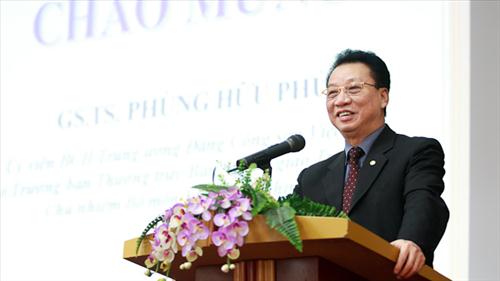
Professor, Doctor Phung Huu Phu was born and raised in a working-class family in Nam Dinh city. For generations, Nam Dinh has been famous as a region..."A land of spiritual significance, home to outstanding people."This is the birthplace of the Tran Dynasty, one of the most glorious dynasties in terms of military prowess and a major contributor to affirming the identity and stature of the brilliant Dai Viet civilization at the beginning of the era of independence and self-governance. This land is also the origin of many "talented heroes and capable generals" whose names are recorded in history. From a very young age, the traditions of his homeland and family were deeply ingrained in his character and temperament.
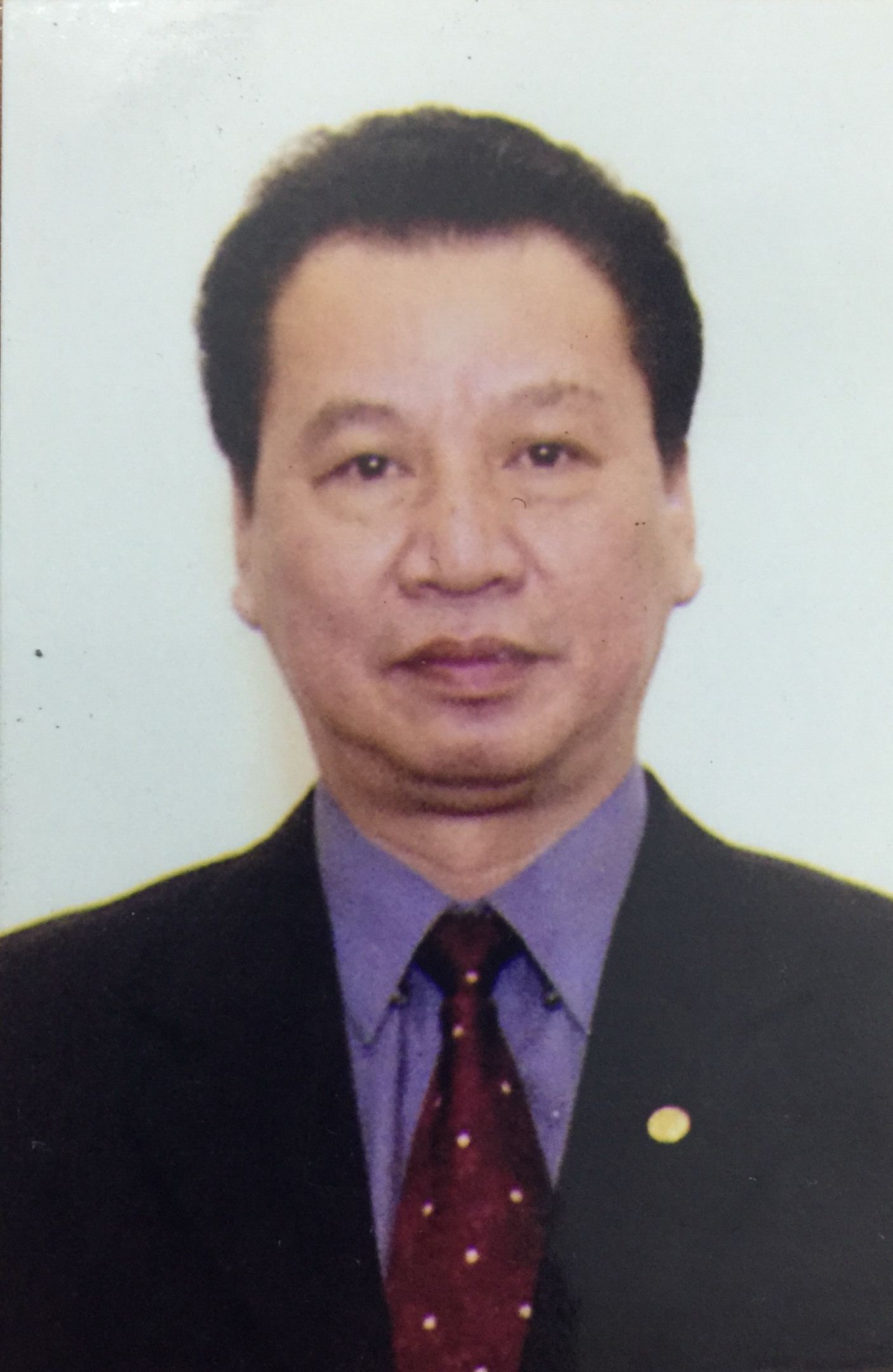
Professor, Doctor, Distinguished Teacher Phung Huu Phu
Phung Huu Phu, a young man from Nam Dinh, enrolled in the 11th cohort, becoming a student of the History Department in September 1966. This was during the most intense period of the Vietnamese people's resistance war against the US. Universities, teachers, and students had to evacuate to rural areas, determined to excel in their studies and training, no matter how difficult the circumstances. From August 1965, the History Department of Hanoi University evacuated to Van Tho commune, Dai Tu district, Bac Thai province. The first-year students of the Department (Group 11) built makeshift shelters for living and studying near Dam Sui, right next to the rocky mountainside. But it was in that simple thatched-roof lecture hall that Phung Huu Phu and his friends received knowledge, scientific methods, and a passion for the history of the nation and humanity from wise and dedicated masters such as Dinh Xuan Lam, Phan Huy Le, Ha Van Tan, Tran Quoc Vuong, Le Mau Han, Pham Thi Tam, Vu Duong Ninh, and others. The young student Phung Huu Phu quickly stood out and was well-liked by his friends for his honesty, straightforwardness, sincere and open lifestyle, simplicity, and sociability. Despite the extremely difficult conditions at the time, Phung Huu Phu strived his best and was one of the very few students who achieved perfect scores (5/5) in all subjects throughout all four years of study. He was well-liked by many teachers for his diligence, intelligence, humility, and passion for learning, but perhaps the three teachers who most significantly influenced his professional orientation, love of the profession, and lifestyle, way of thinking, and behavior were Professor Dinh Xuan Lam, Professor Phan Huy Le, and Associate Professor Le Mau Han. In particular, in his final year, Phung Huu Phu accompanied Professor Le Mau Han, then the homeroom teacher of class G.11, to collect materials for writing the history of the August Revolution in the Viet Bac base area and for his university graduation thesis on the revolutionary movement in Nguyen Binh district, Cao Bang province. Years later, he recalled:"For me, People's Teacher Le Mau Han has always been a shining example of dedication, responsibility, and devotion to the common good, to life, and to humanity. Everything my teacher thought, did, said, and wrote stemmed from a single aspiration: to make our country, our people, our Party, and our society stronger and more beautiful; to ensure the sustainable development of education and training; and to ensure that generations of students enter life with strong character, qualities, and intellect to preserve and promote the fine traditions of our ancestors...."That was a shining example of a master, and also the guiding principle and lifelong aspiration of his own conduct.
Immediately after graduating (1970), he was retained by Hanoi University as a lecturer in the Department of Modern and Contemporary Vietnamese History, Faculty of History. From there, Phung Huu Phu began his career as a teacher and a professional historian. To date, Professor Phung Huu Phu has spent 45 years lecturing at numerous universities both domestically and internationally. Perhaps, for him, this is one of his greatest joys. Professor Phu is respected, trusted, and cherished by many generations of students, not only for his knowledge and scientific methods, but also for his passion for scholarship, professional responsibility, and dedication to the nation and its people. Anyone who has ever been his student recognizes that knowledge, experience, and scientific methods are not merely passed on, but rather, spread from him to them.
With a serious sense of professionalism and the close guidance of esteemed mentors who were prominent scientists, Professor Phung Huu Phu focused on scientific research from the very beginning of his teaching career. For him, serious academic work was both an "identity card" confirming and guaranteeing his status and position as a teacher in the university lecture hall, and a personal passion and aspiration. He often advised his students: for historical research, passion is paramount; no matter how intelligent one is, without passion, diligence, and seriousness, one cannot become a truly talented historian. Students who came to "seek guidance" from their "master" Phung Huu Phu were often given this kind of "spiritual guidance"... accompanied by a few glasses of wine poured by him personally, in a style very characteristic of his.
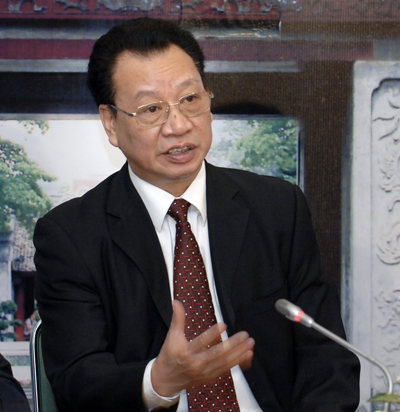
Professor, Doctor, Meritorious Teacher Phung Huu Phu was the first Rector of the University of Social Sciences and Humanities, Vietnam National University, Hanoi (1995-1999).Together with the Party Committee and the Board of Directors, he soon planned and devoted his full efforts to implementing the strategic direction of building and developing the University of Social Sciences and Humanities into a leading training and research center in the country with steady yet dynamic and groundbreaking steps.
It seems that, due to a deep connection with his homeland and family, Phùng Hữu Phú chose modern Vietnamese history, the history of the Vietnamese revolution, and especially the history of the working class and the workers' movement as his primary area of research. Together with his students and colleagues, he conducted numerous surveys of the working class in Nam Định, Hanoi, Hải Phòng, and Quảng Ninh. From a modern perspective, his research also contributed several theoretical points to the study of the history of the workers' movement in the modern era. Furthermore, while researching the working class and the workers' movement, Phùng Hữu Phú always placed it in its vital connection with the peasantry and within the broader context of the Vietnamese patriotic and revolutionary movement. This was the crucial initial foundation that enabled him to successfully defend his doctoral dissertation in history – scientific socialism – in 1983 at the prestigious Lomonosov University.
Upon returning to Vietnam, Phung Huu Phu continued his teaching and research career in history at the Department of History, Hanoi University. Driven by the objective demands of Vietnamese historiography and especially the realities of the revolution, he pioneered interdisciplinary research on the socio-economic changes and complex problems occurring in both North and South Vietnam. Together with his students and colleagues from various research institutions, he undertook numerous field surveys in industrial centers and rural areas, including the rural areas of Central and Southern Vietnam. Based on this, he contributed, along with central research and theoretical agencies, to the timely assessment, summarization, and development of scientific arguments for the timely decisions of the Party and Government, particularly the summary of agricultural collectivization for the 7th Congress of the Communist Party of Vietnam.
Within the context of the reform process initiated by the Sixth Party Congress, Phung Huu Phu soon began to deeply research a range of issues concerning the modern Vietnamese political system and Ho Chi Minh's thought. In particular, when studying the Vietnamese revolutionary state, he always considered it within its developmental context and placed it in organic relation to other political and social institutions, especially elected bodies and the national united front. When studying Ho Chi Minh's life and thought, he was one of the first to deeply explore his views on the ruling party, on the ideology and strategy of national unity and international solidarity, and on the relationship between political authority and revolutionary ethics. Such practical surveys and research discoveries quickly established Phung Huu Phu's academic prestige as one of the leading experts on modern Vietnamese history, even from a relatively young age. To date, Professor Phung Huu Phu has published more than 130 scientific works, including many monographs and monumental works that he edited, which have been highly regarded by scholars both domestically and internationally, such as works on...Ho Chi Minh's strategy of national unity.aboutNational United Front, History of the Hanoi City Party Committee,aboutThe worker-peasant alliance, Ho Chi Minh's secret to success,...He chaired the State-level interdisciplinary scientific research program on Thang Long - Hanoi, on the orientation of cultural development - the inherent strength of the nation in the context of a market economy and international integration, on Party building, etc., while also closely directing the development of modern political science at the University of Social Sciences and Humanities, Vietnam National University, Hanoi.
As a highly respected scientist in Vietnam, Phung Huu Phu was also widely known and highly regarded by foreign scholars. After many years of working in Vietnam, he maintained good relationships and cherished the positive feelings with his colleagues and friends in Russia. In 1990, he was invited to attend an international scientific conference at the University of Passau (Germany) on the occasion of the 100th anniversary of the birth of President Ho Chi Minh, the national liberation hero and world cultural figure. Until then, this was the largest international conference on Ho Chi Minh held in the West. Phung Huu Phu had the honor of representing the Vietnamese scientific delegation and beating the drum to open the conference. His paper was titled..."Ho Chi Minh's thought on the worker-peasant alliance in the Vietnamese revolution"He received considerable attention and positive evaluations from many international scientists. Subsequently, in various capacities, he had numerous opportunities to work with scientists from many countries with diverse academic, political, and cultural viewpoints. His goodwill, openness, seriousness, and high academic level always served as a foundation and a reliable bridge for dialogue between him and many foreign scientists. Many prominent scientists from the United States, Canada, Cuba, Germany, France, Australia, China, Japan, South Korea, and other countries regarded him as a close and trusted friend.
As an outstanding educator and scientist, Phung Huu Phu was also a talented manager and leader. Those close to him from his early days can attest that he had no desire or intention to pursue a career in management or leadership. He wanted to dedicate all his time, intellect, and passion to teaching, his students, and his research and academic discoveries. However, it was precisely because of his dedication to teaching and to the field of history that he naturally entered management at a relatively young age. Being honest, open, sociable, and full of enthusiasm, he participated in the Youth Union activities and was elected Secretary of the Youth Union branch of the History Faculty. After returning from his postgraduate studies in the Soviet Union, he was appointed Deputy Head, and then Head, of the Department of Modern and Contemporary Vietnamese History. Due to his professional reputation and dedication to his profession, he was appointed Deputy Head of the History Department (1985) and then Party Secretary and Head of the History Department (1990). Phung Huu Phu began his leadership and management career from his professional background, using his expertise, and in such a teaching and scientific research institution.
In 1992, Phung Huu Phu was elected Secretary of the Party Committee and also appointed Vice-Rector of Hanoi University. He joined the management and leadership of the university at a time when this prestigious institution was experiencing an internal crisis. At that time, many faculty members, staff, and students were feeling disappointed, distrustful, and resentful. In his capacity as Secretary of the Party Committee, with his high professional prestige, democratic, sincere, and open style, along with Professor Dr. Dao Trong Thi – the Rector – and the new leadership team, Professor Dr. Phung Huu Phu made significant contributions to the urgent restoration of unity, stability, and the continued progress of the university.
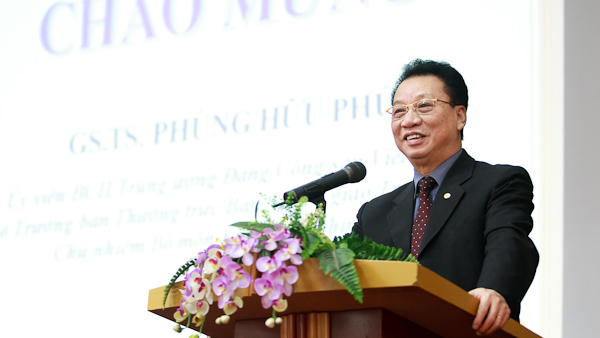
Professor Phung Huu Phu has held many important positions: Standing Deputy Secretary of the Hanoi City Party Committee, Chairman of the Hanoi City People's Council (2001-2006); Member of the Central Committee of the Communist Party of Vietnam (9th and 10th terms) (2001-2010); Standing Deputy Head of the Central Propaganda Department (2006-2011); Standing Vice Chairman of the Central Theoretical Council (2011-present).
In 1993, the Prime Minister signed a decree establishing the Vietnam National University, Hanoi. This was a sound policy aimed at creating a multidisciplinary, high-quality training and research center with the mission of acting as a driving force for breakthroughs in the quality of the Vietnamese university system, meeting the country's requirements in the context of accelerating modernization and international integration. However, this policy was not immediately understood and supported by public opinion, relevant agencies, and even a significant portion of the staff and Party members of the former Hanoi University and its member universities. As the Secretary of the Party Committee of the Vietnam National University, Hanoi, Professor Phung Huu Phu dedicated his talent and enthusiasm to building and strengthening the university from its early days, especially in fostering unity and consensus within the Party committee and leadership team.
In 1995, the University of Social Sciences and Humanities, under the Vietnam National University, Hanoi, was established, and Professor Phung Huu Phu was appointed its first Rector. Together with the Party Committee and the Board of Directors, he quickly formulated and devoted his efforts to implementing the strategic direction of building and developing the University of Social Sciences and Humanities into a leading training and research center in the country, with steady yet dynamic and groundbreaking steps. He encouraged and fostered the dedication and intellect of the leadership, staff, and students throughout the university in its early years, laying the foundation for a tradition of democracy, creativity, and humanism. After 20 years of development, the University of Social Sciences and Humanities has become increasingly strong, worthily continuing the glorious tradition of the Faculty of Literature, Hanoi University, and truly becoming an outstanding and advanced member university of the Vietnam National University, Hanoi. The school has been honored by the State with the title of Hero of Labor during the đổi mới (renovation) period, the Ho Chi Minh Order, and many other prestigious titles and awards. As the first Rector, Professor Dr. Phung Huu Phu truly made a significant contribution to the overall achievements of the school's staff, teachers, and students.
During his time as Secretary of the Party Committee of Vietnam National University, Hanoi, and concurrently Rector of the University of Social Sciences and Humanities, Professor Phung Huu Phu was also entrusted with many important tasks by the Hanoi City Party Committee. In 1998, he was appointed by the Hanoi City Party Committee to the position of Head of the Propaganda Department, concurrently Head of the University Department. From 2001, he was elected to the Central Committee of the Party (9th term) and appointed as the Standing Deputy Secretary of the Hanoi City Party Committee, concurrently Chairman of the Hanoi City People's Council. His leadership positions and work in the Hanoi City Party Committee and People's Council remained closely linked to his lifelong passion for study and research. Moreover, he was a leader who was always deeply involved in practical work, always attentive, serious in listening to and learning from the people, comrades, and colleagues. Therefore, every opinion, every action he took, every speech he delivered was intellectually rich, humane, solid, profound, yet simple and down-to-earth. Cadres, Party members, and the people of Hanoi trusted and respected him for these qualities and because they saw him as a dedicated, approachable official who was wholeheartedly committed to his work and always fully aware of the need to strive his best to contribute to building Hanoi into a modern and civilized capital.
In April 2006, he continued to participate in the 10th Central Committee of the Party. In September 2006, at the request of the work, the Central Committee and the Politburo transferred him to work at the Central Ideology and Culture Department (now the Central Propaganda Department) as the Standing Deputy Head. In April 2011, the Politburo transferred him to serve as the Standing Vice Chairman of the Central Theoretical Council. For nearly a decade, he has excellently fulfilled his assigned duties, leveraging his broad knowledge base accumulated from university studies, in-depth research on theoretical issues, and rich practical experience gained during nearly nine years of work in Hanoi. He successfully carried out propaganda work, guided public opinion and social discourse, and participated in drafting the documents for the 11th and 12th Party Congresses. Several important resolutions of the Central Committee related to the fields of ideology, culture, theory, etc. Witnessing the warm feelings and respect of cadres, Party members, and people in localities and grassroots levels towards him in hundreds of talks on political, economic, cultural, social, defense, security, and foreign affairs issues of the country and new theoretical topics, one can fully appreciate his charisma and persuasiveness. His writings and speeches have a high scientific and intellectual content, reflect the breath of life, and are full of responsibility and dedication to the country and its people, contributing to opening up and resolving pressing issues in practice, focusing on issues of concern to cadres, Party members, and the people. As the leader and direct administrator of the Central Ideology and Culture Committee, the Central Propaganda Department, the Central Theoretical Council, the Central Council for Literary and Artistic Criticism (10th term), and the Central Party Agencies' Science Council (10th and 11th terms), he was highly regarded for his astute and skillful management, leadership, and organization. He made significant contributions to consolidating and improving the quality of the Party's ideological, cultural, theoretical, and scientific advisory and consulting agencies. A prominent feature of his leadership style was his constant respect for and attentive listening to the opinions of cadres; his emphasis on building a democratic, humane, and unified environment; and his systematic, disciplined, and well-planned work methods. He also consistently stayed close to real-life situations, fostering close and intimate collaborative relationships with the grassroots. When asked about his most memorable experiences during his time working in propaganda, he smiled and immediately said..."The warm and affectionate feelings of brothers and friends throughout the country, and the admiration and trust of the grassroots, are the greatest sources of encouragement and a lifelong debt of gratitude that must be repaid. And the joy and happiness lie in contributing, however small, concrete, and practical, to the great cause of the Party and the Nation."
Due to organizational requirements, Professor Phung Huu Phu has held many different positions and roles since graduating. But one thing that is truly special is his unwavering loyalty.For 45 years, I have never left the university environment.His contributions to the field of history were significant. Simultaneously, he dedicated his passion, dedication, and active contributions to the development of Political Science. From the early 1980s, Professor and Academician Nguyen Duy Quy – then Secretary of the Party Committee of Hanoi University – conceived the idea of establishing an Institute of Political Science at the university. Professor and Doctor Phung Huu Phu, then Deputy Head of the History Faculty, strongly supported this idea. In the early 1990s, while serving as Secretary of the Party Committee and Vice-Rector of Hanoi University, he devoted his time and effort, along with several other teachers, to directly building the Political Science department, beginning with experiments at the University's Center for Training Lecturers in Marxist-Leninist Theory. This was a crucial foundation for the establishment of the Department of Ho Chi Minh Thought and Political Science, now the Faculty of Political Science, at the University of Social Sciences and Humanities in 1995. As the founder and direct head of the department within the university, and the head of the faculty, he soon established international relationships with the University of Toronto (Canada), the University of Oregon, the University of Connecticut (USA), the University of Toulouse I (France), etc., to help train staff, build data systems, organize seminars and workshops, etc., with the idea that...Building a truly meaningful field of Political Science.The Faculty possesses both the unique characteristics of Vietnamese political science and selectively adopts the achievements of political science research and teaching from around the world, especially from advanced countries. He placed particular emphasis on cultivating and training highly specialized personnel in this new field. The Faculty became the first institution to offer Political Science at the university level within the national university and college system. The Faculty began offering master's and doctoral programs in Political Science and Ho Chi Minh Studies in the 2005-2006 academic year and undergraduate programs in Political Science in the 2008-2009 academic year, with hundreds of students, graduate students, and doctoral candidates having graduated.
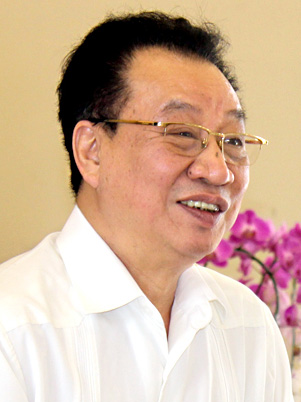
Regardless of his field or position, he always worked as a scientist. In him, the teacher, the scientist, the exemplary Party official, and the simple, cheerful, and dedicated individual were seamlessly intertwined, creating the personality of a teacher and a leader with both heart and vision.
The Faculty of Political Science has made remarkable progress in recent years, both in terms of its staff and the quantity and quality of its training. However, Professor Phung Huu Phu still believes that the past period was a "foundation-building" phase, preparing the necessary prerequisites for a leap forward in development in the next 5-10 years. He remains deeply committed to the hope that the Faculty will further develop with a complete professional structure, suitable to the realities of Vietnam, and at the same time corresponding to the training structure of the world; that it will gradually and urgently complete a standardized curriculum system to be able to train Political Science students nationwide; and that its research and teaching staff will be of high quality, competence, and expertise, specializing in the fields of Vietnamese politics, international politics, political theory, Ho Chi Minh studies, etc., based on integrating and developing comprehensive knowledge and a unique, outstanding identity as a leading university of social sciences and humanities in the country. To train generations of students who are both politically committed and professionally competent, possessing the necessary skills and qualities to become ideological and practical cadres in the political field, thereby contributing to national development in general and the development of Political Science in particular.
Having been associated with the University of Hanoi, now the University of Social Sciences and Humanities, Vietnam National University, Hanoi for 45 years, he shared: “My greatest happiness is seeing many generations of students grow up. Wherever I go, I meet former students. Many of them are now professors, high-ranking leaders, etc., but the teacher-student relationship remains warm.””Over more than 40 generations of his students, many have become outstanding leaders and talented scientists, but as one student confided:"Teacher Phu's element was Tich Lich Hoa (Thunderbolt Fire), but his image, etched in the minds of his students, was both majestic, imposing, and towering like a mountain, yet also simple, approachable, and very down-to-earth. Students always felt him close, as if he were right before them. But the mountain peak remained forever high, reaching towards the azure sky of aspiration."Interacting with him, it's easy to see that, regardless of his field or position, he always works as a scientist. Politics is science, propaganda is science, leadership and management must also be science. He humbly acknowledges that if he can accomplish anything, if he can make any contribution, it is because he always lives and acts wholeheartedly, with dedication and responsibility, using scientific thinking and methods. For him, politics is scientific politics, doing science with a profound political consciousness and unwavering political resolve. What he always maintains, what shapes his character and style, is intellectual purity, serenity in life, and freedom from the pursuit of fame and fortune. With this philosophy of life, despite his busy schedule, he always remains dignified, composed, at ease, cheerful, and optimistic. In him, the teacher, the scientist, the exemplary Party official, and the simple, cheerful, and dedicated man were always seamlessly intertwined to create the personality of a teacher and a leader.heartand havelevel.
|
PROFESSOR, DOCTOR, OUTSTANDING TEACHER PHUNG HUU PHU
+ Workplace: Department of History. Department of Political Science. + Management position: Deputy Head of the History Department (1985-1990) Head of the History Department (1990-1992) Party Secretary, Vice Rector of Hanoi University (1992-1995) Secretary of the Party Committee of Hanoi National University, Rector of the University of Social Sciences and Humanities (1995-1999) Head of the Propaganda Department of the Hanoi City Party Committee (1998-2001) Permanent Deputy Secretary of the Hanoi City Party Committee, Chairman of the Hanoi City People's Council (2001-2006) Member of the Central Executive Committee of the Party (9th and 10th terms) (2001-2010) Deputy Head of the Standing Committee of the Central Propaganda Department (2006-2011). Permanent Vice Chairman of the Central Theoretical Council (2011-present) Head of the Department of Vietnamese Politics, Head of the Faculty of Political Science, University of Social Sciences and Humanities (2011-present)
Ho Chi Minh's strategy of national unity(Co-editor)National Political Publishing House, 1996. Ho Chi Minh and Vietnamese Buddhism: 1945-1969(Editor-in-chief)National Political Publishing House, 1997. Leveraging the natural, economic, social potential and historical and cultural values for sustainable development of Hanoi Capital City by 2020.(Editor-in-chief)Hanoi Publishing House, 2010. Ho Chi Minh's secret to success,National Political Publishing House, 2010. Culture - The intrinsic strength of development(Co-editor)National Political Publishing House, 2014. |
Author:Prof. Dr. Pham Hong Tung, PhD Candidate Nguyen Thi Thuy Hang