When the Hanoi University of Social Sciences and Humanities assigned me the task of writing about Professor Nguyen Minh Thuyet, I felt honored but also apprehensive, because Professor Nguyen Minh Thuyet's career is difficult to cover in a single article: He was both a professor of linguistics with valuable works and a leading expert in general education, having served as the chief editor or editor-in-chief of many textbooks at the primary and lower secondary levels; he was also the Vice-Rector of a major university, and notably, he was a member of the National Assembly for two consecutive terms with many active parliamentary activities, earning him great popularity among the people.
Perhaps I will write about Professor Nguyen Minh Thuyet from my own perspective, as his student. This style of writing will certainly avoid duplicating what many others have already written about him.
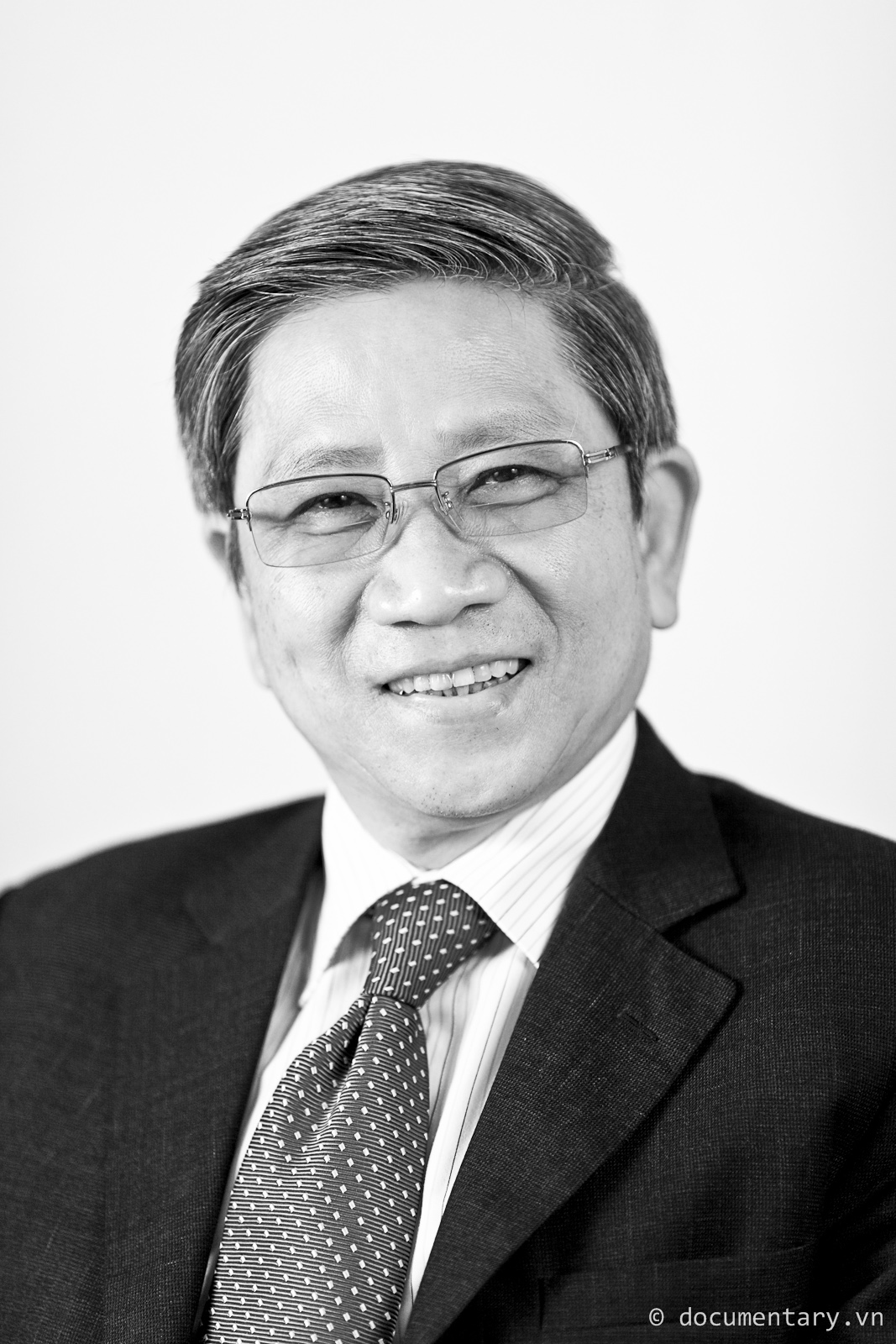
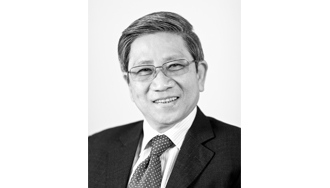
Professor, Doctor Nguyen Minh Thuyet/Photo: Thanh Long
I recall one evening a friend took me to house number 28 Yen Ninh Street (Hanoi) to meet a newly returned PhD in linguistics from Russia. He was very proficient in Russian and had many passions and professional plans. That was Professor Nguyen Minh Thuyet, working at the Institute of Educational Sciences. At the time, I was studying far from home, and my parents in the countryside were poor, so financial difficulties were a constant concern for me. My friends, who valued me, wanted to help me find some extra work in the bustling city. During that meeting, after inquiring about my abilities, Professor Thuyet offered to help me by assigning me some Russian-Vietnamese translation tasks. This deeply moved me and motivated me to study Russian intensely. My studies paid off with first prize in the first Russian Language Olympiad for university students in Hanoi. Even though I didn't manage to translate any pages to earn a little extra money afterward, the love for the Russian language and the awareness that using a foreign language as a key to unlock the treasure trove of human knowledge, which Professor Thuyet instilled in the soul of a country boy who came to the capital, has stayed with me through many stages of my life. Later, when I stood on the university lecture podium, I was always enthusiastic about passing on that love to many generations of students.
After graduating from university and continuing my postgraduate studies, I was incredibly fortunate to have Professor Thuyet as my co-supervisor, along with Professor Nguyen Tai Can. The Linguistics Department invited Professor Can to supervise my dissertation on Vietnamese syntax, as the best way for me to take on this teaching role in the Faculty of Literature, University of Hanoi, continuing the work of previous professors. Professor Can accepted and invited Professor Thuyet to be my co-supervisor, because Professor Can had commented on me, essentially: "You are intelligent, but subjective, careless, and lack work discipline. Therefore, I need someone very skilled in syntax, with a scientific work method and work discipline, to mentor and guide you." Professor Can said that if you accept Professor Thuyet's dissertation from the first page, then from the second to the last page, you must follow his conclusions; whatever conclusions he leads you to, you must accept them, they are so rigorous that they cannot be refuted. Professor Can also said, "Mr. Thuyet, you know, his Russian writing is even better than mine, a man with a Russian wife." He said that studying with Professor Thuyet would allow me to both learn specialized knowledge and hone my scientific work methods.
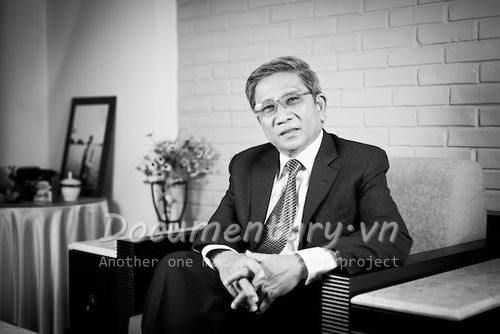
Professor Dr. Nguyen Minh Thuyet was the Vice Dean of the Faculty of Literature, Hanoi University (1992-1995); Vice Rector of the University of Social Sciences and Humanities (1995-2002); and Secretary of the Party Committee of the University of Social Sciences and Humanities (2001-2002).
So, every now and then, I had the opportunity to work with Professor Thuyet at his house at 28 Yen Ninh Street. His family was very well-mannered, with the style of civil servant families from the old days. Everyone in the family was kind and simple. I remember that his parents always invited me to have lunch with them. The meals, with meat and vegetables, were incredibly luxurious for a country boy like me who came to Hanoi to study and live in a boarding school. After lunch, I volunteered to wash the dishes, and Professor Thuyet would join me in the kitchen, not wanting to leave his guest to wash dishes alone, even though the guest was his student. So, the two of us would wash dishes while chatting about our professional work – it was wonderful. Looking back now, I understand that he took advantage of every opportunity to explain his expertise to me. I think that nowadays, postgraduate training is developing, with many professors, associate professors, and doctoral students, but it's rare to find a professor and student having such a lively professional discussion while washing dishes together, as I was fortunate enough to experience back then. I remember one day, after I had successfully defended my thesis at the basic level and was going through the procedures for my formal defense, my professor came to the dormitory for some reason and took the opportunity to visit me. We sat drinking hot tea at a quiet tea shop, and he suddenly said: "Hiep, just be confident in pursuing your syntax research. I've already taught you everything I know about syntax, and you've grasped it all." I was speechless with emotion, not because of his words of praise, but because of the immense love and care he had for his student.
Professor Thuyet was a man whose love and help for his students were always natural, sincere, and touching. And his help was always very subtle. On the day of my official thesis defense, as was customary at the time, I would have had a celebratory meal to thank the professors on the committee. But Professor Thuyet said that many of the professors on the committee had studied in the Soviet Union, so he wanted to invite his friends, as if we hadn't seen each other in a long time. Actually, even a clueless person like me understood that he was inviting his friends so I wouldn't have to spend money. After finishing my thesis, to make a living, I had to work night shifts at the Gia Lam rattan and woodworking factory, as the team leader of security and martial arts instructor for the team. Because the work was all night, I was sluggish during the day due to lack of sleep, and I couldn't concentrate on anything I read (I later jokingly told my students that linguistics requires good health and cannot be sleep-deprived, because this subject consumes a lot of brainpower). Mr. Thuyet knew about it, called me over, and gave me his founding role at a fairly large tutoring center in Hanoi at that time. The job was easy (just keeping track of records and collecting tuition fees, occasionally taking a walk around the schoolyard to get some fresh air and check on the classes) and the salary was high (sometimes double the salary of a newly graduated teaching staff member). Thanks to that job, I finally dared to... get married, because I understood that "a humble cottage and two loving hearts" was very difficult to achieve.

He was a Member of the National Assembly in the 11th and 12th terms (2002-2011); and Deputy Chairman of the Committee on Culture, Education, Youth, and Children of the National Assembly in the 12th term (2007-2011).
Later, when reading articles written about him as an outstanding and beloved member of the National Assembly, I learned that he had a difficult childhood. To help his parents, he once sold newspapers and roasted peanuts on the clanging trams in Hanoi, scraped rust off bridges, and worked as a porter in Thai Nguyen. A teacher with such experiences would easily empathize with, share, and want to help poor students like me. I also learned that his hometown was Sui village (also known as Tho Loi village), now Phu Thuy hamlet, Phu Thi commune, Gia Lam district, Hanoi, the birthplace of Cao Ba Quat and many other renowned Confucian scholars; further back, it was also the hometown of Empress Y Lan, the village girl who rose to prominence in history and legend. In his calm and open manner of speaking and behaving, I sensed the cultural traditions of his family and the proud historical flow of a cultured homeland. Later, when he became Vice Rector of the Hanoi University of Social Sciences and Humanities, and then Vice Chairman of a National Assembly Committee, equivalent to a Deputy Minister, I still saw in him the same simplicity, sincerity, and affection for everyone; he was always a good listener and willing to share.
Professor Thuyet was a visionary, and although my life had its twists and turns and confusing crossroads, thanks to him I didn't go astray. I remember around 1988, when I had just finished my postgraduate Russian language course, Professor Dang Duc Nga, Head of the Graduate School at Hanoi University, told me that there was a vacant position for a Russian language teacher under the Pushkin Institute's internship program, and the university wanted to send me to the Soviet Union under this position. At that time, going to the Soviet Union was a dream for many people; however, when I discussed it with Professor Thuyet, he advised me against it because it was outside my area of expertise. He said I should focus on my dissertation, improve my Russian so that I could legitimately go to Russia as an intern and defend my dissertation there. He said that was also why he had always urged me to practice writing in Russian to present the issues of my dissertation. Accordingly, every few months, I would bring my writings to my professor's house for him to correct my sentence structure and word usage. During the official thesis defense, he stated to the committee that my Russian was in no way inferior to those who had written theses in Russia. I think this is a very good approach. Now, if thesis supervisors also encourage graduate students to practice writing in English to present their professional issues, the prospects for international publication will certainly be more optimistic, because the first barrier to international publication is foreign language proficiency. Later, around the late 1990s, when the business and trade of the Vietnamese community in the Soviet Union were thriving, some of my friends intended to invite me there because I could speak Russian, was agile, had a solid martial arts skill (I had a black belt in karate), and was hardworking and not afraid of hard work, which could earn me a lot of money in those fast-paced times. However, once again, when I spoke to my professor, he advised against it. Looking back now, I am extremely grateful for that advice. Because if I had gone to the Soviet Union at that time, plunging into the pursuit of making a living, who knows what unforeseen dangers might have arisen, and today I might not be sitting here as a professor and Director of the Institute of Linguistics, writing about my teacher.
It was fortunate for me and many generations of linguistics students that in 1990, Professor Thuyet transferred from the Institute of Educational Sciences to work at the Faculty of Literature, Hanoi University. Besides working on my dissertation, I also had the opportunity to attend Professor Thuyet's classes. Those were unforgettable lessons, thanks to his pedagogical skills and profound professional knowledge, along with his timely and appropriate sense of humor, which made general grammar and Vietnamese grammar incredibly easy to understand and engaging. At that time, the Faculty of Literature held an annual conversion course for those in related fields to obtain a certificate for postgraduate studies in linguistics. Among them was Ngo Tu Lap, who had studied at the Maritime University in the Soviet Union and returned to Vietnam to work as a ship captain, writing prose and poetry with great flair. Lap was known for his arrogance and lack of respect for others. However, after studying with Professor Thuyet, Lap told me that he greatly admired him, praising his profound knowledge and excellent teaching skills. He presented his work logically and clearly, addressing each issue precisely without omissions or redundancies. After completing the conversion course, Ngo Tu Lap passed the postgraduate entrance exam with top marks and applied to be a postgraduate student under Professor Thuyet. Unfortunately, strict regulations prevented him from pursuing a career in Linguistics. As for me, I was fortunate enough to study with him and was even invited to contribute to several books he edited, including the book...Vietnamese sentence componentsand two booksPractical VietnameseVolume A is for students in natural sciences, and Volume B is for students in social sciences; both have been reprinted numerous times by the Education Publishing House and the Hanoi National University Publishing House.
Later, following his activities in the National Assembly, I, along with many others, greatly admired his presentation style, questioning, and argumentation, making complex issues easy to understand and persuasive. On television, when he spoke about the country's major issues, I always saw in him the style of a teacher in politics: calm, composed, and respectful of others. His contributions to parliamentary activities and to the country's development in many fields would probably require an entire book. However, one can easily sense the affection of a large number of voters for him through the many approving and admiring comments on major online newspapers such as VietnamNet, Vnexpress, and Thanh Nien... Once, I went to Hue and visited my martial arts teacher. During a conversation about current events, when he learned that I was a student of Congressman Nguyen Minh Thuyet, my martial arts teacher asked me to connect him to Mr. Thuyet. And he said very sincerely: "Mr. Thuyet, I am just an ordinary citizen, nameless and without a name. I'm calling to say that I thank you very much for what you have said, which is very beneficial to the country and the people. I wish you good health so that you can continue your glorious and arduous work."
I believe Professor Thuyet made a significant contribution to reforming parliamentary activities, ensuring that our State truly belongs to the people, is by the people, and serves the people. When he retired after two terms as a National Assembly representative, I felt a sense of loss and regret. Many people I know share this same feeling. In the process of building a socialist rule of law state, the country desperately needs people with the intellect, heart, and courage of Professor Thuyet, my teacher and the teacher of many generations of his students.
Having been his student for decades, I know he carries a deep sorrow, one that I cannot help him with. His younger brother sacrificed his life in the fierce Tri Thien battlefield, and to this day, he doesn't know where his brother lies buried in his homeland. I've only seen his brother's photograph at his house at 28 Yen Ninh, but in his words whenever he mentions his brother, I sense his boundless love for him. I believe that he and his brother, each with their own path, have contributed to the development of this country and this nation.
When I think of Professor Thuyet's contributions to the field of education, linguistic research, university administration, and parliamentary activities, I imagine small streams diligently gathering to form a river, which then powerfully flows into the vast ocean, carrying fertile silt to the rural areas it passes through. Professor Thuyet worked tirelessly, sowing seeds in the fields of work he undertook, not shying away from small tasks like quietly correcting errors in students' assignments, or large tasks like debating or questioning ministers in parliament, or participating in the drafting of new laws... In every task, he excelled with compassion and a broad, profound intellect. I remember the year I helped Professor Cho Jae Hyun proofread the translation of his memoir.There are no myths.By President Lee Myung-bak (published by the Korea-Vietnam Friendship Association). As the title of his memoir suggests, President Lee Myung-bak recounted his life story simply as that of a hardworking, tireless learner striving for success, without any mythical elements to aid his contributions to society, the nation, and the people. Professor Thuyet also had a life "without myths" like that, but it is precisely because of this that I admire his achievements and contributions even more.
Hanoi, July 2015
|
PROFESSOR, DR. NGUYEN MINH THUYET
+ Workplace: Department of Literature Board of Rectors + Management position: Deputy Head of the Faculty of Literature, Hanoi University (1992-1995). Vice Rector of the University of Social Sciences and Humanities (1995-2002). Secretary of the Party Committee of the University of Social Sciences and Humanities (2001-2002).
Introduction to Linguistics (co-authored with Nguyen Thien Giap – editor, Doan Thien Thuat). Vietnam Education Publishing House, Hanoi, 1994. Vietnamese Parlons. Université Laval, Quebec, 1995. Practical Vietnamese(Nguyen Minh Thuyet - editor-in-chief, Nguyen Van Hiep))National University Publishing House, Hanoi, 1996. Vietnamese sentence components(Nguyen Minh Thuyet – editor, Nguyen Van Hiep). National University Publishing House, Hanoi, 1998. Revised edition: Education Publishing House, Hanoi, 2004. Vietnamese language teaching methods viewed from the primary school level.(Hoang Hoa Binh, Nguyen Minh Thuyet). Vietnam Education Publishing House, Hanoi, 2012. book set Fun Vietnamese((18 volumes) (Nguyen Minh Thuyet - editor). The Gioi Publishing House, Hanoi, 2007 - 2009. book setVietnameseGrades 2, 3, 4, 5 (24 volumes) (Nguyen Minh Thuyet - editor). Vietnam Education Publishing House, Hanoi, 2003 - 2006. book setLiteratureGrades 6, 7, 8, 9 (24 volumes) (Nguyen Minh Thuyet - editor of the Vietnamese language section). Vietnam Education Publishing House, Hanoi, 2002 - 2005. |
Author:Prof. Dr. Nguyen Van Hiep

