VThe same chalk, the same blackboard, the same lecture hall from that year.
The teacher still walks leisurely this early morning.
A gentle breeze rustles the sparse, silvery hair.
Many autumns have passed silently beneath the trees…
Those are the opening lines of a poem I wrote for Professor Dinh Van Duc on November 20, 2008, on the occasion of him receiving the title of People's Teacher.
Time flies. This year (2015), Professor Dinh Van Duc turned 72 years old.
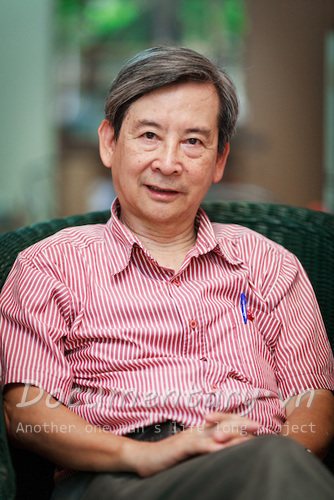
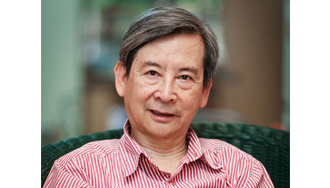
Professor, Doctor, People's Teacher Dinh Van Duc
It's not that I don't remember my professor's birth year. But I (like many of my friends) have been confused many times. That's because, after all these years, his demeanor remains the same: gentle, calm, cheerful, and very witty. He's still diligent with his books, teaching classes every day, not only to graduate students and researchers but also to undergraduates. On many occasions when I teach at the University of Social Sciences and Humanities, I've seen him hurrying to the lecture hall. "I have to go to class now. Wait for me, we'll meet during the break," he'd say, and then he'd leave quickly. I'd watch him go and try to picture the professor I was fortunate enough to have studied under nearly forty years ago.
It was early 1979. Our K22 Literature class (Faculty of Vietnamese Language and Literature, Hanoi University) was studying Vietnamese grammar, specifically the section on parts of speech. Our lecturer was a young, completely new man whom we had just met for the first time. He was of average height, fair-skinned, with a refined face and intellectual-looking white glasses. He was even more handsome in his attire, which at the time was very fashionable and stylish for us young people. On the first day, the whole class was captivated by his teaching style: mature, clear, concise… with many difficult examples from Russian (which more than half of our class was studying). Later, we learned that he was Professor Dinh Van Duc, who had just defended his PhD thesis in the Soviet Union the previous year.
Then, in later years, due to work and other relationships in life, I had many opportunities to interact with and get closer to him, and to read the works under the name Dinh Van Duc. I came to understand more about a teacher whom I always respected.
Professor Dinh Van Duc came from an intellectual family in Thanh Hoa. His family had been teachers for four generations. Like many of his peers, during the war against the French, the small, intelligent, and energetic boy Duc had to evacuate with his parents to various places due to their work, encountering many people and situations. He surprised many because, even at a young age, he already seemed like a "little old man," very observant and thoughtful. From elementary and middle school, he excelled academically, with a talent for social sciences and humanities. At that time, schools had a very popular wall newspaper movement. Duc's early "spontaneous" essays were quickly appreciated and enthusiastically encouraged by his teachers and classmates. His homeroom teacher in his final year advised him to apply to a department with a Literature focus, even though he really liked History and Geography. Thus, in 1961, Dinh Van Duc was admitted to the Faculty of Literature, Hanoi University, after the entrance exam.The South school is competing with the North school for the exam." in Nam Dinh. Back then, people commonly referred to the Faculty of Literature as "General Literature" (as well as General Mathematics, General History, etc.), a name that marked a bygone era, reflecting the honor bestowed upon a fundamental science that was both essential and highly valued.
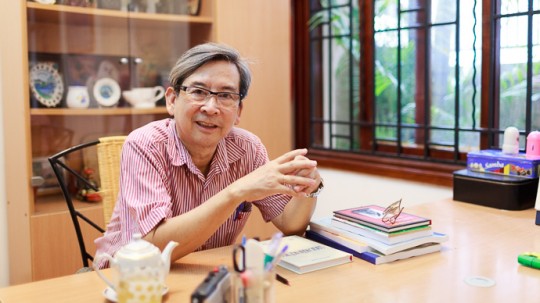
He was Head of the Department of Vietnamese Language (Hanoi University) (1985–1990); Head of the Department of Linguistics, University of Social Sciences and Humanities (1996–2004).
Recalling this, Professor Dinh Van Duc recounted a humorous anecdote. He said, “I entered the University, but unlike many of my classmates, I wasn't yet a member of the Youth Union. Joining the Union was very difficult back then. In high school, I was considered a 'petty bourgeois' because I was fond of reading 'unconventional' literary works (from the Tu Luc Van Doan literary group with names like Khai Hung, Nhat Linh, Hoang Dao, Thach Lam, and the New Poetry movement,...) which were being condemned at the time. Then, on another occasion, I was considered lazy when I went to help farmers harvest rice; I had the 'brilliant' idea of running back to borrow a bicycle to carry the rice instead of shouldering it myself.” But that was just a fleeting incident. Just a few months after entering university, thanks to his academic achievements and self-cultivation, this young man who favored "romanticism" quickly joined the ranks of the Youth Union. And now, he is nearly forty years into his Party membership.
Student Dinh Van Duc's dream of honing his Russian language skills in order to later delve deeper into Russian literature was abruptly cut short by an unexpected turn of events that led him down a different path: linguistics. This happened at the end of the first semester of 1962, when Professor Nguyen Phan Canh (whom many people know through his treatise on...)Poetic languageHis teacher recognized the student's potential and introduced Dinh Van Duc to Professor Nguyen Tai Can. Professor Can inquired about his aspirations and asked if he wanted to pursue Linguistics. Initially, Professor Can was not very enthusiastic, believing the student lacked determination (and was prone to giving up). However, Dinh Van Duc was completely captivated and influenced by Professor Nguyen Tai Can's talent and character, giving him the confidence to enter this new field. Thus, Dinh Van Duc decided to "venture" into a very new field, not only because of "dry, difficult, arduous"The future was very unpredictable at that time, and very few people were passionate about it (The teacher still quoted a line from the Tale of Kieu: "Who knows where to entrust my heart and soul?").
Being retained as a lecturer in the Linguistics Department at Hanoi University, a place filled with excellent teachers, was a great honor. Young lecturer Dinh Van Duc (like other lecturers in the Department and Faculty) had to endure many hardships during the war (when the US expanded its bombing campaign in the North). Just four days after receiving his appointment letter, he and his colleagues went to the remote Dai Tu district, Bac Thai province, to build a wartime base for Hanoi University amidst the wild mountains and forests, facing numerous shortages. Living in that "thatched huts, bamboo walls, eating in the mountains, sleeping in the forest" for four years, they overcame all obstacles, teaching, self-studying, and carrying out a field research program on ethnic languages, focusing on the Tay and Nung languages, with remarkably successful results… Lecturer Duc also matured from that experience thanks to his willingness to learn and his proactive approach to serving the public.
Thus, thanks to the unexpected "turning point" mentioned, our linguistic community has gained a new expert specializing in Vietnamese grammar. After years of study in Rostov and Moscow (Soviet Union), he received formal training in linguistic theory and returned to further his expertise in Vietnamese linguistics. His book...Vietnamese Grammar - Parts of SpeechDinh Van Duc's treatise, published in 1986, marked a significant milestone in Vietnamese linguistics with its new perspective and approach to Vietnamese word classes based on functional theory. After thirty years, this treatise remains highly relevant and profound, further affirming its scientific value. This year, he has published volumes I and II, further exploring and updating these contents.
But Professor Dinh Van Duc's scientific contributions did not stop there.
As a professional researcher, he was very eager to learn everywhere and at all times (He said: "We need to learn even from our students"). Always sensitive to new things, proficient in foreign languages (Russian, English, French), he also had the opportunity to lecture at universities in many countries (France, South Korea, the US, Canada, etc.), thus absorbing and accumulating many ideas and academic methods of modern linguistics. He read extensively, practiced much observation, and concluded that: "For a time, after breaking free from the European-style grammatical description of Vietnamese, Vietnamese linguists believed that they had to treat the Vietnamese language differently."Lectures on Vietnamese Grammar - Word Categories Viewed from a Functional Perspective,(National University of Hanoi Publishing House, 2010, p. 10). From here, the professor identified a series of issues related to linguistic theory and Oriental linguistics, as reflected in his specialized works in very difficult fields: booksGeneral Linguistics - Key Contents(Hanoi National University Publishing House, 2012), bookLanguage and Thought - An ApproachHanoi National University Publishing House, 2013… Nearly a dozen in-depth books have been published, reflecting the immense effort and dedication Professor Dinh Van Duc invested throughout his life (especially since his retirement in 2009). These books vividly showcase his broad and profound academic thinking and observations, demonstrating the unwavering perseverance of Professor Dinh Van Duc throughout his life to become a respected linguist of the third generation in Vietnam. His recent books offer profound insights into a range of general theoretical issues and Vietnamese linguistics, providing foundational knowledge and research methods in linguistics for students pursuing this career.
From a young man initially passionate about literature and aspiring to become a literary researcher, Professor Dinh Van Duc has today become a renowned Vietnamese linguist. But it would be a great oversight not to mention his passion for literature.
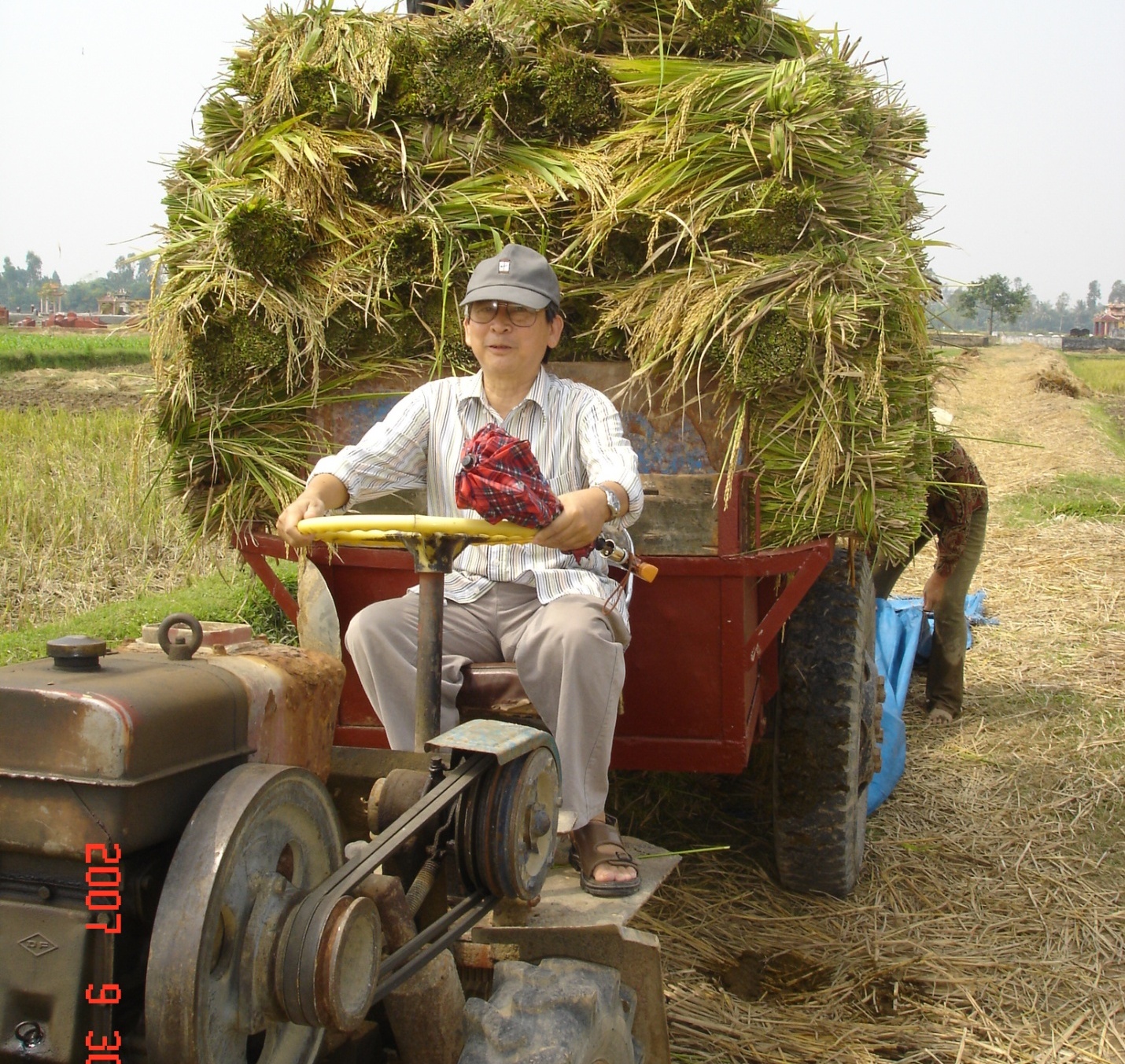
Professor, Doctor, People's Teacher Dinh Van Duc and a moment of tranquility in the countryside.
Turning to linguistics, “Though separated by distance, the threads of affection still linger in the heart."He has always been interested in literature, reading and reflecting on literary language through books on the history of the Vietnamese language. I know he still contemplates life by writing very good essays about the events he has witnessed and about the people around him. His essays have a very unique style, incredibly interesting, very 'Dinh Van Duc': leisurely, profound and lyrical, very rich in emotion. I heard that he will have a collection of nearly fifty essays published under the title: "From my village to the university village: A brief stopover for memories."
As an individual, Mr. Dinh Van Duc is also a person worthy of respect.
Before meeting him, he might seem quiet, but anyone who does will find him open, approachable, cheerful, and very pleasant. Serious and thoughtful, yet not pretentious, he has a simple, friendly, and humorous way of speaking. In his lectures, he possesses a high level of pedagogical skill. Topics such as grammar, general linguistics, and the language of thought—which are often difficult to access due to their abstractness, dryness, and complexity—are always presented in a way that makes them easier to understand. His slow, simple, and gentle delivery, using colloquial and literary language, makes even the most profound theoretical concepts more accessible. Occasionally, he quotes from the Tale of Kieu, Tang Dynasty poetry, or folk songs and proverbs, adding a unique and lively touch to his lectures. His public speaking is always concise, informative, and emotionally resonant, with a rich and distinctive style.
The professor deeply loved his students, cared for them, and while his academic criticism was strict, he provided dedicated and friendly support and encouragement. Having taught for half a century and served as head of the Linguistics departments for nearly two decades, his students respected him for his vast knowledge, erudition, and rigorous argumentation, as well as his concise and unpretentious style of speaking and writing (yet he was humble and unassuming). His students also admired him for his compassionate heart and his willingness to learn from others.
Lessons from a bygone era become witnesses to history.
We still cherish those familiar voices.
Just take your time, like the wind blowing across the sky.
Add more salt to life, my Vietnamese language!
At over 70 years old, with half a century dedicated to university teaching and traveling to the ends of the earth, one might think Professor Dinh Van Duc could finally rest in peace.Wash your hands and lay down your sword."But no, he was still as enthusiastic and diligent as ever, very charming and 'honest' with a calm and composed demeanor. Looking at his agile movements, strong voice, and friendly smile, one gets the feeling that he 'stays young' despite his seventies."
There's a touch of poetry that the teacher subtly planted in the grammar lesson.
Each linguistic expression reflects the flourishing of life.
Thousands of pages of books still contain simple words.
Professor Duc deserves to be considered a "historical witness," having experienced and witnessed all the ups and downs, all the growth and development of Vietnamese linguistics. Generations of Vietnamese linguists mention his name - Professor Dinh Van Duc - with respect, affection, and fondness. For a teacher and a scientist, that is the most fitting "medal."
PROFESSOR, DOCTOR, PEOPLE'S TEACHER DINH VAN DUC
+ Workplace: Faculty of Literature, Hanoi University. Department of Vietnamese Language, Hanoi University. + Management position: Deputy Head of the Department of Linguistics (Faculty of Literature, Hanoi University) (1980-1985). Head of the Department of Vietnamese Language (Hanoi University) (1985–1990). Head of the Department of Linguistics and Vietnamese Linguistics (1995–1996) (Faculty of Literature, Hanoi University). Head of the Department of Linguistics, University of Social Sciences and Humanities (1996-2004). Head of the Department of General and Applied Linguistics (1996–2004). Director of the Center for Asian and Pacific Studies (University of Social Sciences and Humanities) (2006-2012).
Questions and Answers about Modern Vietnamese Grammar (co-authored). H., Education Publishing House, D, D, 1974. Noun-Verb opposition in inflectional and isolating languages.PhD dissertation in Literature, Moscow State University, 1978. Vietnamese grammar (parts of speech).University and Vocational College Publishing House, Hanoi, 1986, 2001, 2009. Lectures on Vietnamese Grammar,Hanoi National University Publishing House, Hanoi, 2001. One Hundred Years of Vietnamese Language and LiteraturePrinted in the book series.A century of Vietnamese literaturePart 8, Vietnam National University, Hanoi. Hanoi, Education Publishing House, 2004. Lectures on the history of the Vietnamese language (20th century). National University of Hanoi Publishing House, Hanoi, 2005. General Linguistics: Key Contents,Vietnam Education Publishing House, 2012. Language and Thought: An Approach Vietnam National University, Hanoi Publishing House, 425 pages, 2013. Vietnamese History before the 20th Century: Important Issues weak (Editor-in-chief) Vietnam National University, Hanoi Publishing House, 2015. Vietnamese Grammar: Parts of Speech I & II, Vietnam National University, Hanoi Publishing House, 2015. Applied Linguistics: An Introductionco-author), Vietnam National University, Hanoi Publishing House. Vocabulary of French-Vietnamese and Vietnamese-French economic and trade terminology.Paris, AUPELF-UREF, 1993–1994. Research on the development of the Vietnamese language in the first half of the 20th century..Special research project QX 97–13., Vietnam National University, Hanoi, 1997–1998. Some issues concerning the development of the Vietnamese language in the first half of the 20th century..Ministry-level research project, code QG 97–13., Vietnam National University, Hanoi, 1997–1998. Some issues concerning the development of the Vietnamese language in the latter half of the 20th century..Ministry-level research project, code QG 01–23, Vietnam National University, Hanoi, 2001–2003. NVietnamese literary language on the path to modernization in the 20th century.Ministry-level project, code: QG 04–18, 2004–2005. |
Author:Assoc. Prof. Dr. Pham Van Tinh

