
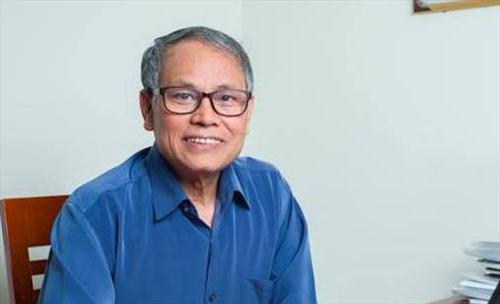
He was always a quiet worker, quietly sharing with everyone, but behind that quietness was a burning and spreading passion for research, profound erudition, a relentless pursuit of new studies, and a warm, kind heart that always empathized with everyone.
For generations of students, Mr. Pham Gia Lam has always been an example of striving for excellence, of a burning desire to acquire knowledge, and of overcoming seemingly insurmountable difficulties. Like many other teachers of his generation, he went through the war years, left the lecture halls to go to the battlefield, then returned to his studies, struggling with the hardships of the subsidy era and the challenges of the teaching profession... The story of those journeys is perhaps endless. But the stories he told about his learning and life experiences truly helped me understand the Russian idiom he often used to encourage me whenever I faced difficulties or complained about my hardships:Bce будет b порядке/All Already will fineThis is the story of the unexpected difficulties that arose as the professor prepared to leave for Russia to pursue postgraduate studies: illness, the challenges encountered after treatment… It is also the story of the arduous journey from Kharkiv to Moscow to contact the doctoral thesis defense committee when his supervising professor in Kharkiv faced internal problems in the early stages.PerestroikaIt was also a story about making a living as a translator during those extremely difficult times… I understood him not only through his stories but also through the process of working directly with him as a student, a research fellow under his guidance, and a colleague in the same department.
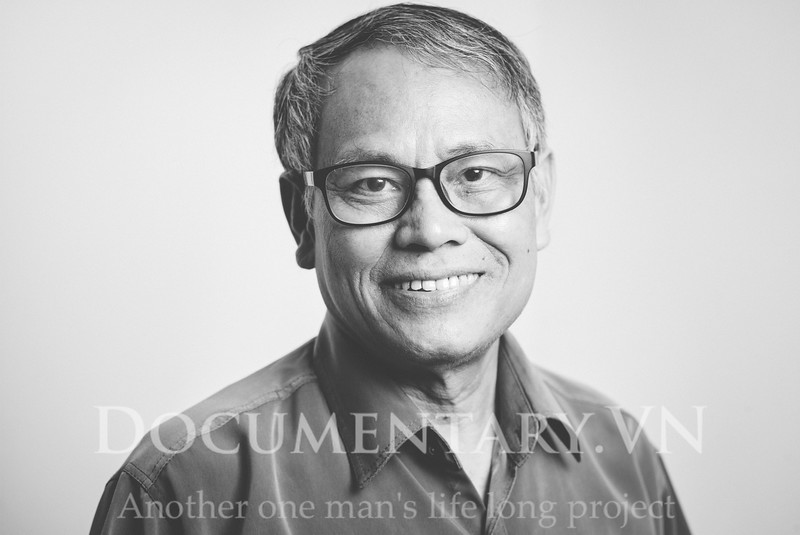
Associate Professor, Dr. Pham Gia Lam
In 2005, when narrative theory was still unfamiliar to Vietnamese researchers, my supervisor guided my graduation thesis, using the light of narrative theory to illuminate the works of a 19th-century Russian classical writer. From the very beginning, he gave me newly published materials on narrative theory by a German scholar written in English. I read, translated, and asked my supervisor many questions, and he was always willing to answer them all. Completing my graduation thesis also meant completing the Vietnamese translation of M. Jahn's work. My supervisor, amidst his numerous responsibilities (at that time he was the Vice Rector of the University), diligently proofread the translation. Over the years, we have been very happy that this translation has assisted many graduate students, undergraduates, and researchers in their work. After that translation, we continued with more difficult, lengthy, and substantial translations, both in English and Russian. My teacher never hesitated to proofread each page for me. I understood that proofreading translations was essentially him teaching me translation, foreign languages, and research skills. And signing translation contracts was also a way for him to help me earn a small amount of money to cover my living expenses. After each translation he proofread, I learned a great deal about translation techniques, language usage, and perseverance in the face of difficulties. And after each translation, he instilled in me a passion for exploring new horizons of knowledge. During his time as Vice Rector and as the "leader" of credit-based training, despite constant meetings and a very busy schedule, he diligently and quietly dedicated time to his professional work. I continuously received the latest and most engaging materials from him in both English and Russian to support my research and teaching. My professor consistently provided guidance and suggestions, helping me to gradually overcome the difficulties and concerns I had in my research.
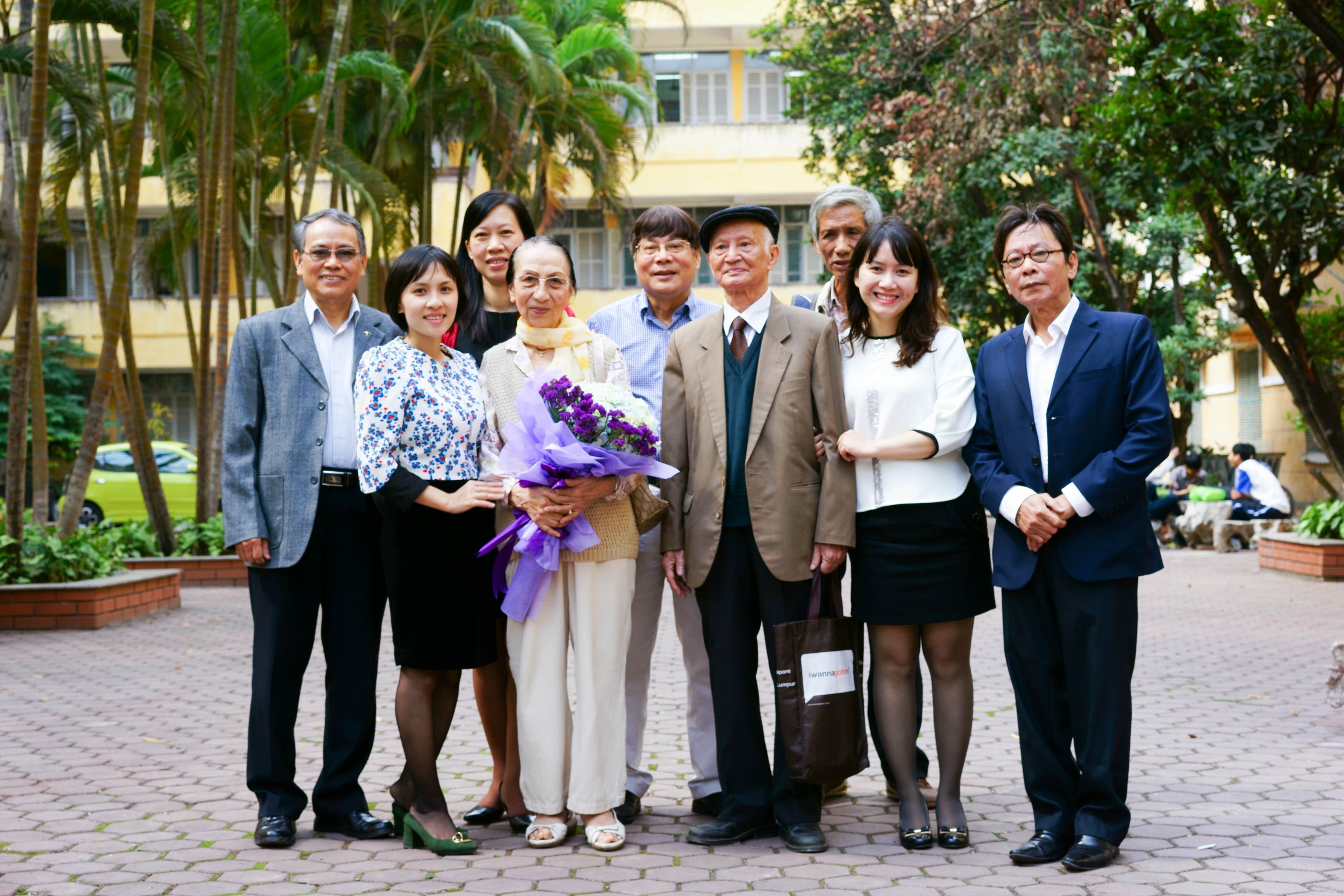
Associate Professor Pham Gia Lam (far left) with faculty members from the Department of Western Literature, Faculty of Literature.
Many teachers and generations of students, when mentioning Professor Pham Gia Lam, share that he was very serious (and strict), meticulous in his work and in his profession. But alongside that, there was also the image of a teacher in everyday life: kind, simple, tolerant, and exemplary. I was his student from my undergraduate years to my doctoral studies, and I have continued his research and teaching work, so I have had many opportunities to interact with him and his family. Whenever I faced difficulties, he and his wife were always ready to share and were always a safe haven for me to turn to. I can never forget his words when he and his wife talked to me during the time I was injured and they took me home to care for me: "Any young staff member in your situation would receive help from us. Like you, we have received a lot of support and assistance from previous generations of teachers." Young faculty members in the Department, both professionally and personally, whenever they had concerns or difficulties requiring support from their professor, he would listen, share, and help wholeheartedly. Talking with him, listening to his slow, deliberate voice, and hearing his stories—both humorous, engaging, and profoundly insightful—everyone felt the kind, approachable "Russian spirit" and the erudition and depth of mind of a model researcher and teacher.
If we were to name Russian studies scholars who have remained steadfast in their research despite changing times, we cannot fail to mention Associate Professor Dr. Pham Gia Lam. He received his doctoral training in Russia and has taught and researched Russian literature for many years. Looking at his research works, one can certainly see a persistent, tireless process of continuous exploration and discovery, seeking new approaches to Russian culture and literature. His articles, for example,Christian motifs in M. Bulgakov's novels "The Master" and "Margarita": An experiment in an intertextual approach.,Cultural symbols in Natasha Rostova's dance ("War and Peace" by L. Tolstoy),Tương tác văn hóa trong sáng tác của V.Nabokov"...not only is it an important reference source in the study and teaching of Russian literature, but the articles also open up new approaches and applications of new theories in literary research. Over the past few years, Professor has chaired a key research project on Russian literature abroad. This has also been an opportunity for the Russian-Slav research group to demonstrate their work ethic and contributions to research and teaching. This year, the book is quite substantial and elaborate."Russian literature abroad:Process – Characteristics – ReceptionThe research findings from that key project will be conveyed to the readers. Currently, Associate Professor Dr. Pham Gia Lam, along with several Vietnamese Russian studies scholars, is attending a major international conference commemorating the 120th anniversary of S. Esenin's birth in Russia. He is both a Vietnamese scholar invited to chair a subcommittee and a presenter of a very interesting and engaging paper in Russian.Проблемы межкультурной коммуникации b переводе стихотворений Есенина na вьетнамских yazsk" (Intercultural communication issues in translating Esenin's poetry into Vietnamese.It can be said that the "leader" of that Russian studies group, through his research and his simple, modest demeanor, inspired and instilled a passion for research in generations of students and colleagues.
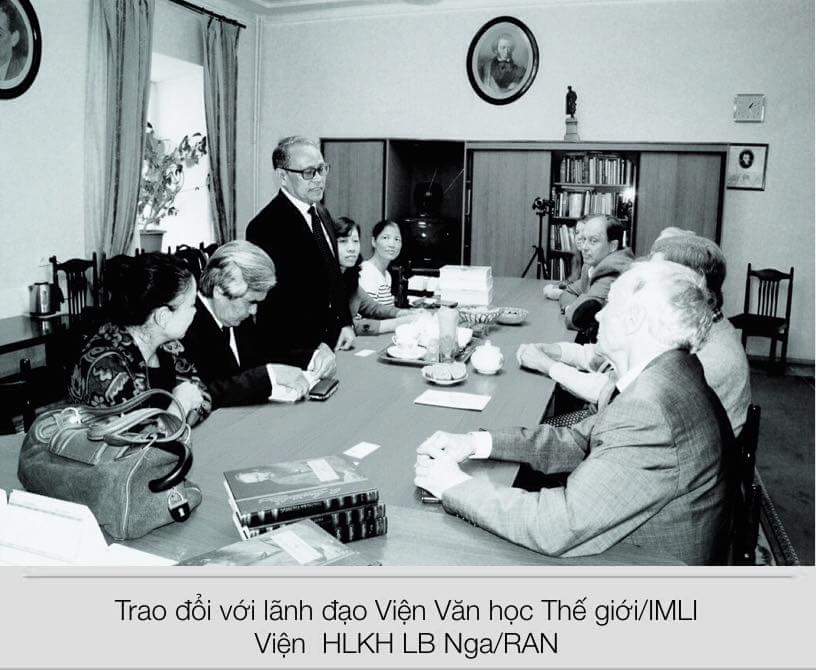
Associate Professor Pham Gia Lam during a business trip to Russia.
Working and talking with my professor, I always remember the Russian proverb he told me during my doctoral thesis defense: Тише едешь, дальше будешь/Quietly, one will go far.
|
ASSOCIATE PROFESSOR, DR. PHAM GIA LAM
+ Workplace: Department of Literature. Board of Directors. + Management position: Vice Rector of the University of Social Sciences and Humanities (2001-2009).
Some recent theoretical issues in the Soviet Union, Literature Magazine (1982). К проблеме влияния творчества M.A.Шолохова na вьетнамских писателей, Вісник Харківського університету (310'87), 1987. Những truyền thống của L. Tolstoi trong các tác phẩm viết về chiến tranh vệ quốc vĩ đại của M. Sholokhov, Tạp chí Khoa học ĐHTH Hà Nội, 1988. Tiểu thuyết Nga xô viết hiện đại: những vấn đề thi pháp của thể loại, Tạp chí Văn học, 1995. Văn hóa Nga – Một hiện tượng tiêu biểu của sự tích hợp và khuyếch tán văn hóa, Tạp chí Nghiên cứu Châu Âu,1996. Changes in artistic thinking in Russian prose at the end of the 19th and beginning of the 20th centuries,Literature Magazine, 1997. In the heart and behind literary masterpiecesSome theoretical and historical issues of literature (Proceedings of the National Conference on Research and Teaching of Literature in Universities), Vietnam National University Hanoi Publishing House, 2002. The Christian motif in M. Bulgakov's novel *The Master and Margarita*: An experiment in an intertextual approach., Journal of Literary Studies,2007. New trends in Gogol studies in Russia today: Perspectives, problems, and lessons learned., Journal of Literary Studies, 2009. Cultural symbols in Natasha Rostova's dance(Chiến tranh và hòa bình của L.Tolstoy), Tạp chí nghiên cứu Văn học, 2010. Sự tiếp nhận tiểu thuyết “Lolita” của V.Nabokov: những khía cạnh văn hóa, Tạp chí Nghiên cứu Văn học, 2012. Tương tác văn hóa trong sáng tác của V.Nabokov, Tạp chí Nghiên cứu Văn học, 2013. Проблемы межкультурной коммуникации в переводе стихотворений Есенина на вьетнамских язык ,Сергей Есенин: Личность. Творчество. Эпоха:сборник научных трудов(вМеждународном научном симпозиу - со дня рождения С.А. Федера-ции). IMLI RAN, 2015. Russian literature abroad:Process – Characteristics – Reception,Hanoi National University Publishing House, 2015. Intercultural communication in literary translation: The case of translating S. Esenin's poetry in Vietnam.,Journal of Literary Studies, 2015. |
Author:Nguyen Nhu Trang

