
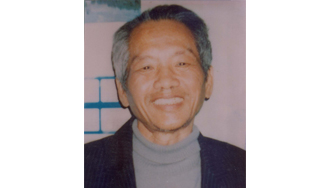
Vo Quang Nhon was born in 1929 in Quang Ngai. He graduated from Hanoi University in 1963, successfully defended his doctoral dissertation in Literature in 1982, and was appointed Associate Professor in 1994.
For many years, at Hanoi University, Vo Quang Nhon specialized in teaching folklore of ethnic minorities in Vietnam. From 1981 onwards, he also taught Southeast Asian literature. Regarding specialized topics, from 1982, he lectured on the heroic epic genre; from 1985, he taught classes on different schools of folklore research.
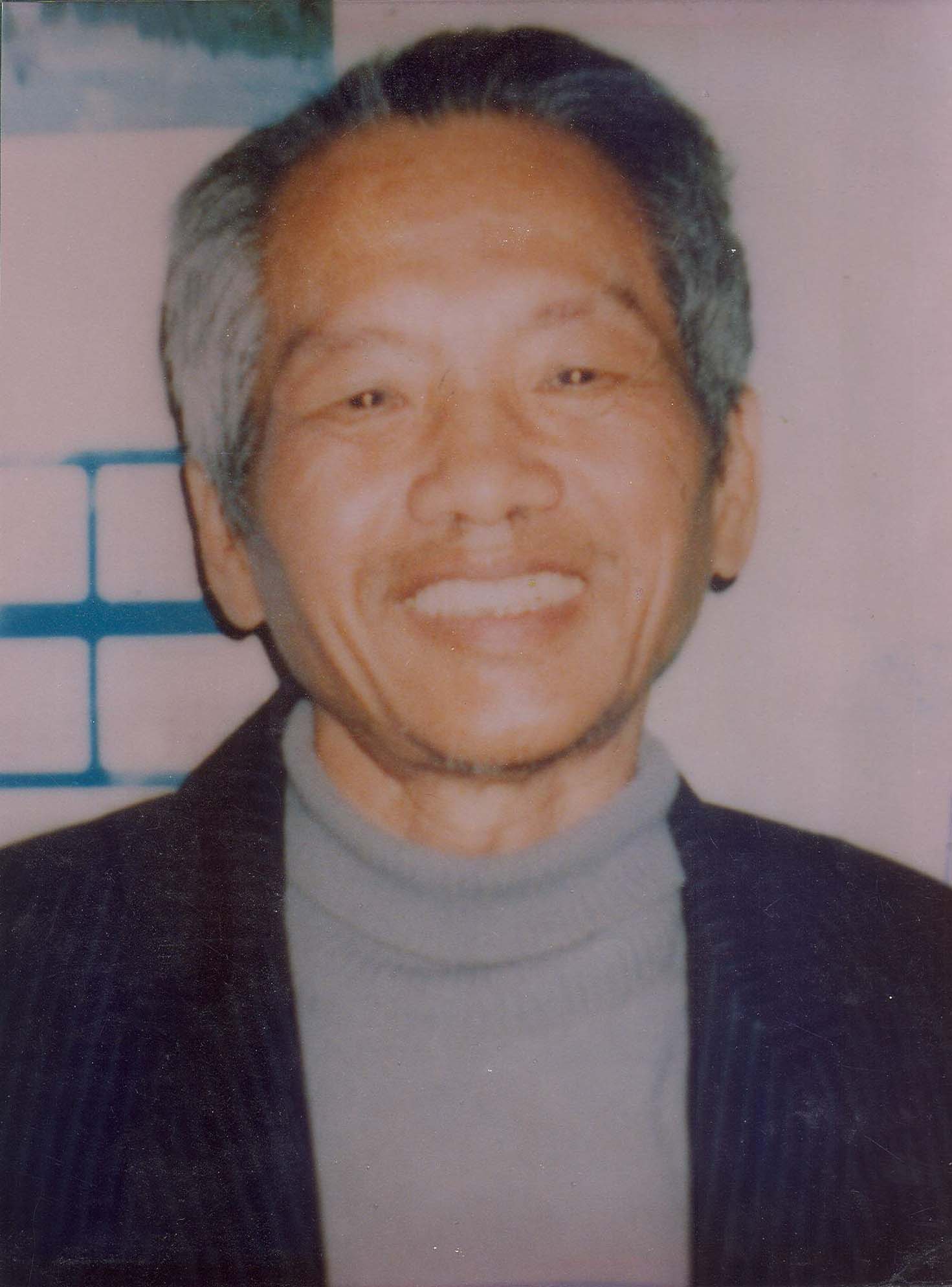
Associate Professor, Doctor, Distinguished Teacher Vo Quang Nhon (1929-1995). He was a researcher of folklore and Head of the Department of Folklore (1990-1992).
In his youth, Vo Quang Nhon experienced life as a citizen and soldier on the Central Highlands battlefield. In 1948, after a period of activity in the local youth movement, the young intellectual and Party member Vo Quang Nhon, "walking on clouds, his hair caressed by mountain winds," went to the people of Cheo Reo (formerly part of Dak Lak province, now Ayunpa district in Gia Lai province) as the district's political commissar. There, he wore a loincloth to clear land for farming, sharpened stakes to kill the enemy, and joined the villagers in singing and playing while trapping birds in the fields, celebrating the Mnamthun New Year in the village, and listening to the village elders tell stories in the communal house. Looking at the dark-skinned young man with thick lips and coarse hair, the people of the Central Highlands forgot that he was a scholar who had graduated from Thuan Hoa High School and mistook him for the son of Bok Klang or a descendant of several generations of Dam San uncles and nephews... It was this deep, heartfelt connection to the Central Highlands that gave him the knowledge and inspiration to compile these anthologies.Dam San Thi(1972)Folk tales of the ethnic groups of Southern Vietnam(1976)Folk Tale of Ca Tu(1978)Folk Tales of Cơ Ho(1984, 1988) and especiallyCentral Highlands folk songs(1976, 1986).
Whether these are materials he collected himself or selected from previously published works, readers can still recognize Vo Quang Nhon's imprint in them. For example...Dam ThiThis is a collection of children's stories that he compiled at the request of Kim Dong Publishing House. However, he didn't simply copy the originals, but retold them in a vivid way. The stories both capture the essence of the Central Highlands' forests and mountains, and are suitable for the thinking of schoolchildren. Or readCentral Highlands folk songsEven the most critical observer would have to acknowledge the serious work and keen understanding of Vo Quang Nhon in this case. The book is compiled from numerous sources. A few were collected by others and carefully selected by him for their content and artistic quality. A very large number of works were collected by others and translated or edited by him. There are also pieces that he himself collected or translated into standard Vietnamese. Given the current state of the team of folklore scholars in our country, especially those with academic degrees and titles like Vo Quang Nhon, this kind of work is very rare.
Besides drawing his main inspiration for collections of folk tales and songs of the Central Highlands ethnic groups as a way of repaying the kindness of those who sheltered him during the nine-year resistance war, Vo Quang Nhon also broadened his vision to include...Roi – Tay folk song(Viet Bac Ethnic Publishing House, 1972). This is the result of his work after his field trip to Cao Bang in 1977. Going even further, he reached even more.Four Champa flowering trees(Lao folk tales, Kim Dong Publishing House, 1970) andHero Hong Kinh Ton,(Korean Folk Tales, Dong Thap Publishing House, 1989). These collections of stories helped Vietnamese readers become familiar with the folk literature heritage of neighboring countries in Southeast Asia and North Asia, and also aligned with his later research direction.
In general, the collection, editing, and compilation of folk literature serves both to benefit readers and is an integral part of the work of a folklore scholar. Long ago, Professor Iu.M. Sokolov wrote: “It should be considered outdated that a folklore researcher could not simultaneously be a collector and surveyor directly examining how folklore exists in real life.”Russian folk compositions,(University Publishing House, Moscow). From that perspective, Vo Quang Nhon is truly a genuine folk writer. Each story, each folk song he conveys to the reader and listener is not just a dry phrase on the page, but is brimming with the breath of life and the vibrancy of cultural activities in the villages and hamlets. It is precisely from this reality that his later writings on theory are not only free from "gray" but also "fresh and green" like the tree of life.
The most persuasive theoretical work of Vo Quang Nhon is his written articles.Epic poems of the ethnic groups of the Central Highlands of Vietnam.(Literature Magazine, No. 4, 1987, pp. 5-21). This article is a developed summary of the doctoral dissertation that he successfully defended on March 22, 1982, at Hanoi University. It can also be said that this article is the culmination of the knowledge he accumulated during his years on the battlefield and at university. In it, we see that Vo Quang Nhon is not only a keenly knowledgeable expert in epic poetry from the oral traditions of village elders, but also possesses a vast body of collected materials and research works in Vietnamese, French, and Russian. He analyzes the unique poetic system through the beautiful imagery, language, images, rhyme, and rhythm of the verses, as well as the performance methods of this genre. This is Vo Quang Nhon's paradise, and also a forbidden garden for some others, as few can overcome the language barrier. To conclude his article, Vo Quang Nhon turned to the typological method and urged his colleagues to "place the research subjects under discussion on a comparative typological level with the epics of related ethnic groups, especially in Southeast Asia."
Here we see that Vo Quang Nhon has transcended the level of a loyal scribe for the ethnic people of the Central Highlands, recording their songs and stories, to become a literary and folklore theorist. He is no longer a deer or squirrel frolicking in the fields, but has transformed into an eagle soaring in the sky, casting his gaze in all directions, "looking North, looking South, looking across the globe," to gain a perspective that is both specific and comprehensive. This ability of his is more clearly demonstrated in his university textbook.Folklore of ethnic minorities in Vietnam(University and Vocational High School Publishing House, 1983, 475 pages). To this day, this book remains a major milestone in systematically introducing the literary and cultural heritage of ethnic minorities in Vietnam. Therefore, its significance extends beyond the scope of a textbook used in schools. It has become a reference book for anyone needing to access this subject. As Vo Quang Nhon wrote in the opening pages: “The textbook on folk literature of ethnic minorities in Vietnam is built according to the general direction of Vietnamese literary history, while also starting from the unique characteristics of each ethnic group to highlight the contributions of the literature of ethnic minorities to the common literature of the entire Vietnamese nation” (p. 10). However, achieving that goal is not easy because the folk literature of the 50 ethnic minority groups, in the words of poet Nong Quoc Chan, is "a garden of many fragrant flowers, and the soil in which it is cultivated is extremely diverse." To overcome this difficulty, Vo Quang Nhon resorted to the typological-historical comparative method to find and explain "the close relationship between the general and the particular, based on the commonalities of the entire Vietnamese community as a foundation, while paying due attention to the unique characteristics of the ethnic minority groups" (pp. 10-11).
When discussing the contributions of Associate Professor Vo Quang Nhon to the literature and folk culture of ethnic minorities in Vietnam, it is impossible not to mention some of his timely, impactful short articles aimed at "praising and encouraging positive elements and criticizing and condemning negative and harmful manifestations in the field of culture and arts."
Those are the articlesFolklore of ethnic minorities through the lens of colonial studies.(1974)Folklore of ethnic minorities in the cultural activities of the American imperialists.(1991)The voice of the Vietnamese ethnic group against Greater Han expansionism through folk literature.(1983). These articles were written during specific political periods and contexts of the country. They reflect the civic consciousness of the scientist Vo Quang Nhon. To this day, many of the arguments in those articles remain highly relevant. We cannot help but criticize the lack of objectivity, dishonesty, and sometimes even deliberate distortion of texts by some French scholars, military commanders, bishops, or administrators when collecting and publishing the national cultural heritage and folklore of ethnic minorities in the Central Highlands and Northwest Vietnam. The use of literary and folklore materials of ethnic minorities to serve governing policies continued even during the American imperialist period and the South Vietnamese puppet regime. Therefore, the above articles by Vo Quang Nhon are necessary and have a positive significance.
Readers have always deeply admired Vo Quang Nhon for his sincerity and the integrity of an intellectual who had followed the Party for many years. This respect is amplified many times over for those who were close to Vo Quang Nhon, witnessing his dedication in thousands of university lectures, supervising hundreds of undergraduate theses and dozens of doctoral dissertations for graduate students.
On January 27, 1995, educator and scientist Vo Quang Nhon passed away. However, the Party, the State, and the scientific community will never forget him. On September 1, 2000, the President of the Socialist Republic of Vietnam signed a decision awarding him the State Prize for his work.Folklore of ethnic minorities in VietnamNot only his spirit in the eternal realm, but also the entire community of folklore researchers, both domestically and internationally, rejoice at this prestigious award.
|
Associate Professor, Doctor, Distinguished Teacher Vo Quang Nhon
+ Workplace: Faculty of Literature, Hanoi University. + Management position: Head of the Department of Folklore Studies (1990-1992).
Four Champa flowering trees(Lao folk tales, compiled). Kim Dong Publishing House, 1970. Dam Thi(Folk tales of ethnic groups, compiled). Kim Dong Publishing House, 1972. Folk tales of the ethnic groups of Southern Vietnam(Two volumes, selected and compiled). Culture Publishing House, 1975-1976. Central Highlands folk songs(Compiled and introduced). Culture Publishing House, 1976; reprinted 1986. Katu folk tales(Compiled and introduced). Culture Publishing House, 1978. Learn about the history and culture of Laos.Social Sciences Publishing House, 1982, Volume II. Literature of ethnic minorities in Vietnam(University textbook). University and Vocational High School Publishing House, 1983. Folk cultureFolklore Culture Department(Published by the Vietnam Social Sciences Committee) in 1982. Cơho folk tales(Compiled and introduced). Culture Publishing House, 1984; Reprinted 1988. History of Lao Literature(Compiled). Education Publishing House, Vientiane. 1985. A collection of folk tales from the ethnic groups of Vietnam.(Editor-in-chief, reference book, used in universities), 1988. Warrior Hong Kinh Ton(Korean folk tales, compiled). Dong Thap Publishing House, 1989. Epic of the Heroes of the Central Highlands(co-authored). Education Publishing House, 1997.
+ State Award for Science and Technology in 2000 for the workFolklore of ethnic minorities. |
Author:Prof. Dr. Le Chi Que

