
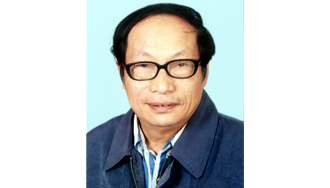
Teacher Vu Cao Dam was born in 1938 in Thai Binh province.
Born and raised during a turbulent period in the country's history, Professor Vu Cao Dam's educational path encompassed diverse educational systems: primary school in French schools, secondary school in schools under the Bao Dai government, and finally high school in schools under the Democratic Republic of Vietnam. He graduated with a degree in technology from Hanoi University of Technology in 1961 and became a lecturer at Hanoi University of Technology and Hanoi University of Mining and Geology.
One might have thought that his teaching and research career would be confined to the fields of science, engineering, and technology, but that wasn't the case. Certain events created turning points in his life and career – a pioneer in exploring new territories in science.
Developing the fields of Scientific Theory and Science and Technology Management.
In the early 1970s, he went to the Soviet Union as a postgraduate student. There, his scientific career took a new turn, as he had the opportunity to work at the Kyiv Institute of Cybernetics and study under Professor and Vice-Director, Academician GM Dobrov – one of the pioneers of the field of Scientific Theory.(Theory of Science)author of the famous bookScience of Science – An Introduction to General Scientific Theory.From this, the professor realized the paradoxes: We study many types of science, but we have never officially learned a simple definition of "What is science?" We study many scientific theories, but we have never learned "Theory of Scientific Theory," much less how to construct a scientific theory. The professor laid the first bricks for the field of Scientific Theory in Vietnam to contribute to answering the above questions.
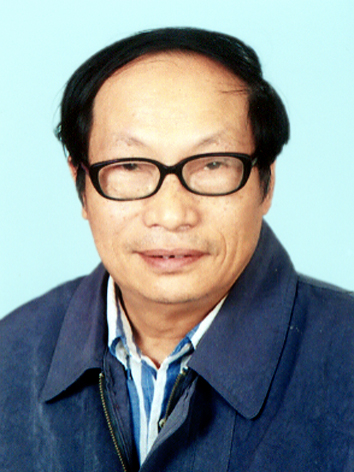
Associate Professor Dr. Vu Cao Dam was the founding Director of the Institute of Science and Technology Management, now the Institute of Science and Technology Strategy and Policy, Ministry of Science and Technology (1978-1992); and Director of the Center for Policy Research and Analysis, now the Institute of Policy and Management, University of Social Sciences and Humanities (2008-2011).
In early 1976, upon learning that Vu Cao Dam was entering the field of scientific theory, Academician Tran Dai Nghia, Chairman of the State Committee for Science and Technology (now the Ministry of Science and Technology), assigned him the task of establishing a research institute for science and technology management. By 1978, he had become the founding director of the Institute for Science and Technology Management at the State Committee for Science and Technology, with its predecessor being a research group on science and technology policy of the State Committee for Science and Technology.
From 1983, Professor Vu Cao Dam began his part-time teaching activities at Hanoi University, initially supervising dissertations on topics related to the modern Scientific and Technological Revolution in the Faculty of Philosophy and the Faculty of Sociology - Psychology. From the mid-1990s, he moved to work permanently at Hanoi University.
Although various approaches to the theory of science have been incorporated into training programs in many countries around the world, their introduction to Vietnam has always been a major obstacle. Professor Vu Cao Dam has devoted tireless efforts to finding ways to integrate it into training programs, primarily by introducing the subject of Scientific Research Methodology into the main curriculum. His books on scientific research methodology were born for this very reason.Scientific research methodology(Science and Technology Publishing House)Textbook on Scientific Research Methodology(Education Publishing House)Scientific research – Theoretical and practical foundations(National Political Publishing House) represents the first attempts to follow a modern and universal approach in scientific research across various fields. Fortunately, these books quickly attracted the attention of colleagues with an incredible number of reprints: Science and Technology Publishing House reprinted them 18 times, Education Publishing House reprinted them 7 times, and notably, in 2015, the book was...Center Career guidance and technology support for nblind people DaystarSwitch to audio devices to serve the visually impaired.
In 1991, Professor Dam, along with colleagues from the Ministry of Science and Technology, launched a Master's program in Science and Technology Policy. In 1997, he collaborated with colleagues from the University of Social Sciences and Humanities, Vietnam National University, Hanoi, to establish a Master's program in Science and Technology Management. In 2012, he began offering a Doctoral program in Science and Technology Management, simultaneously launching a Bachelor's program in Science and Technology Management.
Developing the field of Public Policy – an approach from the perspective of policy science.
Although policy planning may seem like a familiar field, examining policies from modern perspectives is a relatively new area.
In the workPolicy SciencePublished by Hanoi National University Publishing House in 2011, Professor Dam introduced new conceptual pairs, such as the stated and implied objectives of policy, the positive and negative impacts of policy, the externalities and subsequent effects of policy, policy-induced social conflict and inequality, policy paradigms and social construction… Along with these conceptual pairs, the process/methods for analyzing, planning, implementing, and evaluating policies are approached from modern scientific perspectives.Policy ScienceThis is the textbook for the course of the same name, part of the Bachelor of Science in Management program and some other disciplines.
With the collaboration of the Rosa Luxemburg Institute (Federal Republic of Germany), Professor Dam and his colleagues organized numerous training courses for policy planning and implementation specialists in localities such as Bac Lieu, Can Tho, Dak Lak, Gia Lai, Ha Nam, Ha Tinh, Hai Duong, Hai Phong, Kon Tum, Lam Dong, Quang Ninh, Thai Nguyen, Thanh Hoa, and Vinh Phuc. Professor Dam and his colleagues also organized policy training classes for specialists from the Ministry of Planning and Investment, the Central Party Office, the National Assembly Office, the Presidential Office, and the Government Office. Notably, the Institute for Legislative Research under the Standing Committee of the National Assembly sent a letter requesting the University of Social Sciences and Humanities to provide 500 copies of policy training materials for National Assembly deputies.
In 1996, Professor Dam was appointed Head of the Department of Management Science at the University of General Studies by the Director of the National University. In 2003, he was appointed Head of the Editorial Board for the High-Quality Bachelor of Science in Management program. He was also appointed by the Rector of the University of Social Sciences and Humanities as Head of the Editorial Team for the Bachelor of Public Policy and Master of Public Policy programs, scheduled to begin in 2016.
Summary of Vietnam's philosophy of scientific and educational development
Many scholars and administrators have discussed educational and training reforms, but Professor Dam has taken a different approach.
Stemming from his research on the philosophy of science and technology, he realized that the philosophy of education and the philosophy of science always go hand in hand. He devoted much time to researching this fascinating relationship, to demonstrate that reforming the philosophy of education cannot be effective without linking it to the renewal of the philosophy of scientific development.
Starting with the workReflections on Science and Education in Contemporary Vietnamese SocietyPublished by the Science and Technology Publishing House in 2007 and the bookThe Paradox of Science and Education in Contemporary Vietnamese SocietyPublished by The World Publishing House in 2009, the professor discussed the relationship between science and education.
From this approach, Vu Cao Dam developed a philosophical system, which is analyzed in his book.Paradox and Solution: Discussing the Philosophy of Science and Education Development in VietnamPublished by World Publishing House in 2014, it stated the argument that "Science and Education are twin sisters. Science was born to create a treasure trove of knowledge for humanity; while Education was born to return that knowledge to humanity. Without science, education would have nothing to teach; conversely, without education, science would be unknown and unapplied."
The book was introduced by Professor Tran Hong Quan, former Minister of Education and Training. He commented that Vu Cao Dam had: "...discovered many anomalies, many paradoxes that, if still immersed in old ways of thinking, would seem normal, logical, and obvious." He added, "His (Vu Cao Dam's) opinions are not entirely unfamiliar. We have encountered similar opinions here and there, from various people, but nowhere have we seen them as systematic, frank, and thorough as in this work."
Vũ Cao Đàm broadly described the philosophy regarding the relationship between science and education in three stages: Stage 1: Education follows science, transmitting to learners what science has already created; Stage 2: Education progresses alongside science, transmitting to learners the constantly updated knowledge of contemporary science; Stage 3: Education surpasses science, transmitting to learners methods of scientific innovation, the ability to foresee and make decisions that adapt to the ever-changing circumstances of future society.
Based on that premise, Professor Vu Cao Dam determined that the educational reform roadmap must aim towards Phase 3 in the relationship between science and education.
Former minister Tran Hong Quan commented:“…This book will be received with a wide range of reactions, even strong ones, whether in agreement or disagreement. Many of the issues raised here deserve further research."
*
In 2008, when it was being prepared for publication.Collection of published worksOn the occasion of Mr. Dam's 70th birthday, we wrote:"Over more than 40 years of research and teaching, Professor has left behind a wealth of dedicated works for his colleagues both domestically and internationally, ranging from theoretical research on science and technology to articles with practical applications in management and policy planning. Through the works recorded in this collection, it can be said that he laid the foundation and built the fields of Science Theory, Technology Theory, Science and Technology Policy, and Science and Technology Management in our country."Today, we continue to write: Educator Vu Cao Dam was a pioneer who explored new territories in science, namely policy science and the philosophy of scientific and educational development.
To date, throughout his working life, Professor Dam has contributed over 200 articles, 17 books, 12 monographs, and lectures to his colleagues. He has led 9 scientific programs/projects at various levels (including 5 state-level programs/projects), published 9 works in English, served as director/coordinator of 12 economic, scientific, and technological cooperation projects with foreign countries, and led 5 projects to compile strategic documents, policies, and legal regulations on science and technology. He also served as an advisor on science and technology strategy and policy for the Government of Ethiopia (1984) and the Government of Laos (1986).
Looking back at his contributions, we recognize a consistent value: the unwavering passion he has shown in his published and unpublished works for his colleagues. He has trained many generations of students who have achieved success in science and education, but above all, he has instilled in them an boundless love for the fields of science and education.
|
ASSOCIATE PROFESSOR, DR. VU CAO DAM
+ Workplace: Department of Management Science, Faculty of General Studies, Vietnam National University, Hanoi (1995-1996). Faculty of Management Science, University of Social Sciences and Humanities, Vietnam National University, Hanoi (1997-2008). Institute of Policy and Management, Faculty of Social Sciences and Humanities, Vietnam National University, Hanoi (2008-2011). + Management position: Founding Director of the Institute of Science and Technology Management, now the Institute of Science and Technology Strategy and Policy, Ministry of Science and Technology (1978-1992). Head of the Department of Management Science, Faculty of General Studies, Vietnam National University, Hanoi (1995-1996). Head of the Department of Science and Technology Management, Faculty of Management Sciences (1997-2008). Director of the Center for Policy Research and Analysis, now the Institute for Policy and Management (2008-2011). Chairman of the Science and Training Council, Institute of Policy and Management (from 2011 to present).
Scientific research methodology,Published by Science and Technology Publishing House, Hanoi, first edition in 1996, 18th reprint in 2014; Textbook on Scientific Research Methodology,Published by the Education Publishing House, Hanoi, first edition in 2007, reprinted for the seventh time in 2015; Scientific Research, ctheoretical and practical basis, National Political Publishing House, 2008. Evaluating scientific research,Science and Technology Publishing House, Hanoi, first published in 2005, third published in 2012; Policy Science,Hanoi National University Publishing House, 2011; The Paradox of Science and Education in Contemporary Vietnamese Society,World Publishing House, Hanoi, 2009; Paradox and Solution: Discussing the Philosophy of Science and Education Development in Vietnam,World Publishing House, Hanoi, 2014. Some issues in the management of science and technology in our country.,Science and Technology Publishing House, Hanoi, 2012. Discussing Human Resources Strategy,Co-authored with Tran Quoc Vuong and Hoang Duc Nhuan, Truth Publishing House, Hanoi, 1988 Technology Transfer to Vietnam, co-authored with Claes Brundenius and Bo Göransson, University of Lund, Sweden, 1987, Vietnam in a changing world, co-edited with Irene Nørlund and Carolyne Gate, Edition Routledge, United Kingdom, 1992. The Role of Top Level Research Institutions in Vietnamese Policy Making, A Study for Swedish International Development Authority, co-authored with Nguyen Thanh Ha, 1992. |
Author:Assoc. Prof. Dr. Tran Van Hai, Dr. Dao Thanh Truong

