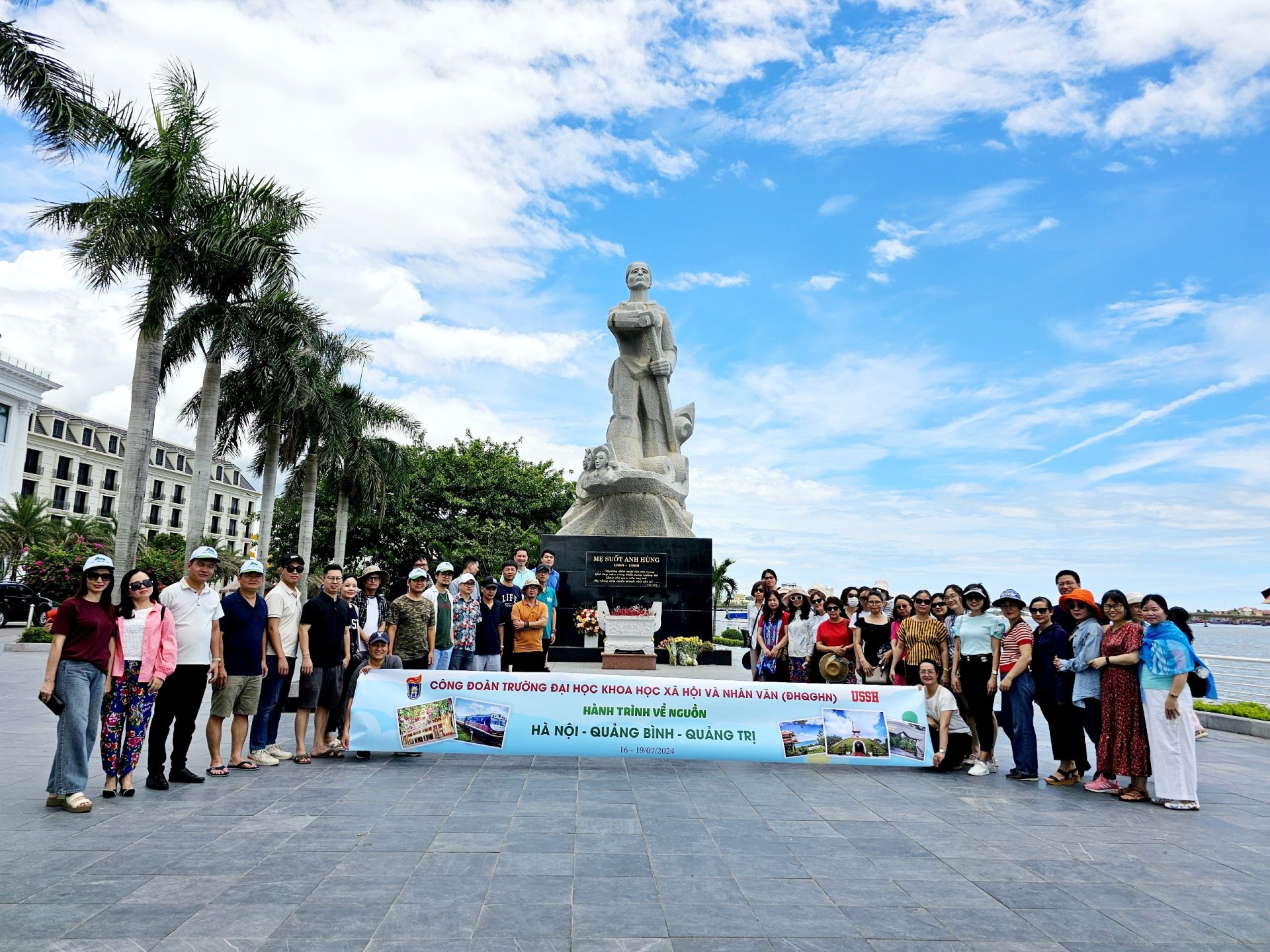
Throughout the 4-day, 3-night "Back to the Roots" journey, this special field trip, experience, and training left many lasting impressions and profound memories for the members of the delegation.
At exactly 8:05 PM on July 16, 2024, the train QB1 began its journey to Dong Hoi, Quang Binh. This was the first train journey for the group of staff and union members from the University of Social Sciences and Humanities to their revolutionary homeland in the central region of Vietnam. The experience of traveling overnight on the train, amidst the camaraderie of colleagues and comrades, brought about exciting emotions, optimism, and a warm sense of unity after months of hard work for the common good.
Quang Tri Ancient Citadel - every inch of land soaked with the blood of heroes.
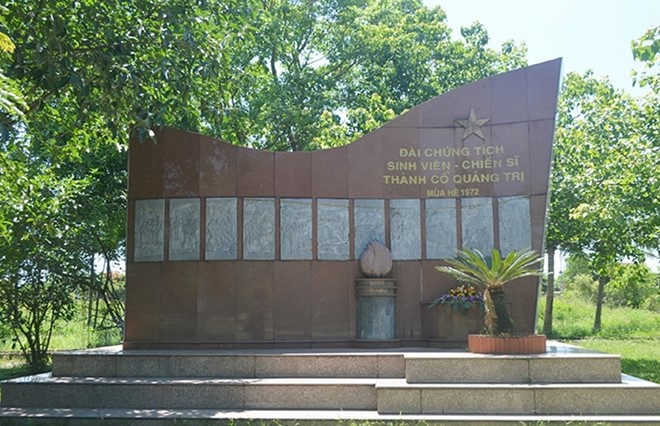
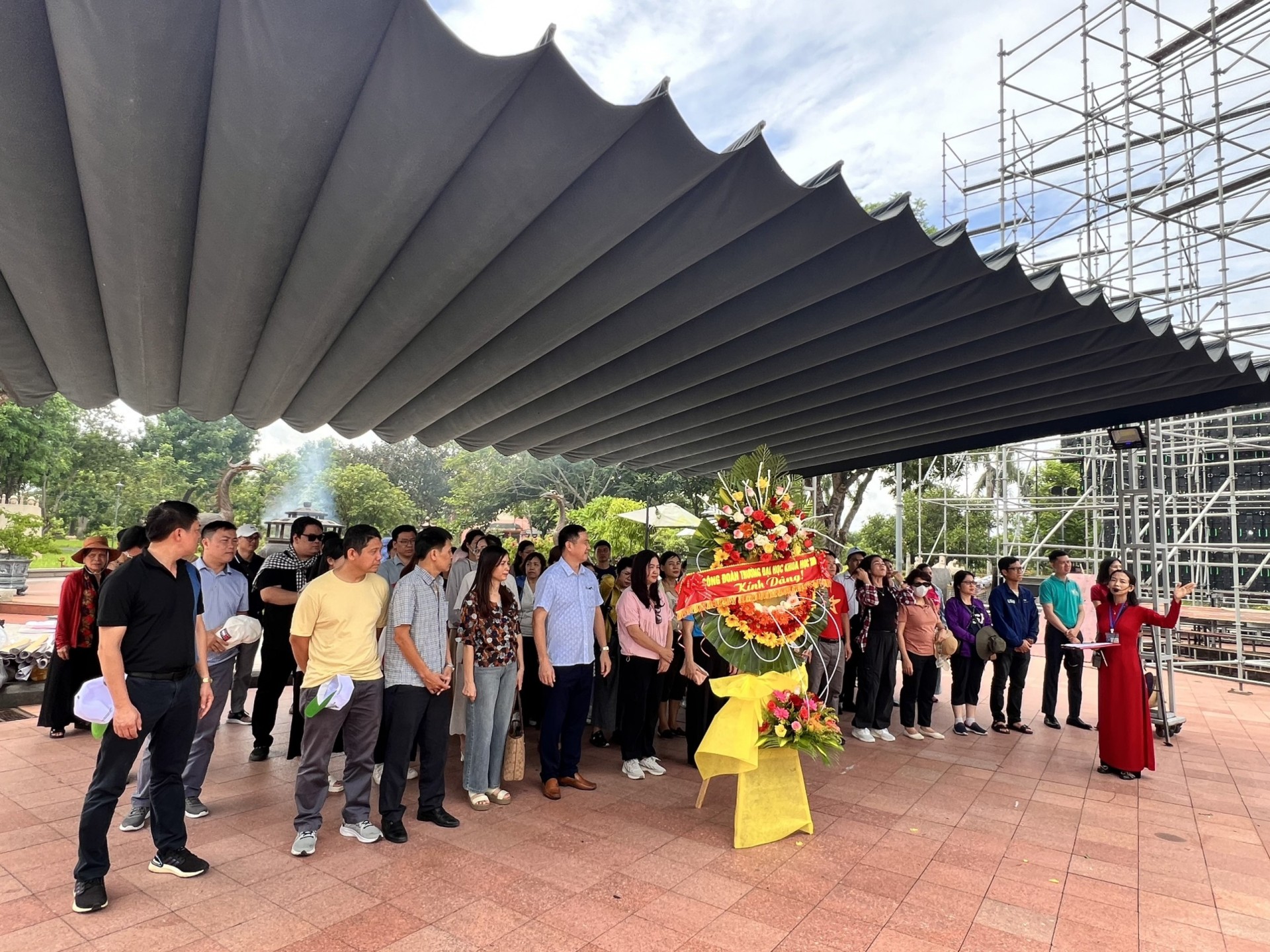
The train arrived at Dong Hoi station early on July 17th. The sunrise in this land of fire greeted us with a cool breeze, not the scorching heat of summers. The sacred land, stained with blood 50 years ago, is now covered in the gentle green of the earth and sky. We set off for over 100 km to Quang Tri Ancient Citadel – a particularly important national historical site. Located on Ly Thai To Street, about 2 km east of National Highway 1A, Quang Tri Ancient Citadel is a complex built during the reign of King Gia Long, a feat of 28 years, beginning in 1809. Through countless historical events, Quang Tri Ancient Citadel bears witness to the ups and downs of history from the Nguyen Dynasty to the French colonial period. Quang Tri Ancient Citadel was once a place of imprisonment for patriots and loyal revolutionary fighters during the pre-insurrection period. The Geneva Accords of July 20, 1954, established the 17th parallel as the temporary dividing line of the country. The Quang Tri Citadel was occupied and became the political, military, economic, and social center—a new type of colony—of the American empire. From that historic moment, the Quang Tri Citadel became a symbol of revolutionary heroism in the 1972 strategic offensive and the historic 81-day and 81-night battle (June 28, 1972 - September 16, 1972). We stand here, deeply moved and admiring this land soaked with the blood of thousands of soldiers. They lived and died for their country until their last breath. During the ceremony to offer incense to the martyrs of the citadel, we only saw the vast blue sky and an indescribably peaceful city. No one dared to step heavily because the blood of these heroes had seeped into the earth and rocks, into the alluvial soil of the riverbanks, bringing eternal peace to the nation. The legendary and tragic story of the 81 days and nights at the Quang Tri Citadel touches the hearts of those standing on this land. Covering an area of over 2 square kilometers, for 81 days and nights, Quang Tri town and the Quang Tri Citadel endured 328,000 tons of bombs and ammunition. On average, each of our soldiers had to withstand 100 tons of bombs and 200 artillery shells, equivalent to the destructive power of 7 atomic bombs that the US dropped on Hiroshima, Japan in 1945. More than 80% of our soldiers perished due to the pressure of the bombs and ammunition. They also fell due to the tropical depression, when the Thach Han River rose, submerging the entire town in water. Many soldiers, while repelling enemy attacks, were immersed in water, subsisting on dry rations, and were utterly exhausted, resulting in countless casualties, sometimes reaching hundreds of soldiers in a single day…
The victory in reclaiming every inch of land at Quang Tri Citadel during the 81-day counter-offensive was of vital importance, contributing decisively to the success of the diplomatic struggle at the Paris peace talks, paving the way for the great victory of Spring 1975, the complete liberation of the South, and the reunification of the country. It is a testament to the unwavering loyalty and filial piety, and the noble sacrifice for the just cause and independence of the nation.
Thousands of soldiers sacrificed their lives in the prime of their youth, with countless unfulfilled dreams. Because it was impossible to recover all their remains, Quang Tri province erected a memorial in the center of the ancient citadel – a common grave for thousands of beloved sons and daughters of the nation who would never return. We lined up to offer incense to the martyrs, climbing the 81 steps symbolizing the 81 days and nights of fighting at the Quang Tri citadel to relive those glorious, painful, and heroic days. We silently gazed at the 81 bas-reliefs, 81 calendar pages recording each day of the 81-day and 81-night battle at the citadel – special calendar pages preserving the sacred spirit of the nation. This place also bears the bloodstained footprints of former outstanding students from Hanoi University and many other universities throughout the beloved North. They left behind their pens and ink, venturing into the fierce battlefield during the fiery summer, leaving their blood and bones to their motherland. A particularly poignant moment for the group was listening to the explanation of the sacred letter that foretold the passing of martyr Le Van Huynh (Kien Xuong, Thai Binh). Sent to his kind mother back home with the genuine feelings of a son far away, he wrote: “Dear Mother! I am leaving, you will live to be a hundred years old and gray-haired. Consider me always lying beside you, Mother, don't be sad so that my soul can fly away peacefully… Please, Mother, don't be sad, consider that I have lived my whole life for the Fatherland”; “I am sitting here writing these last few lines before I go to ‘research the secrets in the heart of the earth’ so that my family won’t find it sudden… Dear Mother! I grew up in your arms from the time I was a baby, and before I could repay your immense kindness, your youngest son has to go to visit my father. I'm sure you will be very sad when this letter reaches you. The pain of childbirth, the precious blood, the precious drop of blood, the yellow leaves remain on the tree while the green leaves fall…”
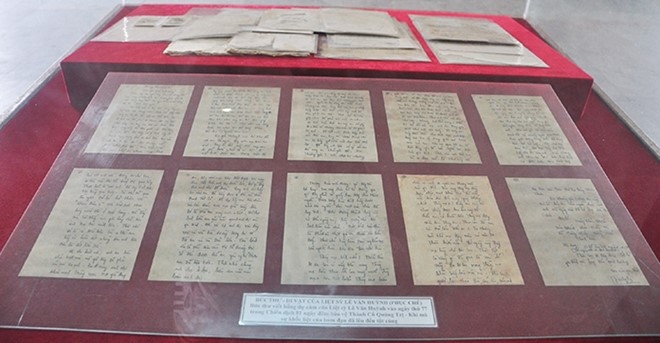
The will is on display at the Quang Tri Ancient Citadel Museum.
Union member Nguyen Thi Phuong Thuy (Faculty of Linguistics) wrote these emotionally charged lines of poetry right on this historical site:
"Quang Tri Ancient Citadel, home to thousands of martyrs"
Whispers, souls carried on the wind.
Beneath the pine trees, the vast forest remains forever.
The Humanities Trade Union overcomes a difficult challenge.
Respectfully lighting incense at the ancient citadel.
The endless green grass seemed to be shedding tears.
Bidding farewell to the beloved Quang Tri Citadel, we bowed one by one to the soldiers' equipment laid out at the exit of the historical site: a floppy hat, a pair of rubber sandals, a water canteen, an AK rifle, and a backpack. So many profound emotions about the magnificent achievements of the generation that fought to the death for their country still lingered in our hearts amidst the gentle summer of peace.
The delegation from the Trade Union of the University of Social Sciences and Humanities offered incense at Quang Tri Ancient Citadel.
TSacred legend of the Trường Sơn soldiersOn the same day, July 16th, our group set off for the Truong Son Martyrs' Cemetery amidst incessant rain. The Truong Son Martyrs' Cemetery is located on Ben Tat Hill, next to National Highway 15 in Gio Linh District, more than 20 km northwest of National Highway 1A. This is the final resting place of soldiers who sacrificed their lives on the Truong Son Trail during the Vietnam War. Construction of the cemetery began on October 24, 1975, and was completed on April 10, 1977. The construction was commanded by the 559th Division Command, with the participation of more than 40 main army and local army units. The Truong Son Martyrs' Cemetery contains the remains of 10,333 martyrs and covers a total area of 140,000 square meters. Of that, the burial ground covers an area of 23,000m2, the monument area is 7,000m2… The burial ground is divided into 10 main areas.
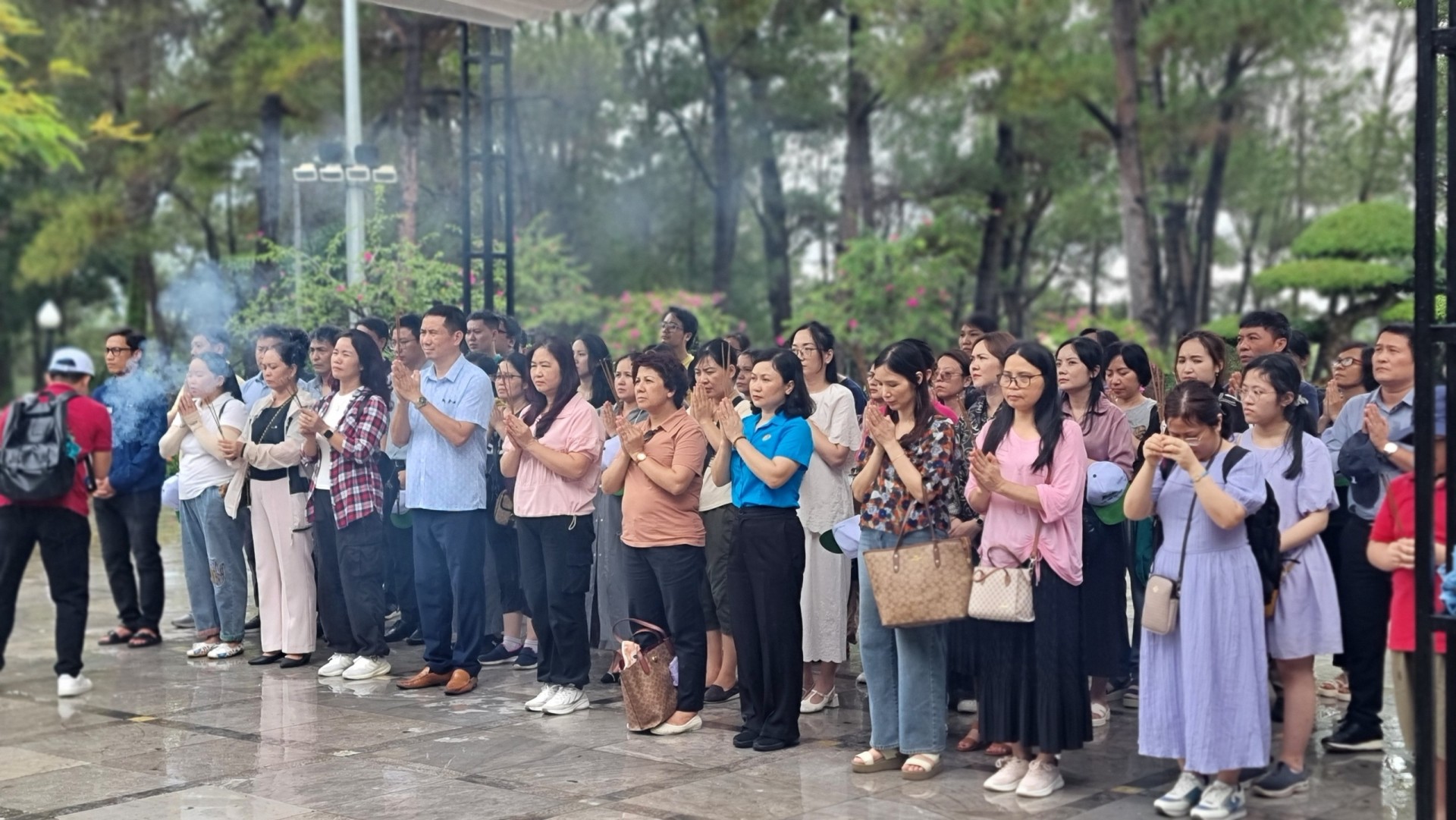
In the pouring summer rain, our group silently lined up to offer incense and commemorate the beloved sons and daughters of our nation who bravely sacrificed their lives for national independence. As the mournful music of fallen soldiers echoed through the Truong Son mountains, many choked sobs and tears of remembrance and admiration streamed down the faces of our union members. After a moment of silence, we dispersed to visit the resting places of the heroic martyrs from all over the country. Tens of thousands of graves, meticulously cared for and adorned with flowers and incense, stretched as far as the eye could see, overwhelming us. The graves of martyrs with names and ages evoked pain because of their young lives. Meanwhile, the graves of "unknown martyrs" stirred boundless sorrow and reverence.
"The Truong Son Mountains have sunshine in the east and rain in the west."
"He who hasn't been there doesn't truly know himself."
(Tố Hữu)
The Truong Son Martyrs' Cemetery is a sacred place where families of martyrs, delegations from the Party and State, local authorities, and military personnel come to pay their respects and express gratitude; it is a pilgrimage site for the people and international friends, reflecting the principle of remembering one's roots. This land has become an eternal symbol of revolutionary heroism, a place to forever honor the legendary soldiers who rest eternally in the embrace of Mother Earth.
At Truong Son Cemetery, the sunlight was fading.
The rain poured down like tears, some drops near, some far.
Ten thousand two hundred and sixty-three.
These are the graves of thousands of young people.
Where time stands still, souls remain forever.
They sacrificed and fought for peace.
They left, leaving no trace behind.
No photograph, no time to say goodbye.
They passed away before their families even knew.
They left, with no promise of return…
Their shadows flickered, their souls like stone.
Silently amidst the swirling currents of time.
The land and sky of Quang Tri are endlessly green…
The young son fell to the ground.
(Nguyen Thi Phuong Thuy)
This moving poem has accompanied us on our journey back to our roots, carrying so much meaning.
The delegation from the Trade Union of the University of Social Sciences and Humanities offered incense at Truong Son Cemetery.
A heartwarming reunion night filled with camaraderie among colleagues.
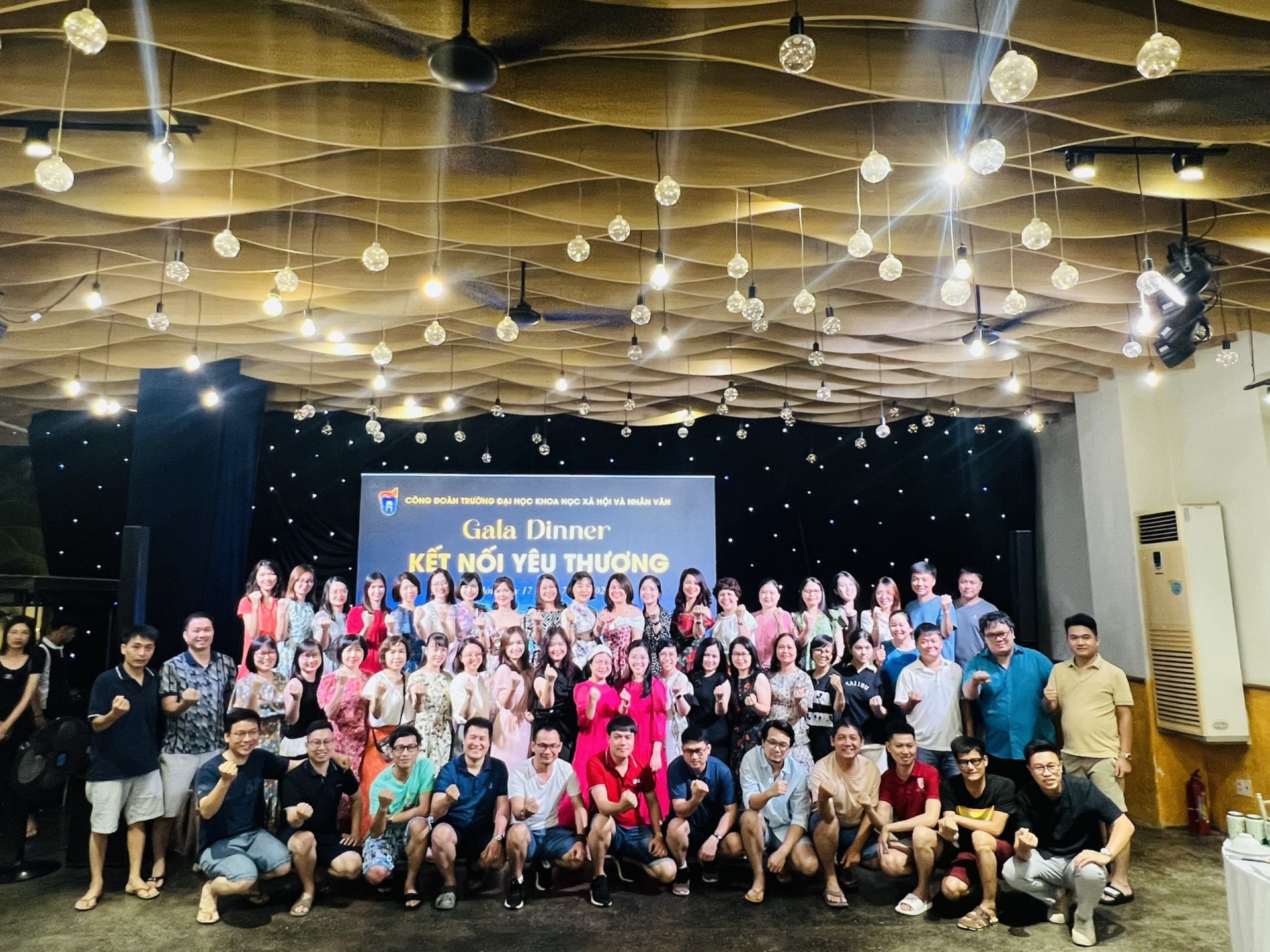
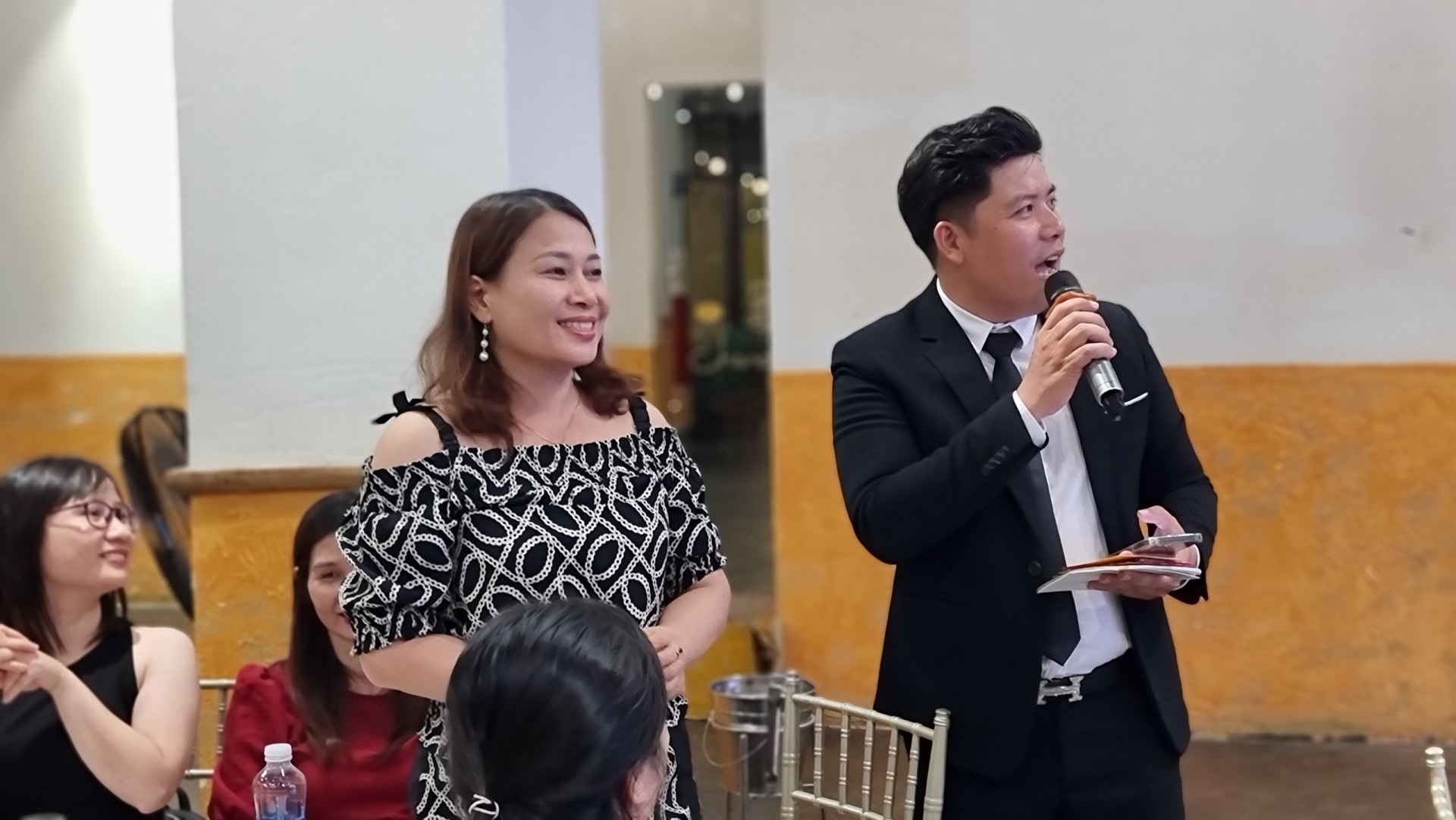
At 7 PM on July 16th, we sat together at a heartwarming party called: "Gala of Connecting Love." The evening took place in a joyful atmosphere, filled with the warmth and camaraderie of union members who are always dedicated to serving others. The heartfelt speech by the Chairwoman of the University's Trade Union, Dr. Ngo Thi Kieu Oanh, to all members of the delegation, inspired a sense of unity, sharing, and a commitment to working for the collective good. The 2024 summer trip to our roots by the "traveling along Vietnam" ship will become a special memory for everyone, representing the University's trade union's efforts to recognize and honor the values and roles of the teachers and union members who have served the union throughout history. The training and networking activities at the Gala aimed to equip delegates with basic knowledge about the functions of the trade union, the duties and responsibilities of union officials and members; and regulations on the organization and operation of the trade union. Regulations regarding the school's policies and benefits for its staff and employees.
In the soft light of the auditorium and amidst the flavorful Quang Binh cuisine, we played fun games: guessing the names of revolutionary songs and familiar songs of youth. The birthday celebration for seven beloved members of the delegation further strengthened the bonds of camaraderie and unity among the union officials. The love song by Mr. Dinh Van Nam, along with many other duets, created a wonderful atmosphere for the party.
2. A heart filled with gratitude and proud experiences.
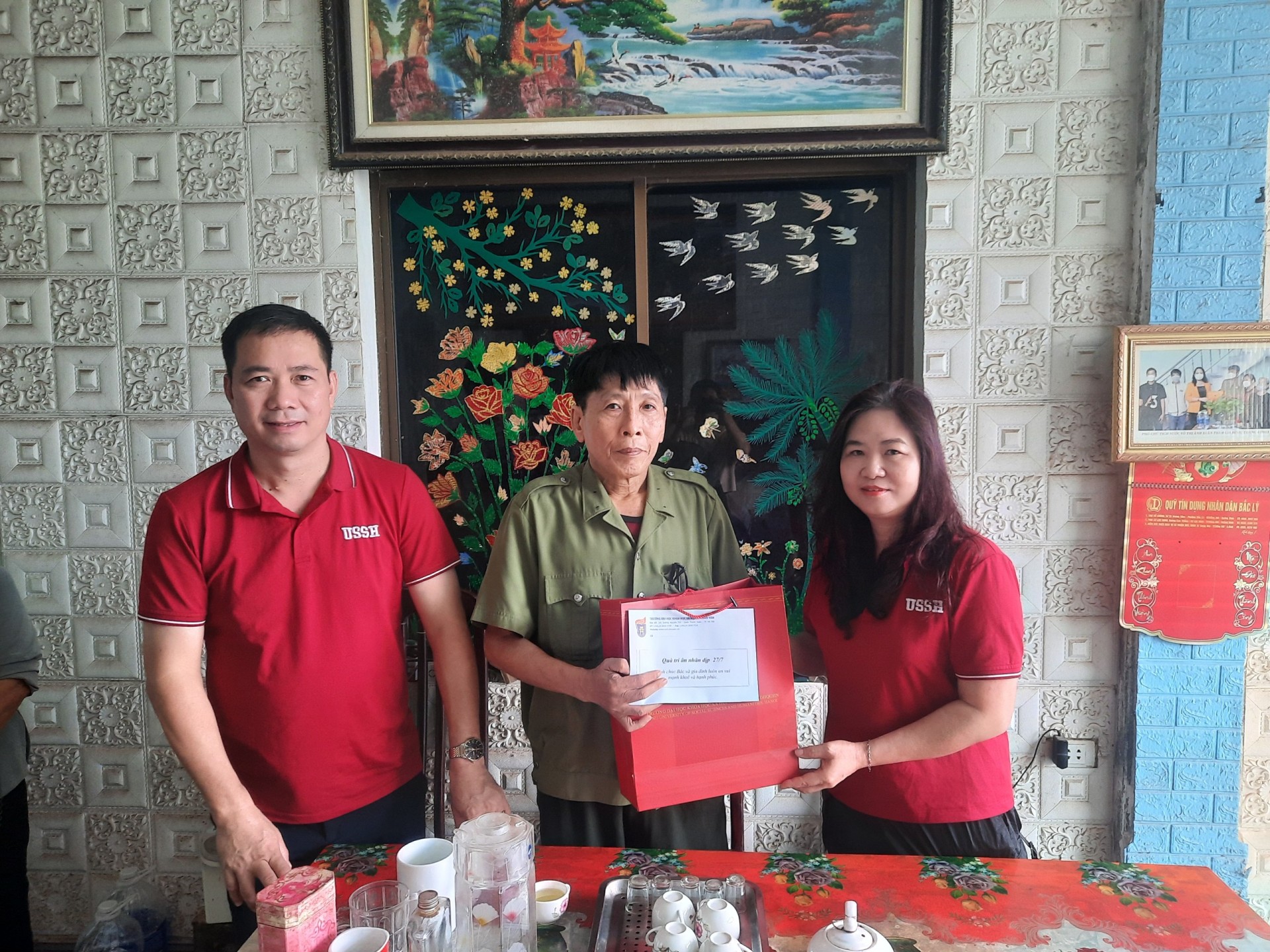
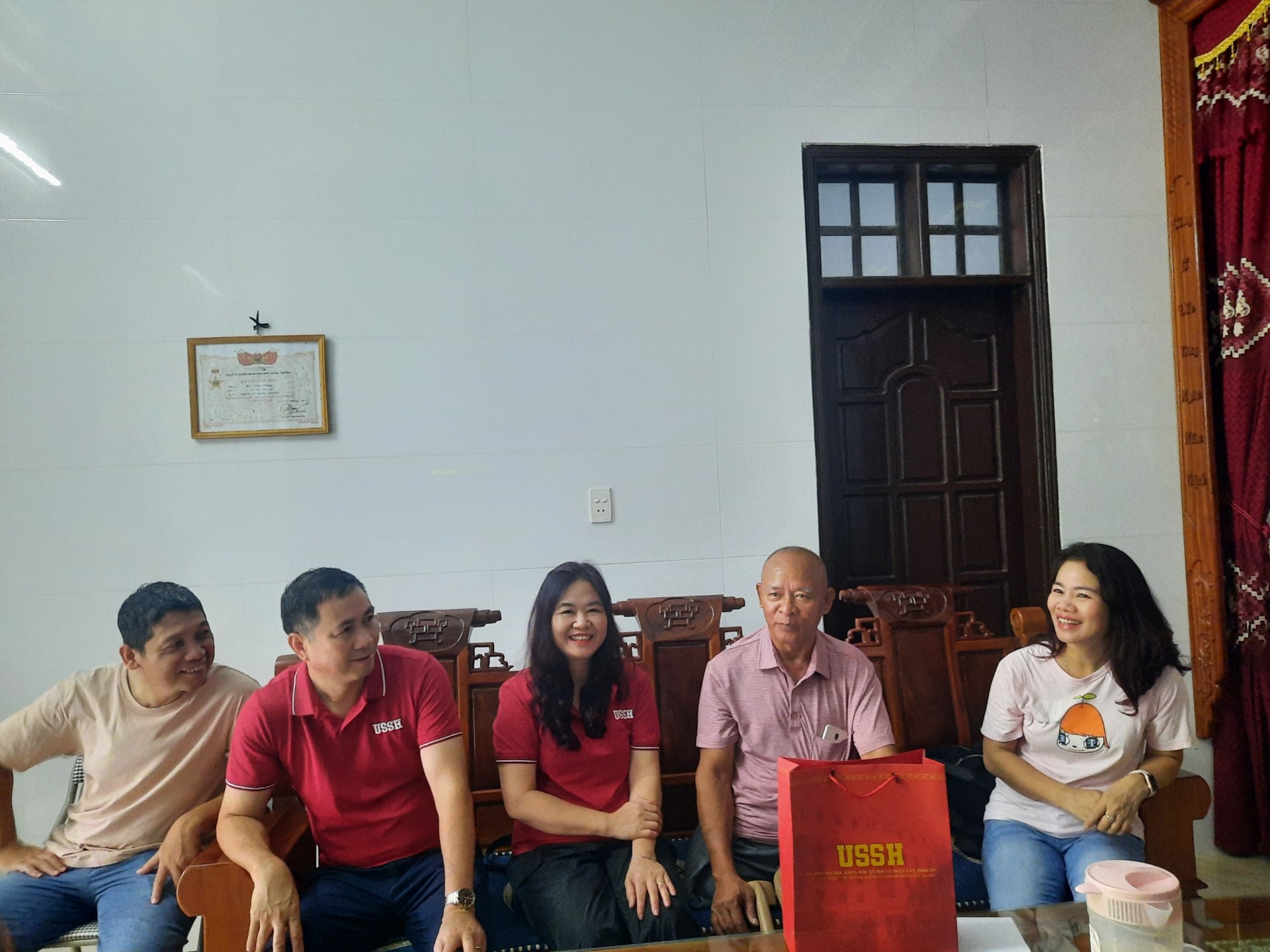
From early morning, while the sunlight on the Cua Tung sea was still hazy on the waves, the delegation organized a visit to and presented gifts to severely disabled veterans (over 81%) in Dong Hoi city. The delegation directly presented gifts of gratitude (1 million VND and a gift bag each) to three severely disabled veterans: Mr. Ho Van Dung in Tan Phu village, Quang Phu commune. Mr. Dung's wife is unemployed, and the couple lives on preferential allowances. Mr. Nguyen Van Hieu in Nam Phu village, Quang Phu commune. Mr. Hieu's wife recently passed away, and he is currently living alone in a difficult situation. Mr. Ngo Thanh Huan in Loc Dai village, Loc Ninh commune. Mr. Huan's wife and two children do not have stable jobs, and the family is facing hardship. The delegation also sent 7 gift packages, each worth 1 million VND, to the Department of Labor and Social Affairs of Dong Hoi city to be given to 7 other disabled veterans in the city.
The next leg of the journey is a visit to Thien Duong Cave – the largest, most magnificent, and splendid cave complex in Phong Nha Ke Bang National Park. Dubbed the "underground labyrinth," Thien Duong Cave is a top attraction for tourists from all over. The exploration seems endless, with its stalactite formations bestowed by nature, boasting incredibly captivating shapes and colors. The group will explore Thach Thien Cung Cave, Thien Ha Waterfall, Quan Tien Tu Hoi Cave, Lien Hoa Tower, and more. The trip further instills a sense of pride in the beautiful landscape, alongside the glorious historical achievements of this steadfast land.
In the afternoon, the delegation departed to visit the tomb of General Vo Nguyen Giap, offering incense to pay tribute to the outstanding General of the nation. Located about 75 km north of Dong Hoi city center, on Vung Chua, Yen Island, near Le Thuy district, the General's hometown, the tomb of General Vo Nguyen Giap is surrounded by three islands: Hon Gio, Hon Nom, and Hon La. To visit the General's tomb, the delegation climbed 103 steps, symbolizing the General's age. For the past 10 years, the General's tomb has become a sacred and familiar place for people from all walks of life. The delegation offered incense in remembrance of General Vo Nguyen Giap – the first General of the Vietnam People's Army, an outstanding military theorist, and a brilliant military leader of the Vietnamese nation.
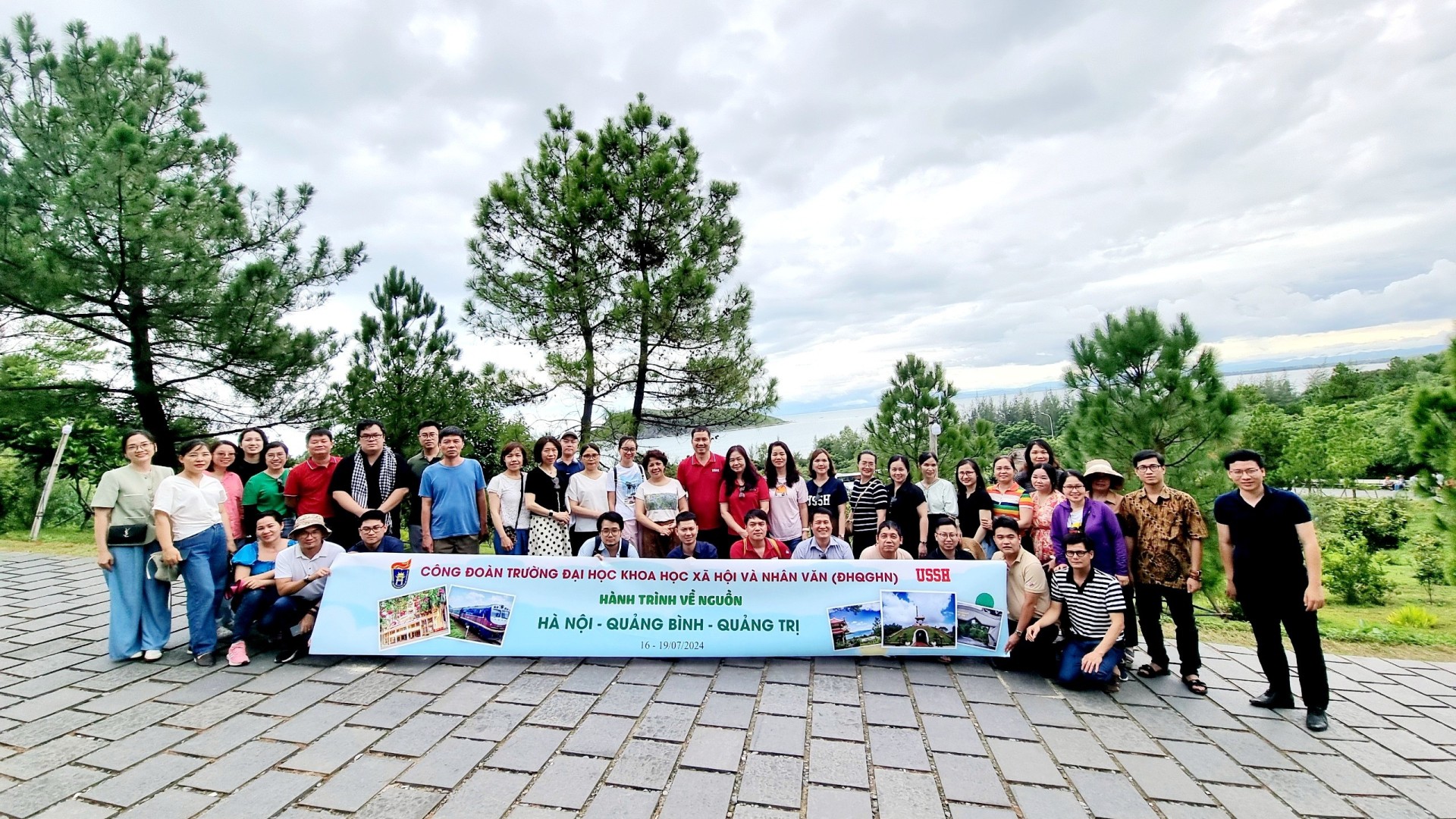
The next stop for the delegation was the Memorial Area of the C283 Youth Volunteer Company in Thanh Trach (Bo Trach, Quang Binh). The memorial area, built on nearly one hectare, includes many significant features: a memorial temple, a memorial monument, a lake, a main gate, and a ceremonial courtyard. The memorial was built to commemorate a historical event: on January 13, 1973, hundreds of youth volunteers from units such as Cu Chinh Lan (Nghe An, Ha Tinh), Hai Hung 283, workers from Gianh Port 309, the 16th Fuel and Oil Regiment, communications troops, and people from the Quyet Thang Cooperative were transporting goods from ships to warehouses to serve the Southern battlefield when they were attacked by the 7th Fleet and American aircraft. The devastating bombing claimed the lives of 156 people, including soldiers, youth volunteers, and 32 civilians. The memorial site commemorates the selfless sacrifices of the heroes and martyrs who fell in battle.
3. Visiting Mother Suốt and Quảng Bình Gate – a farewell to beloved Quảng Bình.
With only a few hours left by the Nhật Lệ River, our group visited the monument to Mother Suốt – a legendary figure of a heroic Vietnamese mother. The monument to Mother Suốt is located on Quách Xuân Kỳ Street in Đồng Hới City. During the resistance war against the US from 1964 to 1967, Mother Nguyễn Thị Suốt volunteered to row boats to transport soldiers across the river, maintaining communication between the two banks, and transporting weapons and ammunition along the Nhật Lệ River day and night, regardless of enemy bombs and bullets. It is estimated that Mother Suốt rowed more than 1,400 trips each year. In 1968, Mother Suốt sacrificed her life during a US cluster bomb attack and was posthumously honored as a martyr by the State.
In the sun and wind of Nhật Lệ on our farewell day, our group quietly recited a poem by Tố Hữu:
"Never mind old age."
Let's keep competing to the very end!
I lifted my head, my mother's hair was shaking.
The wind stirs like crashing waves, turning the shore white...
What kind of liver is that, Mom?
My mother said: "To save the country, who are we waiting for?"
In remembrance of Mother Suốt and with a deep affection for Quang Binh province, the group stopped at Quang Binh Gate – an architectural relic located in the heart of Hai Dinh ward. The ancient, moss-covered structure reflects the passage of time, possessing both historical and artistic value, and symbolizing the culture of this land of outstanding people and rich history.
Homecoming experiencesWe gathered at the train station to return to Hanoi at noon on July 19th, the cool breeze from the Nhat Le River still stirring our spirits. The lingering, solemn atmosphere of the 72 cemeteries on the Truong Son mountain range still permeated the vast space towards Cua Tung and Cua Viet. The fiery summer of 1972 will forever be a testament to the unwavering will of those who were willing to lay down their lives for the peace of the nation.
During a visit to the ancient citadel, General Secretary Le Duan wrote: "We endured not because we were made of steel, for even steel melts under their bombs and bullets. But because we are human beings, truly human beings - Vietnamese people, with a 4,000-year tradition who have deeply understood their immense responsibility to the Fatherland and to the times."
That day, ...
"We went without regretting our lives."
(How can one not have regrets in their twenties?)
But if everyone regrets losing their twenties, what will become of the homeland?”
(Thanh Thảo)
This is a source of inspiration to feel the burning patriotism and indomitable will of Vietnamese youth and the Vietnamese nation during the most brutal years of the resistance war against the US to save the country. It is also a source of inspiration for each trade union official in the school to become more deeply aware of their responsibility towards improving the status of workers, protecting human rights and the sacred sovereignty of the nation; and to be aware of the great cause of the Vietnamese people: awakening the conscience of humanity to the aspiration of "independence, freedom, and unity" for the entire nation, and for peace throughout the world.