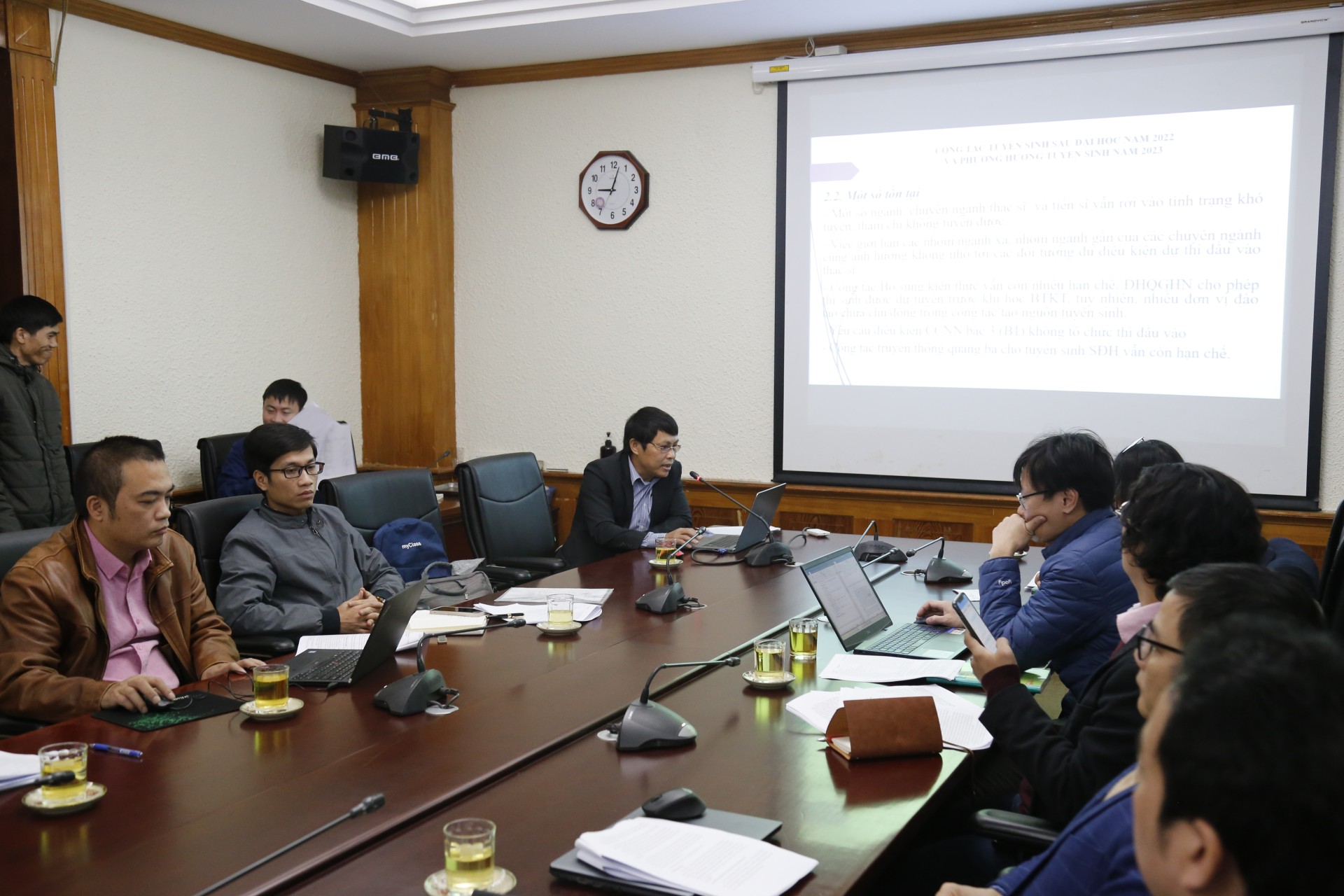
Attending the conference were representatives from the leadership responsible for admissions in the faculties/departments, and the leaders of the Training, Planning - Finance, Cooperation and Development, and General Administration departments.
Opening the conference, Dr. Hoang Van Quynh (Deputy Head of the Training Department), on behalf of the University's Admissions Board, presented an overview of the report on the results of admissions for bachelor's, master's, doctoral, and dual degree programs in 2022, as well as the admissions direction for 2023.
Deputy Head of Training Department Hoang Van Quynh presented a summary report highlighting the achievements as well as some shortcomings in the 2022 enrollment process.
Regarding regular undergraduate admissions, in 2022, the University of Social Sciences and Humanities received over 25,000 applications across 5 admission methods, with 92% of the total applications being based on high school graduation exam results. The total number of admitted and enrolled students reached 107.92% of the target, with most majors meeting or exceeding their targets. The university continues to be the leading institution within Vietnam National University, Hanoi in terms of the number of applicants and applications.
Regarding postgraduate admissions: 2022 was a year of outstanding success in doctoral admissions, with the number of applications and applicants increasing by over 200% compared to the initial target. The number of applications and successful candidates through direct admission also increased significantly. 2022 was also the year the University of Social Sciences and Humanities first applied a new admission method for master's programs, shifting from traditional entrance exams to selection based on application review (combining document evaluation and interviews), which yielded positive results.
Regarding the 2023 admissions plan: Based on the 2022 admissions results and some remaining issues, as well as responding to the actual situation when Hanoi National University issued a new training regulations with many changes, the School proactively proposed short-term solutions with several key tasks: strengthening communication and promotion of postgraduate training programs through mass media; disseminating changes in admissions regulations to those in need; developing a plan to integrate and streamline some difficult-to-recruit master's programs; prioritizing the development of strong programs; and building a system of professional interview questions to provide to postgraduate applicants so they can prepare well for the application process.
Representatives from various faculties/departments unanimously agreed that the 2022 regular and postgraduate admissions process had many positive aspects and achieved good results. Some majors had admission scores among the top in the country, and even basic science majors, which are usually difficult to recruit for, met and exceeded their targets in 2022. Communication efforts were effective, particularly in conveying some of the innovations in the admissions process to prospective students. To achieve even better results in 2023, representatives proposed several solutions: expanding the number of dual-degree programs to provide students with more choices; strengthening support for graduate students and doctoral candidates, especially by promptly approving supervisors for each doctoral candidate to ensure students can focus on their studies and have more time to prepare for their dissertations; and diversifying communication and admissions counseling methods.
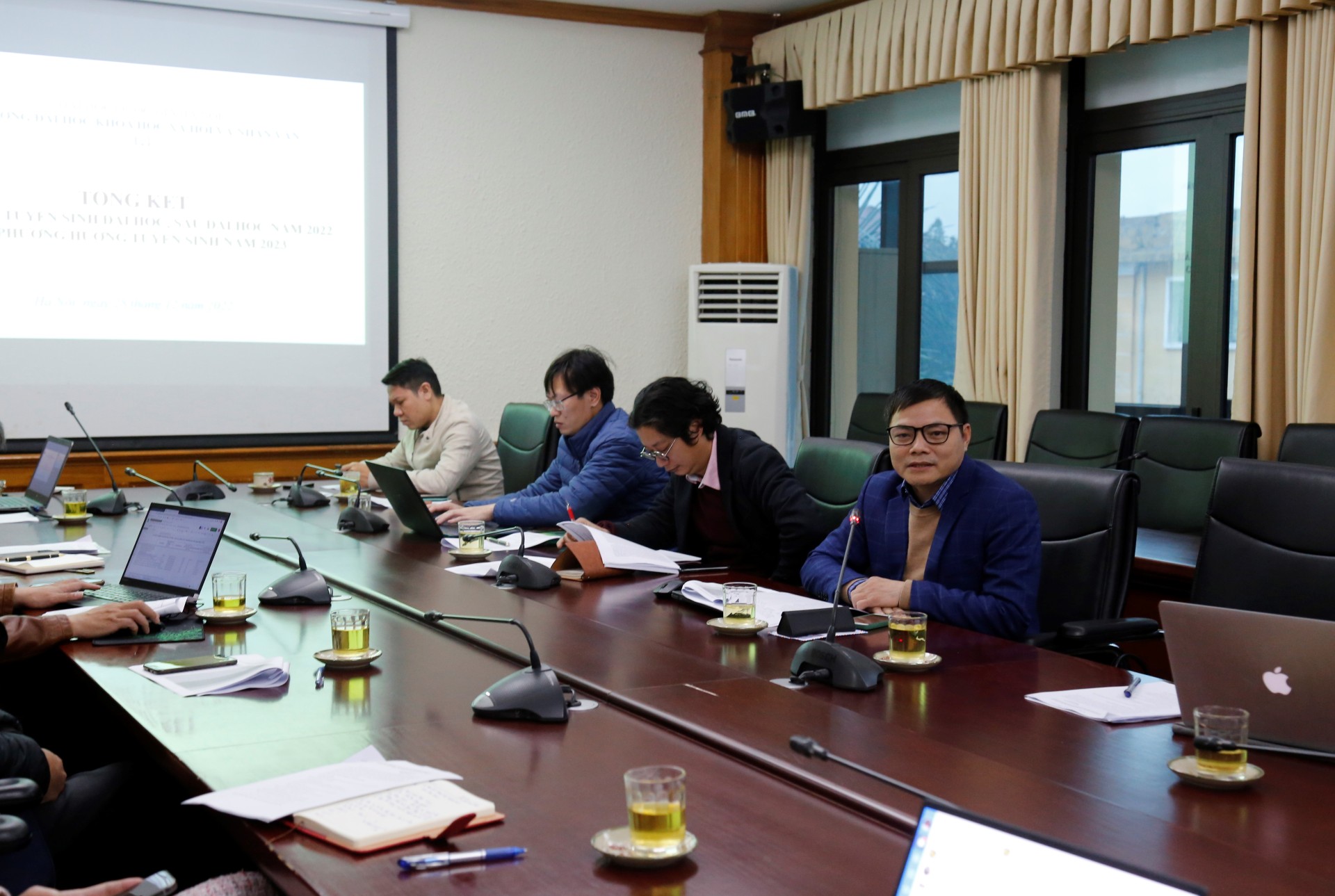
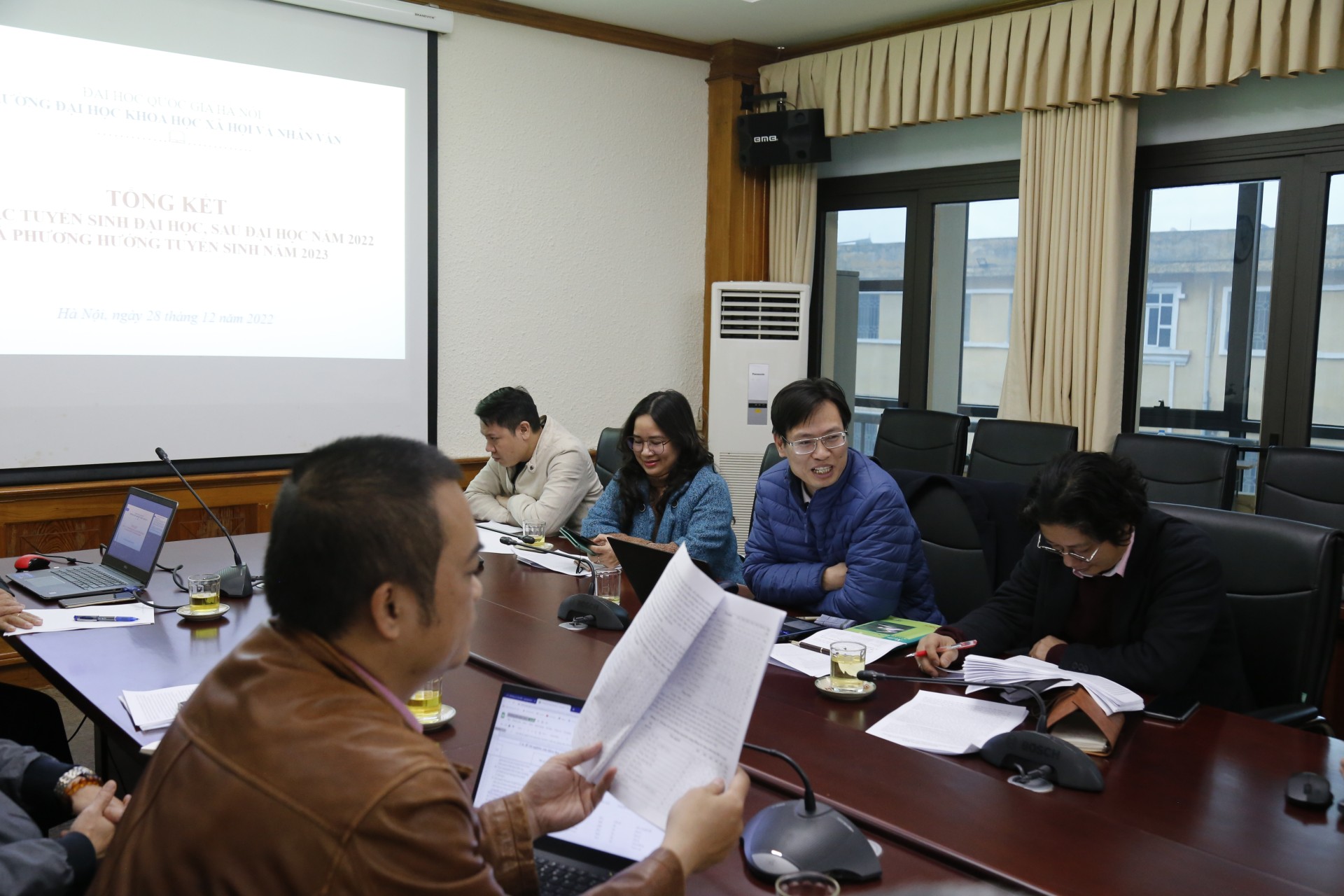
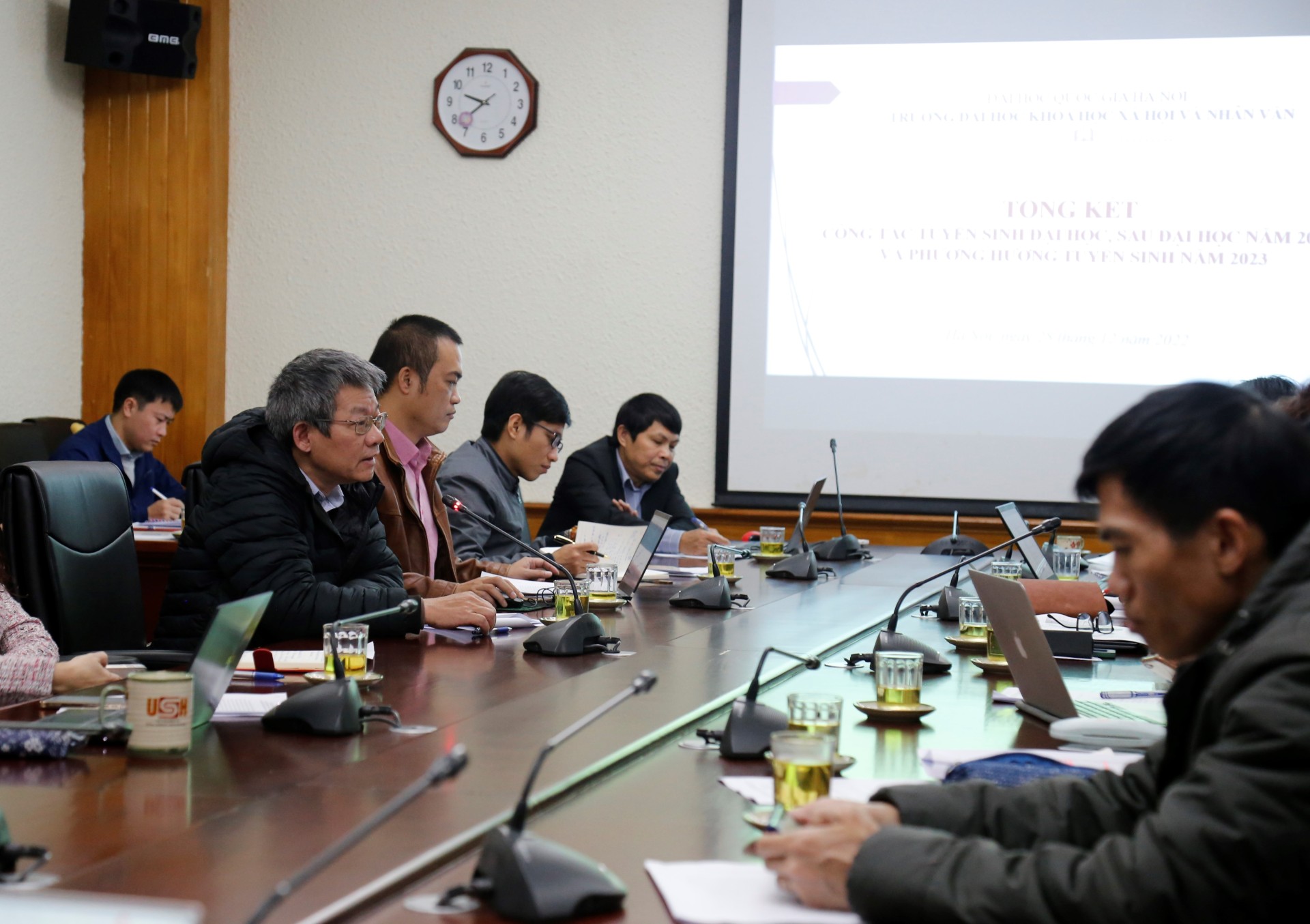
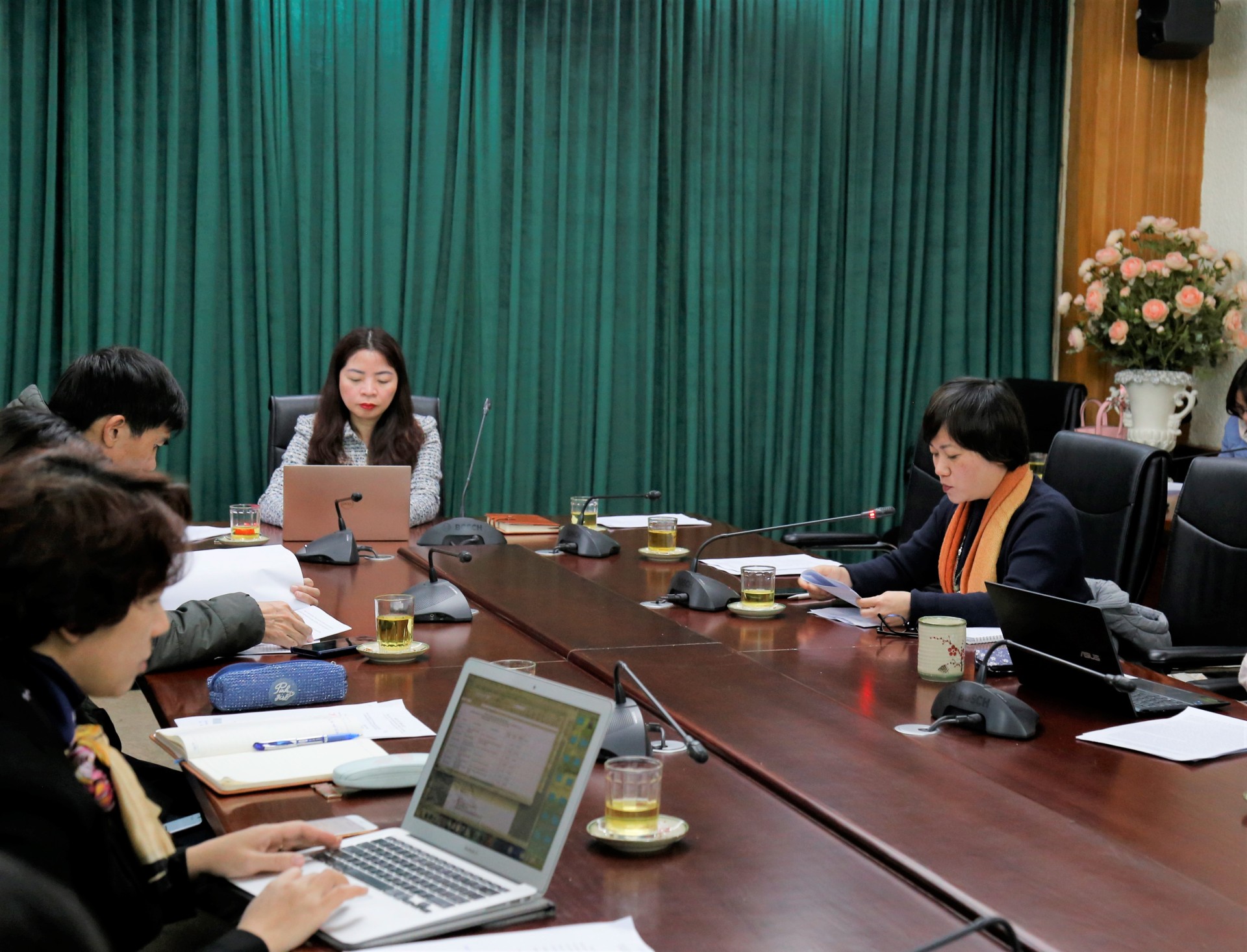
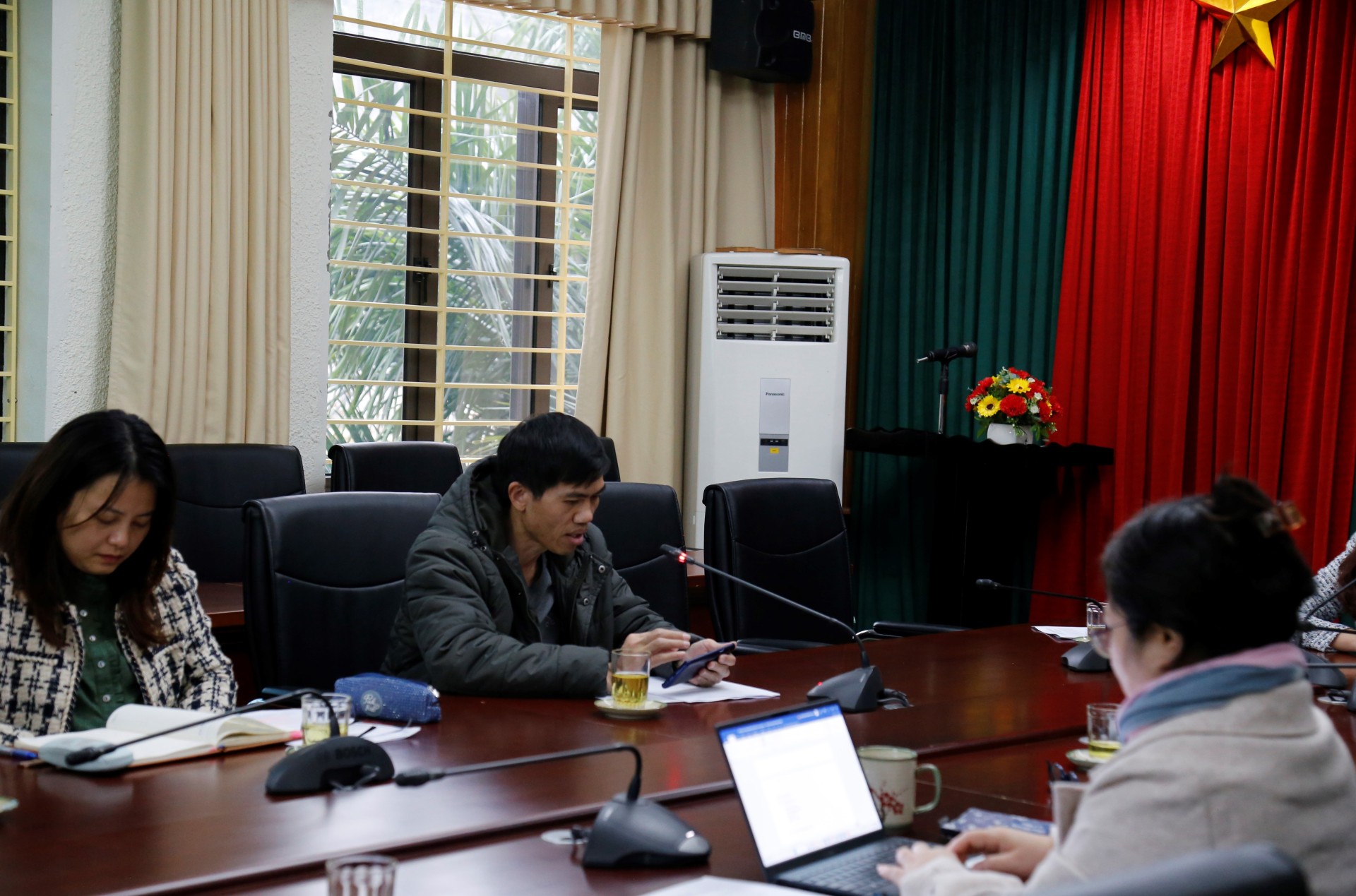
Representatives from the Faculty leadership discussed and proposed several solutions to improve the quality of the admissions process.
Concluding the conference, Assoc. Prof. Dr. Dang Thi Thu Huong, on behalf of the University's Admissions Board, thanked the leadership and faculty members of all departments/divisions for their support and efforts in the 2022 admissions process. She emphasized that 2023 will see many new changes in the Ministry's and VNU's admissions regulations, therefore proactive measures are needed to develop appropriate and effective admissions plans. To provide more quantitative data for adjusting the quotas of the admissions methods in a reasonable manner, closely aligned with the actual situation and student needs, and to improve training outcomes, a survey of student learning outcomes across the five admissions methods should be conducted. It is also necessary to strengthen communication and admissions counseling efforts to reach a wide range of parents and high school students, especially for new majors and those that have been accredited and charge tuition fees according to economic and technical standards.
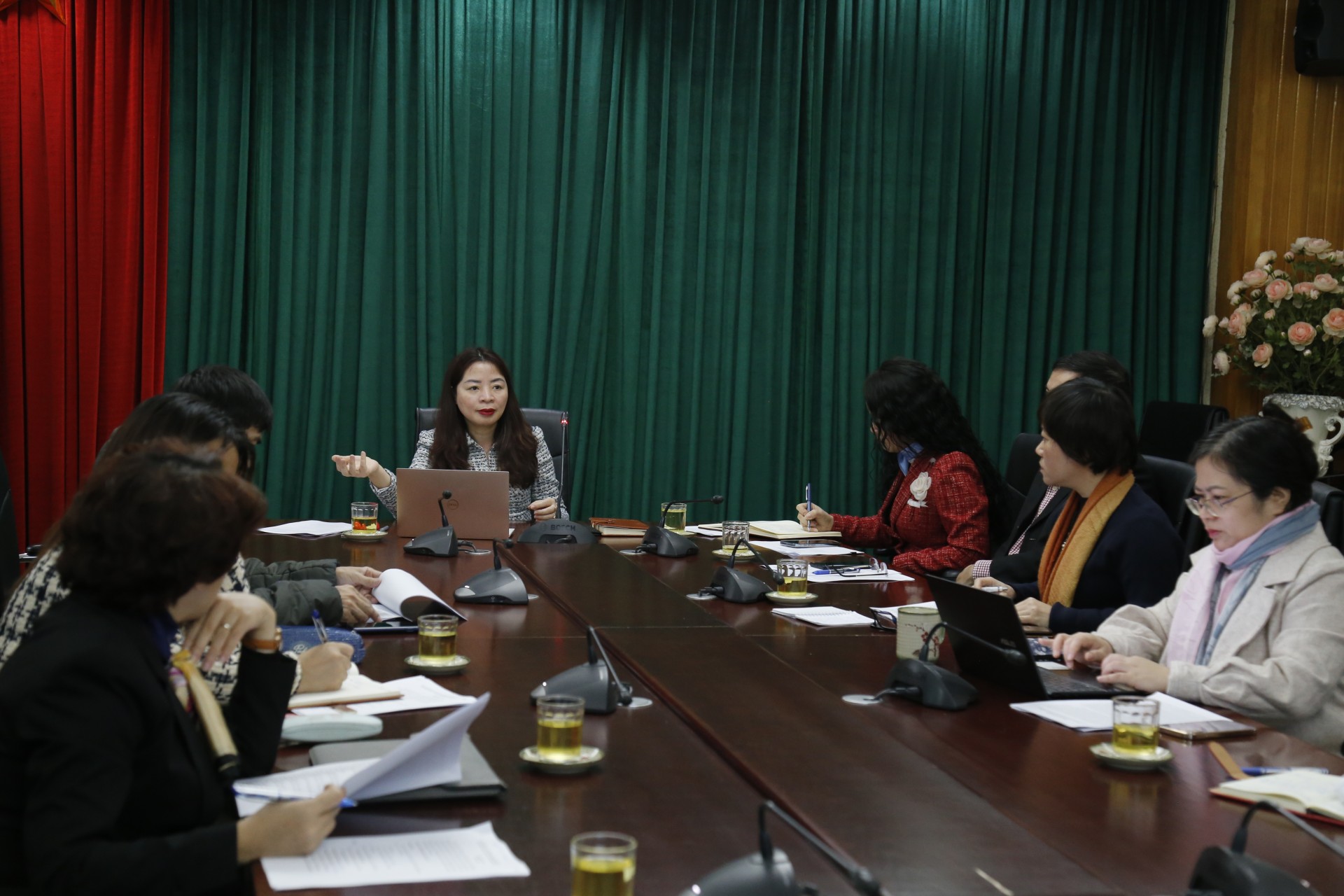
In her concluding remarks, Vice Rector Dang Thi Thu Huong emphasized several key tasks in the 2023 admissions plan.