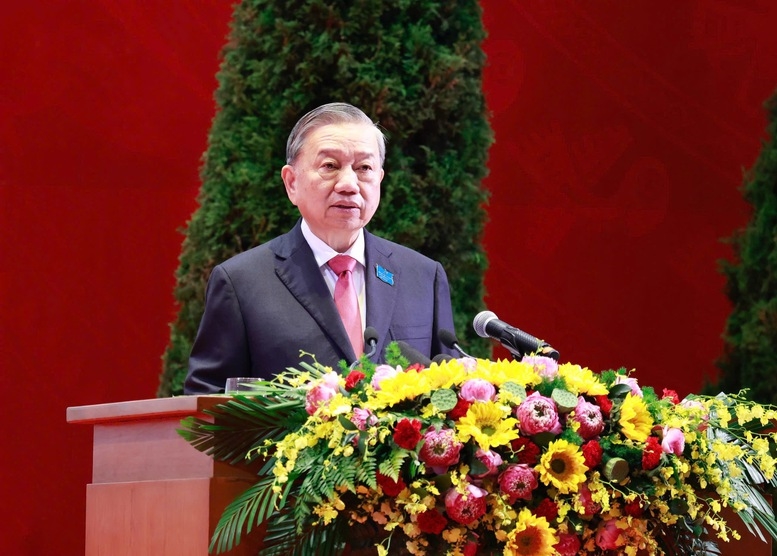
General Secretary To Lam delivers a directive speech at the opening session of the 18th Congress of the Hanoi City Party Committee - Photo: VGP/Nhat Bac
Among the requirements and tasks for the Hanoi Party Committee in the new term, General Secretary To Lam proposed that Hanoi should be built as a "City of Culture, Identity, and Creativity," aiming towards a "Civilized, Modern, and Sustainable Capital" with contemporary wisdom and global stature: where culture is the root, the crystallization of national wisdom, nurturing faith, aspirations, and resilience, creating a unique appeal that no other city can replicate; identity is the foundation and core competitive advantage, helping Hanoi not only preserve its historical soul but also create an attraction to lead creativity, develop a knowledge-based economy, and attract talent; creativity is the driving force for development, transforming heritage into living values, simultaneously preserving, developing, and expanding the city's stature, from planning, architecture, and art to education, science, and governance.
To achieve this, the General Secretary suggested that the development strategy must synchronously integrate culture, space, economy, and people. Every policy decision, every project, and every investment must ensure that it both preserves traditional values and shapes cultural spaces for future generations, while simultaneously creating the capacity for innovation. It is necessary to develop "creative arteries" linking the entire capital city, ensuring the flow of creative energy from heritage, knowledge, and technology, connecting cultural, academic, and innovation centers.
Based on this, three "creative poles" will be formed: Heritage - the historical inner city center and the Red River waterfront area - Co Loa Citadel; Knowledge - the National University and training and research centers; and Technology with Hoa Lac High-Tech Park and other innovation zones. These will be the axes driving the creativity of the entire capital, maximizing the value of history, knowledge, and technology, transforming Hanoi into a city that converges the past, present, and future.
According to the General Secretary, when Hanoi places culture, identity, and creativity at the center of all development orientations, the capital city not only affirms its leading position, guiding and spreading national strength, but also becomes a model city with character, intelligence, vitality, and sustainability, where the past, present, and future converge into a comprehensive force, forming the foundation for the country's development in the new era.
At the exhibition "Some Outstanding Achievements in Education and Health," the Director of Vietnam National University, Hanoi, Hoang Minh Son, introduced to General Secretary To Lam the cutting-edge science and technology products that Vietnam National University, Hanoi is developing, emphasizing the capacity for basic research combined with application, the ability to transfer and commercialize to serve national priority tasks (Photo: Quoc Toan).
General Secretary To Lam also requested that Hanoi become a place for creating new policies, testing new technologies, training new talents, and generating new ideas for the nation. The capital city possesses all the most favorable conditions, along with Ho Chi Minh City, to assume the role of the country's innovation and technology center: it is a hub for high-quality intellectual human resources, with leading universities and research institutes such as Hanoi National University, Hanoi University of Science and Technology, the Posts and Telecommunications Institute, and the Vietnam Academy of Science and Technology; it is a national hub for technology and data infrastructure, with key high-tech zones like Hoa Lac, data centers, research centers, and a synchronized digital infrastructure network; it has a thriving business and innovation ecosystem, with companies like Viettel, VNPT, FPT, MobiFone… and thousands of technology startups; and it houses research centers of global technology corporations such as Samsung and Qualcomm. It is also a hub for abundant capital from major financial institutions such as Vietcombank, Techcombank, VPBank, Agribank, BIDV, VietinBank, etc.
Vietnam National University, Hanoi (VNU) has always been a strong partner and contributor to the cause of building and developing a civilized, modern, and sustainable capital city.Throughout the development of Hanoi – the political, cultural, scientific, and educational center of the country – Vietnam National University, Hanoi (VNU) has consistently affirmed its role as a leading knowledge center, a hub of intellect and creativity, making strong contributions to the building and development of a civilized, modern, and sustainable capital city.
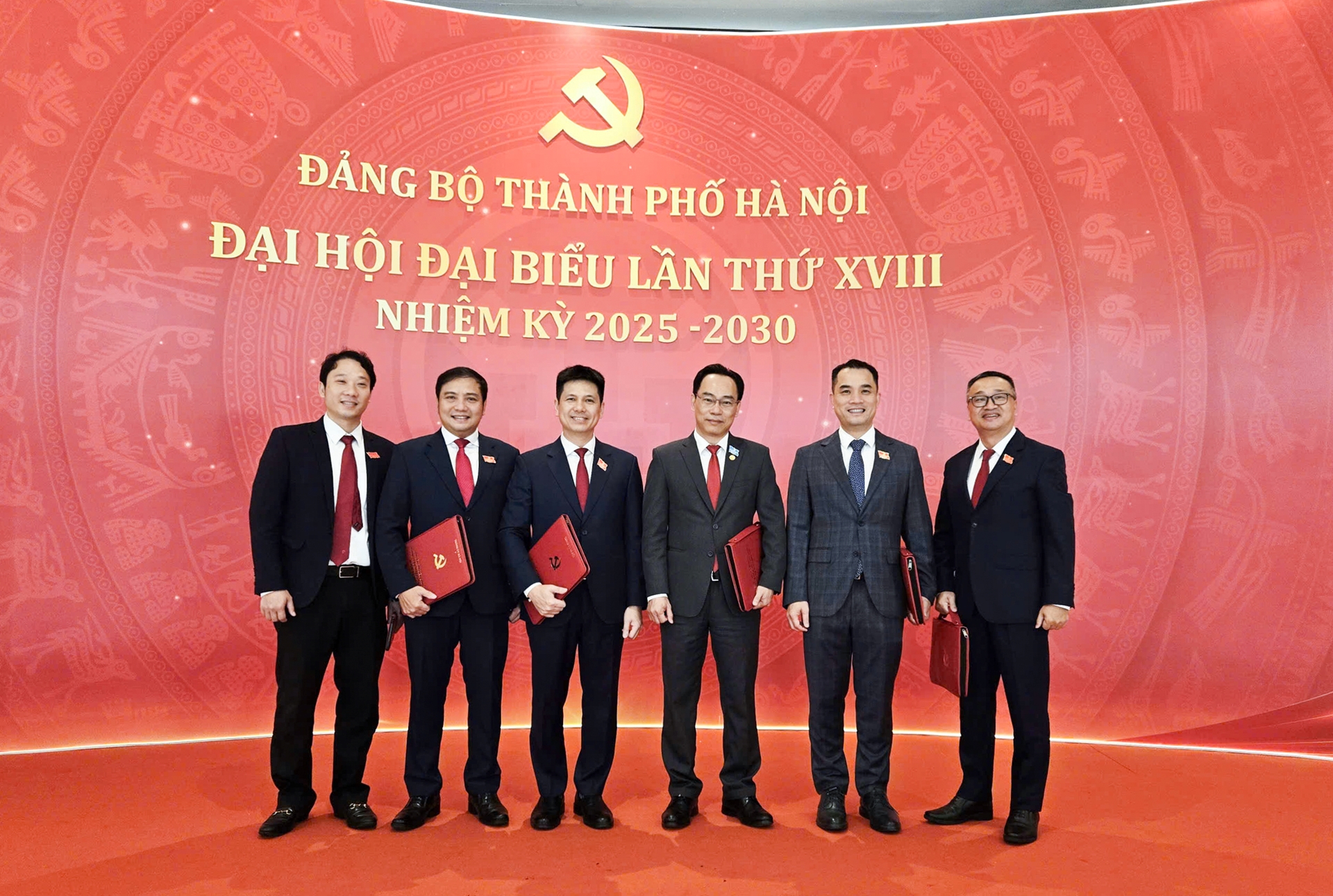
Delegation from Vietnam National University, Hanoi attends the 18th Congress of the Hanoi City Party Committee, term 2025-2030.
Vietnam National University, Hanoi (VNU) is not only a key national university but also a strategic resource for Hanoi in education, science, technology, and innovation. Tens of thousands of graduates, masters, and doctoral degree holders trained at VNU have made and continue to make positive contributions to the capital's workforce of officials, experts, managers, entrepreneurs, and intellectuals.
Over the years, Vietnam National University, Hanoi (VNU) has signed and implemented numerous comprehensive cooperation programs with Hanoi City, particularly in areas such as smart urban planning, public administration, education, healthcare, environment, digital transformation, and high-quality human resource development. VNU scientists regularly participate in policy consultations, social critique, and research on major issues facing Hanoi, such as sustainable development, social welfare, heritage preservation, climate change adaptation, and urban spatial planning.
Vietnam National University, Hanoi (VNU) recognizes the urgency and great opportunities arising from the Central Committee's resolutions, and is ready to place Hanoi's major challenges at the heart of its applied research. VNU currently has over 3,000 scientists, including 500 professors and associate professors, with the capacity to solve interdisciplinary and cross-sectoral problems, from basic research to applications.
According to the leaders of Vietnam National University, Hanoi (VNU), the Law on Science, Technology and Innovation, recently passed by the National Assembly, combined with Resolution 71/NQ-CP amending the Government's action program, and the Law on the Capital City, opens up a favorable legal framework for Hanoi and VNU to jointly experiment with innovative governance models, co-invest in laboratories, establish specialized research institutes, and attract international experts.
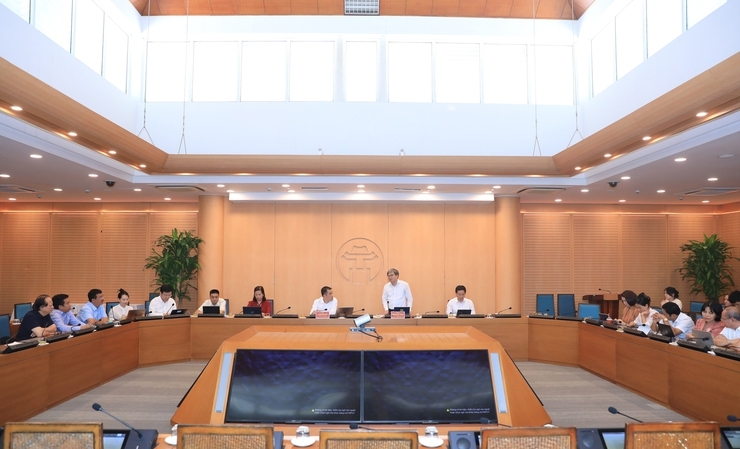
On July 25, 2025, the Hanoi People's Committee and Vietnam National University, Hanoi (VNU) held a working session to discuss and agree on key cooperation contents between the two sides in implementing Resolution No. 57-NQ/TW of the Politburo on breakthroughs in the development of science, technology, innovation, and national digital transformation.
Vietnam National University, Hanoi (VNU) has proactively researched major issues facing the capital city and developed a list of key tasks, focusing on four major areas of particular concern to the city: Environment and sustainable development; Economy and public health; Preservation and promotion of cultural values and digital heritage; and Digital platforms supporting data-driven decision-making. In addition, training, capacity building, and professional development for city officials is also a key focus of cooperation. These proposals clearly demonstrate VNU's vision and superior capabilities in addressing the interdisciplinary and complex challenges of a major metropolis like Hanoi.
In the journey of developing Hanoi into a cultured, civilized, and modern capital city, Vietnam National University, Hanoi (VNU) has consistently affirmed its role as a leading intellectual hub and innovation center, contributing to strengthening Hanoi's soft power. Entering a new phase of national development, VNU has even more favorable conditions to leverage its pioneering position in training, research, knowledge transfer, and policy consulting, while simultaneously accompanying the capital city in building a knowledge ecosystem, innovation, and sustainable development. With a long-term vision and national mission, VNU will continue to lead new trends in science, technology, and education, becoming a strategic intellectual resource, contributing to realizing the aspiration of building Hanoi into a regional and global center of innovation, education, and knowledge.