During the celebration of the 120th anniversary of the founding of Vietnam National University, Hanoi, General Secretary and President To Lam expressed his hope that Vietnam National University, Hanoi would become the "brain bank" of the Party and the State, making a significant contribution to formulating policies and providing solutions to the major problems of the country and the era.
On this occasion, VOV2 presents an interview with Professor Hoang Anh Tuan, a member of the Central Theoretical Council and Rector of the University of Social Sciences and Humanities, Vietnam National University, Hanoi.
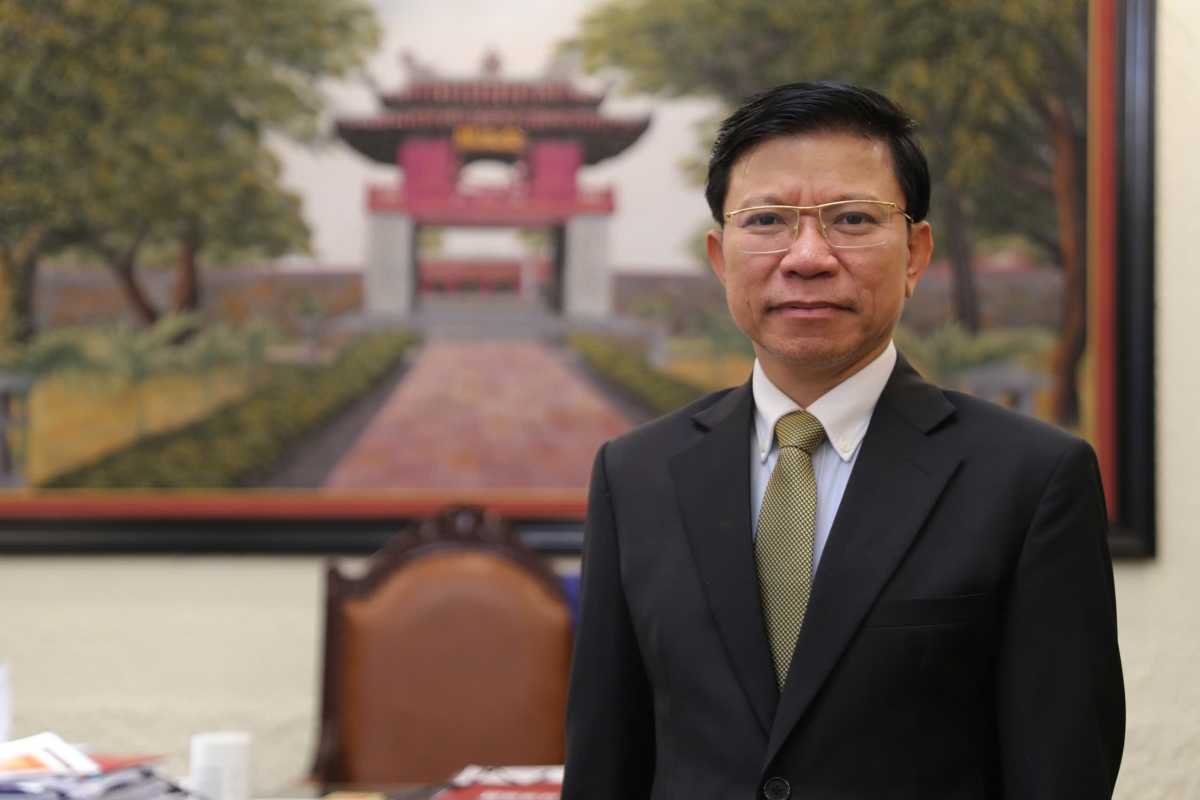
Reporter: Professor, at the 120th anniversary celebration of Hanoi National University, General Secretary and President To Lam delivered a profound speech expressing his faith and expectations in Hanoi National University. How do you feel about this?
GS.TS Hoàng Anh Tuấn:General Secretary and President To Lam's speech at the 120th anniversary celebration of Hanoi National University, filled with faith and expectations, was not only an acknowledgment of the long-standing academic tradition of a particular university, but also a strategic message about the role of higher education and elite training in the future development of the country.
Firstly, the Party and State leaders have placed their trust and expectations in Vietnam National University, Hanoi (VNU): with its 120-year journey, VNU has achieved many accomplishments, and this is the foundation for breakthrough development in the future, aiming to become a leading university in the country and a center for training, research, innovation, and technology transfer with significant influence in the Asian region. This trust is both an honor and a very heavy responsibility.
Secondly, the Party and State leaders demand a strong transformation in Vietnamese higher education: The overarching spirit in the current orientations of the Party and State leaders emphasizes issues of genuine university autonomy, scientific and technological development, elite training, connecting universities with businesses and national needs, and building cutting-edge fields such as AI, semiconductors, biotechnology, digital transformation, and new energy… This means that Vietnam National University, Hanoi cannot be strong only in tradition, but must be strong in its capacity to create new knowledge and contribute directly to national competitiveness.
Thirdly, high expectations also mean the need to be pioneering: Vietnam National University, Hanoi (VNU) must not only train highly skilled professionals, but also cultivate intellectuals with strong character, a spirit of service, and the ability to lead society. Therefore, VNU must drastically restructure its training programs, focus on talent development and elite training, invest heavily in cutting-edge research, attract international scholars, build an innovation ecosystem, and create an environment where Vietnamese students can compete globally based on the soft power of national identity.
Reporter: Professor, how should we understand the concept of "wisdom pool" that the General Secretary and President use? Do you think that the role of higher education institutions, especially Hanoi National University, should not only be limited to training human resources but also include the responsibility of researching and finding practical and effective solutions to lead the country to sustainable and comprehensive development?
GS.TS Hoàng Anh Tuấn:The fact that General Secretary and President To Lam assigned the Vietnam National University, Hanoi the task of becoming a "brains" that the State turns to when it needs scientific arguments for strategic decisions; a place where businesses seek to jointly develop technology, human resources, and new business models; and a place where society finds faith in the power of Vietnamese knowledge, science, and education, has a particularly important significance.
The message and expectations of the highest leaders of the Party and State place an extremely heavy and glorious responsibility on Vietnam National University, Hanoi (VNU): First and foremost, VNU must focus all its resources on continuing to build and develop into a "top-tier policy advisory center" for the Party, State, and society. Beyond its function of training high-quality human resources and talents for socio-economic development, VNU must also become a center of science and innovation capable of advising Party and State agencies on major policies and strategies, providing solutions to the nation's long-term and contemporary challenges, enabling the country to achieve breakthrough development in the new era.
The task assigned by General Secretary and President To Lam to the Vietnam National University, Hanoi (VNU) to become a "brain bank" is also a strategic orientation for VNU to become a "brain bank of the era," a center for gathering outstanding minds, intellectual elites, and scientific and technological talents from Vietnam and around the world. VNU must be a bridge between intellectuals, scholars, and talents and policy-making and strategic planning agencies.
Therefore, in the coming period, Vietnam National University, Hanoi must have policy breakthroughs in attracting and utilizing talent to focus intellectual resources on providing scientific arguments for forecasting, offering initiatives, analyzing, advising, and critiquing policies, and directly participating in the process of formulating the Party's guidelines and policies, the State's laws and regulations, and the country's economic, cultural, and social development projects.
Phóng viên: Theo GS, ĐHQG Hà Nội đặc biệt là trường ĐH Khoa học Xã hội và Nhân văn cần phải làm gì để hiện thực hóa những chủ trương, mục tiêu của Đảng, nhà nước, giữ vai trò cân bằng giữa phát triển Khoa học công nghệ, kinh tế xã hội mà vẫn giữa được bản sắc nền tảng văn hóa đặc sắc mang tính kế thừa truyền thống và sáng tạo để góp phần cùng đất nước vươn mình?
GS.TS Hoàng Anh Tuấn: Với việc theo đuổi hệ triết lý Văn hiến – Hiện đại - Khai phóng, Trường Đại học Khoa học Xã hội và Nhân văn kiên trì quan điểm các giá trị và bản sắc văn hoá của dân tộc là tảng nền và động lực cho sự phát triển chứ hoàn toàn không phải là lực cản. Để cụ thể hoá các quan điểm ấy vào thực tiễn cuộc sống, thực hiện chủ trương, mục tiêu, Đảng, Nhà nước đặt ra trong bối cảnh chuyển đổi mạnh mẽ của đất nước hiện nay, Trường tiếp tục kiên trì và đẩy mạnh một số nội dung căn bản sau:
Nhà trường tiếp tục là trung tâm nghiên cứu, đào tạo hàng đầu về lĩnh vực lịch sử, văn hoá, cổ học và di sản - nơi vừa định hình tư duy, tri thức cho thế hệ tương lai, vừa cung cấp luận cứ khoa học phục vụ hoạt động xây dựng chiến lược phát triển bền vững của đất nước. Bằng việc đẩy mạnh nghiên cứu, nhận diện giá trị và bản sắc văn hoá dân tộc, văn hiến, cổ học,…. giúp xã hội nhận diện, hiểu đúng, hiểu rõ về giá trị văn hoá của mình, từ đó gìn giữ, khai thác phục vụ phát triển xã hội trong đó hệ giá trị con người được đặc biệt chú ý và đề cao. Đây là nền tảng quan trọng nhất trong việc dựng con người Việt Nam hiện đại và bản sắc.
Nhà trường tiến hành xây dựng cơ sở dữ liệu lớn về di sản văn hiến của đất nước phục vụ bảo tồn, nghiên cứu và khai thác của cộng đồng học thuật và của xã hội.
Kết quả nghiên cứu đỉnh cao không chỉ được thể hiện trong các công trình nghiên cứu có uy tín mà còn được thể hiện dưới nhiều hình thức khác nhau giúp công chúng dễ dàng tiếp cận, nắm bắt các giá trị và cụ thể hoá chúng trong suy nghĩ, hành động của mỗi cá nhân và của toàn xã hội.
Đào tạo nhân lực không chỉ biết nhận diện giá trị mà còn biết biến các giá trị ấy từ dạng tài nguyên thành động lực để phát triển bền vững, vừa bảo tồn, vừa khai thác và sáng tạo các giá trị mới trên nền tảng của giá trị cũ, từ đó viết tiếp truyền thống của nhà trường, của con người Việt Nam, của đất nước Việt Nam.
PV: Xin trân trọng cảm ơn GS!
VOV2: ĐHQG Hà Nội phải trở thành Trung tâm tư vấn chính sách đỉnh cao
Author:According to VOV2
Newer news
Older news

