Driven by my love and passion for history, as well as my affection for the university with the longest history of history education in Vietnam, I chose the Faculty of History, University of Social Sciences and Humanities, as my place of residence for all four years of my university studies.
After graduating from the K51 class of the History Department, I was accepted as a research officer at the Thang Long - Hanoi Heritage Conservation Center (Thang Long Imperial Citadel) – a job perfectly suited to the knowledge and skills I had honed at the University of Social Sciences and Humanities. After graduating with a bachelor's degree, I was offered direct entry into a master's program at VNU-USSH, but I put it on hold to prioritize my work.
To improve my professional skills and perform my job well at the agency, I researched master's programs related to cultural management. In fact, many of my colleagues have chosen to pursue a master's degree in Cultural Management at several institutions in Hanoi. Many of them also advised me to study there, saying it would be "easier." Once again, I temporarily put aside my intention to pursue a master's degree and waited.
Fortunately, in 2018, the University of Social Sciences and Humanities opened a new Master's program in Cultural Management. I didn't hesitate and applied for the entrance exam, becoming a student in the third cohort of the Cultural Management program.
The reason is probably quite simple: I graduated from the History Department of VNU-USSH, and I understand the quality of training and the learning environment at the University of Social Sciences and Humanities, so I still want to study there. Although I understand that the admission regulations and graduation requirements are stricter and more difficult, I think that such strictness is necessary for a master's degree to truly be valuable.
Nguyen Thi ThuyTo be honest, when I applied for and was accepted into the Cultural Management program, I, like my classmates, was quite unclear about the curriculum.
Regarding the Cultural Studies course, we had already studied it in university, so we grasped the basics. However, adding content on "management" was a real challenge. We didn't really understand what management entailed, as the class members included recent graduates and those already working, but mostly as ordinary civil servants, with little exposure to the work and positions of cultural managers.
However, the Cultural Management training program truly provided students with training content of high theoretical and practical value. We learned everything from basic knowledge such as management science to in-depth topics in the field of cultural management in many aspects such as tangible and intangible aspects, religion, beliefs, architecture, etc. Even more innovative were modern knowledge such as cultural industry and practical issues facing contemporary culture, closely related to the work we are doing.
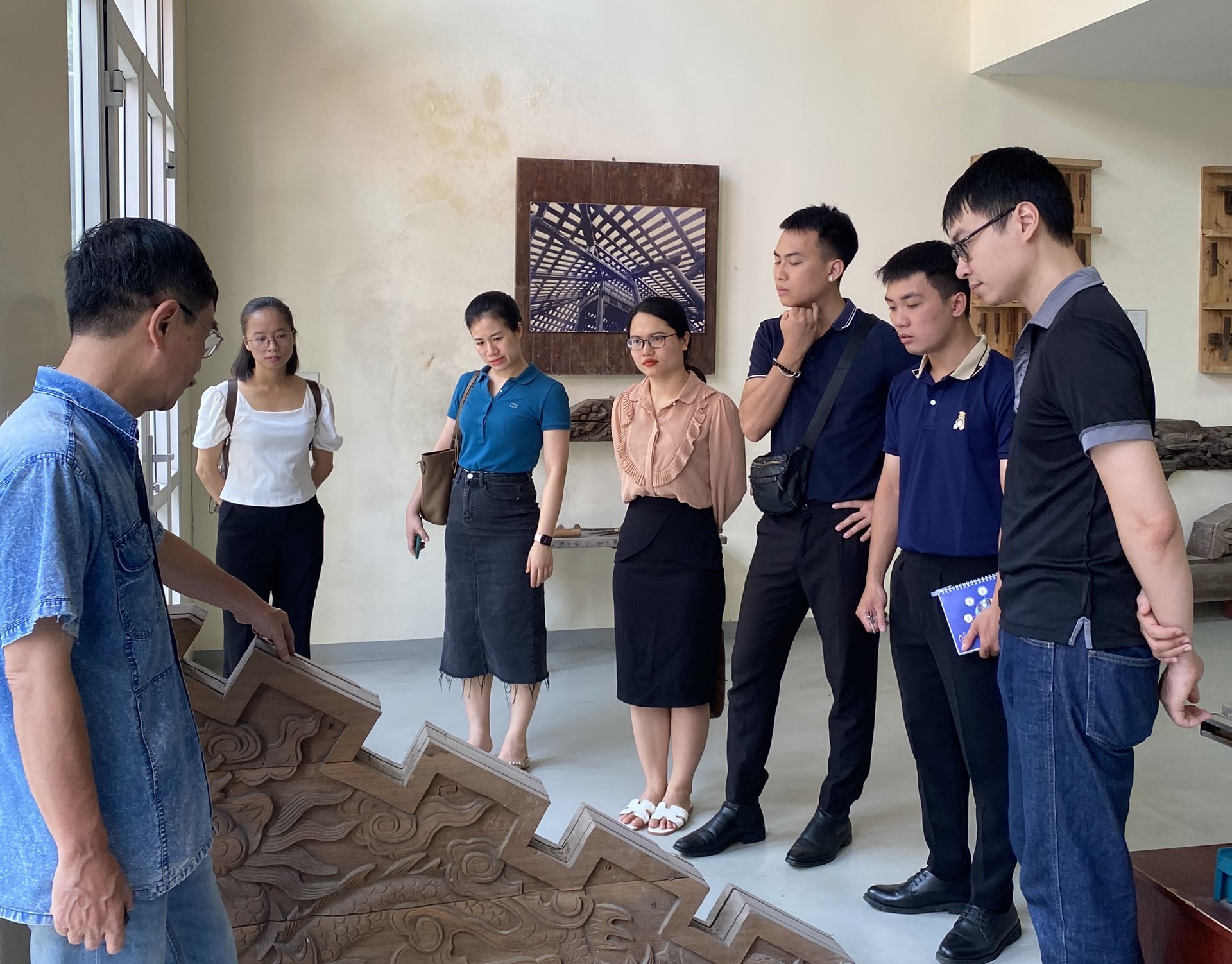
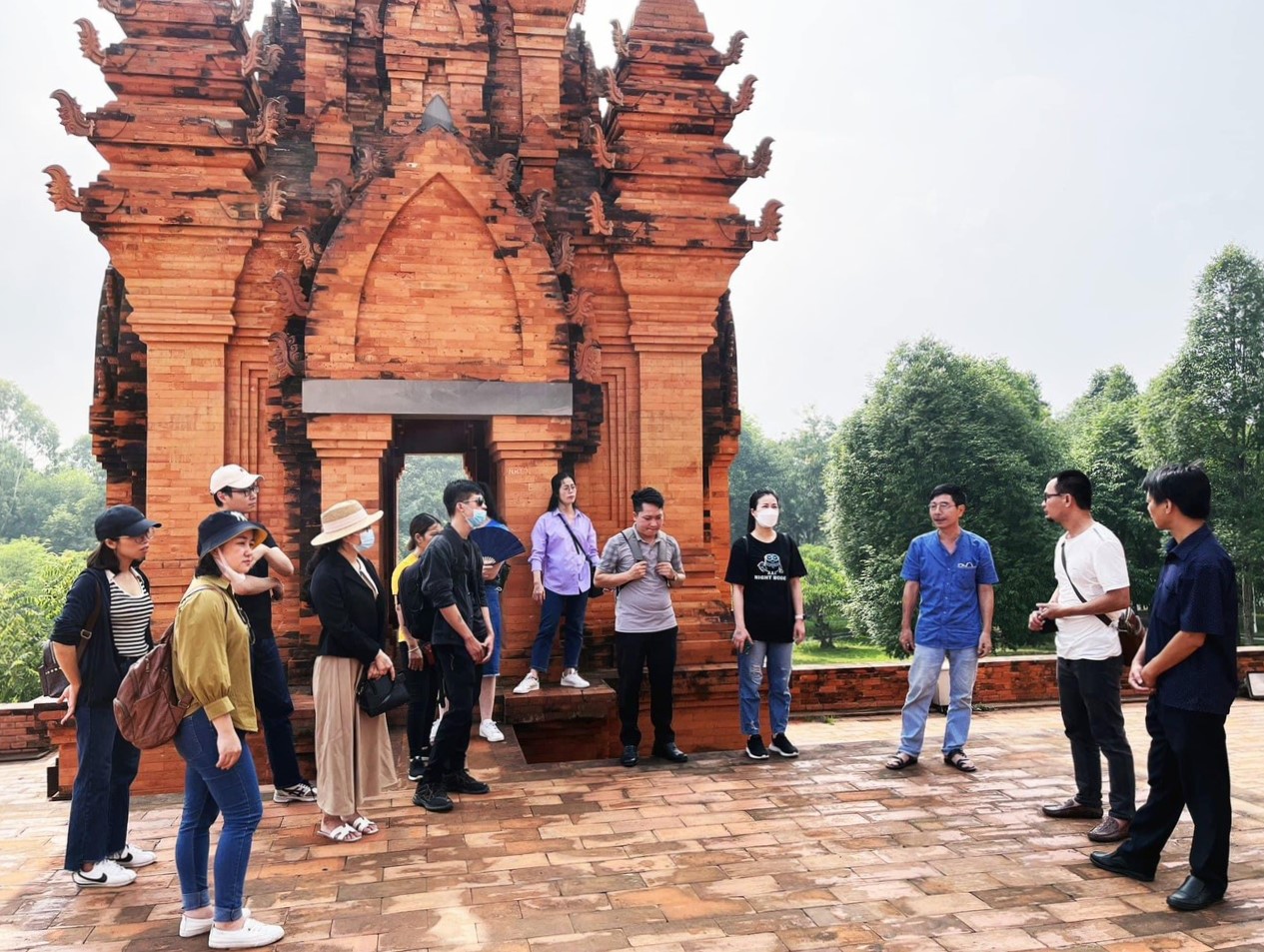
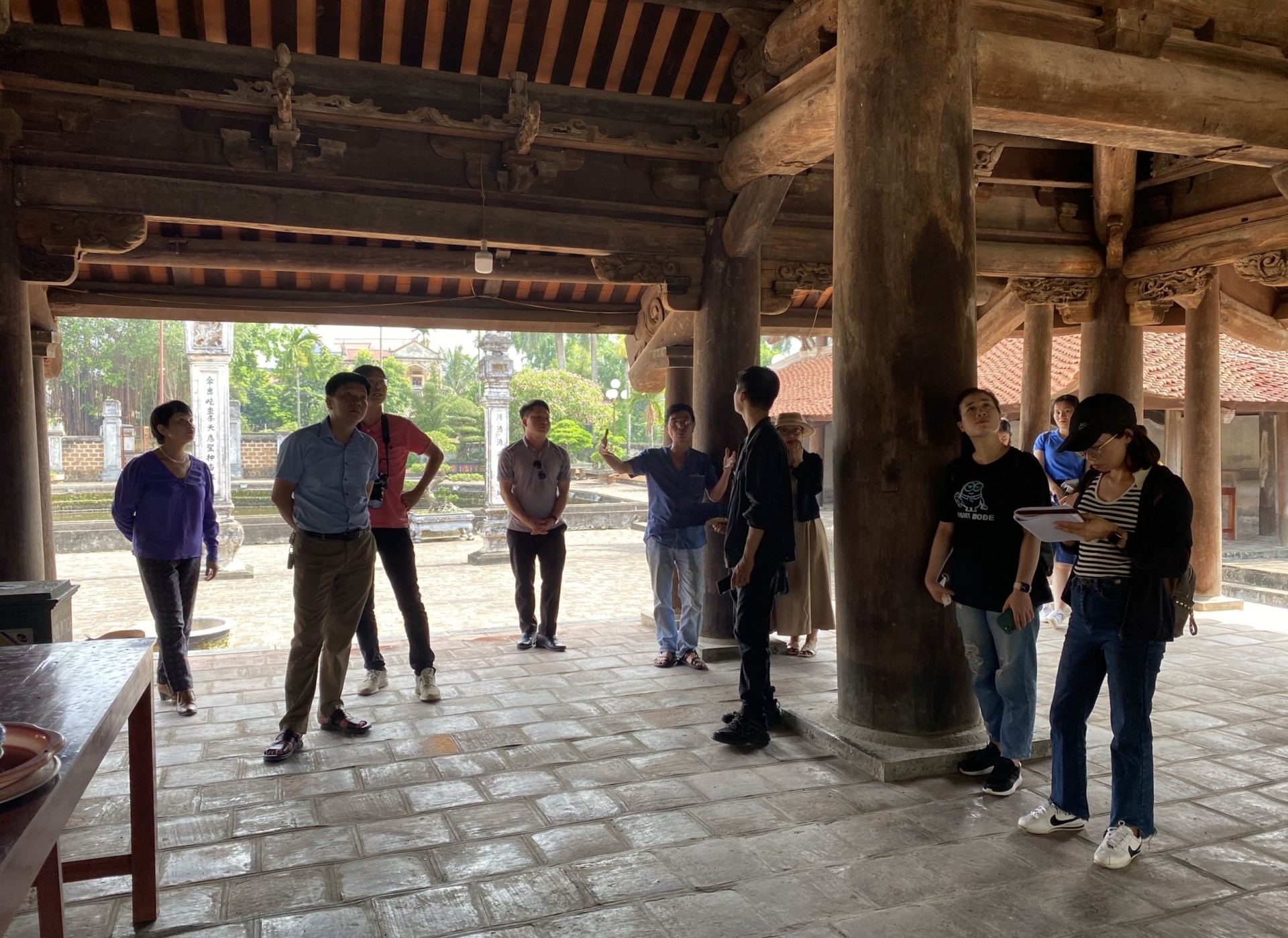
One really great aspect of the Master's program in Cultural Management is that we not only learn in the classroom but also gain a lot of practical experience. For some modules, such as Cultural Industry, Architectural Heritage Management, and Cultural Management - Theory and Application, the professors arranged field trips to famous historical sites like temples and shrines in Ba Vi, excavation sites in Bac Giang, or an exhibition on cultural creativity at the Vietnam National Institute of Culture and Arts. This fieldwork was incredibly interesting; for us, it would have been very difficult to do it on our own without these combined trips. Being able to directly observe the sites and artifacts, listen to cultural managers discuss practical issues, and hear the professors explain in detail with specific case studies was truly a wonderful learning opportunity.
The Master's class in Cultural Management went on a field trip to the Institute of Heritage Conservation.
The Master's class in Cultural Management went on a field trip to the Vietnam National Village of Ethnic Cultures.
The Master's class in Cultural Management went on a field trip to several ancient communal houses in Ba Vì.
One thing that impressed and moved me was how caring the teachers were towards their students during the field trips. They tried every way to save costs for the students as much as possible. They connected with others, even using their own money to support students who were "poor." In 2021, amidst the complicated Covid-19 pandemic, the teachers still managed to complete the theoretical curriculum through online or offline classes. And as soon as the pandemic subsided, they still arranged for the class to have all the field trips. During the coursework, the teachers were also very flexible in arranging teaching and learning schedules, creating the best conditions for students to complete their studies while still maintaining their work at their workplaces and taking care of their families.
During our master's studies, in addition to the full-time faculty of the History Department, the University invited many professors and experts from outside the university, working in various fields (education, culture, management science), to teach. These professors all have numerous renowned scientific publications and extensive practical experience in their respective fields. Therefore, their lectures were of exceptionally high quality, easy to understand, easy to absorb, and extremely engaging.
I believe I made the right choice when I decided to pursue a Master's degree in Cultural Management at the Faculty of History, University of Social Sciences and Humanities, Vietnam National University, Hanoi.
PV:With a relatively short study period, while still balancing work and family responsibilities, you still excelled and earned the top honors in your major? What's your "secret" to balancing and succeeding in everything?
Nguyen Thi Thuy:Pursuing a master's degree is certainly not easy for working professionals, especially during a severe pandemic when all activities are disrupted.
During the initial phase of the program, after finishing work at 5 PM, I would quickly grab a bite to eat and then rush back to school to study from 6 PM to 9 PM. When a module was finished, I always tried to complete assignments on time, never allowing myself to neglect them just because the professors hadn't requested them yet.
The most stressful period was writing my graduation thesis. I worked on my thesis during the last few months of 2023, which was also the busiest time at work as I had to complete my year's work plans. My other work still had to be completed on schedule, but if I fell behind, my study deadline would be extended, meaning I would be behind on my graduation plan and would "cost money." I don't have any big secrets; I just kept telling myself "keep going, keep going" and tried to organize my work as efficiently as possible. I dedicated my free time to the thesis, and if I couldn't work during the day, I would do it at home in the evenings.
PV:Some argue that job opportunities in fields related to Cultural Studies and Cultural Management are currently quite limited, making it difficult for graduates to find employment in the current job market. What are your thoughts on this opinion?
Nguyen Thi Thuy:I am fortunate to have graduated with a Bachelor's degree and landed a job in my field at a very good organization. Back then, 14 years ago, and even now, finding a job for recent graduates is still quite difficult, especially for those in social sciences. Studying cultural studies or cultural management makes finding a job both easy and difficult. It's easy because these fields encompass many aspects of life, making it easier for graduates to find jobs that are more or less related to their specialization. For example, there are now many entertainment channels for young people inspired by traditional cultural elements, which would be a great opportunity for graduates in these fields.
But if graduates only want to work in units like cultural institutions or cultural management agencies within the state system, it will be difficult because there are few staff positions and a lot of experience is required.
Therefore, in my opinion, whether you study Culture or any other field, in addition to your specialized knowledge, you must also develop other skills to expand your job opportunities.
When asked about her most memorable experience during her studies at the Faculty of History, University of Social Sciences and Humanities, especially during the complicated Covid-19 period, Thuy emotionally shared:I have many memorable experiences from my studies, but perhaps the most memorable are the online classes in late 2021 and early 2022. At that time, the Covid-19 pandemic was very complicated, and my class had to switch to online learning for some topics. Instead of rushing back to school after finishing work, we rushed home to be ready by 8 PM to sit in front of our computers for online classes.
I remember attending a specialized course with Associate Professor Dr. Vu Van Quan (who was then the Head of Department) when I contracted Covid. I was studying online at home, but I couldn't stop coughing. He felt sorry for me and let me take a break, saying I could continue studying when I recovered. By the time I got better, it was Professor Quan's turn to get Covid. When he came to class, he was coughing while teaching, his voice hoarse, but he still managed to finish the session. The next day, he couldn't manage it anymore and texted me (the class leader) to cancel the class. As a result, the specialized course lasted longer than planned.
Even now, I still vividly remember the feeling when the pandemic ended, when we no longer had to wear masks, and teachers and students were able to "see each other" for the first time, albeit through computer screens. Before that, in class, both teachers and students wore masks that completely covered their faces.
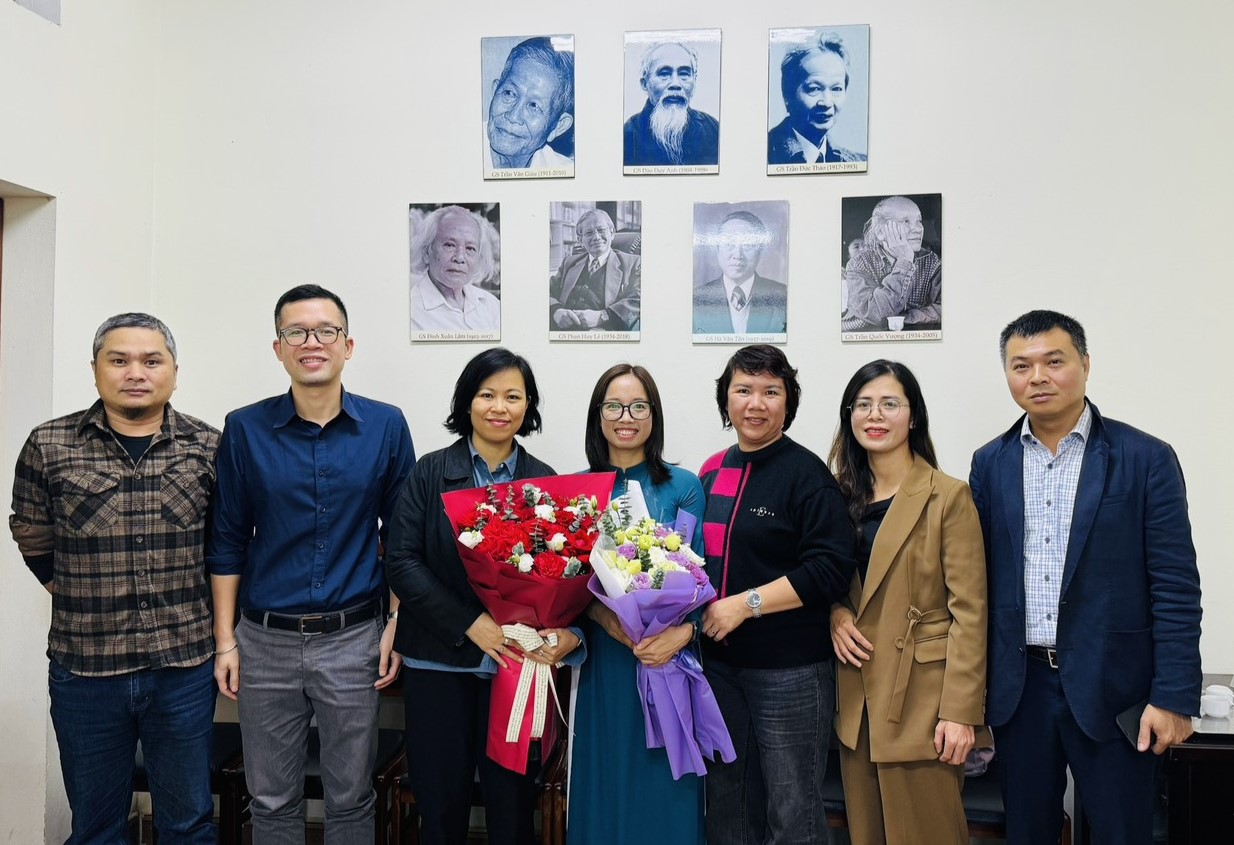
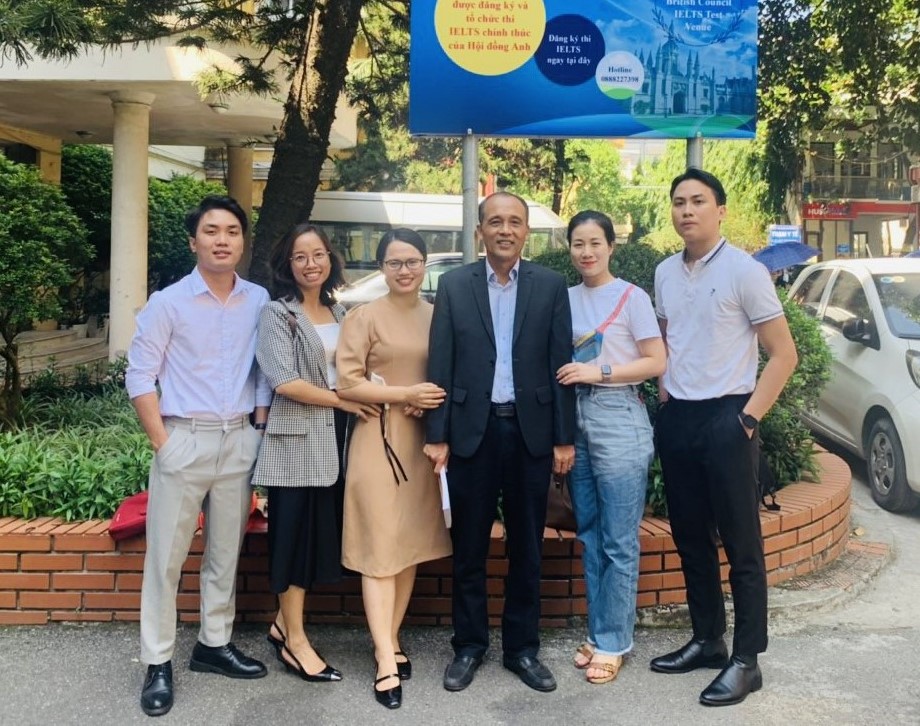
Nguyen Thi Thuy (second from the right) and her classmates from the K3 Master's Program in Cultural Management pose for a photo with Assoc. Prof. Dr. Vu Van Quan.
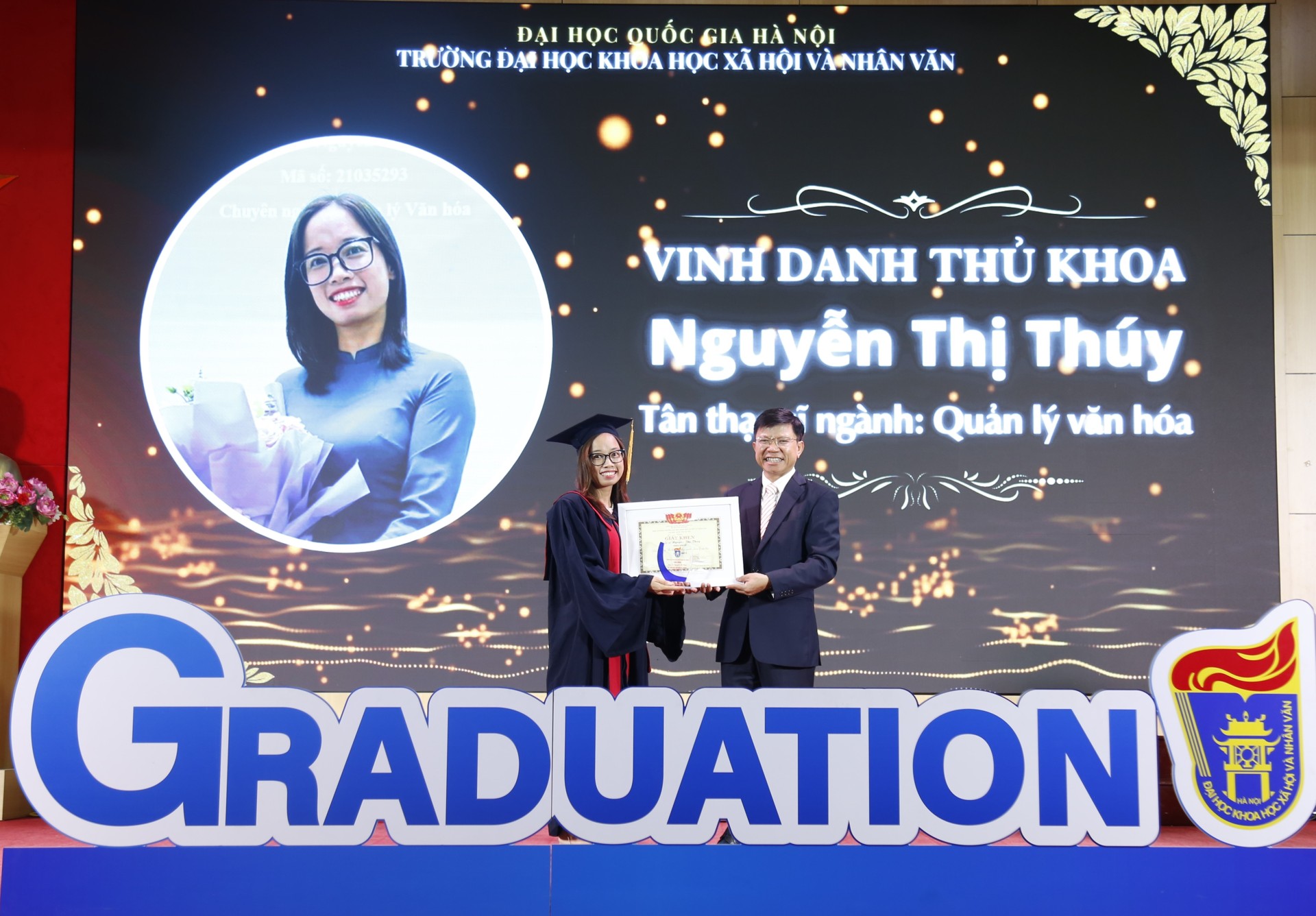
Sharing her future plans, Thuy said:A few days ago, when I attended the warm and moving 2024 Doctoral and Master's degree awarding ceremony in the auditorium on the 8th floor of Building E, listening to the sharing from the Rector, Mr. Hoang Anh Tuan, and from the newly graduated PhDs, I also really wanted to continue studying so that I could stand on the podium to receive my degree like them. In that moment of overwhelming emotion, I remembered my decision to study here for over two years. It was difficult and arduous, but holding the degree felt truly valuable.
Currently, I don't plan to pursue a PhD immediately, but if I do, I will definitely choose the Department of History, Faculty of Social Sciences and Humanities, VNU Hanoi! And I will always be proud to be a student and master's graduate of Hanoi University of Social Sciences and Humanities.
For detailed information on Master's program admissions in Cultural Management at VNU-USSH, please see [link/website].
here