Evidence of interaction through different historical periods.
The international scientific conference "Vietnam - Korea Historical and Cultural Exchange: Transformation of Heritage, Memory and Contemporary Vision," organized by the University of Social Sciences and Humanities (USSH), Vietnam National University, Hanoi (VNU-Hanoi) in collaboration with the National Institute of Korean History on September 18th, was an opportunity to revisit those historical traces and broaden discussions to include issues of heritage and cultural innovation in the current context.
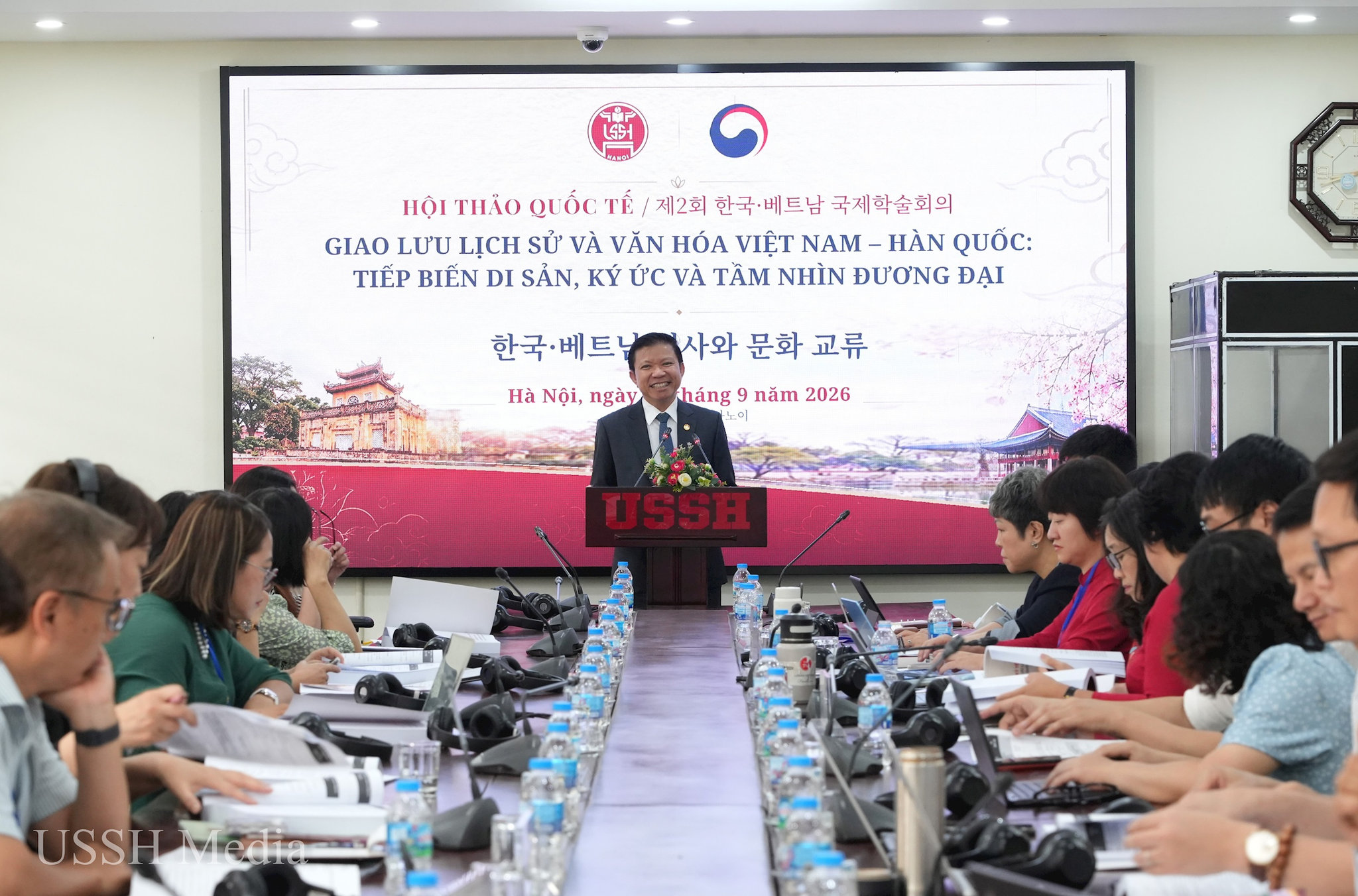
Professor Hoang Anh Tuan, Rector of the University of Social Sciences and Humanities (VNU Hanoi), shared his views at the conference. Photo: USSH
One of the issues of interest is the story of Ly Long Tuong – a figure often mentioned in research on Vietnam-Korea relations during the medieval period. Professor Heo In-uk (Jeonbuk National University, South Korea) stated that, based on the Hoa Son Ly clan genealogy and the history of Goryeo, Ly Long Tuong is believed to have been a royal prince of the Ly dynasty who migrated to Goryeo around the beginning of the 13th century. According to the documents, he arrived in the Ung Tan area, where he was later granted the Hoa Son Ly region as a fiefdom and given the title of Hoa Son Quan by King Gojong.
From this figure, research continues to raise questions about the formation and development of the Hoa Son Ly clan. Professor Cho Jeong-gon, Senior Research Fellow at the Institute of Korean Studies, provided further information on the economic situation of the clan in Phung Hoa in the latter half of the 16th century, through documents dividing property. Studies show that the story of Ly Long Tuong is approached not only from the perspective of a historical figure, but also from the perspective of the settlement and development of a clan of Vietnamese origin in Goryeo.
Vietnamese-Korean connections can also be found in historical sources. According to Professor Heo In-uk, records about the Annam Protectorate, local customs, and the activities of Cao Bien (according to "Supplement to the Annam Records of Strange Events" by Cui Zhiyuan, a Silla scholar who lived and worked in the Tang Dynasty in the 9th century) show that understanding of Annam was formed through multiple sources of information. Research also extends to maritime networks and sea trade during the Korean period, indicating that interaction occurred not only through official contacts between dynasties.
Ancient artifacts also add another layer of documentation. Dr. Nguyen Van Anh, from the University of Social Sciences and Humanities, Vietnam National University, Hanoi, said that among the tens of thousands of artifacts discovered through excavations in the central area of Thang Long Imperial Citadel, five ceramic fragments have been identified as belonging to the Goryeo celadon pottery group.
The artifacts, all discovered in the central axis area of Thang Long during the Ly-Tran dynasties, mostly date from the 13th-14th centuries and are high-quality ceramic products with distinctive Goryeo decorative techniques, including Sanggam mosaic. The presence of these artifacts in the central area of the Imperial Citadel raises questions about the route of Goryeo ceramics to Thang Long.
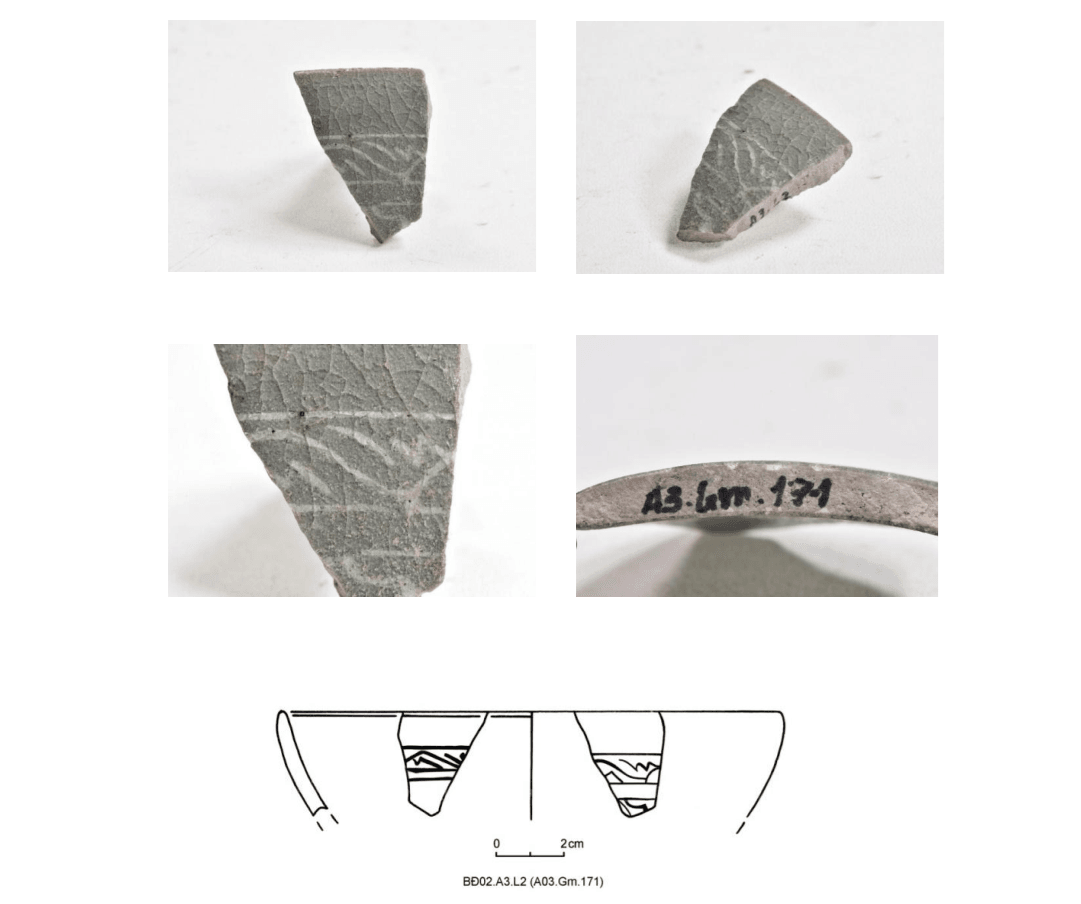
Celadon bowl, Korean ceramics from Thang Long Imperial Citadel, 13th-14th century. Photo: USSH
These traces show that historical exchanges between Vietnam and Korea can be identified through multiple layers of evidence, in different circumstances and settings.
Continuing the legacy in contemporary creative life.
While historical documents reveal traces of Vietnam-Korea exchanges preserved over centuries, contemporary research points to how the cultural values of Vietnam and Korea are preserved, continued, and promoted in today's life.
The cultural exchange between Vietnam and Korea is clearly demonstrated through the philosophy of "living heritage." Analyzing the operation of provincial-level Confucian temples in Northern Vietnam, Dr. Do Thi Huong Thao from the University of Social Sciences and Humanities, Vietnam National University, Hanoi, discusses approaches such as "preserving original forms," "preserving values," and "creating traditions." According to her research, these approaches can be combined depending on the characteristics of each site, both preserving inherent values and creating conditions for the heritage to continue to be present in contemporary life.
Comparative studies of Hahoe Ancient Village (South Korea) and Duong Lam Ancient Village (Vietnam) also emphasize the role of the community in maintaining the vitality of heritage. The sustainability of village heritage is linked to cooperative governance models, ensuring livelihoods, people's participation, and maintaining "cultural continuity." This is coupled with mechanisms for benefit sharing and appropriate methods for promoting its value.
From preserving and promoting cultural values, the issue has expanded to the possibility of transforming cultural resources into creative activities. Amidst the wave of urban transformation in Vietnam, Hai Phong is affirming its determination to join the UNESCO Creative Cities Network in the field of music. Analyzing this problem from the perspective of the cultural industry, Dr. Nguyen Thi Hoai Phuong (Faculty of Social Sciences and Humanities, Vietnam National University, Hanoi) noted that the lessons learned from Daegu – a leading creative music center in South Korea – offer particularly valuable insights.
In Daegu, the music ecosystem is formed from training, composition, performance, production, distribution, community activities, festivals, and international exchange. These experiences are presented by the authors in relation to the challenges facing Hai Phong, from leveraging cultural resources and developing performance spaces to music education and expanding community participation. Here, heritage is not only seen as values to be preserved, but can also become part of the cultural resources for urban creativity and development.
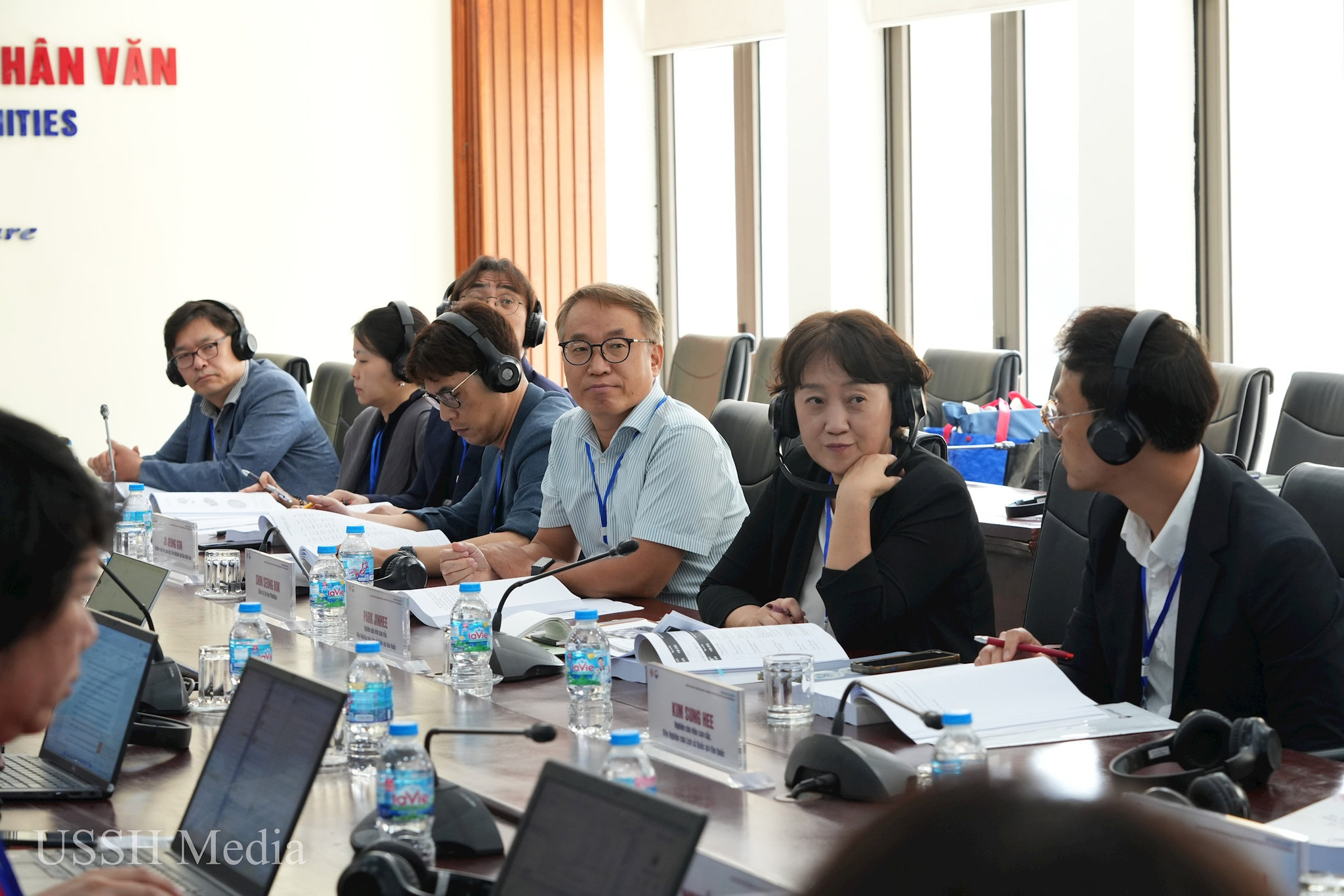
Experts from the National Institute of History of Korea at the international scientific conference "Vietnam-Korea Historical and Cultural Exchange: Transformation of Heritage, Memory, and Contemporary Vision". Photo: USSH
Alongside the creative industries, human resources and knowledge base are also crucial factors. Dr. Hoang Thi Hong Nga (Faculty of Social Sciences and Humanities, Vietnam National University, Hanoi) emphasized the similarity in that both countries have "internalized" the Western university model based on Confucianism and a tradition of valuing learning. Promoting university autonomy while preserving cultural identity helps transform global standards into internal capabilities, creating high-quality human resources to serve the digital economy and artificial intelligence.
From historical evidence to contemporary issues, the Vietnam-Korea relationship has been nurtured through many layers of exchange. In the context of the two countries becoming Comprehensive Strategic Partners, these exchanges contribute to clarifying the cultural depth of the Vietnam-Korea relationship, alongside economic, trade, and investment fields.
Related articles:
New scientific perspectives on the historical and cultural exchange between Vietnam and South Korea.
International Scientific Conference “History and Cultural Exchange between Vietnam and Korea”
New research on cooperation between South Korea and East Asian countries.
Author:CollaboratorAccording to Hanoi New Newspaper
Newer news
Older news

